
Authentic Chicken Cacciatore: A Classic Italian Recipe That Never Disappoints
Introduction: The Rustic Heritage of Chicken Cacciatore
The Hunter’s Dish: Origins and Meaning
Chicken cacciatore is one of Italy’s most beloved culinary treasures. This rustic dish, whose name translates to “hunter’s chicken,” has deep roots in Italian country cooking. Traditionally prepared with whatever ingredients hunters had available after a day’s expedition, chicken cacciatore embodies the resourceful spirit of Italian cuisine. Originally made with rabbit or other game, the modern version featuring chicken has become a staple in homes and restaurants worldwide.
“Learn more about other classic Italian-inspired dishes like our creamy chicken linguine recipe that shares similar flavor profiles.”
Why Chicken Cacciatore Remains a Timeless Classic
What makes chicken cacciatore stand the test of time is its perfect balance of simplicity and depth of flavor. The combination of tender chicken thighs, aromatic vegetables, and tomato sauce creates a hearty meal that satisfies on multiple levels. This one-pot wonder delivers complex flavors without requiring advanced culinary skills, making it accessible to home cooks of all experience levels. The dish also represents the heart of Italian cooking philosophy—transforming humble ingredients into something extraordinary through slow simmering and thoughtful seasoning.
Ingredients: Everything You Need for Perfect Chicken Cacciatore
Essential Components for Authentic Flavor
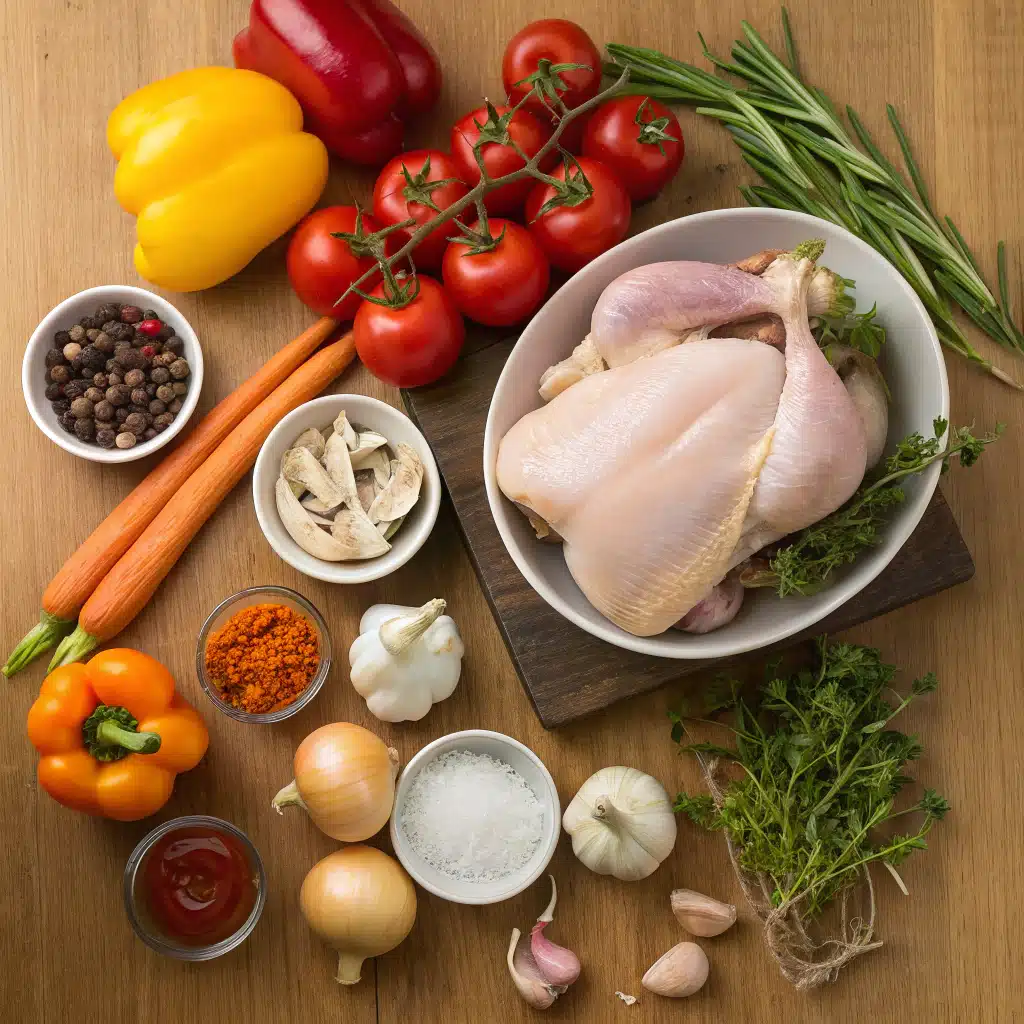
The beauty of chicken cacciatore lies in its straightforward ingredient list. Each component plays a crucial role in building the dish’s signature rustic flavor profile:
| Main Ingredients | Aromatics & Herbs | Liquids & Seasonings |
|---|---|---|
| 6 chicken thighs (bone-in, skin-on, trimmed) | 1 small yellow onion, chopped | 28 oz can crushed tomatoes |
| 8 oz mushrooms (white or baby bella), sliced | 2 celery ribs, chopped | ½ cup chicken broth |
| ½ red bell pepper, chopped | 3 garlic cloves, minced | 1 tsp red wine vinegar |
| ½ green bell pepper, chopped | 1 tsp oregano | Kosher salt and black pepper |
| 3 sprigs fresh thyme | Extra virgin olive oil | |
| 2 tbsp fresh chopped parsley | Pinch red pepper flakes |
The Importance of Quality Ingredients
Using bone-in, skin-on chicken thighs is non-negotiable for authentic chicken cacciatore. These cuts remain juicy throughout the cooking process and impart rich flavor to the sauce. Fresh vegetables provide the aromatic base, while herbs like oregano, thyme, and parsley add the characteristic Italian flavor profile. The combination of crushed tomatoes, chicken broth, and a touch of red wine vinegar creates the perfect sauce consistency—not too thick or thin, but ideal for coating each piece of chicken and vegetable.
Step-by-Step: Creating Your Chicken Cacciatore Masterpiece
Preparing and Browning the Chicken
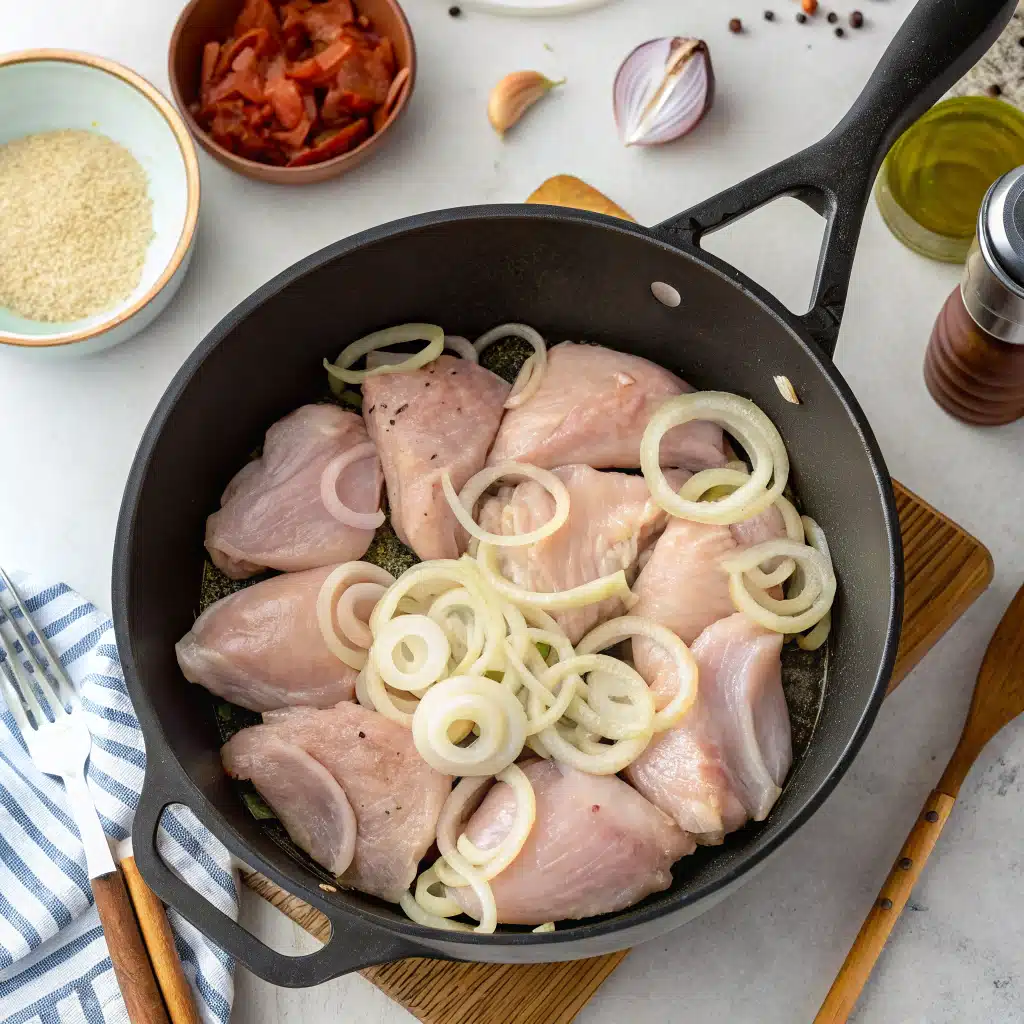
Pat the chicken thighs dry with paper towels and season generously with kosher salt and black pepper on all sides, including underneath the skin. This crucial step ensures flavor penetrates the meat.
Heat 2 tablespoons of extra-virgin olive oil in a large pan or braiser (with a lid) over medium-high heat until the oil shimmers but doesn’t smoke.
Carefully place the chicken thighs skin-side down in the hot oil and cook undisturbed for about 4-5 minutes until the skin turns golden brown and crispy.
Flip the chicken pieces and brown the other side for an additional 3-4 minutes. Remove the browned chicken to a clean plate and set aside. Don’t worry that the chicken isn’t fully cooked—it will finish cooking later in the sauce.
Building the Flavorful Vegetable Base
In the same pan with the flavorful chicken drippings, add the chopped onions, celery, red and green bell peppers, sliced mushrooms, and minced garlic. The fond (browned bits) from the chicken will incorporate into the vegetables, adding depth of flavor.
Cook the vegetable mixture over medium heat for 5-6 minutes, stirring regularly to prevent burning. Season with kosher salt, black pepper, dried oregano, fresh thyme sprigs, chopped parsley, and a pinch of red pepper flakes.
Continue cooking until the vegetables are tender and fragrant, and the onions have become translucent.
“Looking for inspiration? Try our oven-roasted boneless chicken thighs recipe for another delicious chicken dinner option.”
Simmering to Perfection
Pour in the ½ cup of chicken broth mixed with 1 teaspoon of red wine vinegar. This liquid will help deglaze the pan, loosening any remaining browned bits and incorporating them into the sauce.
Allow the mixture to simmer for 2-3 minutes, reducing slightly while the flavors meld together.
Add the 28-ounce can of crushed tomatoes, stirring thoroughly to combine with the vegetable mixture. Bring to a gentle simmer and cook for 5-10 minutes until the sauce begins to thicken slightly.
Place the seared chicken thighs back into the pan, positioning them skin-side up so they rest gently in the sauce. The chicken should be partially submerged with the skin remaining above the sauce to maintain its crispness.
Reduce heat to medium-low, cover the pan, and simmer for approximately 30 minutes, or until the chicken is completely cooked through and fork-tender.
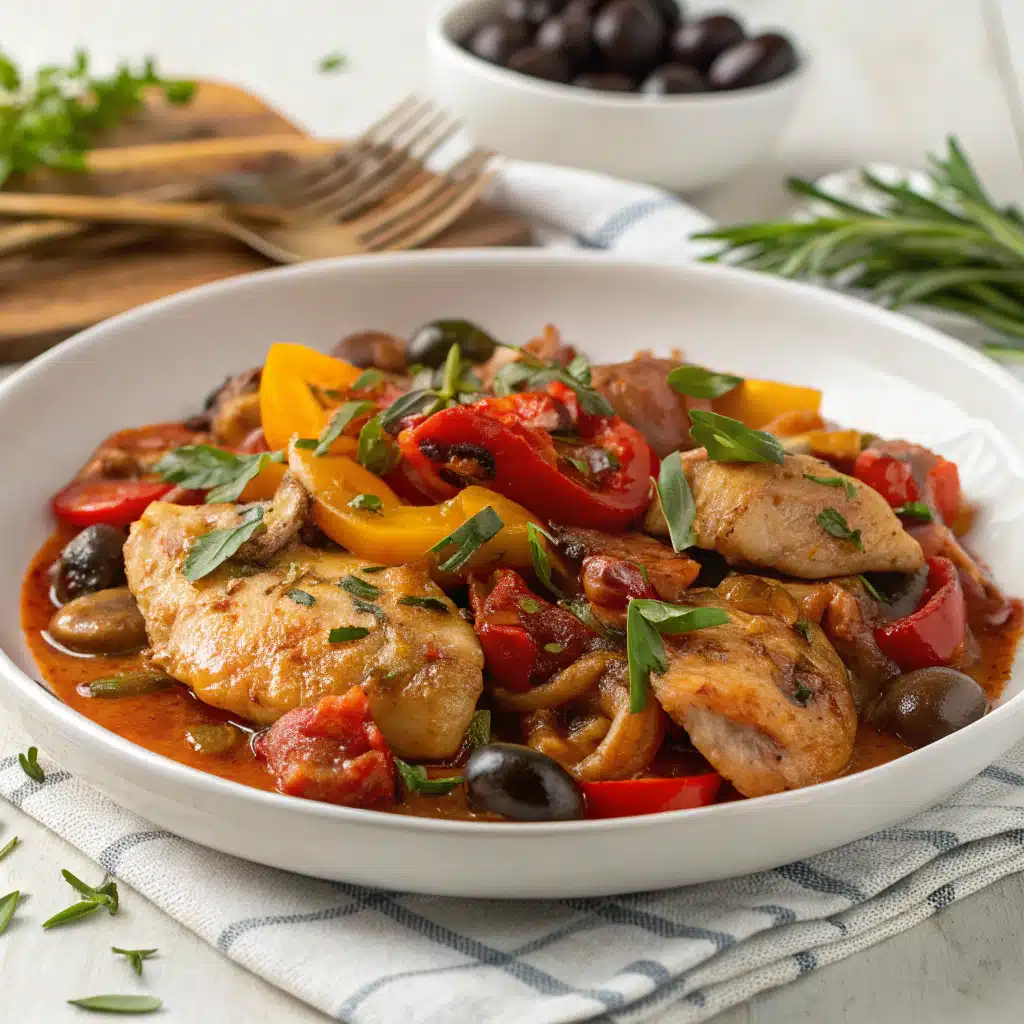
Before serving, taste the sauce and adjust seasoning if needed. Sprinkle with additional fresh chopped parsley for a bright finish.
Tips: Elevating Your Chicken Cacciatore
Common Mistakes to Avoid
When making chicken cacciatore, several pitfalls can compromise your results. First, avoid overcrowding the pan when browning the chicken. Working in batches if necessary ensures proper browning, which is essential for flavor development. Second, don’t rush the cooking process—this dish benefits from slow simmering, allowing flavors to meld and the chicken to become tender. Lastly, resist the urge to stir too frequently once the chicken is returned to the sauce, as this can break apart the meat and prevent it from cooking evenly.
Chef’s Secrets for Restaurant-Quality Results
For truly exceptional chicken cacciatore, consider these professional techniques: Marinate the chicken with herbs, garlic, and a splash of olive oil for a few hours before cooking to enhance flavor penetration. Allow the completed dish to rest, covered, for 10-15 minutes off the heat before serving—this resting period allows flavors to settle and intensify.
“Check out our creamy garlic herb chicken recipe for another crowd-pleasing chicken dish with rich flavors.”
Perfect Timing and Temperature Control
Temperature control is vital for chicken cacciatore success. Start with high heat for browning the chicken, then reduce to medium for sautéing vegetables, and finally, maintain a gentle simmer (low to medium-low heat) for the final cooking phase. The sauce should bubble gently, not boil vigorously, which could toughen the chicken. For food safety, ensure the chicken reaches an internal temperature of 165°F (74°C), but for optimal tenderness, thighs are best when they reach 175°F (79°C). Allow yourself about 1 hour from start to finish, including prep time.
Storage: Making the Most of Leftovers
Proper Refrigeration Techniques
Chicken cacciatore actually improves with time as flavors continue to develop, making it an ideal make-ahead dish. To refrigerate properly, allow the cacciatore to cool completely before transferring to airtight containers. Stored in the refrigerator, it will keep well for up to 4 days. When reheating, add a splash of chicken broth if the sauce has thickened too much during storage. For best results, reheat gently on the stovetop over medium-low heat, covered, rather than using a microwave, which can toughen the chicken.
Freezing Guidelines for Future Meals
Chicken cacciatore freezes beautifully, providing convenient future meals. Portion the cooled cacciatore into freezer-safe containers, leaving some headspace for expansion. Mark the container with the preparation date and store it in the freezer for as long as three months. For optimal quality, thaw overnight in the refrigerator before reheating. The sauce may separate slightly after freezing, but this is easily remedied by gentle stirring during reheating.
“Discover this simple homemade chicken pot pie guide — a cozy, make-ahead meal that keeps beautifully.”
Repurposing Leftovers Creatively
Transform leftover chicken cacciatore into exciting new meals. Shred the chicken and use the sauce and meat as a hearty pasta topping, especially delicious with pappardelle or rigatoni. Create a rustic sandwich by piling warm cacciatore onto crusty Italian bread with melted provolone cheese. Turn it into a comforting soup by adding additional chicken broth and some small pasta shapes. Or use it as a savory filling for stuffed bell peppers, topped with mozzarella and baked until bubbling.
Variations: Personalizing Your Chicken Cacciatore
Regional Italian Differences
Chicken cacciatore varies throughout Italy’s diverse regions. In northern Italy, sometimes including capers and olives for a brighter flavor profile. Tuscan versions might incorporate pancetta and rosemary, while Sicilian interpretations could include olives, capers, and sometimes anchovies for a more pronounced Mediterranean flavor. Some regions add carrots for sweetness or potatoes for heartiness. Each variation maintains the dish’s rustic essence while reflecting local ingredients and preferences.
Modern Adaptations and Dietary Alternatives
Today’s culinary landscape welcomes numerous adaptations of chicken cacciatore. For a lighter version, use boneless, skinless chicken breasts or thighs, though you’ll sacrifice some richness. Make it gluten-free by ensuring your chicken broth is certified gluten-free (the rest of the ingredients naturally comply). For a dairy-free rendition that still offers creaminess, stir in a few tablespoons of dairy-free cream or coconut milk at the end of cooking. Vegetarians can substitute firm tofu or portobello mushrooms for the chicken, adjusting cooking times accordingly.
“Want more ideas? Check out our garlic parmesan chicken pasta for a creamy alternative.”
Seasonal Ingredient Swaps
Adapt chicken cacciatore to showcase seasonal produce throughout the year. In summer, incorporate yellow squash, zucchini, or fresh cherry tomatoes during the last 10 minutes of cooking. Fall variations might include butternut squash cubes or sliced fennel. Winter versions can incorporate hearty greens like kale or escarole, while spring renditions shine with fresh peas, asparagus tips, or tender artichoke hearts. These seasonal adjustments maintain the dish’s spirit while keeping it fresh and relevant year-round.
Serving: Creating the Perfect Meal with Chicken Cacciatore
Traditional Italian Accompaniments
In Italy, chicken cacciatore is traditionally served with starchy sides that complement the rich sauce. Creamy polenta makes a perfect base, soaking up the flavorful sauce while providing textural contrast. Crusty Italian bread or rustic sourdough is essential for the beloved Italian practice of “fare la scarpetta”—using bread to soak up every last bit of sauce. Rice, particularly risotto, offers another authentic pairing. Simple sides like steamed green beans dressed with olive oil and lemon or a crisp green salad with a light vinaigrette balance the meal beautifully.
“Discover great ideas like our cheesy garlic chicken wraps for another Italian-inspired serving option.”
Presentation Tips for Entertaining
When serving chicken cacciatore for guests, presentation elevates the experience. Serve family-style in a rustic earthenware dish or individually plated with the sauce artfully spooned around the chicken. Garnish with fresh herbs, particularly whole sprigs of thyme or chopped flat-leaf parsley, for color contrast. Consider serving each portion with a lemon wedge on the side—a traditional Italian touch that brightens the rich flavors. Complete the presentation with simple, elegant tableware, cloth napkins to honor this classic dish’s rustic sophistication.
FAQs: Everything You Need to Know About Chicken Cacciatore
What ingredients are in chicken cacciatore?
Classic chicken cacciatore includes bone-in chicken (often thighs), onions, bell peppers, garlic, mushrooms, tomatoes, herbs like oregano and thyme. Some versions add olives, capers, or anchovies for extra depth, reflecting local Italian variations and seasonal produce.
What is traditionally served with chicken cacciatore?
It’s often paired with polenta, crusty bread, or wide pasta such as pappardelle or tagliatelle that soak up the rich sauce. In some Italian regions, you’ll also find it served with risotto.
Why is my chicken cacciatore bland?
A mild flavor usually means the chicken wasn’t well-browned or seasoned enough. Season generously with salt and pepper, brown the meat to create fond, and let it simmer long enough for the sauce to thicken and the flavors to meld. Fresh herbs also boost depth.
Why do they call it chicken cacciatore?
The word “Cacciatore” means “hunter” in Italian, a nod to the recipe’s traditional, countryside origins. Traditionally, hunters cooked freshly caught game with foraged herbs and vegetables, creating a hearty, countryside-style stew that inspired the modern chicken version.
Which pasta is best with chicken cacciatore?
Wide noodles like pappardelle or tagliatelle are ideal for holding the chunky sauce. Rigatoni or fusilli are excellent choices since their ridged shapes hold onto the hearty sauce and deep flavors of the dish.
Is chicken cacciatore healthy?
Yes—this dish aligns with the Mediterranean diet, offering lean protein, olive oil, and plenty of vegetables. Using skinless chicken reduces fat, while tomatoes and herbs add antioxidants and nutrients, making it a balanced, wholesome meal.
Conclusion: Mastering the Art of Chicken Cacciatore
Why This Recipe Works Every Time
Chicken cacciatore stands the test of time because it balances simplicity with depth of flavor. The methodical layering of ingredients—from properly browning the chicken to building the aromatic vegetable base, then slowly simmering everything together—creates a dish greater than the sum of its parts. The acid from tomatoes and vinegar tenderizes the chicken while developing a complex sauce. The dish is also forgiving; slight variations in ingredients or timing won’t ruin the outcome, making it accessible for cooks of all skill levels.
“Don’t miss our cozy homemade chicken noodle soup with egg noodles for another comforting classic.”
The Joy of Sharing Traditional Italian Comfort Food
There’s something uniquely satisfying about preparing chicken cacciatore for family and friends. This dish embodies the Italian tradition of gathering around the table to share not just food, but connection and conversation. The rustic presentation and family-style serving encourage a convivial atmosphere. As the tantalizing aroma fills your kitchen, you’re participating in a culinary tradition that spans generations and crosses cultural boundaries. Chicken cacciatore reminds us that the most memorable meals often come from humble ingredients transformed through care and patience—a philosophy at the heart of Italian cooking.
PrintChicken Cacciatore

Authentic Italian hunter-style chicken simmered with vegetables in a rich tomato sauce for a comforting, flavorful meal.
- Prep Time: 15 minutes
- Cook Time: 50 minutes
- Total Time: 1 hour 5 minutes
- Yield: 4–6 servings 1x
- Category: Dinner
- Cuisine: Italian
Ingredients
- 6 chicken thighs bone in, skin on, trimmed of excess fat
- Kosher salt and black pepper
- Extra virgin olive oil
- 1 small yellow onion chopped
- 2 celery ribs chopped
- ½ red bell pepper chopped
- ½ green bell pepper chopped
- 8 ounces mushrooms (white or baby bella) cleaned and sliced
- 3 garlic cloves minced
- 1 tsp oregano
- 3 sprigs fresh thyme
- 2 tbsp fresh chopped parsley more for later
- Pinch red pepper flakes
- ½ cup chicken broth mixed with 1 teaspoon red wine vinegar
- 28 ounce can crushed tomatoes
Instructions
- Season chicken thighs with salt and pepper on all sides, including under skin.
- Heat olive oil in a large braiser over medium-high heat. Brown chicken skin-side down first until golden, then flip and brown other side (about 8 minutes total). Remove chicken to a plate.
- In the same pan, add onions, celery, peppers, mushrooms, and garlic. Cook over medium heat for 5-6 minutes, stirring regularly.
- Season vegetables with salt, pepper, oregano, thyme, parsley, and red pepper flakes. Cook until tender.
- Add chicken broth with vinegar and simmer for a few minutes until slightly reduced.
- Stir in crushed tomatoes and simmer 5-10 minutes until sauce thickens slightly.
- Return chicken to pan, skin-side up. Cover, reduce heat to medium-low and cook for 30 minutes until chicken is tender and cooked through.
- Garnish with additional fresh parsley before serving.
Notes
Serve over polenta, pasta, or with crusty bread to soak up the delicious sauce.
Nutrition facts are estimates and may vary based on ingredients used, portion sizes, and preparation methods.
Nutrition
- Serving Size: 4-6 servings
- Calories: 385
- Sugar: 6g
- Sodium: 520mg
- Fat: 22g
- Saturated Fat: 5g
- Trans Fat: 0g
- Carbohydrates: 15g
- Fiber: 4g
- Protein: 32g
- Cholesterol: 155mg
Keywords: chicken cacciatore, Italian chicken, hunter style chicken, tomato braised chicken, Italian comfort food
Let’s connect! Follow me for more Joylicious Recipes: Facebook, Instagram, Pinterest