
One-Pan Chicken Sausage Skillet: Easy Weeknight Dinner
Why Chicken Sausage Skillet Is Your New Favorite Meal
Convenience and Flavor in One Pan
Chicken sausage skillet is the ultimate weeknight dinner solution when you’re craving something hearty yet easy to prepare. This one-pan wonder combines savory chicken sausages with colorful vegetables and a creamy sauce that transforms simple ingredients into a restaurant-quality meal. What makes this dish particularly appealing is how it delivers maximum flavor with minimal cleanup. Furthermore, this versatile recipe works beautifully whether you’re cooking for a family dinner or meal prepping for the week ahead. The combination of protein-packed chicken sausage and nutrient-rich vegetables creates a balanced meal that’s both satisfying and nourishing.
A Healthy Alternative to Traditional Sausage Dishes
Unlike recipes using pork sausage, chicken sausage skillet offers a leaner protein option without sacrificing flavor. Additionally, chicken sausage typically contains less fat and fewer calories, making this dish a healthier choice for those watching their intake. The vegetables add fiber, vitamins, and minerals, while the herbs and spices provide depth of flavor without relying on excessive salt or fat. Moreover, this recipe is naturally gluten-free if you serve it with compatible sides like rice or potatoes.
“Looking for inspiration? Try our Chicken Mushroom Wild Rice” for another healthy, delicious meal option.
Ingredients for a Perfect Chicken Sausage Skillet
Quality Chicken Sausage Selection
The foundation of an exceptional chicken sausage skillet begins with selecting the right sausages. For best results, choose high-quality chicken sausages that are fully cooked but not overly processed. There are numerous flavor options available, including Italian-style, garlic herb, apple, and spicy varieties. Each type will create a slightly different flavor profile in your finished dish. When shopping, look for sausages with natural casings and minimal additives. Additionally, check the ingredients list to ensure you’re getting real chicken rather than fillers. The quality of your sausage will significantly impact the overall taste of your skillet meal.
Fresh Vegetables and Aromatics
| Ingredient | Amount | Preparation |
|---|---|---|
| Olive oil | 2 teaspoons | Divided |
| Chicken sausages | 4-6 links | Whole or sliced |
| Butter | 2 tablespoons | Room temperature |
| Onion | 1 medium | Sliced |
| Bell pepper | 1 | Sliced |
| Garlic cloves | 3 | Sliced |
| Mushrooms | 1½ cups | Sliced |
| Tomato paste | 1 teaspoon | |
| Dijon mustard | 1 teaspoon | |
| Smoked paprika | ½ tablespoon | |
| Salt and pepper | To taste | |
| Chicken broth | 1½ cups | Divided |
| Sour cream | 2 tablespoons | |
| Fresh herbs | To taste | Chopped parsley, dill, or tarragon |
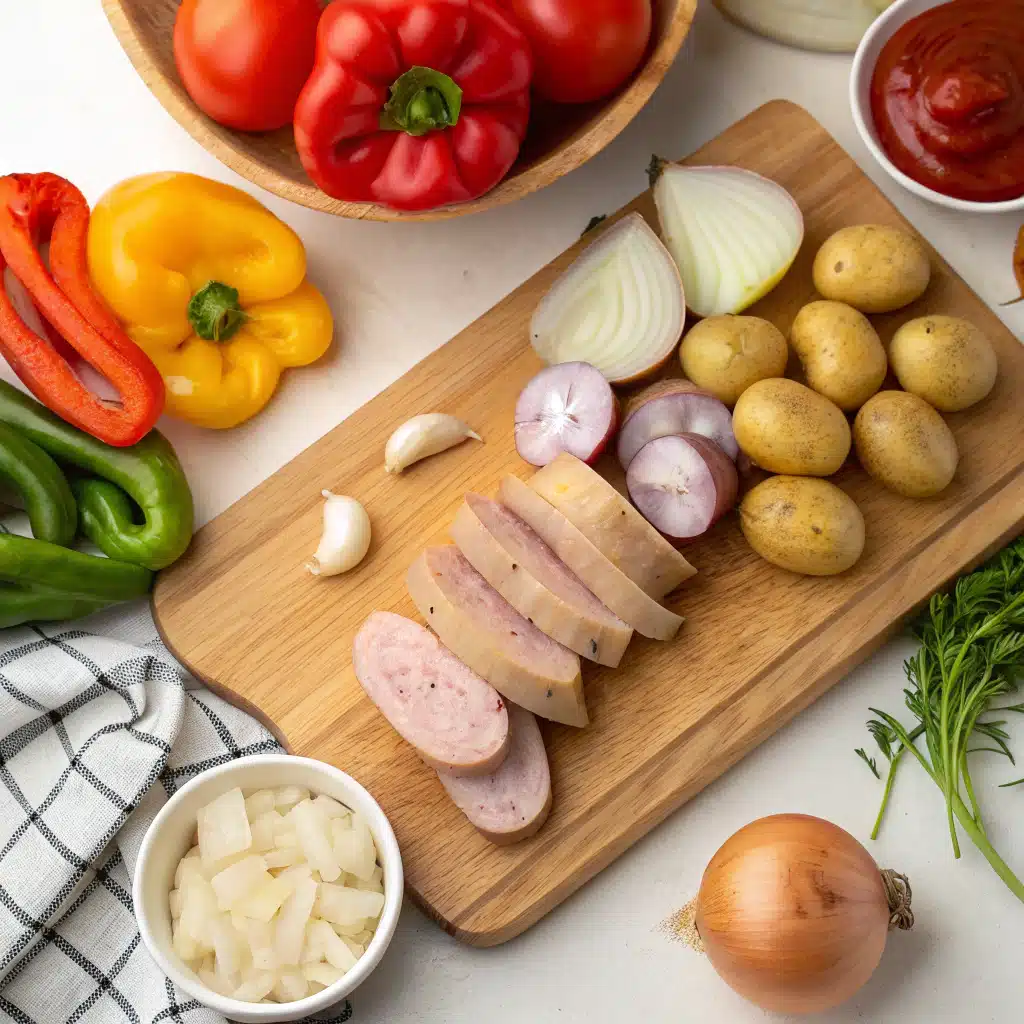
The vegetable combination in this recipe creates a perfect balance of flavors and textures. The onions and garlic form an aromatic base, while bell peppers add sweetness and vibrant color. Furthermore, the mushrooms contribute an earthy depth and meaty texture that complements the chicken sausage beautifully. For the best results, try to slice all vegetables to a similar thickness so they cook evenly. Additionally, you can customize the vegetable selection based on what’s in season or your personal preferences.
Step-by-Step Chicken Sausage Skillet Preparation
Browning the Sausages
- Heat a large skillet over medium-high heat and add 1 teaspoon of olive oil.
- Place the chicken sausages in the skillet and brown them on all sides for about 5-7 minutes. They don’t need to be fully cooked at this stage, just nicely browned.
- Once browned, transfer the sausages to a plate and set aside temporarily.
- Don’t clean the skillet—those browned bits on the bottom will add tremendous flavor to your vegetables.
The browning process creates a caramelized exterior on the sausages, which adds depth of flavor to the entire dish. For even better results, allow your skillet to heat fully before adding the oil and sausages. Additionally, avoid overcrowding the pan as this will cause the sausages to steam rather than brown properly. “Discover great ideas like our Turkey Sausage Mushroom Soup for more delicious ways to use sausage in your cooking.”
Sautéing Vegetables and Building Flavor
- In the same skillet, add the remaining olive oil and butter.
- Once the butter has melted, add the sliced onion, bell pepper, garlic, and mushrooms.
- Sauté the vegetables for about 8 minutes, stirring occasionally, until they’re softened and starting to caramelize.
- Add the tomato paste, Dijon mustard, smoked paprika, salt, and pepper to the skillet. Stir to coat the vegetables evenly with the seasonings.
- Pour in ½ cup of chicken broth and simmer for 2-3 minutes, allowing the flavors to meld while the liquid reduces slightly.
This step is crucial for developing the rich flavor profile that makes this dish special. The combination of tomato paste and Dijon mustard creates a tangy base, while the smoked paprika adds a subtle smokiness that complements the chicken sausage perfectly. Moreover, deglazing the pan with broth helps incorporate all the flavorful browned bits from the bottom of the skillet into your sauce. For added depth, you could also include a splash of white wine during the deglazing process.
Finishing the Dish
- Return the browned sausages to the skillet and add the remaining cup of chicken broth.
- Reduce the heat to medium-low, cover, and simmer for about 15 minutes, allowing the sausages to cook through completely and the flavors to meld.
- Remove the skillet from heat and stir in the sour cream for a creamy finish.
- Garnish with freshly chopped herbs of your choice—parsley, dill, or tarragon all work beautifully.
- Serve warm with your preferred side dish.
The final simmering step ensures that the sausages are perfectly cooked and juicy while allowing all the flavors to blend harmoniously. Additionally, adding the sour cream off the heat prevents it from separating or curdling. The fresh herbs added at the end provide a burst of color and fresh flavor that brightens the entire dish. For a richer version, you could increase the amount of sour cream or substitute heavy cream.
Tips for Chicken Sausage Skillet Success
Selecting the Right Skillet
The choice of skillet can significantly impact your chicken sausage dish. Cast iron skillets are ideal because they retain heat well and create excellent browning. However, any large, heavy-bottomed skillet will work effectively. Furthermore, ensure your skillet is at least 12 inches in diameter to accommodate all ingredients without overcrowding. Additionally, a skillet with a tight-fitting lid is essential for the simmering phase. If you don’t have a proper lid, aluminum foil can work in a pinch, though it’s not ideal for longer cooking times.
Preventing Dry Chicken Sausage
One common challenge when cooking chicken sausage is preventing it from becoming dry. To keep your sausages juicy and flavorful, avoid overcooking them in the initial browning stage. Additionally, the braising process in the broth helps maintain moisture. For extra insurance against dryness, you can prick the sausages with a fork before browning to prevent them from splitting. Moreover, using pre-cooked chicken sausages requires less cooking time than raw varieties, so adjust accordingly.
“Check out our Creamy Skillet Chicken Mushrooms Cheese for another delicious way to keep chicken moist and flavorful.”
Enhancing Flavor Profiles
While this recipe is delicious as written, there are several ways to customize the flavor profile. For a spicier version, add red pepper flakes or a diced jalapeño. If you prefer a sweeter profile, consider using apple or maple-flavored chicken sausage and adding a teaspoon of honey to the sauce. Additionally, herbs like thyme or rosemary can be added during cooking for an aromatic boost. Furthermore, a splash of balsamic vinegar or a squeeze of lemon juice at the end will brighten all the flavors. Experiment with different combinations to find your perfect flavor balance.
Storage and Meal Prep with Chicken Sausage Skillet
Refrigerating and Freezing Guidelines
This chicken sausage skillet is excellent for meal prep because it actually tastes even better the next day as the flavors continue to meld. To store leftovers, allow the dish to cool completely before transferring to airtight containers. Refrigerated leftovers will stay fresh for up to 4 days. For longer storage, this dish freezes beautifully for up to 3 months. However, if you plan to freeze, consider adding the sour cream only to the portion you’ll eat immediately, as dairy can sometimes separate when frozen and reheated. Additionally, freeze individual portions for convenient grab-and-go meals that can be reheated directly from frozen.
Reheating for Best Results
Proper reheating ensures your chicken sausage skillet maintains its flavor and texture. For refrigerated leftovers, reheat gently in a covered skillet over medium-low heat, adding a splash of chicken broth if the mixture seems dry. Alternatively, microwave on medium power in 30-second intervals, stirring between each, until heated through. For frozen portions, thaw overnight in the refrigerator before reheating, or use the defrost function on your microwave followed by gentle reheating. Additionally, adding a fresh garnish of herbs after reheating will revive the dish’s bright flavors.
“Here’s your guide to Slow Cooker Chicken with Cream of Mushroom for another make-ahead meal option.”
Incorporating Leftovers Creatively
Leftover chicken sausage skillet can be repurposed into entirely new meals. Try tossing it with pasta for a quick pasta dish, or add it to beaten eggs for a hearty breakfast scramble. Moreover, you can use it as a filling for omelets or quesadillas. For a lighter option, serve cold leftovers over mixed greens with additional dressing for a satisfying lunch salad. Additionally, the mixture can be used as a topping for baked potatoes or stirred into cooked rice for a quick rice bowl. These versatile leftovers help you create multiple meals from one cooking session, making this recipe especially practical for busy weeks.
Variations on the Classic Chicken Sausage Skillet
Dairy-Free Adaptations
Making this chicken sausage skillet dairy-free is simple and doesn’t sacrifice flavor. Replace the butter with additional olive oil or a plant-based butter alternative. Instead of sour cream, use coconut cream, dairy-free yogurt, or cashew cream for that creamy finish. Furthermore, these substitutions often add unique flavor notes that complement the dish beautifully. Additionally, you can enhance the sauce with a splash of coconut milk throughout the cooking process for extra richness. The result is a dairy-free version that’s just as satisfying as the original.
Seasonal Vegetable Variations
One of the best features of this chicken sausage skillet is its adaptability to seasonal produce. In spring, add asparagus, peas, or baby spinach during the final minutes of cooking. Summer versions shine with zucchini, yellow squash, or cherry tomatoes. Fall variations can incorporate butternut squash, Brussels sprouts, or kale. Winter adaptations work beautifully with root vegetables like parsnips or turnips, though these may need additional cooking time. Additionally, using seasonal vegetables ensures you’re getting the freshest, most flavorful ingredients while keeping your meal rotation interesting throughout the year.
“Don’t miss our Mushroom Ratatouille for more seasonal vegetable inspiration.”
Global Flavor Inspirations
Transform your chicken sausage skillet by drawing inspiration from global cuisines. For a Mediterranean twist, add olives, capers, and finish with feta cheese instead of sour cream. Create a Mexican-inspired version by using chorizo-style chicken sausage and adding black beans and corn, topped with avocado and cilantro. For Asian flair, incorporate ginger, soy sauce, and a touch of honey, finishing with green onions and sesame seeds. A Cajun variation might include bell peppers, celery, and spicy Andouille-style chicken sausage with Cajun seasoning. Moreover, these variations allow you to travel the world through flavors while maintaining the convenient one-pan cooking method.
Serving Your Chicken Sausage Skillet
Perfect Side Dish Pairings
While this chicken sausage skillet is hearty enough to stand alone, pairing it with complementary sides elevates the meal. Creamy polenta or mashed potatoes make excellent bases for soaking up the flavorful sauce. For a lighter option, serve with a simple green salad dressed with vinaigrette. Crusty bread or garlic bread is perfect for dipping into the sauce. Additionally, roasted vegetables like Brussels sprouts or broccoli add extra nutrition and texture. For a low-carb alternative, consider cauliflower rice or zucchini noodles. Furthermore, the type of side you choose can transform this versatile dish from casual weeknight dinner to impressive entertainment fare.
Family-Friendly Serving Ideas
This chicken sausage skillet easily adapts to please the whole family, including picky eaters. For children who might be hesitant about mixed dishes, you can serve the components separately—sausages on one side and vegetables on another. Additionally, presenting the meal in fun ways, like creating a “build your own” bowl station with the skillet components and various toppings, can increase appeal. Moreover, allowing family members to customize their portions with different garnishes like cheese, fresh herbs, or hot sauce helps ensure everyone enjoys their meal. Serving in colorful bowls or on special plates can also make the meal more exciting for younger diners.
Entertaining with Chicken Sausage Skillet
Don’t underestimate this humble skillet meal for entertaining—it’s ideal for casual dinner parties. The make-ahead potential allows you to spend time with guests instead of cooking. For a stunning presentation, transfer the completed skillet to a beautiful serving dish, garnish generously with fresh herbs, and serve family-style at the table. Additionally, you can create a complementary appetizer and dessert menu while keeping the main dish simple yet impressive. Furthermore, this dish pairs wonderfully with both red and white wines, making it versatile for beverage pairings.
“Want more ideas? Check out Greek Chicken Orzo for another crowd-pleasing dish.”
FAQs About Chicken Sausage Skillet
What type of chicken sausage works best for a skillet meal?
Pre-cooked chicken sausages with natural casings work best for skillet meals because they brown beautifully and hold their shape. Italian-style, garlic herb, or apple-flavored varieties all work well, depending on your flavor preferences. For the best results, choose high-quality sausages with minimal fillers and additives. Additionally, both fully cooked and raw chicken sausages can work, though cooking times will vary—raw sausages will need to be fully cooked through to 165°F internal temperature.
Can chicken sausage skillet be made in one pan?
Yes! That’s one of the biggest advantages of this dish. Everything from browning the sausages to creating the sauce happens in the same skillet, minimizing cleanup. A large 12-inch skillet with high sides works best to accommodate all ingredients comfortably. Additionally, a skillet with a lid is ideal for the simmering phase, though foil can be used as a temporary cover if needed.
What vegetables pair well with chicken sausage?
Bell peppers, onions, mushrooms, and garlic form the classic base, but this dish is incredibly versatile. Other excellent additions include zucchini, spinach, kale, cherry tomatoes, broccoli, asparagus, or green beans. Root vegetables like carrots or parsnips work well too but may require additional cooking time. Additionally, consider seasonal availability when choosing vegetables to ensure the freshest, most flavorful results.
Is chicken sausage skillet good for meal prep?
Absolutely! This dish actually improves in flavor after a day in the refrigerator as the ingredients meld together. It keeps well for up to 4 days refrigerated and can be frozen for up to 3 months. For best results when meal prepping, slightly undercook the vegetables so they don’t become mushy when reheated. Additionally, portion into individual containers for grab-and-go convenience throughout the week.
Can chicken sausage skillet be made dairy-free?
Yes, this recipe is easy to adapt for dairy-free diets. Simply replace the butter with olive oil or plant-based butter alternatives and substitute the sour cream with coconut cream, dairy-free yogurt, or cashew cream. These substitutions maintain the creamy texture and rich flavor while accommodating dietary restrictions. Additionally, many commercial chicken sausages are naturally dairy-free, but always check labels to be certain.
How do you keep chicken sausage from drying out?
To prevent chicken sausage from drying out, avoid overcooking during the initial browning stage—you just want color, not complete cooking. The braising in broth helps maintain moisture, as does cooking with a lid to trap steam. For extra insurance, you can prick sausages with a fork before cooking to prevent splitting. Additionally, adding the sausage back to the skillet with plenty of sauce helps keep everything juicy and flavorful.
Conclusion
Why Chicken Sausage Skillet Deserves a Place in Your Recipe Rotation
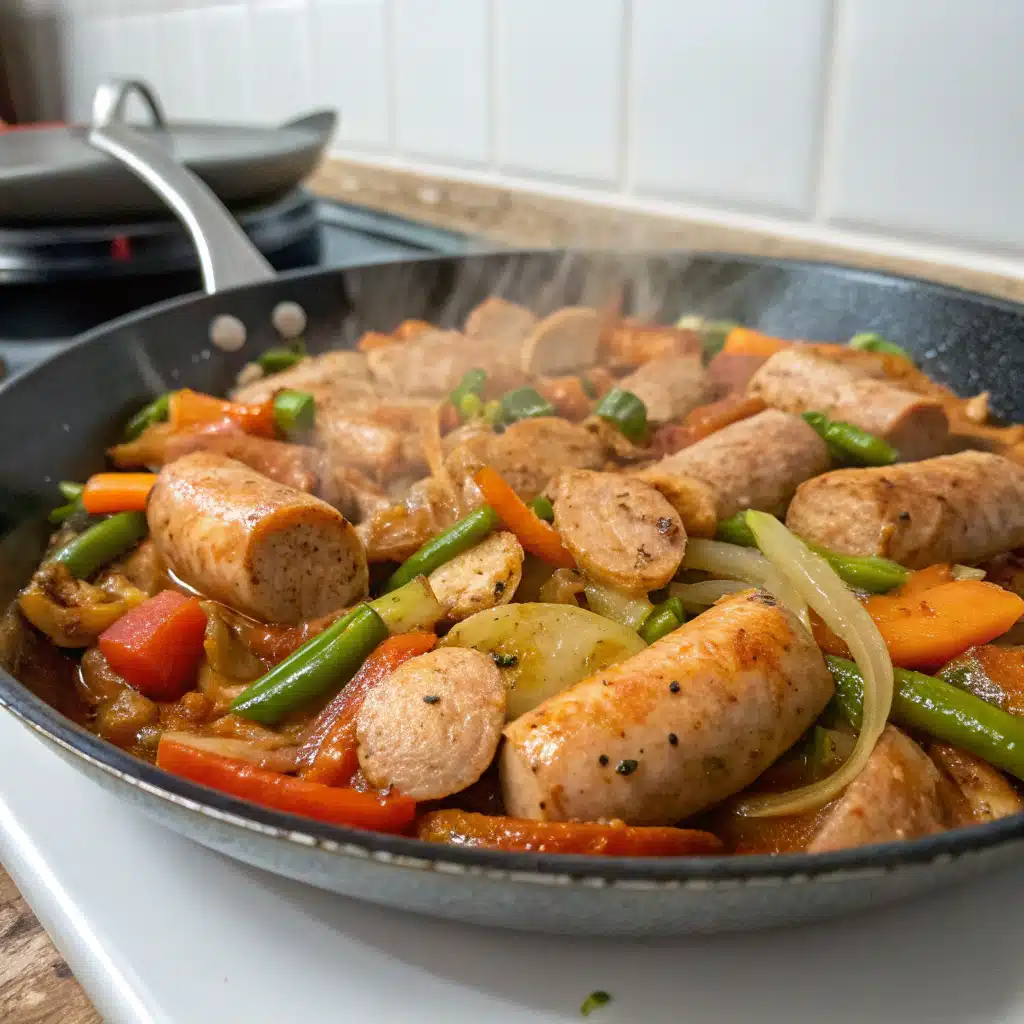
Chicken sausage skillet has earned its place as a weeknight dinner star because it delivers on all fronts—convenience, nutrition, and most importantly, flavor. The one-pan cooking method means minimal cleanup, while the combination of lean protein and vegetables creates a nutritionally balanced meal. Additionally, the versatility of this dish allows for endless variations to keep your meal planning exciting and fresh. Furthermore, its make-ahead capability makes it perfect for busy households where time is precious but good food remains a priority. This adaptable recipe truly embodies modern home cooking: simple ingredients transformed into a satisfying meal with minimal fuss.
Mastering the Art of Skillet Cooking
As you become more comfortable with this chicken sausage skillet recipe, you’ll discover it’s not just about following instructions but about understanding the techniques that make one-pan cooking so effective. Learning to layer flavors—starting with properly browning meat, building an aromatic base with vegetables, deglazing to incorporate browned bits, and finishing with the right balance of seasonings—creates depth that belies the simplicity of the cooking method. Moreover, these fundamental skills transfer to countless other dishes. “Learn more about Sausage with Mushroom Gravy to further expand your skillet cooking repertoire.” By mastering this recipe, you’re not just adding one dish to your collection but developing cooking intuition that will serve you well in the kitchen for years to come.
PrintChicken Sausage Skillet

A flavorful one-pan meal featuring juicy chicken sausage, sautéed vegetables, and a creamy savory sauce that comes together in under 30 minutes.
- Prep Time: 10
- Cook Time: 30
- Total Time: 40 minutes
- Yield: 4 1x
- Category: Main Dish
- Cuisine: American
Ingredients
- 2 teaspoons olive oil
- 4–6 chicken sausages
- 2 tablespoons butter
- 1 medium onion, sliced
- 1 bell pepper, sliced
- 3 garlic cloves, sliced
- 1½ cups sliced mushrooms
- 1 teaspoon tomato paste
- 1 teaspoon Dijon mustard
- ½ tablespoon smoked paprika
- Salt and pepper
- 1½ cups low-sodium chicken broth, divided
- 2 tablespoons sour cream
- Chopped parsley, dill, or tarragon
Instructions
- Heat 1 teaspoon olive oil in a large skillet and brown sausages on all sides. Remove and set aside.
- Add remaining oil and butter to the skillet. Cook onion, pepper, garlic, and mushrooms for 8 minutes until softened.
- Stir in tomato paste, mustard, paprika, salt, and pepper, coating vegetables evenly.
- Pour in ½ cup broth and simmer 2-3 minutes to reduce slightly.
- Return sausages to the skillet and add remaining broth. Cover and simmer 15 minutes.
- Remove from heat and stir in sour cream. Garnish with fresh herbs.
- Serve with potatoes, rice, or crusty bread.
Notes
Nutrition facts are estimates and may vary based on ingredients used, portion sizes, and preparation methods.
Nutrition
- Serving Size: 4
- Calories: 380 Kcal
- Sugar: 3g
- Sodium: 620mg
- Fat: 28g
- Saturated Fat: 12g
- Carbohydrates: 12g
- Fiber: 2g
- Protein: 22g
- Cholesterol: 85mg
Keywords: chicken sausage skillet, one-pan dinner, easy weeknight meal, chicken sausage recipe, skillet dinner
Let’s connect! Follow me for more Joylicious Recipes: Facebook, Instagram, Pinterest