Delicious Coconut Curry Noodle Soup: A Thai-Inspired Comfort Bowl
The Perfect Balance of Flavors
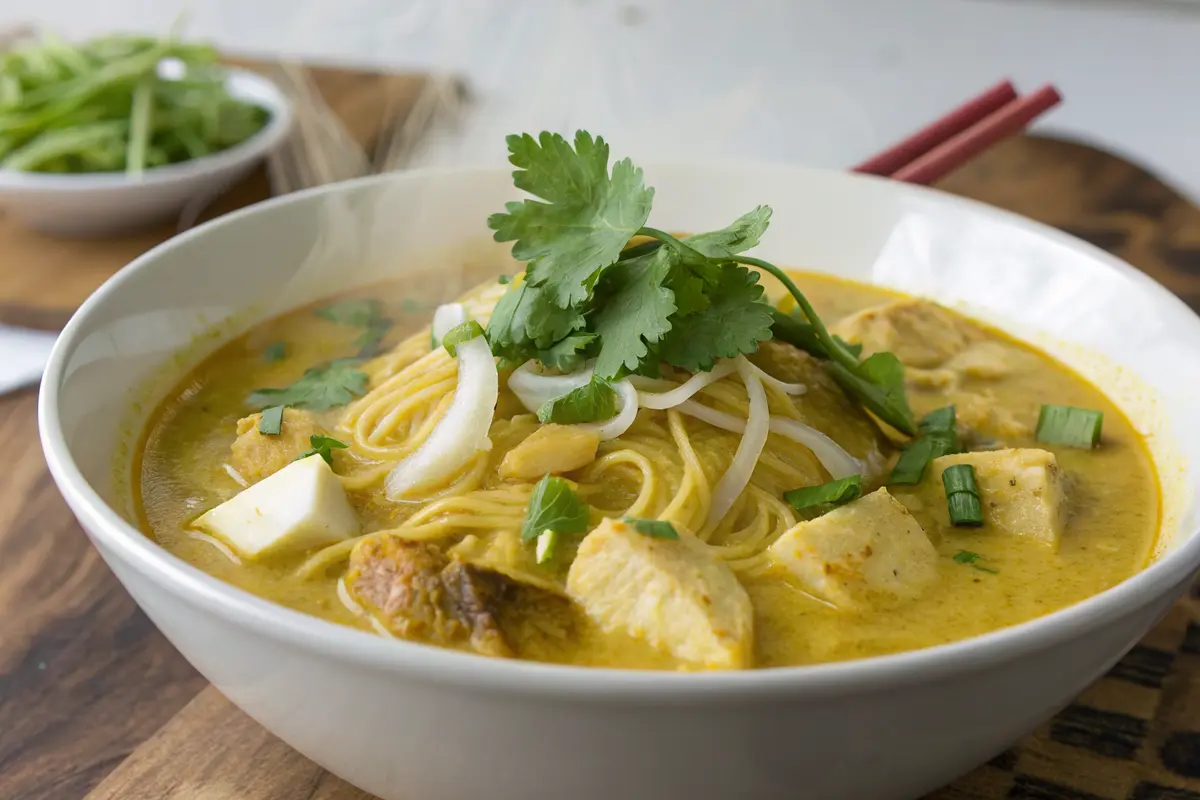
Coconut curry noodle soup combines the richness of coconut milk with the aromatic depth of curry paste, creating a soul-warming bowl that’s both satisfying and refreshing. This vibrant soup delivers a harmonious balance of creamy, spicy, tangy, and savory notes that dance on your palate with each spoonful. “The Mushroom Chicken Curry features similar fragrant spices that create depth and complexity in curry dishes.”
This versatile bowl of comfort works beautifully as a standalone meal or as part of a larger Asian-inspired feast. Perfect for chilly evenings when you crave something warming, yet equally delightful during warmer months when its bright flavors shine. Whether you’re cooking for a family dinner, meal prepping for the week ahead, or impressing guests with your culinary skills, this coconut curry noodle soup delivers both impressive flavor and visual appeal.
Essential Ingredients for a Perfect Thai-Inspired Soup
The Foundation of Flavor
Creating an authentic coconut curry soup requires quality ingredients that work together to build layers of flavor. Here’s everything you’ll need to create this satisfying bowl:
| Main Ingredients | Quantity |
|---|---|
| Coconut milk (full-fat recommended) | 2 cups |
| Red curry paste | 2 tablespoons |
| Rice noodles | 200g |
| Fresh ginger, grated | 1 tablespoon |
| Garlic, minced | 2 cloves |
| Lime juice, freshly squeezed | 1 tablespoon |
| Carrot, thinly sliced | 1 medium |
| Red bell pepper, sliced | 1 medium |
| Vegetable broth | 2 cups |
| Soy sauce | 2 tablespoons |
| Fresh cilantro, chopped | For garnish |
Optional Enhancements
Take your spicy coconut noodles to the next level with these flavor-boosting additions:
| Flavor Enhancers | Quantity |
|---|---|
| Lemongrass, bruised and cut into 2-inch pieces | 1 stalk |
| Makrut lime leaves | 2 leaves |
| Fish sauce | 1 tablespoon |
| Brown sugar | 1 teaspoon |
| Thai basil leaves | ¼ cup |
| Green onions, sliced | 2 stalks |
| Bean sprouts | 1 cup |
| Thai bird’s eye chilies, thinly sliced | 1-2 (adjust to taste) |
| Bok choy, roughly chopped | 2 cups |
| Firm tofu, cubed | 8 ounces |
| Shiitake mushrooms, sliced | 1 cup |
| Lime wedges | For serving |
“The Turmeric Fish Vermicelli Bowl uses similar fresh herbs and vegetables to create layers of bright, complementary flavors.”
Master the Art of Creating Perfect Thai Noodle Soup
Building Layers of Flavor
Follow these detailed steps to create a coconut curry noodle soup that balances complex flavors and textures:
- Heat a large pot over medium heat. Add 1 tablespoon of vegetable or coconut oil. When the oil is shimmering (but not smoking), add the curry paste, grated ginger, and minced garlic. Sauté for 1 minute, stirring constantly to prevent burning. You’ll know it’s ready when the mixture becomes intensely fragrant and slightly darkens in color.
- Slowly pour in the coconut milk while stirring continuously to prevent the curry paste from clumping. Then add the vegetable broth and stir to combine. If using, add the lemongrass stalk, makrut lime leaves, and fish sauce at this point. Bring the mixture to a gentle simmer (small bubbles around the edges, not a rolling boil).
- Add the sliced carrots and bell peppers to the simmering broth. If using firmer vegetables like broccoli stems or cauliflower, add those now as well. Cook until the vegetables are tender but still have a slight bite, about 5-6 minutes. For a softer texture, cook for 7-8 minutes.
- Stir in the soy sauce and lime juice. Taste and adjust with brown sugar if you’d like to balance the acidity. Add the rice noodles directly to the pot, making sure they’re fully submerged. If using pre-soaked noodles, they’ll need 2-3 minutes; dry noodles will require 4-6 minutes or according to package instructions.
- During the last minute of cooking, add any quick-cooking vegetables like baby spinach, bean sprouts, or herbs. If using tofu, add it now so it warms through without breaking apart. Test a noodle to ensure it’s cooked to your preferred tenderness.
- Remove the lemongrass and lime leaves if used. Taste the broth and adjust seasonings as needed – add more soy sauce for saltiness, lime juice for acidity, or a pinch of sugar for balance. The perfect broth should have a harmonious balance of creamy, spicy, tangy, and savory notes.
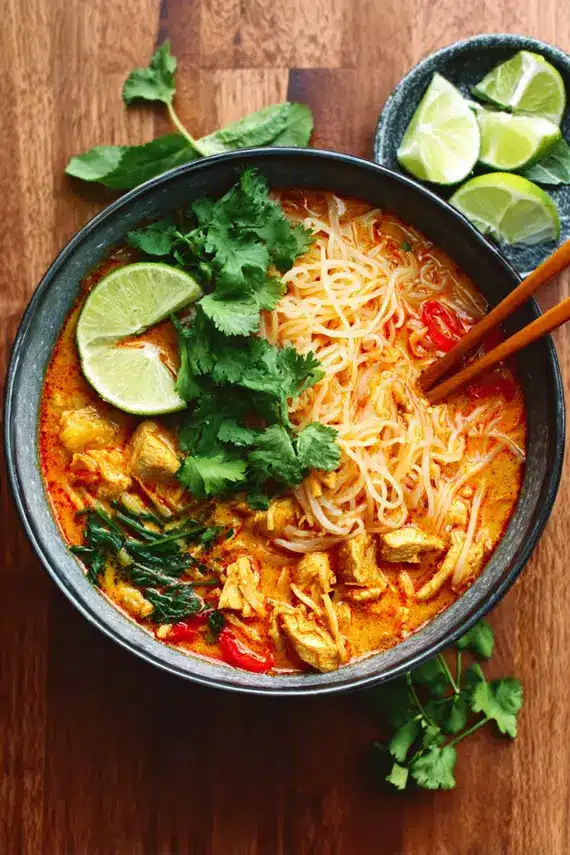
- Ladle the hot soup into deep bowls, ensuring each serving has a good distribution of noodles, vegetables, and broth. Garnish generously with fresh cilantro, Thai basil, sliced green onions, and additional lime wedges on the side.
Elevate Your Coconut Curry Soup with Pro Techniques
Expert Cooking Strategies
Take your spicy coconut noodles from good to extraordinary with these professional tips:
- Toast your curry paste – Before adding liquid ingredients, cook the curry paste in oil for 1-2 minutes until fragrant. This “blooms” the spices and significantly deepens the flavor profile of your soup.
- Use full-fat coconut milk – Light coconut milk will create a thinner broth without the same rich mouthfeel. For the most authentic thai noodle soup experience, choose full-fat coconut milk (or use half full-fat and half light as a compromise).
- Prepare vegetables strategically – Cut vegetables to similar sizes for even cooking, but consider how each absorbs flavor. Carrots can be cut slightly smaller than bell peppers since they take longer to soften.
- Consider cook timing – Add vegetables in stages based on cooking time—firm vegetables first (carrots, broccoli), followed by quicker-cooking ones (bell peppers, snap peas), and delicate items last (bean sprouts, herbs).
- Soften noodles separately – For meal prep or when serving a crowd, consider soaking or cooking the rice noodles separately, then adding them to individual bowls before pouring the hot broth over them. This prevents the noodles from absorbing too much liquid and becoming mushy.
- Taste as you go – The key to balanced flavor is tasting throughout cooking. The perfect coconut curry soup should have a harmonious blend of salty, spicy, sour, and sweet elements, with no single flavor overpowering the others.
- Add fresh herbs at the very end – Stir in Thai basil, cilantro, and mint just before serving for the brightest flavor and vibrant color.
“The Creamy Chicken Rice Soup uses similar techniques for developing depth of flavor in a broth-based dish.”
Storing Your Thai-Inspired Soup for Maximum Freshness
Preserving Flavors and Textures
Proper storage of your coconut curry noodle soup ensures you can enjoy its vibrant flavors even days after preparation. Here’s how to maintain quality while extending shelf life:
For refrigeration, cool the soup completely before transferring it to airtight containers. The soup base (broth with vegetables) will keep well for 3-4 days in the refrigerator. For optimal texture, consider storing the noodles separately from the broth—they tend to absorb liquid and can become overly soft. Simply place the cooked noodles in a separate container with a small amount of oil to prevent sticking.
When reheating, warm the broth mixture in a saucepan over medium heat until it reaches a gentle simmer. If the noodles were stored separately, add them during the last minute of heating, just long enough to warm through without overcooking. If stored together, you may want to add a splash of vegetable broth or water to replenish liquid absorbed by the noodles.
For longer storage, this easy noodle soup freezes remarkably well—with one important caveat: freeze only the soup base without the noodles. Cooked rice noodles don’t maintain their texture well when frozen and thawed. Freeze the soup base in portion-sized containers, leaving about an inch of headspace for expansion. When ready to enjoy, thaw overnight in the refrigerator, then reheat and add freshly cooked rice noodles.
“The Plant-Based Vegan Burrito Bowls also benefit from similar component storage techniques that keep ingredients fresh and textures intact.”
Creative Twists on Traditional Coconut Curry Soup
Personalize Your Noodle Bowl
Customize your coconut curry noodle soup with these delicious variations that maintain the soul of the dish while introducing exciting new elements:
Protein-Packed Version
Transform your soup into a hearty meal by adding protein. Sear 8 ounces of thinly sliced chicken breast or thigh before adding the curry paste, or add 12 large shrimp during the last 3-4 minutes of cooking. For plant-based options, pan-fry 8 ounces of cubed extra-firm tofu until golden and add it to the soup just before serving. The protein absorbs the aromatic broth while adding satisfying substance.
Veggie-Forward Variation
Double down on vegetables for a nutrient-dense bowl. Add 1 cup sliced mushrooms (shiitake or cremini) when sautéing the aromatics, and incorporate 2 cups of baby spinach, 1 cup snow peas, and 1 cup broccoli florets during the last few minutes of cooking. This creates a garden-in-a-bowl effect with varied textures and colors, making each spoonful a new discovery.
Northern Thai Inspiration
Create a khao soi-inspired version by using egg noodles instead of rice noodles and adding 1 teaspoon of curry powder along with the red curry paste. Finish with crispy fried noodles on top (fry a small portion of the cooked noodles in hot oil until golden) and serve with pickled mustard greens and sliced shallots for authentic northern Thai flavors.
Quick Weeknight Shortcut
For busy evenings, streamline the process by using 1 tablespoon of pre-made Thai curry simmer sauce in place of separate curry paste and aromatics. Use frozen stir-fry vegetables (2 cups) to eliminate chopping time, and opt for quick-cooking thin rice noodles. This version comes together in under 15 minutes without sacrificing the essential character of the dish.
Green Curry Alternative
Create a completely different flavor profile by substituting green curry paste for red. Add 1/2 cup of fresh or frozen peas and use zucchini instead of bell pepper. Finish with a handful of fresh mint leaves for a brighter, more herbaceous version of the soup that highlights the distinct lemongrass and coriander notes in green curry paste.
Coconut-Free Option
For those avoiding coconut, create a lighter but still flavorful broth using 4 cups of vegetable stock, 2 tablespoons of tahini paste for creaminess, and a tablespoon of red curry paste. The resulting soup has a nutty undertone that complements the curry spices beautifully while maintaining the comforting quality that makes the original so appealing.
Exciting Ways to Serve Your Spicy Coconut Noodle Bowl
Presentation and Pairing Ideas
Elevate your coconut curry noodle soup experience with these creative serving suggestions that turn a simple meal into a memorable dining occasion:
Create an interactive soup bar for casual entertaining by serving the hot broth separately from prepped ingredients. Set out individual bowls with portioned rice noodles, then allow guests to add their preferred toppings from an array of options: bean sprouts, Thai basil, cilantro, lime wedges, sliced chilies, and crispy fried shallots. Pour the steaming coconut curry broth at the table for a dramatic finishing touch that releases aromatic steam and creates an engaging dining experience.
For a balanced family meal, serve smaller portions of the soup as a starter before a main course of Thai cucumber salad with peanuts and a simple protein dish. The bright, tangy flavors of the cucumber salad provide perfect contrast to the rich, creamy soup.
Transform leftover soup into next-day lunches by packing components separately in a bento-style container. Keep the broth hot in a thermos, with noodles and precooked vegetables in separate compartments. This prevents sogginess and allows for fresh assembly at lunchtime, maintaining ideal textures for an office or school meal.
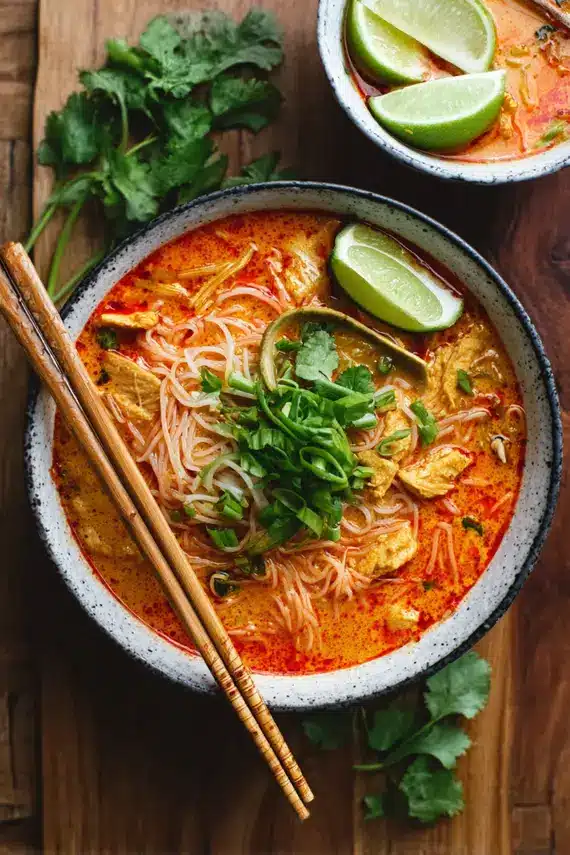
For a dinner party presentation, serve individual portions in wide, shallow bowls that showcase the vibrant ingredients. Arrange the noodles in the center, surrounded by artfully placed vegetables and protein, then pour the coral-hued broth tableside. Garnish with a sprig of Thai basil, a lime wedge, and a light sprinkle of black sesame seeds for an elegant visual appeal that promises the complex flavors within.
Consider a deconstructed approach for young diners by serving mild broth with noodles separately from the vegetables and optional spicy condiments. This allows children to customize their bowls to their comfort level while introducing them to new flavors in an approachable way.
For meal prep efficiency, prepare double batches of the soup base (without noodles) and freeze in portion sizes. When needed, simply thaw, reheat, and add freshly cooked noodles for a quick but satisfying homemade meal that’s ready in minutes rather than hours.
Common Questions About Perfect Thai Soup
Troubleshooting and Expert Advice
Can I make coconut curry noodle soup ahead of time for a party?
Absolutely! The soup base (without noodles) can be made up to 3 days ahead and refrigerated in an airtight container. When ready to serve, gently reheat the broth, prepare fresh rice noodles, and combine just before serving. This approach maintains optimal texture while allowing you to enjoy your gathering instead of cooking throughout the event.
My soup isn’t as flavorful as I expected. How can I enhance it?
Depth of flavor in Thai-inspired soups comes from building layers. Try adding a tablespoon of fish sauce or soy sauce for umami, a squeeze of fresh lime juice for brightness, or a teaspoon of brown sugar to balance the heat. Bruised lemongrass and makrut lime leaves steeped in the broth (then removed before serving) can also dramatically enhance aromatics. Remember that curry paste varies in potency between brands, so you may need to adjust quantities.
Is there a way to make this soup less spicy without sacrificing flavor?
Certainly! Reduce the curry paste to 1 tablespoon and add 1 teaspoon of ground coriander and 1/2 teaspoon of ground turmeric to maintain complexity without heat. Increasing the coconut milk ratio to broth creates a creamier soup that moderates spiciness. Adding a touch more sugar (1-2 teaspoons) also helps balance heat while enhancing other flavors in the dish.
My noodles became mushy. How do I prevent this?
Rice noodles continue cooking from residual heat and will absorb liquid as they sit. For best results, slightly undercook the noodles if serving immediately (1-2 minutes less than package directions). For leftovers or meal prep, store noodles and soup separately, combining only when ready to eat. Alternatively, place a portion of dry noodles in each serving bowl and pour hot broth over them just before serving.
“The Creamy Chicken Spaghetti Casserole applies similar principles for preventing pasta from becoming overcooked and soggy.”
Final Thoughts on This Thai-Inspired Comfort Bowl
A Versatile Recipe for Your Collection
Coconut curry noodle soup represents the beautiful harmony that can be achieved when creamy, spicy, tangy, and savory elements come together in perfect balance. This adaptable recipe proves that vibrant, restaurant-quality Thai-inspired cuisine is entirely achievable in your home kitchen, requiring neither extensive culinary training nor hard-to-find ingredients.
What makes this soup truly special is its versatility. Whether you’re seeking a quick weeknight dinner, meal prepping for busy days ahead, or impressing dinner guests, this recipe adapts to your needs. The fundamental technique—building layers of flavor from aromatics, curry paste, coconut milk, and fresh elements—creates a foundation for endless personalization.
As you make this recipe your own, don’t hesitate to experiment with different vegetables, proteins, or even the style of curry paste. Each variation offers a new discovery while maintaining the soul-warming comfort that makes Thai noodle soup so beloved worldwide. “The Hibachi Chicken Recipe showcases similar Asian-inspired flavors that can complement this soup for a complete meal.”
I hope this coconut curry noodle soup brings as much joy to your table as it has to countless others. With each aromatic spoonful, you’ll experience a mini culinary vacation that nourishes both body and spirit. Happy cooking!
PrintCoconut Curry Noodle Soup

- A vibrant Thai-inspired soup combining creamy coconut milk with aromatic red curry paste and tender rice noodles.
- This soul-warming bowl delivers the perfect balance of spicy, tangy, and savory flavors in every spoonful.
- Ready in just 30 minutes for a quick weeknight dinner or impressive entertaining option.
- Prep Time: 15
- Cook Time: 15
- Total Time: 30 minutes
- Yield: 4 servings 1x
- Category: Dinner
- Method: Stovetop
- Cuisine: Thai-Inspired
Ingredients
- 2 cups coconut milk (full-fat recommended)
- 2 tablespoons red curry paste
- 200g rice noodles
- 1 tablespoon fresh ginger, grated
- 2 cloves garlic, minced
- 1 tablespoon lime juice, freshly squeezed
- 1 medium carrot, thinly sliced
- 1 medium red bell pepper, sliced
- 2 cups vegetable broth
- 2 tablespoons soy sauce
- Fresh cilantro, chopped, for garnish
- 1 tablespoon vegetable or coconut oil
- 1 stalk lemongrass, bruised and cut into pieces (optional)
- 2 makrut lime leaves (optional)
- 1 teaspoon brown sugar (optional)
- ¼ cup Thai basil leaves (optional)
- 2 green onions, sliced (optional)
- 1–2 Thai bird’s eye chilies, thinly sliced (optional)
- Lime wedges, for serving
Instructions
- Heat a large pot over medium heat. Add oil, then sauté curry paste, ginger, and garlic for 1 minute until fragrant.
- Slowly pour in coconut milk while stirring constantly, then add vegetable broth. Add lemongrass and lime leaves if using. Bring to a gentle simmer.
- Add sliced carrots and bell peppers. Cook until vegetables are tender but still have some bite, about 5-6 minutes.
- Stir in soy sauce, lime juice, and brown sugar if using. Add rice noodles to the pot, ensuring they’re fully submerged.
- Cook until noodles are tender according to package instructions, typically 2-3 minutes for pre-soaked or 4-6 minutes for dry noodles.
- During the last minute of cooking, add any quick-cooking vegetables or herbs like bean sprouts or spinach.
- Remove lemongrass and lime leaves if used. Taste and adjust seasonings as needed.
- Ladle into deep bowls, ensuring each serving has a good distribution of noodles, vegetables, and broth.
- Garnish generously with fresh cilantro, Thai basil, sliced green onions, and serve with lime wedges on the side.
Notes
- For meal prep, store the noodles separately from the broth to prevent them from becoming soggy.
- Adjust the spice level by increasing or decreasing the amount of curry paste or adding sliced chilies.
- This soup base freezes well without the noodles for up to 3 months.
- Nutrition facts are estimates and may vary based on ingredients used, portion sizes, and preparation methods.
Nutrition
- Serving Size: 1 bowl
- Calories: 385
- Sugar: 6
- Sodium: 890
- Fat: 24
- Saturated Fat: 18
- Unsaturated Fat: 5
- Carbohydrates: 38
- Fiber: 3
- Protein: 7
Keywords: coconut curry noodle soup, coconut curry soup, thai noodle soup, spicy coconut noodles, easy noodle soup
Let’s connect! Follow me for more Joylicious Recipes: Facebook, Instagram, Pinterest