
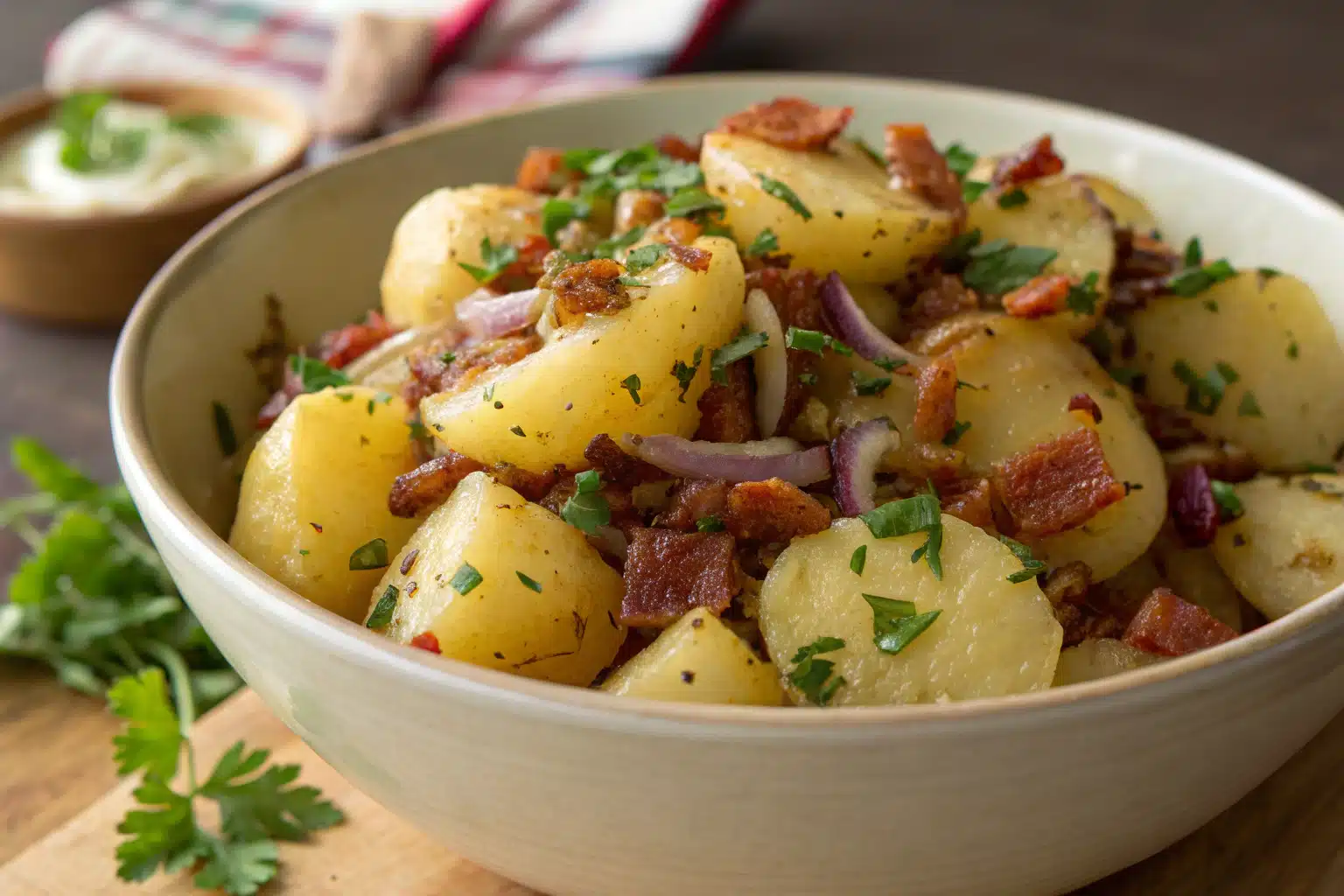
Authentic German Potato Salad: A Tangy, Bacon-Infused Classic
Origins and Cultural Significance
German potato salad represents a delicious departure from the creamy, mayo-based versions most Americans know. This traditional dish, particularly popular in Southern Germany, especially Bavaria, has become a beloved staple at gatherings across the United States. Unlike its American counterpart, German potato salad brings together the perfect balance of tangy, savory, and slightly sweet flavors that make it uniquely satisfying. The warm preparation method and distinctive vinegar-based dressing are hallmarks of authentic German potato salad that have been passed down through generations.
“Looking for inspiration? Try our potato salad recipe for a classic American version that’s just as delicious in its own way.”
What Makes German Potato Salad Special
The magic of German potato salad lies in its warm preparation and vibrant flavor profile. Traditional German potato salad features tender red potatoes tossed in a hot bacon-fat dressing seasoned with tangy apple cider vinegar, a touch of sugar, and mustard. Unlike mayo-based potato salads that are served cold, German potato salad is typically enjoyed warm or at room temperature, allowing the potatoes to absorb all the wonderful flavors of the dressing. The addition of crispy bacon pieces and fresh herbs elevates this dish, making it a hearty side that complements everything from grilled sausages to schnitzel. The contrast between the soft potatoes, crunchy bacon, and zesty dressing creates a harmonious dish that’s hard to resist.
Ingredients for Perfect German Potato Salad
The Foundation: Potatoes and Bacon
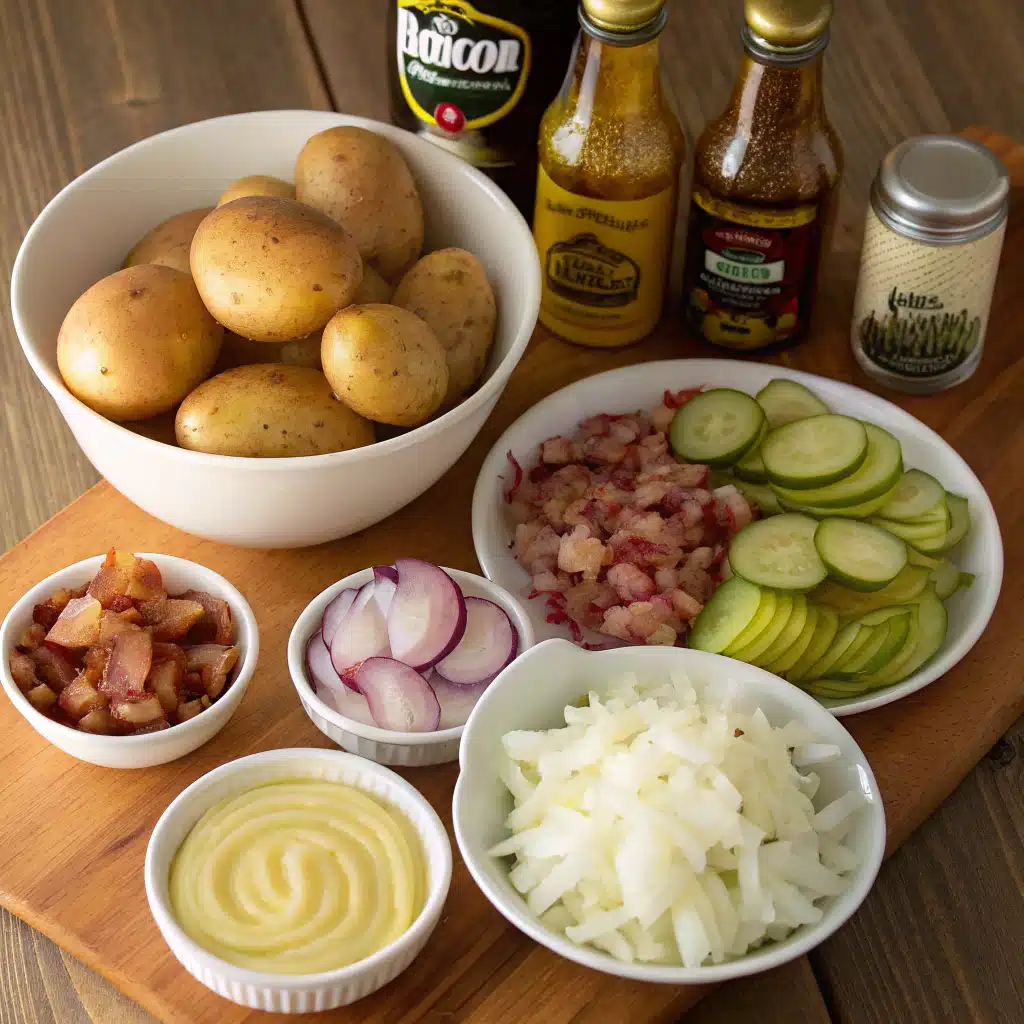
The heart of any German potato salad starts with choosing the right ingredients. For an authentic German potato salad, you’ll need:
| Essential Ingredients | Quantity | Notes |
|---|---|---|
| Red potatoes | 2 pounds | Waxy varieties hold shape better |
| Bacon | 12 ounces | Thick-cut is preferable |
| Salt for boiling | 1 teaspoon | Enhances potato flavor |
| Fresh garlic | 1 tablespoon (3 cloves) | Minced |
| Fresh parsley | ½ cup | Chopped |
Red potatoes are the preferred choice because their waxy texture holds up well during cooking and tossing. They don’t fall apart like starchy potatoes might, and they absorb the dressing beautifully. The bacon provides both crispy texture and renders fat that becomes the flavorful base for the dressing. Quality matters here – thick-cut bacon offers more substantial bites and renders more fat for a richer dressing.
The Distinctive Dressing Components
What truly sets German potato salad apart is its tangy, bacon-infused dressing:
| Dressing Ingredients | Quantity | Purpose |
|---|---|---|
| Apple cider vinegar | ⅓ cup | Provides tanginess |
| Granulated sugar | 1-3 tablespoons | Balances acidity |
| Dijon mustard | 1 tablespoon | Adds depth and spice |
| Salt for seasoning | ½ teaspoon | Enhances flavors |
| Black pepper | To taste | Adds subtle heat |
The apple cider vinegar provides that signature tanginess that German potato salad is known for. The sugar amount can be adjusted according to preference – traditionally, Southern German versions tend to be sweeter than Northern ones. Dijon mustard adds complexity and a subtle spiciness that brings everything together. The precise balance of these ingredients creates that distinctive German potato salad flavor that’s simultaneously tangy, savory, and slightly sweet.
Step-by-Step German Potato Salad Preparation
Preparing the Potatoes
The foundation of a perfect German potato salad begins with properly cooked potatoes. Here’s how to get them just right:
- Scrub 2 pounds of red potatoes thoroughly under cold water to remove any dirt.
- Cut any larger potatoes in half so all pieces are roughly equal in size for even cooking.
- Put the potatoes in a large pot and add enough cold water to fully submerge them.
- Bring the water to a boil over high heat, then add 1 teaspoon of salt.
- Lower the heat to medium and cook for about 15–20 minutes, or until the potatoes are soft and easily pierced with a fork.
- Drain the water and return the potatoes to the hot (but turned off) pot with the lid removed.
- Allow the potatoes to steam dry for 2-3 minutes, which helps them better absorb the dressing.
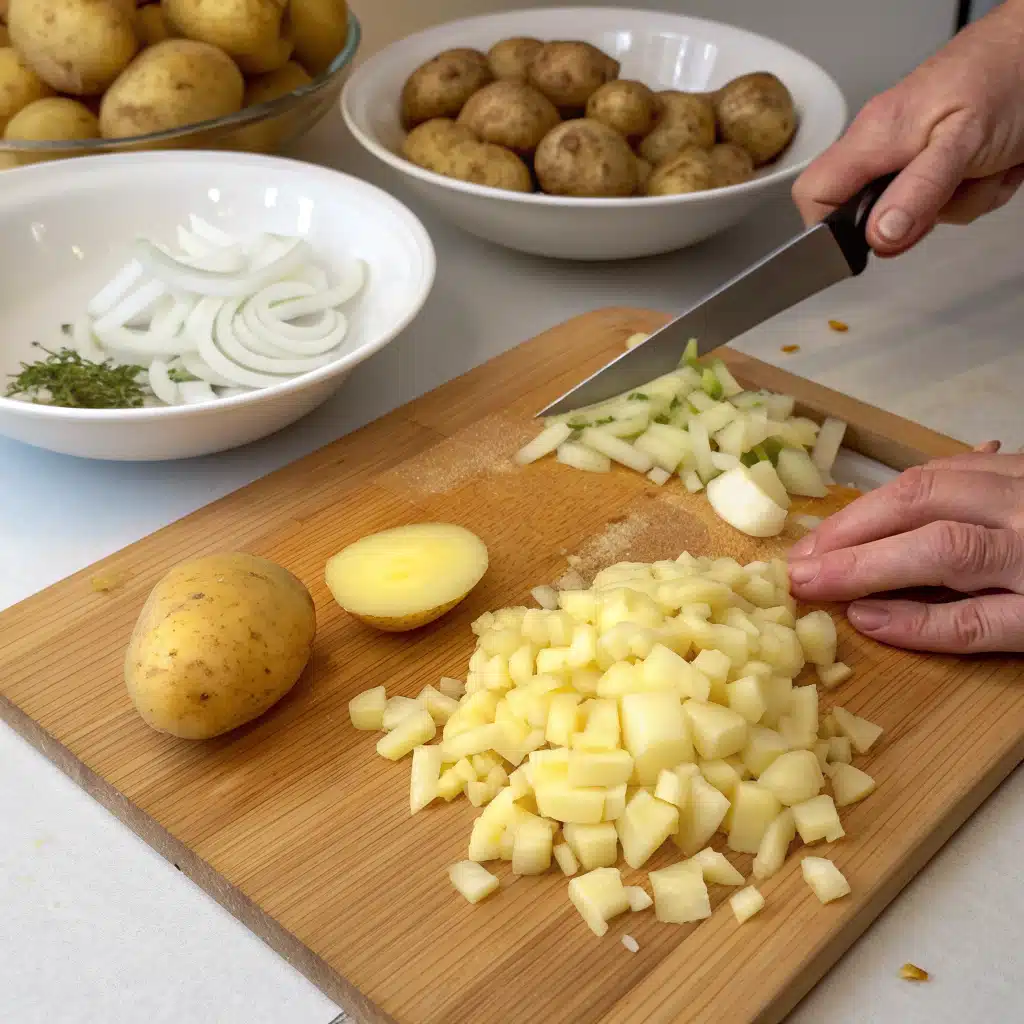
- While still warm, cut the potatoes into ½-inch thick slices, halving any extremely large slices.
The key to perfect potato texture is not overcooking them – they should be fork-tender but not mushy. Allowing them to steam dry prevents the dressing from becoming watered down.
“Learn more about how to cook potato dishes perfectly for other creative ways to use this versatile ingredient.”
Creating the Bacon Dressing
The signature flavor of German potato salad comes from its bacon-infused dressing:
- Set a large pot over medium heat and use kitchen shears to cut the bacon strips into 1-inch pieces directly into the pot.
- Cook the bacon, stirring occasionally, until it reaches your desired level of crispiness.
- Using a slotted spoon, transfer the crispy bacon pieces to a paper towel-lined plate, leaving the rendered bacon fat in the pot (you should have about ¼ cup).
- Carefully add ⅓ cup apple cider vinegar, 1-3 tablespoons sugar (to taste), 1 tablespoon Dijon mustard, ½ teaspoon salt, and freshly ground black pepper to the hot bacon fat.
- Return the pot to the burner and bring the mixture to a simmer, stirring for 2-3 minutes to help dissolve the sugar and integrate the flavors.
- Add 1 tablespoon of minced garlic and cook for another 30 seconds to 1 minute, just until the garlic becomes fragrant and starts to turn light golden.
- Remove the pot from heat immediately to prevent the garlic from burning.
This hot dressing is what sets German potato salad apart from other varieties. The combination of bacon fat, tangy vinegar, and savory seasonings creates a complex flavor profile that’s impossible to resist.
Assembling the Salad
The final assembly brings all the components together:
- Add the sliced, still-warm potatoes to the hot dressing in the pot.
- Gently toss the potatoes until they’ve absorbed all the dressing, being careful not to break them.
- Fold in the crispy bacon pieces, reserving a small amount for garnish if desired.
- Add the ½ cup of freshly chopped parsley and fold gently to incorporate.
- Transfer the finished German potato salad to a serving dish.
- Garnish with any reserved bacon bits and a sprinkle of additional parsley for a fresh, colorful presentation.
- For the truest flavor, serve the dish either warm or at room temperature.
For the best flavor development, allow the salad to rest for about 5-10 minutes before serving, giving the potatoes time to fully absorb the dressing. Unlike mayo-based potato salads that need refrigeration, German potato salad is traditionally served warm, allowing all the flavors to shine.
Tips for German Potato Salad Success
Potato Selection and Preparation
Choosing the right potatoes and preparing them properly is crucial for authentic German potato salad:
- Stick with waxy potatoes like red potatoes, fingerlings, or Yukon Golds, which hold their shape better than starchy varieties.
- For consistent cooking, aim to keep potato pieces relatively uniform in size.
- Always start potatoes in cold water rather than boiling water – this ensures even cooking from the inside out.
- Don’t overcook the potatoes; they should be fork-tender but still hold their shape when sliced.
- Slice the potatoes while they’re still warm, as they’ll absorb the dressing much more effectively.
- Consider leaving the skins on for added texture, color, and nutrients – just be sure to wash them thoroughly.
The thickness of your potato slices matters too – aim for about ½-inch thickness to provide enough surface area to absorb the dressing while still maintaining structural integrity when tossed.
“Check out our easy sheet pan chicken and potatoes for another delicious way to enjoy perfectly cooked potatoes.”
Balancing Flavors
The distinctive taste of German potato salad comes from carefully balanced flavors:
- Adjust the sugar amount based on your preference – traditional Southern German recipes tend to be sweeter, while Northern German versions are often more tart.
- The type of vinegar matters – apple cider vinegar provides the right balance of fruitiness and acidity, but white wine vinegar can also work well.
- Don’t skimp on the bacon – both the crispy pieces and the rendered fat are essential for authentic flavor.
- Fresh herbs make a significant difference – while parsley is traditional, chives or dill can also complement the flavors beautifully.
- Allow the dressing ingredients to simmer briefly to help the sugar dissolve and the flavors meld.
- Taste and adjust the seasoning before adding the potatoes – once mixed, it’s harder to correct the flavor balance.
Remember that the potatoes will absorb some of the tanginess, so the dressing should taste slightly more pronounced before mixing than you want the final dish to be.
Make-Ahead Considerations
While German potato salad is traditionally served warm, there are some make-ahead strategies:
- The salad can be made up to 24 hours in advance and refrigerated.
- To reheat, warm gently in a skillet over medium-low heat or microwave on medium power, stirring occasionally.
- Add a splash of vinegar and a drizzle of olive oil when reheating to refresh the flavors.
- Reserve some fresh parsley to add after reheating for a pop of color and freshness.
- If making ahead, slightly undercook the potatoes as they’ll continue to soften as they sit in the dressing.
Unlike mayo-based potato salads that can become unsafe if left at room temperature, German potato salad’s vinegar-based dressing allows for more flexibility in serving, though it shouldn’t sit out for more than two hours for food safety reasons.
Storage and Reheating German Potato Salad
Proper Storage Methods
Properly storing German potato salad ensures you can enjoy its delicious flavors for days after preparation:
- Allow the potato salad to cool completely before transferring to an airtight container for refrigeration.
- German potato salad will keep in the refrigerator for 3-4 days when stored properly.
- Due to its vinegar-based dressing, German potato salad is more forgiving for storage than mayo-based versions, but proper refrigeration is still essential.
- For best flavor retention, store the salad in a shallow container that allows it to cool quickly in the refrigerator.
- If you notice the salad has dried out somewhat during storage, a little additional vinegar and olive oil can revitalize it.
The flavor of German potato salad often develops further after a day in the refrigerator, as the potatoes continue to absorb the dressing. Some people even prefer it after it’s had time to rest.
“Don’t miss our cucumber salad recipe, another tangy side dish that stores beautifully in the refrigerator.”
Reheating for Optimal Flavor
While some enjoy German potato salad cold straight from the refrigerator, reheating restores its traditional warm serving style:
- Microwave Method: Place a portion in a microwave-safe dish, cover loosely, and heat on medium power for 1-2 minutes, stirring halfway through.
- Stovetop Method: Place the salad in a skillet over medium-low heat, adding a splash of water or chicken broth to prevent sticking, and stir occasionally until warmed through (about 5-7 minutes).
- Oven Method: Place the salad in an oven-safe dish, cover with foil, and warm in a 325°F oven for 15-20 minutes.
- Avoid high heat when reheating, as this can cause the dressing to separate and the potatoes to break down.
- After reheating, taste and adjust seasonings as needed – a splash of vinegar often helps wake up the flavors.
No matter which reheating method you choose, stirring gently helps distribute the heat evenly while preserving the integrity of the potato slices.
Freezing Considerations
While it’s best enjoyed fresh or within a few days, sometimes freezing is necessary:
- German potato salad can be frozen, though the texture of the potatoes will change somewhat upon thawing.
- For best results when freezing, slightly undercook the potatoes so they don’t become too soft after thawing and reheating.
- Allow the salad to cool completely before transferring to freezer-safe containers.
- Be sure to leave a bit of space at the top of the container so the contents can expand as they freeze.
- Frozen German potato salad will keep for up to 2 months.
- Thaw overnight in the refrigerator before reheating using one of the methods described above.
- After thawing, you may need to refresh the flavors with a little additional vinegar, salt, and pepper.
When freezing and thawing, expect the potatoes to be slightly softer than the original preparation, but the flavor should still be enjoyable.
Variations on German Potato Salad
Regional German Differences
The style of German potato salad differs greatly from one region of Germany to another:
- Bavarian Style (Southern Germany): This is the most well-known version in America, featuring bacon, a sweet-tangy dressing, and often served warm. It typically includes onions cooked in the bacon fat and sometimes incorporates a small amount of beef broth.
- Swabian Style: Similar to Bavarian, but often includes finely sliced cucumbers and might use more herbs like chives and parsley.
- Northern German Style: Less sweet, sometimes made with mayonnaise or yogurt in addition to vinegar, and often includes apples and pickles for extra crunch and tanginess.
- Berlin Style: Often includes pickles, hard-boiled eggs, and might feature a combination of mayonnaise and vinegar dressing.
- Eastern German Style: Might include diced apples, cucumber, and hard-boiled eggs, with a lighter vinegar dressing and sometimes sour cream.
These regional variations reflect Germany’s diverse culinary landscape and local ingredient availability. The version most Americans know as “German potato salad” most closely resembles the Bavarian style.
“Here’s your guide to hellmanns potato salad if you’re curious about classic American-style variations.”
Modern Adaptations
Contemporary cooks have put their own spin on traditional German potato salad:
- Healthier Versions: Reducing bacon and using some of the bacon fat mixed with olive oil for a lighter dressing.
- Vegetarian Adaptations: Omitting bacon and using vegetable broth and smoked paprika to create similar savory notes.
- Herbal Enhancements: Adding different fresh herbs like dill, chives, or tarragon for varied flavor profiles.
- Protein Additions: Incorporating sliced hard-boiled eggs or chickpeas to make the salad more substantial.
- Vegetable Additions: Adding blanched green beans, roasted red peppers, or corn kernels for color and nutritional value.
- Mustard Variations: Experimenting with different mustards like whole grain, spicy brown, or honey mustard to alter the flavor profile.
- Vinegar Substitutions: Using white wine vinegar, red wine vinegar, or even a splash of balsamic for different flavor notes.
These adaptations maintain the essence of German potato salad while allowing for personal preferences and dietary needs.
Seasonal and Occasion-Based Variations
Different seasons and occasions call for thoughtful adaptations:
- Summer Picnic Version: Adding radishes and more fresh herbs for a lighter, brighter flavor profile that holds up well outdoors.
- Holiday Feast Adaptation: Incorporating roasted garlic instead of fresh for a deeper, more mellow flavor that pairs well with holiday meats.
- Spring Version: Adding tender asparagus tips and fresh peas for a seasonal twist.
- Autumn Variation: Including thinly sliced apples and a touch of caraway seed for a fall-inspired flavor.
- Oktoberfest Special: Using dark beer in place of some of the vinegar for a robust flavor that pairs perfectly with bratwurst.
- Potluck Size: Doubling or tripling the recipe with slightly more dressing to account for absorption during transport and standing time.
- Make-Ahead Version: Slightly undercooking the potatoes and adding extra dressing, knowing the salad will continue to develop as it sits.
These seasonal adaptations keep German potato salad interesting year-round while honoring its traditional flavors and preparation methods.
Serving German Potato Salad
Traditional Pairings
In Germany and German-American communities, German potato salad is traditionally served with specific dishes:
- Bratwurst and Sauerkraut: The tangy potato salad balances the richness of grilled sausages and fermented cabbage.
- Sauerbraten: This sweet-sour pot roast pairs perfectly with the similar flavor profile of German potato salad.
- Rouladen: Beef rolls stuffed with bacon, onions, and pickles complement the similar flavor notes in the salad.
- German Meatballs (Frikadellen): These pan-fried meat patties are often served with potato salad as a complete meal.
- Grilled Fish: In coastal regions of Germany, potato salad might accompany grilled herring or other local fish.
The warm, tangy nature of German potato salad makes it especially suitable for heartier meat dishes where its acidity helps cut through richness.
“Discover great ideas like our creamy dijon chicken with mashed potatoes which would pair beautifully with German potato salad for a complete meal.”
Modern Serving Ideas
Contemporary menus feature German potato salad in creative ways:
- Alongside Grilled Meats: The tanginess pairs perfectly with everything from steaks to chicken to grilled vegetables.
- As Part of a Picnic Spread: Unlike mayo-based salads, German potato salad travels well for outdoor gatherings.
- In Brunch Settings: Served warm alongside eggs and breakfast meats for a hearty morning meal.
- As a Base for Protein: Top with grilled chicken, salmon, or roasted vegetables for a complete one-dish meal.
- On Charcuterie Boards: A small dish of German potato salad adds a tangy element to a spread of meats and cheeses.
- In Buffet Arrangements: Its vinegar base makes it safer for buffet service than mayo-based salads.
- As a Gourmet Side: At dinner parties, serve small portions in elegant dishes alongside sophisticated main courses.
The versatility of German potato salad makes it appropriate for casual weeknight dinners and special occasions alike. Its distinctive flavor profile complements a wide range of cuisines beyond traditional German food.
Presentation Tips
How you serve German potato salad can enhance the dining experience:
- Temperature Matters: Serve warm or at room temperature for authentic flavor – cold mutes the taste and changes the texture.
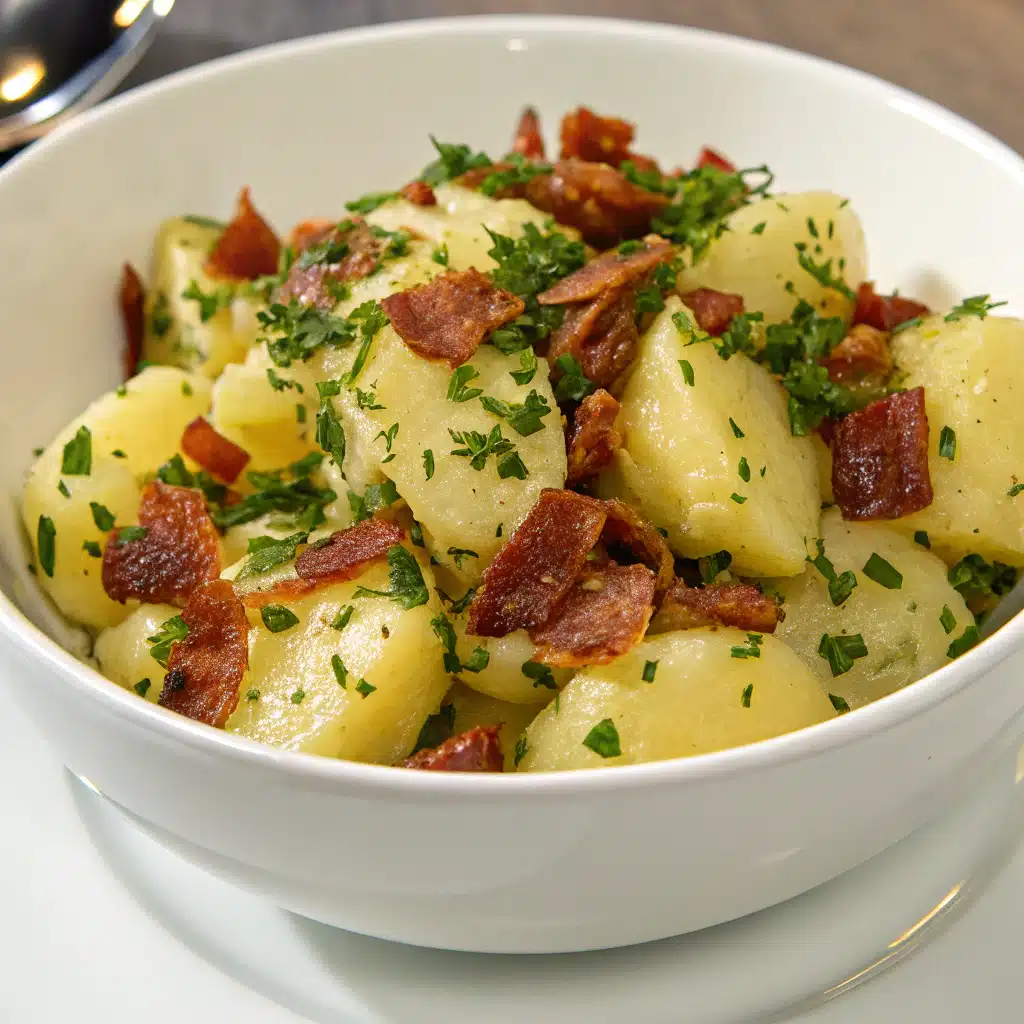
- Garnishing: A sprinkle of additional fresh parsley, crisp bacon bits, or a light dusting of paprika adds visual appeal.
- Serving Vessels: Warm, shallow bowls allow the salad to maintain temperature longer than flat plates.
- Family Style: A rustic ceramic bowl in the center of the table emphasizes the homestyle nature of the dish.
- Individual Portions: For more formal settings, small individual servings in ramekins look elegant.
- Fresh Additions: Add a few slices of radish or cucumber alongside for color contrast and textural variety.
- Utensil Choice: Provide a slotted spoon for serving to leave excess dressing behind, or a regular spoon to include more of the flavorful liquid.
Remember that German potato salad should be served promptly after preparation or reheating for the best experience. If it must sit out for a buffet, a warming dish set on low heat will help maintain its proper temperature.
FAQs About German Potato Salad
What does German potato salad consist of?
German potato salad combines waxy potatoes, bacon, onions, and a warm tangy dressing made with bacon fat, vinegar, sugar, and mustard. Fresh parsley adds brightness, and it’s served warm or at room temperature. Some regions add eggs, apples, or pickles, but the core ingredients stay the same.
What makes German potato salad different?
Unlike American potato salad with mayonnaise, the German version uses a vinegar-based dressing for a tangy, slightly sweet flavor. Served warm and enriched with bacon and its fat, it reflects Bavarian traditions and their signature sweet-sour balance.
Are there pickles in German potato salad?
Traditional Bavarian potato salad omits pickles, while Northern German and Berlin-style versions often add diced pickles for extra tang and crunch. Dill pickles make a flavorful addition that complements the vinegar dressing without losing authenticity.
Can you use apple cider vinegar in German potato salad?
Absolutely. Apple cider vinegar is commonly used and provides mild acidity with a subtle fruitiness that complements the potatoes and bacon. While some recipes use white wine or distilled vinegar, apple cider vinegar offers a balanced sweet-sour taste that defines authentic German potato salad.
What is German potato salad supposed to taste like?
It should taste tangy and slightly sweet, with savory depth from bacon and mustard. The vinegar brings brightness, while sugar softens the sharpness. The flavor is lighter than creamy American versions yet more complex—refreshing, hearty, and full of contrast.
What kind of onion for German potato salad?
Yellow or white onions are most common. Finely diced and sautéed in bacon fat, they add gentle sweetness and richness. Red or sweet onions can be substituted for a milder taste and color variation.
Conclusion: The Enduring Appeal of German Potato Salad
Why German Potato Salad Remains a Favorite
German potato salad has endured as a beloved dish for generations due to its perfect balance of flavors and textures. The tangy-sweet dressing, smoky bacon, and tender potatoes create a harmony that satisfies both simple and sophisticated palates. Unlike mayo-based salads that can feel heavy, German potato salad offers a lighter yet deeply flavorful experience. Its vinegar base not only creates a distinctive taste profile but also makes it more food-safe for gatherings and picnics. The dish represents the best of German cooking traditions – practical, flavorful, and making excellent use of everyday ingredients. Whether served at an Oktoberfest celebration or a family dinner, German potato salad brings a touch of European culinary heritage to the table.
“Want more ideas? Check out our creamy peach salad recipe for another side dish that balances sweet and tangy flavors beautifully.”
Keeping Traditions Alive Through Food
In preparing authentic German potato salad, we connect with culinary traditions that have traveled across oceans and generations. German immigrants brought this recipe to America, where it became especially popular in regions with strong German heritage like the Midwest and Texas. By making this dish today, we participate in a living food tradition that tells the story of cultural exchange and adaptation. While respecting traditional methods, don’t be afraid to make small adaptations based on personal preference or local ingredients – this is how food traditions remain relevant and alive. The beauty of German potato salad lies in its simplicity and adaptability while maintaining its distinctive character. Whether you’re of German descent or simply appreciate international cuisines, preparing this salad offers a delicious way to experience another culture’s food heritage and share it with others.
PrintGerman Potato Salad
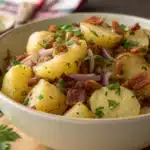
Authentic German potato salad with crispy bacon and a tangy vinegar dressing, served warm for maximum flavor.
- Prep Time: 15 minutes
- Cook Time: 30 minutes
- Total Time: 45 minutes
- Yield: 8 servings 1x
- Category: Lunch
- Cuisine: German
Ingredients
- 2 pounds red potatoes
- 1 teaspoon salt, for boiling the potatoes
- 12 ounces bacon
- ⅓ cup apple cider vinegar
- 1 to 3 tablespoons granulated sugar*
- 1 tablespoon Dijon mustard
- ½ teaspoon salt, for seasoning the potato salad
- Freshly ground black pepper
- 1 tablespoon minced fresh garlic, about 3 cloves
- ½ cup chopped fresh parsley
Instructions
- Wash potatoes and cut larger ones in half. Place in pot, cover with cold water, bring to boil, add salt, and simmer 15-20 minutes until tender.
- Drain potatoes and let them steam dry in the hot pot for 2 minutes.
- In another pot, cook bacon pieces until crispy. Remove bacon with slotted spoon, leaving fat in pot.
- While bacon cooks, slice potatoes into ½-inch thick pieces.
- Add vinegar, sugar, Dijon, salt, and pepper to bacon fat. Simmer for 2 minutes.
- Add minced garlic and cook 30-60 seconds until lightly golden.
- Remove from heat, add sliced potatoes, and gently toss until dressing is absorbed.
- Fold in bacon pieces and parsley.
- Transfer to serving dish and serve warm.
Notes
For food safety, don’t leave potato salad at room temperature for more than two hours before refrigerating leftovers.
Nutrition facts are estimates and may vary based on ingredients used, portion sizes, and preparation methods.
Nutrition
- Serving Size: 8 servings
- Calories: 275
- Sugar: 5g
- Sodium: 480mg
- Fat: 16g
- Saturated Fat: 5g
- Trans Fat: 0g
- Carbohydrates: 22g
- Fiber: 2g
- Protein: 10g
- Cholesterol: 30mg
Keywords: german potato salad, bacon potato salad, vinegar potato salad, warm potato salad
Let’s connect! Follow me for more Joylicious Recipes: Facebook, Instagram, Pinterest