Korean Cucumber Salad: Authentic, Fresh & Easy Recipe
What is Korean Cucumber Salad?
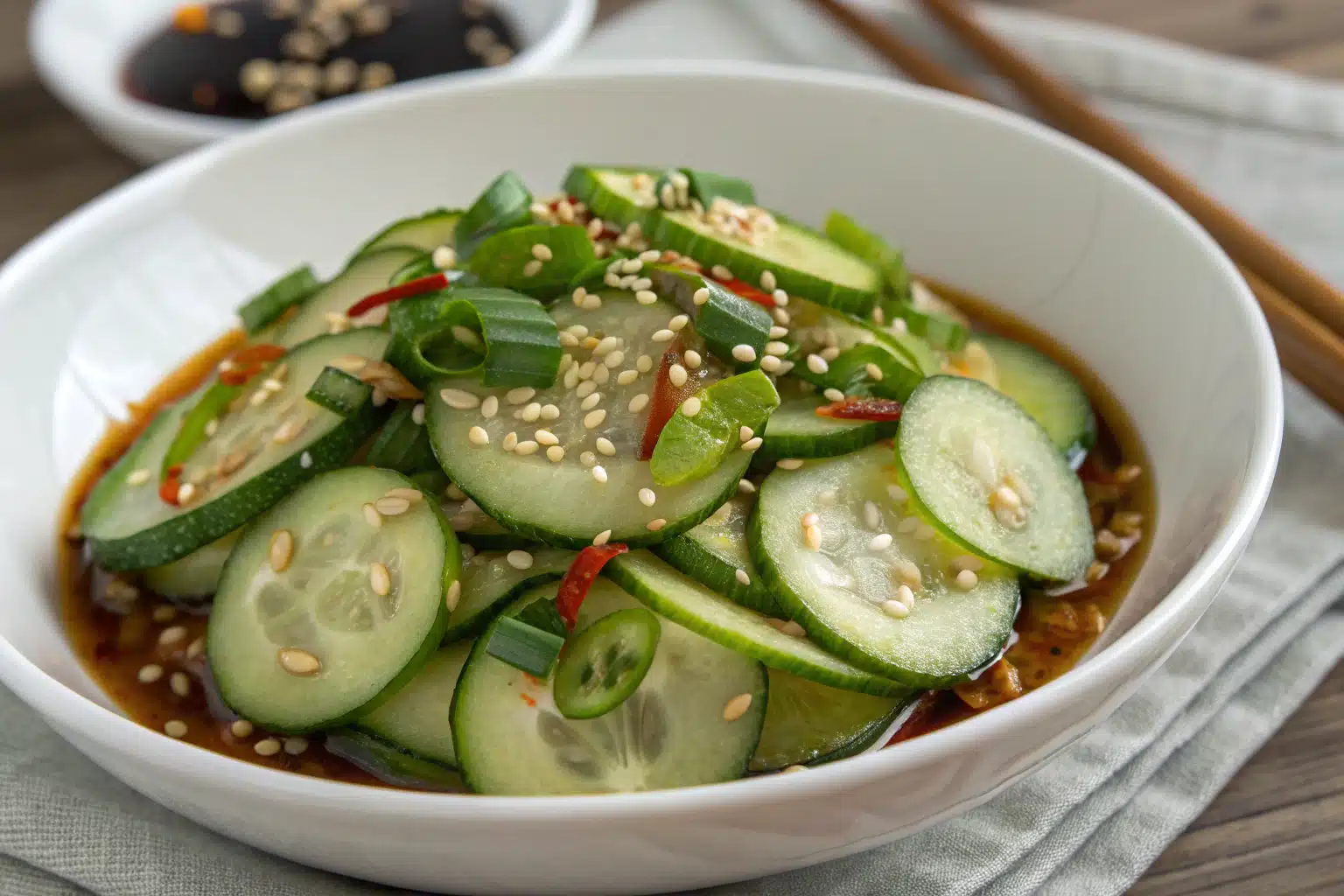
Korean cucumber salad, also known as Oi Muchim, is a vibrant and refreshing side dish that has become increasingly popular in American kitchens. This simple yet flavorful Korean cucumber salad combines crisp cucumbers with a perfect balance of soy sauce, rice vinegar, and Korean chili powder to create a dish that’s simultaneously spicy, tangy, and slightly sweet. Unlike many heavy side dishes, Korean cucumber salad offers a light, palate-cleansing experience that complements both Asian and Western main courses beautifully.
“Check out our cucumber salad collection for more refreshing ideas to brighten your table.”
The Cultural Significance of Korean Cucumber Salad
In Korean cuisine, this cucumber salad is traditionally served as a banchan (side dish) alongside main dishes. The beauty of Korean cucumber salad lies in its simplicity and adaptability. Families often have their own unique variations, adjusting spice levels and ingredients to suit their preferences. This dish represents the Korean culinary philosophy of balancing flavors and textures in every meal, creating harmony between cool and spicy elements. Korean cucumber salad has transcended cultural boundaries to become a beloved recipe worldwide, appreciated for its fresh taste and nutritional benefits.
PrintKorean Cucumber Salad

A refreshing, crisp Korean cucumber salad (Oi Muchim) with the perfect balance of spicy, tangy, and sweet flavors.
- Prep Time: 10 minutes
- Cook Time: 0 minutes
- Total Time: 10 minutes
- Yield: 2 servings 1x
- Category: Lunch
- Cuisine: Korean
Ingredients
- 1 cucumber (Japanese, English, Persian, or Pickling)
- 1 Tbsp soy sauce (Jin Ganjang)
- 2 Tbsp rice vinegar
- 1 Tbsp sugar
- 1/2 tsp Korean red chili powder
- 1/4 tsp sesame seeds
- 2 green onions, chopped
Instructions
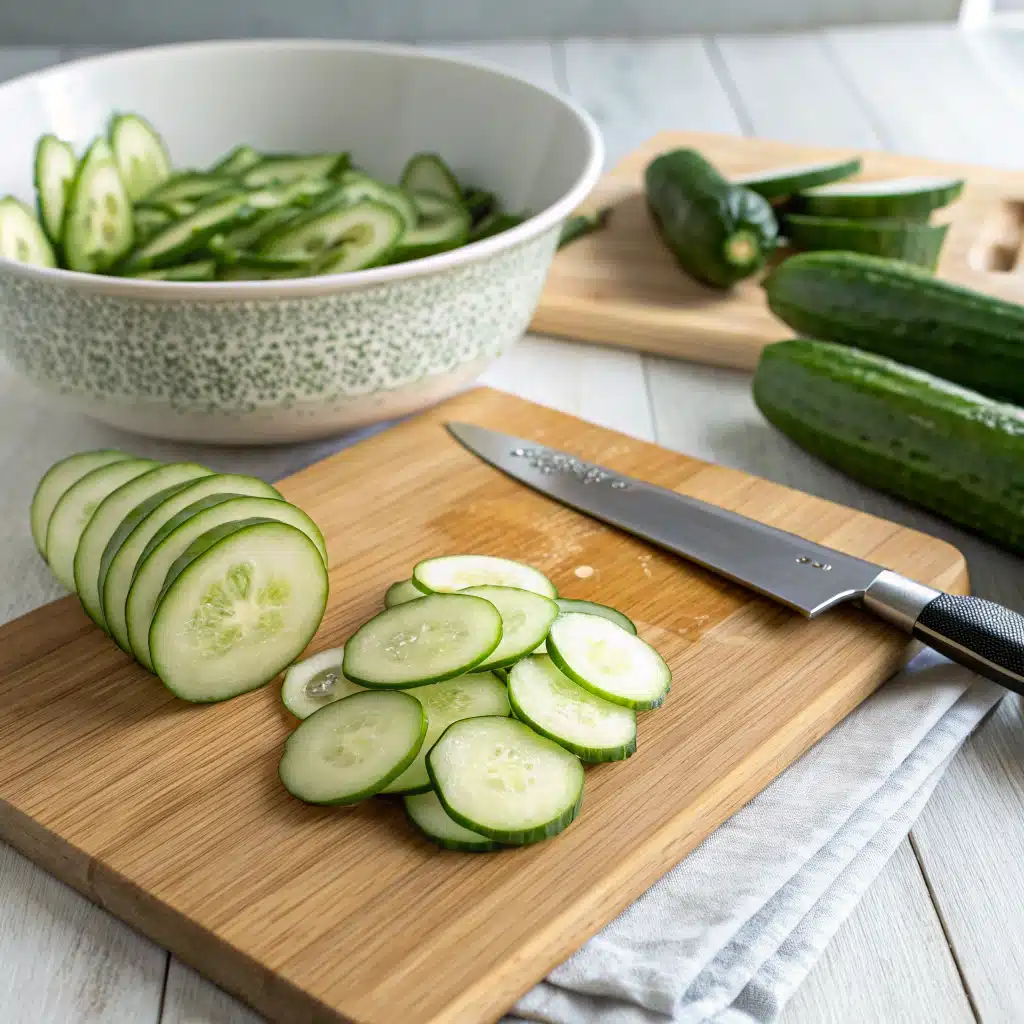
- Slice cucumber into thin slices (approximately 1/8 inch or 3mm thick).
- In a small bowl, mix soy sauce, rice vinegar, and sugar until sugar dissolves.
- Pour the soy-vinegar mixture over the cucumber slices.
- Sprinkle with Korean red chili powder and sesame seeds, then gently toss to coat.
- Add chopped green onions and mix again.
- Serve immediately for maximum crispness or let sit for 10-15 minutes to allow flavors to meld.
Notes
This salad is best enjoyed fresh. For maximum crispness, serve immediately after preparation.
Nutrition facts are estimates and may vary based on ingredients used, portion sizes, and preparation methods.
Nutrition
- Serving Size: 2 servings
- Calories: 68
- Sugar: 9g
- Sodium: 487mg
- Fat: 0.5g
- Saturated Fat: 0.1g
- Trans Fat: 0g
- Carbohydrates: 14g
- Fiber: 1.5g
- Protein: 2g
- Cholesterol: 0mg
Keywords: Korean cucumber salad, Oi Muchim, spicy cucumber salad, Korean side dish, banchan, cucumber recipe
Let’s connect! Follow me for more Joylicious Recipes: Facebook, Instagram, Pinterest
Ingredients: Everything You Need for Perfect Korean Cucumber Salad
Key Components and Their Significance
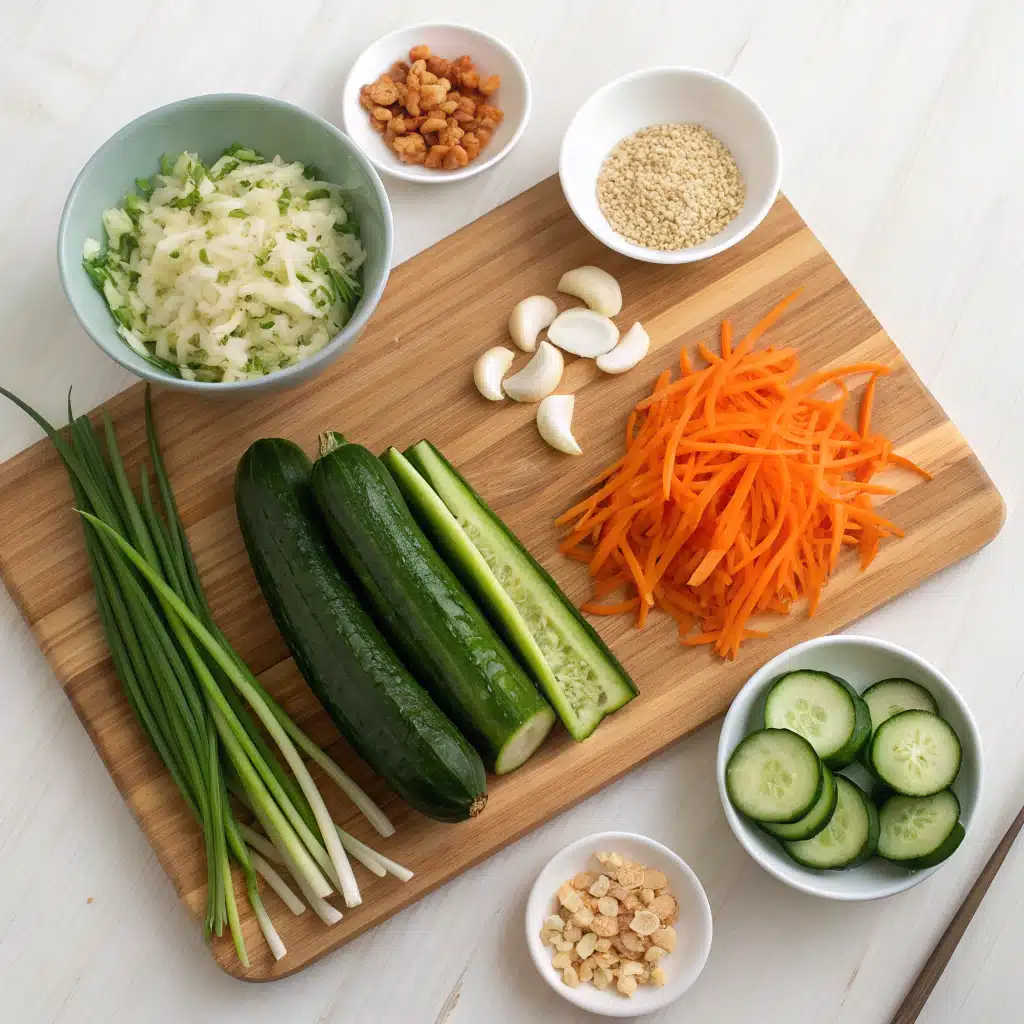
The authentic Korean cucumber salad requires just a handful of simple ingredients that work together to create complex flavors. Here’s what you’ll need:
| Ingredient | Amount | Notes |
|---|---|---|
| Cucumber | 1 medium (approximately 1½ cups sliced) | Japanese, English, Persian, or Pickling varieties all work well |
| Soy sauce (Jin Ganjang) | 1 tablespoon | Provides umami depth |
| Rice vinegar | 2 tablespoons | Creates the tangy foundation |
| Sugar | 1 tablespoon | Balances acidity and adds subtle sweetness |
| Korean red chili powder | ½-1 teaspoon (adjustable) | Adds characteristic color and heat |
| Sesame seeds | ¼ teaspoon | Contributes nuttiness and visual appeal |
| Green onions | 2, chopped | Adds fresh, mild onion flavor |
Selecting the Perfect Cucumber
The cucumber is undoubtedly the star of Korean cucumber salad. While traditional Korean recipes use Korean cucumbers (which are thinner and have bumpier skin), any cucumber variety with firm flesh and minimal seeds works wonderfully. English cucumbers offer a nice crunch with thin skin, while Persian cucumbers provide a delicate texture perfect for absorbing the dressing. Japanese cucumbers are another excellent option with their firm texture and subtle sweetness. Whatever variety you choose, look for fresh, firm cucumbers without soft spots for the best Korean cucumber salad experience.
Step-by-Step: Creating Your Korean Cucumber Salad
Preparing the Cucumbers
The first step in making authentic Korean cucumber salad is proper cucumber preparation:
- Wash your cucumber thoroughly under cold running water.
- Decide whether to peel your cucumber based on the variety and your preference. English and Persian cucumbers have thin, edible skins, while thicker-skinned varieties may benefit from peeling.
- Slice the cucumber thinly, about ⅛ inch (3mm) thick. Uniform slices ensure even flavor absorption and consistent texture.
- Place the sliced cucumbers in a medium bowl, ready for dressing.
“Looking for inspiration? Try our asian cucumber salad for another delicious variation on this refreshing dish.”
Making the Perfect Dressing
The dressing is what transforms simple cucumber slices into a vibrant Korean cucumber salad:
- In a small bowl, combine 1 tablespoon soy sauce, 2 tablespoons rice vinegar, and 1 tablespoon sugar.
- Whisk thoroughly until the sugar dissolves completely, creating a balanced sweet-tangy base.
- Pour this soy-vinegar mixture over the cucumber slices.
- Sprinkle ½ teaspoon Korean red chili powder and ¼ teaspoon sesame seeds over the cucumbers.
- Gently toss to coat evenly, being careful not to break the cucumber slices.
- Taste and adjust the chili powder according to your spice preference.
Final Touches and Presentation
Complete your Korean cucumber salad with these finishing steps:
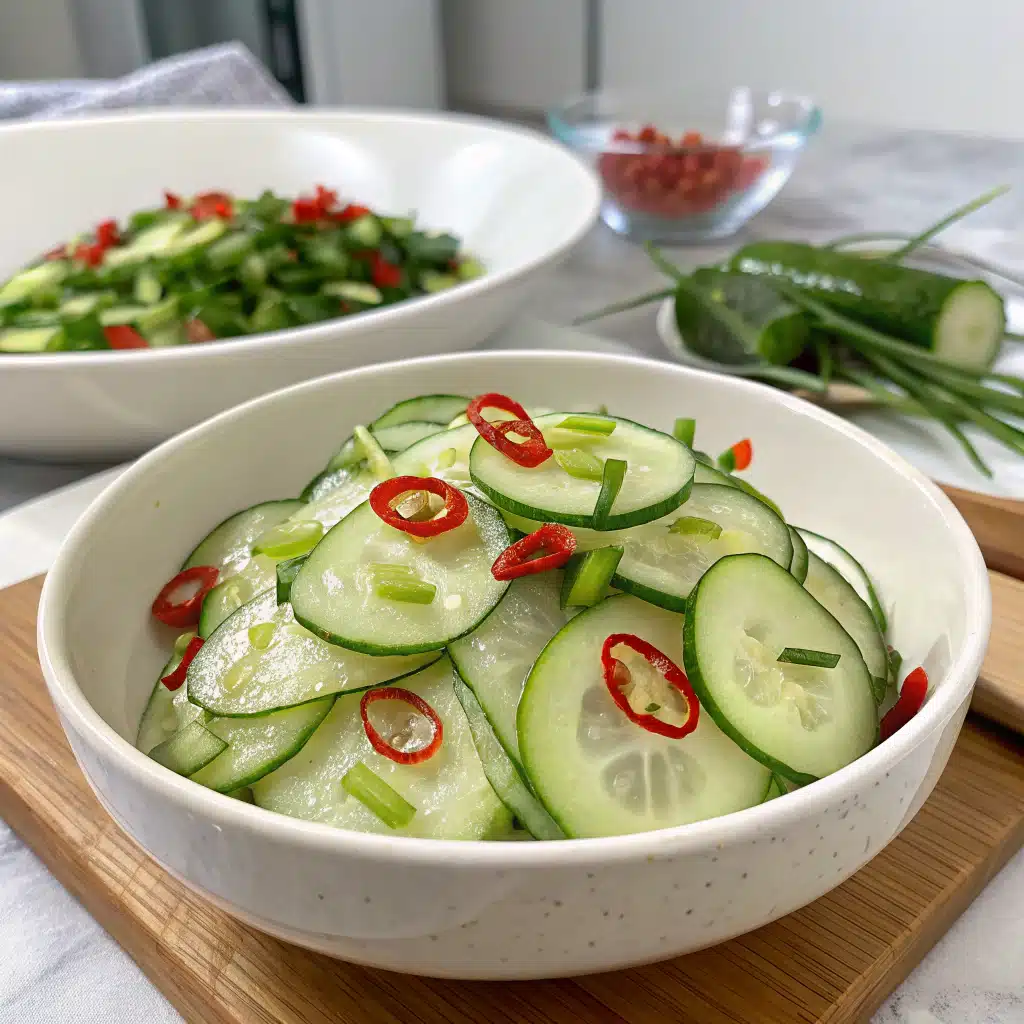
- Add the chopped green onions to the dressed cucumbers.
- Gently fold everything together to ensure even distribution of all ingredients.
- At this point, you can either serve immediately for maximum crispness or let the salad rest for 10-15 minutes to allow flavors to meld more deeply.
- For an authentic presentation, transfer to a traditional Korean banchan dish or any small serving bowl.
- Garnish with additional sesame seeds or green onions if desired for visual appeal.
Tips: Secrets to Elevate Your Korean Cucumber Salad
Balancing Flavors Perfectly
The magic of Korean cucumber salad lies in its perfectly balanced flavors. Here are some pro tips for achieving that balance:
- Taste as you go. Start with less chili powder and add more according to your heat preference.
- If your dressing tastes too acidic, add a pinch more sugar to round out the flavors.
- For deeper umami, let the salad marinate for 15 minutes before serving.
- Consider adding a few drops of sesame oil for added complexity and aromatic richness.
- Use good quality Korean red chili powder (gochugaru) for authentic flavor—it has a different profile than other chili powders.
Texture Enhancement Techniques
The ideal Korean cucumber salad has that perfect crisp-tender texture that makes it so refreshing. Try these techniques:
- For extra-crisp cucumbers, after slicing, sprinkle them with a little salt and let sit for 10 minutes, then rinse and pat dry before dressing. This removes excess moisture.
- Cut your cucumbers just before dressing them to maintain maximum crispness.
- Consider making a “quick pickle” by letting the cucumbers sit in the dressing for 30 minutes if you prefer a slightly softer texture with more absorbed flavor.
- For an interesting textural contrast, try cutting half your cucumber slices thicker and half thinner.
“Discover great ideas like our watermelon cucumber feta salad for more refreshing cucumber-based recipes.”
Seasonal Adaptations
Korean cucumber salad can be adapted throughout the year:
- Summer: Use the freshest garden cucumbers and reduce marinating time for a more refreshing, crisp experience.
- Fall/Winter: Add a bit more chili powder for warming heat during colder months.
- Spring: Incorporate fresh spring herbs like mint or chives along with the green onions.
- Year-round adaptations: Consider adding thinly sliced radishes for color and peppery crunch, regardless of season.
Storage: Keeping Your Korean Cucumber Salad Fresh
Immediate Storage Guidelines
Korean cucumber salad is at its prime when freshly made, but proper storage can help maintain quality:
- For same-day consumption (ideal): Keep at room temperature for up to 2 hours if you plan to serve it shortly after making.
- For short-term refrigeration: Store in an airtight container with minimal air space to prevent oxidation.
- Always use clean utensils when serving to prevent introducing bacteria that could speed spoilage.
Long-Term Storage Options
While Korean cucumber salad is best enjoyed fresh, sometimes you need to store leftovers:
- Refrigerate in an airtight container for up to 2 days maximum.
- The texture will gradually soften as the cucumbers continue to release water and absorb the dressing.
- Korean cucumber salad does not freeze well due to the high water content of cucumbers, which leads to a mushy texture upon thawing.
- If you know you’ll have leftovers, consider only dressing the portion you’ll eat immediately and storing the components separately.
“Don’t miss our cucumber tomato salad recipe for another refreshing way to enjoy fresh cucumbers.”
Quality Indicators and Food Safety
Here’s how to determine if your stored Korean cucumber salad is still at its best:
- Visual cues: Look for excessive sogginess, darkening of the green color, or any signs of mold.
- Aroma test: Fresh Korean cucumber salad should smell pleasantly tangy and slightly spicy—any sour or off-odors indicate spoilage.
- Taste: A slight change in flavor profile is normal after storage as flavors meld, but any strange or unpleasant taste means it’s time to discard.
- Safety guideline: When in doubt, throw it out. The simple ingredients are inexpensive compared to the risk of foodborne illness.
Variations: Creative Spins on Korean Cucumber Salad
Regional Korean Adaptations
Korean cucumber salad varies across different regions of Korea, offering inspiring variations:
- Northern-style: Less spicy with more vinegar and sometimes a touch of mustard for complexity.
- Southern-style: Typically spicier with more generous use of chili powder and sometimes fermented shrimp paste for umami depth.
- Coastal adaptations: May include a small amount of fish sauce or dried seafood for a briny note.
- Modern Korean interpretations: Often incorporate honey instead of sugar for a more complex sweetness profile.
“Here’s your guide to creamy cucumber onion salad if you’re looking for a creamy alternative to this vinegar-based recipe.”
Fusion and International Influences
Korean cucumber salad has inspired many fusion creations:
- Korean-American fusion: Addition of apple cider vinegar for tanginess that appeals to American palates.
- Korean-Mexican fusion: Incorporation of lime juice instead of vinegar and the addition of cilantro.
- Korean-Japanese fusion: Using ponzu sauce in place of some of the soy sauce and adding a touch of wasabi for heat.
- Korean-Southeast Asian fusion: Addition of fish sauce and lime with Thai basil for a cross-cultural flavor experience.
Dietary Adaptations
Korean cucumber salad is naturally accommodating to many dietary needs, but here are specific adaptations:
- Low-sugar version: Substitute sugar with monk fruit sweetener or erythritol for a keto-friendly option.
- Gluten-free adaptation: Use tamari or coconut aminos instead of traditional soy sauce.
- Extra protein boost: Add thinly sliced tofu, shredded chicken, or cooked shrimp to transform the side dish into a light main course.
- Extra vegetables: Incorporate thinly sliced bell peppers, carrots, or radishes for added nutrition and color.
Serving: Pairing Your Korean Cucumber Salad
Traditional Korean Accompaniments
In Korean cuisine, this refreshing cucumber salad is traditionally served alongside:
- Korean BBQ dishes like bulgogi (marinated beef)
- Bibimbap (mixed rice bowls) as a cooling contrast to the warm rice and vegetables
- Jjigae (Korean stews) to balance the richness and heat
- Korean fried chicken, where the cool, tangy salad offsets the crispy, spicy meat
- Japchae (glass noodles) for a complete meal with contrasting textures
Contemporary Pairing Suggestions
Korean cucumber salad works wonderfully with many non-Korean dishes:
- Grilled meats of all kinds, particularly those with strong flavors
- Sandwich accompaniment instead of traditional pickles
- Alongside rich pasta dishes as a palate-cleansing side
- With seafood, especially fatty fish like salmon or tuna
- As part of a fusion rice bowl with ingredients from multiple cuisines
“Want more ideas? Check out our grilled chicken street tacos that pair beautifully with this refreshing salad.”
Presentation Ideas for Various Occasions
Elevate your Korean cucumber salad presentation for different settings:
- Casual family dinner: Serve in a communal bowl with small tongs or serving spoon
- Elegant dinner party: Individual small plates or ramekins with cucumber slices arranged in an overlapping pattern
- Buffet-style serving: Drain excess liquid before placing on the buffet table and refresh with fresh green onions just before serving
- Picnic or potluck: Transport dressing separately and combine just before serving to maintain optimal texture
FAQs: Common Questions About Korean Cucumber Salad
What are the ingredients for Korean cucumber salad?
Korean cucumber salad (Oi Muchim) uses seven simple ingredients: fresh cucumbers, soy sauce, rice vinegar, sugar, Korean red chili flakes, sesame seeds, and green onions. Together, they create a crisp, flavorful mix that’s spicy, tangy, slightly sweet, and refreshing.
Is Korean cucumber salad good for you?
Yes. It’s low in calories and rich in vitamins K and C, plus antioxidants that promote overall health. Because it’s made with mostly fresh ingredients, it’s a light and wholesome side dish. For a lower-sodium version, simply use reduced-sodium soy sauce.
Does Korean cucumber salad go bad?
It’s best eaten fresh or within 1–2 days when stored in an airtight container in the fridge. Over time, cucumbers release water and lose their crunch. Discard the salad if it smells sour, looks slimy, or changes color.
What kind of vinegar is used in Korean cucumber salad?
Rice vinegar is preferred for its mild, slightly sweet acidity that balances the dish beautifully. If unavailable, apple cider or white vinegar can work, but rice vinegar offers the most authentic Korean flavor.
What to eat with Korean cucumbers?
This salad pairs perfectly with grilled meats, Korean BBQ, rice, noodles, or stews. It also cuts through the richness of fried dishes and complements sandwiches, seafood, or light appetizers.
What is the difference between a Korean cucumber and a regular cucumber?
Korean cucumbers are slimmer, bumpier, and contain fewer seeds with a firmer, sweeter bite. If unavailable, English, Persian, or Japanese cucumbers provide a similar crisp texture.
Conclusion: Embracing Korean Cucumber Salad in Your Culinary Repertoire
The Timeless Appeal of Korean Cucumber Salad
Korean cucumber salad represents everything wonderful about international cuisine—simplicity, balanced flavors, and adaptability. This humble dish showcases how a few quality ingredients, thoughtfully combined, can create something greater than the sum of its parts. The contrast between crisp cucumbers and the spicy-tangy-sweet dressing epitomizes the Korean culinary philosophy of harmonious contrasts. As more Americans explore global cuisines, Korean cucumber salad has rightfully earned its place as a staple side dish that transcends cultural boundaries.
Making Korean Cucumber Salad Your Own
The beauty of Korean cucumber salad lies not just in its authentic preparation but in how easily it can be personalized. Whether you adjust the spice level, swap in different cucumber varieties, or create fusion variations, this dish welcomes creative interpretation while maintaining its essential character. Don’t be afraid to experiment with your own twist—perhaps adding fruits like pear for sweetness or incorporating herbs from your garden.
“Learn more about watermelon radish for a colorful and unique addition to your cucumber salad that will impress guests.”
Make this Korean cucumber salad part of your regular rotation, and you’ll discover how this simple dish can transform ordinary meals into memorable dining experiences. Its refreshing profile makes it perfect for hot summer days, while its vibrant flavors brighten winter meals when we need it most. From novice cooks to experienced chefs, everyone can master this accessible yet impressive Korean classic.