
Unlocking the Savory Potential of Mushroom Kombu Vegetable Broth
The Foundation of Umami-Rich Cooking
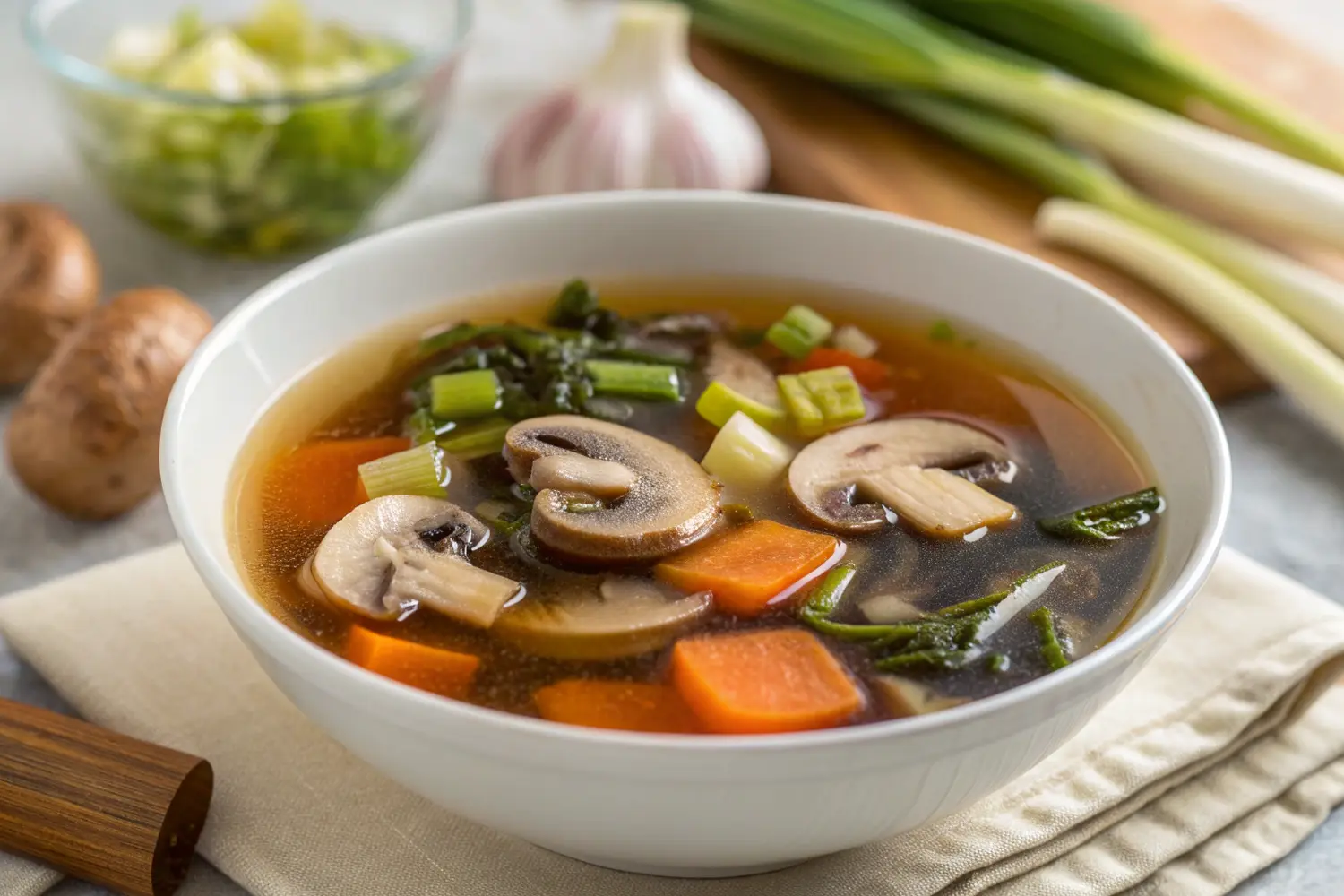
Mushroom kombu vegetable broth creates a foundation of incredible depth and umami that transforms ordinary dishes into extraordinary culinary experiences. This versatile liquid gold combines the earthy richness of mushrooms with the oceanic intensity of kombu (dried kelp) to create a broth that’s far more complex and satisfying than standard vegetable stocks. The resulting broth delivers a perfect balance of savory notes that enhance everything from simple soups to elaborate risottos.
“The Mushroom Vegetable Bake uses similar earthy ingredients to create a hearty, comforting dish perfect for cozy dinners.”
This homemade broth shines as the backbone for countless plant-based recipes, but it’s equally impressive when sipped warm on its own as a nourishing tonic. The combination of vegetables, mushrooms, and mineral-rich kombu creates a nutritional powerhouse that’s both satisfying and deeply restorative. Whether you’re creating an Asian-inspired noodle bowl, enhancing a classic soup, or looking to add complexity to grain dishes, this mushroom kombu vegetable broth will elevate your cooking to restaurant-quality levels with minimal effort.
Essential Building Blocks for Flavor-Packed Broth
Core Components and Optional Enhancements
The key to a truly outstanding mushroom kombu vegetable broth lies in selecting quality ingredients that complement each other. This foundation of umami-rich components creates the perfect base for countless dishes. “For another comforting soup option, try the Mushroom Split Pea Soup which offers similar warming qualities with additional protein benefits.”
| Essential Ingredients | Quantity | Notes |
|---|---|---|
| Water | 2 cups | Filtered water produces cleaner flavor |
| Kombu (dried kelp) | 4 oz | Rich in glutamates that create umami |
| Mushrooms, sliced | 1 cup | Cremini, shiitake, or button varieties all work well |
| Carrot, diced | 1 medium | Adds natural sweetness and color |
| Celery stalk, diced | 1 medium | Creates aromatic foundation |
| Garlic cloves, minced | 2 cloves | Provides subtle pungency |
| Soy sauce | 1 tablespoon | Enhances savory notes |
| Black pepper | Pinch | Freshly ground provides best flavor |
| Optional Enhancements | Quantity | Flavor Contribution |
|---|---|---|
| Dried shiitake mushrooms | 3-5 pieces | Intensifies mushroom flavor and deepens color |
| Leek, white part only | 1/2 leek, sliced | Adds subtle onion flavor without bitterness |
| Fresh ginger, sliced | 1-inch piece | Introduces warming, aromatic notes |
| Bay leaf | 1 leaf | Provides subtle herbal complexity |
| Wakame seaweed | 1 tablespoon | Enhances oceanic flavor alongside kombu |
| Scallion/green onion | 2 stalks, chopped | Adds bright, fresh allium notes |
| Nutritional yeast | 1 tablespoon | Creates savory, almost cheesy undertones |
| Dried thyme | 1/2 teaspoon | Incorporates herbal dimension |
Crafting Your Flavorful Umami Broth Step-by-Step
Layering Flavors for Maximum Depth
Creating the perfect mushroom kombu vegetable broth is all about extracting maximum flavor while maintaining balance. Follow these detailed steps for a broth that will transform even your simplest dishes. “If you enjoy cooking with mushrooms, the Chickpea Mushroom Meatballs provide another delicious way to enjoy their earthy flavors in a protein-packed format.”
- Prepare the kombu base – Combine 2 cups of water and 4 oz kombu in a large pot. Allow the kombu to soak for 10 minutes undisturbed. This pre-soaking helps release the glutamates that create the distinctive umami flavor without releasing bitter compounds that can develop with boiling.
- Add the aromatic vegetables – After soaking, add 1 cup of sliced mushrooms, 1 diced carrot, 1 diced celery stalk, and 2 minced garlic cloves to the pot with the kombu and water. For enhanced flavor, you can add any optional ingredients like dried shiitake mushrooms, sliced leek, or fresh ginger at this stage.
- Begin the gentle simmer – Place the pot over medium-low heat and bring the mixture to a very gentle simmer. Avoid boiling, as high heat can cause kombu to release bitter flavors. Look for tiny bubbles just beginning to break the surface – this is the perfect temperature.
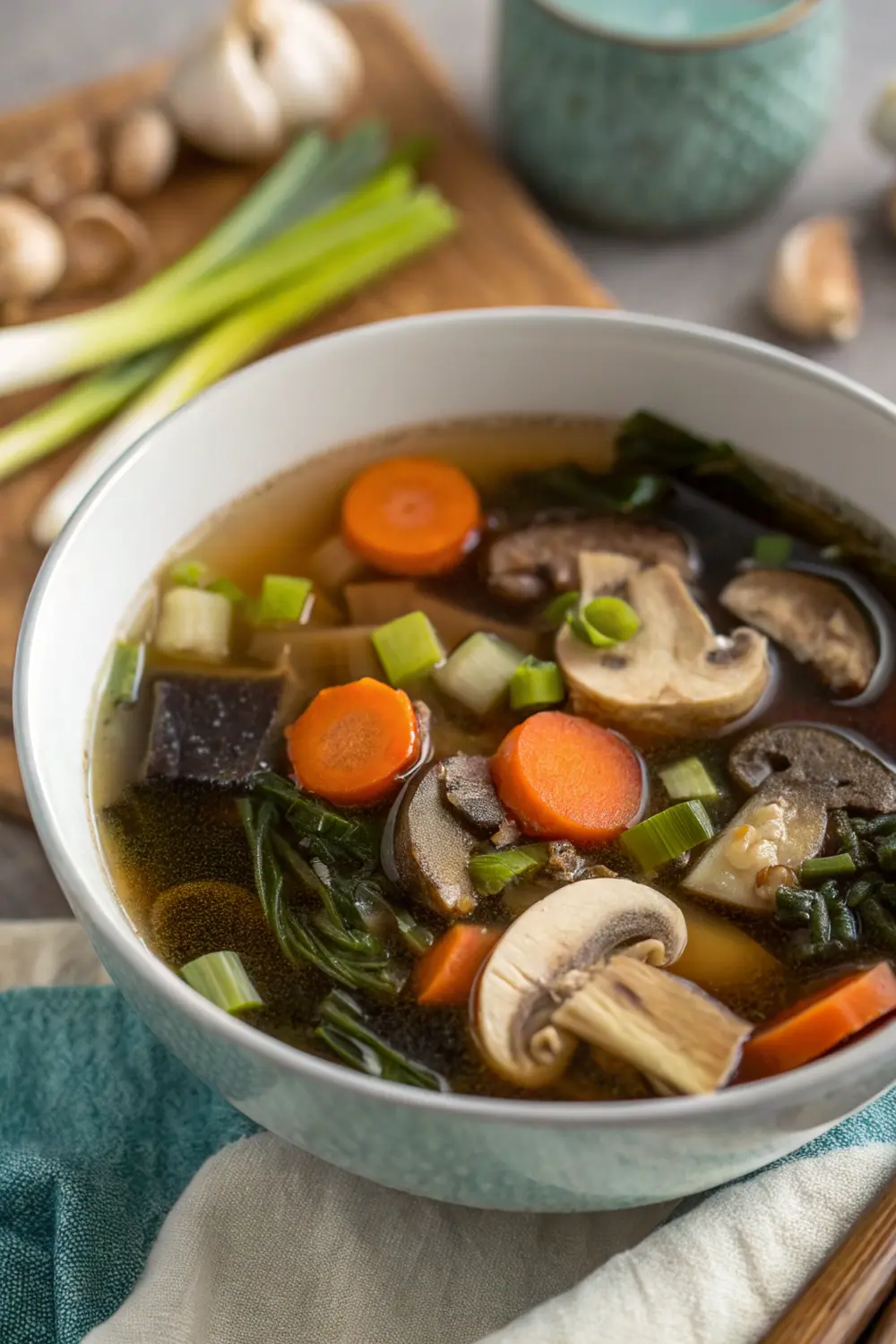
- Allow flavors to develop – Maintain the gentle simmer for 20 minutes, uncovered. You’ll notice the liquid beginning to take on a golden-amber hue and a fragrant aroma will fill your kitchen. The vegetables will soften and release their flavors into the broth.
- Remove the kombu – After 20 minutes, use tongs or a slotted spoon to remove the kombu from the broth and discard it. Leaving kombu in too long can make the broth slimy or overly strong.
- Season and finish – Stir in 1 tablespoon of soy sauce and a pinch of black pepper. Taste the broth and adjust seasonings if needed – you may want more soy sauce if you prefer a saltier profile or additional herbs for complexity.
- Strain if desired – For a clearer broth, strain the mixture through a fine-mesh sieve. For a more rustic stock with bits of vegetables, you can skip straining. Both versions offer excellent flavor, though the strained version works better for more refined dishes.
- Cool and store – If not using immediately, allow the broth to cool completely before transferring to airtight containers. The flavor will continue to develop as it cools, becoming even more complex and nuanced.
Pro Tips for Broth-Making Success
Elevating Your Homemade Stock
These expert tips will help you create the most flavorful mushroom kombu vegetable broth possible, avoiding common pitfalls and maximizing that coveted umami flavor. “The Spinach Mushroom Soup is another delicious way to enjoy the earthy depth of mushrooms in a comforting bowl.”
- Never boil the kombu – Always maintain a gentle simmer to prevent bitterness and sliminess that can develop when kombu is subjected to high heat.
- Use mushroom stems – Don’t throw away those mushroom stems! They contain tremendous flavor and can be used in your broth (save the caps for another dish if you prefer).
- Roast vegetables first – For a deeper, more caramelized flavor, try roasting your carrots, celery, and mushrooms at 400°F for 20 minutes before adding them to the broth.
- Add vegetable scraps – Clean onion skins, carrot tops, and celery leaves can all contribute extra flavor to your broth. Keep a bag in your freezer to collect these scraps between cooking sessions.
- Try different mushroom varieties – Experiment with various mushroom types like porcini, shiitake, or oyster mushrooms for different flavor profiles. Dried mushrooms often provide more concentrated flavor than fresh.
- Control sodium levels – If you’re watching your sodium intake, use low-sodium soy sauce or replace with coconut aminos for a similar umami boost with less salt.
- Increase volume wisely – When doubling or tripling the recipe, don’t proportionally increase the kombu, as it can quickly become too strong. Instead, add about 1.5x the amount of kombu when doubling the recipe.
Smart Storage Solutions for Homemade Kombu Broth
Preserving Flavor and Freshness
Proper storage techniques ensure you’ll have delicious mushroom kombu vegetable broth ready whenever inspiration strikes. These methods help maintain quality and extend the usable life of your homemade stock. “For a comforting meal that makes great use of this broth, try the Mushroom Orzo Risotto which benefits greatly from a flavorful homemade stock.”
Refrigeration Methods
For short-term storage, refrigeration is your best option. Allow the broth to cool completely before transferring to airtight containers. Glass mason jars work particularly well as they don’t absorb flavors or stain like plastic containers might. Leave about half an inch of headspace if you’re using jars, as the liquid will expand slightly when cold. Properly stored, your mushroom kombu vegetable broth will maintain peak flavor for 4-5 days in the refrigerator.
Freezer Storage for Long-Term Use
To extend the life of your broth for months, freezing is the way to go. Consider these methods:
- Ice cube trays – Pour cooled broth into ice cube trays and freeze until solid. Transfer the frozen cubes to a freezer bag, removing as much air as possible before sealing. Each cube equals approximately 1-2 tablespoons, perfect for adding to sauces or deglazing pans.
- Freezer containers – For larger portions, use freezer-safe containers with tight-fitting lids. Leave about an inch of headspace to allow for expansion during freezing.
- Silicone muffin cups – These create perfect 1/4 cup portions that are easy to pop out and use as needed.
Frozen mushroom kombu vegetable broth maintains excellent quality for up to 3 months. Label containers with the date to keep track of freshness.
Concentrate Method
For space-efficient storage, consider reducing your broth to a concentrate. After straining, return the broth to a clean pot and simmer gently until reduced by half. This intensified stock can be stored in smaller containers and later reconstituted with equal parts water when needed. This method not only saves freezer space but also creates a more potent flavor base.
Creative Variations on Your Umami Broth
Customizing Your Broth for Different Cuisines
The versatility of mushroom kombu vegetable broth makes it perfect for adapting to various culinary traditions. These variations maintain the umami-rich base while introducing exciting new flavor directions.
Asian-Inspired Mushroom Dashi
Transform your basic broth into a Japanese-style dashi by adding 2 tablespoons of dried bonito flakes during the last 5 minutes of simmering. Strain before use for a clearer broth. This variation works beautifully as a base for miso soup, ramen, or as a poaching liquid for delicate white fish.
Herbal Mediterranean Broth
Add a Mediterranean twist by incorporating 1 teaspoon dried oregano, 1/2 teaspoon dried rosemary, and 1/4 teaspoon dried thyme along with 1 tablespoon tomato paste. This variation creates a wonderfully aromatic base for minestrone, Tuscan bean soups, or as the cooking liquid for risotto and other grain dishes.
Spicy Thai-Style Infusion
Introduce 1 stalk of lemongrass (bruised and cut into 2-inch pieces), 3 slices of fresh ginger, 2 makrut lime leaves, and 1 small red chili (seeded and sliced) to the basic recipe. This vibrant variation serves as an excellent base for coconut curries, tom yum soup, or for cooking jasmine rice with extra dimension.
Smoky Roasted Mushroom Broth
Deeply roast your mushrooms before adding them to the broth by tossing them with 1 tablespoon olive oil and roasting at 425°F for 20 minutes until they develop a rich brown color. Add 1/2 teaspoon smoked paprika to the final broth for a deeply satisfying smoky flavor that pairs beautifully with beans, lentils, or as a base for plant-based gravy.
Root Vegetable Enriched Stock
Enhance the natural sweetness of your broth by adding 1 parsnip (diced), 1/2 sweet potato (cubed), and 1 small turnip (diced) to the standard recipe. This heartier variation creates a more substantial base for winter vegetable soups, pot pies, or as a braising liquid for roasts.
Lemon-Herb Brightened Broth
For a lighter, brighter profile, add the zest of one lemon (being careful to avoid the bitter white pith), 3 tablespoons chopped fresh parsley, and 1 tablespoon fresh dill during the last 5 minutes of cooking. This refreshing variation works wonderfully with spring vegetables, as a poaching liquid for fish, or as a base for light summer soups.
Serving Your Mushroom Kombu Creation
From Simple Sipping to Culinary Foundation
The versatility of mushroom kombu vegetable broth extends far beyond being just an ingredient—it’s a culinary powerhouse that can be enjoyed in numerous ways. Whether sipping it on its own or using it as the foundation for elaborate dishes, this umami-rich liquid elevates everything it touches. For a delicious Vietnamese dipping sauce that pairs wonderfully with dishes made using this broth, check out this authentic Nuoc Cham recipe which adds brightness to umami-rich foods.
As a Sipping Broth
Enjoy the broth on its own in a mug, perhaps with a sprinkle of sliced scallions, a few drops of sesame oil, or a dash of chili oil for heat. This makes a nourishing mid-afternoon pick-me-up or a light starter before dinner. The warm, savory quality is particularly comforting during cold weather or when you’re feeling under the weather.
Soup and Stew Foundation
Use your mushroom kombu vegetable broth as the liquid base for virtually any soup or stew recipe. It adds tremendous depth to:
- Vegetable soups where the complex flavors compensate for the absence of meat
- Hearty bean and lentil stews where the umami notes complement the earthiness of legumes
- Asian-inspired noodle soups like ramen, pho, or udon dishes
- Simple miso soup—just add a tablespoon of miso paste per cup of hot broth
Grain Cooking Medium
Replace water with mushroom kombu vegetable broth when cooking grains for an instant flavor boost:
- Rice dishes absorb the savory notes beautifully, especially brown rice or wild rice
- Quinoa and farro develop a nutty complexity when cooked in this broth
- Barley becomes extraordinarily savory and satisfying as a side dish or salad base
- Polenta or grits transform into a gourmet dish with this simple substitution
Sauce Foundation
Use the broth as a starting point for delicious sauces:
- Reduce it with a splash of wine and herbs for a sophisticated pan sauce
- Thicken with cornstarch or flour for a versatile gravy
- Blend with roasted vegetables for a naturally thickened sauce
- Use as the liquid in plant-based “cream” sauces by adding a touch of coconut milk or cashew cream
Frequently Asked Questions About Umami-Rich Broths
Clarifying Common Concerns
Can I make mushroom kombu vegetable broth in a slow cooker or pressure cooker?
Absolutely! For a slow cooker, combine all ingredients and cook on low for 4-6 hours. The gentle, sustained heat creates an excellent extraction of flavors. For a pressure cooker or Instant Pot, combine ingredients and cook on high pressure for just 15 minutes, then allow for natural pressure release. One important note: still remove the kombu after the initial 20 minutes of cooking time (set a timer if using a slow cooker) to prevent bitterness.
Why is my broth cloudy instead of clear?
Cloudiness in broth typically results from rapid boiling, which causes vegetable particles to break down and remain suspended in the liquid. For a clearer broth, maintain a gentle simmer rather than a rolling boil, and strain the finished broth through cheesecloth or a coffee filter. Remember that cloudiness affects appearance but not flavor—cloudy broths can be just as delicious!
Can I use other types of seaweed if I can’t find kombu?
While kombu is traditional and provides the ideal umami flavor, you can substitute other dried seaweeds like wakame or dulse in a pinch. They provide similar minerals and oceanic notes, though their umami profile differs slightly. Adjust quantities accordingly—other seaweeds may be more potent than kombu. Start with about half the amount and adjust to taste.
Your Gateway to Umami-Rich Cooking Adventures
Building Culinary Confidence
Creating your own mushroom kombu vegetable broth is more than just following a recipe—it’s about building a foundational cooking skill that will elevate countless dishes in your culinary repertoire. This versatile, deeply flavorful liquid brings professional-level depth to everything it touches, from simple soups to elaborate special-occasion dishes. “The rich, savory profile of this broth would complement the Mushroom Roast Lamb beautifully, adding another layer of umami complexity to the dish.”
Once you’ve mastered this basic technique, you’ll find yourself reaching for boxed broths less and less. The difference in flavor is remarkable, and the satisfaction of creating something so fundamental from scratch brings a special joy to cooking. Plus, by controlling exactly what goes into your broth, you’re creating a healthier, preservative-free alternative to commercial products.
We encourage you to experiment with the variations and applications suggested throughout this guide. Each batch of homemade broth becomes a learning opportunity and a chance to refine your personal taste preferences. Whether you’re a seasoned home cook or just beginning your culinary journey, this mushroom kombu vegetable broth represents an accessible way to bring restaurant-quality flavor to your everyday cooking.
PrintMushroom Kombu Vegetable Broth
A deeply savory, umami-rich broth combining earthy mushrooms and mineral-rich kombu.
This versatile foundation elevates soups, grains, and sauces with professional-level depth.
Perfect for both everyday cooking and special culinary creations.
- Prep Time: 15
- Cook Time: 25
- Total Time: 40 minutes
- Yield: 4 cups 1x
- Category: Dinner
- Method: Stovetop
- Cuisine: Asian-Inspired
Ingredients
- 2 cups filtered water
- 4 oz kombu (dried kelp)
- 1 cup mushrooms, sliced (cremini, shiitake, or button)
- 1 medium carrot, diced
- 1 medium celery stalk, diced
- 2 garlic cloves, minced
- 1 tablespoon soy sauce
- Pinch of freshly ground black pepper
- 3–5 dried shiitake mushrooms (optional)
- 1/2 leek, white part only, sliced (optional)
- 1-inch piece fresh ginger, sliced (optional)
- 1 bay leaf (optional)
- 1 tablespoon wakame seaweed (optional)
- 2 scallions, chopped (optional)
- 1 tablespoon nutritional yeast (optional)
- 1/2 teaspoon dried thyme (optional)
Instructions
- Combine water and kombu in a large pot and let soak for 10 minutes undisturbed.
- Add sliced mushrooms, diced carrot, diced celery, minced garlic, and any optional ingredients to the pot.
- Place pot over medium-low heat and bring to a gentle simmer (avoid boiling).
- Maintain a gentle simmer for 20 minutes uncovered.
- Remove and discard the kombu using tongs or a slotted spoon.
- Stir in soy sauce and black pepper, adjusting seasonings to taste.
- For a clearer broth, strain through a fine-mesh sieve (optional).
- Allow to cool completely before storing if not using immediately.
Notes
This broth can be refrigerated for 4-5 days or frozen for up to 3 months.
For a more concentrated stock, simmer the strained broth until reduced by half.
Avoid boiling kombu as it can release bitter flavors and create a slimy texture.
Use mushroom stems for extra flavor—they’re packed with umami compounds.
Nutrition facts are estimates and may vary based on ingredients used, portion sizes, and preparation methods.
Nutrition
- Serving Size: 1 cup
- Calories: 45
- Sugar: 2
- Sodium: 320
- Fat: 1
- Unsaturated Fat: 1
- Carbohydrates: 8
- Fiber: 2
- Protein: 3
Keywords: mushroom kombu vegetable broth, kombu broth, mushroom stock, umami broth, vegetable stock, vegan broth, homemade stock
Let’s connect! Follow me for more Joylicious Recipes: Facebook, Instagram, Pinterest