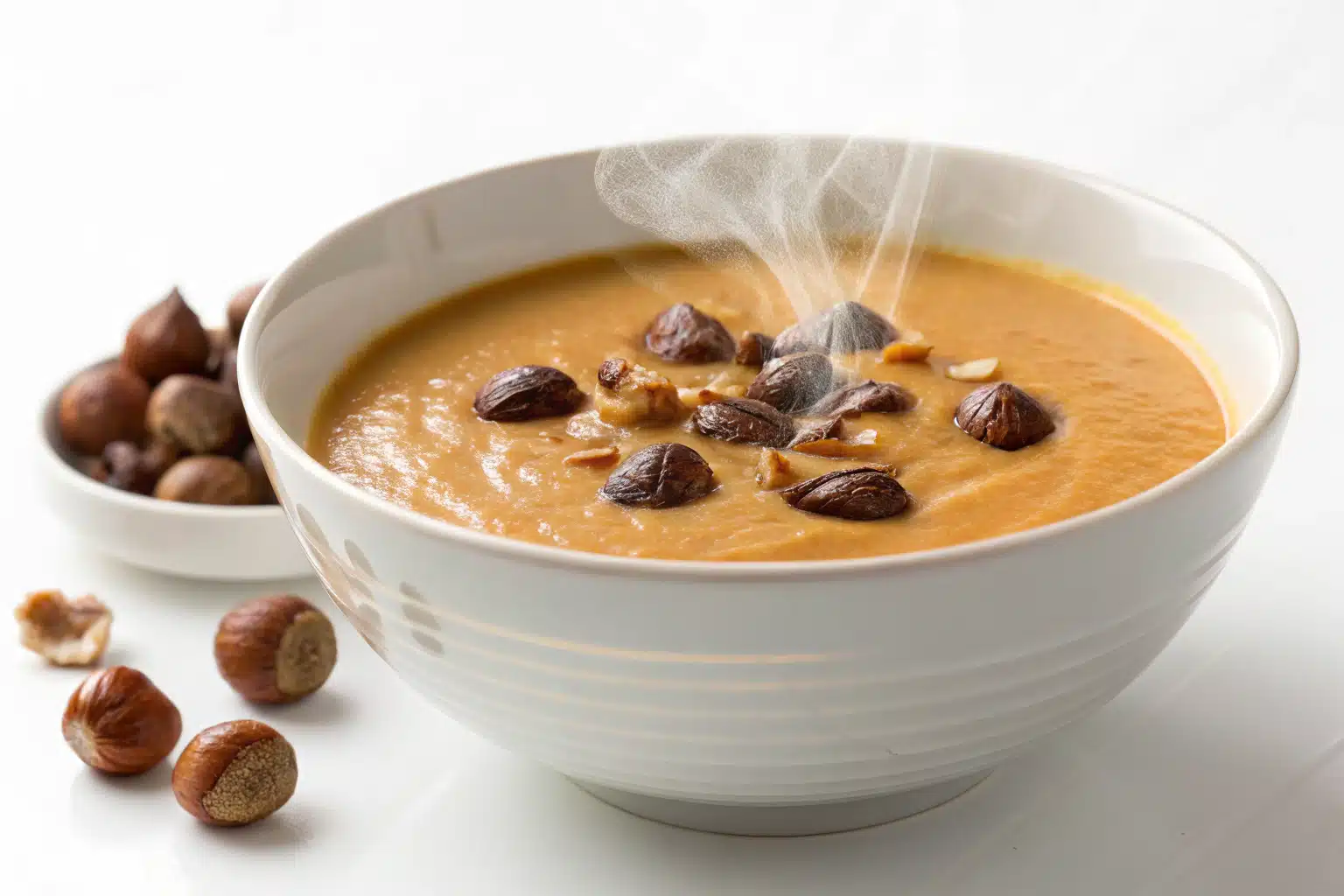
Creamy Chestnut Soup with Buttery Toasted Chestnuts
Introduction: Discovering the Delights of Chestnut Soup
The Rich Heritage of Chestnut Soup
Chestnut soup stands as one of winter’s most luxurious comfort foods. This velvety, earthy delight has been enjoyed for centuries across Europe, particularly in regions where chestnuts grow abundantly. The natural sweetness and starchy texture of chestnuts create a soup that’s inherently rich and satisfying without requiring heavy cream. In fact, chestnut soup represents perfect seasonal cooking – transforming a humble winter nut into a sophisticated dish that warms both body and soul.
Why Chestnut Soup Deserves a Place at Your Table
Beyond its delicious flavor profile, chestnut soup offers impressive nutritional benefits. Chestnuts are lower in fat than most nuts while providing good amounts of fiber, vitamin C, and B vitamins. Additionally, this soup is remarkably versatile – it can be dressed up for elegant holiday gatherings or enjoyed as a simple weeknight meal. “Looking for inspiration? Try our mushroom bacon gratin for another warming winter dish.” The combination of nutty sweetness, aromatic herbs, and creamy texture makes chestnut soup an unforgettable culinary experience that’s surprisingly easy to prepare at home.
Ingredients: Everything You Need for Perfect Chestnut Soup
Understanding Your Chestnut Options
Before diving into preparation, it’s important to understand your chestnut options. While fresh chestnuts offer the most authentic flavor, they require preparation – specifically scoring and roasting or boiling before peeling. Vacuum-packed peeled chestnuts provide excellent convenience without sacrificing quality and are ideal for this recipe. Jarred chestnuts also work well, though they may have a slightly softer texture. For the topping, whole chestnuts add a delightful textural contrast and visual appeal.
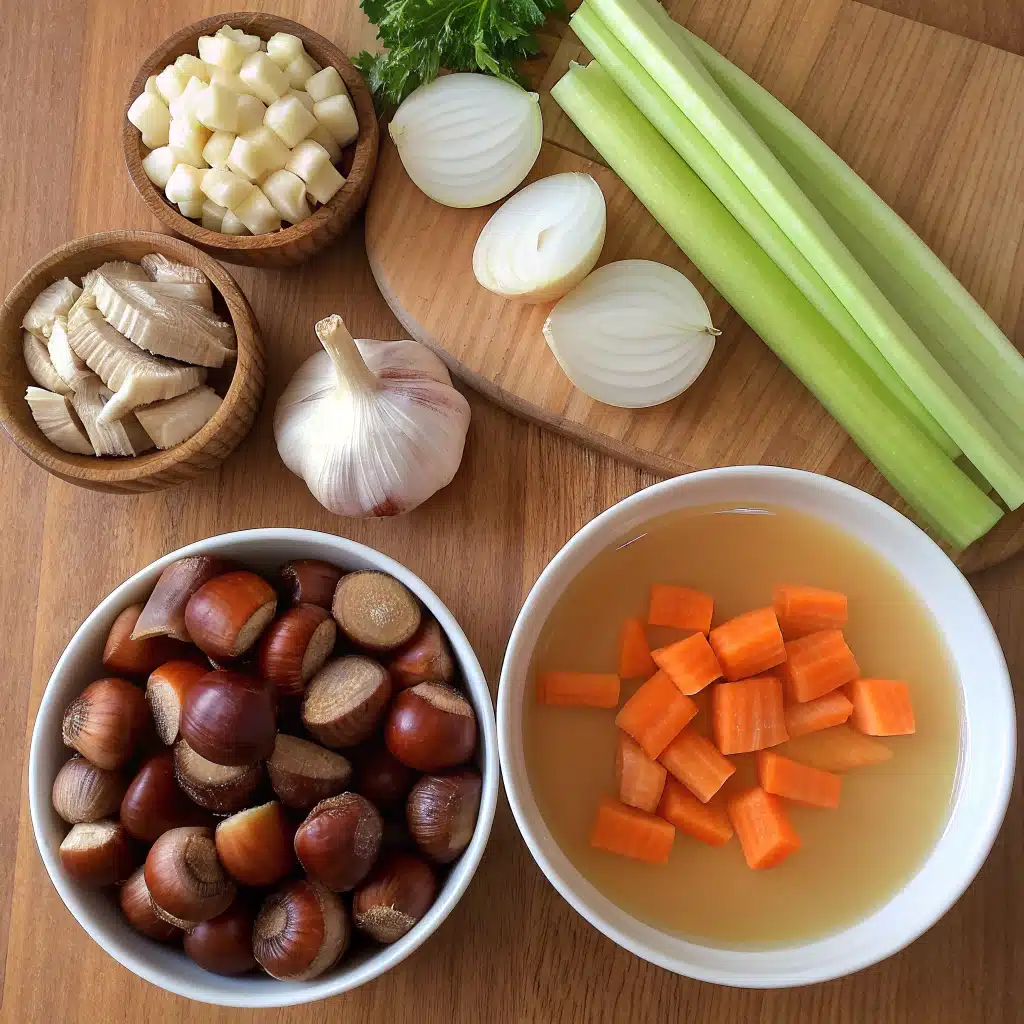
Essential Ingredients for Classic Chestnut Soup
| Main Soup Ingredients | Amount | Notes |
|---|---|---|
| Olive oil | 2 tablespoons | Extra virgin preferred |
| Yellow onion | 1 large | Thinly sliced |
| Chestnuts | 1 1/4 pounds | Peeled and roughly chopped |
| Garlic | 2 cloves | Minced |
| Rosemary | 2 teaspoons | Fresh or dried |
| Ground nutmeg | 1/8 teaspoon | Freshly ground if possible |
| Water | 3 cups | Filtered preferred |
| Vegetable bouillon cube | 1 | Organic recommended |
| Milk | 1 3/4 cups | Whole milk for richness |
| Salt and pepper | To taste | Freshly ground pepper best |
| Topping Ingredients | Amount | Notes |
|---|---|---|
| Whole chestnuts | 10 | For garnish |
| Butter | 1 tablespoon | Unsalted preferred |
| Salt | Pinch | For toasting chestnuts |
Step-by-Step: Creating Your Chestnut Soup Masterpiece
Preparing the Aromatics and Chestnuts
- Heat the olive oil in a large pot over medium heat until it shimmers slightly.
- Add the thinly sliced yellow onion with a pinch of salt to help it release moisture. Cook for 5-7 minutes, stirring occasionally, until the onions become soft and develop a light golden color.
- Add the minced garlic to the pot and cook for just 30-60 seconds until fragrant, being careful not to let it brown or burn.
- Incorporate the roughly chopped chestnuts into the pot, stirring them with the onion and garlic mixture. Allow them to cook for about 2-3 minutes, which will lightly toast them and intensify their nutty flavor.
Building Flavor and Simmering
- Sprinkle the rosemary and nutmeg over the chestnut mixture, stirring well to ensure the aromatics coat everything evenly. These herbs complement the natural sweetness of chestnuts perfectly.
- Pour in the water and bring the mixture to a gentle boil. The liquid should just barely bubble around the edges.
- Add the vegetable bouillon cube, breaking it up slightly to help it dissolve faster. “Discover great ideas like our roasted butternut squash with cranberries for more seasonal inspiration.”
- Reduce the heat to maintain a gentle simmer and cover the pot partially. Cook for approximately 20-25 minutes, or until the chestnuts become very tender when pierced with a fork.
Creating the Creamy Texture and Finishing Touches
- Remove the pot from heat and allow the mixture to cool slightly for safer blending.
- Using an immersion blender directly in the pot (or transferring carefully to a countertop blender in batches), blend until completely smooth. Take your time with this step to achieve maximum creaminess.
- Return the blended soup to low heat and gradually stir in the milk, incorporating it fully.
- Heat the soup gently for an additional 5 minutes, being careful not to let it boil which could cause the milk to separate.
- Season with salt and black pepper to taste, remembering that the flavors will continue to develop as the soup sits.
Tips: Mastering the Art of Chestnut Soup
Choosing and Preparing Chestnuts
Selecting the right chestnuts makes all the difference in this soup. Look for chestnuts that feel heavy for their size and have glossy shells without cracks or mold. If using fresh chestnuts, you’ll need to score an “X” on the flat side before roasting at 425°F for about 20 minutes until the shells open slightly. Let them cool just enough to handle, then peel while still warm.
For maximum convenience, vacuum-sealed peeled chestnuts are excellent for this recipe. “Don’t miss our roasted chestnuts recipe to learn how to perfectly prepare fresh chestnuts from scratch.” Remember that chestnuts need to be thoroughly cooked for this soup – undercooked chestnuts will result in a gritty texture rather than the silky smoothness we’re aiming for.
Achieving Perfect Texture and Flavor
The key to exceptional chestnut soup lies in proper blending and seasoning. For the smoothest texture, blend the soup thoroughly and strain it through a fine-mesh sieve if you want to eliminate any remaining particles. When adding the milk, do so gradually while stirring constantly to prevent any separation or curdling.
For flavor depth, don’t rush the initial steps of softening the onions and lightly toasting the chestnuts – these establish the foundation of flavor. The nutmeg should complement rather than overpower, so stick to the recommended amount. For a more complex flavor profile, consider adding a small splash of sherry vinegar or lemon juice at the end to brighten the soup’s earthy notes.
Make-Ahead Strategies for Stress-Free Serving
Chestnut soup actually improves with time as flavors meld, making it perfect for preparing in advance. You can make the soup (without the milk) up to three days ahead and refrigerate it. When ready to serve, gently reheat and add the milk. The buttered chestnuts for garnish are best prepared just before serving for maximum crispness and visual appeal.
For entertaining, consider serving the soup in small cups as a sophisticated starter. Prepare everything in advance, then simply reheat and garnish when guests arrive. This approach allows you to enjoy your company rather than being tied to the kitchen.
Storage: Keeping Your Chestnut Soup Fresh and Delicious
Refrigerating Chestnut Soup Properly
Properly stored chestnut soup will maintain its quality and flavor for several days. After cooking, allow the soup to cool completely before transferring to airtight containers. Refrigerate promptly, where it will keep well for up to 4 days. When reheating, do so gently over low heat, stirring occasionally to prevent the bottom from scorching. If the soup thickens during storage, thin it with a little extra milk or broth until you reach your desired consistency.
For the butter-toasted chestnuts, store these separately from the soup in their own container to maintain their texture. They’ll keep in the refrigerator for 2-3 days but may lose some crispness. “Here’s your guide to beef pulao for another hearty meal option to add to your rotation.”
Freezing Techniques for Longer Storage
Chestnut soup freezes beautifully, but with one important caveat: freeze it before adding the milk. The milk-free base can be frozen for up to 3 months in airtight containers or heavy-duty freezer bags. Leave some headspace in containers as the soup will expand slightly when frozen.
To use frozen soup, thaw overnight in the refrigerator, then reheat gently on the stovetop. Once hot, add the fresh milk and simmer briefly to incorporate. This method prevents the milk from separating during the freezing and thawing process, ensuring your soup maintains its creamy texture. The buttered chestnuts for garnish don’t freeze well, so prepare those fresh when serving previously frozen soup.
Reviving Leftover Soup
Even perfectly stored soup sometimes needs rejuvenation after a few days. If your chestnut soup has thickened too much, simply add a splash of milk or vegetable broth while reheating. A quick blend with an immersion blender can also help restore the soup’s original creamy texture.
To refresh the flavor of leftover soup, consider adding a small amount of fresh herbs (a sprinkle of chopped rosemary is perfect) or a tiny pinch of additional nutmeg. For an entirely new presentation, serve the reheated soup with different toppings – perhaps a swirl of cream, some crispy fried sage leaves, or a few toasted hazelnuts for variety.
Variations: Creative Twists on Classic Chestnut Soup
Dietary Adaptations
Chestnut soup is wonderfully adaptable to various dietary needs without sacrificing flavor. For a vegan version, simply substitute the dairy milk with unsweetened almond milk, oat milk, or coconut milk. The natural creaminess of chestnuts means you’ll still achieve a luxurious texture. Replace the butter for toasting chestnuts with olive oil or a plant-based butter alternative.
For a gluten-free version, just ensure your bouillon cube contains no gluten ingredients. Those watching calories can use low-fat milk instead of whole milk and reduce the butter for toasting the garnish chestnuts. The natural properties of chestnuts create a creamy soup that doesn’t rely on heavy cream or excessive fats for its rich texture.
Flavor Variations to Explore
While the classic chestnut soup is divine, several variations can keep this recipe exciting throughout the winter season:
- Chestnut and Wild Mushroom Soup: Add 8 ounces of sautéed wild mushrooms (such as shiitake or porcini) before blending for an earthy, forest-inspired version.
- Chestnut-Apple Soup: Include one peeled, diced apple when cooking the chestnuts for a subtle sweetness that complements the nutty flavor.
- Chestnut-Pear Soup: Similar to the apple variation, but using a ripe pear for a more delicate sweetness.
- Spiced Chestnut Soup: Add warming spices like cinnamon, cloves, and allspice for a holiday-inspired variation.
- Chestnut-Celery Root Soup: Replace half the chestnuts with peeled, diced celery root for a complex, slightly tangy version.
“Check out our fennel celeriac soup for another wonderful winter soup option.”
Texture and Presentation Alternatives
The traditional chestnut soup is velvety smooth, but you can play with texture:
- Rustic Chestnut Soup: Only partially blend the soup, leaving some chestnut pieces for a more rustic, country-style presentation.
- Chestnut Soup with Crispy Croutons: Top with homemade garlic-herb croutons instead of the chestnuts for a different textural contrast.
- Chestnut Soup with Crispy Bacon: Garnish with crumbled crispy bacon for a savory counterpoint to the soup’s sweetness (though this makes it non-vegetarian).
- Whipped Chestnut Soup: For special occasions, finish with a small dollop of lightly whipped cream sprinkled with nutmeg.
- Layered Presentation: For an elegant dinner party, serve in clear glass bowls with the creamy soup on the bottom and a small layer of herb oil floating on top.
Serving: Perfect Pairings and Presentation Ideas
Elegant Presentation Techniques
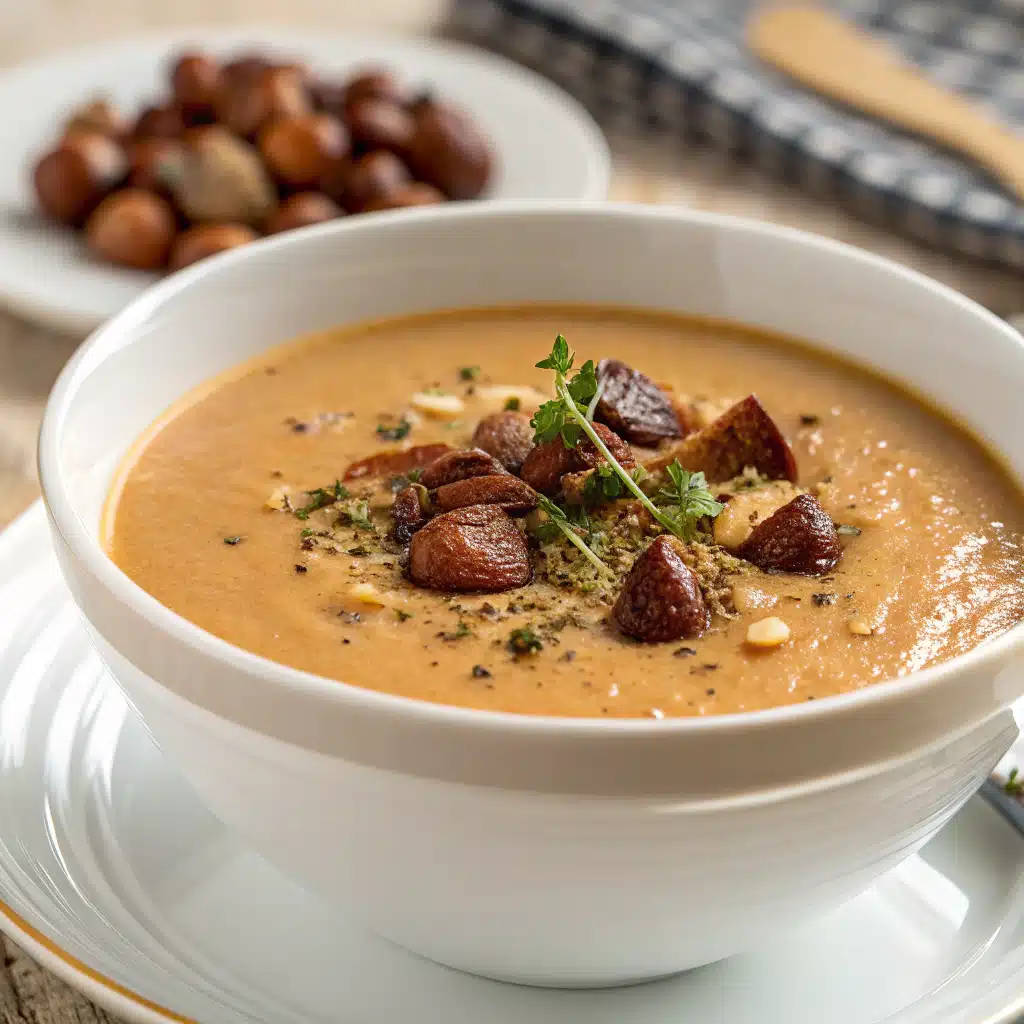
Chestnut soup’s rich, earthy color and velvety texture make it perfect for elegant presentation. Serve in warmed bowls or cups to maintain temperature – white vessels provide beautiful contrast with the deep brown soup. Place the buttered chestnuts in the center of each serving, perhaps with a single small rosemary sprig for color contrast.
For special occasions, consider serving in hollowed-out mini pumpkins or small acorn squashes for a stunning autumnal presentation. A drizzle of cream in a spiral or feathered pattern not only adds visual appeal but also creates a pleasant flavor contrast. “Want more ideas? Check out our spinach mushroom soup for additional garnishing inspiration.”
Perfect Accompaniments
Chestnut soup pairs beautifully with carefully chosen accompaniments:
- Bread Options: Serve with crusty artisanal bread, thinly sliced dark rye, or homemade herb focaccia for dipping. Cheese straws or gruyère gougères also make excellent companions.
- Salad Pairings: A bitter greens salad with pears, blue cheese and walnuts offers pleasing contrast. Alternatively, try a simple endive and apple salad with a light vinaigrette.
- Wine Pairings: For wine enthusiasts, an oaked Chardonnay or a medium-bodied Viognier complements the nutty flavors. A dry Amontillado sherry also pairs exceptionally well with chestnut soup’s earthy qualities.
Seasonal Serving Suggestions
Chestnut soup can be adapted throughout the winter season:
- Early Autumn: Serve as part of a harvest dinner alongside roasted vegetables and wild rice.
- Thanksgiving: Offer as an elegant starter before the main feast, perhaps in small cups to leave room for the meal ahead.
- Christmas Holiday: Present as part of a festive dinner, perhaps garnished with a few pomegranate seeds for color.
- Winter Gatherings: Serve in mugs for casual fireside suppers with hearty sandwiches.
- Late Winter: Pair with a robust salad for a light yet satisfying meal as winter begins to wane.
The versatility of chestnut soup makes it appropriate for everything from casual family meals to sophisticated dinner parties throughout the cooler months.
FAQs: Common Questions About Chestnut Soup
Can chestnut soup be made with packaged chestnuts?
Absolutely! Packaged chestnuts are not only convenient but often produce excellent results. Vacuum-sealed or jarred chestnuts are already peeled and cooked, saving significant preparation time. They maintain good chestnut flavor and create a smooth texture in the finished soup. If using packaged chestnuts, just be sure to check whether they’re sweetened (some jarred varieties are) and adjust any added seasonings accordingly.
What spices pair best with chestnut soup?
Nutmeg is the classic spice companion for chestnut soup, bringing warmth without overwhelming the delicate chestnut flavor. Other excellent pairings include cinnamon, cloves, and allspice in small quantities. Fresh or dried herbs like rosemary and thyme complement chestnuts beautifully. For a more complex profile, a tiny pinch of star anise or cardamom can add intriguing depth. Remember that chestnuts have a subtle sweetness that can be easily overwhelmed, so use spices with a light hand.
Is chestnut soup naturally creamy?
Yes, chestnut soup develops a remarkably creamy texture even without dairy. This natural creaminess comes from the high starch content in chestnuts, which creates a velvety texture when the chestnuts are cooked and puréed. The addition of milk enhances this creaminess, but the soup maintains a luxurious mouthfeel even in dairy-free versions. This natural creaminess makes chestnut soup particularly special among pureed soups.
Can chestnut soup be made vegan?
Definitely! Chestnut soup adapts beautifully to a vegan preparation. Simply substitute the milk with an unsweetened plant-based alternative like almond milk, oat milk, or coconut milk. Replace the butter used for toasting the garnish chestnuts with olive oil or a plant-based butter. The natural creaminess of chestnuts means you’ll still achieve a rich, satisfying texture without any dairy products.
Can chestnut soup be frozen?
Yes, but it’s best to freeze the soup before adding the milk. The soup base freezes well for up to three months in airtight containers. When ready to use, thaw overnight in the refrigerator, then reheat gently and add fresh milk. This prevents the milk from separating during freezing and thawing. The buttered chestnuts for garnish don’t freeze well, so prepare those fresh when serving previously frozen soup.
What toppings pair well with chestnut soup?
Beyond the butter-toasted chestnuts in this recipe, many toppings complement chestnut soup beautifully. Consider crispy fried sage leaves, a swirl of cream or crème fraîche, toasted hazelnuts or walnuts, crispy pancetta (for non-vegetarians), herb oil drizzled on top, or tiny croutons seasoned with herbs. For a sweet-savory contrast, a few pomegranate seeds can add color and bright flavor. A light grating of aged hard cheese like Parmesan can also add delicious umami notes.
Conclusion: Mastering the Art of Chestnut Soup
Why This Chestnut Soup Will Become a Winter Favorite
Chestnut soup offers a perfect balance of comfort and sophistication that few dishes can match. The natural sweetness of chestnuts creates a uniquely satisfying experience, while the velvety texture provides luxurious mouthfeel without excessive cream or butter. Its adaptability to different dietary needs and serving occasions makes it an invaluable recipe in your winter repertoire. “Learn more about mushroom orzo risotto as another versatile comfort food option.”
The combination of simplicity and elegance makes this chestnut soup particularly special. With just a few quality ingredients and some basic techniques, you can create a dish that tastes as though it came from a fine-dining establishment. The make-ahead possibilities further enhance its appeal, allowing you to prepare it during leisure time and enjoy it when needed.
Seasonal Cooking and Chestnut Appreciation
Embracing chestnut soup connects you to the rhythm of seasonal cooking and the joy of using ingredients at their peak. Chestnuts have been valued for centuries across cultures, and this soup honors their distinctive character. While chestnuts may not be an everyday ingredient in modern American kitchens, this soup offers an accessible way to incorporate them into your culinary repertoire.
As you master this chestnut soup recipe, consider exploring other chestnut preparations – from traditional stuffings to desserts and beyond. The versatility of this humble nut might surprise you, and the satisfaction of transforming it into something as delicious as this soup brings the special pleasure that comes from thoughtful, seasonal cooking.
PrintChestnut Soup
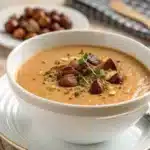
Velvety chestnut soup with buttery toasted chestnuts is the perfect winter comfort food, balancing natural sweetness with aromatic herbs.
- Prep Time: 15
- Cook Time: 40
- Total Time: 55 minutes
- Yield: 4 1x
- Category: Soup
- Cuisine: European
Ingredients
- 2 tablespoons olive oil
- 1 large yellow onion, thinly sliced
- 1 1/4 pounds chestnuts, peeled and roughly chopped
- 2 cloves garlic, minced
- 2 teaspoons fresh or dried rosemary
- 1/8 teaspoon ground nutmeg
- 3 cups water
- 1 vegetable bouillon cube
- 1 3/4 cups milk
- Salt, to taste
- Ground black pepper, to taste
- For the topping:
- 10 whole chestnuts
- 1 tablespoon butter
- Pinch of salt
Instructions
- Heat olive oil in a large pot over medium heat. Add onion with a pinch of salt and cook until soft and golden, about 5-7 minutes.
- Add garlic and cook for 30-60 seconds until fragrant.
- Add chopped chestnuts and cook for 2-3 minutes to lightly toast.
- Stir in rosemary and nutmeg.
- Add water and bring to a gentle boil.
- Add bouillon cube, reduce heat, and simmer until chestnuts are tender, about 20-25 minutes.
- Remove from heat and blend until smooth.
- Return to low heat, stir in milk, and warm gently for 5 minutes without boiling.
- Season with salt and black pepper.
- For topping, melt butter in a skillet over low heat, add whole chestnuts and salt, cooking until golden.
- Serve soup topped with butter-toasted chestnuts.
Notes
Nutrition facts are estimates and may vary based on ingredients used, portion sizes, and preparation methods.
Nutrition
- Serving Size: 4
- Calories: 320 Kcal
- Sugar: 8g
- Sodium: 450mg
- Fat: 12g
- Saturated Fat: 4g
- Carbohydrates: 48g
- Fiber: 5g
- Protein: 7g
- Cholesterol: 15mg
Keywords: chestnut soup, creamy soup, winter soup, vegetarian soup
Let’s connect! Follow me for more Joylicious Recipes: Facebook, Instagram, Pinterest