
The Best Homemade Chopped Salad Recipe with Italian Dressing
What Makes a Chopped Salad Special
A chopped salad recipe stands out from ordinary salads because of its distinctive preparation method and texture. In this colorful, nutritious dish, all ingredients are cut into uniform, bite-sized pieces, allowing you to get a perfect blend of flavors in every forkful. Unlike tossed salads where ingredients often separate, a properly chopped salad delivers a harmonious combination of vegetables, creating a delightful eating experience.
“Discover great ideas like our flavorful Chinese chicken salad recipe for another refreshing meal option.”
History and Popularity of Chopped Salads
Chopped salads have been popular in American cuisine for decades, with roots tracing back to classic Italian antipasto platters. Their appeal has grown tremendously in recent years as more people seek fresh, nutrient-dense meal options. Restaurants across the country feature signature chopped salads, but nothing beats a homemade version where you control the quality, freshness, and quantity of each ingredient. The beauty of the chopped salad recipe lies in its versatility – it works perfectly as a light lunch, dinner side, or a hearty main course with added protein.
Ingredients for the Perfect Chopped Salad Recipe
Fresh Vegetables and Greens
The foundation of any exceptional chopped salad recipe begins with fresh, crisp ingredients. For our classic Italian-style chopped salad, we’ll use these garden-fresh vegetables that provide a variety of textures, colors, and nutrients:
| Vegetable | Quantity | Preparation |
|---|---|---|
| Romaine hearts | 2 | Chopped small |
| Red bell pepper | 1 | Diced into ½-inch squares |
| Cherry tomatoes | 1 cup | Halved |
| Red onion | ½ medium | Diced small |
| Celery | 2 ribs | Diced small |
| Carrots | 2 small | Diced small |
| English cucumber | ½ | Quartered and diced |
Each ingredient contributes its unique nutritional profile and flavor to create a well-balanced chopped salad that’s as healthy as it is delicious.
Homemade Italian Dressing Components
What truly elevates this chopped salad recipe is the scratch-made Italian dressing. This vibrant dressing combines the perfect balance of acidity, herbs, and quality olive oil:
| Ingredient | Quantity | Notes |
|---|---|---|
| Red wine vinegar | ¼ cup | Provides tanginess |
| Light mayonnaise | ½ teaspoon | Optional for creaminess |
| Extra virgin olive oil | ¾ cup | Use high-quality oil |
| Garlic cloves | 3 | Minced |
| Kosher salt | 1 teaspoon | Enhances all flavors |
| Dried oregano | ½ teaspoon | Classic Italian flavor |
| Dried basil | ½ teaspoon | Aromatic herb note |
| Dried rosemary | ¼ teaspoon | Adds complexity |
| Black pepper | Dash | Freshly ground preferred |
| Red pepper flakes | Dash | Adds gentle heat |
Making your own dressing ensures no preservatives or additives, resulting in a fresher taste that perfectly complements your chopped salad ingredients.
Step-by-Step Chopped Salad Recipe Guide
Preparing the Italian Dressing
Creating the perfect Italian dressing for your chopped salad begins with combining ingredients in the right order to achieve the ideal emulsion:
- In a medium bowl, whisk together the red wine vinegar and light mayonnaise until completely smooth. The mayonnaise, though optional, helps create a stable emulsion that won’t separate.
- Slowly drizzle in the extra virgin olive oil while whisking continuously. This gradual addition is crucial for a properly emulsified dressing.
- Add the minced garlic, kosher salt, dried oregano, dried basil, dried rosemary, black pepper, and red pepper flakes.
- Whisk vigorously until all ingredients are fully incorporated and the dressing looks uniform.
- For best flavor development, transfer to an airtight container and refrigerate overnight. This allows the herbs to infuse the oil and vinegar, creating a more complex flavor profile.
“Looking for inspiration? Try our Mediterranean salad for another herb-infused dressing option that works wonderfully with various salad combinations.”
Chopping Techniques for Perfect Texture
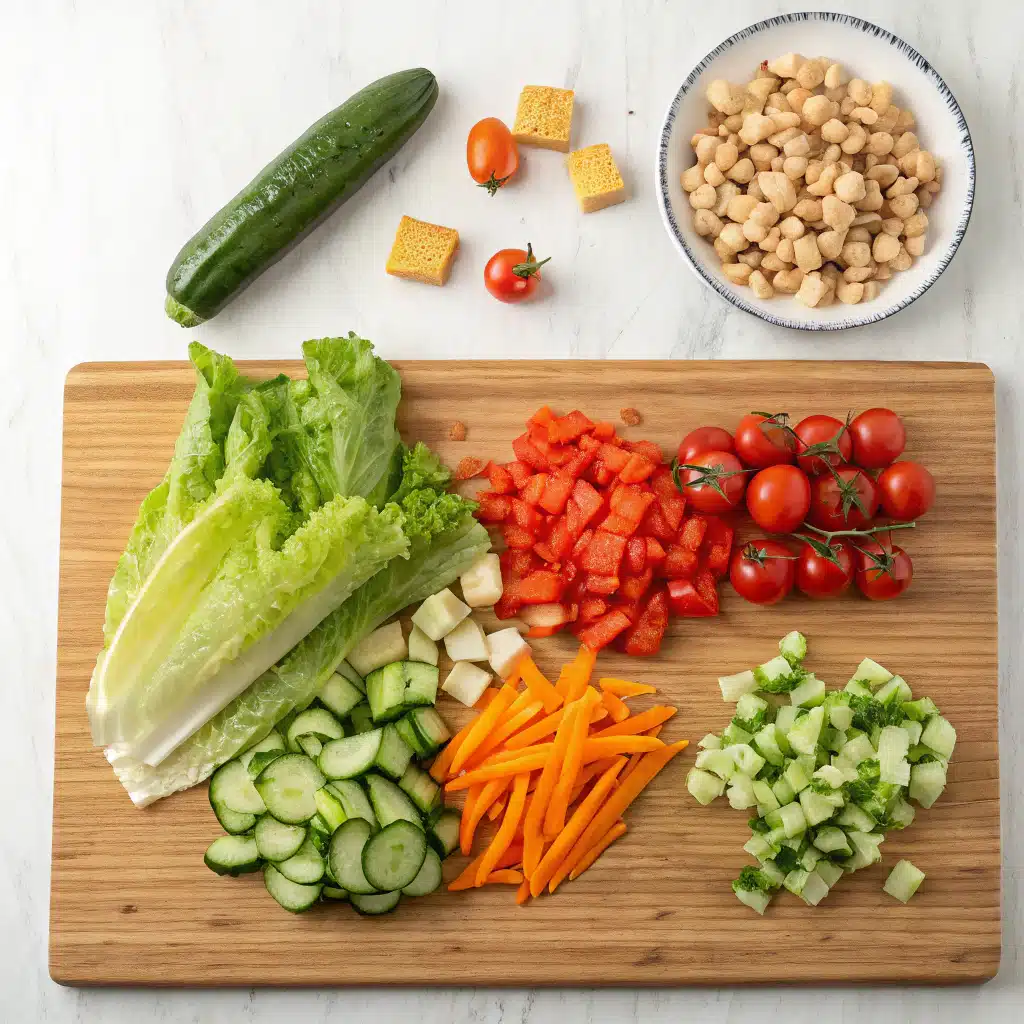
The key to an authentic chopped salad recipe lies in the uniform size of all ingredients, which allows for balanced flavor in every bite:
- Start with the romaine hearts. Slice them lengthwise into quarters, then rotate and chop crosswise into small, bite-sized pieces approximately ½-inch in size.
- Dice the red bell pepper into ½-inch squares, removing seeds and white membranes first.
- Halve the cherry tomatoes, creating bite-sized pieces that release their juices into the salad.
- Finely dice the red onion to ensure it distributes evenly throughout the salad without overwhelming any single bite.
- Slice celery ribs lengthwise, then chop into small pieces, capturing their distinctive crunch.
- Dice the carrots into small, uniform cubes for consistent texture and even cooking.
- Quarter the English cucumber lengthwise, then chop into bite-sized pieces, maintaining the refreshing crunch.
Remember, consistency in size is crucial – aim for pieces that fit comfortably on a fork while allowing multiple ingredients in each bite.
Assembling Your Chopped Salad
Putting together the perfect chopped salad involves more than just tossing ingredients in a bowl. Follow these steps for optimal presentation and flavor:
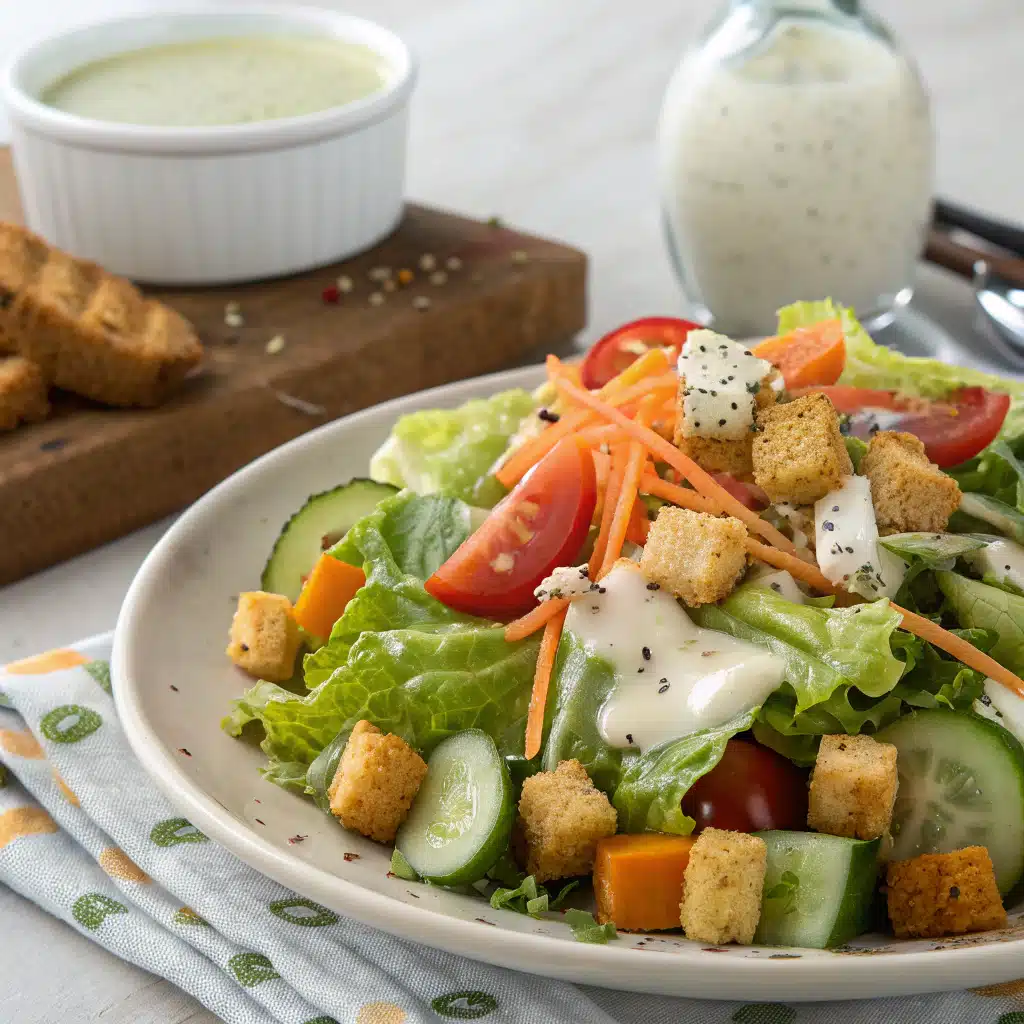
- In a large salad bowl, combine all the chopped vegetables: romaine, bell pepper, tomatoes, red onion, celery, carrots, and cucumber.
- Gently toss the vegetables to distribute them evenly throughout the mixture.
- For immediate serving, drizzle a portion of the Italian dressing over the salad and toss again to coat evenly.
- For a buffet-style service or meal prep, keep the dressing on the side in a small container or pitcher to prevent the salad from becoming soggy.
- If desired, finish with additional freshly ground black pepper or a sprinkle of grated Parmesan cheese.
This method ensures each bite contains the perfect blend of crisp vegetables and flavorful dressing.
Tips for the Best Chopped Salad Recipe
Choosing and Storing Fresh Ingredients
The quality of your chopped salad recipe depends significantly on the freshness of your ingredients. Here are some expert tips:
- Select romaine hearts that are firm and crisp with vibrant green leaves and no signs of wilting or browning.
- Choose bell peppers that feel heavy for their size with glossy, smooth skin and no soft spots.
- Cherry tomatoes should be plump and aromatic with tight, unblemished skin.
- Look for red onions with dry, papery outer skins and firm flesh without soft spots.
- Select celery with crisp, rigid stalks and fresh-looking leaves.
- Carrots should be firm and bright orange without cracks or softness.
- English cucumbers (sometimes called hothouse cucumbers) offer fewer seeds and thinner skin than regular cucumbers.
For optimal freshness, store most vegetables in the crisper drawer of your refrigerator. However, tomatoes maintain better flavor when stored at room temperature until you’re ready to prepare your salad.
“Want more ideas? Check out our cucumber tomato salad recipe for more tips on keeping produce at peak freshness.”
Knife Skills for Efficient Chopping
Proper knife techniques make preparing a chopped salad recipe both safer and more efficient:
- Use a sharp chef’s knife for most chopping – dull knives require more force and cause more accidents.
- Create a flat base when cutting round vegetables by slicing them in half first.
- For consistent sizing, make parallel cuts, then rotate the food 90 degrees and cut again.
- Use the “claw method” by curling your fingertips under and using your knuckles as a guide against the flat of the knife blade.
- For delicate herbs or greens, try the chiffonade technique: stack leaves, roll them tightly, then slice into thin ribbons.
- Maintain a steady rhythm rather than rushing – consistency is more important than speed.
- Keep your cutting board stable by placing a damp kitchen towel underneath to prevent slipping.
These techniques help ensure uniform pieces that cook evenly and create the ideal texture in your finished chopped salad.
Make-Ahead Strategies
One of the greatest advantages of a chopped salad recipe is its versatility for meal prep:
- Prepare the Italian dressing up to a week ahead and store in an airtight container in the refrigerator.
- Wash and dry greens thoroughly, then store wrapped in paper towels inside a sealed container.
- Chop hardy vegetables like carrots, bell peppers, and celery up to 3 days ahead, storing them in separate airtight containers.
- Wait to cut more delicate items like tomatoes and cucumbers until the day you plan to serve the salad.
- Assemble the complete salad without dressing up to 24 hours ahead, covering tightly with plastic wrap and refrigerating.
- Pack individual portions in containers with dressing on the side for grab-and-go lunches.
- If preparing for a party, chop all ingredients ahead but keep components separate, then assemble just before serving.
These strategies help maintain the optimal texture and freshness of your chopped salad, especially when planning for busy weekdays or entertaining.
Storing Your Chopped Salad Recipe
Keeping Ingredients Fresh
Proper storage is crucial for maintaining the crispness and flavor of your chopped salad recipe components:
- For undressed salad mixtures, store in airtight containers lined with paper towels to absorb excess moisture.
- Keep the salad and dressing separate until serving time to prevent wilting and sogginess.
- If storing partially dressed salad, place in containers with tight-fitting lids and consume within 24 hours.
- Store the Italian dressing in a glass jar with a tight seal – shake well before each use as natural separation may occur.
- Keep all components refrigerated at temperatures between 35-40°F (1.7-4.4°C).
“Here’s your guide to cucumber salad with more helpful storage techniques that apply to various fresh vegetable preparations.”
Reviving Wilted Ingredients
Even with careful storage, sometimes salad ingredients lose their crispness. Here are effective ways to bring them back to life:
- For limp romaine or other leafy greens, trim the ends and place them in ice water for 15-20 minutes, then dry thoroughly.
- Revive softened carrots and celery by cutting off the ends and standing them upright in a glass of cold water for about an hour.
- Refresh cucumber slices by soaking briefly in ice water with a squeeze of lemon juice.
- For slightly wilted herbs, trim the stems and place them in a glass of water like a bouquet of flowers, covering loosely with a plastic bag.
- If cherry tomatoes have started to wrinkle, a quick 30-second blanch in boiling water followed by an ice bath can help restore their plumpness.
These techniques can extend the life of your ingredients and reduce food waste when preparing your chopped salad recipe.
Meal Prep Ideas
Transform your chopped salad recipe into convenient meal options throughout the week:
- Create salad-in-a-jar meals by layering dressing on the bottom, followed by hearty vegetables, proteins, and greens on top.
- Prepare a large batch of undressed chopped salad and portion into individual containers for quick lunch options.
- Use leftover chopped salad as a filling for wraps or pita pockets by adding a protein like grilled chicken or chickpeas.
- Transform day-old dressed salad into a grain bowl by adding quinoa, farro, or brown rice.
- Use any extra chopped vegetables as pizza toppings or omelet fillings.
- Blend extra dressing with Greek yogurt to create a vegetable dip or sandwich spread.
- Combine leftover chopped vegetables with pasta for a quick pasta salad by adding extra dressing.
These strategies maximize convenience while ensuring you enjoy every bit of your chopped salad ingredients.
Variations on the Classic Chopped Salad Recipe
Adding Proteins for a Main Dish
Transform your chopped salad recipe from a side dish to a satisfying main course by incorporating these protein options:
- Grilled chicken breast, sliced into bite-sized pieces that maintain the uniform texture of your chopped salad
- Diced hard-boiled eggs for a vegetarian protein source with creamy texture
- Chickpeas or white beans, rinsed and drained, adding plant-based protein and fiber
- Cubed mozzarella or provolone cheese for an Italian-inspired protein addition
- Salami or pepperoni, diced small, adding rich flavor (optional)
- Grilled shrimp, chopped to maintain the salad’s consistency
- Canned tuna, drained well and flaked into small pieces
The key is to cut your protein additions to the same size as your vegetables, maintaining the characteristic uniform texture of a true chopped salad recipe.
“Don’t miss our BBQ chicken salad recipe for another protein-rich salad option that’s perfect for lunch or dinner.”
Regional and International Variations
The beauty of a chopped salad recipe is its adaptability to various culinary traditions:
- Greek-Style: Add kalamata olives, feta cheese, and substitute oregano-forward Greek dressing
- Mexican-Inspired: Incorporate black beans, corn, avocado, and cilantro with a lime-based dressing
- Asian Fusion: Include edamame, mandarin orange segments, and sliced almonds with a ginger-sesame dressing
- Mediterranean: Add artichoke hearts, roasted red peppers, and pine nuts with a lemon-herb vinaigrette
- California-Style: Include avocado, jicama, and sunflower seeds with a light avocado-based dressing
- Southwestern: Add corn, black beans, and diced bell peppers with a chipotle-lime dressing
Each variation maintains the fundamental chopped salad technique while introducing new flavor profiles from around the world.
Seasonal Adaptations
Adapt your chopped salad recipe throughout the year by highlighting seasonal produce:
- Spring: Incorporate tender asparagus, radishes, and sugar snap peas with a light lemon dressing
- Summer: Feature vine-ripened tomatoes, sweet corn, and fresh basil with classic Italian dressing
- Fall: Include roasted butternut squash, dried cranberries, and toasted pecans with a maple vinaigrette
- Winter: Add roasted beets, orange segments, and fennel with a citrus dressing
Seasonal adaptations not only provide variety but also ensure you’re enjoying ingredients at their peak flavor and nutritional value. Additionally, seasonal produce is often more affordable and sustainable than out-of-season options.
Serving Your Chopped Salad Recipe
Presentation Ideas
Elevate your chopped salad recipe with these attractive serving suggestions:
- For a buffet, serve in a wide, shallow bowl that showcases the colorful mixture of ingredients.
- Create individual portions in martini glasses or stemless wine glasses for an elegant dinner party presentation.
- Arrange the chopped salad as a wreath around a small bowl of extra dressing in the center of a circular platter.
- Layer the salad in clear glass trifle dishes to highlight the vibrant colors of the various ingredients.
- For a family-style meal, serve on a wooden board with small bowls of additional toppings like croutons, cheese, or nuts that guests can add according to preference.
- Pack individual portions in mason jars for picnics or outdoor gatherings, with dressing in separate containers.
Remember that a truly beautiful chopped salad needs minimal garnish – the vibrant colors of the fresh vegetables speak for themselves.
Pairing Suggestions
Complete your meal by pairing your chopped salad recipe with these complementary dishes:
- Serve alongside grilled protein like chicken, fish, or steak for a complete, balanced meal.
- Pair with a crusty Italian bread or garlic breadsticks for a traditional combination.
- Offer with a cup of minestrone or tomato soup for a satisfying lunch duo.
- Serve as a fresh counterpoint to rich pasta dishes like lasagna or fettuccine.
- Present as a side dish with a simple roasted chicken or turkey.
- Include as part of an antipasto spread with cheeses, olives, and cured meats.
“Learn more about egg salad recipes that can be served as another side option when hosting a luncheon alongside your chopped salad.”
Scaling for Crowds
When preparing your chopped salad recipe for larger gatherings, follow these practical tips:
- Calculate approximately 1½ cups of chopped salad per person as a side dish, or 2½-3 cups per person as a main course.
- Prepare vegetables in advance, storing them separately until assembly time.
- For very large groups, consider setting up a “chopped salad bar” with ingredients in separate containers, allowing guests to customize their portions.
- Make multiple smaller batches of dressing rather than one large batch for more consistent results.
- Use a large mixing bowl with plenty of room to toss ingredients without spillage.
- Consider slightly underdressing a large salad, offering additional dressing on the side.
- For outdoor events, keep the salad chilled by placing the serving bowl inside a larger bowl filled with ice.
These strategies ensure your chopped salad maintains its fresh appeal even when serving a crowd.
Frequently Asked Questions
What does “chopped” mean in the context of a Chopped Salad?
A chopped salad means all ingredients are cut into small, uniform, bite-sized pieces—usually about ¼ to ½ inch. Unlike tossed salads, where ingredients vary in size, a chopped salad ensures everything is similar in shape so each bite has a balanced mix of flavors and textures. This even chopping also helps the dressing coat every piece and makes fibrous veggies easier to eat.
What are common ingredients in a classic Chopped Salad?
A classic chopped salad features a mix of crisp vegetables—usually romaine, tomatoes, cucumbers, bell peppers, carrots, and red onions—cut into small, uniform pieces. Celery and olives add extra crunch and flavor, while cheese like provolone, mozzarella, or parmesan is often included. Some versions add cured meats such as salami, though they’re optional. It’s typically dressed with an herby Italian-style vinaigrette. What truly defines this salad is the uniform chopping that creates a balanced bite every time.
How does a chopped salad dressing differ from a vinaigrette?
While both are oil-based, chopped salad dressings differ from basic vinaigrettes. Italian-style chopped salad dressings often use a small amount of mayonnaise as an emulsifier, helping the dressing cling to the vegetables instead of separating. They also include more herbs and seasonings and tend to be slightly thicker so they coat the uniformly chopped pieces more effectively. Letting the dressing rest also enhances the flavor as the herbs infuse into the oil.
Is a chopped salad more filling than a regular tossed salad?
Yes, chopped salads are generally more filling than regular tossed salads. Because the vegetables are finely chopped, they pack more tightly into each serving and are easier to digest, which helps increase satiety. Chopped salads also tend to include a wider variety of fiber-rich veggies and often some protein. Plus, the dressing coats every piece evenly, adding satisfying fats. Altogether, this makes a chopped salad substantial enough to serve as a full meal, unlike many lighter tossed salads.
How can you prep a chopped salad ahead for convenience?
To prep a chopped salad ahead without losing freshness, make the dressing up to five days in advance and refrigerate it. Two to three days before serving, chop sturdy veggies like carrots, bell peppers, and celery and store them in airtight containers lined with paper towels. The day before, wash, dry, and chop the romaine separately. On the day you serve, prep delicate ingredients like tomatoes and cucumbers, then assemble everything. For meal prep, build individual bowls and keep the dressing in a separate small container. This staggered approach keeps the salad crisp while still offering grab-and-go convenience.
What are low‐carb or vegan variations of a chopped salad?
For a low-carb chopped salad, focus on non-starchy veggies like bell peppers, celery, cucumbers, and leafy greens, and limit higher-carb ingredients such as carrots. Add healthy fats with avocado, olives, or nuts, and boost protein with eggs, cheese, or grilled meats. Use a dressing with no added sugar.
For a vegan version, swap animal products for plant-based options. Add protein with chickpeas, white beans, or edamame, and use nutritional yeast for a cheesy flavor. Replace mayonnaise in the dressing with Dijon mustard or skip it entirely. Both variations keep the signature chopped style while fitting specific dietary needs.
Conclusion
Why This Chopped Salad Recipe Stands Out
This chopped salad recipe distinguishes itself through its perfect balance of texture, flavor, and versatility. By maintaining consistently sized ingredients, each bite delivers the ideal combination of crisp vegetables and zesty dressing. The homemade Italian dressing elevates the entire dish, offering depth of flavor that store-bought versions simply can’t match. Moreover, this recipe provides extraordinary flexibility – serve it as a light lunch, hearty dinner with added protein, or an impressive side for entertaining.
“Check out our grilled chicken salad for another refreshing option that pairs beautifully with this chopped salad recipe.”
The make-ahead options make it practical for busy households, while the endless variation possibilities ensure you’ll never tire of this nutritious, vibrant dish. From its visual appeal to its satisfying crunch, this chopped salad represents the perfect blend of simplicity and sophistication.
PrintChopped Salad Recipe

A fresh, crisp Italian-style chopped salad with homemade dressing – perfect for lunch, dinner sides, or a main meal with added protein.
- Prep Time: 25
- Total Time: 25 minutes
- Yield: 6 1x
- Category: Salad
- Cuisine: Italian-American
Ingredients
- 2 romaine hearts chopped small
- 1 red bell pepper diced into 1/2 inch squares
- 1 cup cherry tomatoes
- 1/2 medium red onion diced
- 2 celery ribs diced small
- 2 small carrots diced small
- 1/2 English cucumber quartered and then diced
- Italian Salad Dressing:
- 1/4 cup red wine vinegar
- 1/2 teaspoon light mayonnaise (optional)
- 3/4 cup extra virgin olive oil
- 3 garlic cloves minced
- 1 teaspoon kosher salt
- 1/2 teaspoon dried oregano
- 1/2 teaspoon dried basil
- 1/4 teaspoon dried rosemary
- Dash freshly ground black pepper
- Dash dried red pepper flakes
Instructions
- Prepare the dressing by whisking together vinegar and mayonnaise until well combined.
- Slowly whisk in olive oil and add garlic, salt, oregano, basil, rosemary, black pepper, and red pepper flakes until fully incorporated.
- For best flavor, refrigerate dressing overnight to allow herbs to infuse.
- Cut romaine hearts into fourths lengthwise, then chop crosswise into small, uniform pieces.
- Dice all remaining vegetables into similar-sized pieces (approximately 1/2 inch).
- Combine all vegetables in a large bowl and toss to mix evenly.
- Serve with dressing on the side or toss with dressing just before serving.
Notes
For a complete meal, add protein such as grilled chicken, chickpeas, or cheese. Nutrition facts are estimates and may vary based on ingredients used, portion sizes, and preparation methods.
Nutrition
- Serving Size: 6
- Calories: 215 Kcal
- Sugar: 3g
- Sodium: 420mg
- Fat: 18g
- Saturated Fat: 2.5g
- Carbohydrates: 12g
- Fiber: 4g
- Protein: 2g
Keywords: chopped salad recipe, Italian dressing, homemade salad, fresh vegetables, healthy lunch
Let’s connect! Follow me for more Joylicious Recipes: Facebook, Instagram, Pinterest