Mediterranean Salad: A Fresh & Authentic Recipe for the Perfect Mediterranean Side Dish
The Timeless Appeal of Mediterranean Salad
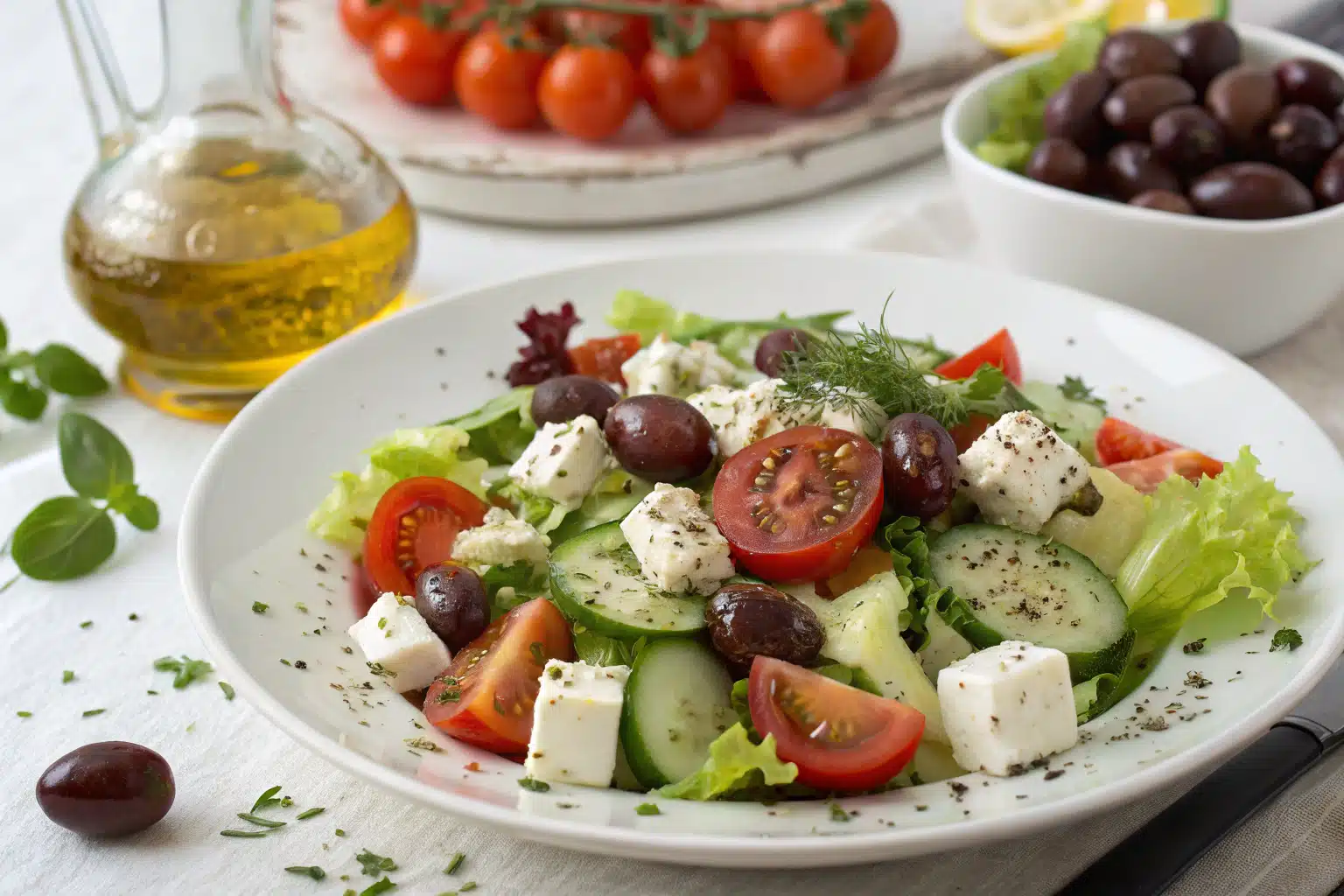
Mediterranean salad represents the heart and soul of Mediterranean cuisine, bringing together the vibrant flavors and fresh ingredients that make this regional diet so celebrated worldwide. This classic dish combines juicy tomatoes, crisp cucumbers, tangy feta cheese, and aromatic herbs to create a refreshing salad that’s both nutritious and bursting with flavor. Whether you’re serving it as a side dish or enjoying it as a light meal, this Mediterranean salad recipe delivers authentic taste with minimal effort.
“Looking for inspiration? Try our Greek salad with chicken for a heartier protein-packed version of this Mediterranean classic.”
Health Benefits of Mediterranean Salad
Not only is Mediterranean salad delicious, but it’s also packed with health benefits that align perfectly with the Mediterranean diet’s reputation as one of the healthiest eating patterns in the world. This salad is rich in antioxidants from fresh vegetables, heart-healthy fats from olive oil and olives, and calcium from feta cheese. The combination of these nutrient-dense ingredients makes Mediterranean salad a perfect choice for those looking to maintain a balanced diet without sacrificing flavor. The simplicity of this dish means you’re getting pure, unprocessed nutrition in every colorful bite.
Mediterranean Salad Ingredients
Fresh Vegetables for Authentic Mediterranean Flavor
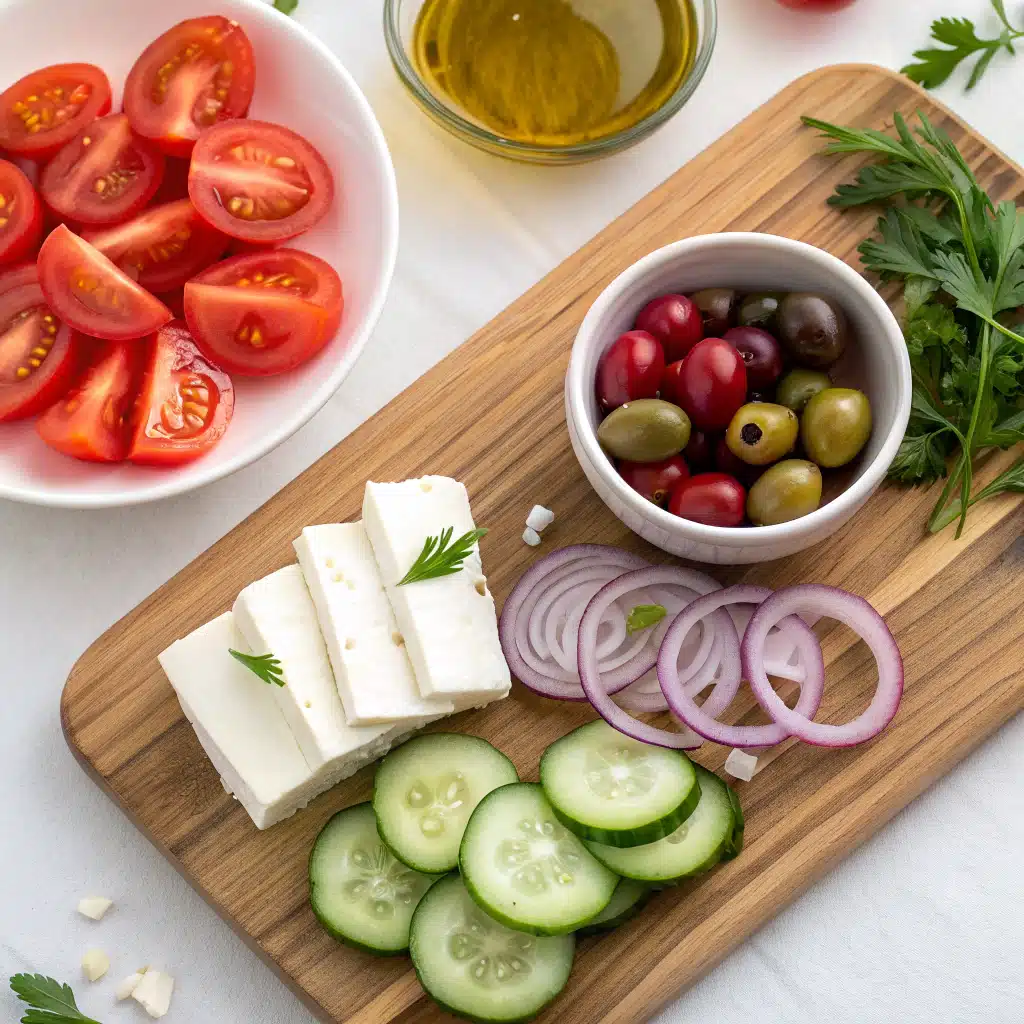
The foundation of any great Mediterranean salad lies in using the freshest vegetables possible. Here’s what you’ll need for this authentic recipe:
| Ingredient | Quantity | Notes |
|---|---|---|
| Medium red onion | 1 | Thinly sliced into half moons |
| Medium juicy tomatoes | 4 | Sliced into bite-sized pieces or wedges |
| English cucumber | 1 | Partially peeled in stripes and sliced into half moons |
| Green bell pepper | 1 | Cored and sliced into rings |
| Pitted Kalamata olives | 1 handful | Authentic Mediterranean variety |
| Dried oregano | 1 1/2 teaspoons | Divided usage |
| Kosher salt | To taste | For seasoning |
| Extra virgin olive oil | 1/4 cup | Use high-quality oil for best results |
| Red wine vinegar | 1-2 tablespoons | Adjustable to taste |
| Greek feta cheese in brine | 1 (7 ounce) block | Torn into slabs |
The Importance of Quality Ingredients in Mediterranean Salad
For the best Mediterranean salad experience, ingredient quality matters significantly. Opt for vine-ripened tomatoes when available, as they offer superior flavor compared to their greenhouse counterparts. Always choose Greek feta packed in brine rather than pre-crumbled varieties for authentic taste and texture. The extra virgin olive oil should be cold-pressed and have a rich, fruity flavor that complements the vegetables. Kalamata olives from Greece provide the distinctive Mediterranean flavor that makes this salad special. Remember that the simplicity of this Mediterranean salad means each ingredient’s quality will be noticeable in the final dish.
How to Make Mediterranean Salad
Preparing the Vegetables
Preparing a perfect Mediterranean salad begins with properly handling the vegetables. Here’s how to start:
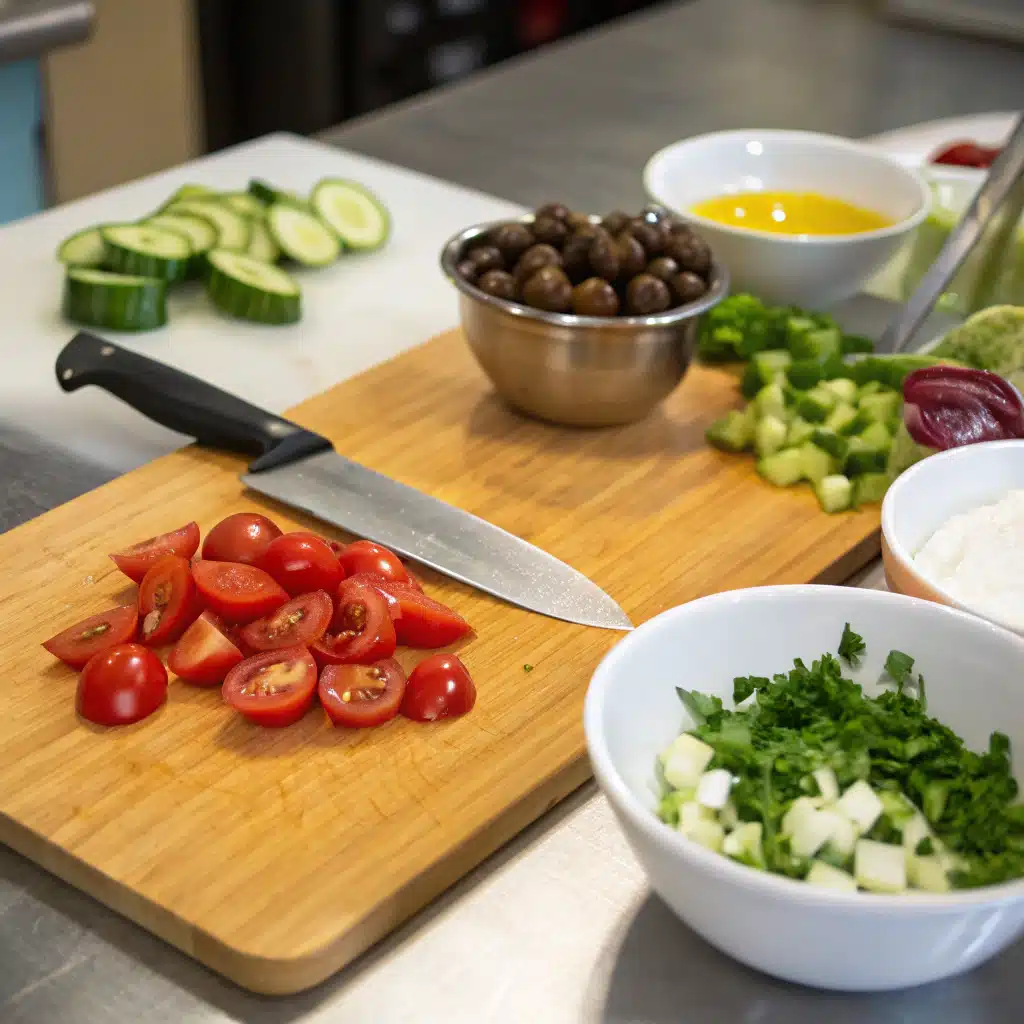
- Thinly slice the red onion into half moons. For a milder onion flavor, place the slices in a small bowl with ice water and about 1 teaspoon of red wine vinegar. Let them soak for approximately 10 minutes to reduce their sharpness.
- While the onions are soaking, prepare the remaining vegetables. Slice the tomatoes into bite-sized pieces or attractive wedges, aiming for uniformity in size.
- Partially peel the cucumber to create a striped pattern (this adds visual appeal while retaining some of the nutrients in the skin), then slice into half moons of even thickness.
- Core the green bell pepper and slice it into thin rings for the perfect crunch and visual contrast in your Mediterranean salad.
Assembling Your Mediterranean Salad
The assembly process is where your Mediterranean salad comes to life:
- In a large serving dish, combine the prepared tomatoes, cucumber slices, bell pepper rings, and Kalamata olives.
- Drain the soaked onions thoroughly and add them to the vegetable mixture.
- Season the vegetables with 3/4 teaspoon of dried oregano and a pinch of kosher salt to enhance their natural flavors.
- Drizzle the salad with extra virgin olive oil and red wine vinegar, adjusting the amounts to suit your taste preference.
- Gently toss all ingredients to ensure even distribution of the dressing and seasonings throughout the Mediterranean salad.
“Discover our cucumber tomato salad — a refreshing, Mediterranean-inspired side that complements this classic dish beautifully.”
Finishing Touches for Perfect Mediterranean Salad
The final steps will elevate your Mediterranean salad from good to exceptional:
- Top the dressed vegetables with slabs of Greek feta cheese, arranging them attractively across the top rather than crumbling them. This preserves the cheese’s creamy texture and creates a more authentic presentation.
- Sprinkle the remaining 3/4 teaspoon of dried oregano over the feta and vegetables to add a final aromatic touch.
- For the best flavor development, allow the salad to rest for 5-10 minutes before serving, giving the ingredients time to mingle and absorb the dressing.
- Serve your Mediterranean salad at room temperature to fully appreciate its complex flavors and textures.
Mediterranean Salad Tips and Tricks
Choosing the Best Vegetables for Mediterranean Salad
The success of your Mediterranean salad depends largely on selecting the right produce:
- Tomatoes should be firm yet yielding, with vibrant color and a sweet aroma. During summer months, heirloom varieties add wonderful flavor and color variation.
- Look for cucumbers that are firm and heavy for their size with no soft spots. English or Persian cucumbers have fewer seeds and thinner skins, making them ideal for Mediterranean salad.
- Bell peppers should have glossy, taut skin and feel heavy for their size. Green peppers provide the traditional flavor, but red or yellow can be substituted for a sweeter profile.
- Red onions should be firm with dry, papery skin and no sprouting. Smaller onions typically offer milder flavor than larger ones.
“Discover great ideas like our creamy cucumber onion salad for another refreshing vegetable side dish that complements Mediterranean meals.”
The Secret to Perfect Mediterranean Salad Dressing
The dressing for Mediterranean salad is simple but requires attention to detail:
- Extra virgin olive oil should be the foundation—choose a high-quality variety with fruity notes rather than bitter ones.
- Red wine vinegar provides the necessary acidity, but can be partially substituted with fresh lemon juice for a brighter flavor profile.
- Allow the dressing to sit on the vegetables for at least 5 minutes before serving to develop more complex flavors.
- Consider adding a small clove of minced garlic to the dressing for an additional layer of authentic Mediterranean flavor.
- Always dress the salad just before serving to maintain the vegetables’ crispness and prevent sogginess.
Balancing Flavors in Mediterranean Salad
Achieving the perfect flavor balance makes all the difference in your Mediterranean salad:
- The saltiness from feta cheese and olives should be balanced by the sweetness of ripe tomatoes and the freshness of cucumbers.
- If your tomatoes aren’t at peak ripeness, a pinch of sugar can help enhance their natural sweetness.
- Consider adding a dash of freshly ground black pepper for subtle heat that complements the other flavors.
- For an authentic twist, incorporate a teaspoon of dried mint along with the oregano—this combination is common in many Mediterranean regions.
- Taste and adjust seasonings before adding the feta, as the cheese will contribute significant saltiness to the final dish.
Storing Mediterranean Salad
How to Keep Mediterranean Salad Fresh
Proper storage is essential to maintain the quality of your Mediterranean salad:
- Ideally, Mediterranean salad should be eaten fresh, within a few hours of preparation for the best texture and flavor.
- If you need to prepare components ahead of time, store the cut vegetables, dressing, and feta separately in airtight containers in the refrigerator.
- Tomatoes lose flavor when refrigerated, so consider keeping them at room temperature until ready to use if preparing ingredients in advance.
- If storing a dressed salad, place it in an airtight container and consume within 24 hours for the best quality.
“Don’t miss our caprese salad recipe, another Mediterranean favorite that uses similar fresh ingredients with different preparation techniques.”
Make-Ahead Tips for Mediterranean Salad
When preparing Mediterranean salad in advance, follow these strategies:
- Wash and dry all vegetables thoroughly before storage to prevent spoilage.
- Slice cucumbers, bell peppers, and onions up to 24 hours in advance and store in separate containers lined with paper towels to absorb excess moisture.
- Prepare the dressing up to 3 days ahead and store in a sealed jar in the refrigerator. Bring to room temperature before using.
- Leave tomatoes whole until just before assembling the salad, as they begin to release juices once cut.
- For best results when making ahead, assemble the salad without dressing or feta, cover tightly, and refrigerate for up to 4 hours. Add the dressing and cheese just before serving.
Reviving Leftover Mediterranean Salad
If you have leftover Mediterranean salad, try these methods to refresh it:
- Add a splash of fresh lemon juice and a drizzle of olive oil to revive flavors that may have dulled in the refrigerator.
- Introduce fresh vegetables to leftovers to add crispness—cucumber and bell pepper are particularly good additions.
- Consider transforming leftovers into a new dish by tossing with cooked pasta, quinoa, or adding grilled chicken for a complete meal.
- Drain excess liquid that may have accumulated before refreshing and reserving.
- Allow refrigerated leftovers to come to room temperature before serving to enhance the flavors.
Mediterranean Salad Variations
Regional Mediterranean Salad Styles
The Mediterranean region encompasses diverse culinary traditions, each with its own take on the classic salad:
- Greek Style: The most well-known variation, featuring chunky vegetables, large pieces of feta, and a simple oregano-based dressing.
- Lebanese Fattoush: Incorporates toasted or fried pita bread pieces and sumac spice for a tangy flavor profile.
- Italian Panzanella: Features chunks of day-old bread soaked in dressing, with a heavier emphasis on tomatoes and basil instead of oregano.
- Spanish Ensalada Mixta: Often includes tuna, hard-boiled eggs, and sometimes corn or olives with a sherry vinegar dressing.
- Turkish Çoban Salatası (Shepherd’s Salad): Typically has vegetables diced more finely with a heavy emphasis on parsley and a lemon-forward dressing.
“Try our Mediterranean quinoa salad recipe for a delicious, protein-packed take on traditional coastal flavors.”
Seasonal Adaptations for Mediterranean Salad
Adjust your Mediterranean salad based on seasonal availability for the best flavor:
- Summer: Utilize peak-season tomatoes, add fresh herbs like basil or mint, and consider incorporating stone fruits like peaches for a sweet contrast.
- Fall: Include roasted bell peppers, substitute part of the cucumber with fennel bulb, and add toasted walnuts for texture.
- Winter: Incorporate roasted vegetables like beets or winter squash, use preserved tomatoes, and add heartier greens like kale or radicchio.
- Spring: Feature tender spring onions instead of red onion, add fresh peas, and incorporate tender young herbs like dill and chives.
Creative Additions to Enhance Your Mediterranean Salad
Customize your Mediterranean salad with these flavorful additions:
- Proteins: Grilled chicken, shrimp, chickpeas, or white beans transform this side dish into a complete meal.
- Grains: Cooked and cooled quinoa, farro, or bulgur wheat add heartiness and nutritional value.
- Fresh Herbs: Parsley, basil, mint, or dill can be added generously for bright, fresh flavor.
- Nuts and Seeds: Toasted pine nuts, sliced almonds, or sunflower seeds provide pleasant crunch and healthy fats.
- Cheeses: While traditional feta is classic, experiment with halloumi (grilled), fresh mozzarella, or ricotta salata for interesting variations.
- Additional Vegetables: Artichoke hearts, roasted red peppers, thinly sliced radishes, or avocado complement the traditional ingredients beautifully.
Serving Mediterranean Salad
Perfect Pairings for Mediterranean Salad
Mediterranean salad works wonderfully with many main courses and accompaniments:
- Grilled proteins like chicken souvlaki, lamb chops, or fish enhance the meal with complementary Mediterranean flavors.
- Warm pita bread or crusty sourdough provides a perfect vehicle for soaking up the flavorful dressing.
- Rice dishes such as pilaf or orzo pasta offer a satisfying starch component to balance the fresh vegetables.
- Hummus, tzatziki, or baba ganoush served alongside create an authentic Mediterranean mezze platter.
- Grilled vegetables like zucchini, eggplant, or asparagus extend the vegetable-forward theme of the meal.
“Want more ideas? Check out our avocado shrimp salad for another refreshing option that pairs beautifully with this Mediterranean salad.”
Mediterranean Salad as Part of a Complete Meal
Incorporate Mediterranean salad into your menu planning with these approaches:
- For a light lunch, serve a larger portion of the salad with a protein component and warm bread.
- As part of a dinner, offer Mediterranean salad as a first course before a main dish of pasta, seafood, or grilled meat.
- For entertaining, include Mediterranean salad as part of a buffet alongside other small plates and dips.
- Create a deconstructed version, allowing guests to build their own salads with components arranged separately on a platter.
- Consider Mediterranean salad as a bed for grilled fish or chicken, allowing the warm protein to slightly wilt the vegetables and meld with the dressing.
Presentation Tips for Mediterranean Salad
The visual appeal of your Mediterranean salad enhances the dining experience:
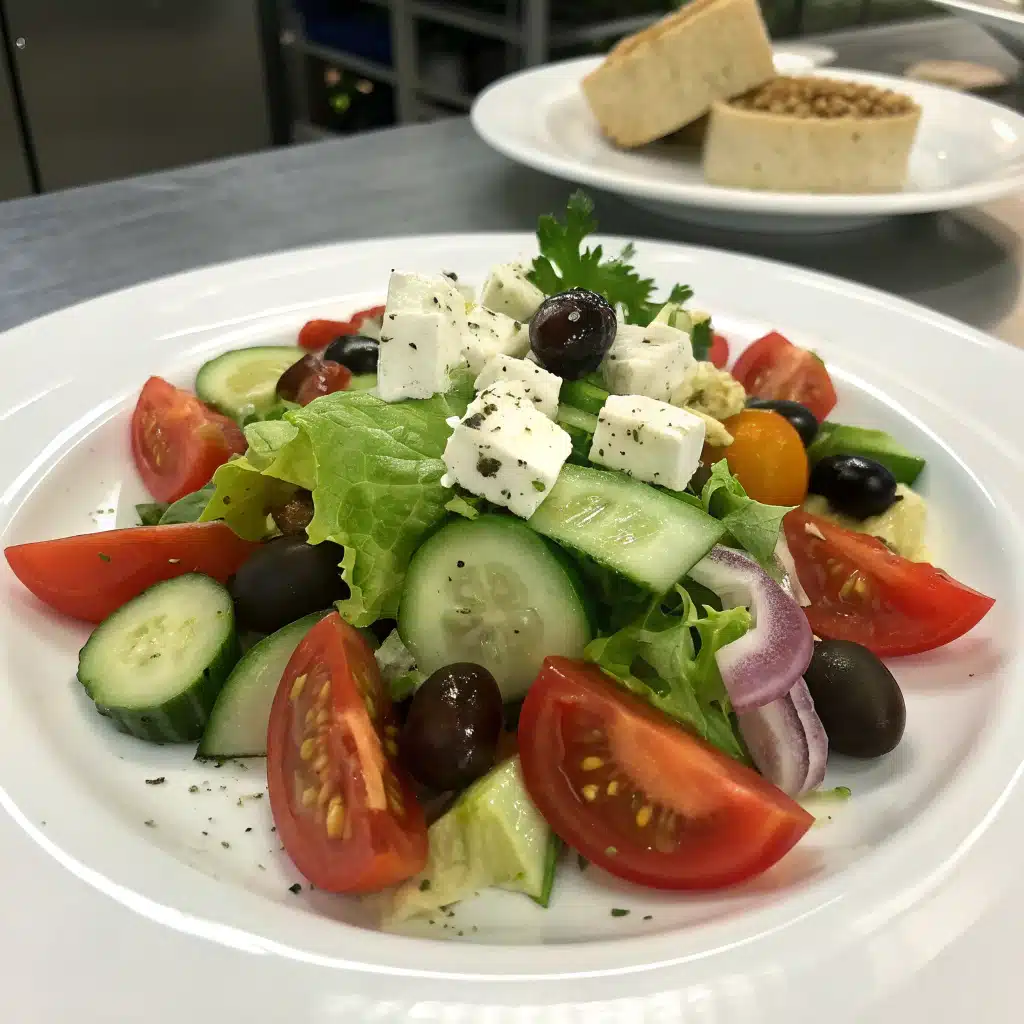
- Serve in a shallow, wide bowl or platter that allows the colorful ingredients to be displayed prominently.
- Arrange the feta cheese on top in attractive slabs rather than crumbling it, creating visual interest and preserving its texture.
- Consider serving components in separate sections on a large platter for an impressive “composed salad” presentation.
- Garnish with additional fresh herbs, a twist of black pepper, or a final drizzle of your best olive oil just before bringing to the table.
- For individual servings, consider using shallow bowls that showcase the ingredients while containing the dressing.
- Add a final flourish with a sprinkle of high-quality sea salt flakes and a few whole Kalamata olives as garnish.
Frequently Asked Questions About Mediterranean Salad
What kind of cheese is used in Mediterranean salad?
Greek feta cheese is the classic choice for Mediterranean salads. Made from sheep’s or goat’s milk, it offers a tangy, salty flavor and a creamy, crumbly texture that complements fresh vegetables. For the best taste, choose authentic Greek feta packed in brine. Other cheeses like halloumi, mozzarella, or manchego work too, but feta remains the signature option.
What is another name for Mediterranean salad?
Mediterranean salad, often called Greek salad or Horiatiki, has many regional versions—like Fattoush in Lebanon, Panzanella in Italy, Çoban Salatası in Turkey, and Ensalada Mixta in Spain. Each highlights fresh vegetables, simple dressing, and local flavors.
What pairs with Mediterranean salad?
This salad pairs beautifully with grilled meats or seafood like chicken, lamb, fish, or shrimp. Enjoy it with pita or crusty bread, or serve alongside couscous or rice for a fuller meal. It also complements Mediterranean dips such as hummus or tzatziki.
What do you put in a Mediterranean salad?
A Mediterranean salad features tomatoes, cucumbers, bell pepper, red onion, olives, and feta, dressed with olive oil, red wine vinegar, oregano, and salt. Add capers, herbs, or chickpeas if desired. Fresh ingredients make it shine.
What kind of salad dressing do you use on the Mediterranean diet?
Dressings are usually olive oil-based with lemon juice or vinegar, seasoned with herbs and garlic. Yogurt or tahini versions are also popular, always highlighting fresh, simple ingredients.
What is the difference between Mediterranean and Greek salad?
Greek salad is a specific type of Mediterranean salad featuring tomatoes, cucumber, bell pepper, red onion, olives, and feta—without lettuce. “Mediterranean salad” is a broader term that includes regional variations from across the Mediterranean, each with its own ingredients and flavors.
“Learn more about pasta salad recipe options that can complement this Mediterranean classic for a more substantial meal.”
Conclusion
Why Mediterranean Salad Remains a Timeless Classic
Mediterranean salad has endured through generations because it perfectly embodies what makes Mediterranean cuisine so special—simplicity, fresh ingredients, and balanced flavors. This salad celebrates the bounty of fresh produce available throughout the Mediterranean region, combining vegetables at the peak of ripeness with minimal intervention to let their natural flavors shine. The contrast of crisp vegetables, briny olives, tangy cheese, and aromatic herbs creates a harmonious dish that feels both satisfying and refreshing. In a world of increasingly complex food trends, Mediterranean salad remains beloved because it demonstrates that exceptional flavor can come from straightforward preparation when quality ingredients lead the way.
“Learn more about arugula salad for another Mediterranean-inspired dish that celebrates simple, fresh ingredients.”
Embracing the Mediterranean Diet Through Fresh Salads
Mediterranean salad offers more than just a delicious eating experience—it provides a gateway into the celebrated Mediterranean diet, consistently ranked among the world’s healthiest eating patterns. By incorporating this salad into your meal rotation, you’re embracing core principles of this diet: emphasizing fresh vegetables, using olive oil as the primary fat source, and enjoying dairy in moderation through high-quality cheese. The Mediterranean diet has been associated with numerous health benefits, including reduced risk of heart disease, improved cognitive function, and longevity. Mediterranean salad makes these benefits accessible through a dish that’s as pleasurable to eat as it is nourishing. By starting with this approachable recipe, you can begin to explore the broader Mediterranean way of eating and experience its delicious diversity while supporting your overall health.
Printmediterranean salad
Authentic Mediterranean salad with fresh vegetables, Kalamata olives, and feta cheese dressed in olive oil and red wine vinegar.
- Prep Time: 15 minutes
- Cook Time: 0 minutes
- Total Time: 15 minutes
- Yield: 4–6 servings 1x
- Category: Salad
- Cuisine: Mediterranean
Ingredients
- 1 medium red onion, thinly sliced into half moons
- 4 medium juicy tomatoes, sliced into bite-sized pieces or wedges
- 1 English cucumber, partially peeled to make a striped pattern and sliced into half moons
- 1 green bell pepper, cored and sliced into rings
- 1 handful pitted Kalamata olives
- 1 1/2 teaspoons dried oregano
- Kosher salt
- 1/4 cup extra virgin olive oil
- 1–2 tablespoons red wine vinegar
- 1 (7 ounce) block Greek feta cheese in brine, torn into slabs
Instructions
- Optional: Soak sliced red onion in ice water with 1 teaspoon of red wine vinegar for 10 minutes to mellow the flavor.
- Combine tomatoes, cucumber, bell pepper, and olives in a large serving dish. Add drained onions.
- Season vegetables with 3/4 teaspoon oregano and a pinch of kosher salt.
- Drizzle with olive oil and red wine vinegar, then gently toss to combine.
- Top with slabs of feta cheese and sprinkle with remaining oregano.
- Let rest for 5-10 minutes before serving to allow flavors to develop.
Notes
For the best flavor, use the freshest vegetables available and high-quality Greek feta packed in brine. Serve at room temperature for optimal taste.
Nutrition facts are estimates and may vary based on ingredients used, portion sizes, and preparation methods.
Nutrition
- Serving Size: 4-6 servings
- Calories: 195
- Sugar: 4g
- Sodium: 412mg
- Fat: 16g
- Saturated Fat: 5g
- Trans Fat: 0g
- Carbohydrates: 8g
- Fiber: 2g
- Protein: 5g
- Cholesterol: 22mg
Keywords: mediterranean salad, greek salad, feta cheese, olive oil, kalamata olives
Let’s connect! Follow me for more Joylicious Recipes: Facebook, Instagram, Pinterest