The Ultimate Greek Pasta Salad: Fresh Mediterranean Flavors in Every Bite
What Makes Greek Pasta Salad Special
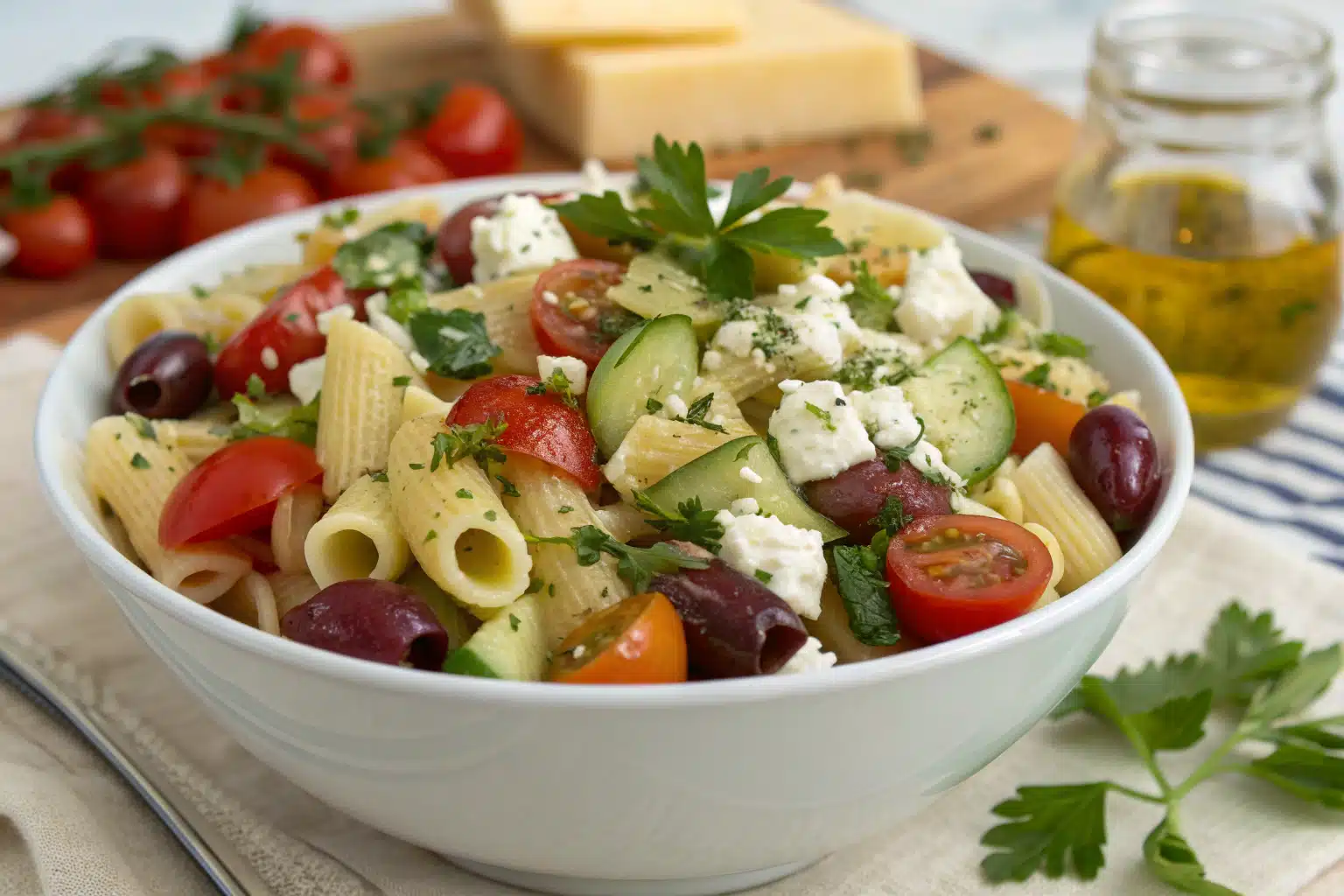
Greek pasta salad is a vibrant and delicious Mediterranean-inspired dish that combines the heartiness of pasta with the fresh, zesty flavors of traditional Greek ingredients. This colorful salad features rotini pasta tossed with crisp vegetables, tangy feta cheese, and Kalamata olives, all brought together with a bright Greek dressing. It’s the perfect balance of textures and flavors that makes this dish a standout at any gathering.
“Looking for more Mediterranean-inspired recipes? Check out our Greek salad with chicken for another delicious option.”
Why Greek Pasta Salad Is a Summer Favorite
During the hot summer months, Greek pasta salad becomes an absolute essential. It’s refreshing, satisfying, and incredibly versatile. You can prepare it ahead of time, making it ideal for picnics, potlucks, or backyard barbecues. Additionally, this pasta salad doesn’t require heating up your kitchen for long periods, which is a huge plus during sweltering summer days. The combination of cool ingredients and zesty dressing creates a dish that’s both filling and refreshing, perfect for those warm-weather meals when you need something substantial yet light.
PrintGreek Pasta Salad

Fresh Mediterranean-style pasta salad with crisp vegetables, tangy feta, and zesty Greek dressing.
- Prep Time: 15 minutes
- Cook Time: 10 minutes
- Total Time: 25 minutes
- Yield: 8 servings 1x
- Category: Salad
- Cuisine: Greek, Mediterranean
Ingredients
- 16 ounces rotini or other medium pasta
- ¾ English cucumber diced
- 1 pint grape tomatoes halved
- 1 bell pepper red or orange, diced
- ½ cup sliced pitted olives
- ½ cup crumbled feta cheese
- ⅓ cup diced red onion
- 1 cup Greek dressing
Instructions
- Cook pasta according to package directions until al dente. Drain the food, then rinse it with cold water to halt the cooking process.
- In a large bowl, combine cooled pasta with cucumber, tomatoes, bell pepper, olives, feta cheese, and red onion.
- Pour Greek dressing over the salad and gently toss until all ingredients are evenly coated.
- Cover and refrigerate for at least 2 hours before serving to allow flavors to blend.
Notes
This salad tastes even better the next day! For best results, save a little dressing to refresh the salad just before serving.
Nutrition facts are estimates and may vary based on ingredients used, portion sizes, and preparation methods.
Nutrition
- Serving Size: 8 servings
- Calories: 320
- Sugar: 4g
- Sodium: 580mg
- Fat: 14g
- Saturated Fat: 3g
- Trans Fat: 0g
- Carbohydrates: 42g
- Fiber: 3g
- Protein: 8g
- Cholesterol: 10mg
Keywords: Greek pasta salad, Mediterranean salad, summer salad, pasta salad
Let’s connect! Follow me for more Joylicious Recipes: Facebook, Instagram, Pinterest
Ingredients: Everything You Need for Perfect Greek Pasta Salad
Fresh Produce and Staples
The beauty of Greek pasta salad lies in its fresh, vibrant ingredients. For this recipe, you’ll need:
| Pasta and Vegetables | Cheese and Olives | Dressing |
|---|---|---|
| 16 ounces rotini pasta | ½ cup crumbled feta cheese | 1 cup Greek dressing |
| ¾ English cucumber, diced | ½ cup sliced pitted olives | |
| 1 pint grape tomatoes, halved | ||
| 1 bell pepper (red or orange), diced | ||
| ⅓ cup diced red onion |
The foundation of any great Greek pasta salad starts with quality rotini pasta, which holds the dressing perfectly in its spirals. English cucumbers provide a refreshing crunch without excessive seeds or bitterness, while colorful grape tomatoes add bursts of juicy sweetness. The bell pepper contributes a crisp texture and vibrant color, and red onion delivers a sharp, aromatic flavor that balances the other components.
Choosing the Right Cheese and Olives
Feta cheese is non-negotiable in authentic Greek pasta salad. This crumbly, tangy cheese adds a distinctive Mediterranean flavor that ties all the ingredients together. For the best taste experience, choose a high-quality feta made from sheep’s milk or a sheep and goat milk blend. As for olives, while Kalamata olives are traditional and offer a distinctive rich, fruity taste, this recipe works well with any sliced pitted olives you prefer. The combination of salty olives and tangy feta creates a perfect flavor contrast against the fresh vegetables and pasta.
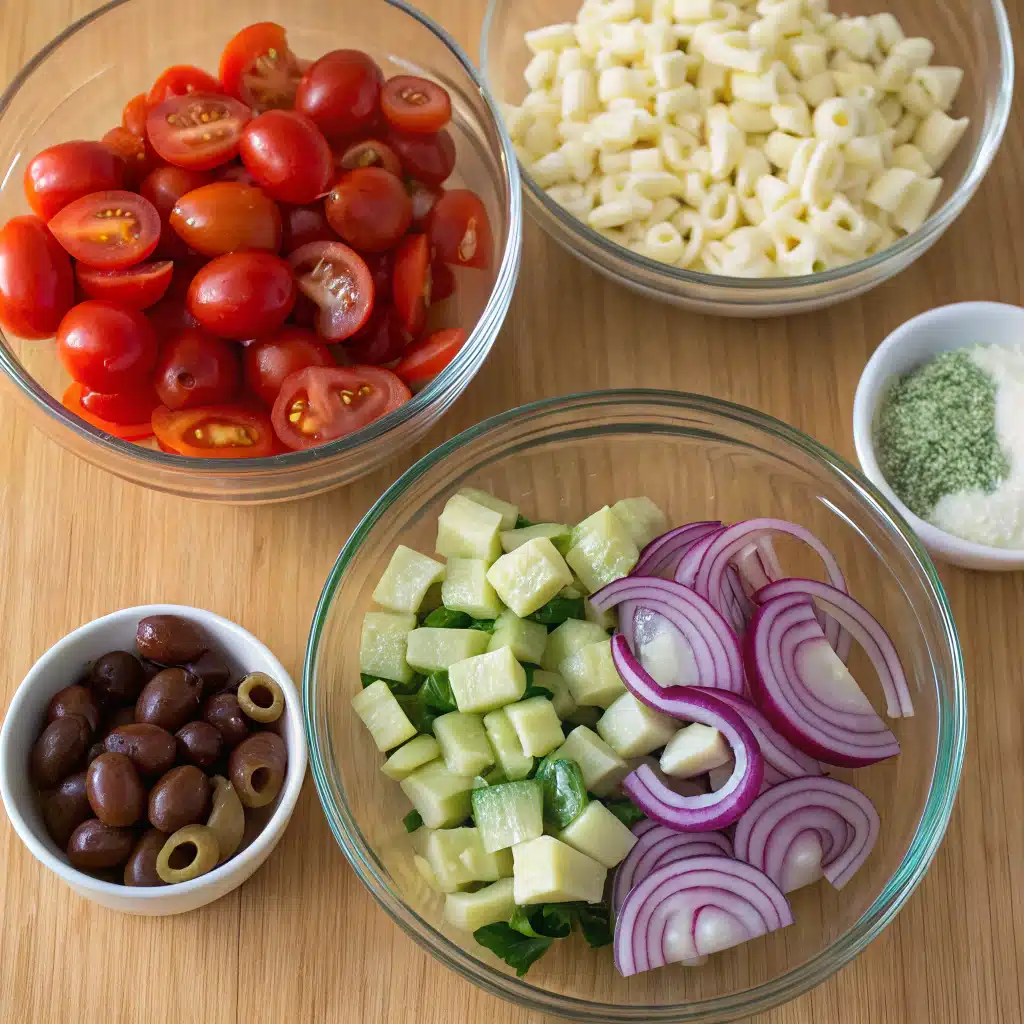
Step-by-Step: Creating Your Perfect Greek Pasta Salad
Preparing the Pasta and Vegetables
- Start by cooking 16 ounces of rotini pasta according to the package directions until it reaches al dente texture. Be careful not to overcook—the pasta should maintain a slight firmness for the best texture in your salad.
- Once cooked, immediately drain the pasta and rinse under cold water to stop the cooking process and prevent sticking. Set aside to cool completely.
- While the pasta cools, prepare your vegetables: dice the English cucumber, halve the grape tomatoes, dice the bell pepper, and finely dice the red onion.
- For the best flavor distribution, try to cut all vegetables into similar-sized pieces, roughly matching the size of the pasta spirals.
“Want more pasta salad inspiration? Check out our pasta salad recipe collection for additional delicious variations.”
Mixing and Marinating
- In a large mixing bowl, combine the cooled pasta and all prepared vegetables (cucumber, tomatoes, bell pepper, and red onion).
- Add the sliced olives and crumbled feta cheese to the bowl.
- Pour the Greek dressing over the ingredients, starting with about ¾ cup and adding more if needed.
- Lightly mix all the ingredients until they’re evenly covered in the dressing. Be careful not to break up the feta cheese too much while mixing.
- Cover the bowl and refrigerate for at least 2 hours before serving, allowing the flavors to meld together perfectly.
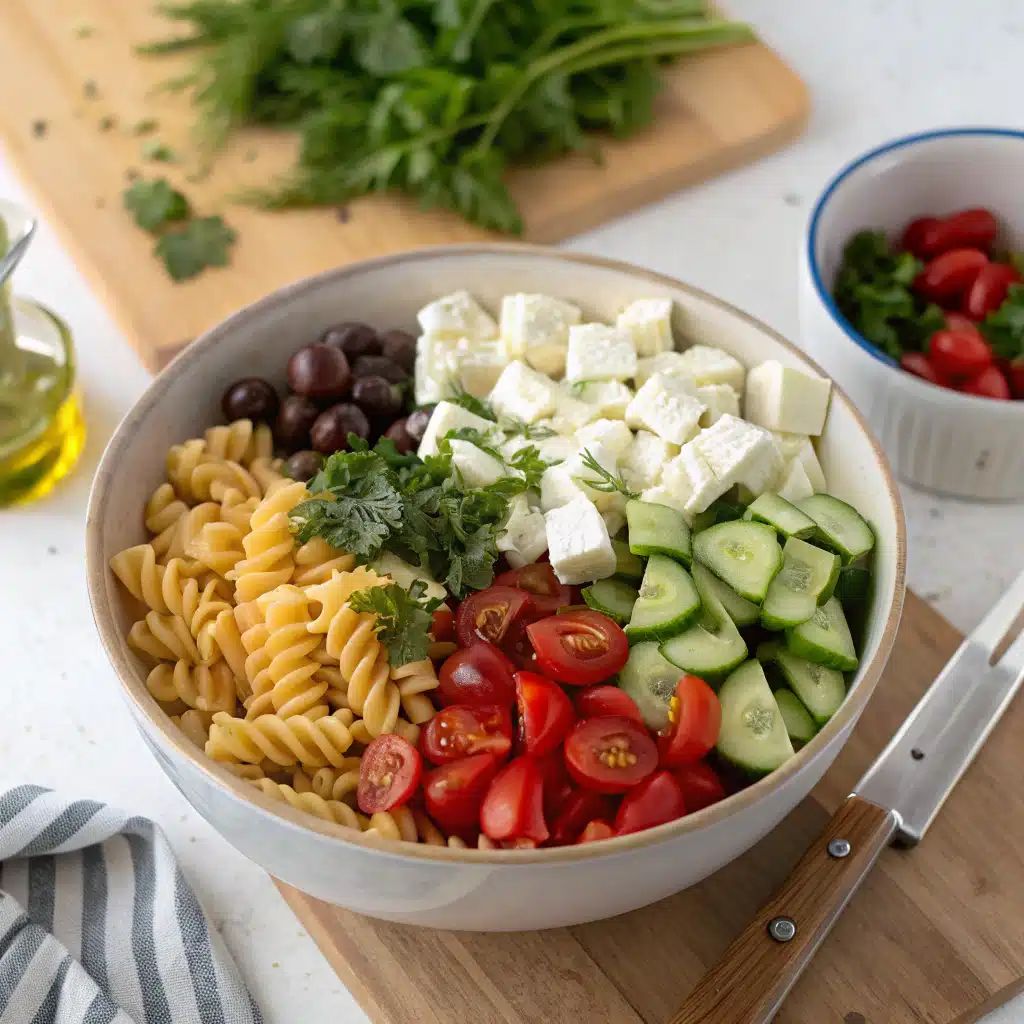
Final Touches Before Serving
After the Greek pasta salad has marinated in the refrigerator for a couple of hours, there are a few final touches that can elevate your dish even further:
- Remove the salad from the refrigerator about 15-20 minutes before serving to take the chill off slightly. This allows the flavors to become more pronounced.
- Give the salad another gentle toss to redistribute the dressing, which may have settled at the bottom of the bowl.
- Taste the salad and adjust seasonings if necessary. You might want to add a bit more dressing, a sprinkle of salt and pepper, or even a squeeze of fresh lemon juice to brighten the flavors.
- For an extra touch of freshness and visual appeal, consider garnishing the salad with fresh herbs such as chopped parsley, dill, or oregano just before serving.
Tips: Secrets to Making the Best Greek Pasta Salad
Pasta Selection and Preparation
The type of pasta you choose significantly impacts your Greek pasta salad. Rotini is ideal because its spirals capture and hold the dressing, ensuring flavorful bites throughout the dish. However, other medium-sized pasta shapes like penne, fusilli, or farfalle can work well too.
“Learn more about chicken pasta salad recipe variations that use different pasta shapes to great effect.”
When cooking pasta for salad, follow these professional tips:
- Always cook pasta in heavily salted water (it should taste like the sea) to flavor the pasta from within.
- Cook the pasta to al dente or even slightly firmer, as it will continue to absorb moisture from the dressing.
- After draining, rinse the pasta immediately with cold water to stop the cooking process and wash away excess starch that could make your salad gummy.
- Toss the cooled pasta with a small amount of olive oil to prevent sticking if you’re not immediately mixing it with other ingredients.
Dressing Choices and Customization
While this recipe calls for 1 cup of Greek dressing, you have several options:
- Store-bought Greek dressing works perfectly for convenience.
- For a homemade version, combine olive oil, red wine vinegar, lemon juice, minced garlic, dried oregano, and a touch of honey or Dijon mustard.
- For a creamy twist, mix Greek yogurt with olive oil, lemon juice, herbs, and a little garlic for a lighter but still creamy dressing.
The key to perfect dressing distribution is adding it to the pasta while it’s still slightly warm (but not hot), which helps the pasta absorb the flavors more effectively. Then, add another splash of dressing just before serving to refresh the flavors.
Make-Ahead and Serving Suggestions
Greek pasta salad actually improves with time, making it an excellent make-ahead dish:
- Prepare the salad up to 24 hours in advance, but reserve a small portion of the dressing to add just before serving.
- If making more than a day ahead, consider keeping the pasta and vegetables separate from the cheese and dressing until a few hours before serving.
- To maintain the best texture, add delicate ingredients like feta cheese closer to serving time.
- For a buffet or potluck, place the Greek pasta salad in a shallow, wide bowl rather than a deep one to showcase the colorful ingredients and make serving easier.
Storage: Keeping Your Greek Pasta Salad Fresh
Refrigeration Best Practices
Proper storage is essential to maintaining the freshness and flavor of your Greek pasta salad. Here are some best practices for refrigerating this Mediterranean favorite:
- Transfer leftover Greek pasta salad to an airtight container before refrigerating. This prevents the salad from absorbing other food odors and helps maintain its moisture level.
- Greek pasta salad will keep well in the refrigerator for up to 3-4 days. The flavors often improve after the first day as the ingredients have more time to meld together.
- If you notice the salad becoming dry during storage, rejuvenate it with a small drizzle of olive oil or additional Greek dressing and gently toss before serving again.
“Don’t miss our supreme spaghetti pasta salad recipe for another fantastic pasta salad that stores beautifully.”
Freezing Guidelines and Limitations
While Greek pasta salad is best enjoyed fresh, there are some components you can freeze if necessary:
- Greek pasta salad as a whole doesn’t freeze well due to the high water content of the fresh vegetables and the texture changes in the pasta and cheese.
- However, if you’re planning ahead, you can cook and freeze the pasta separately (tossed lightly with olive oil), then thaw and combine with fresh ingredients when ready to serve.
- Homemade Greek dressing can be frozen in small portions for up to 3 months. Simply thaw in the refrigerator overnight before using.
Reviving Leftover Pasta Salad
If your Greek pasta salad has been sitting in the refrigerator for a couple of days and needs refreshing:
- Allow the salad to come to cool room temperature (about 15-20 minutes out of the refrigerator) before serving, as cold temperatures can dull flavors.
- Add a splash of fresh lemon juice and a drizzle of olive oil to brighten the flavors.
- Toss in some freshly chopped vegetables like cucumber or bell pepper to add back some crunch.
- Sprinkle with additional fresh herbs and a little extra feta cheese to give it new life.
- If the pasta has absorbed most of the dressing, add a small amount of new dressing and gently toss.
Variations: Exciting Twists on Classic Greek Pasta Salad
Protein Additions
Transform your Greek pasta salad from a side dish to a complete meal by incorporating protein. Here are some delicious options:
- Grilled Chicken: Add diced or sliced grilled chicken seasoned with Greek spices like oregano and thyme for a substantial protein boost.
- Shrimp: Quick-cooked and chilled shrimp add a seafood twist that pairs beautifully with the Mediterranean flavors.
- Chickpeas: For a vegetarian protein option, add drained and rinsed chickpeas, which also contribute additional texture and fiber.
- Salami or Prosciutto: Small pieces of cured meats can add a salty, savory element that complements the other ingredients.
“Here’s your guide to avocado shrimp salad that uses similar Mediterranean flavors with different proteins.”
Veggie Variations and Add-ins
While the classic Greek pasta salad has a specific vegetable profile, you can customize it with these delicious additions:
- Artichoke Hearts: Quartered artichoke hearts add texture and a subtle tanginess.
- Roasted Red Peppers: Substitute or add roasted red peppers for a sweeter, smokier flavor.
- Sun-Dried Tomatoes: These intensely flavored tomatoes add depth and umami.
- Avocado: Add diced avocado just before serving for creaminess (not for long storage).
- Spinach or Arugula: Fold in some fresh greens for added nutrition and a peppery flavor.
Different Cheese Options
While feta is traditional for Greek pasta salad, you can experiment with these cheese alternatives:
- Goat Cheese: For a creamier texture with similar tanginess to feta.
- Fresh Mozzarella Pearls: These add a mild, milky flavor and delightful texture.
- Halloumi: Lightly grilled and cubed halloumi adds a unique chewy texture and salty flavor.
- Ricotta Salata: This firm, salted ricotta can be crumbled similarly to feta but offers a different flavor profile.
- Dairy-Free Options: For those avoiding dairy, try a plant-based feta alternative or simply increase the olives and add nutritional yeast for a savory element.
Serving: Perfect Pairings for Greek Pasta Salad
Main Dish Companions
Greek pasta salad works wonderfully alongside a variety of main dishes. Here are some perfect pairings:
- Grilled Proteins: Serve alongside grilled chicken, fish, or lamb chops seasoned with herbs and lemon for a complete Mediterranean meal.
- Gyros or Souvlaki: The cool pasta salad balances the warm, savory flavors of these traditional Greek sandwiches or skewers.
- Roasted Vegetable Platters: For a vegetarian feast, pair with a platter of roasted vegetables like eggplant, zucchini, and bell peppers.
- Simple Burgers: The tangy, herbaceous flavors of Greek pasta salad complement straightforward grilled burgers beautifully.
- Grilled Shrimp or Salmon: Seafood with simple lemon and herb preparation pairs wonderfully with this pasta salad.
“Discover great ideas like our authentic chicken gyro recipe which makes a perfect main dish to serve with Greek pasta salad.”
Presentation Ideas
How you present your Greek pasta salad can elevate the entire dining experience:
- Serve in a large, shallow white bowl to showcase the vibrant colors of the vegetables, olives, and feta.
- For individual servings, use glass bowls or mason jars for a beautiful layered presentation.
- Line a serving platter with large romaine or butter lettuce leaves, then mound the pasta salad on top for an elegant presentation.
- Garnish the top with additional feta crumbles, a sprinkle of dried oregano, and a few whole Kalamata olives.
- Add visual interest with a drizzle of extra virgin olive oil and a light dusting of paprika or sumac around the edges of the serving dish.
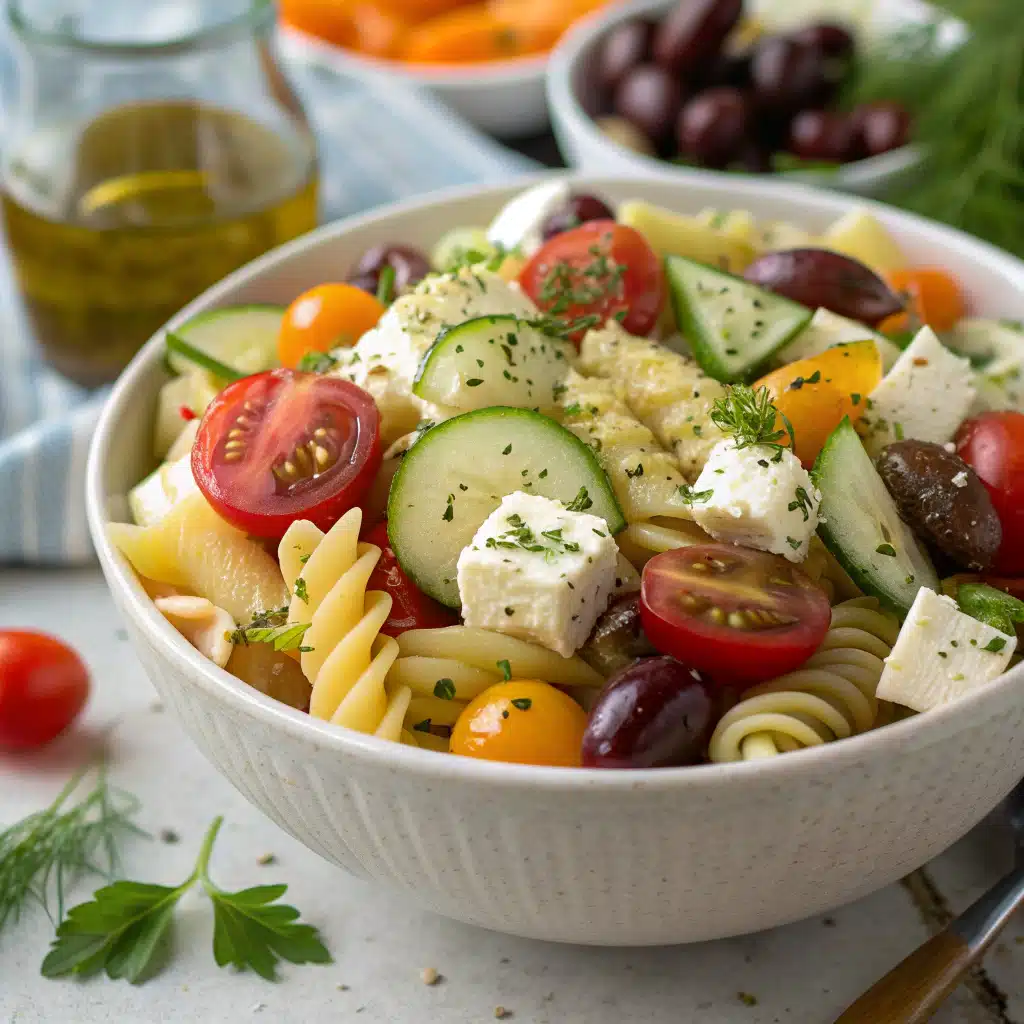
Complete Menu Suggestions
Create a cohesive meal by pairing your Greek pasta salad with these complementary dishes:
- Mediterranean Feast: Serve with hummus, warm pita bread, stuffed grape leaves, and grilled lamb or chicken skewers.
- Summer Barbecue: Pair with grilled chicken, corn on the cob, and watermelon slices for a refreshing summer meal.
- Light Lunch: Serve smaller portions alongside a cup of chilled gazpacho or avgolemono (Greek lemon chicken soup) for a satisfying midday meal.
- Family Dinner: Create a family-style spread with Greek pasta salad, rotisserie chicken, and garlic bread for a simple yet satisfying dinner.
FAQs: Common Questions About Greek Pasta Salad
What are the ingredients in summer fresh Greek pasta salad?
This refreshing salad usually combines rotini pasta, cucumber, grape tomatoes, bell pepper, red onion, Kalamata olives, and crumbled feta cheese tossed in a zesty Greek dressing. Fresh herbs such as oregano, dill, or parsley brighten the flavor, and optional add-ins like artichoke hearts or pepperoncini add extra tang.
What goes in a Greek pasta salad?
Classic Greek pasta salad blends spiral pasta with cucumbers, tomatoes, bell peppers, red onions, Kalamata olives, and feta cheese. The dressing features olive oil, red wine vinegar, lemon juice, garlic, and oregano. Optional ingredients like capers or artichokes can enhance its Mediterranean flair.
What main dish goes with Greek pasta salad?
Greek pasta salad complements grilled dishes like chicken souvlaki, lamb chops, or fish. It also pairs nicely with Mediterranean wraps such as gyros or falafel. For a meat-free meal, try it alongside stuffed peppers or roasted eggplant for a balanced combination.
How to make a creamy Greek pasta salad?
To achieve a creamy version, swap the vinaigrette for a Greek yogurt dressing made with olive oil, lemon juice, garlic, oregano, and a hint of honey. You can also mix in a bit of mayonnaise or extra feta to enrich the texture.
What do you put in a Greek pasta salad?
This salad includes rotini, cucumber, grape tomatoes, bell pepper, red onion, feta, and olives, all coated in a lemony Greek vinaigrette. Fresh herbs or tangy extras like pepperoncini or artichokes can be added for variety.
What cheese is best for Greek salad?
Traditional Greek salad uses authentic feta made from sheep’s or goat’s milk. It’s tangy, salty, and crumbly—ideal for pairing with crisp vegetables. Sheep’s milk feta provides the most authentic taste, while cow’s milk versions are milder and more widely available.
Conclusion: Mastering the Art of Greek Pasta Salad
Why This Recipe Works
Greek pasta salad has stood the test of time as a beloved dish because it perfectly balances flavors, textures, and nutritional elements. The al dente pasta provides a satisfying base, while the fresh vegetables add crunch, vitamins, and vibrant colors. The salty tang of feta cheese and olives contrasts beautifully with the sweet tomatoes and bell peppers, while the zesty dressing ties everything together harmoniously.
“Check out our chicken waldorf salad recipe for another perfectly balanced salad option.”
What makes this particular recipe stand out is its adaptability and foolproof nature. The clear instructions ensure that even novice cooks can create a restaurant-quality dish. Furthermore, the versatility of Greek pasta salad means it can be customized to suit dietary preferences or to use seasonal ingredients without losing its essential character. It’s truly a recipe that you’ll return to again and again, whether for family dinners, potlucks, or meal prep.
Final Tips for Success
To ensure your Greek pasta salad is outstanding every time, keep these final tips in mind:
- Quality ingredients matter—use the freshest vegetables and best feta cheese you can find.
- Don’t overcook the pasta; slightly firm pasta holds up better in salads.
- Season thoughtfully—the olives and feta are already salty, so taste before adding additional salt.
- Allow time for marination—the flavors truly develop after a few hours in the refrigerator.
- Balance is key—aim for equal amounts of pasta and vegetables for the most nutritious and flavorful result.
- Make it your own—once you master the basic recipe, don’t be afraid to experiment with additional ingredients that appeal to your taste.
- Serve at the right temperature—Greek pasta salad tastes best when slightly chilled but not ice cold.
By following these guidelines and making this recipe part of your regular rotation, you’ll soon be known for your exceptional Greek pasta salad—a dish that brings Mediterranean sunshine to any table, any time of year.