
Classic Caprese Salad: A Fresh and Simple Italian Masterpiece
The Italian Heritage Behind Caprese Salad
Caprese salad is one of Italy’s most beloved culinary treasures, embodying the simplicity and vibrant flavors that Italian cuisine is famous for. This iconic dish originates from the island of Capri, hence its name “Caprese,” and showcases the colors of the Italian flag: red tomatoes, white mozzarella, and green basil. What makes caprese salad so enduringly popular is its perfect balance of fresh, high-quality ingredients that complement each other beautifully.
“Learn more about how to combine fresh ingredients in our pasta salad recipe for another Italian-inspired delight.”
Why Caprese Salad Remains a Global Favorite
The enduring appeal of caprese salad lies in its versatility and ease of preparation. Whether served as an elegant appetizer, a light lunch, or a refreshing side dish, caprese salad delivers exceptional flavor with minimal effort. The combination of juicy tomatoes, creamy mozzarella, and aromatic basil creates a perfect harmony that has captivated food lovers worldwide. Additionally, caprese salad’s adaptability makes it suitable for various dietary preferences, including vegetarian and gluten-free options, further contributing to its widespread popularity.
Essential Caprese Salad Ingredients: Quality Matters
The Foundation: Choosing Perfect Tomatoes and Mozzarella
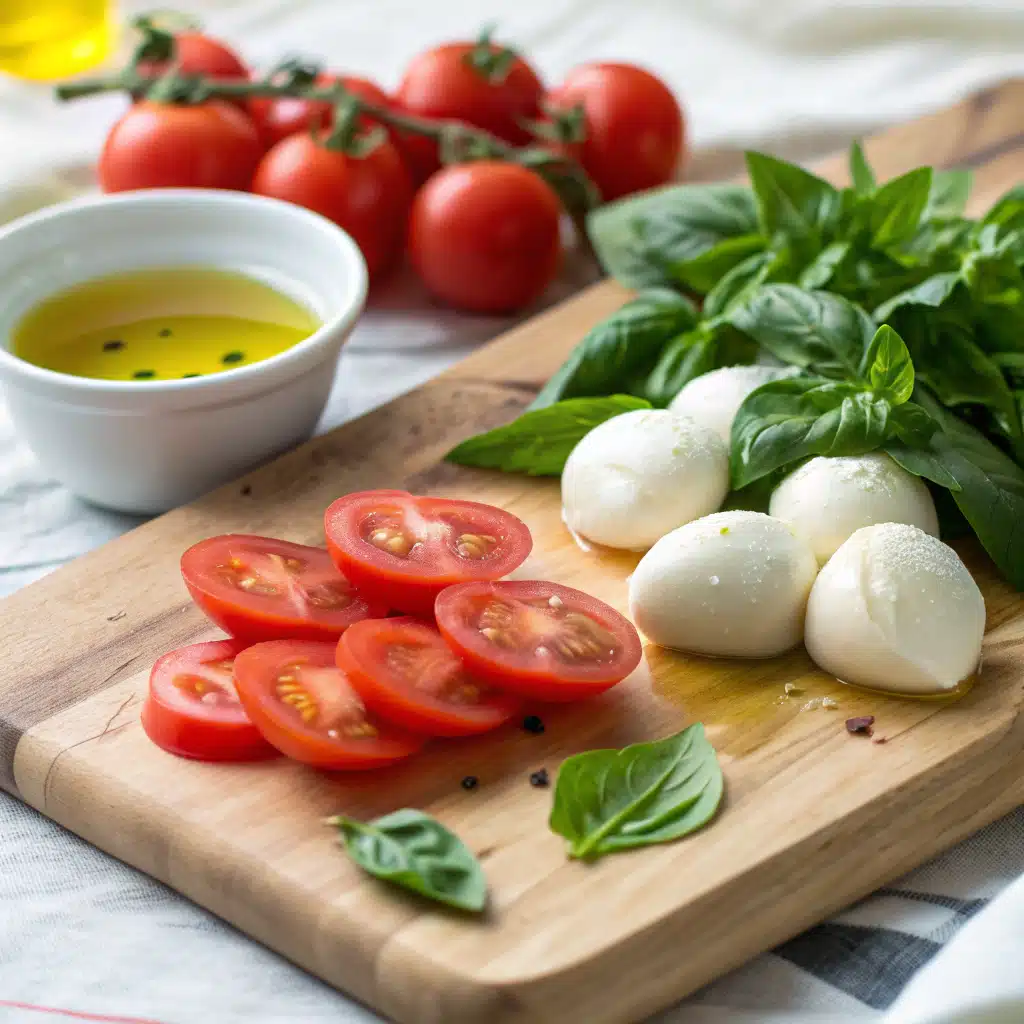
The secret to an exceptional caprese salad starts with selecting the finest ingredients. For tomatoes, heirloom varieties shine in this dish because of their rich flavor profiles and beautiful colors. Look for fully ripe tomatoes that feel heavy for their size and yield slightly to gentle pressure. Fresh mozzarella—specifically the soft, milky ball type packed in water—delivers the authentic taste and texture that defines a traditional caprese salad. Opt for high-quality buffalo mozzarella if available, or a good cow’s milk variety as an alternative.
Fresh Herbs and Quality Extras
While basil is the non-negotiable herb in caprese salad, selecting vibrant, aromatic leaves makes all the difference. Choose leaves that are bright green without any dark spots or wilting. For the olive oil component, extra-virgin varieties offer the best flavor profile—look for cold-pressed options with a fruity, slightly peppery taste. Finishing with flaky sea salt provides textural contrast and enhances the other flavors, while freshly ground black pepper adds a subtle warmth that balances the dish’s freshness.
| Essential Ingredients | Selection Tips |
|---|---|
| 3-4 medium heirloom tomatoes | Choose ripe, fragrant tomatoes with vibrant color |
| 8 oz fresh mozzarella | Select high-quality, soft mozzarella packed in water |
| Fresh basil leaves | Look for bright green, aromatic leaves |
| Extra-virgin olive oil | Opt for cold-pressed with fruity notes |
| Flaky sea salt | Use Maldon or similar high-quality finishing salt |
| Freshly ground black pepper | Grind just before serving for maximum aroma |
Creating the Perfect Caprese Salad: Step-by-Step Guide
Preparing Your Ingredients
Before assembling your caprese salad, proper preparation ensures the best flavor experience. Start by washing and thoroughly drying the tomatoes and basil leaves—excess water will dilute the flavors. Slice the tomatoes into ¼-inch thick rounds, maintaining consistent thickness for visual appeal and balanced flavor distribution. For the mozzarella, drain it well and pat dry with paper towels before slicing it to match the thickness of your tomato slices. If you’re using whole basil leaves, gently tear larger ones to release their aromatic oils, enhancing the fragrance of your dish.
“Check out our avocado shrimp salad for another refreshing dish that emphasizes quality ingredient preparation.”
The Art of Assembly
- Start with a wide, flat serving platter to showcase the beautiful ingredients.
- Arrange tomato slices slightly overlapping in a circular pattern or straight line.
- Place mozzarella slices alternating between the tomato slices for visual contrast.
- Tuck fresh basil leaves between the tomato and mozzarella pieces.
- Drizzle the entire arrangement generously with extra-virgin olive oil.
- Sprinkle flaky sea salt and freshly ground black pepper over the entire salad.
- For optional additions like balsamic, add a light drizzle just before serving.
- Allow the salad to rest at room temperature for 5-10 minutes before serving to let the flavors meld.
Timing Considerations for Maximum Freshness
Caprese salad tastes best when served within 30 minutes of assembly. The tomatoes begin releasing their juices after slicing, which can make the dish watery if left too long. If preparing in advance, consider keeping the components separate and assembling just before serving. For special occasions, you can pre-slice the ingredients and store them separately in the refrigerator, bringing the mozzarella to room temperature about 20 minutes before final assembly.
Expert Tips for Caprese Salad Excellence
Temperature Matters for Caprese Salad
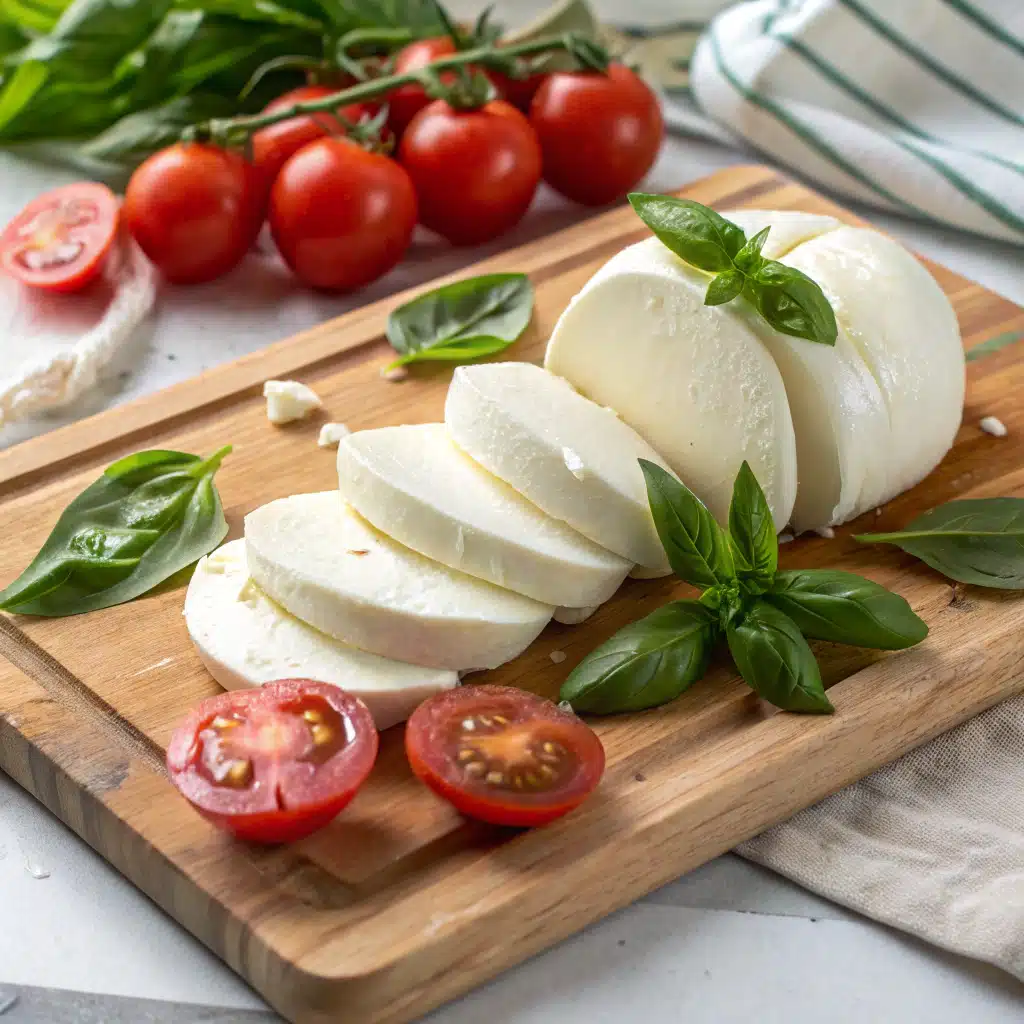
The serving temperature dramatically affects the flavor profile of your caprese salad. For optimal taste, serve the mozzarella at room temperature, not cold from the refrigerator. Cold cheese masks its delicate flavor and creamy texture. Remove the mozzarella from refrigeration at least 20-30 minutes before assembling your salad. Similarly, tomatoes should never be refrigerated before use, as cold temperatures alter their texture and diminish their flavor.
“Discover great ideas like our watermelon cucumber feta salad which also benefits from proper temperature considerations.”
Enhancing Flavors with Simple Techniques
Several simple techniques can elevate your caprese salad from good to extraordinary. First, try lightly salting the sliced tomatoes and allowing them to rest for 5-10 minutes before assembly. This draws out excess moisture and concentrates their flavor. For the olive oil, warm it slightly with crushed garlic for a few minutes, then strain and cool before drizzling to infuse a subtle garlic essence. Additionally, tearing rather than cutting basil leaves prevents bruising and oxidation, preserving their bright green color and aromatic properties.
Balancing the Composition
The ratio of ingredients in caprese salad significantly impacts the eating experience. Aim for balanced proportions—approximately equal amounts of tomato and mozzarella by volume, with enough basil to provide flavor in each bite without overwhelming the other components. The thickness of your slices also matters; too thin and they’ll lose structural integrity, too thick and the textural contrast diminishes. Generally, ¼-inch slices work well for both tomatoes and mozzarella, creating the perfect bite.
Proper Storage of Caprese Salad Components
Short-term Storage Solutions
For the best caprese salad experience, immediate consumption after assembly is ideal. However, if you need to store it briefly, cover the assembled salad with plastic wrap and keep it at cool room temperature for up to 2 hours. Refrigeration is not recommended for a fully assembled caprese salad as it compromises the texture of the tomatoes and dulls the flavors overall.
“Here’s your guide to proper food storage with our cucumber tomato salad recipe which faces similar storage challenges.”
Storing Individual Components
When planning ahead, store the individual components separately to maintain their integrity. Fresh mozzarella should be kept in its original liquid or in clean water in an airtight container, changing the water daily if keeping it longer than 2-3 days. Tomatoes should be stored stem-side down at room temperature away from direct sunlight until fully ripe. Once ripe, they can be refrigerated if necessary, but bring them to room temperature before using. Fresh basil is best stored like a bouquet of flowers—stems in a glass of water at room temperature, loosely covered with a plastic bag.
Reviving Day-old Caprese Salad
If you find yourself with leftover caprese salad, all is not lost. While it won’t maintain its original texture, you can repurpose it creatively. Chop the ingredients finely and mix with hot pasta for an instant pasta salad, blend everything together with additional olive oil for a flavorful sauce, or use as a topping for bruschetta or grilled chicken. Adding a fresh splash of olive oil and additional basil can help revive some of the original brightness.
Creative Caprese Salad Variations
Modern Twists on the Classic
While traditional caprese salad remains a favorite, contemporary variations add exciting dimensions to this classic dish. One popular adaptation is the addition of sliced avocado, which contributes a buttery richness that complements the creamy mozzarella. Another modern twist incorporates stone fruits like peaches or nectarines, whose natural sweetness creates a delightful contrast with the savory elements. For those who enjoy added texture, try introducing toasted pine nuts or crispy prosciutto as a garnish.
“Looking for inspiration? Try our strawberry spinach salad which similarly combines fruits with traditional salad ingredients.”
Seasonal Adaptations for Year-round Enjoyment
Caprese salad can be adapted for different seasons by incorporating seasonal produce. In summer, blend in colorful cherry tomatoes or sweet strawberries for extra brightness. Fall versions might include roasted butternut squash or figs for earthier notes. Winter adaptations can feature blood oranges or roasted beets for vibrant color and flavor. Spring variations shine with tender young asparagus tips or pea shoots. These seasonal adjustments ensure you can enjoy caprese-inspired dishes throughout the year, even when peak-season tomatoes aren’t available.
Global Influences on Caprese Salad
International culinary traditions have inspired creative reinterpretations of caprese salad. A Mediterranean variation might include olives and cucumbers for added brininess and crunch. Asian-inspired versions could incorporate a light drizzle of sesame oil and a sprinkle of toasted sesame seeds. Mexican-influenced adaptations might feature corn, avocado, and a hint of lime zest. These global variations maintain the core essence of caprese salad while introducing new flavor profiles that reflect diverse culinary traditions.
Serving Suggestions for Caprese Salad
Perfect Pairings with Caprese Salad
Caprese salad’s versatility makes it an ideal companion to numerous main dishes. It pairs exceptionally well with grilled proteins like chicken, steak, or fish, where its freshness balances the char and richness of grilled foods. For a vegetarian meal, serve it alongside a hearty pasta like fettuccine Alfredo or risotto. The salad also complements crusty bread and charcuterie for a casual yet elegant antipasto platter.
“Want more ideas? Check out our pan-seared steak with butter sauce which makes a perfect main course alongside caprese salad.”
Presentation Techniques for Maximum Impact
The visual presentation of caprese salad significantly enhances the dining experience. For a traditional arrangement, alternate overlapping slices of tomato and mozzarella in a circular pattern or straight line on a platter, with basil tucked between. For individual servings, stack the components vertically in alternating layers. A deconstructed approach might scatter torn mozzarella, halved cherry tomatoes, and basil leaves across a plate, drizzled with olive oil. For special occasions, use cookie cutters to create uniform shapes from the tomato and mozzarella for a more formal presentation.
Adapting Caprese Salad for Different Occasions
Caprese salad can be tailored for various dining scenarios. For casual family dinners, serve it family-style on a large platter in the center of the table. For elegant dinner parties, create individual portions on small plates as a sophisticated starter. Caprese skewers—where cherry tomatoes, mozzarella balls, and basil leaves are threaded onto cocktail picks—make perfect finger food for cocktail parties or buffets. For picnics or packed lunches, consider a caprese sandwich with the components tucked into crusty bread, or a caprese pasta salad that travels well and can be served at room temperature.

Frequently Asked Questions About Caprese Salad
What is a Caprese salad made of?
Caprese salad features fresh tomato slices, mozzarella cheese, and basil leaves. It’s seasoned with salt, pepper, and a drizzle of olive oil to highlight the natural flavors. Some versions include a touch of balsamic vinegar or glaze for extra sweetness and tang.
What do you eat with Caprese salad?
This salad pairs beautifully with crusty bread, grilled meats, or pasta. It can serve as an appetizer, side dish, or light entrée. For a classic Italian meal, enjoy it alongside grilled chicken or as part of an antipasto platter with olives, cured meats, and assorted cheeses.
Are Caprese salads healthy?
Yes, Caprese salad is both light and nutritious. Tomatoes supply vitamins C and A, potassium, and lycopene, while mozzarella provides protein and calcium. Olive oil contributes heart-healthy fats, and basil offers antioxidants and anti-inflammatory compounds. Enjoy it moderately since cheese adds fat and calories.
What herbs go with Caprese salad?
Fresh basil is the signature herb, but others can elevate the flavor. Try a hint of mint for freshness, oregano for a Mediterranean note, or chives for a mild onion taste. A sprinkle of thyme or tarragon can add subtle complexity.
What sauce is good on Caprese salad?
High-quality olive oil is the traditional dressing. Many people also enjoy a drizzle of balsamic vinegar or reduction for a sweet-acidic balance. Alternatives include pesto, herb-infused oil, or lemon vinaigrette—just use them lightly to preserve the salad’s freshness.
Can you put cucumber in Caprese salad?
Yes, cucumber adds a crisp, refreshing twist. Thin slices or small cubes blend well with the tomatoes and cheese. Remove seeds to avoid excess moisture. This variation combines the best of Caprese and Mediterranean-style salads.
Conclusion: The Timeless Appeal of Caprese Salad
Why Caprese Salad Continues to Captivate
Caprese salad has earned its place as a culinary classic due to its perfect balance of simplicity and sophistication. By focusing on a few high-quality ingredients, it demonstrates that exceptional cooking doesn’t always require complexity. The contrasting textures—from the juicy tomatoes to the tender mozzarella and aromatic basil—create a multisensory experience that continues to delight food enthusiasts worldwide. The visual appeal of caprese salad, with its vibrant colors reminiscent of the Italian flag, further enhances its enduring popularity.
“Don’t miss our classic chicken salad recipe for another timeless dish that celebrates simple, quality ingredients.”
Making Caprese Salad Part of Your Regular Repertoire
Incorporating caprese salad into your cooking rotation offers numerous benefits. Its quick preparation makes it ideal for busy weeknights while its elegant presentation suits special occasions. By mastering this fundamental dish, you’ll develop an appreciation for ingredient quality that will enhance all your cooking. Consider establishing relationships with local farmers or specialty food shops to source the best tomatoes and fresh mozzarella during peak season. Experiment with the variations discussed to keep this classic dish exciting year-round. Ultimately, caprese salad represents more than just a recipe—it embodies a philosophy of respecting ingredients and celebrating their natural flavors.
PrintCaprese Salad

This classic Italian caprese salad combines fresh tomatoes, mozzarella, and basil for a simple yet elegant dish perfect as an appetizer or light meal.
- Prep Time: 15 minutes
- Cook Time: 0 minutes
- Total Time: 15 minutes
- Yield: 4 servings 1x
- Category: Salad
- Cuisine: Italian
Ingredients
- 3 to 4 medium heirloom tomatoes, sliced
- 1 (8-ounce) ball fresh mozzarella cheese, sliced
- Fresh basil leaves
- Extra-virgin olive oil, for drizzling
- Flaky sea salt and freshly ground black pepper
- Optional: balsamic vinegar or balsamic reduction, for drizzling
- Optional: pesto
- Optional: sliced peaches
- Optional: fresh mint leaves
- Optional: avocado slices
- Optional: strawberries
Instructions
- Arrange sliced tomatoes in a circular pattern or straight line on a serving platter.
- Place mozzarella slices alternating between the tomato slices.
- Tuck fresh basil leaves between the tomato and mozzarella pieces.
- Drizzle generously with extra-virgin olive oil.
- Season with flaky sea salt and freshly ground black pepper to taste.
- If desired, add a light drizzle of balsamic vinegar or any optional ingredients.
- Let it sit at room temperature for 5–10 minutes before serving.
Notes
Serve caprese salad at room temperature for the best flavor.
Nutrition facts are estimates and may vary based on ingredients used, portion sizes, and preparation methods.
Nutrition
- Serving Size: 4 servings
- Calories: 210
- Sugar: 3g
- Sodium: 330mg
- Fat: 16g
- Saturated Fat: 7g
- Trans Fat: 0g
- Carbohydrates: 6g
- Fiber: 1g
- Protein: 12g
- Cholesterol: 40mg
Keywords: caprese salad, tomato mozzarella basil, Italian salad, fresh salad, summer salad
Let’s connect! Follow me for more Joylicious Recipes: Facebook, Instagram, Pinterest