Vibrant Pesto Chicken Pasta That Will Transform Your Weeknight Dinner
A Burst of Italian Freshness on Your Table
Pesto chicken pasta combines three beloved elements into one extraordinary dish: tender chunks of garlic-infused chicken, perfectly cooked pasta, and vibrant homemade basil pesto that clings beautifully to every bite. This classic Italian-inspired meal delivers bold flavors while remaining surprisingly simple to prepare, making it perfect for busy weeknights when you need something satisfying without hours of kitchen time.
“The Garlic Parmesan Chicken Pasta technique offers similar staged-cooking approaches to prevent burning while developing maximum flavor.”
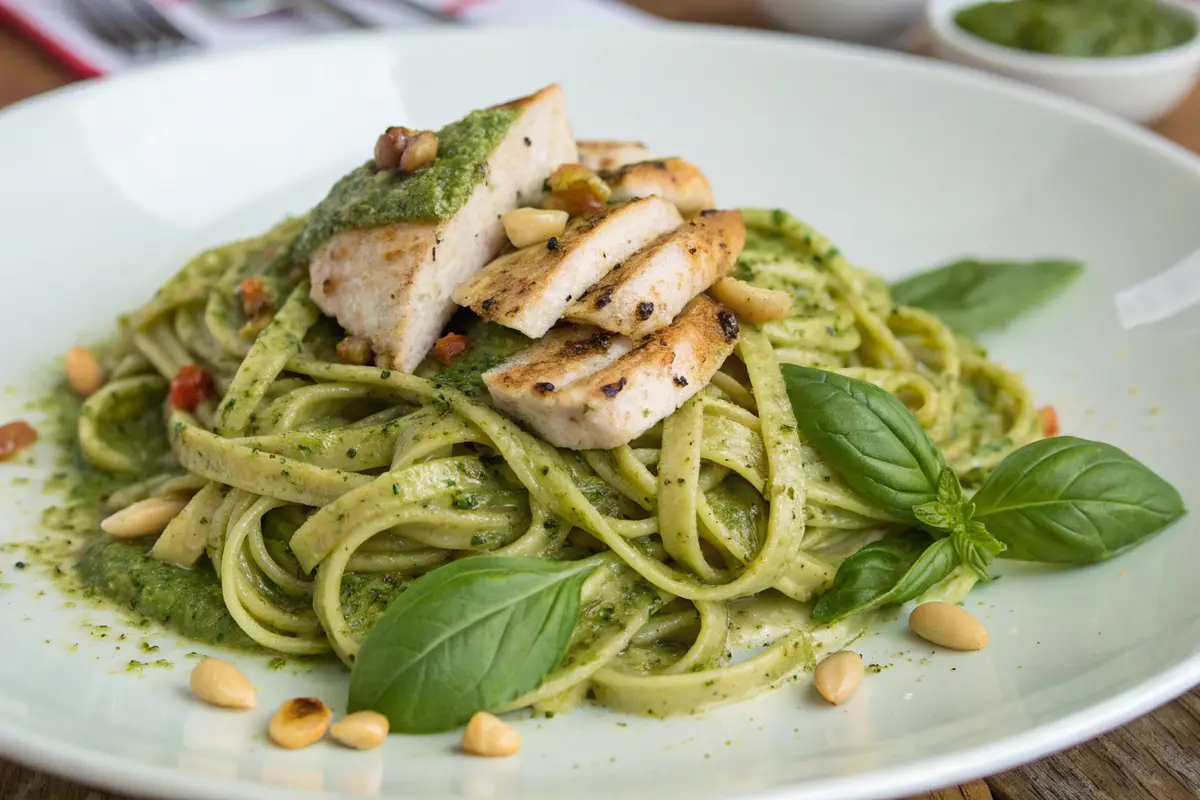
Whether you’re serving this dish for a casual family dinner or entertaining friends on the weekend, this pesto chicken pasta promises to impress with its fresh flavors and beautiful presentation. The bright green sauce, golden chunks of chicken, and al dente pasta create a visually appealing plate that tastes even better than it looks. Best of all, this recipe comes together in about 30 minutes, allowing you to enjoy a restaurant-quality Italian dinner without the fuss.
Fresh and Flavorful Ingredients for Your Pesto Masterpiece
Building Blocks of Flavor
The beauty of pesto chicken pasta lies in its straightforward yet impactful ingredients. Each component plays a crucial role in creating the final harmonious dish. “The Fettuccine Alfredo recipe uses a similar approach to pasta doneness, ensuring the perfect texture with every bite.”
| Essential Ingredients | Quantity | Notes |
|---|---|---|
| Boneless chicken breasts, diced | 2 (about 1 pound) | Chicken thighs work wonderfully too for extra juiciness |
| Penne or fusilli pasta | 8 oz (about 2 cups dry) | Pasta with ridges or spirals holds the pesto beautifully |
| Fresh basil leaves | 1 cup, packed | The fresher, the better for vibrant flavor |
| Pine nuts | 1/3 cup | Toast lightly for enhanced nutty flavor |
| Garlic cloves | 2, peeled | Add more for extra garlic punch |
| Parmesan cheese, freshly grated | 1/2 cup | Pre-grated works but fresh is best |
| Olive oil | 1/4 cup for pesto + 2 Tbsp for cooking | Use extra-virgin for the pesto |
| Salt and pepper | To taste | Be generous with the chicken seasoning |
| Lemon juice (fresh) | 1 tablespoon | Brightens the pesto flavor |
| Cherry tomatoes, halved | 1 cup | Adds freshness and color (optional) |
| Baby spinach | 2 cups | Wilts perfectly into hot pasta (optional) |
| Red pepper flakes | 1/4 teaspoon | Adds gentle heat (optional) |
| Extra Parmesan for serving | 1/4 cup | For sprinkling on top |
Ingredient Selection Tips
For the most vibrant pesto chicken pasta, select ingredients with care. Look for bright, fragrant basil leaves without any dark spots. Choose high-quality Parmesan cheese and grate it yourself for the best flavor and melting properties. When selecting chicken, opt for hormone-free, air-chilled chicken breasts for the best texture and taste. For a time-saving option, you can use pre-diced chicken, but be sure it’s fresh and not previously frozen for the juiciest results.
Crafting the Perfect Pesto Chicken Pasta: Step-by-Step Guide
Preparation Phase
Follow these detailed steps to create a restaurant-worthy pesto chicken pasta that balances fresh basil flavor with savory garlic chicken. “The Pesto Pasta Salad uses the same homemade pesto technique that produces incredibly vibrant flavor.”
- Bring a large pot of water to a rolling boil. Add 1 tablespoon of salt to the water (this flavors the pasta from within). Add the pasta and cook according to package directions until al dente, typically 8-10 minutes. The pasta should have a slight bite to it—not too soft or mushy. Reserve ½ cup of pasta water before draining. After draining, toss pasta with a small drizzle of olive oil to prevent sticking and set aside.
- While the pasta cooks, prepare the chicken. Pat the diced chicken breasts dry with paper towels (this helps achieve better browning). Season generously with salt and pepper on all sides.
- Heat 2 tablespoons of olive oil in a large skillet over medium-high heat until shimmering but not smoking. Add the seasoned chicken in a single layer, being careful not to overcrowd the pan (work in batches if necessary).
- Cook the chicken undisturbed for 2-3 minutes until golden brown on one side. Flip and continue cooking for another 3-4 minutes until chicken is cooked through and no longer pink in the center (internal temperature should reach 165°F). The exterior should be lightly golden with caramelized edges. Remove from heat and set aside.
- For the homemade pesto, begin by toasting pine nuts in a dry skillet over medium-low heat for 3-4 minutes, stirring frequently until fragrant and lightly golden. Watch carefully as they can burn quickly. Allow to cool for 2 minutes.
- In a food processor, combine fresh basil leaves, cooled toasted pine nuts, garlic cloves, and Parmesan cheese. Pulse 8-10 times until roughly chopped and combined.
- With the food processor running, slowly drizzle in 1/4 cup of olive oil in a steady stream. Process until the mixture is smooth but still has some texture, about 30 seconds. Add 1 tablespoon of fresh lemon juice and season with salt and pepper to taste. Pulse a few more times to incorporate.
- Return the cooked pasta to its pot or a large serving bowl. Add the cooked chicken and fresh pesto sauce. Toss gently but thoroughly to coat every piece of pasta and chicken with the vibrant green sauce.
- If the pasta seems dry, add a splash of the reserved pasta water, 1 tablespoon at a time, until you reach your desired consistency. The starchy water helps the sauce cling to the pasta.
- For added freshness and color, fold in halved cherry tomatoes and baby spinach if using. The residual heat will lightly wilt the spinach.
- Taste and adjust seasoning with additional salt, pepper, or a squeeze of lemon juice if needed.
- Serve immediately in warm bowls, topped with extra grated Parmesan cheese and a light sprinkle of red pepper flakes if desired.
Expert Tips for Pesto Perfection Every Time
Elevate Your Pesto Chicken Pasta Experience
Take your pesto chicken pasta from good to extraordinary with these professional tips that address common challenges and enhance flavor. “The Garlic Parmesan Baked Chicken uses similar aromatics that you can incorporate into this dish for an even more robust flavor profile.”
- Prevent basil oxidation: To keep your pesto vibrant green, blanch basil leaves for just 5-10 seconds in boiling water, then immediately plunge into ice water before drying and processing. This quick step deactivates the enzymes that cause browning.
- Budget-friendly pine nut alternatives: While traditional pesto uses pine nuts, you can substitute with less expensive walnuts, almonds, or even sunflower seeds without compromising flavor. Just be sure to toast them first to enhance their nutty taste.
- Perfect pasta texture: For ideal al dente pasta that holds up to the pesto, cook it 1 minute less than the package directions suggest. The pasta will continue absorbing moisture from the sauce when mixed.
- Chicken flavor boosters: For more flavorful chicken, marinate the diced pieces in 1 tablespoon olive oil, 1 teaspoon Italian seasoning, and 1 minced garlic clove for 15-30 minutes before cooking.
- Make-ahead pesto: Prepare the pesto up to 3 days in advance and store in an airtight container with a thin layer of olive oil on top to prevent oxidation. This makes weeknight assembly incredibly quick.
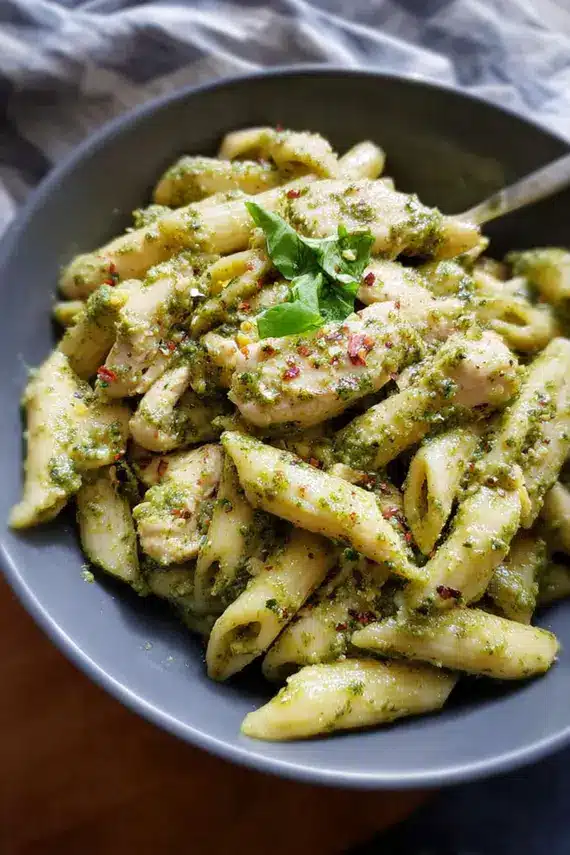
- Texture contrast: For a delightful textural element, sprinkle toasted breadcrumbs or additional toasted pine nuts over the finished dish just before serving.
- Vegetable additions: This dish is incredibly versatile – try adding roasted red peppers, sautéed zucchini, or steamed broccoli florets to increase vegetable content and create a more colorful presentation.
Keeping Your Pesto Chicken Pasta Fresh and Flavorful
Smart Storage Solutions for Leftovers
Proper storage is essential for maintaining the vibrant flavor and texture of your pesto chicken pasta. Follow these guidelines to enjoy your leftovers with nearly the same quality as when freshly made. “The Creamy Garlic Chicken Pasta uses similar storage techniques to preserve the sauce consistency and prevent the pasta from becoming soggy.”
For refrigerator storage, allow the pesto chicken pasta to cool completely before transferring to an airtight container. Store in the refrigerator for up to 3 days. The pasta will absorb more of the pesto sauce as it sits, which can sometimes result in a drier texture when reheated. To combat this, reserve a small amount of pesto separately if possible to refresh the dish when reheating.
When reheating, add 1-2 tablespoons of water or chicken broth to the pasta before warming it in the microwave (covered) for 1-2 minutes, stirring halfway through. Alternatively, reheat in a skillet over medium-low heat, adding a splash of liquid and stirring frequently until warmed through. This gentle reheating method prevents the chicken from becoming tough.
For meal prep purposes, consider storing the components separately when possible. Keep the cooked pasta, chicken, and pesto sauce in separate containers, then combine just before serving. This method preserves the individual textures and prevents the basil in the pesto from darkening due to prolonged contact with acidic ingredients.
Freezing pesto chicken pasta is possible but not ideal as the texture of the pasta may become softer upon thawing. However, you can successfully freeze the pesto sauce alone in small ice cube trays, then transfer the frozen cubes to a freezer bag for storage up to 3 months. This way, you can quickly thaw just the amount of sauce you need for future meals.
Delicious Twists on the Classic Pesto Chicken Pasta
Creative Variations to Keep Things Exciting
While traditional pesto chicken pasta is delicious on its own, these inventive variations offer exciting new flavor profiles while maintaining the dish’s core appeal.
Creamy Pesto Chicken Pasta
Transform the dish with a velvety texture by stirring in 1/4 cup of heavy cream or mascarpone cheese along with the pesto. The creamy element mellows the basil’s intensity and creates a luxurious sauce that clings beautifully to each pasta strand. For additional richness, add 2 tablespoons of cream cheese. This variation pairs particularly well with mushrooms or peas as vegetable additions.
Mediterranean Pesto Chicken Pasta
Create a Mediterranean-inspired variation by adding 1/2 cup each of halved Kalamata olives, crumbled feta cheese, and diced sun-dried tomatoes to the finished dish. The briny olives and tangy feta complement the herbal notes of the pesto perfectly. A handful of baby arugula folded in at the end adds a peppery bite that enhances the overall flavor profile. This variation transports your taste buds to the Mediterranean coastline.
Lemon Arugula Pesto Chicken Pasta
For a brighter, peppery variation, substitute half of the basil with fresh arugula in the pesto recipe and double the lemon juice. The peppery arugula and citrus notes create a lighter, more vibrant sauce perfect for spring and summer meals. Top with lemon zest just before serving to amplify the citrus aromatics. This variation works beautifully with seafood substituted for chicken.
Roasted Vegetable Pesto Pasta
Create a more vegetable-forward dish by roasting cherry tomatoes, zucchini, bell peppers, and red onions with olive oil, salt, and pepper at 425°F for 20 minutes until caramelized. Toss these roasted vegetables with the pesto pasta and chicken for a dish with more complex flavors and increased nutritional value. The caramelized vegetables add wonderful depth and natural sweetness.
Spicy Sun-Dried Tomato Pesto Chicken Pasta
For a flavor twist with a hint of heat, blend 1/4 cup of oil-packed sun-dried tomatoes and 1/4 teaspoon of red pepper flakes into your pesto sauce. This creates a beautiful reddish-green sauce with sweet, tangy notes and a pleasant warming sensation. The sun-dried tomatoes add umami depth that complements the chicken beautifully. This variation is perfect for those who enjoy a bit of spice in their Italian dishes.
Protein-Packed Pesto Pasta Bowl
For a higher-protein meal, reduce the pasta by half and add 1 cup of cooked white beans or chickpeas along with the chicken. This variation offers more balanced macronutrients while maintaining the dish’s satisfying nature. The beans add a pleasant textural contrast and help the meal keep you fuller longer. It’s perfect for athletes or those focused on higher-protein diets.
Serving Ideas for a Memorable Pesto Chicken Pasta Experience
From Casual Weeknights to Special Occasions
How you serve pesto chicken pasta can transform it from a simple weeknight dinner to an impressive centerpiece for gatherings. Here are versatile serving suggestions for different occasions. Mediterranean-inspired pasta dishes can be paired with similar sides to create a cohesive meal experience.
Family Weeknight Dinner
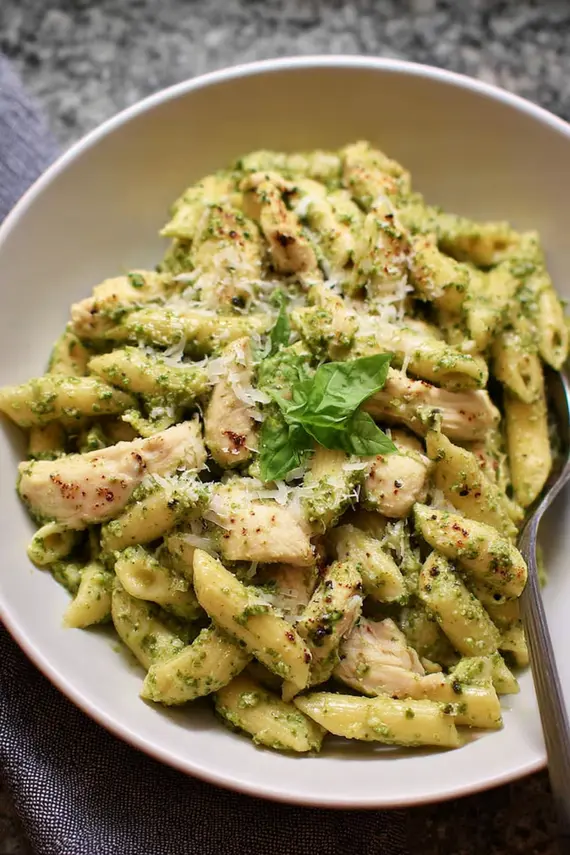
For a balanced family meal, serve pesto chicken pasta in wide, shallow bowls that showcase the vibrant colors. Accompany with a simple side salad of mixed greens dressed with lemon vinaigrette to cut through the richness of the pesto. A basket of warmed garlic bread provides the perfect vehicle for soaking up any extra sauce. For portion sizing, plan on approximately 1½ cups of pasta per adult and ¾-1 cup per child, adjusting as needed for your family’s appetites.
Casual Entertaining Setup
When hosting friends for a relaxed gathering, create a pesto pasta bar that allows guests to customize their bowls. Serve the base pasta and chicken in a large, warmed serving dish, then offer an array of toppings in small bowls: extra toasted pine nuts, diced fresh tomatoes, additional grated Parmesan, red pepper flakes, and perhaps some fresh herbs. Accompany with bruschetta or a Mediterranean antipasto platter for a true Italian-inspired experience. This interactive approach encourages conversation and accommodates different preferences.
Meal Prep Presentation
For weekly meal preparation, portion the pesto chicken pasta into individual glass containers, arranging the components attractively with the pasta as the base, chicken distributed evenly throughout, and a few cherry tomatoes or fresh herbs on top for color. These visually appealing portions stay fresh for several days and can be quickly reheated for lunches or dinners on busy days. Include a lemon wedge in each container to squeeze over the pasta just before eating to brighten the flavors after reheating.
Al Fresco Summer Dining
For warm-weather outdoor meals, serve the pesto chicken pasta at room temperature (slightly cooler than hot) as part of a summer spread. The flavors of basil and olive oil actually shine when not piping hot. Pair with a chilled cucumber-tomato salad, fresh fruit platter, and sparkling water with lemon for a refreshing outdoor dining experience. The room-temperature serving style allows guests to mingle and enjoy at a leisurely pace without worrying about food getting cold.
Make It a Feast
For special occasions, elevate your pesto chicken pasta by serving it alongside “The Garlic Parmesan Green Beans for a cohesive garlic-forward flavor profile. Complete the feast with fresh-baked focaccia, a caprese salad with heirloom tomatoes, and lemon sorbet for dessert. This creates an Italian-inspired menu that feels special without requiring excessive preparation time.
Answering Your Pesto Chicken Pasta Questions
Common Concerns and Expert Solutions
Can I make this pesto chicken pasta with dried basil instead of fresh?
While fresh basil creates the most vibrant and authentic pesto flavor, you can create a modified version using 2 tablespoons of dried basil in a pinch. Rehydrate the dried basil by soaking it in 3 tablespoons of hot water for 5 minutes before proceeding with the recipe. The flavor won’t be as bright as with fresh basil, but you’ll still get a tasty result. For the best compromise when fresh basil isn’t available, look for refrigerated tube pesto or frozen basil cubes in the grocery store.
Why does my homemade pesto turn dark shortly after making it?
Pesto darkening is caused by oxidation of the basil leaves when exposed to air. To prevent this, you can add a small amount (about 1 teaspoon) of lemon juice to your pesto, which acts as a natural preservative. Another effective technique is to blanch the basil leaves for 5-10 seconds in boiling water, then immediately shock them in ice water before patting dry and proceeding with the recipe. This quick blanching deactivates the enzymes responsible for browning. Finally, always store leftover pesto with a thin layer of olive oil on top to create a barrier against oxygen.
What’s the best pasta shape for pesto chicken pasta?
The ideal pasta shapes for pesto sauce have nooks, ridges, or twists that can capture and hold the sauce. Fusilli, rotini, and farfalle (bowtie) are excellent choices because their shapes trap the small bits of basil, pine nuts, and garlic. Penne and orecchiette also work well because their hollow centers or cup shapes hold pesto beautifully. Avoid very thin pasta like angel hair, which can clump with pesto’s texture, or very large shapes like lasagna. Medium-sized pasta with texture works best for achieving the perfect sauce-to-pasta ratio in each bite.
Bringing Homemade Italian Goodness to Your Table
Your New Favorite Weeknight Wonder
Pesto chicken pasta represents the perfect balance of convenience and culinary satisfaction. In just about 30 minutes, you’ve created a restaurant-worthy dish that delivers vibrant flavor in every bite. The combination of aromatic basil pesto, tender garlic-infused chicken, and perfectly cooked pasta creates a meal that feels special enough for company yet simple enough for busy weeknights.
“The Creamy Garlic Chicken Pasta offers another wonderful option when you’re looking for quick weeknight meals with big flavor.”
What makes this pesto chicken pasta truly special is its versatility. You can customize it based on what’s in your pantry, what’s in season, or simply what you’re craving. Add more vegetables for a nutrient boost, experiment with different nuts in your pesto, or try one of the exciting variations we’ve shared to keep your meal rotation feeling fresh and inspired.
We hope this pesto chicken pasta becomes a beloved staple in your cooking repertoire—a dish you can confidently prepare when you want to impress without stress. The vibrant colors, fresh flavors, and satisfying textures make it a true crowd-pleaser that brings a taste of Italy to your dining table any day of the week.
PrintPesto Chicken Pasta
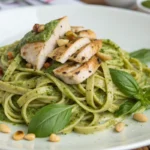
- Classic Italian-inspired pesto chicken pasta with homemade basil sauce.
- Tender garlic chicken chunks tossed with al dente pasta and vibrant pesto.
- A quick weeknight dinner ready in just 30 minutes!
- Prep Time: 15
- Cook Time: 15
- Total Time: 30 minutes
- Yield: 4 servings 1x
- Category: Dinner
- Method: Stovetop
- Cuisine: Italian
Ingredients
- 2 boneless chicken breasts, diced (about 1 pound)
- 8 oz penne or fusilli pasta
- 1 cup fresh basil leaves, packed
- 1/3 cup pine nuts
- 2 cloves garlic, peeled
- 1/2 cup grated Parmesan cheese, plus extra for serving
- 1/4 cup extra virgin olive oil, plus 2 Tbsp for cooking
- Salt and pepper to taste
- 1 tablespoon fresh lemon juice
- 1 cup cherry tomatoes, halved (optional)
- 2 cups baby spinach (optional)
- 1/4 teaspoon red pepper flakes (optional)
Instructions
- Bring a large pot of salted water to boil and cook pasta according to package directions until al dente, about 8-10 minutes.
- Reserve 1/2 cup pasta water before draining. Toss drained pasta with a drizzle of olive oil to prevent sticking.
- While pasta cooks, pat chicken dry and season generously with salt and pepper.
- Heat 2 tablespoons olive oil in a large skillet over medium-high heat. Add chicken and cook undisturbed for 2-3 minutes until golden.
- Flip chicken pieces and continue cooking 3-4 minutes until cooked through (165°F internal temperature). Set aside.
- Toast pine nuts in a dry skillet over medium-low heat for 3-4 minutes, stirring frequently until golden. Let cool slightly.
- In a food processor, combine basil, toasted pine nuts, garlic, and Parmesan. Pulse 8-10 times until roughly chopped.
- With processor running, slowly drizzle in 1/4 cup olive oil until smooth but still textured. Add lemon juice and season with salt and pepper.
- Combine cooked pasta and chicken in a large bowl. Add pesto sauce and toss thoroughly to coat.
- If pasta seems dry, add reserved pasta water 1 tablespoon at a time until desired consistency is reached.
- Fold in cherry tomatoes and spinach if using. The residual heat will slightly wilt the spinach.
- Taste and adjust seasoning if needed.
- Serve immediately topped with additional Parmesan cheese and optional red pepper flakes.
Notes
- For a creamier variation, add 1/4 cup heavy cream or 2 tablespoons cream cheese when mixing the pesto with pasta.
- The pesto can be made up to 3 days ahead and stored with a thin layer of olive oil on top.
- To prevent pesto from darkening, blanch basil leaves for 5 seconds in boiling water, then plunge into ice water before proceeding with the recipe.
- Nutrition facts are estimates and may vary based on ingredients used, portion sizes, and preparation methods.
Nutrition
- Serving Size: 1 1/2 cups
- Calories: 520
- Sugar: 3
- Sodium: 390
- Fat: 28
- Saturated Fat: 6
- Unsaturated Fat: 20
- Carbohydrates: 42
- Fiber: 3
- Protein: 30
- Cholesterol: 65
Keywords: pesto chicken pasta, basil pasta, garlic chicken, Italian dinner, quick weeknight meal
Let’s connect! Follow me for more Joylicious Recipes: Facebook, Instagram, Pinterest