
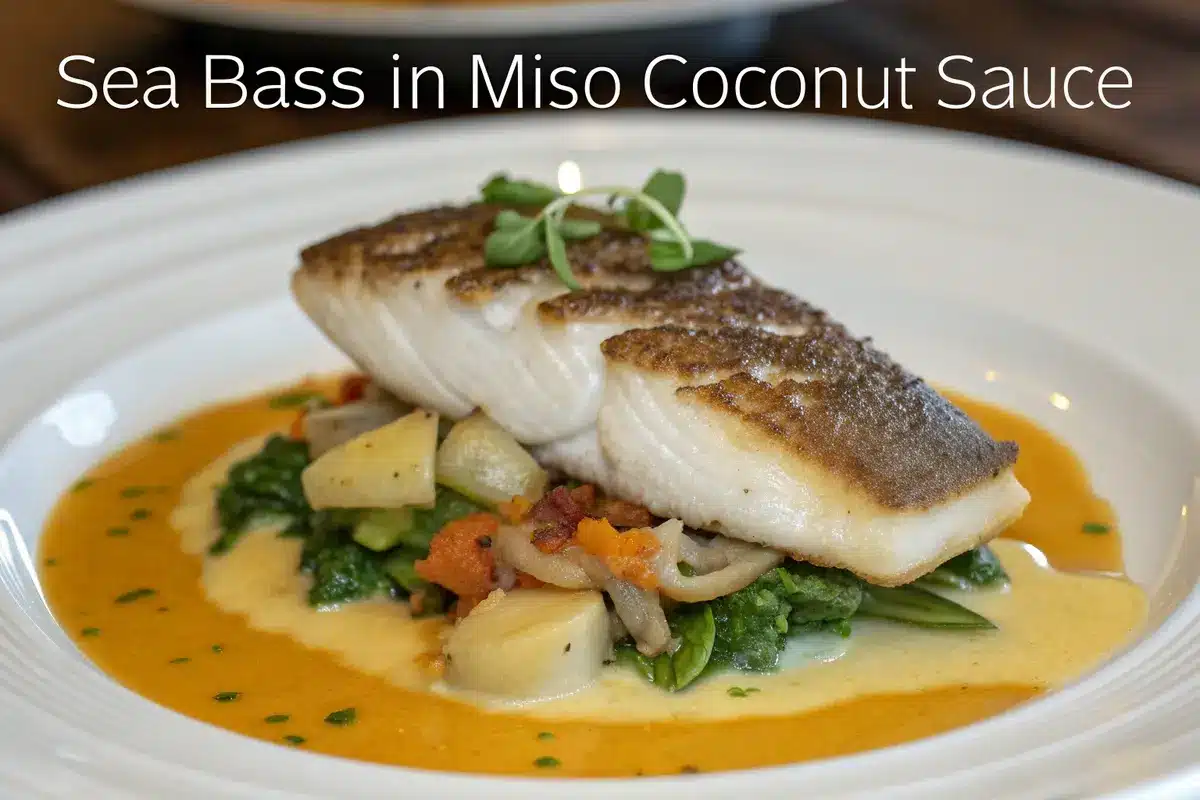
Discover the Delicate Elegance of Sea Bass in Miso Coconut Sauce
A Perfect Balance of Flavors
Sea Bass in Miso Coconut Sauce brings together the delicate texture of perfectly cooked fish with a sauce that’s both umami-rich and subtly sweet. This exquisite dish transforms an ordinary dinner into something truly special, combining the buttery tenderness of sea bass with the complex flavors of miso and the silky richness of coconut milk. “The Garlic Butter Grilled Shrimp recipe uses similar quality seafood preparation techniques to highlight the natural flavors of the protein.”
This restaurant-quality meal is surprisingly simple to prepare at home, making it perfect for special occasions or when you want to elevate your weeknight dinner routine. The aromatic sauce, infused with ginger, garlic, and lime, creates a beautiful Asian-inspired flavor profile that will impress even the most discerning palates. Serve this elegant dish with jasmine rice and steamed vegetables for a complete meal that feels both indulgent and nourishing.
Essential Components for Miso Coconut Sea Bass Excellence
Core Ingredients That Create Magic
Creating this remarkable Sea Bass in Miso Coconut Sauce requires quality ingredients that work harmoniously together. Each component plays a vital role in developing the distinctive flavor profile that makes this dish so memorable. Here’s what you’ll need:
| Ingredient | Amount | Notes |
|---|---|---|
| Sea bass fillets | 4 (6 oz each) | Skin-on preferred for texture and flavor |
| White miso paste | 3 tablespoons | Provides umami depth without overpowering |
| Coconut milk | 1 cup | Full-fat for richest texture and flavor |
| Fresh ginger, grated | 1 tablespoon | Adds aromatic warmth |
| Garlic, minced | 3 cloves | For savory foundation |
| Lime juice | 2 tablespoons | Brightens all flavors |
| Sesame oil | 2 tablespoons | For searing and nutty flavor |
| Low-sodium soy sauce | 1 tablespoon | Enhances umami notes |
| Green onions, sliced | 3-4 stalks | For garnish and fresh flavor |
| Kosher salt | To taste | For seasoning fish |
| Fresh cilantro leaves | ¼ cup | Optional garnish |
| Red chili flakes | ¼ teaspoon | Optional for heat |
| Lime zest | 1 teaspoon | For aromatic brightness |
| Honey | 1 teaspoon | Optional for balancing flavors |
| Toasted sesame seeds | 1 tablespoon | For garnish and texture |
“The Turmeric Fish Vermicelli Bowl showcases similar Asian-inspired flavors that pair beautifully with delicate white fish.”
Master the Art of Preparing This Exquisite Seafood Dish
Professional Techniques Made Simple
Follow these detailed instructions to create a perfectly cooked Sea Bass in Miso Coconut Sauce that will rival any restaurant version. Pay attention to the visual cues and timing to achieve the ideal texture and flavor.
- Pat dry sea bass fillets using paper towels to remove all moisture. This crucial step ensures proper searing and crispy skin. Season very lightly with kosher salt on both sides.
- In a medium bowl, whisk together 3 tablespoons white miso paste, 1 cup coconut milk, 1 tablespoon low-sodium soy sauce, 1 tablespoon freshly grated ginger, 3 cloves minced garlic, 2 tablespoons lime juice, and optional 1 teaspoon honey until completely smooth with no lumps. The sauce should have a silky consistency.
- Heat 2 tablespoons sesame oil in a large, heavy-bottomed skillet over medium heat until shimmering but not smoking. The right temperature is critical for proper searing.
- Carefully place sea bass fillets skin-side down in the hot oil, pressing gently with a spatula for the first 30 seconds to prevent curling. Cook for 3-4 minutes until the skin is golden brown and crispy. The edges of the fish will begin to turn opaque as they cook.
- Using a thin spatula, gently flip each fillet. The skin should release easily when properly seared. If it sticks, give it another 30 seconds before attempting to flip.
- Pour the prepared miso coconut sauce around (not directly on top of) the fillets and reduce heat to medium-low. Simmer gently until fish is opaque throughout and flakes easily with a fork, approximately 4-5 minutes. The internal temperature should reach 137°F (58°C) for perfectly cooked sea bass.
- As the sauce simmers, spoon it over the fillets occasionally to baste them. The sauce will thicken slightly as it reduces. It should coat the back of a spoon but still remain pourable.
- Taste the sauce and adjust seasoning if needed. If too salty, add a little more coconut milk; if too bland, add a touch more miso or soy sauce.
- Remove from heat and let the fish rest in the sauce for 1 minute to allow the flavors to settle and distribute evenly.
- Garnish generously with sliced green onions, optional fresh cilantro leaves, and a sprinkle of toasted sesame seeds. Add a squeeze of fresh lime juice just before serving for brightness.
“The Lemon Garlic Herb Chicken recipe uses similar techniques for creating a flavorful sauce that complements the protein perfectly.”
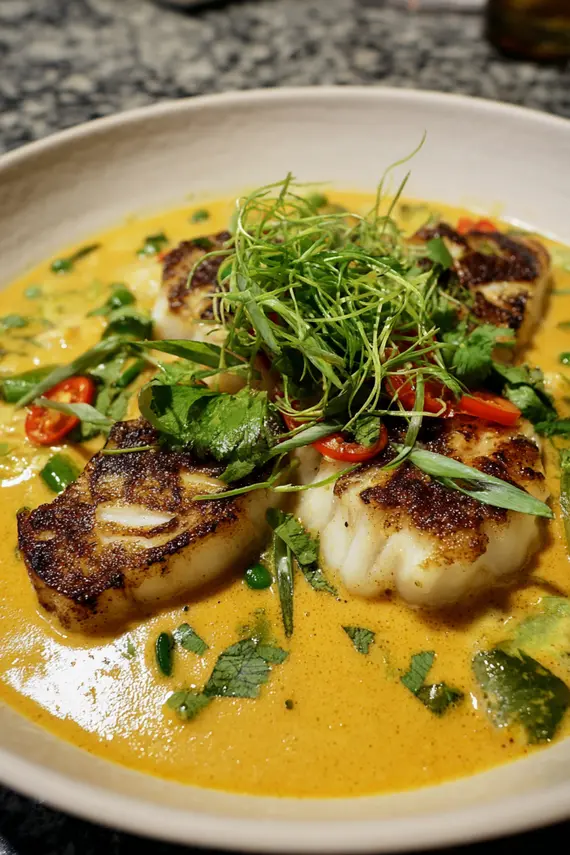
Chef’s Secrets for Perfecting Your Miso Coconut Sea Bass
Professional Insights for Home Cooking Success
Elevate your Sea Bass in Miso Coconut Sauce with these expert tips that make all the difference between a good dish and an extraordinary one:
- Fish Selection: While sea bass is ideal, you can substitute with other firm white fish like black cod, halibut, or even snapper. Look for fillets of even thickness to ensure uniform cooking.
- Miso Varieties: White miso provides a delicate sweetness, but you can experiment with yellow miso for a slightly stronger flavor. Avoid red miso for this dish as its robust flavor may overwhelm the delicate fish.
- Perfect Searing: Ensure your pan is properly heated before adding the fish, and don’t move the fillets for the first 2-3 minutes to allow the skin to crisp properly. A stainless steel or cast-iron pan works best for achieving that restaurant-quality sear.
- Sauce Consistency: If your sauce becomes too thick during cooking, thin it with a splash of chicken broth or water. For a richer sauce, you can add a tablespoon of cold butter at the end and swirl until melted.
- Temperature Control: The key to perfectly cooked fish is gentle heat after the initial sear. If your sauce starts to bubble too vigorously, reduce the heat immediately to prevent the fish from becoming tough.
- Fresh Aromatics: For the most vibrant flavor, use freshly grated ginger and freshly minced garlic rather than pre-packaged versions. The difference in taste is remarkable in a sauce with such clean flavors.
- Testing Doneness: Sea bass is perfectly cooked when it flakes easily but still maintains a slight translucence in the center. Overcooking will result in dry, tough fish that detracts from the elegant nature of the dish.
“The Steak Caprese Salad demonstrates similar high-quality protein cooking techniques that preserve moisture while developing beautiful flavor.”
Keeping Your Seafood Creation Fresh and Flavorful
Proper Storage for Maximum Quality
Proper storage is essential for maintaining the quality and safety of your Sea Bass in Miso Coconut Sauce. Follow these guidelines to ensure your leftovers remain delicious for future enjoyment:
For optimal freshness, allow the sea bass and sauce to cool completely before refrigerating, but don’t leave at room temperature for more than 1 hour. Transfer the fish and sauce to separate airtight containers for best results. The fish will keep its texture better when stored separately from the sauce, which prevents the delicate sea bass from becoming soggy.
Refrigerate the sea bass for up to 2 days. The sauce can be stored separately for up to 3-4 days and often develops even deeper flavors as it rests. When reheating, do so gently to preserve the fish’s texture. For best results, reheat the sauce in a skillet until warm, then add the fish and heat just until warmed through, about 2-3 minutes over low heat.
This dish is not recommended for freezing as both the texture of the fish and the consistency of the coconut milk sauce will deteriorate significantly upon thawing. If you know you’ll have leftovers, consider setting aside a portion of the raw fish and sauce ingredients before cooking to make a fresh batch later.
“The One-Pan Cheesy Meat Potatoes Skillet offers excellent guidance on storing protein-rich dishes properly to maintain their quality.”
Creative Twists on the Classic Miso Coconut Sea Bass
Exciting Flavor Adaptations
The versatility of Sea Bass in Miso Coconut Sauce allows for numerous variations while maintaining the dish’s elegant essence. Here are some inspired variations to keep this recipe exciting:
Lemongrass-Infused Version
Add 2 tablespoons of finely minced lemongrass to the sauce for a fragrant, citrusy note that complements the coconut beautifully. This variation creates a more Thai-inspired profile that works wonderfully with the delicate fish. Finish with extra lime juice and fresh Thai basil instead of cilantro.
Spicy Ginger Miso Sea Bass
Transform the dish with additional heat by incorporating 1-2 teaspoons of Sriracha or sambal oelek into the sauce, along with extra ginger for a warming effect. The spice balances beautifully with the rich coconut milk and sweet miso, creating a more complex flavor profile that still allows the sea bass to shine.
Green Curry Adaptation
Add 1-2 tablespoons of Thai green curry paste to the sauce base for a vibrant twist. This variation pairs wonderfully with additional vegetables like thinly sliced bell peppers and snow peas added during the final minutes of cooking. The result is a complete one-pan meal with brilliant color and depth.
Citrus-Forward Version
Replace the lime juice with a combination of orange and yuzu or Meyer lemon juice for a brighter, more fragrant sauce. Add 1 tablespoon of orange zest to enhance the citrus notes. This variation is particularly wonderful in spring and summer when lighter flavors are preferred.
Herb-Enriched Miso Coconut Sea Bass
Incorporate 3 tablespoons of finely chopped fresh herbs like Thai basil, mint, and cilantro into the sauce just before serving. This creates a fresher, more aromatic dish that highlights seasonal herbs. The green speckled sauce also creates a beautiful presentation against the white fish.
Mushroom Umami Boost
Add 1 cup of sliced shiitake mushrooms to the pan after flipping the fish and before adding the sauce. The mushrooms will absorb the flavorful sauce while adding their own earthy umami notes, creating a heartier version of the dish with additional textural elements.
Elegant Presentation Ideas for Your Miso-Glazed Sea Bass
From Weeknight Dinners to Special Occasions
The exquisite Sea Bass in Miso Coconut Sauce deserves a presentation that highlights its elegant flavors. Here are some inspired serving suggestions for various occasions:
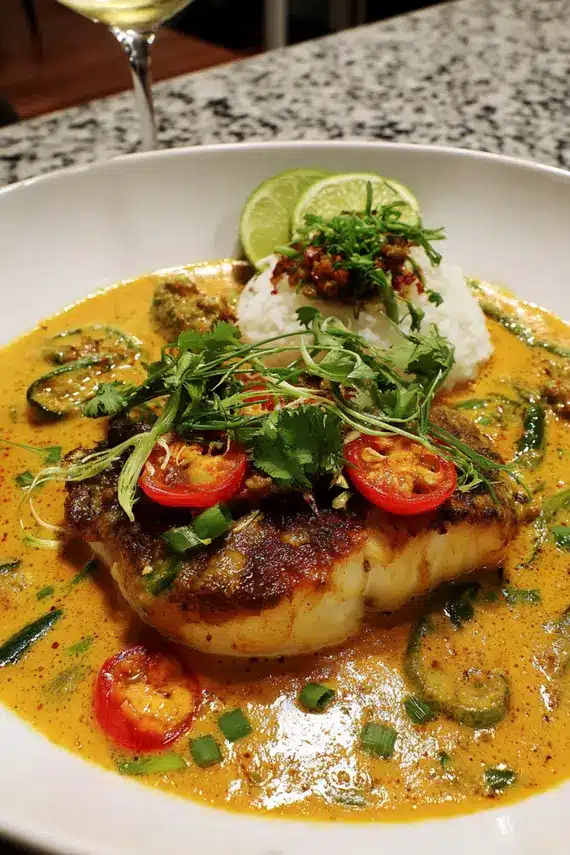
For an impressive date night dinner, serve the sea bass on a bed of coconut jasmine rice, allowing the flavorful sauce to seep into the grains. Arrange blanched baby bok choy around the plate and drizzle additional sauce over the fish. A sprinkling of black sesame seeds and microgreens adds a sophisticated touch that transforms this dish into a restaurant-worthy experience.
When hosting a dinner party, consider individual servings on warmed plates with the sauce artfully spooned around (not over) the fish to maintain the crispy skin. Pairing this with a light seafood side dish creates a cohesive menu that will impress your guests without overwhelming them.
For family meals, create a beautiful communal serving platter with the sea bass as the centerpiece surrounded by colorful roasted vegetables like bell peppers, zucchini, and carrots. The sauce can be served in a small bowl on the side, allowing everyone to add as much or as little as they prefer.
When seeking a lighter option, serve the sea bass over a bed of spiralized zucchini or cucumber noodles that have been briefly warmed. The vegetable noodles will absorb some of the delicious sauce while keeping the meal light and refreshing.
For a complete meal-in-one approach, serve alongside steamed brown rice and a simple Asian-inspired slaw made with shredded cabbage, carrots, and a rice vinegar dressing. This balanced combination provides complementary textures and flavors while adding nutritional variety to the meal.
Common Questions About Making Perfect Miso Coconut Sea Bass
Expert Answers to Your Cooking Concerns
Can I make the miso coconut sauce ahead of time?
Absolutely! The sauce can be prepared up to 2 days in advance and stored in an airtight container in the refrigerator. In fact, making it ahead allows the flavors to develop more deeply. Simply reheat gently before adding to the pan with the seared fish. This makes weeknight preparation much faster, as you’ll only need to cook the fish when ready to serve.
Why did my coconut milk sauce separate or curdle?
Coconut milk can sometimes separate when heated too quickly or boiled vigorously. To prevent this, warm the sauce gently over medium-low heat and avoid boiling. If your sauce does separate, you can often rescue it by removing from heat and whisking vigorously, or blending with an immersion blender for a few seconds. Adding a teaspoon of cornstarch mixed with cold water can also help stabilize the sauce.
What’s the best substitute if I can’t find sea bass?
Sea bass has a buttery, mild flavor and firm texture that makes it ideal for this dish, but several alternatives work wonderfully. Black cod (sablefish) is an excellent substitute with similar richness. Halibut offers a clean flavor with firm texture, though it’s leaner and requires careful cooking to prevent dryness. Barramundi is another great option with a similar texture and sweet, mild flavor. Even salmon can work, though it will change the flavor profile to be more distinctive.
Final Thoughts on This Exquisite Asian Seafood Creation
A Celebration of Elegant Simplicity
Sea Bass in Miso Coconut Sauce represents the beautiful harmony that can be achieved when simple, quality ingredients are prepared with care and attention. The buttery tenderness of the sea bass paired with the complex umami notes of miso and the silky richness of coconut creates a dish that feels both indulgent and refined. What makes this recipe truly special is how accessible it is for home cooks while delivering results that feel worthy of a special occasion.
Don’t be intimidated by the elegant nature of this dish – the techniques are straightforward, and the ingredients work together to create something greater than the sum of their parts. Whether you’re cooking for a quiet dinner at home or hosting guests you want to impress, this sea bass recipe delivers remarkable flavor with relatively minimal effort.
“The Spaghetti Recipe demonstrates how simple ingredients can be transformed into an impressive meal with the right techniques, just like this sea bass dish.”
We hope this recipe inspires you to bring more seafood into your cooking repertoire. The delicate balance of flavors in the miso coconut sauce might just become your new signature dish – one that friends and family request time and again.
PrintSea Bass in Miso Coconut Sauce
- Tender sea bass fillets bathed in a silky miso coconut sauce with hints of ginger, garlic, and lime.
- A restaurant-quality Asian-inspired seafood dish that’s surprisingly simple to make at home.
- Perfect for special occasions or an elevated weeknight dinner.
- Prep Time: 15
- Cook Time: 12
- Total Time: 27 minutes
- Yield: 4 servings 1x
- Category: Dinner
- Method: Skillet
- Cuisine: Asian-Inspired
Ingredients
- 4 sea bass fillets (6 oz each), skin-on preferred
- 3 tablespoons white miso paste
- 1 cup full-fat coconut milk
- 1 tablespoon fresh ginger, grated
- 3 cloves garlic, minced
- 2 tablespoons lime juice
- 2 tablespoons sesame oil
- 1 tablespoon low-sodium soy sauce
- 3–4 stalks green onions, sliced
- Kosher salt, to taste
- ¼ cup fresh cilantro leaves (optional)
- ¼ teaspoon red chili flakes (optional)
- 1 teaspoon lime zest
- 1 teaspoon honey (optional)
- 1 tablespoon toasted sesame seeds
Instructions
- Pat dry sea bass fillets using paper towels and season lightly with kosher salt on both sides.
- Whisk together miso paste, coconut milk, soy sauce, grated ginger, minced garlic, lime juice, and optional honey until completely smooth.
- Heat sesame oil in a large skillet over medium heat until shimmering but not smoking.
- Place sea bass fillets skin-side down, pressing gently with a spatula for the first 30 seconds to prevent curling. Cook for 3-4 minutes until skin is golden and crispy.
- Gently flip each fillet using a thin spatula. The skin should release easily when properly seared.
- Pour the miso coconut sauce around (not directly on top of) the fillets and reduce heat to medium-low.
- Simmer gently until fish is opaque throughout and flakes easily, approximately 4-5 minutes. Internal temperature should reach 137°F (58°C).
- Spoon sauce over the fillets occasionally as they simmer. The sauce will thicken slightly as it reduces.
- Taste and adjust seasoning if needed, then remove from heat and let rest for 1 minute.
- Garnish with sliced green onions, optional cilantro, sesame seeds, and a final squeeze of lime juice before serving.
Notes
- For the crispiest skin, ensure the fish is completely dry before cooking.
- White miso paste provides the best balance of flavor for this dish, but yellow miso can work as a substitute.
- Serve with jasmine rice, coconut rice, or steamed vegetables to complete the meal.
- Nutrition facts are estimates and may vary based on ingredients used, portion sizes, and preparation methods.
Nutrition
- Serving Size: 1 fillet with sauce
- Calories: 385
- Sugar: 2
- Sodium: 615
- Fat: 28
- Saturated Fat: 14
- Unsaturated Fat: 12
- Carbohydrates: 8
- Fiber: 1
- Protein: 28
- Cholesterol: 68
Keywords: Sea Bass in Miso Coconut Sauce, Miso Coconut Sauce, Sea Bass Recipe, Asian Fish Dish, Dinner Seafood
Let’s connect! Follow me for more Joylicious Recipes: Facebook, Instagram, Pinterest