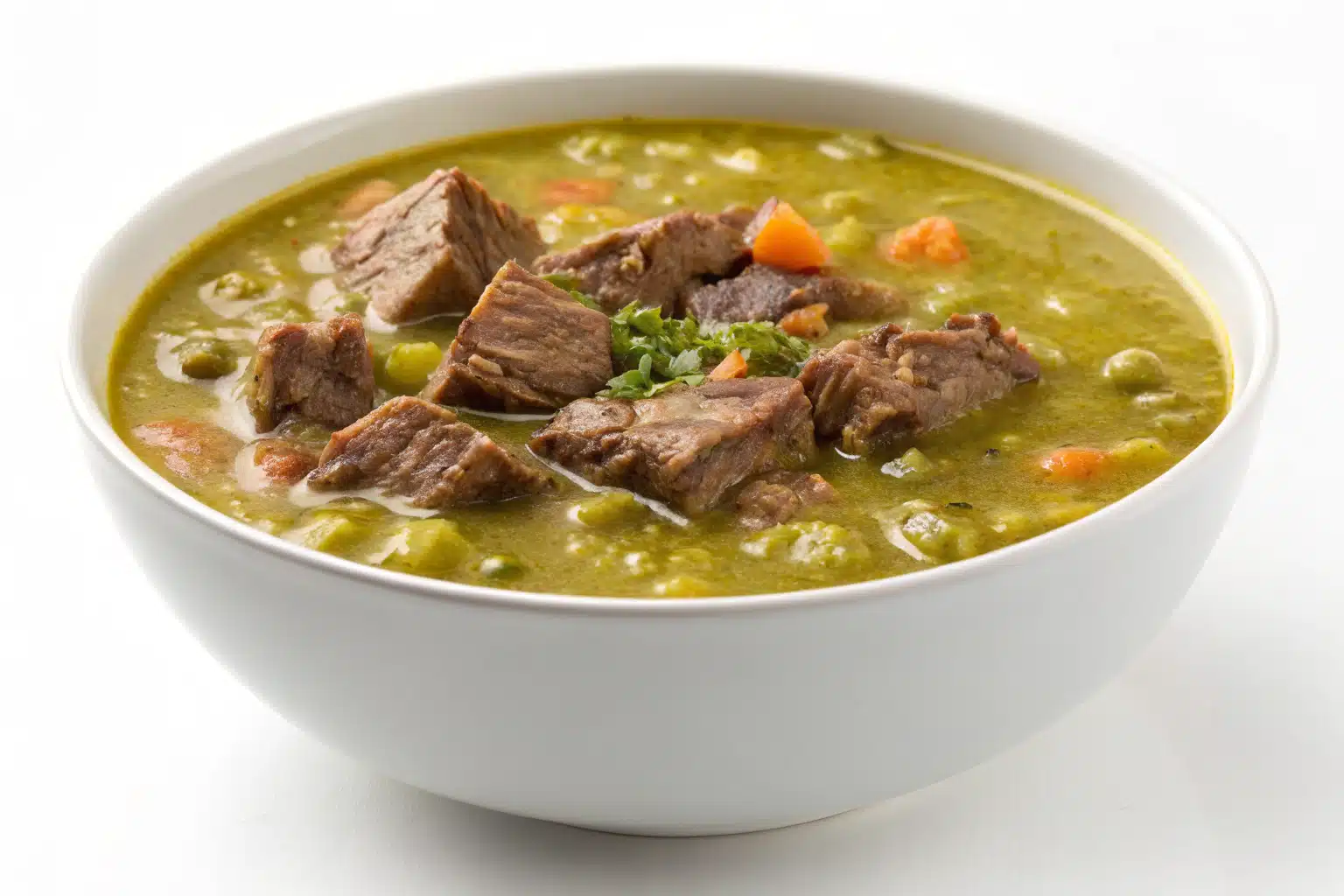
Hearty Split Pea Soup with Beef: A Comforting Classic
Introduction: Why Split Pea Soup with Beef Deserves a Place at Your Table
The Perfect Comfort Food for Any Season
Split pea soup with beef is one of those timeless recipes that delivers exceptional comfort with minimal effort. This nutritious powerhouse combines protein-rich split peas with tender, savory beef to create a meal that satisfies both hunger and cravings. Whether you’re fighting off winter chills or looking for a hearty yet light dinner option during warmer months, this soup adapts beautifully to any season. The combination of earthy split peas and rich beef creates a depth of flavor that’s both rustic and refined.
“If you enjoy heartwarming soups, you might also want to check out our mushroom split pea soup for another delicious variation.”
Nutritional Benefits and Value
Beyond its incredible flavor, split pea soup with beef offers impressive nutritional benefits. Split peas are packed with plant-based protein, fiber, and essential nutrients like iron and potassium. When combined with beef, this soup becomes a complete protein source that helps build and repair muscles. Additionally, the fiber content promotes digestive health and helps maintain steady blood sugar levels. The vegetables add vitamins and antioxidants, making this soup a well-rounded meal that’s as nutritious as it is delicious. For budget-conscious cooks, split pea soup with beef stretches quality ingredients into multiple servings, offering excellent value without sacrificing taste or nutrition.
Ingredients: Everything You Need for Perfect Split Pea Soup with Beef
Essential Components
| Ingredient | Amount | Notes |
|---|---|---|
| Olive oil | 2 tablespoons | Extra virgin preferred for best flavor |
| Yellow onion | 1 large, diced | Sweet onion works well too |
| Carrots | 3 medium, diced | For natural sweetness and color |
| Celery | 2 stalks, diced | Adds aromatic base flavor |
| Garlic | 4 cloves, minced | Fresh provides the best flavor |
| Bay leaves | 2 | Remove before serving |
| Dried thyme | ½ teaspoon | Complements the earthy pea flavor |
| Smoked paprika | 1 teaspoon | Adds depth and subtle smokiness |
| Black pepper | 1 teaspoon, ground | Freshly ground is best |
| Salt | 1 teaspoon | Adjust to taste |
| Green split peas | 1 pound | No need to pre-soak |
| Beef or vegetable broth | 8 cups, low-sodium | Allows control over salt content |
| Cooked shredded beef | 2 cups | Leftover pot roast or brisket works well |
| Apple cider vinegar or lemon juice | 1-2 teaspoons | Brightens flavors |
Ingredient Selection Tips
Choosing quality ingredients elevates your split pea soup with beef from good to exceptional. When selecting split peas, look for uniformly sized, bright green peas without discoloration. Fresher peas cook more evenly and have better texture. For the beef component, leftover roast beef works wonderfully, but you can also use chuck roast, brisket, or even short ribs cooked until tender and shredded. Using low-sodium broth allows you to control the salt content, which is especially important as the soup reduces and flavors concentrate. Fresh vegetables create the aromatic base that defines this soup, so choose firm, fresh produce whenever possible. The smoked paprika adds a subtle smoky quality that complements the beef beautifully—Spanish varieties offer the most authentic flavor.
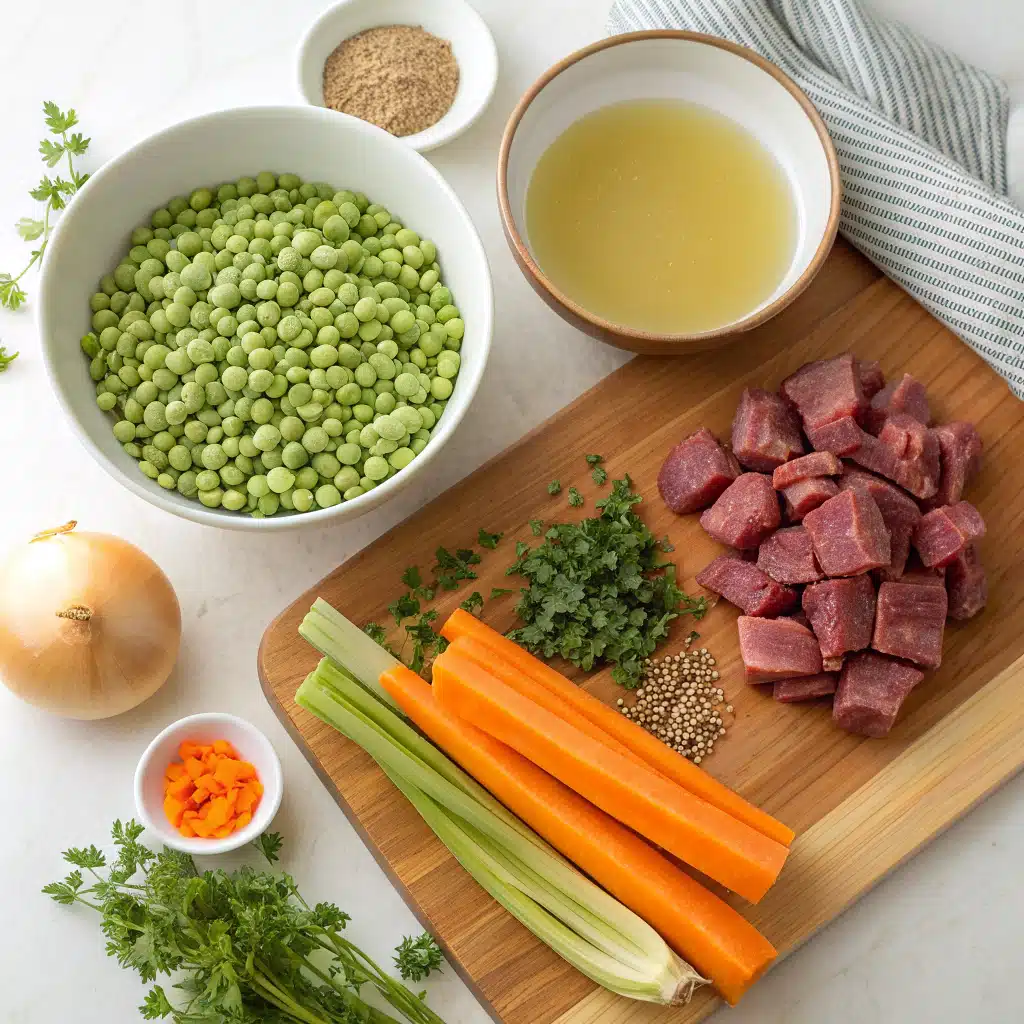
Step-by-Step: Making Delicious Split Pea Soup with Beef
Preparing the Base
Heat the olive oil in a large heavy-bottomed pot or Dutch oven over medium-low heat. The gradual heating prevents the oil from smoking and allows the vegetables to release their flavors more effectively.
Add the diced onion, carrots, and celery to the heated oil. This combination, known as mirepoix, forms the aromatic foundation of the soup. Sauté for 5-7 minutes until the vegetables soften and the onions become translucent. Stir occasionally to ensure even cooking and prevent browning.
Add the minced garlic, bay leaves, and dried thyme to the pot. Cook for an additional 1-2 minutes, stirring frequently. You’ll know it’s ready when the garlic becomes fragrant but hasn’t browned, as browning can create bitterness. “For another hearty beef option with different flavors, our beef pulao offers a delicious alternative when you want variety in your meal rotation.”
Cooking the Soup
Stir in the green split peas, making sure they’re well distributed throughout the vegetable mixture. Add the smoked paprika, ground black pepper, and salt, stirring to coat the peas and vegetables evenly with the seasonings.
Pour in the beef or vegetable broth, stirring well to combine all ingredients. Bring the mixture to a boil over medium-high heat, then reduce to a simmer. Cover the pot with a lid slightly ajar to allow some steam to escape while maintaining adequate moisture.
Simmer the soup for approximately 45-60 minutes, stirring occasionally to prevent sticking. The soup is ready when the split peas have broken down and created a naturally thick consistency. If you prefer a smoother texture, continue cooking until the peas completely disintegrate, or use an immersion blender to partially blend the soup.
Finishing Touches
Once the peas are tender, add the shredded beef to the pot and simmer for an additional 10-15 minutes. This allows the beef to heat through and integrate its flavors with the soup.
Taste the soup and adjust seasonings as needed. Add more salt, pepper, or other seasonings according to your preference. This is also the time to stir in the apple cider vinegar or lemon juice, which brightens the flavors and balances the richness of the soup.
Remove the bay leaves before serving. Ladle the hot soup into bowls and serve with your favorite accompaniments such as crusty bread, a sprinkle of fresh herbs, or a dollop of sour cream.
Tips: Enhancing Your Split Pea Soup with Beef
Texture Perfection
The texture of split pea soup with beef can vary greatly depending on personal preference. For a rustic, chunky soup, cook until the peas are tender but still maintain some shape, typically around 45 minutes. Stir less frequently to preserve chunks of vegetables and peas. For a creamier, more homogeneous texture, cook the soup longer, up to 75 minutes, and stir more often to break down the peas. You can also use an immersion blender to partially blend the soup while leaving some texture. If your soup becomes too thick, simply add more broth or water until you reach your desired consistency. Conversely, if it’s too thin, simmer uncovered for 10-15 minutes to reduce and thicken the liquid.
Flavor Boosters
Elevate your split pea soup with beef by incorporating flavor enhancers throughout the cooking process. For deeper beef flavor, consider browning beef bones or meat scraps before starting the soup, then adding them during simmering and removing before serving. A splash of Worcestershire sauce adds umami depth that complements both the beef and peas beautifully. Fresh herbs like thyme, rosemary, or parsley added in the last few minutes of cooking brighten the flavor profile. For smoky notes without additional ingredients, try charring one of the onion halves on an open flame before dicing and adding to the pot.
“Looking for inspiration? Try our french onion chuck roast for another meal that transforms simple ingredients into something extraordinary.”
Time-Saving Techniques
While split pea soup with beef isn’t complicated to make, several techniques can streamline the process. Using pre-chopped frozen vegetables eliminates prep work without sacrificing quality. If time permits, make a double batch and freeze half for future meals—split pea soup freezes exceptionally well. Pressure cookers or Instant Pots dramatically reduce cooking time to about 15-20 minutes under pressure. For the beef component, leverage leftovers from previous meals or use rotisserie chicken as a quick alternative. When time is limited but you still want homemade flavor, prepare the vegetable base ahead of time and refrigerate; then simply add peas, broth, and beef the day you plan to serve the soup.
Storage: Keeping Your Split Pea Soup with Beef Fresh
Refrigeration Recommendations
Split pea soup with beef actually improves with time as the flavors continue to meld, making it ideal for meal prep. After cooking, allow the soup to cool completely before transferring to airtight containers. Properly stored in the refrigerator, the soup remains fresh for 4-5 days. When ready to enjoy, reheat only the portion you plan to consume rather than the entire batch repeatedly. Gently warm the soup over medium-low heat, stirring occasionally to prevent scorching. If the soup has thickened considerably during storage, add a small amount of broth or water to restore the desired consistency. For the best flavor experience, remove portions from the refrigerator about 30 minutes before reheating to take the chill off.
Freezing Methods
Split pea soup with beef freezes exceptionally well, making it perfect for batch cooking. For optimal results, cool the soup completely before portioning into freezer-safe containers, leaving about an inch of headspace to allow for expansion. Alternatively, use silicone muffin trays to freeze individual portions, then transfer the frozen soup “pucks” to freezer bags for space-efficient storage. Properly frozen, the soup maintains quality for up to 3 months.
“Don’t miss our chile beef with mushrooms for another freezer-friendly meal option that’s perfect for busy weeknights.”
Reheating Strategies
Reheating split pea soup with beef requires gentle techniques to preserve its texture and flavor. For refrigerated soup, reheat in a saucepan over medium-low heat, stirring occasionally until thoroughly heated. From frozen, you have several options: thaw overnight in the refrigerator for the best texture preservation, or use the defrost setting on your microwave followed by regular heating intervals, stirring between each.
For stovetop reheating of frozen soup, place the frozen block in a pot with a small amount of water or broth over low heat, covering until it begins to thaw, then stir occasionally as it heats through. Regardless of method, avoid boiling the soup as this can toughen the beef and create an overly thick texture. After reheating, a splash of fresh lemon juice or herbs rejuvenates the flavor profile.
Variations: Customizing Your Split Pea Soup with Beef
Regional Adaptations
Split pea soup with beef takes on distinctive regional characteristics worldwide. Scandinavian versions often incorporate root vegetables like rutabaga and turnips, adding earthy sweetness. Southern European variations might include additional herbs like oregano and a splash of red wine for depth. In Latin American interpretations, cumin, cilantro, and a hint of chile create a warmer flavor profile. Middle Eastern versions might incorporate warming spices like cinnamon, allspice, and cloves.
Dutch erwtensoep traditionally includes sausage alongside the beef for an extra-hearty winter meal. These regional adaptations reflect local ingredients and taste preferences while maintaining the soup’s comforting essence. Exploring these variations allows you to travel the world through your soup pot, experiencing different cultural approaches to this versatile dish.
Dietary Modifications
Split pea soup with beef adapts beautifully to various dietary needs without sacrificing flavor. For vegetarian and vegan versions, omit the beef and use vegetable broth, adding smoky paprika, liquid smoke, or smoked salt to replicate the depth beef provides. Consider adding extra vegetables like sweet potatoes or mushrooms for additional texture and substance.
For lower-sodium diets, use unsalted broth and increase herbs and spices for flavor without additional salt. Those following gluten-free diets can enjoy this soup without modifications, as split peas are naturally gluten-free. For lower-carb preferences, reduce the quantity of split peas and increase the beef portion, along with low-carb vegetables like celery root or turnips.
“Discover great ideas like our beef and vegetable roast that can be adapted to similar dietary modifications.”
Creative Twists
Take your split pea soup with beef in unexpected directions with these creative variations. For a Mediterranean-inspired version, add sun-dried tomatoes, a handful of chopped olives, and finish with a drizzle of good olive oil. Create an Indian-spiced version with curry powder, garam masala, and a swirl of coconut milk added at the end of cooking.
Turn the soup into a complete one-pot meal by adding diced potatoes or barley during cooking. For summer servings, try a chilled split pea soup with beef, garnished with cucumber and mint for a refreshing twist on the classic. Experiment with ham hock alongside the beef for a complementary smoky flavor. The versatility of split pea soup with beef invites creative interpretation while maintaining its core comfort-food status.
Serving: Enjoying Your Split Pea Soup with Beef
Perfect Pairings
Split pea soup with beef stands beautifully on its own, but thoughtful accompaniments elevate it to a complete dining experience. Crusty artisan bread or warm, buttered cornbread provides perfect vehicles for soaking up every flavorful drop. For a lighter pairing, a crisp green salad dressed with a bright vinaigrette offers textural contrast to the soup’s hearty consistency.
Toasted croutons, either store-bought or homemade from day-old bread, add a welcome crunch when scattered atop each serving. A simple cheese board featuring aged cheddar or gouda complements the earthy flavors in the soup. For a touch of brightness, pickled vegetables like beets or cucumber salad can cut through the richness, creating a balanced meal. Consider these pairings as opportunities to enhance the soup experience rather than compete with its satisfying simplicity.
Garnishing Ideas
The right garnishes transform split pea soup with beef from rustic comfort food to an elegant presentation. A dollop of tangy sour cream or Greek yogurt creates a pleasing temperature contrast and adds creaminess. Fresh herbs like minced chives, dill, or parsley brighten both the appearance and flavor. For texture, add crispy elements like crumbled bacon bits, frizzled shallots, or toasted pumpkin seeds. A light drizzle of quality olive oil creates an appetizing sheen while adding fruity notes. For special occasions, consider a small splash of sherry or cognac stirred into each bowl just before serving. These thoughtful finishing touches engage the senses before the first spoonful, enhancing both presentation and flavor complexity.
“Here’s your guide to cabbage potato soup with similar garnishing ideas that can cross over to your split pea soup.”
Meal Planning
Incorporate split pea soup with beef into your meal planning for efficiency and satisfaction. This soup improves with time, making it ideal for Sunday batch cooking to enjoy throughout the week. Consider its protein content when planning—it’s substantial enough to serve as a main course, especially when paired with bread and a side salad.
For lighter meals, serve smaller portions as a starter before a main dish. The soup freezes excellently, allowing you to prepare multiple batches during less busy times for future easy meals. For entertaining, serve in shot glasses or small cups as an elegant appetizer before the main course. Split pea soup with beef also travels well in insulated containers for lunch at work or school. By thinking beyond the traditional single serving, this versatile soup becomes a cornerstone of efficient, delicious meal planning.
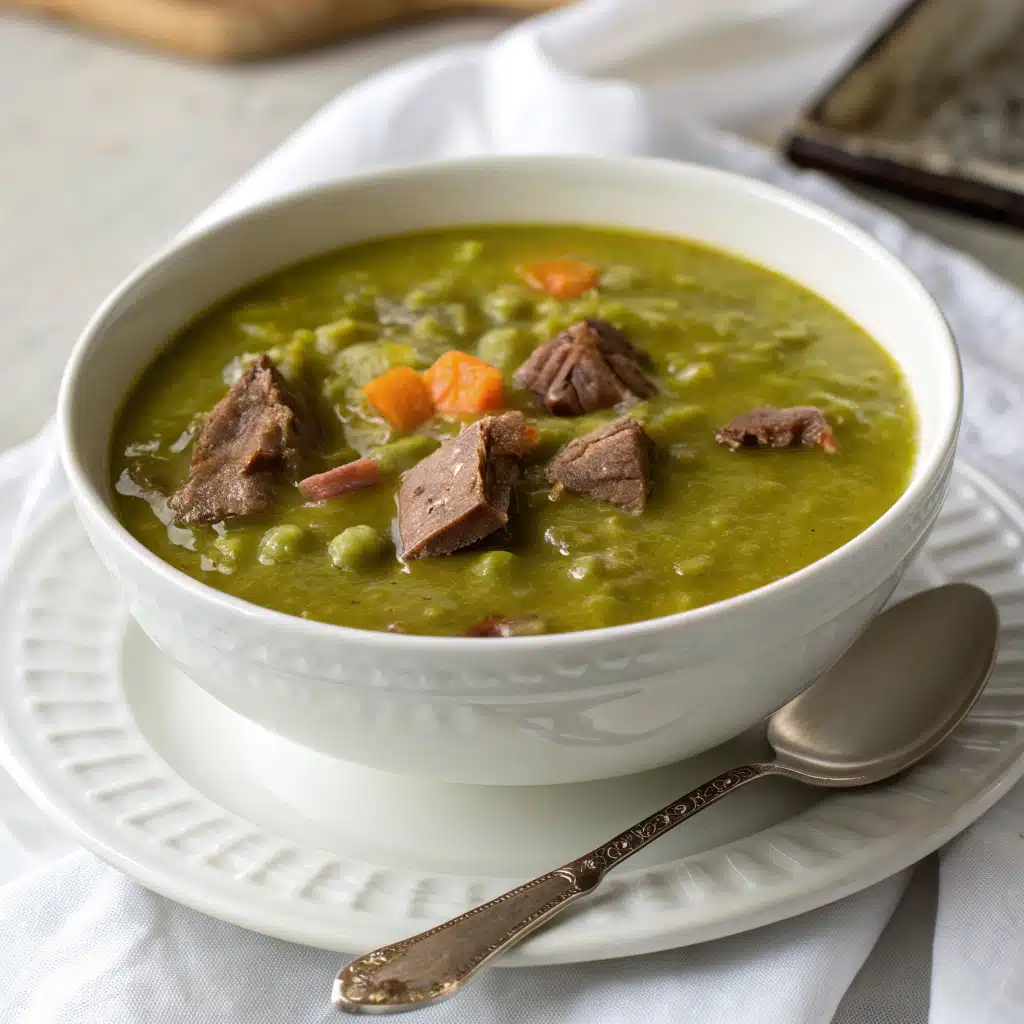
FAQs: Common Questions About Split Pea Soup with Beef
What cut of beef works best in split pea soup?
Chuck roast, brisket, and short ribs are excellent choices for split pea soup because they’re flavorful and become tender after slow cooking. You can also use leftover pot roast or beef stew meat. The key is choosing a cut with some fat content, as this adds richness to the soup. Leaner cuts won’t contribute as much flavor or may become tough during cooking.
Do split peas need to be soaked before cooking?
Unlike many other dried legumes, split peas don’t require soaking before cooking. Their split nature allows them to cook relatively quickly compared to whole dried peas or beans. However, you should always rinse them thoroughly and pick through them to remove any debris or discolored peas before adding them to your soup.
How long should split pea soup simmer?
Split pea soup typically needs 45-60 minutes of simmering to achieve the perfect texture. The peas should break down and create a naturally thick consistency. If you prefer a more pureed texture, continue cooking for up to 75 minutes. The exact time depends on the freshness of your split peas and your texture preference.
Can split pea soup with beef be frozen?
Yes, split pea soup with beef freezes exceptionally well. Allow the soup to cool completely, then portion it into airtight containers, leaving about an inch of headspace for expansion. Properly stored, it maintains quality in the freezer for up to 3 months. Thaw overnight in the refrigerator for best results.
How do you thicken split pea soup?
Split pea soup naturally thickens as the peas break down during cooking. If your soup isn’t thick enough, continue simmering uncovered to reduce the liquid, or puree a portion of the soup with an immersion blender. Alternatively, mash some of the peas against the side of the pot with a spoon to release their starch into the broth.
Is split pea soup with beef filling enough for dinner?
Absolutely! Split pea soup with beef is a complete meal containing protein, complex carbohydrates, and vegetables. The combination of beef protein and the fiber-rich split peas creates a highly satisfying dish that provides sustained energy. Serve with a slice of whole-grain bread for an even more filling meal. “Want more ideas? Check out our beef ragu with gnocchi for another satisfying dinner option.”
Conclusion: Mastering Split Pea Soup with Beef
Why This Recipe Works
Split pea soup with beef has stood the test of time for good reason. The magic lies in its perfect balance of simplicity and complexity. The straightforward cooking method requires minimal active preparation but yields layers of flavor that develop throughout the cooking process. Split peas provide natural thickening without requiring cream or flour, creating a hearty texture that satisfies without heaviness.
The combination of beef and peas offers complementary proteins, making this soup nutritionally complete. The mirepoix base creates the aromatic foundation that good soups depend on, while the long, gentle simmering allows flavors to meld beautifully. Additionally, the recipe’s flexibility accommodates ingredient substitutions and personal preferences without compromising the essential character of the dish. These elements combine to create a reliable, delicious meal that delivers consistent satisfaction with room for creative interpretation.
Final Tips for Success
As you make split pea soup with beef part of your cooking repertoire, remember these final suggestions for consistent success. First, trust the process—this soup improves with patience, so resist the urge to rush cooking or cooling. Second, taste and adjust seasonings at the end of cooking when the flavors have developed; what seems under-seasoned early may be perfectly balanced once the soup has simmered.
Third, embrace the soup’s versatility by varying your garnishes and accompaniments to create different dining experiences from the same base. Fourth, consider the soup’s texture when reheating, adding liquid as needed to maintain your preferred consistency. Finally, don’t hesitate to make this recipe your own by incorporating family preferences or ingredients that reflect your cultural background.
“Learn more about perfecting soups with our chicken vegetable soup recipe that shares many techniques with this split pea version.”
Hearty Split Pea Soup with Beef: A Comforting Classic
A hearty, comforting soup combining tender beef with nutritious split peas and vegetables for a complete meal.
- Prep Time: 15
- Cook Time: 1 hour 15 minutes
- Total Time: 1 hour 30 minutes
- Yield: 8 1x
- Category: Soups
- Cuisine: American
Ingredients
- 2 tablespoons olive oil
- 1 large yellow onion, diced
- 3 medium carrots, diced
- 2 celery stalks, diced
- 4 garlic cloves, minced
- 2 bay leaves
- ½ teaspoon dried thyme
- 1 teaspoon smoked paprika
- 1 teaspoon ground black pepper
- 1 teaspoon salt
- 1 pound green split peas
- 8 cups low-sodium beef or vegetable broth
- 2 cups cooked shredded beef
- 1 to 2 teaspoons apple cider vinegar or lemon juice
Instructions
- Heat olive oil in a large pot over medium-low heat and sauté onion, carrots, and celery until soft, about 5-7 minutes.
- Add garlic, bay leaves, and thyme, cooking until fragrant, about 1-2 minutes.
- Stir in split peas, smoked paprika, black pepper, salt, and broth. Bring to a boil, then reduce to a simmer and cook covered for 45-60 minutes until peas are tender.
- Add shredded beef and simmer for an additional 10-15 minutes until heated through.
- Remove bay leaves, adjust seasoning, and stir in vinegar or lemon juice.
- For a thicker consistency, simmer uncovered for 5-10 minutes before serving.
Notes
Nutrition facts are estimates and may vary based on ingredients used, portion sizes, and preparation methods.
Nutrition
- Serving Size: 8
- Calories: 320 Kcal
- Sugar: 5g
- Sodium: 650mg
- Fat: 9g
- Saturated Fat: 2.5g
- Carbohydrates: 40g
- Fiber: 16g
- Protein: 25g
- Cholesterol: 35mg
Keywords: split pea soup, beef soup, comfort food, hearty soup, winter soup, split peas recipe
Let’s connect! Follow me for more Joylicious Recipes: Facebook, Instagram, Pinterest