
Homemade Veggie Egg Rolls – Crunchy, Flavorful, and Easy to Make
Introduction: Why Vegetable Egg Rolls Are the Perfect Appetizer
Vegetable egg rolls represent the ideal balance of crispy exterior and flavorful filling that many of us crave in an appetizer. These golden-brown delights are not only delicious but also versatile enough to please both vegetarians and meat-lovers alike. Whether you’re hosting a dinner party or simply want to enjoy authentic Asian cuisine at home, homemade vegetable egg rolls will undoubtedly impress your family and friends with their restaurant-quality taste and texture.
The History Behind Vegetable Egg Rolls
Originating from Chinese cuisine, vegetable egg rolls have evolved significantly over the years to become a staple in American Chinese restaurants. Despite their name, traditional egg rolls don’t actually contain eggs in the filling – the name refers to the egg that’s sometimes used in the wrapper dough.
“Learn more about authentic Asian appetizers like our crispy vegetable egg rolls on our website.”
Why Homemade Is Better Than Takeout
Making vegetable egg rolls at home allows you to control the ingredients, ensuring fresher vegetables and less oil than their restaurant counterparts. Additionally, homemade versions can be customized to suit your taste preferences, whether you prefer more ginger, extra garlic, or a particular blend of vegetables. The satisfaction of creating these crispy delights from scratch is unmatched, and the process is simpler than you might think!
Vegetable Egg Roll Ingredients: Everything You Need
The perfect vegetable egg rolls begin with quality ingredients. Thankfully, most components are readily available at standard grocery stores, making this an accessible recipe for home cooks of all skill levels.
The Perfect Egg Roll Wrappers
For authentic vegetable egg rolls, you’ll need:
| Wrapper Ingredients | Quantity | Notes |
|---|---|---|
| Egg roll wrappers | 12 (6-inch squares) | Available in the refrigerated section of most grocery stores |
Egg roll wrappers are specifically designed for this dish and shouldn’t be confused with spring roll wrappers, which are thinner and made from rice flour. The wheat-based egg roll wrappers create that distinctive bubbly, crispy exterior when fried.
Fresh Filling Components
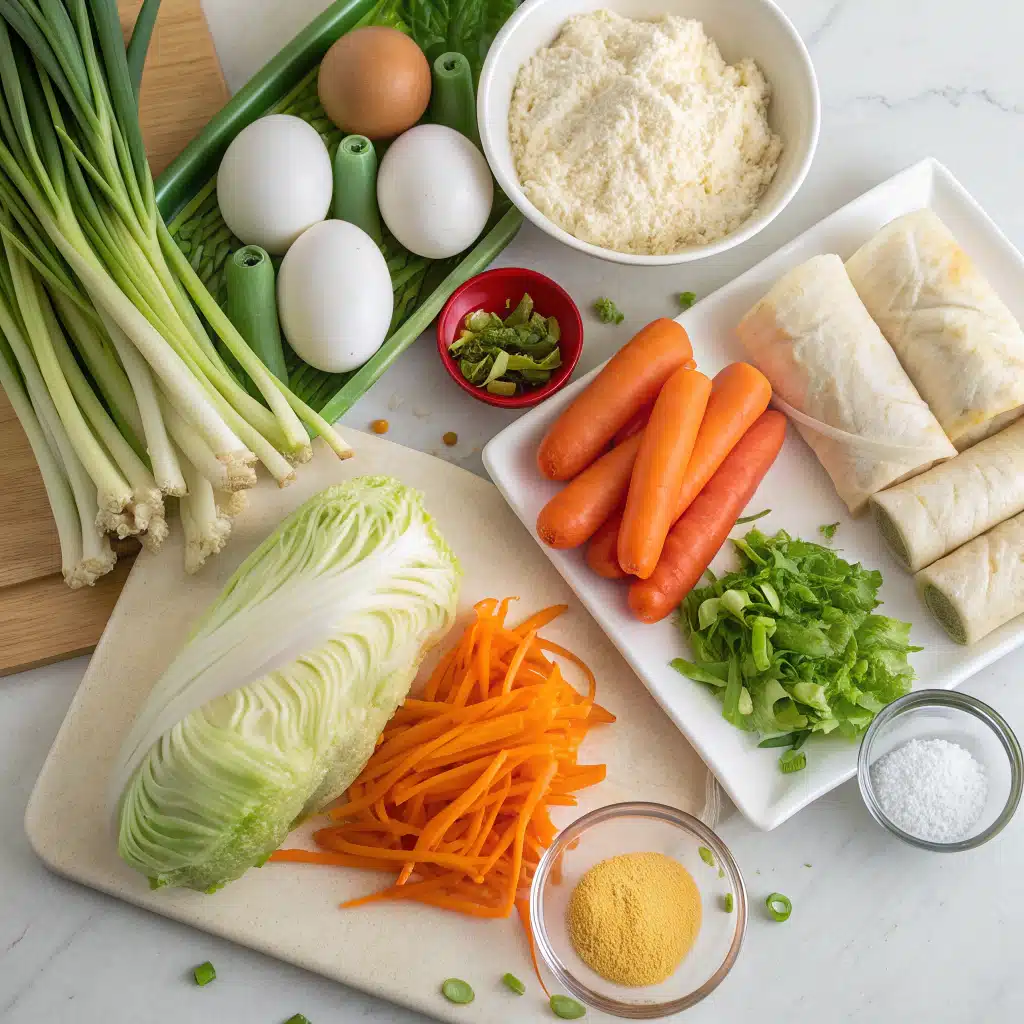
The heart of any good vegetable egg roll is its filling. Here’s what you’ll need:
| Filling Ingredients | Quantity | Notes |
|---|---|---|
| Sesame oil | 1 1/2 tablespoons | Provides distinctive Asian flavor |
| Ginger | 1 tablespoon, minced | Fresh is preferred over powdered |
| Garlic | 1 tablespoon, minced | Adds aromatic depth |
| Cabbage | 4 cups, shredded | Green cabbage works best |
| Carrots | 2 cups, julienned | Adds color and sweetness |
| Scallions | 4, finely chopped | Also known as green onions |
| Soy sauce | 1 1/2 teaspoons | Provides savory umami flavor |
| Sugar | 1 teaspoon | Balances the flavors |
| Salt | 1/8 teaspoon | Enhances overall taste |
| White pepper | 1/8 teaspoon | Adds subtle heat |
Cooking Oils and Additional Needs
For cooking and assembly, you’ll also need:
| Additional Items | Purpose |
|---|---|
| Vegetable oil or peanut oil | For frying (approximately 2-3 cups) |
| Small bowl of water | For sealing wrappers |
| Paper towels | For draining excess oil |
Step-by-Step Vegetable Egg Roll Preparation
Creating perfect vegetable egg rolls requires attention to detail, but the process is straightforward once broken down into manageable steps.
“Want more ideas? Check out our chicken and stove top stuffing bake for another crowd-pleasing dish.”
Preparing the Flavorful Filling
- Heat a large pan or wok over medium heat and add 1 1/2 tablespoons of sesame oil.
- Add the minced ginger and garlic, cooking for about 1 minute until fragrant but not browned.
- Incorporate the shredded cabbage, julienned carrots, and chopped scallions into the pan, stirring frequently.
- Cook the vegetable mixture for 4-5 minutes until the vegetables have softened but still retain some crunch.
- Season with soy sauce, sugar, salt, and white pepper, then stir to combine all flavors evenly.
- Cook for an additional minute, then remove from heat and transfer to a bowl.
- Allow the filling to cool for at least 10 minutes – hot filling can make wrappers soggy and difficult to work with.
Mastering the Egg Roll Folding Technique
The key to perfect vegetable egg rolls lies in proper folding and sealing:
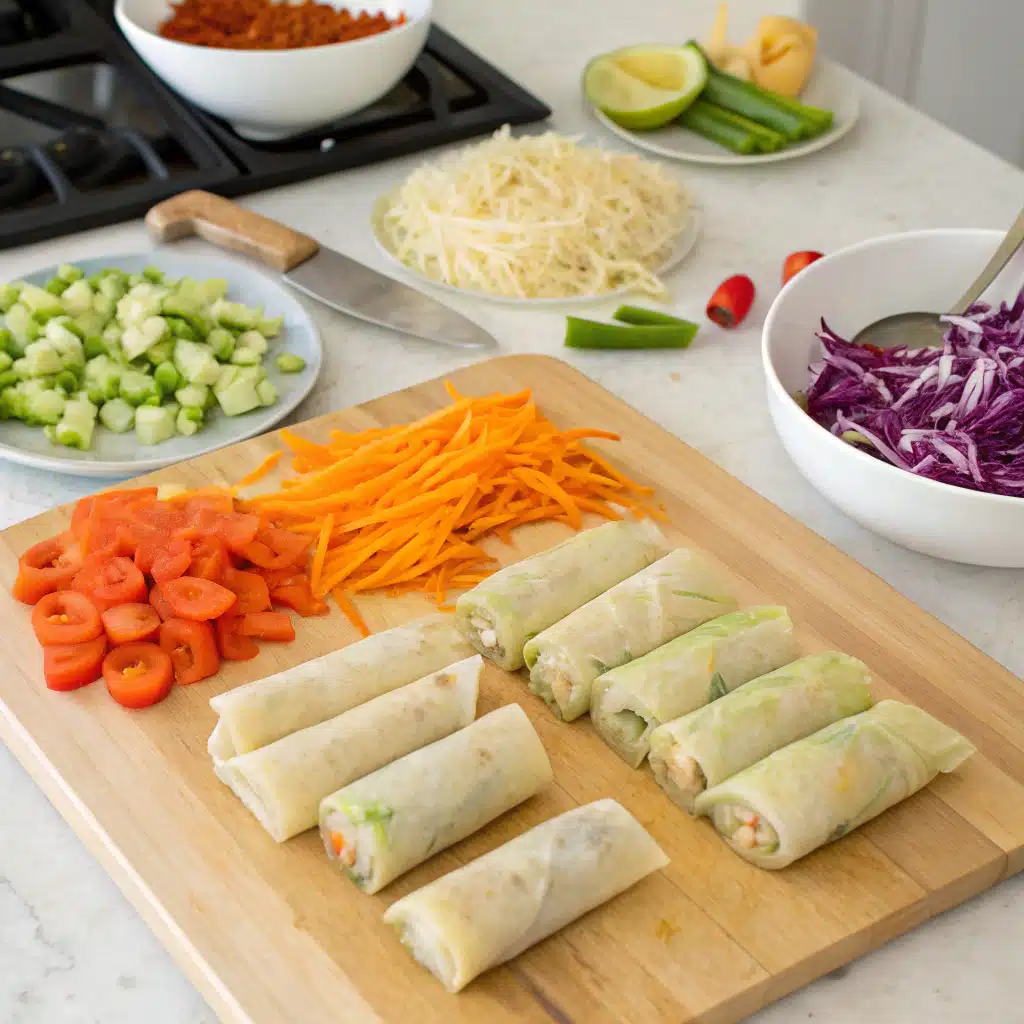
- Position an egg roll wrapper diagonally on a clean, flat surface, with one corner pointing toward you.
- Place approximately 2 tablespoons of filling in the center of the wrapper, spreading it horizontally but leaving about 2 inches of wrapper free on each side.
- Fold the bottom corner up and over the filling, tucking it under slightly to create a tight cylinder.
- Fold in both side corners toward the center, creating an envelope shape.
- Continue rolling upward until you reach the top corner.
- Dab a bit of water on the top corner and complete the roll to seal it securely.
- Place the finished egg roll seam-side down on a plate and cover with a slightly damp paper towel to prevent drying while you roll the remaining wrappers.
Frying to Golden Perfection
For that signature crispy texture:
- In a large, heavy-bottomed pan or wok, pour enough oil to reach about 1/2 inch depth.
- Heat the oil to approximately 350°F (175°C). Test readiness by dropping a small piece of wrapper into the oil – it should sizzle immediately and float to the surface.
- Carefully slide 3-4 egg rolls into the hot oil, being careful not to overcrowd the pan.
- Fry for 1-2 minutes on each side, using tongs to turn them, until they achieve an even golden-brown color.
- Transfer to a paper towel-lined plate to drain excess oil.
- Continue frying in batches until all egg rolls are cooked.
Expert Tips for Perfect Vegetable Egg Rolls
Even experienced cooks can benefit from these professional tips to elevate their vegetable egg rolls from good to extraordinary.
Achieving Maximum Crispiness
The difference between soggy and crispy vegetable egg rolls often comes down to a few key factors:
- Ensure your oil is hot enough (350-375°F) before adding egg rolls.
- Don’t overcrowd the pan – this lowers the oil temperature and results in soggy wrappers.
- After cooking, place egg rolls on a wire rack over paper towels rather than directly on paper towels to maintain crispiness on all sides.
- For even crispier results, double-fry your egg rolls: fry once at 325°F for 3 minutes, let rest for 30 seconds, then fry again at 375°F until golden brown.
Common Mistakes to Avoid
Learning from these common pitfalls will improve your vegetable egg rolls significantly:
- Don’t overfill your wrappers – this leads to bursting during frying.
- Always cool your filling before rolling – hot filling creates steam that can make wrappers soggy or tear.
- Seal edges completely with water to prevent filling from leaking out during frying.
- Don’t roll too loosely – air pockets can cause uneven cooking and excessive oil absorption.
- Never walk away from frying egg rolls – they can go from perfect to burnt in seconds.
Alternative Cooking Methods
While traditional deep-frying produces the most authentic vegetable egg rolls, these healthier alternatives still deliver excellent results:
- Air fryer: Preheat to 380°F, spray egg rolls with a light coating of oil, and cook for 6-8 minutes, turning halfway through.
- Oven baking: Preheat to 425°F, place egg rolls on a wire rack over a baking sheet, brush lightly with oil, and bake for 15-20 minutes until golden and crispy.
- Pan-frying: Use just 1/4 cup oil in a non-stick pan and turn frequently until all sides are crispy.
“Here’s your guide to fettuccine alfredo if you’re looking for another crowd-pleasing recipe to pair with your vegetable egg rolls.”
Storing Vegetable Egg Rolls for Maximum Freshness
Proper storage ensures your vegetable egg rolls maintain their flavor and texture for later enjoyment.
Refrigeration Techniques
For short-term storage:
- Allow cooked vegetable egg rolls to cool completely to room temperature.
- Line an airtight container with paper towels to absorb excess moisture.
- Place egg rolls in a single layer, avoiding stacking which can cause sogginess.
- Refrigerate for up to 3-4 days.
- For best results when reheating refrigerated egg rolls, use an oven or air fryer rather than a microwave to restore crispiness.
Freezing for Long-Term Storage
Vegetable egg rolls freeze exceptionally well:
- After cooling completely, arrange egg rolls in a single layer on a baking sheet.
- Freeze for 2-3 hours until solid.
- Transfer to freezer-safe bags or containers, removing as much air as possible.
- Label with the date and freeze for up to 3 months.
- No need to thaw before reheating – cook frozen egg rolls directly in the oven, air fryer, or re-fry in oil.
Best Practices for Reheating
To restore that fresh-from-the-fryer crispiness:
- Oven method: Preheat to 350°F and bake for 10-15 minutes until heated through and crisp.
- Air fryer: 350°F for 3-4 minutes provides excellent results.
- Toaster oven: Works similarly to a conventional oven but heats up faster.
- Avoid microwaving if possible, as this can make the wrappers chewy instead of crispy.
“Check out our easy baked chicken recipe for a delicious main course to serve alongside your vegetable egg rolls.”
Creative Vegetable Egg Roll Variations
While traditional vegetable egg rolls are delicious, experimenting with different ingredients can create exciting flavor combinations.
International Flavor Inspirations
Take your vegetable egg rolls on a global tour with these creative variations:
- Mexican: Add black beans, corn, diced poblano peppers, and a touch of cumin.
- Mediterranean: Incorporate chopped olives, feta cheese, sun-dried tomatoes, and a sprinkle of oregano.
- Indian: Use cauliflower, peas, potato, and curry spices for a samosa-inspired egg roll.
- Thai: Add basil, lime juice, and a touch of red curry paste to the traditional vegetable mix.
- Southern comfort: Try collard greens, black-eyed peas, and a hint of smoked paprika.
Adding Protein Options
For a more substantial vegetable egg roll:
- Tofu: Firm tofu, crumbled and stir-fried with the vegetables, adds protein while keeping the recipe vegetarian.
- Mushrooms: Chopped shiitake, oyster, or button mushrooms provide meaty texture and umami flavor.
- Shrimp: Small chopped cooked shrimp add a sweet seafood element.
- Chicken: Finely diced cooked chicken combines well with the vegetable mixture.
- Beans: Mashed black beans or refried beans create a creamy, protein-rich component.
Sweet Dessert Egg Rolls
Who says vegetable egg rolls have to be savory? Dessert variations provide a surprising twist:
- Apple pie: Fill with cinnamon-spiced apple filling and dust with powdered sugar after frying.
- Banana split: Sliced bananas with chocolate and a few mini marshmallows make a decadent treat.
- Berries and cream: Mixed berries with a touch of cream cheese create a cheesecake-like filling.
- S’mores: Graham cracker crumbs, chocolate chips, and mini marshmallows for a campfire-inspired treat.
- Pumpkin pie: Sweetened pumpkin puree with pie spices for a fall favorite.
Serving Vegetable Egg Rolls with Perfect Accompaniments
The right dipping sauces and side dishes can elevate your vegetable egg rolls to a complete and satisfying meal.
Essential Dipping Sauces
A variety of dipping sauces allows everyone to customize their egg roll experience:
- Sweet and sour sauce: The classic pairing offers tangy contrast to the savory egg rolls.
- Duck sauce: A sweet, fruity option popular in American Chinese restaurants.
- Soy-ginger sauce: Combine soy sauce, rice vinegar, minced ginger, and a touch of honey.
- Spicy mustard: Chinese hot mustard provides a sinus-clearing heat.
- Peanut sauce: Creamy and slightly sweet, this adds richness to each bite.
- Sriracha mayo: Mix mayonnaise with sriracha for a creamy, spicy option.
Complementary Side Dishes
Turn your vegetable egg rolls into a complete meal with these complementary sides:
- Asian slaw: A light, vinegar-based cabbage slaw balances the richness of fried egg rolls.
- Steamed rice: Simple white or brown rice serves as a neutral canvas.
- Vegetable fried rice: For a more substantial meal.
- Cucumber salad: Thinly sliced cucumbers in rice vinegar provide a refreshing contrast.
- Miso soup: A light starter that sets the stage for the main course.
- Edamame: These simple steamed soybeans add protein and freshness.
Presentation Ideas for Entertaining
When serving vegetable egg rolls to guests:
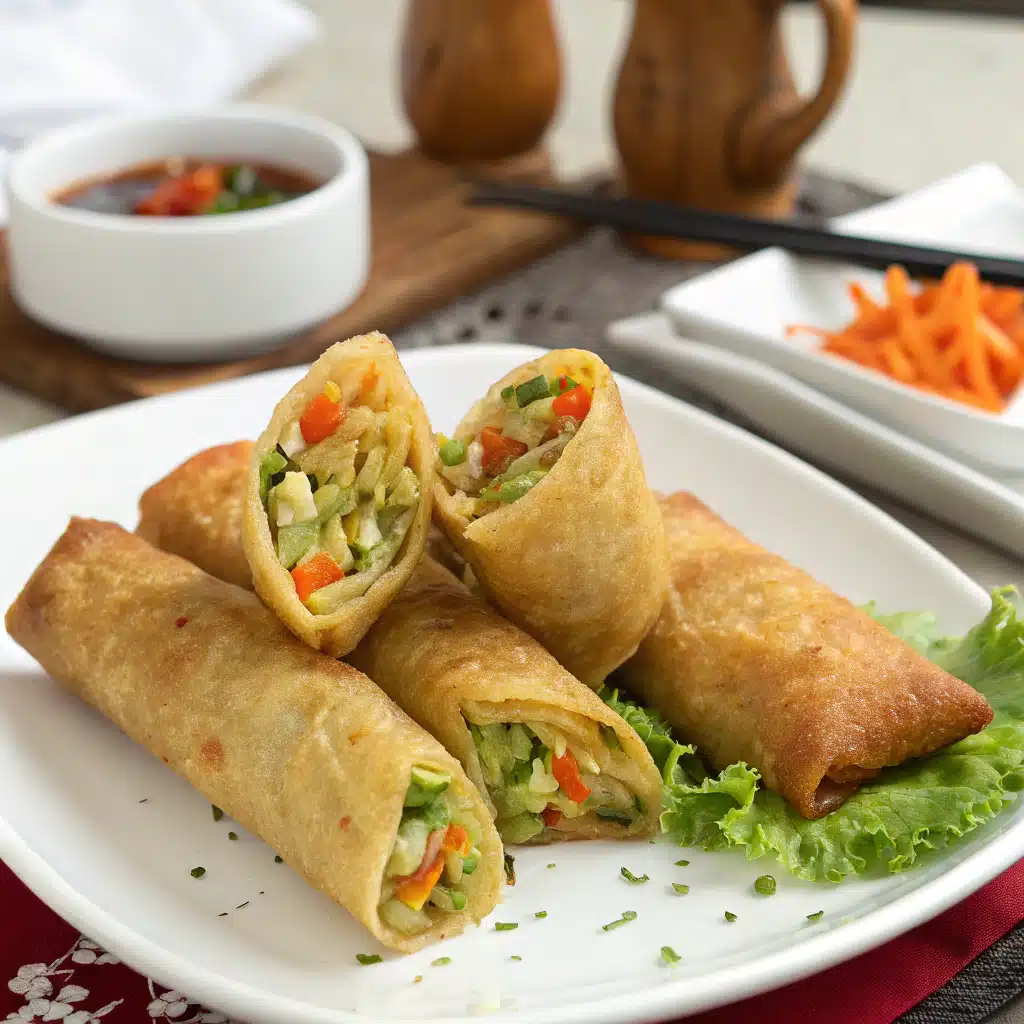
- Arrange on a platter with colorful dipping sauces in small bowls.
- Cut large egg rolls diagonally for an attractive presentation and easier eating.
- Garnish with fresh cilantro, sliced scallions, or sesame seeds.
- Serve in decorative Chinese takeout boxes for a fun presentation at parties.
- Create a DIY egg roll station where guests can choose their own dipping sauces.
“Don’t miss our pasta salad recipe which pairs wonderfully with vegetable egg rolls for a fusion meal.”
Frequently Asked Questions About Vegetable Egg Rolls
How do you make crispy vegetable egg rolls at home?
For perfectly crispy vegetable egg rolls, maintain oil temperature between 350-375°F, avoid overcrowding the frying pan, ensure filling is completely cooled before wrapping, and seal wrappers tightly. After frying, place egg rolls on a wire rack instead of directly on paper towels to maintain crispness on all sides. Also, make sure your filling isn’t too wet – drain any excess liquid before rolling.
What vegetables go inside egg rolls?
Traditional vegetable egg rolls contain cabbage, carrots, and scallions as the base. However, you can customize with bean sprouts, water chestnuts, bamboo shoots, bell peppers, mushrooms, or snow peas. The key is cutting vegetables into similar sizes and pre-cooking them slightly to remove excess moisture while maintaining some crunch. For best results, vegetables should be shredded or julienned for easy rolling and even cooking.
What kind of wrapper is used for vegetable egg rolls?
Vegetable egg rolls use wheat-based wrappers that contain eggs, giving them their name and distinctive bubbly texture when fried. These square or rectangular wrappers are thicker than spring roll wrappers and are typically found in the refrigerated section of supermarkets near tofu or Asian ingredients. Don’t substitute with rice paper (spring roll) wrappers, as they have completely different cooking properties and won’t create the characteristic egg roll texture.
Can you bake or air fry vegetable egg rolls instead of frying?
Yes! For air frying, preheat to 380°F, lightly spray egg rolls with oil, and cook for 6-8 minutes, turning halfway. For baking, preheat oven to 425°F, place egg rolls on a wire rack over a baking sheet, brush with oil, and bake for 15-20 minutes until golden. While these methods produce slightly different results than traditional frying, they still create delicious egg rolls with significantly less oil.
How do you keep egg rolls from getting soggy?
To prevent soggy vegetable egg rolls, cool filling completely before wrapping, drain excess liquid from vegetables, maintain proper oil temperature when frying, and don’t overcrowd the pan. After cooking, place on a wire rack instead of stacking on a plate. If storing, cool completely before refrigerating in containers lined with paper towels. When reheating, use an oven or air fryer rather than a microwave to restore crispness.
What dipping sauces go best with vegetable egg rolls?
The most popular dipping sauces include sweet and sour sauce, duck sauce, soy-ginger sauce, spicy mustard, sweet chili sauce, and peanut sauce. For homemade sweet and sour, combine rice vinegar, ketchup, pineapple juice, and brown sugar. A simple dumpling sauce can be made with soy sauce, rice vinegar, a touch of sugar, and thinly sliced scallions. Hot sauce or sriracha mixed with mayonnaise creates a creamy, spicy option.
Conclusion: Mastering the Art of Homemade Vegetable Egg Rolls
Why You’ll Never Go Back to Takeout
After creating these delicious vegetable egg rolls at home, you’ll likely find yourself reluctant to order them from restaurants again. The satisfaction of crafting something so delicious from scratch, the ability to customize fillings to your exact preferences, and the incomparable freshness of homemade versions all contribute to a superior egg roll experience. Moreover, the cost savings can be substantial when making a batch at home versus ordering takeout.
Building Your Asian Cooking Skills
Making vegetable egg rolls is an excellent entry point into Asian cooking techniques. The skills you’ll develop – from proper vegetable cutting methods to wrapper folding techniques to controlling frying temperature – transfer beautifully to other Asian dishes like dumplings, spring rolls, and wontons. Each time you make these egg rolls, you’ll refine your technique and build confidence in your ability to create authentic Asian cuisine at home.
“Looking for inspiration? Try our sushi cake recipe for your next culinary adventure after mastering these vegetable egg rolls.”
Homemade Vegetable Egg Rolls
Crispy, golden-brown vegetable egg rolls filled with savory cabbage, carrots, and aromatic seasonings. These homemade appetizers are better than takeout!
- Prep Time: 25
- Cook Time: 20
- Total Time: 45 minutes
- Yield: 12 1x
- Category: Appetizers
- Cuisine: Asian
Ingredients
- 12 6-inch square egg roll wrappers (approximately)
- Cooking oil such as vegetable oil or peanut oil
- Filling:
- 1 1/2 tablespoons sesame oil
- 1 tablespoon ginger, peeled and minced
- 1 tablespoon garlic, minced
- 4 cups shredded cabbage
- 2 cups carrot, julienned
- 4 scallions, finely chopped
- 1 1/2 teaspoon soy sauce
- 1 teaspoon sugar
- 1/8 teaspoon salt
- 1/8 teaspoon ground white pepper
Instructions
- Heat sesame oil in a pan over medium heat. Add ginger and garlic, cooking for 1 minute until fragrant.
- Add cabbage, carrots, and scallions. Cook for 4-5 minutes until vegetables soften but still have some crunch.
- Mix in soy sauce, sugar, salt, and white pepper. Cook 1 minute more, then transfer to a bowl and cool for 10 minutes.
- Place an egg roll wrapper diagonally on a work surface. Add 2 tablespoons filling in the center, leaving 2 inches free on each side.
- Fold the bottom corner over filling, then fold side corners inward. Continue rolling upward, sealing the top corner with water.
- Heat 1/2 inch of oil in a large pan to 350°F. Fry egg rolls in batches, 1-2 minutes per side until golden brown.
- Drain on paper towels and serve with your favorite dipping sauce.
Notes
Nutrition facts are estimates and may vary based on ingredients used, portion sizes, and preparation methods. For crispier results, ensure oil is hot enough and don’t overcrowd the pan. These egg rolls can be air-fried at 380°F for 6-8 minutes or baked at 425°F for 15-20 minutes if preferred.
Nutrition
- Serving Size: 12
- Calories: 125Kcal
- Sugar: 2g
- Sodium: 220mg
- Fat: 5g
- Saturated Fat: 0.8g
- Carbohydrates: 17g
- Fiber: 1.5g
- Protein: 3g
- Cholesterol: 3mg
Keywords: vegetable egg rolls, homemade egg rolls, crispy egg rolls, Asian appetizers, cabbage egg rolls
Let’s connect! Follow me for more Joylicious Recipes: Facebook, Instagram, Pinterest