How to Make Authentic Fattoush Salad – A Classic Mediterranean Dish
What is Fattoush Salad?
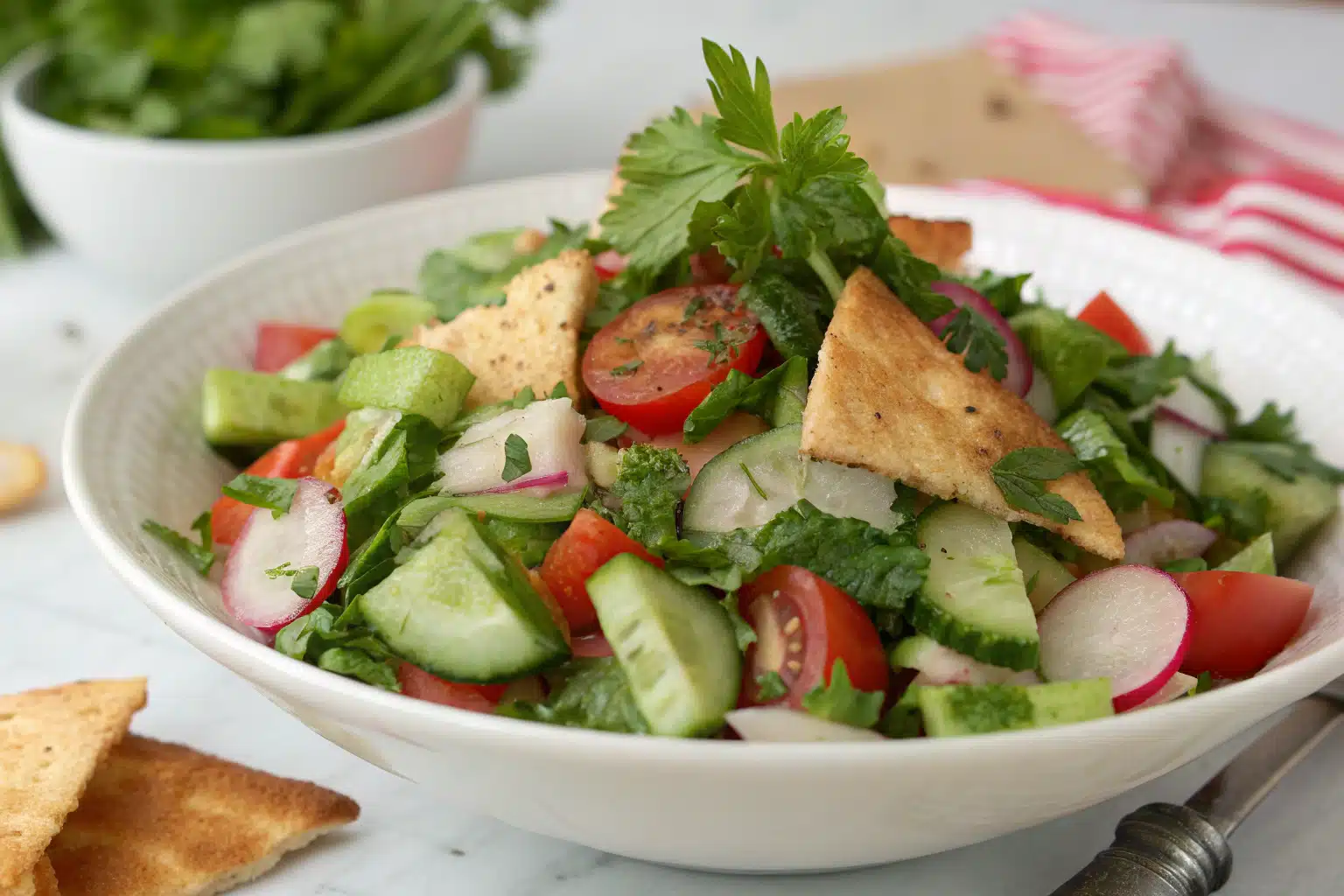
Fattoush salad is a vibrant and refreshing Lebanese bread salad that showcases the bright flavors of the Mediterranean kitchen. This traditional dish features a colorful mix of fresh vegetables, aromatic herbs, and crispy toasted pita bread pieces all tossed in a tangy lemon-pomegranate dressing. The name “fattoush” derives from the Arabic word “fatta,” which refers to the use of leftover flatbread. As a staple across the Middle East, particularly in Lebanon and Syria, fattoush salad represents the region’s ingenious approach to reducing food waste by transforming stale bread into a delicious culinary delight.
“Learn more about Mediterranean dishes in our collection of refreshing recipes.”
The Cultural Significance of Fattoush
Fattoush salad holds a special place in Middle Eastern cuisine and culture. Traditionally served as part of a mezze spread during summer gatherings, this dish embodies the communal spirit of sharing food. The vibrant colors and refreshing taste of fattoush salad make it particularly popular during hot weather, where it serves as both a nutritious side dish and a light main course. Furthermore, the customizable nature of fattoush salad allows each family to develop their own unique version, often passed down through generations with slight variations that reflect regional preferences and seasonal availability of ingredients.
Fattoush Salad Ingredients
Fresh Vegetables and Herbs
The heart of any fattoush salad lies in its fresh, crisp vegetables and aromatic herbs. Traditional fattoush combines the refreshing crunch of romaine lettuce with the juiciness of tomatoes and the cool bite of cucumbers. Red onions add a sharp flavor that balances beautifully with the other components, while radishes contribute a peppery note that awakens the palate. What truly elevates fattoush salad, however, is the generous use of fresh herbs—particularly mint and parsley—which infuse the salad with that distinctive Mediterranean aroma and flavor profile. These herbs aren’t mere garnishes but essential ingredients that give fattoush its characteristic taste.
Special Middle Eastern Components
What distinguishes fattoush salad from ordinary garden salads are the unique Middle Eastern elements that define its authentic character. The most important of these is sumac, a deep red spice with a tart, lemony flavor that’s sprinkled throughout the salad and incorporated into the dressing. Another signature ingredient is pomegranate molasses, a thick, sweet-tart syrup that adds complexity to the dressing. Finally, the crispy pita bread “croutons” represent the soul of the dish—these pieces of toasted or fried pita bread provide textural contrast to the fresh vegetables while absorbing the flavorful dressing. Together, these special components transform simple ingredients into an extraordinary salad experience.
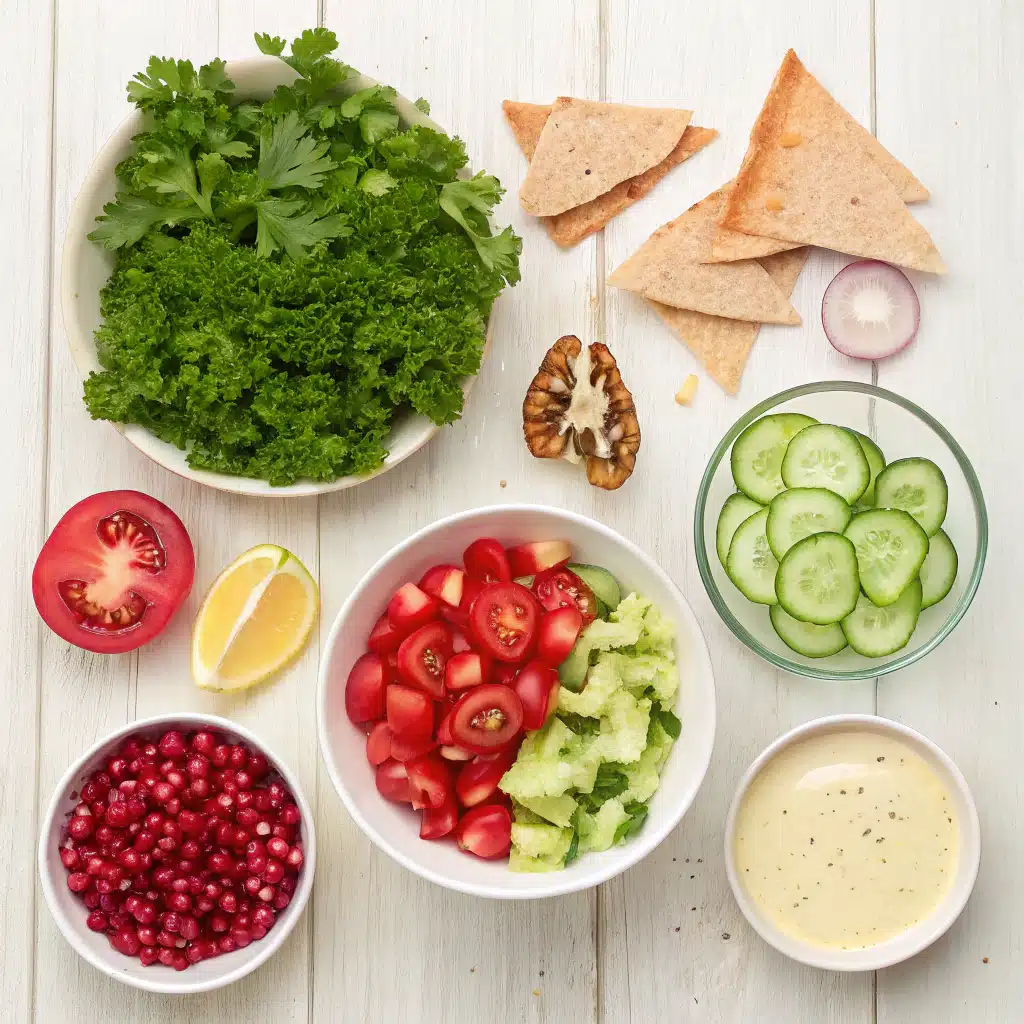
| Ingredient Category | Components | Amount |
|---|---|---|
| Base Vegetables | Romaine lettuce | 5 cups, cut into bite-size pieces |
| Lebanese cucumbers | 2, thinly sliced (3mm rounds) | |
| Cherry tomatoes | 1 cup, halved (~200g) | |
| Red onion | 1/2 small, thinly sliced | |
| Red radish | 5, finely sliced | |
| Fresh Herbs | Mint leaves | 1/2 cup, lightly packed |
| Parsley | 1 tbsp, roughly chopped | |
| Bread Component | Pita bread/Lebanese bread | 2 pita or 1 Lebanese bread |
| Olive oil for toasting | 2 tbsp | |
| Salt for bread | 1/4 tsp | |
| Dressing Ingredients | Extra virgin olive oil | 1/4 cup |
| Lemon juice | 2 tbsp | |
| Pomegranate molasses | 2 tsp | |
| Garlic | 1 medium clove, crushed | |
| Sumac | 1 tsp | |
| Salt | 1/2 tsp |
Step-by-Step Fattoush Salad Preparation
Preparing the Crispy Pita Bread Croutons
The crispy pita bread pieces are what give fattoush salad its distinctive texture and character. Here’s how to prepare them perfectly:
- Preheat your oven to 220°C/425°F (or 200°C if using fan-forced).
- Carefully separate each pita bread into two thin sheets by pulling apart the layers.
- Cut the pita sheets into squares approximately 3cm (1.2 inches) in size.
- Place the cut pita pieces on a baking tray, then drizzle with 2 tablespoons of olive oil.
- Toss the pieces to ensure they’re evenly coated with oil.
- Sprinkle with 1/4 teaspoon of kosher salt and toss again to distribute.
- Spread the pieces in a single layer across the tray to ensure even browning.
- Bake for 5 minutes, checking frequently to prevent burning as they crisp up quickly.
- Remove from oven once golden brown and crisp, then allow to cool completely on the tray.
These homemade pita croutons should have a satisfying crunch that’s far superior to store-bought alternatives. The contrast between the crispy bread and fresh vegetables creates that magical texture combination that makes fattoush salad so beloved.
“Discover great ideas like our strawberry spinach salad for more refreshing meal options.”
Making the Tangy Fattoush Dressing
The dressing is what brings all the fattoush salad elements together, providing a perfect balance of tangy, savory, and slightly sweet flavors:
- In a small jar with a tight-fitting lid, combine 1/4 cup of extra virgin olive oil and 2 tablespoons of freshly squeezed lemon juice.
- Add 2 teaspoons of pomegranate molasses, which provides a distinctive sweet-sour flavor.
- Crush or finely grate 1 medium garlic clove and add to the mixture.
- Add 1 teaspoon of sumac, which contributes a beautiful reddish color and lemony flavor.
- Measure in 1/2 teaspoon of kosher salt.
- Secure the lid tightly and shake vigorously until all ingredients are well incorporated and the dressing has emulsified.
- Taste and adjust seasoning if necessary, adding more lemon juice for acidity or salt according to preference.
The pomegranate molasses and sumac are what give this dressing its authentic Middle Eastern character. While the sumac is technically optional, it significantly enhances the traditional flavor profile of fattoush salad and is worth seeking out at Middle Eastern grocery stores or online.
Assembling Your Perfect Fattoush Salad
Creating the perfect fattoush salad is about layering flavors and textures for maximum impact:
- In a large mixing bowl, combine the 5 cups of romaine lettuce, 2 sliced Lebanese cucumbers, 1 cup of halved cherry tomatoes, and thinly sliced red onion.
- Add the 5 thinly sliced red radishes for a peppery crunch.
- Gently incorporate 1/2 cup of fresh mint leaves (larger leaves torn in half) and 1 tablespoon of roughly chopped parsley.
- Drizzle approximately half of your prepared dressing over the vegetables and herbs.
- Gently toss until all ingredients are evenly coated in the dressing.
- Add most of the crispy pita chips to the bowl, reserving a handful for garnish.
- Pour the remaining dressing over the salad and toss again, this time more carefully to prevent the pita from becoming soggy.
- Transfer the dressed salad to a serving bowl.
- Garnish with the reserved crispy pita pieces on top.
- Serve immediately to enjoy the optimal contrast between the crisp vegetables and crunchy bread.
For the best fattoush salad experience, serve it right after assembly to maintain the perfect texture of the crispy pita pieces against the fresh, dressed vegetables.
Tips for the Perfect Fattoush Salad
Selecting and Preparing Ingredients
The quality of ingredients makes all the difference in a dish as simple and fresh as fattoush salad:
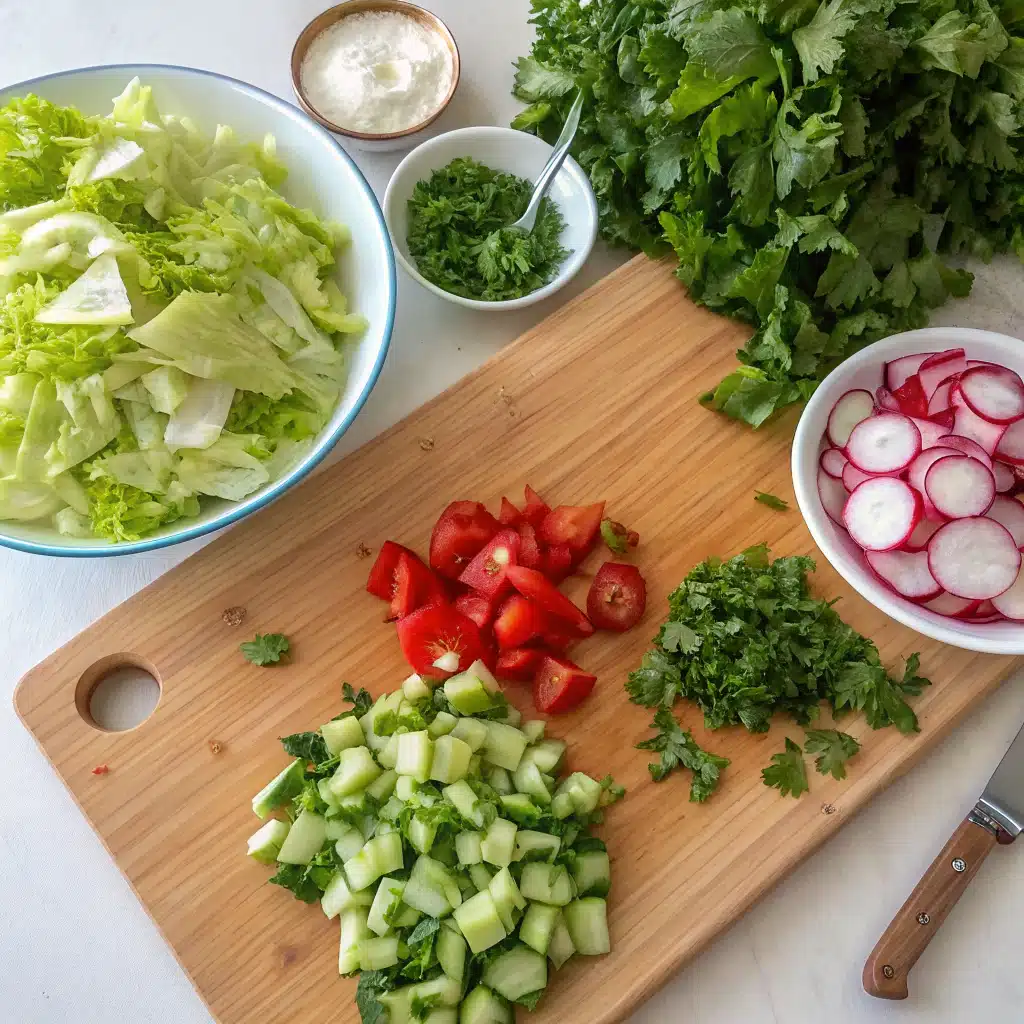
For the vegetables, freshness is paramount. Choose romaine lettuce with crisp, firm leaves rather than wilted ones. Cucumbers should be firm with taut skin, indicating optimal crispness. Cherry tomatoes should be ripe but still firm enough to hold their shape when cut. When selecting red onions, look for those with tight, dry skins and firm bodies, avoiding any with soft spots. Fresh radishes should have vibrant color and firm, smooth skin.
Proper vegetable preparation also affects the final texture and taste. Always wash vegetables thoroughly and dry them completely before assembly—excess water will dilute the dressing and cause the pita to become soggy prematurely. For consistency in texture and appearance, try to cut vegetables into similarly sized pieces. This not only creates a more visually appealing salad but ensures a more balanced bite with multiple flavors.
The herbs deserve special attention: always use fresh, never dried herbs for fattoush salad. To maximize their aromatic qualities, tear larger mint leaves rather than chopping them, which helps prevent browning and preserves more of their essential oils.
“Check out our watermelon cucumber feta salad for another refreshing summer option.”
Authentic Middle Eastern Flavor Enhancers
To achieve truly authentic fattoush salad flavor, consider these traditional enhancements:
Sumac is perhaps the most distinctive spice in fattoush salad. This deep red, lemony-flavored spice comes from ground sumac berries and adds both color and a tangy dimension that’s difficult to substitute. If you’re serious about Middle Eastern cooking, it’s worth adding to your spice collection. Some cooks even reserve a pinch of sumac to sprinkle over the finished salad as a final flourish.
Pomegranate molasses provides a complex sweet-tart flavor that balances the acidity of the lemon juice. Made from reduced pomegranate juice, this thick, syrupy condiment has become more widely available in recent years. If you can’t find it, you can substitute a mixture of honey and additional lemon juice, though the flavor profile will be somewhat different.
For an extra layer of authenticity, consider adding a small amount of ground Aleppo pepper to your dressing. This moderately hot, fruity pepper adds a subtle warmth without overwhelming the other flavors. Some traditional recipes also incorporate a small amount of allspice or cinnamon for added complexity.
Texture Tips for Maximum Enjoyment
The contrasting textures are what make fattoush salad so satisfying, and maintaining them requires careful attention:
For the crispiest pita pieces, timing is crucial. If possible, bake the pita chips just before assembling the salad. Freshly baked pita croutons have superior texture compared to those made in advance. However, if you need to prepare them ahead, store completely cooled chips in an airtight container at room temperature for up to 2 days.
The order of assembly matters significantly. Always toss the vegetables with dressing first, then add the crispy pita pieces just before serving. This minimizes the time the bread has to absorb moisture, maintaining that perfect crunch. For maximum textural contrast, reserve some of the crispiest pita pieces to sprinkle on top just as you serve.
Temperature also affects texture. Vegetables straight from the refrigerator can cause condensation when they meet room temperature dressing, potentially making the salad soggy. For optimal results, allow your prepared vegetables to come to room temperature for about 15 minutes before assembly.
Storing and Making Ahead Fattoush Salad
Component Storage Solutions
The key to making fattoush salad ahead of time lies in storing its components separately and assembling just before serving:
For the vegetables, proper storage maintains freshness and crispness. Wash, dry, and cut the romaine lettuce, then store it in a sealed container lined with paper towels to absorb excess moisture. Sliced cucumbers, tomatoes, and radishes can be refrigerated in separate airtight containers for up to 24 hours. Red onion can be sliced and stored submerged in cold water in the refrigerator, which preserves its crispness while reducing its pungency.
Fresh herbs require special care to maintain their vibrant flavors. Store mint and parsley by wrapping them loosely in slightly damp paper towels, then placing them in a resealable bag with a small amount of air left inside. This creates a micro-environment that keeps herbs fresh without encouraging mold growth.
The dressing can be prepared up to three days in advance and stored in an airtight container or jar in the refrigerator. If the olive oil solidifies when chilled, simply let the dressing return to room temperature and shake vigorously before using.
“Don’t miss our cucumber tomato salad recipe for another simple but delicious vegetable dish.”
Maintaining Freshness and Crispness
Keeping fattoush salad components fresh presents some challenges, but these strategies help maintain optimal quality:
To prevent sogginess, the most critical rule is to keep the crispy pita separate from all other ingredients until the moment of serving. Store completely cooled pita chips in an airtight container at room temperature rather than in the refrigerator, where they might absorb moisture.
For vegetables that tend to release water, such as tomatoes and cucumbers, a light salting can help draw out excess moisture. After slicing, place them in a colander, sprinkle with a small amount of salt, and let them drain for 10-15 minutes. Blot dry with paper towels before adding to the salad. This extra step prevents pooling liquid at the bottom of your salad bowl.
If making fattoush salad for a party or gathering, consider creating a “build your own” station with all components separated. This not only preserves the optimal texture of each ingredient but creates an interactive dining experience where guests can customize their salad according to personal preferences.
Best Practices for Leftovers
While fattoush salad is best enjoyed fresh, sometimes leftovers are unavoidable. Here’s how to handle them:
For already assembled salad with dressing, the quality deteriorates rather quickly as the pita bread becomes soggy. However, if you must store leftover dressed salad, transfer it to an airtight container with paper towels at the bottom to absorb excess moisture. Even with these precautions, expect a significant texture change, with the pita pieces becoming soft rather than crisp.
A better approach for planned leftovers is to intentionally keep a portion of each component separate when initially preparing the salad. Store these undressed components separately, then combine them fresh the next day with newly crisped pita pieces.
If you have leftover pita pieces that have lost their crunch, don’t discard them. They can be rejuvenated by placing them on a baking sheet and returning them to a 350°F oven for 3-5 minutes until crisp again. Alternatively, repurpose them in other dishes, such as using them to top soups or crumbling them into a savory stuffing.
Variations on Traditional Fattoush Salad
Regional and Seasonal Adaptations
Fattoush salad varies significantly across different regions of the Middle East, and can be adapted to showcase seasonal produce:
In Lebanon, the birthplace of fattoush, the traditional version emphasizes purslane, a slightly succulent, lemony herb that may be difficult to find in American supermarkets. If available, substitute a cup of purslane for some of the romaine lettuce for an authentic Lebanese twist. Syrian versions often include bell peppers for additional color and crunch, while Palestinian variations might incorporate more sumac and sometimes Za’atar, a spice blend containing dried thyme, sesame seeds, and sumac.
Seasonally, fattoush salad can be adapted throughout the year. In summer, add diced ripe peaches or watermelon for surprising sweetness that pairs beautifully with the tangy dressing. During fall, incorporate pomegranate seeds for bursts of juicy flavor and visual appeal. Winter variations might include sectioned citrus fruits like blood oranges or tender greens that are available year-round.
For a spring interpretation, consider adding tender young fava beans or fresh peas, which complement the traditional ingredients while celebrating seasonal abundance. These adaptations honor the original spirit of fattoush salad—making the most of what’s fresh and available.
Dietary Modifications for Different Needs
Fattoush salad can be easily modified to accommodate various dietary preferences and restrictions:
For gluten-free diners, traditional pita can be replaced with gluten-free pita or even gluten-free tortillas crisped in the oven using the same method. Another option is to substitute the bread element entirely with toasted chickpeas or gluten-free crackers broken into pieces. These alternatives provide the necessary crunch without compromising dietary needs.
To create a more substantial, protein-rich version suitable for a main course, add grilled halloumi cheese, which doesn’t melt when heated but instead develops a delicious crust while maintaining a tender interior. For vegans, marinated and grilled tofu cubes or a cup of cooked chickpeas can provide protein while complementing the Mediterranean flavor profile.
Low-carb adaptations are also possible by reducing or eliminating the pita bread and increasing the proportion of vegetables. Adding avocado provides healthy fats that help satisfy hunger without the carbohydrates of bread. For those limiting sodium, the salt in both the dressing and pita preparation can be reduced, with flavor enhanced instead through additional herbs or a squeeze of fresh lemon juice.
“Here’s your guide to creating flavorful salads that work with various dietary needs.”
Creative Fusion Interpretations
Innovative cooks have developed interesting fusion versions of fattoush salad that honor its essence while incorporating international influences:
A Mediterranean-Mexican fusion can be created by replacing the pita with baked tortilla strips and adding black beans and avocado. The dressing can be adapted to include a small amount of cumin and cilantro while maintaining the essential sumac and lemon elements. This creates a cross-cultural salad that bridges Middle Eastern and Latin American cuisines.
For an Asian-inspired variation, incorporate thinly sliced snow peas and water chestnuts for additional crunch. The dressing can be modified with a small amount of rice vinegar and sesame oil alongside the traditional lemon juice. Garnish with toasted sesame seeds instead of additional pita for a fusion that respects both culinary traditions.
A California-style fattoush might include champagne grapes, toasted almond slivers, and crumbled goat cheese for a light yet satisfying interpretation. The dressing could incorporate a small amount of honey to balance the traditional tanginess while complementing the added fruits and cheese.
These creative adaptations demonstrate the versatility of fattoush salad while maintaining its essential character as a bread salad with fresh vegetables and a tangy dressing.
Serving Fattoush Salad
Presentation and Garnishing Ideas
Presenting fattoush salad beautifully enhances the dining experience and showcases the vibrant colors and textures of this dish:
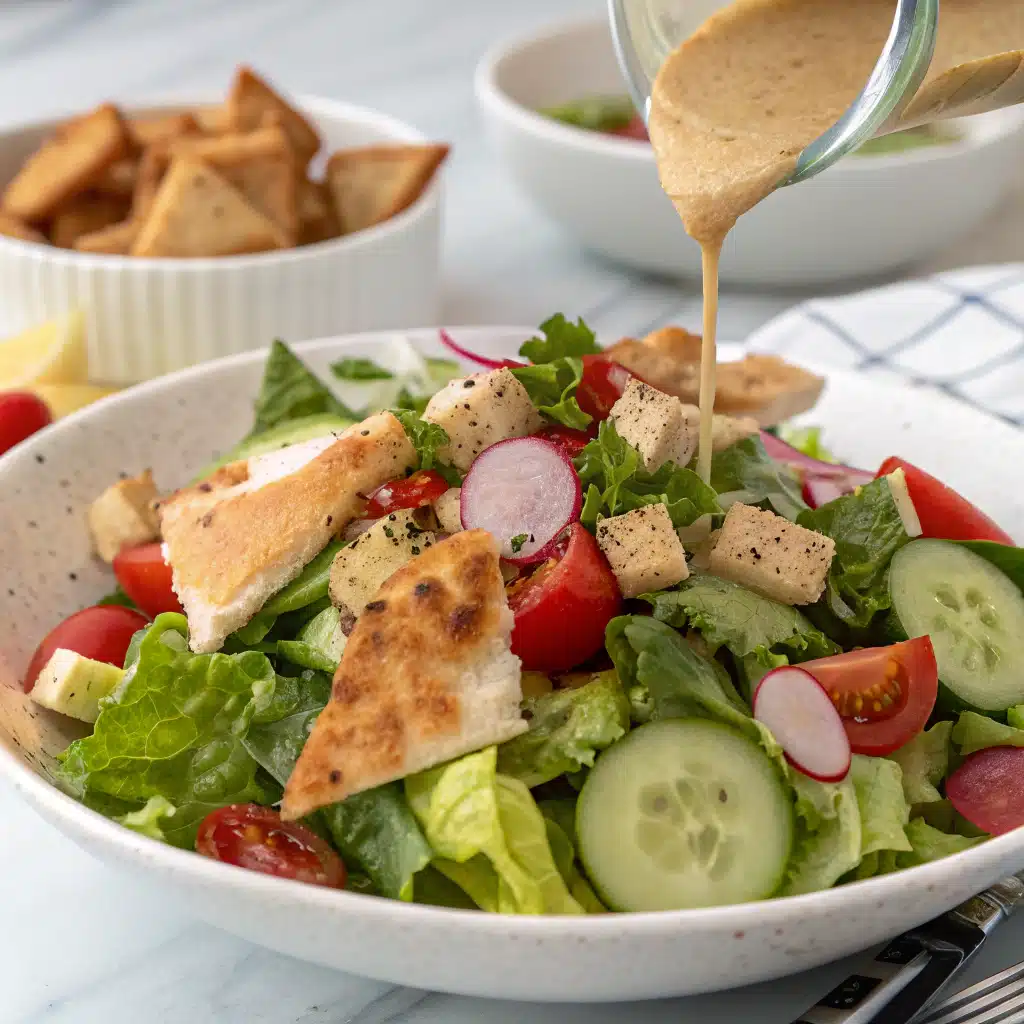
For an impressive presentation, serve fattoush salad in a large, shallow bowl that allows the colorful ingredients to be visible. A white or solid-colored serving dish provides the best backdrop to highlight the vivid greens, reds, and purples of the vegetables and herbs. Just before bringing to the table, drizzle a small additional amount of extra virgin olive oil over the top for a glistening finish.
Garnishing elevates the visual appeal of fattoush salad. Consider these finishing touches: a light dusting of sumac across the top creates appealing color contrast and reinforces the signature flavor; a few whole mint leaves arranged decoratively add an elegant touch; thin slices of lemon on the rim of the serving bowl provide both visual interest and functionality for guests who prefer extra acidity. For special occasions, scatter a few edible flowers such as nasturtiums or violets for an unexpected and sophisticated presentation.
Proper serving tools also matter—use wooden salad servers to gently toss and serve without bruising the delicate herbs and vegetables. This thoughtful presentation transforms fattoush salad from a simple side dish to a centerpiece worthy of any gathering.
Traditional Accompaniments and Pairings
Fattoush salad traditionally appears as part of a larger Middle Eastern meal with complementary dishes that enhance the dining experience:
In authentic Lebanese and Syrian settings, fattoush salad is often served as part of a mezze spread, alongside small plates such as hummus, baba ganoush, tabbouleh, and labneh (strained yogurt). These cooling dishes create a balanced meal, especially when paired with warm flatbreads and perhaps grilled halloumi cheese or falafel for added protein.
For a more substantial meal, fattoush salad pairs beautifully with grilled proteins. The fresh, acidic notes of the salad complement the richness of grilled lamb kofta, chicken shawarma, or fish. The contrast between the warm, savory proteins and the cool, crisp salad creates a satisfying balance of temperatures and textures.
Beverage pairings enhance the fattoush experience. Traditional options include mint tea, served either hot or iced depending on the season, or ayran, a refreshing yogurt-based drink.
“Want more ideas? Check out our creamy peach salad recipe for another fruity and refreshing option.”
Serving as a Main Course or Side Dish
Fattoush salad’s versatility allows it to function as either a light main course or a supporting side dish:
As a main course, fattoush salad needs additional components to create a satisfying meal. Incorporate protein by adding grilled chicken, shrimp, or flaked salmon directly to the salad. For vegetarian options, include roasted chickpeas, crumbled feta cheese, or sliced hard-boiled eggs. Increase the portion size to about 2 cups per person when serving as a main dish, and consider offering warm pita bread on the side for a more substantial meal.
When serving fattoush as a side dish, it pairs exceptionally well with grilled meats and Mediterranean main courses. Its bright, tangy profile provides a refreshing counterpoint to richer dishes such as lamb chops, beef kebabs, or baked fish. A smaller portion of about 1 cup per person is appropriate as an accompaniment. For a cohesive Middle Eastern-themed dinner, serve fattoush alongside rice pilaf, stuffed grape leaves, and grilled vegetables.
For buffet-style serving, consider offering the components separately, allowing guests to build their own fattoush salad according to preference. This not only preserves the optimal texture of the pita chips but accommodates varying dietary needs and preferences. Label each component clearly, particularly noting which elements contain gluten or other common allergens.
Frequently Asked Questions About Fattoush Salad
What is fattoush salad made of?
Fattoush salad consists of fresh vegetables (typically romaine lettuce, tomatoes, cucumbers, radishes, and red onion), aromatic herbs (mint and parsley), crispy toasted pita bread pieces, and a tangy dressing made with olive oil, lemon juice, pomegranate molasses, garlic, sumac, and salt. The combination creates a refreshing salad with contrasting textures and bright flavors that exemplify Mediterranean cuisine.
What is the difference between tabbouleh and fattoush?
While both are popular Lebanese salads, they differ significantly in composition. Tabbouleh is primarily an herb salad with parsley and mint as the main ingredients, bulked out with fine bulgur wheat and accented with tomatoes, onion, and a similar lemon-olive oil dressing. Fattoush, by contrast, is vegetable-focused with romaine lettuce as the base and features toasted pita bread pieces that tabbouleh doesn’t include. Additionally, fattoush dressing typically contains sumac and often pomegranate molasses, which aren’t standard in tabbouleh.
Why is fattoush so good?
Fattoush salad delights the palate through its perfect balance of contrasting elements: the fresh crispness of vegetables against the crunchy pita pieces; the bright acidity of lemon juice complemented by the sweet-tart notes of pomegranate molasses; and the aromatic herbs that provide depth of flavor. Additionally, the sumac in the dressing offers a unique tangy dimension not commonly found in Western salads. This harmony of textures, flavors, and aromas creates an exceptionally satisfying eating experience.
How healthy is fattoush?
Fattoush salad is exceptionally nutritious. The vegetable base provides fiber, vitamins, and antioxidants, while the olive oil in the dressing contributes heart-healthy monounsaturated fats. Fresh herbs add additional antioxidants and micronutrients. The pita bread adds some carbohydrates but in moderate amounts. Overall, fattoush offers a balanced nutritional profile with relatively low calories (approximately 220-250 calories per serving) while delivering substantial nutritional benefits and satisfying flavor.
What bread is used in Fattoush?
Traditional fattoush salad uses Arabic flatbread, specifically pita bread or Lebanese bread (also called khubz). The bread is typically toasted or fried until crispy, then broken into bite-sized pieces. The quality of the bread matters—authentic versions use thin, unleavened or slightly leavened flatbreads rather than thick pita pockets common in Western supermarkets. The bread component is essential to fattoush, as it adds crucial texture and helps absorb the flavorful dressing.
Which is healthier, tabbouleh or Fattoush?
Both salads are nutritious choices, but their health profiles differ slightly. Tabbouleh contains more herbs, which are exceptionally rich in vitamins and antioxidants, and the bulgur wheat provides whole grain benefits. Fattoush typically contains a wider variety of vegetables, offering diverse nutrients and more fiber. Fattoush includes toasted pita, which adds more carbohydrates than tabbouleh’s smaller amount of bulgur. For calorie-conscious diners, tabbouleh is generally slightly lower in calories, but fattoush may be more filling as a standalone dish. The healthiest choice depends on individual nutritional needs and dietary preferences. “Looking for inspiration? Try our Greek salad with chicken for another Mediterranean favorite.”
Conclusion
Why Fattoush Salad Deserves a Place in Your Recipe Collection
Fattoush salad stands out as a culinary treasure that deserves a permanent spot in your regular meal rotation. Its perfect balance of fresh vegetables, aromatic herbs, crispy bread, and tangy dressing creates a harmonious dish that appeals to almost everyone. Unlike many trendy salads that quickly fade from popularity, fattoush has stood the test of time, remaining a beloved staple throughout the Middle East for generations.
The versatility of fattoush salad makes it particularly valuable in any recipe collection. It can serve as a light lunch, a refreshing side dish, or the base for a more substantial meal with added protein. Its adaptability to seasonal ingredients means you can enjoy variations of fattoush year-round, adjusting components based on what’s fresh and available. Additionally, the basic template allows for personalization without losing the essence of what makes fattoush special.
From a practical standpoint, fattoush salad offers an excellent way to reduce food waste by purposefully using leftover or slightly stale bread—an original “upcycled” food long before sustainability became fashionable. This combination of delicious flavor, versatility, and mindful resource use makes fattoush salad not just a recipe but a valuable culinary concept to master.
“Don’t miss our flavorful Chinese chicken salad recipe for another international favorite.”
Embracing Middle Eastern Flavors in Everyday Cooking
Incorporating fattoush salad into your culinary repertoire represents a wonderful entry point to the broader world of Middle Eastern cuisine. The distinctive ingredients that make fattoush special—sumac, pomegranate molasses, and fresh herbs—can become gateway flavors that inspire exploration of other dishes from this rich culinary tradition.
Building a small collection of Middle Eastern pantry staples allows you to authentically recreate dishes like fattoush while providing the foundation for countless other recipes. Beyond sumac and pomegranate molasses, consider adding za’atar (a thyme-based spice blend), tahini (sesame paste), and harissa (chili paste) to your kitchen. These ingredients offer tremendous flavor with minimal effort and store well for extended periods.
The principles that make fattoush salad so appealing—contrasting textures, bright acidity, abundant fresh herbs, and the judicious use of spices—can inform your approach to everyday cooking across cuisines. By embracing these elements, you can transform simple ingredients into memorable meals that nourish both body and spirit. Fattoush salad thus becomes not just a delicious recipe but a philosophy of cooking that celebrates freshness, balance, and the joy of gathering around a shared table.
PrintFattoush Salad
A refreshing Lebanese bread salad featuring crisp vegetables, herbs, and toasted pita in a tangy lemon-pomegranate dressing.
- Prep Time: 20
- Cook Time: 5
- Total Time: 25 minutes
- Yield: 4 1x
- Category: Salad
- Cuisine: Lebanese
Ingredients
Crispy pita bread “croutons”
- 2 pita bread or 1 lebanese bread
- 2 tbsp olive oil
- 1/4 tsp cooking salt / kosher salt
Salad:
- 5 cups cos/romaine lettuce, cut into large bite size pieces
- 2 Lebanese cucumbers, thinly sliced into 3mm rounds
- 1 cup cherry tomatoes, halved (~200g), or 1 1/2 regular tomatoes cut into large chunks
- 1/2 small red onion, thinly sliced
- 5 red radish, finely sliced
- 1/2 cup mint leaves, lightly packed (large ones torn in half)
- 1 tbsp roughly chopped parsley
Dressing:
- 1/4 cup extra virgin olive oil
- 2 tbsp lemon juice
- 2 tsp pomegranate molasses
- 1 medium garlic clove, finely grated or crushed using garlic crusher
- 1 tsp sumac (still worth making without)
- 1/2 tsp cooking salt / kosher salt
Instructions
- Preheat oven to 425°F (220°C). Separate pita bread into thin sheets and cut into 1.2-inch squares.
- Toss pita pieces with olive oil and salt on a baking tray, then spread in a single layer.
- Bake for 5 minutes until crispy, then cool completely on the tray.
- Prepare the dressing by combining all dressing ingredients in a jar and shaking well until combined.
- Place all salad ingredients in a large bowl and drizzle with half the dressing, then toss gently.
- Add most of the crispy pita chips and drizzle with remaining dressing, tossing again.
- Transfer to a serving bowl, top with remaining pita chips and serve immediately.
Notes
For best results, assemble this salad just before serving to maintain the crispness of the pita chips. Nutrition facts are estimates and may vary based on ingredients used, portion sizes, and preparation methods.
Nutrition
- Serving Size: 4
- Calories: 220 Kcal
- Sugar: 4g
- Sodium: 380mg
- Fat: 15g
- Saturated Fat: 2g
- Carbohydrates: 18g
- Fiber: 3g
- Protein: 4g
Keywords: fattoush salad, Lebanese salad, Mediterranean salad, pita bread salad, sumac salad
Let’s connect! Follow me for more Joylicious Recipes: Facebook, Instagram, Pinterest