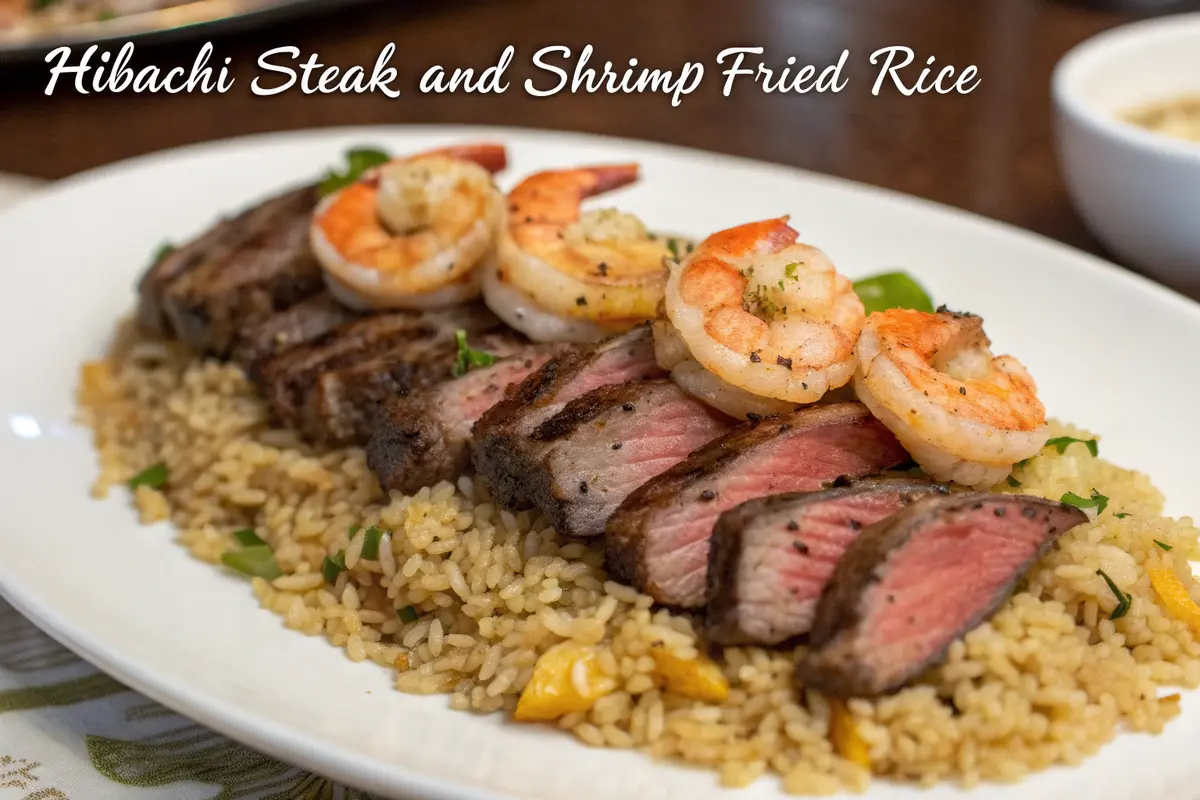
Bringing Hibachi Steak and Shrimp Fried Rice to Your Home Kitchen
Restaurant-Quality Asian Flavors Made Simple
Hibachi Steak and Shrimp Fried Rice combines tender beef, plump shrimp, and perfectly seasoned rice for an irresistible dish that brings the excitement of Japanese steakhouse dining into your kitchen. The savory umami flavors from the soy sauce blend seamlessly with the aromatic ginger and garlic, while the combination of protein-rich steak and shrimp creates a satisfying meal that’s both indulgent and balanced. “The grilled flank steak technique offers similar staged-cooking approaches to prevent burning while developing maximum flavor.”
This crave-worthy hibachi-style rice works beautifully for weeknight family dinners, weekend lunch gatherings, or whenever you’re craving that distinctive teppanyaki taste without the restaurant price tag. With simple ingredients and straightforward techniques, you’ll master this dish in no time, impressing everyone at your table with authentic Japanese fried rice that rivals your favorite hibachi restaurant.
Essential Elements for Perfect Hibachi-Style Rice
The Foundation: Rice and Proteins
Start with these core ingredients to build your ultimate hibachi steak and shrimp fried rice. The combination of tender steak and succulent shrimp provides protein variety, while the aromatics and seasonings bring authentic Japanese steakhouse flavor to your kitchen. “The shrimp marinade approach can enhance the seafood flavor even further if you have a few extra minutes to prepare.”
| Ingredient | Quantity | Notes |
|---|---|---|
| Jasmine rice, cooked and chilled | 2 cups | Day-old rice works best for fried rice |
| Flank steak | 8 oz | Thinly sliced against the grain |
| Large shrimp | 8 oz | Peeled, deveined, tails removed |
| Frozen peas and carrots | 1 cup | Thawed and drained well |
| Large eggs | 2 | Lightly beaten |
| Soy sauce | 2 tbsp | Low-sodium recommended |
| Sesame oil | 1 tbsp | For authentic Asian flavor |
| Unsalted butter | 1 tbsp | Creates hibachi-style richness |
| Minced garlic | 2 tsp | Fresh provides the best flavor |
| Minced ginger | 2 tsp | Adds signature aromatic profile |
| Green onions | 2 | Sliced, white and green parts separated |
Flavor Enhancers and Optional Add-ins
| Ingredient | Quantity | Purpose |
|---|---|---|
| Oyster sauce | 1 tbsp | Deepens umami flavor |
| Mirin (Japanese rice wine) | 1 tsp | Adds subtle sweetness |
| White pepper | ¼ tsp | Traditional Asian seasoning |
| Bean sprouts | ½ cup | Adds fresh crunch |
| Mushrooms (shiitake or button) | ½ cup | Sliced thin for umami boost |
| Diced onion | ¼ cup | Provides aromatic base |
| Toasted sesame seeds | 1 tbsp | For garnish and texture |
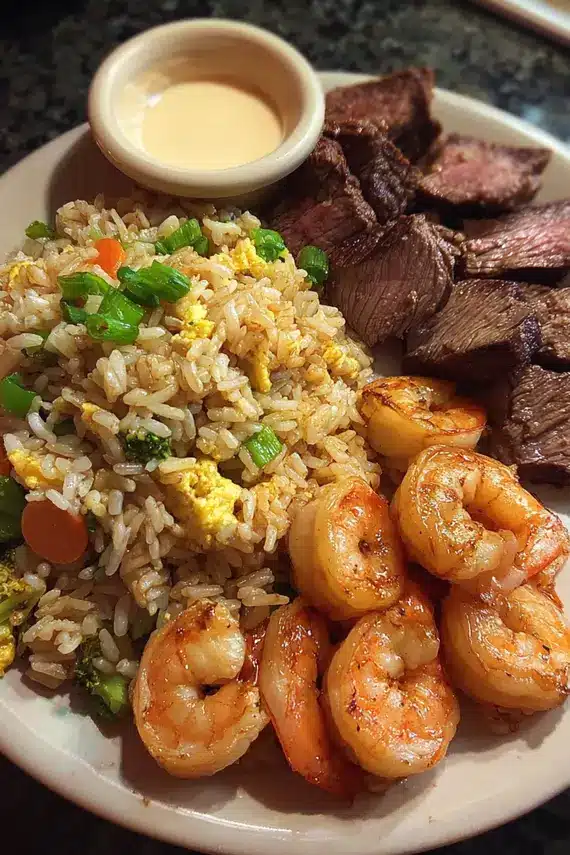
| Yum yum sauce | To serve | Authentic hibachi condiment |
Master Chef Method: Creating Perfect Japanese Fried Rice at Home
Preparation Tips for Hibachi-Style Success
Follow these detailed steps to achieve restaurant-quality hibachi steak and shrimp fried rice in your own kitchen. The key is cooking components separately and combining them at the end for optimal texture and flavor in every bite.
- Prepare your workspace – Have all ingredients measured, chopped, and arranged near your cooking area. This dish comes together quickly, so organization is crucial for success.
- Heat your pan properly – Place a large wok or heavy-bottomed skillet over medium-high heat. Add the sesame oil and butter, allowing them to melt together until the butter stops foaming, about 30 seconds. This combination creates the signature hibachi restaurant flavor.
- Sauté aromatics – Add the minced garlic, ginger, and the white parts of sliced green onions. Stir continuously for 30-45 seconds until fragrant but not browned. The aromatics should release their scent but remain golden rather than dark brown.
- Cook the steak perfectly – Add the thinly sliced flank steak in a single layer. Let it cook undisturbed for 1 minute to develop a nice sear, then stir and cook for another 1-2 minutes until the meat is browned but still slightly pink inside. Transfer to a clean plate and set aside.
- Prepare the shrimp – In the same pan, add the shrimp in a single layer. Cook for approximately 1 minute per side until they turn pink and start to curl into a C-shape. Be careful not to overcook – they should be just opaque throughout. Transfer to the plate with the steak.
- Scramble the eggs – Push any remaining aromatics to the side of the pan. If needed, add a small amount of additional oil to the cleared area. Pour in the beaten eggs and let them set slightly before scrambling gently with a spatula. Cook until just set but still moist, about 30-45 seconds.
- Fry the rice properly – Add the chilled rice to the pan, breaking up any clumps with your spatula. Drizzle the soy sauce and optional oyster sauce over the rice. Stir-fry for 2 minutes, allowing the rice to toast slightly and absorb the flavors.
- Incorporate vegetables – Add the thawed peas and carrots (and any optional vegetables like mushrooms or bean sprouts). Stir-fry for 2 minutes until the vegetables are heated through but still maintain their color and texture.
- Combine all elements – Return the cooked steak and shrimp to the pan. Gently fold everything together, allowing the proteins to reheat for about 1-2 minutes. Be careful not to break up the rice or shrimp too much during this step.
- Season and finish – Taste and adjust seasoning with additional soy sauce if needed. Sprinkle with white pepper if using. Add the green parts of the sliced green onions and optional sesame seeds, giving everything a final toss before serving.
Expert Cooking Insights for Japanese Fried Rice Success
Key Techniques for Authentic Hibachi Flavor
Follow these professional tips to elevate your hibachi steak and shrimp fried rice from good to extraordinary:
- Use cold rice – Always prepare your rice at least 4-6 hours ahead (or use leftover rice from the previous day). Cold rice maintains its structure during stir-frying, preventing mushiness and creating that distinct hibachi rice texture.
- High heat is essential – Authentic hibachi cooking relies on high heat for fast cooking and flavor development. Make sure your pan is properly preheated before adding ingredients, and maintain a medium-high to high flame throughout the cooking process.
- Don’t overcrowd the pan – If you’re doubling the recipe, cook in batches rather than overloading your pan. Overcrowding leads to steaming instead of frying, resulting in soggy rather than crispy rice.
- Timing is crucial – Have all ingredients prepped and ready before you begin cooking. This dish comes together quickly, and ingredients can easily overcook if you’re still preparing components while others are cooking.
- Protein substitutions – Not a fan of shrimp? Replace with diced chicken breast or thighs. For a vegetarian version, substitute the proteins with extra-firm tofu cubes or edamame for plant-based protein.
- Sauce adjustments – For a deeper umami flavor, try adding 1-2 teaspoons of oyster sauce or a dash of fish sauce. For slight sweetness, incorporate 1 teaspoon of mirin or a pinch of sugar.
- Customize the heat level – Add sriracha, sambal oelek, or a pinch of red pepper flakes during cooking for a spicier version that maintains authentic flavor.
Preserving Your Hibachi Masterpiece: Storage Recommendations
Maintaining Freshness for Leftovers
Properly storing your hibachi steak and shrimp fried rice ensures you can enjoy the flavors for days after cooking. Here’s how to keep it tasting its best:
For refrigerator storage, allow the fried rice to cool completely before transferring to an airtight container. This prevents condensation from making the rice soggy. When properly stored in the refrigerator, your hibachi fried rice will maintain its flavor and texture for 3-4 days. The rice may firm up slightly in the cold, which is normal.
For reheating, add a small splash of water (about 1 tablespoon per cup of rice) to restore moisture. The best reheating methods include:
– Microwave: Heat in 30-second intervals, stirring between each until hot throughout (about 2 minutes total for a single portion).
– Stovetop: Reheat in a non-stick skillet over medium heat with a small amount of oil, stirring frequently until hot (about 4-5 minutes).
– Air fryer: Place in a lined basket at 350°F for 3-4 minutes, shaking halfway through for even heating.
If you’re planning to make this dish for meal prep, consider storing the components separately for the best texture. Keep the cooked rice, proteins, and vegetables in separate containers, then combine and quickly stir-fry just before serving. “The honey BBQ chicken rice skillet storage approach works similarly for maintaining ideal texture with protein-rice combinations.”
Delicious Twists on Classic Hibachi Fried Rice
Customizing Your Japanese Steakhouse Experience
Enjoy these creative variations on traditional hibachi steak and shrimp fried rice to keep your meals exciting and personalized:
Spicy Sriracha Hibachi Rice
Transform your hibachi fried rice into a heat-lover’s dream by adding 1-2 tablespoons of sriracha sauce during the final mixing stage. Complement the heat with cooling diced cucumber as a garnish and a squeeze of lime juice for brightness. This variation maintains the authentic hibachi flavor profile while adding a pleasant kick that builds with each bite.
Teriyaki Hibachi Rice Bowl
Add a sweet-savory dimension by incorporating 2 tablespoons of teriyaki sauce instead of part of the soy sauce. Finish with a sprinkle of nori flakes and additional teriyaki drizzle when serving. The caramelized notes in the teriyaki sauce complement the beef particularly well, while adding beautiful glaze and color to the dish.
Vegetable-Forward Hibachi Rice
Double the vegetable content by adding 1 cup of diced zucchini, bell peppers, and broccoli florets. Sauté these vegetables after cooking the proteins but before adding the rice. This variation creates a more nutritionally balanced meal while maintaining the signature hibachi flavor profile. The additional vegetables add vibrant color and fresh texture contrast.
Surf and Turf Deluxe Hibachi
Elevate this dish to special occasion status by using ribeye steak instead of flank, and adding 4-6 oz of lump crabmeat along with the shrimp. Finish with a light drizzle of garlic butter sauce for restaurant-quality indulgence. This premium variation maintains the same cooking technique but uses luxury ingredients for a more special dining experience.
Brown Rice Hibachi
For a nutritional boost, substitute the white jasmine rice with 2 cups of cooked brown rice. The nutty flavor of brown rice pairs wonderfully with the savory hibachi seasonings, though you may need to add an extra splash of soy sauce to compensate for brown rice’s stronger flavor. This variation adds fiber and nutrients while maintaining the essential hibachi character.
Keto-Friendly Cauliflower Hibachi Rice
Replace the jasmine rice with 3 cups of riced cauliflower for a low-carb alternative. Cook the cauliflower rice separately first to remove excess moisture, then add it to the wok in place of regular rice. This variation creates a lighter dish that still captures the hibachi experience while being suitable for those following ketogenic or low-carb diets.
Presenting Your Japanese Steakhouse Creation
Serving Suggestions for Maximum Enjoyment
Elevate your hibachi steak and shrimp fried rice with these thoughtful serving ideas that enhance the dining experience:
For casual weeknight dinners, serve your hibachi fried rice in deep bowls with chopsticks for an authentic Asian dining experience. The bowl presentation helps maintain heat and makes it easier to enjoy all the flavors together. A small side of kimchi or quick-pickled vegetables adds brightness and contrast to the rich, savory rice.
Create a complete hibachi restaurant experience at home by serving the fried rice alongside homemade Asian sesame dressing tossed with a simple green salad. The crisp vegetables and nutty dressing complement the rich umami flavors of the hibachi rice perfectly. Add a side of miso soup for a complete Japanese-inspired meal.
For entertaining guests, arrange the hibachi fried rice on a large platter with the steak and shrimp displayed prominently on top. Garnish with additional sliced green onions, sesame seeds, and small bowls of dipping sauces like yum yum sauce or spicy mayo. This presentation style creates a stunning centerpiece that encourages sharing.
For meal prep convenience, portion the hibachi fried rice into individual containers with a side of steamed edamame or cucumber salad. This balanced combination provides complete nutrition and satisfying flavors that hold up well even after refrigeration, making it perfect for work or school lunches.
When serving children, you might arrange the hibachi fried rice in fun shapes using molds, or create “hibachi faces” with strategic placement of the vegetables and proteins. The familiar flavors of fried rice tend to appeal to younger eaters, especially when presented in an engaging way.
For a lighter meal option, serve smaller portions of the hibachi fried rice inside lettuce cups or alongside a substantial portion of steamed vegetables. This creates a balanced plate with the rich hibachi flavors complemented by fresh, crisp vegetables.
Answering Your Hibachi Rice Questions
Common Queries About Japanese Fried Rice
Why does restaurant hibachi rice taste different from homemade versions?
Restaurant hibachi chefs use extremely high-heat cooking surfaces (around 500°F) and specialized equipment that’s difficult to replicate at home. They also typically use a blend of oils including clarified butter, which creates that distinctive flavor. To get closer to restaurant results, use the highest heat your home stove can safely provide, don’t overcrowd your pan, and incorporate both butter and sesame oil as suggested in this recipe.
Can I make hibachi fried rice with freshly cooked rice?
While day-old, chilled rice is strongly preferred for the ideal texture, you can use fresh rice in a pinch by following this method: Cook the rice with about 20% less water than normally called for, making it slightly firmer. Spread the cooked rice on a baking sheet in a thin layer and place in the refrigerator uncovered for 30-45 minutes to cool and dry out. This quick-chilling method removes excess moisture and helps prevent clumping during stir-frying.
What’s the best way to slice flank steak for hibachi fried rice?
For the most tender results, always slice flank steak against the grain (perpendicular to the visible muscle fibers). This shortens the tough muscle fibers and makes each piece easier to chew. For hibachi fried rice specifically, aim for very thin slices (about ⅛-inch thick) cut at a slight angle. If your steak is difficult to slice thinly, try placing it in the freezer for 15-20 minutes to firm up before cutting.
How can I make an authentic yum yum sauce to serve with my hibachi fried rice?
Combine ½ cup mayonnaise, 2 tablespoons ketchup, 2 teaspoons rice vinegar, 1 teaspoon sugar, ½ teaspoon garlic powder, ¼ teaspoon paprika, and a pinch of cayenne pepper. Mix thoroughly and refrigerate for at least 30 minutes before serving to allow flavors to meld. This creamy, tangy sauce is the perfect complement to hibachi steak and shrimp fried rice.
Your Journey to Hibachi Mastery Begins Here
Final Thoughts on Home Hibachi Excellence
Hibachi Steak and Shrimp Fried Rice brings the excitement and flavors of Japanese steakhouse dining right into your own kitchen without the hefty price tag. By following these detailed instructions and professional tips, you’ve learned how to create a restaurant-quality dish that balances savory proteins, aromatic vegetables, and perfectly seasoned rice in one satisfying meal. “The black bean salad would make an excellent fresh side dish to complement this hearty hibachi main course.”
Whether you’re preparing this for a special family dinner, meal prepping for the week ahead, or simply satisfying a craving for authentic Japanese flavors, this versatile recipe delivers consistent, delicious results. The combination of tender steak and succulent shrimp provides protein variety that makes this dish feel truly special, while the cooking method ensures each component maintains its distinct texture and flavor.
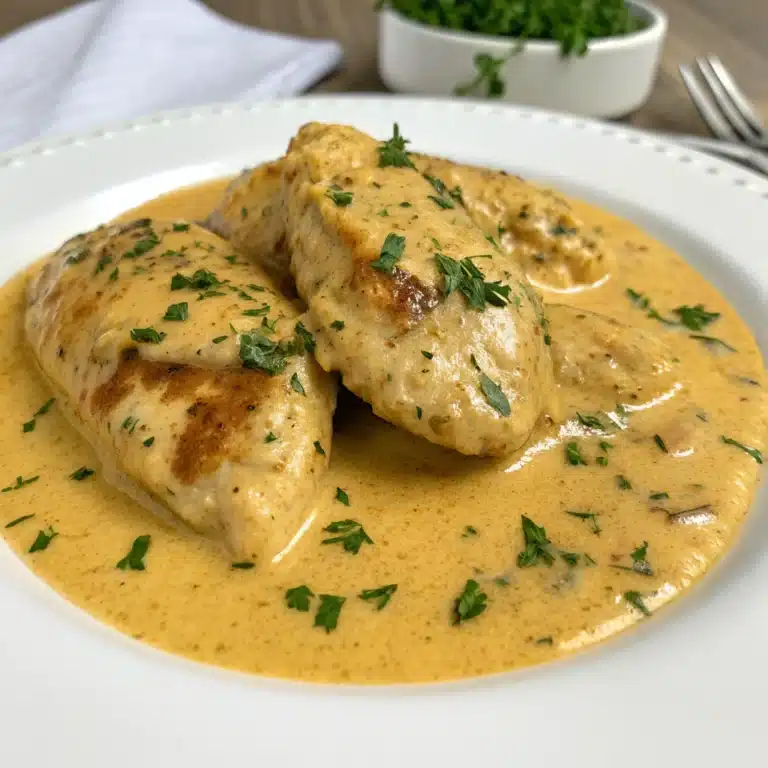
We encourage you to make this recipe your own by trying the variations suggested or incorporating your favorite vegetables and proteins. The foundational techniques you’ve learned here will serve you well across many Asian-inspired recipes in your cooking repertoire. “If you enjoyed this hibachi-style dish, you might also appreciate our creamy garlic herb chicken recipe for another flavorful dinner option with equally impressive results.”
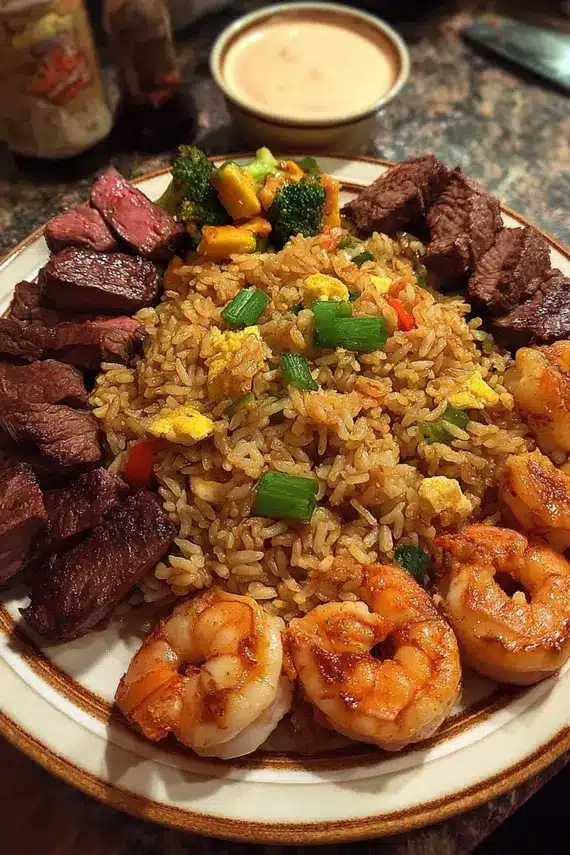
Hibachi Steak and Shrimp Fried Rice
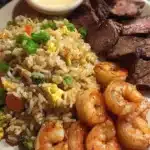
- Restaurant-quality hibachi fried rice with tender steak and juicy shrimp.
- Perfectly seasoned jasmine rice with vegetables, eggs, and savory soy sauce.
- Bring the Japanese steakhouse experience home with this easy-to-follow recipe.
- Prep Time: 20
- Cook Time: 15
- Total Time: 35 minutes
- Yield: 4 servings 1x
- Category: Dinner
- Method: Stir-Frying
- Cuisine: Japanese-Inspired
Ingredients
- 2 cups cooked jasmine rice, chilled (day-old is best)
- 8 oz flank steak, thinly sliced against the grain
- 8 oz large shrimp, peeled and deveined
- 1 cup frozen peas and carrots, thawed
- 2 large eggs, lightly beaten
- 2 tbsp soy sauce (low-sodium recommended)
- 1 tbsp sesame oil
- 1 tbsp unsalted butter
- 2 tsp minced garlic
- 2 tsp minced ginger
- 2 green onions, sliced (white and green parts separated)
- 1 tbsp oyster sauce (optional)
- ¼ tsp white pepper (optional)
- 1 tbsp toasted sesame seeds for garnish (optional)
Instructions
- Heat a large wok or heavy-bottomed skillet over medium-high heat. Add sesame oil and butter until melted and hot.
- Add minced garlic, ginger, and white parts of green onions. Stir for 30 seconds until fragrant but not browned.
- Add thinly sliced flank steak in a single layer. Cook undisturbed for 1 minute, then stir and cook 1-2 minutes more until browned. Transfer to a plate.
- Add shrimp to the same pan. Cook for about 1 minute per side until pink and just opaque. Transfer to plate with steak.
- Push any remaining aromatics to the side of the pan. Pour beaten eggs into the cleared area and scramble until just set, about 30-45 seconds.
- Add the cold rice, breaking up any clumps. Drizzle soy sauce and optional oyster sauce over rice. Stir-fry for 2-3 minutes until rice is heated through.
- Add thawed peas and carrots. Stir-fry for 2 minutes until vegetables are hot.
- Return steak and shrimp to the pan. Gently fold everything together for 1-2 minutes to reheat the proteins.
- Season with white pepper if using. Add green parts of scallions and optional sesame seeds.
- Toss everything together one final time and serve hot.
Notes
- Use cold, day-old rice for best texture – freshly cooked rice will become mushy.
- For spicier flavor, add sriracha or red pepper flakes to taste.
- Substitute chicken thighs for steak if preferred.
- Serve with yum yum sauce or additional soy sauce on the side.
- Nutrition facts are estimates and may vary based on ingredients used, portion sizes, and preparation methods.
Nutrition
- Serving Size: 1.5 cups
- Calories: 460
- Sugar: 3
- Sodium: 810
- Fat: 18
- Saturated Fat: 6
- Unsaturated Fat: 10
- Carbohydrates: 42
- Fiber: 3
- Protein: 32
- Cholesterol: 205
Keywords: Hibachi Steak and Shrimp Fried Rice, Hibachi fried rice, Steak fried rice, Shrimp fried rice, Japanese fried rice
Let’s connect! Follow me for more Joylicious Recipes: Facebook, Instagram, Pinterest