Authentic Shrimp Rice Noodle Soup: A Comforting Asian-Inspired Recipe
Introduction: The Perfect Bowl of Comfort
The Art of Shrimp Rice Noodle Soup
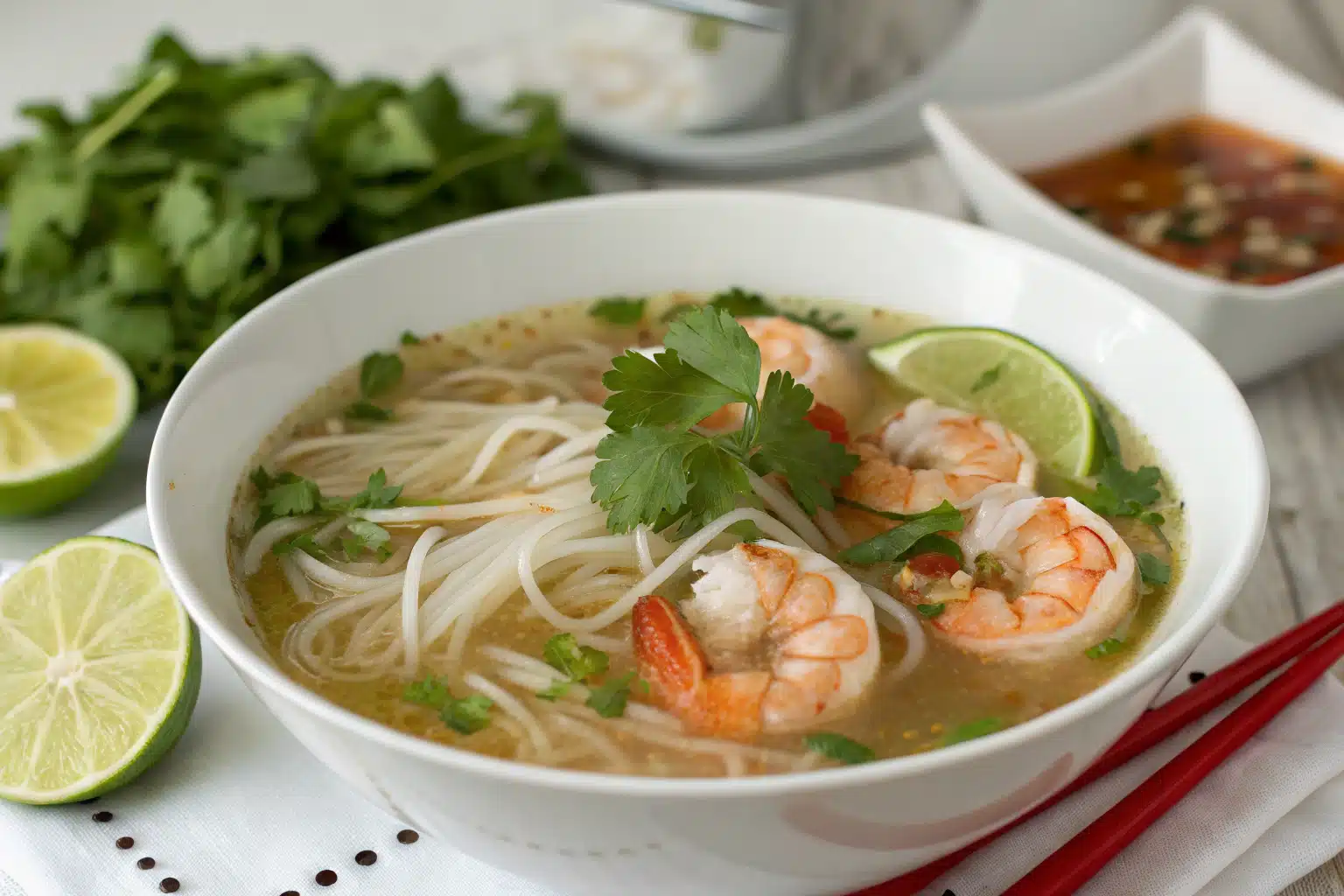
Shrimp rice noodle soup represents the perfect harmony of delicate flavors and satisfying textures. This soul-warming dish combines tender shrimp, silky rice noodles, and aromatic broth for a meal that’s both nourishing and comforting. With its roots in Southeast Asian cuisine, particularly Vietnamese and Thai traditions, this soup has become a beloved staple worldwide. The beauty of shrimp rice noodle soup lies in its balance – the sweetness of shrimp against the savory broth, the softness of noodles contrasting with crisp vegetables.
“Learn more about creating balanced flavors in our Turkey Sausage Mushroom Soup” recipe for additional soup inspiration.
Health Benefits and Versatility
Beyond its incredible taste, shrimp rice noodle soup offers numerous health benefits. Shrimp provides lean protein and beneficial omega-3 fatty acids, while bok choy contributes essential vitamins and minerals. Rice noodles make this dish naturally gluten-free, perfect for those with dietary restrictions. What’s more, this soup’s versatility allows for endless customization – adjust the spice level, swap vegetables based on seasonal availability, or modify the protein to suit your preferences. Whether you’re feeling under the weather, craving something light yet satisfying, or simply looking to explore Asian flavors, shrimp rice noodle soup delivers on all fronts.
Ingredients: Building Layers of Flavor
Core Components
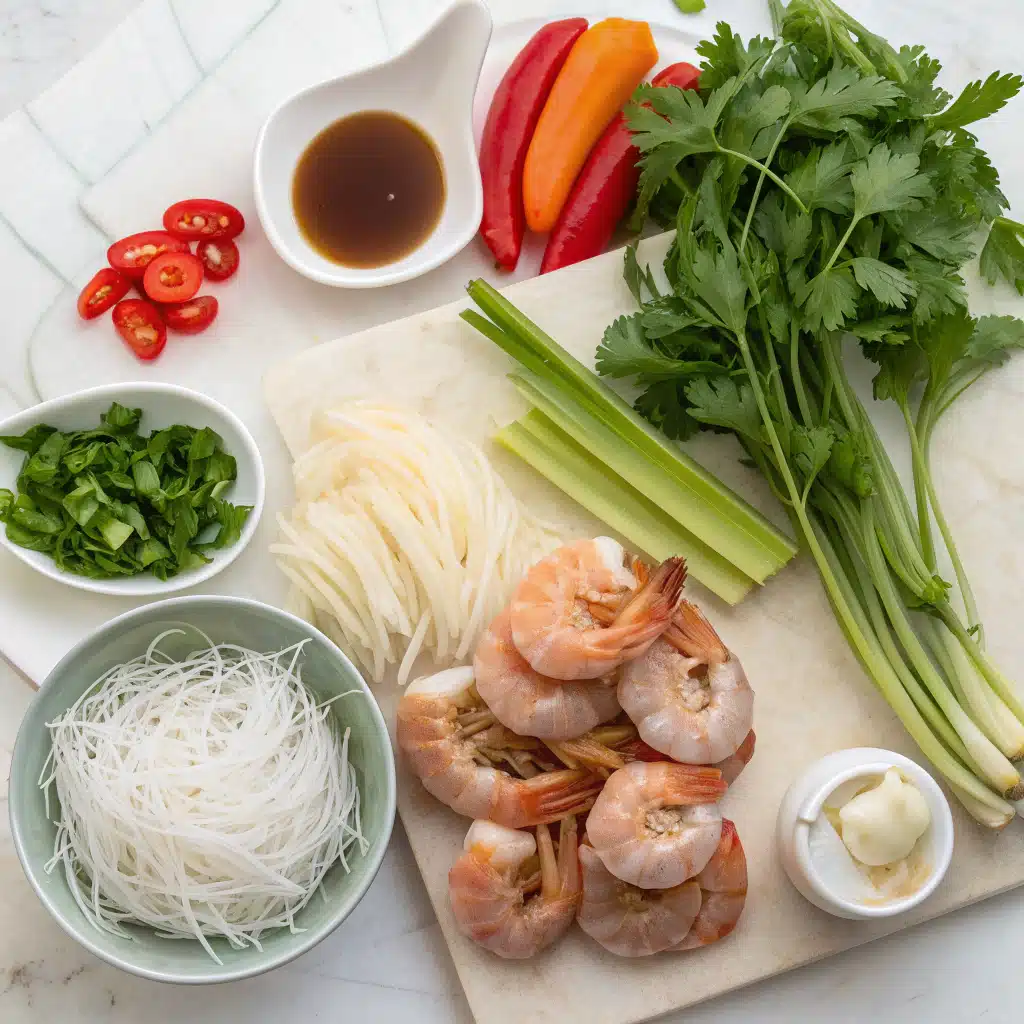
The foundation of an exceptional shrimp rice noodle soup begins with quality ingredients that work together to create a harmonious dish. Each component plays a crucial role in developing the soup’s complex flavor profile.
| Ingredient | Quantity | Notes |
|---|---|---|
| Rice noodles | 8 ounces | Medium thickness works best |
| Large shrimp | 12 ounces | Peeled and deveined |
| Shiitake or cremini mushrooms | 1 cup | Thinly sliced |
| Bok choy | 2 cups | Roughly chopped |
| Neutral cooking oil | 1 tablespoon | Canola or vegetable oil |
| Star anise | 3 whole | Provides distinctive flavor |
| Cinnamon stick | 1 | For aromatic depth |
| Fresh ginger | 1 teaspoon | Minced |
| Garlic cloves | 4 | Minced |
| Lemongrass stalk | 1 | Lightly crushed |
| Jalapeño | 1 | Thinly sliced and divided |
| Low-sodium chicken broth | 6 cups | Foundation of the soup |
| Fish sauce | 1 tablespoon | Adds umami flavor |
| Low-sodium soy sauce | 1 tablespoon | For savory notes |
| Fresh lime juice | 2 tablespoons | Adds brightness |
| Fresh cilantro | 2 tablespoons | Chopped, plus more for serving |
Aromatic Elements and Seasonings
The soul of shrimp rice noodle soup lies in its aromatic ingredients. Star anise, cinnamon, lemongrass, ginger, and garlic create the fragrant base that makes this soup so distinctive. These aromatics infuse the broth with layers of complexity that elevate the dish beyond a simple soup. The jalapeño provides customizable heat, while fish sauce and soy sauce add depth and umami. Fresh lime juice brightens the entire dish, cutting through the richness and adding necessary acidity. Finally, fresh herbs like cilantro add color, freshness, and a pop of flavor that ties everything together.
Step-by-Step: Creating Your Shrimp Rice Noodle Soup
Preparing the Components
Cook the rice noodles according to the package instructions, being careful not to overcook them. They should retain some firmness as they’ll continue softening in the hot soup. Once cooked, drain thoroughly and set aside. You can toss them with a tiny bit of oil to prevent sticking if needed.
Heat the tablespoon of neutral oil in a large pot over medium-high heat. When the oil begins to shimmer, add the star anise and cinnamon stick. Allow these spices to toast for about 30 seconds until they become noticeably fragrant, releasing their essential oils into the base.
Add the minced ginger and garlic to the pot, stirring constantly for about 30-45 seconds. Be careful not to let them brown or burn, as this can create bitterness in your broth. “Discover great ideas like our Chicken Pho Noodle Soup” for more aromatic Asian soup inspiration.
Building the Broth
Add the sliced mushrooms to the pot and sauté for about 2 minutes until they begin to soften and release their moisture. This step adds another layer of umami flavor to your broth.
Pour in the chicken broth, followed by the fish sauce and soy sauce. Add the lightly crushed lemongrass stalk and half of the thinly sliced jalapeño. Bring the mixture to a gentle boil, then reduce the heat and allow it to simmer for 10 minutes. This simmering time allows all the flavors to meld together and infuse into the broth.
Using tongs or a slotted spoon, remove and discard the star anise, cinnamon stick, and lemongrass stalk from the broth. While these ingredients are essential for flavor development, they’re not meant to be eaten.
Finishing the Soup
Add the chopped bok choy and peeled shrimp to the simmering broth. Cook for approximately 2-3 minutes, just until the shrimp turn pink and opaque and the bok choy becomes tender-crisp. Be careful not to overcook the shrimp, as they can quickly become tough and rubbery.
Remove the pot from heat and stir in the fresh lime juice and chopped cilantro. These fresh elements add brightness and complexity to the finished soup, balancing all the flavors.
To serve, place a portion of the cooked rice noodles in each bowl and ladle the hot soup with shrimp and vegetables over the top. Garnish with the remaining sliced jalapeño, additional fresh cilantro, and lime wedges if desired.
Tips: Mastering Shrimp Rice Noodle Soup
Selecting and Preparing Ingredients
The quality of your ingredients significantly impacts the final result of your shrimp rice noodle soup. When selecting shrimp, look for ones that are firm, translucent, and odorless – these indicate freshness. While fresh shrimp are ideal, frozen shrimp work wonderfully too; just ensure they’re properly thawed and patted dry before adding to your soup. For rice noodles, medium-thickness varieties hold up best in soup without becoming mushy.
If possible, choose fresh mushrooms over dried for better texture, though dried mushrooms do impart a deeper umami flavor when reconstituted. Always use low-sodium broths and sauces, as this allows you to control the saltiness of your final dish.
Technique Refinements
Several cooking techniques can elevate your shrimp rice noodle soup from good to exceptional. First, don’t skip toasting your spices – this process releases their essential oils and dramatically enhances their flavor contribution. When cooking rice noodles, slightly undercook them since they’ll continue softening in the hot broth. To prevent overcooked shrimp, add them only at the end of the cooking process and remove the pot from heat once they turn pink. For deeper flavor development, consider making your broth a day ahead, allowing the aromatics to infuse more thoroughly.
“Check out our Spinach Mushroom Soup” recipe for more techniques on developing flavorful broths.
Customization Options
One of the joys of shrimp rice noodle soup is its adaptability to personal preferences. For those who enjoy heat, increase the amount of jalapeño or add a dollop of chili oil when serving. If you prefer a more substantial meal, consider doubling the amount of shrimp or adding other seafood like scallops. Vegetable options are endless – try adding bean sprouts, sliced bell peppers, or snow peas for additional crunch and nutrition. For a richer broth, swap half the chicken stock for seafood stock to enhance the maritime flavor. A squeeze of sriracha or a spoonful of sambal oelek can add wonderful heat and complexity to individual servings, allowing each diner to customize their bowl.
Storage: Keeping Your Soup Fresh
Proper Refrigeration Techniques
Storing shrimp rice noodle soup requires careful consideration to maintain both safety and quality. For optimal freshness, allow the soup to cool completely before refrigerating, but don’t leave it at room temperature for more than two hours. The best approach is to store the components separately: keep the broth in one container, the cooked shrimp and vegetables in another, and the noodles in a third. This prevents the noodles from absorbing all the broth and becoming soggy while ensuring the shrimp doesn’t develop an off-flavor from extended soaking. When properly stored in airtight containers, the soup components will keep well in the refrigerator for 2-3 days.
Freezing and Thawing Methods
While fresh is best for shrimp rice noodle soup, you can freeze portions for future meals with a few modifications. The broth freezes excellently and can be stored for up to 3 months in freezer-safe containers, leaving about an inch of headspace for expansion. However, cooked shrimp and rice noodles typically don’t freeze well – their textures suffer significantly during thawing. Instead, consider freezing only the broth, then adding freshly cooked noodles and shrimp when reheating.
“Here’s your guide to Hot and Sour Tofu Soup” with additional tips on freezing Asian soups.
Reheating for Best Results
Reheating shrimp rice noodle soup requires gentle handling to prevent overcooking the delicate ingredients. If you’ve stored components separately, start by warming the broth over medium heat until simmering. For combined storage, use low heat and stop once the soup reaches serving temperature – avoid boiling as this will toughen the shrimp. Microwave reheating works in a pinch but use 50% power and stir frequently to ensure even heating.
If your noodles have absorbed much of the broth during storage, add a splash of fresh chicken stock or even water to restore the soup’s consistency. A squeeze of fresh lime juice and a sprinkle of cilantro just before serving will revitalize the flavors, making your reheated soup taste nearly as good as freshly made.
Variations: Exploring Different Styles of Shrimp Rice Noodle Soup
Regional Inspirations
Shrimp rice noodle soup appears in various forms across Asian cuisines, each with distinctive characteristics worth exploring. Vietnamese-style phở tôm emphasizes a clear, aromatic broth with notes of star anise, cinnamon, and charred ginger, often served with bean sprouts and herbs like Thai basil and culantro. Thai tom yum goong takes a spicier approach, incorporating lemongrass, galangal, makrut lime leaves, and chili for a soup that’s simultaneously hot, sour, and fragrant. Malaysian laksa combines coconut milk with a spicy curry paste for a rich, complex broth. To experiment with these regional variations, adjust your aromatics and garnishes accordingly while maintaining the shrimp and rice noodle base.
“Want more ideas? Check out Garlic Butter Grilled Shrimp” for additional shrimp preparation methods.
Protein Substitutions and Additions
While shrimp creates a wonderful soup, experimenting with other proteins can yield equally delicious results. For seafood lovers, try adding scallops, firm white fish pieces, or squid rings – just adjust cooking times accordingly as these cook at different rates than shrimp. For a more substantial soup, include thinly sliced chicken breast or pork tenderloin, briefly poached in the simmering broth. Vegetarians can substitute firm tofu, tempeh, or even meaty mushrooms like king oyster or portobello. For added richness, consider topping each bowl with a soft-boiled egg, which creates a luxurious element as the yolk mixes into the broth.
Dietary Adaptations
Shrimp rice noodle soup can easily accommodate various dietary needs without sacrificing flavor. For gluten-free diners, ensure your soy sauce is certified gluten-free or substitute with tamari. Those following dairy-free or paleo diets will find this recipe naturally compliant. For a lower-carb option, replace rice noodles with spiralized zucchini or shirataki noodles. Vegetarians and vegans can use vegetable stock, omit the shrimp in favor of tofu or additional mushrooms, and replace fish sauce with a combination of miso paste and liquid aminos for umami depth. If watching sodium intake, reduce the quantities of soy and fish sauces while adding fresh herbs to maintain flavor complexity.
Serving: Presentation and Accompaniments
Bowl Selection and Presentation
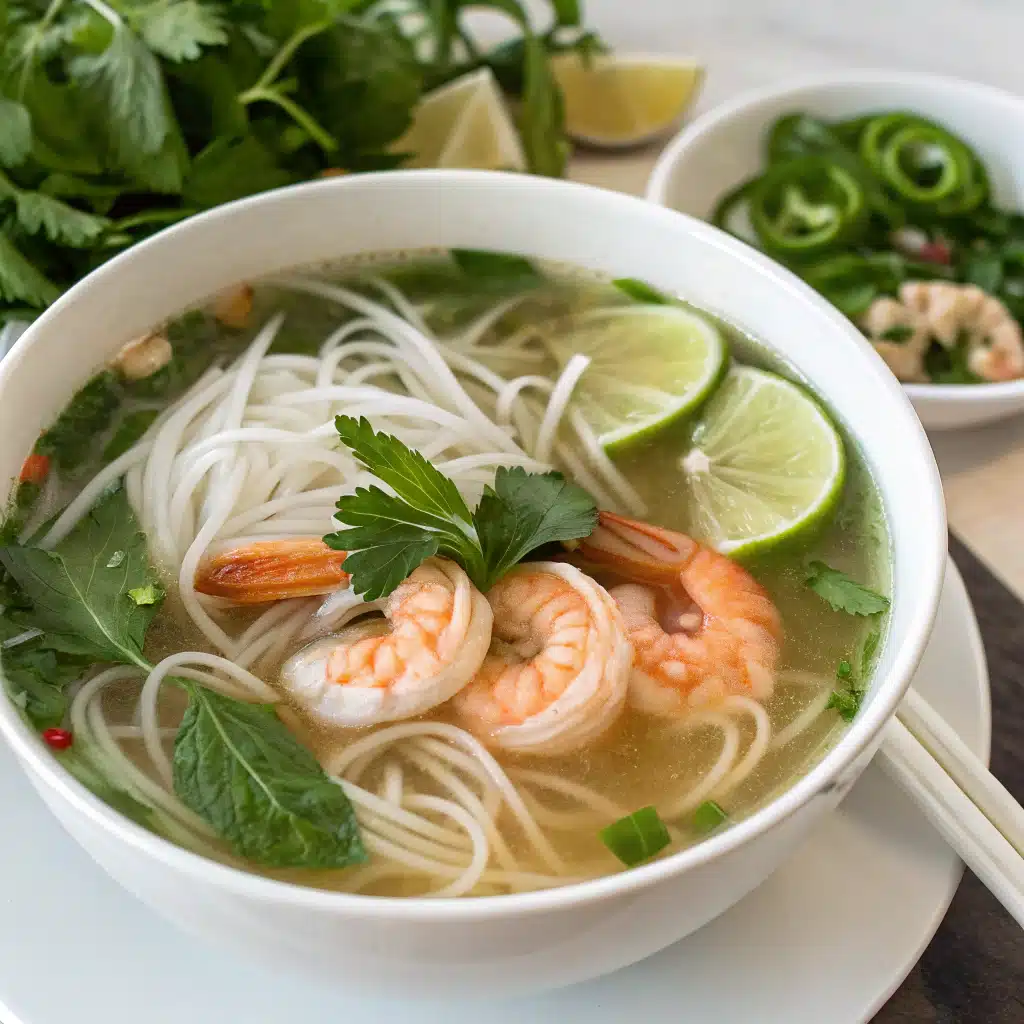
The presentation of shrimp rice noodle soup significantly enhances the dining experience. Traditional deep, wide bowls are ideal, allowing room for both broth and ingredients while helping retain heat. For an authentic Asian presentation, consider using ceramic bowls with matching soup spoons and chopsticks. When assembling the soup, place noodles at the bottom, arrange shrimp and vegetables attractively on top, and then pour the hot broth over everything. This method showcases the colorful ingredients while allowing diners to appreciate the clarity of your broth. Garnish thoughtfully with fresh herbs, chili slices, and lime wedges placed around the rim of the bowl for both visual appeal and easy access.
Garnishes and Condiments
The right garnishes and condiments can transform a good bowl of shrimp rice noodle soup into an exceptional one. Beyond the standard cilantro and jalapeño, consider offering a selection of fresh herbs like Thai basil, mint, or culantro (saw-leaf herb) for diners to add according to taste. Bean sprouts provide welcome crunch, while lime wedges allow for customized acidity. For those who enjoy heat, provide chili oil, sriracha sauce, or sliced fresh chilies. Other traditional condiments include hoisin sauce for sweetness, fish sauce for additional umami, and fried shallots for texture and flavor. Presenting these garnishes on a shared plate or individual side dishes allows each person to personalize their soup experience.
Complementary Side Dishes
While shrimp rice noodle soup can certainly stand alone as a complete meal, thoughtfully chosen side dishes can enhance the dining experience. Fresh spring rolls with a peanut dipping sauce offer a cool contrast to the hot soup and provide additional textures. A simple cucumber salad dressed with rice vinegar and a touch of sugar cleanses the palate between spoonfuls of rich broth. For heartier appetites, consider small bowls of sticky rice or steamed dumplings. When serving this soup as part of a larger Asian-inspired feast, pair it with dishes that provide contrasting flavors and textures, such as crispy-skinned fish or stir-fried vegetables with garlic.
“Looking for inspiration? Try our Avocado Shrimp Salad” for a perfect soup companion.
FAQs: Common Questions About Shrimp Rice Noodle Soup
What type of shrimp works best for noodle soup?
Medium to large shrimp (21-25 count per pound) work best for shrimp rice noodle soup. They’re substantial enough to stand up as a main protein yet cook quickly and evenly in the hot broth. Always choose shrimp that are already peeled and deveined to save preparation time, though leaving the tails on can add flavor to the broth. Both fresh and frozen shrimp work well – if using frozen, ensure they’re fully thawed and patted dry before adding to the soup.
How do you prevent shrimp from overcooking in soup?
To prevent overcooking shrimp in soup, add them only during the final minutes of cooking. Shrimp cook extremely quickly, turning from translucent to pink and firm in just 2-3 minutes. Add them to simmering (not boiling) broth, and remove the pot from heat once they’ve just turned pink. Remember that residual heat will continue cooking the shrimp even after the pot is off the heat. For meal prep, consider keeping the cooked shrimp separate from the broth and adding them only when reheating to serve.
Can shrimp rice noodle soup be made spicy?
Absolutely! Shrimp rice noodle soup can be made as mild or spicy as you prefer. For a moderately spicy soup, include all the jalapeño slices in the broth during cooking. For more significant heat, add Thai bird’s eye chilies or a teaspoon of chili paste like sambal oelek. Alternatively, keep the base soup mild and provide chili oil, sriracha sauce, or fresh sliced chilies as condiments, allowing each person to adjust the spice level to their preference.
What broth works best for shrimp noodle soup?
While this recipe calls for low-sodium chicken broth for its accessible flavor, several alternatives can enhance your shrimp rice noodle soup. Seafood stock creates a more pronounced maritime flavor that complements the shrimp beautifully. For depth, a combination of chicken and seafood stock offers the best of both worlds. In a pinch, vegetable broth works too, though you might want to enhance it with additional aromatics. Regardless of which broth you choose, using low-sodium versions allows you to control the final salt content of your soup.
Can shrimp rice noodle soup be made ahead of time?
Yes, but with some considerations. For the best results, prepare the broth with all aromatics up to three days ahead and refrigerate. The vegetables can be prepped and stored separately. Cook the rice noodles and shrimp only when you’re ready to serve. If you must prepare everything in advance, store the components separately – broth in one container, cooked vegetables in another, and noodles and shrimp in a third. When ready to serve, gently reheat the broth, add the vegetables to warm through, and then combine with the noodles and shrimp just before serving.
What herbs pair well with shrimp rice noodle soup?
Cilantro is the classic herb for shrimp rice noodle soup, but many other herbs can enhance the flavor profile. Thai basil adds a distinctive anise-like note, while mint provides a cooling counterpoint to spicy elements. Culantro (not to be confused with cilantro) has a more intense flavor that stands up well to the rich broth. Green onions and chives add a mild onion flavor that complements seafood beautifully. For maximum flavor and presentation impact, offer a mixture of fresh herbs for garnishing at the table.
Conclusion: Embracing the Art of Soup Making
Perfecting Your Technique
Creating an exceptional shrimp rice noodle soup is both an art and a science. With each batch you prepare, you’ll develop a deeper understanding of how flavors meld together and how timing affects the texture of delicate ingredients like shrimp and vegetables. Don’t be afraid to adjust the recipe to suit your personal taste – perhaps adding more ginger for extra warmth or increasing the lime juice for brighter acidity.
The true mark of a skilled cook isn’t rigidly following recipes but understanding how ingredients work together and making intuitive adjustments. With practice, you’ll develop the confidence to create your own signature version of this classic soup, perhaps even incorporating family traditions or locally available ingredients.
Sharing the Experience
Food has a remarkable ability to bring people together, and few dishes exemplify this better than a steaming pot of shrimp rice noodle soup. Consider hosting a soup gathering where guests can customize their bowls with various toppings and garnishes. This interactive dining experience creates conversation and connection while allowing everyone to enjoy the soup according to their preference.
Don’t forget to share your recipe and techniques with those who express interest – passing down culinary knowledge is a beautiful tradition that keeps cultural food practices alive. Whether enjoyed as a quiet solo meal on a rainy afternoon or as the centerpiece of a lively family dinner, shrimp rice noodle soup offers nourishment for both body and soul.
“Don’t miss our Cajun Shrimp with Mushrooms” for another delicious shrimp recipe to add to your collection.
Authentic Shrimp Rice Noodle Soup: A Comforting Asian-Inspired Recipe
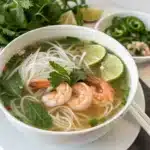
A comforting Asian-inspired soup featuring tender shrimp, rice noodles, and aromatic broth with herbs and spices.
- Prep Time: 15
- Cook Time: 20
- Total Time: 35 minutes
- Yield: 4 1x
- Category: Soup
- Cuisine: Asian
Ingredients
- 8 ounces rice noodles
- 12 ounces large shrimp, peeled and deveined
- 1 cup sliced shiitake or cremini mushrooms
- 2 cups chopped bok choy
- 1 tablespoon neutral cooking oil
- 3 whole star anise
- 1 cinnamon stick
- 1 teaspoon fresh ginger, minced
- 4 garlic cloves, minced
- 1 lemongrass stalk, lightly crushed
- 1 jalapeño, thinly sliced and divided
- 6 cups low-sodium chicken broth
- 1 tablespoon fish sauce
- 1 tablespoon low-sodium soy sauce
- 2 tablespoons fresh lime juice
- 2 tablespoons chopped fresh cilantro, plus more for serving
Instructions
- Cook rice noodles according to package directions. Drain and set aside.
- Heat oil in a large pot over medium-high heat. Add star anise and cinnamon; cook until fragrant, about 30 seconds.
- Add ginger and garlic, cooking for 30-45 seconds until aromatic but not browned.
- Add mushrooms and sauté for 2 minutes, then add broth, fish sauce, soy sauce, lemongrass, and half the jalapeño. Simmer for 10 minutes.
- Remove and discard star anise, cinnamon, and lemongrass.
- Add bok choy and shrimp. Cook until shrimp are pink and opaque, about 2-3 minutes.
- Remove from heat and stir in lime juice and cilantro.
- Divide noodles among serving bowls and ladle soup over top. Garnish with remaining jalapeño and additional cilantro.
Notes
For a spicier soup, include additional jalapeño or add chili oil. Nutrition facts are estimates and may vary based on ingredients used, portion sizes, and preparation methods.
Nutrition
- Serving Size: 4
- Calories: 325 Kcal
- Sugar: 3g
- Sodium: 890mg
- Fat: 6g
- Saturated Fat: 1g
- Carbohydrates: 43g
- Fiber: 3g
- Protein: 24g
- Cholesterol: 145mg
Keywords: shrimp soup, rice noodle soup, Asian soup, seafood soup, Thai-inspired soup
Let’s connect! Follow me for more Joylicious Recipes: Facebook, Instagram, Pinterest