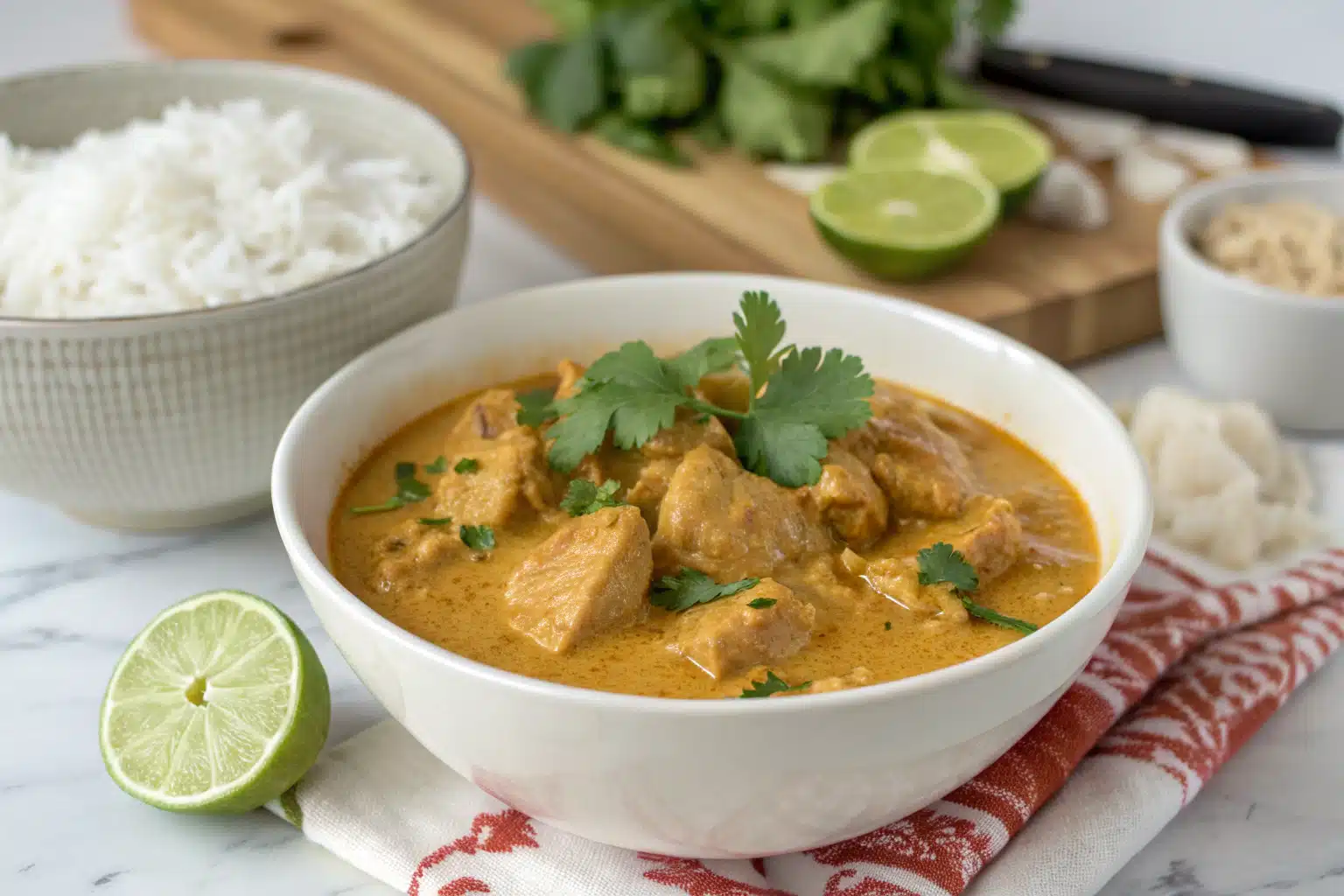
Thai Coconut Chicken Curry: Creamy, Fragrant, and Easy to Make
Introduction: Experience the Flavor Explosion
What Makes Coconut Chicken Curry So Popular?
Coconut chicken curry is a beloved dish that brings together the perfect balance of creamy, spicy, and aromatic flavors. This Thai-inspired recipe transforms ordinary chicken into a mouthwatering meal that will transport your taste buds to the streets of Bangkok. The secret lies in the harmonious combination of aromatic spices, tender chicken, and rich coconut milk that creates a velvety sauce perfect for spooning over fluffy rice.
“Check out our creamy coconut curry meatballs for another delicious variation of this flavor profile.”
The Magic of Thai Flavors at Home
Creating restaurant-quality coconut chicken curry at home is easier than you might think. The aromatic blend of curry powder, ginger, garlic, and red curry paste creates an authentic base, while the coconut milk adds a luxurious creaminess that balances the heat. This recipe walks you through each step to ensure your coconut chicken curry turns out perfect every time, with that ideal balance of sweet, savory, and spicy notes that will leave everyone asking for seconds.
Ingredients: Building Blocks for Perfect Coconut Chicken Curry
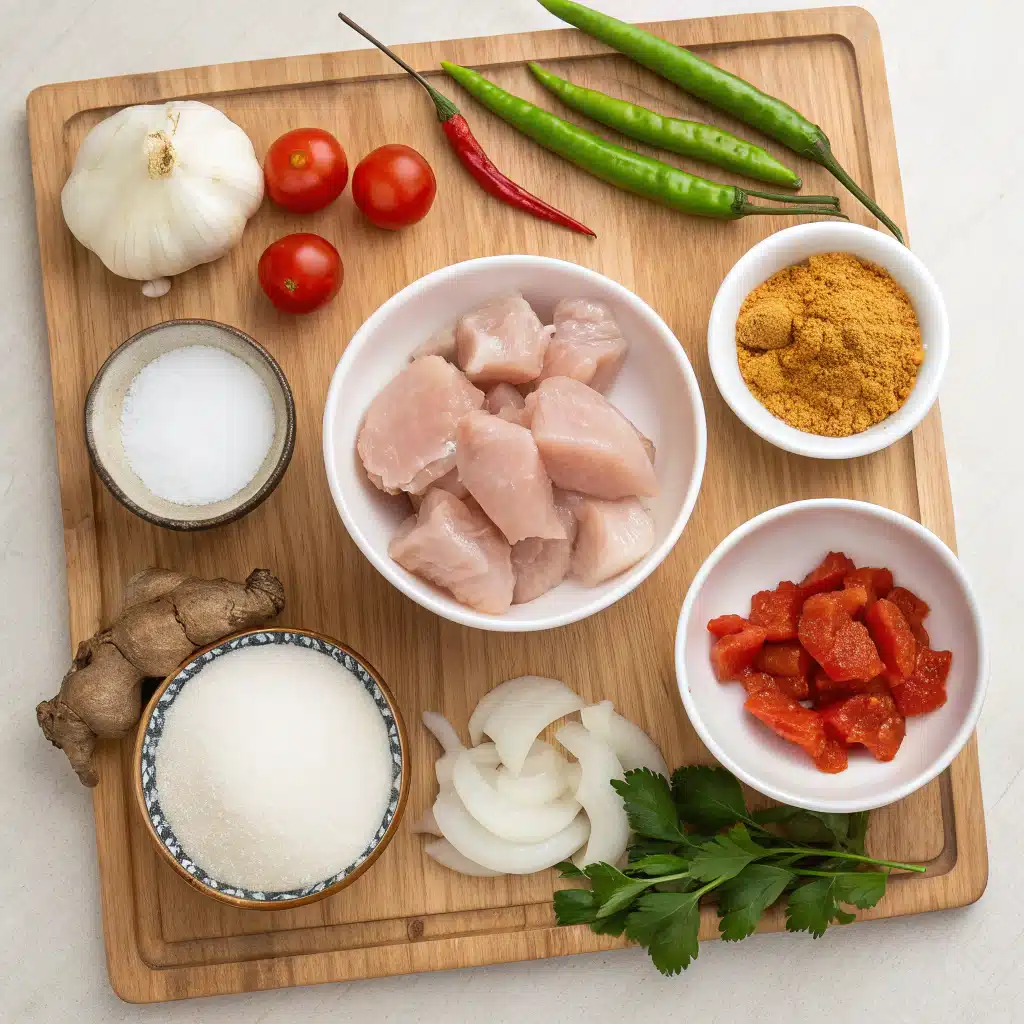
Essential Ingredients for Authentic Flavor
| Ingredient | Amount | Notes |
|---|---|---|
| Coconut oil | 3 tablespoons (divided) | Enhances the coconut flavor |
| Yellow onion | 1/2 medium (1/2 cup) | Diced |
| Garlic | 3 cloves (1½ teaspoons) | Minced |
| Ginger | 2 tablespoons | Finely minced from 1½-inch piece |
| Yellow curry powder | 2 teaspoons | Provides authentic curry flavor |
| Red curry paste | 3 tablespoons | Adjust for desired spice level |
| Ground coriander | 2 teaspoons | Adds earthy notes |
| Red bell pepper | 1 large | Cut into strips |
| Chicken breast/thighs | 1 pound | Cut into 1-inch pieces |
| Salt and pepper | To taste | For seasoning |
| Coconut milk | 13.5-ounce can | Use full-fat, not lite |
| Lime | 1 whole | For juice and wedges |
| Brown sugar | 1-2 tablespoons | Balances the spice |
| Fish sauce | 2 teaspoons | Optional, adds umami |
| Fresh herbs | 1/4 cup | Cilantro and/or basil, diced |
| Nuts | To taste | Chopped peanuts or cashews (optional) |
Understanding Your Coconut Curry Components
The beauty of coconut chicken curry lies in how each ingredient plays a crucial role. The coconut oil and milk create the creamy base, while the aromatics (garlic, ginger, onion) build the flavor foundation. The curry powder and paste deliver authentic Thai spice notes, and the fresh lime brightens everything. The chicken absorbs these complex flavors, becoming tender and flavorful as it simmers in the rich sauce. “Discover great ideas like our coconut milk and boneless chicken breasts for more ways to use these ingredients together.”
Step-by-Step: Creating Your Coconut Chicken Curry
Preparing Your Ingredients
- Dice the yellow onion into small, uniform pieces (about 1/2 cup).
- Mince the garlic cloves finely to release their aromatic oils.
- Peel the ginger using a spoon or vegetable peeler, then finely mince it.
- Slice the red bell pepper into long vertical strips, then cut these strips in half horizontally.
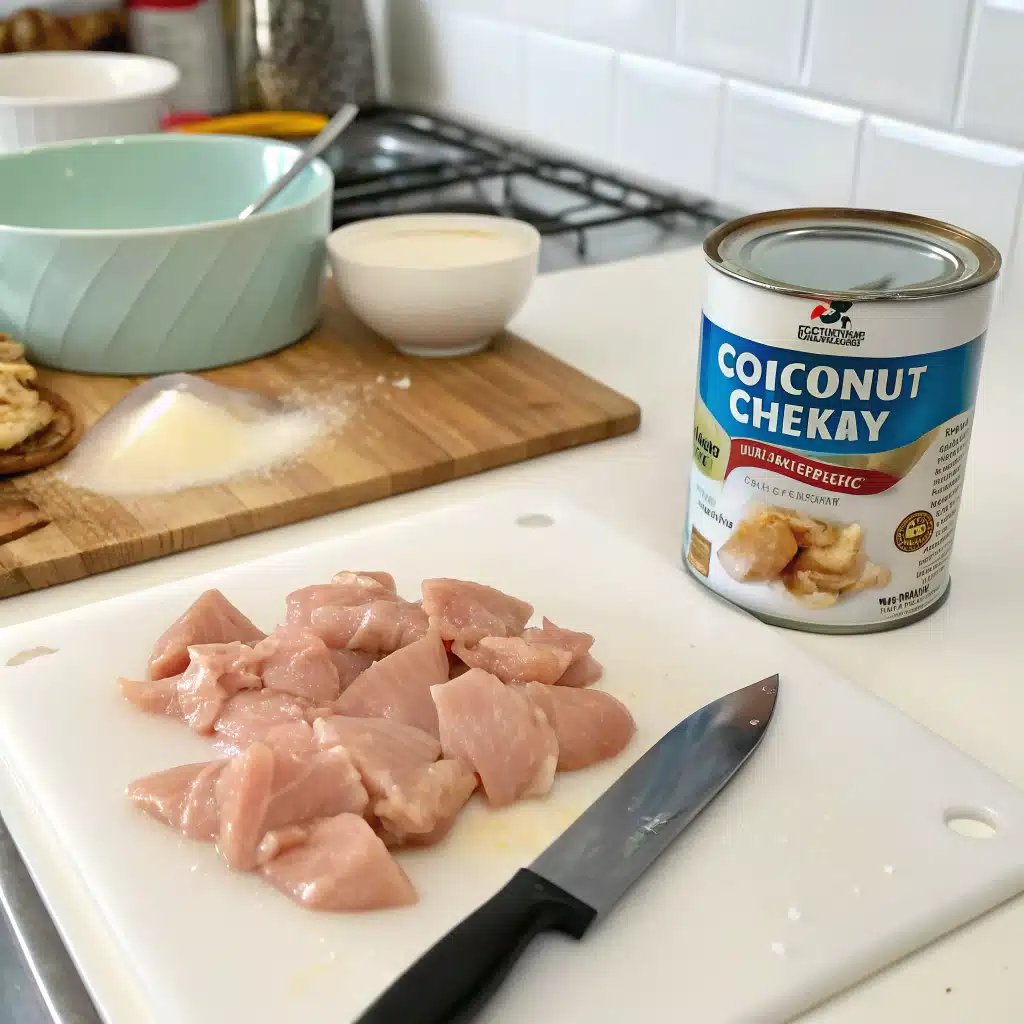
- Cut the boneless chicken into uniform 1-inch pieces for even cooking.
- Measure out your spices and have them ready in small bowls for easy access.
Building the Flavor Base
- Heat 2 tablespoons of coconut oil in a large, deep skillet over medium-high heat.
- Add the diced onion and sauté for 3-5 minutes until they begin turning golden and translucent.
- Add the minced garlic and ginger, stirring to coat everything evenly with oil.
- Lower the heat to prevent burning, then add yellow curry powder, red curry paste, and ground coriander.
- Stir constantly for 2-3 minutes until the spices become fragrant and lightly toasted, which releases their essential oils and deepens the flavor profile.
Cooking the Protein and Creating the Sauce
- Return the heat to medium-high and add the remaining tablespoon of coconut oil.
- Add the sliced red bell pepper and sauté for 1-2 minutes until slightly softened.
- Add the chicken pieces, season with salt and pepper (approximately 1 teaspoon salt and 1/2 teaspoon pepper).
- Cook for 4-5 minutes, stirring frequently, until the chicken is browned on all sides but not fully cooked through.
- Pour in the full-fat coconut milk, 1 tablespoon of fresh lime juice, and 1 tablespoon of brown sugar (adjust to taste).
- Stir gently and allow the mixture to simmer until the chicken is fully cooked (165°F internal temperature) and the sauce has slightly thickened, about 5-7 minutes.
- If using, add the fish sauce for an extra depth of umami flavor.
Tips: Perfecting Your Coconut Chicken Curry
Achieving the Perfect Coconut Curry Consistency
The ideal coconut chicken curry has a sauce that’s neither too thin nor too thick. If your curry sauce seems too watery, continue simmering uncovered to reduce and concentrate the flavors. Conversely, if it’s too thick, add a splash of chicken broth or water. Remember that the sauce will thicken slightly as it cools, so it’s better to err on the side of slightly thinner when it’s hot. For maximum creaminess, be sure to use full-fat coconut milk rather than light versions, which contain more water and less coconut cream.
“Looking for inspiration? Try our rice coconut milk recipe for the perfect accompaniment to this curry.”
Balancing Flavors in Your Curry
The best coconut chicken curry achieves a perfect harmony between sweet, salty, sour, and spicy elements. If your curry tastes too spicy, add more brown sugar or a splash of extra coconut milk to mellow the heat. If it lacks depth, a dash more fish sauce or soy sauce will enhance the umami notes. Too sweet? A squeeze of fresh lime juice brings balance with acidity. Remember to taste and adjust seasoning at the end of cooking, as flavors develop and change during the simmering process. Don’t be afraid to make small adjustments until the flavor profile satisfies your palate.
Protein and Vegetable Variations
While chicken thighs or breasts are traditional, coconut curry works beautifully with a variety of proteins. Try using shrimp for a faster-cooking option (add them toward the end of cooking), or tofu for a vegetarian version (press and pan-fry it first for better texture). Beyond red bell peppers, consider adding vegetables like snow peas, broccoli florets, baby corn, or spinach to boost nutrition and add texture. Just remember that different vegetables require different cooking times, so add harder vegetables earlier and more delicate ones toward the end of cooking.
Storage: Keeping Your Coconut Chicken Curry Fresh
Refrigeration Guidelines
Coconut chicken curry actually improves in flavor after resting in the refrigerator, making it an excellent make-ahead meal. Once cooled to room temperature, transfer leftovers to an airtight container and refrigerate for up to 3-4 days. The coconut milk fat may solidify slightly when chilled, but this is normal and will reincorporate when reheated. For best results, reheat gently in a saucepan over medium-low heat, stirring occasionally to prevent scorching.
“Want more ideas? Check out our easy homemade chicken pot pie recipe for another comforting dish that stores well.”
Freezing Your Coconut Chicken Curry
Coconut chicken curry freezes remarkably well, though there may be slight textural changes in the sauce upon thawing. To freeze, allow the curry to cool completely, then portion it into freezer-safe containers or heavy-duty freezer bags, removing as much air as possible.
Label with the date and freeze for up to 3 months. For best results, thaw overnight in the refrigerator before reheating. When reheating frozen curry, you may need to add a splash of water or coconut milk to restore the original consistency, as the sauce can sometimes separate slightly after freezing.
Reviving Leftover Curry
Leftover coconut chicken curry often tastes even better the next day as the flavors have had time to meld and intensify. To revitalize day-old curry, reheat it gently and add a squeeze of fresh lime juice just before serving to brighten the flavors. If the sauce has thickened too much during storage, thin it with a little coconut milk or water. For an exciting transformation, use leftover curry as a filling for savory crepes, a topping for baked potatoes, or mix it with scrambled eggs for an Indian-inspired breakfast.
Variations: Customizing Your Coconut Chicken Curry
Regional Curry Adaptations
The beauty of coconut chicken curry is its adaptability to different regional influences. For a more Indian-style curry, increase the yellow curry powder and add a teaspoon of garam masala. To create a Malaysian-inspired rendang, add lemongrass and increase the cooking time for a drier, more intensely flavored curry. For a Caribbean twist, include allspice and a habanero pepper. Each variation maintains the coconut base but offers a unique flavor profile that reflects diverse culinary traditions from around the world.
“Here’s your guide to black pepper chicken with mushrooms for another Asian-inspired chicken dish with different flavor notes.”
Dietary Modifications
This coconut chicken curry recipe is naturally gluten-free and can be easily adapted for various dietary needs. For a dairy-free and vegan version, substitute the chicken with chickpeas, tofu, or a mix of hearty vegetables like cauliflower, potatoes, and carrots. For a keto-friendly adaptation, omit the brown sugar or substitute with a keto-approved sweetener, and serve over cauliflower rice instead of traditional rice. Those watching sodium intake can reduce or eliminate the fish sauce and use low-sodium seasonings, while still achieving great flavor through the curry spices.
Heat Level Adjustments
The spice level of coconut chicken curry can be customized to suit any preference. For a milder curry that’s kid-friendly, reduce the amount of red curry paste to just 1 tablespoon and ensure you remove the seeds from the red bell pepper. For heat-seekers, amp up the spice by adding thinly sliced fresh chili peppers like Thai bird’s eye chilies or a pinch of cayenne pepper.
Remember that coconut milk helps temper heat, so if you’ve accidentally made your curry too spicy, adding more coconut milk or a dollop of plain yogurt when serving can help cool it down.
Serving: Presenting Your Coconut Chicken Curry
Perfect Accompaniments
Coconut chicken curry pairs beautifully with a variety of sides that complement its rich flavors and help soak up the delicious sauce. Fluffy jasmine or basmati rice is traditional and perfect for absorbing the curry. Naan bread or roti makes an excellent tool for scooping up every last bit of sauce. For a lower-carb option, serve over cauliflower rice or alongside a simple cucumber salad. A side of cooling raita (yogurt with cucumber and mint) provides a refreshing contrast to the curry’s warmth and spice, creating a balanced meal experience.
Garnishing for Visual Appeal
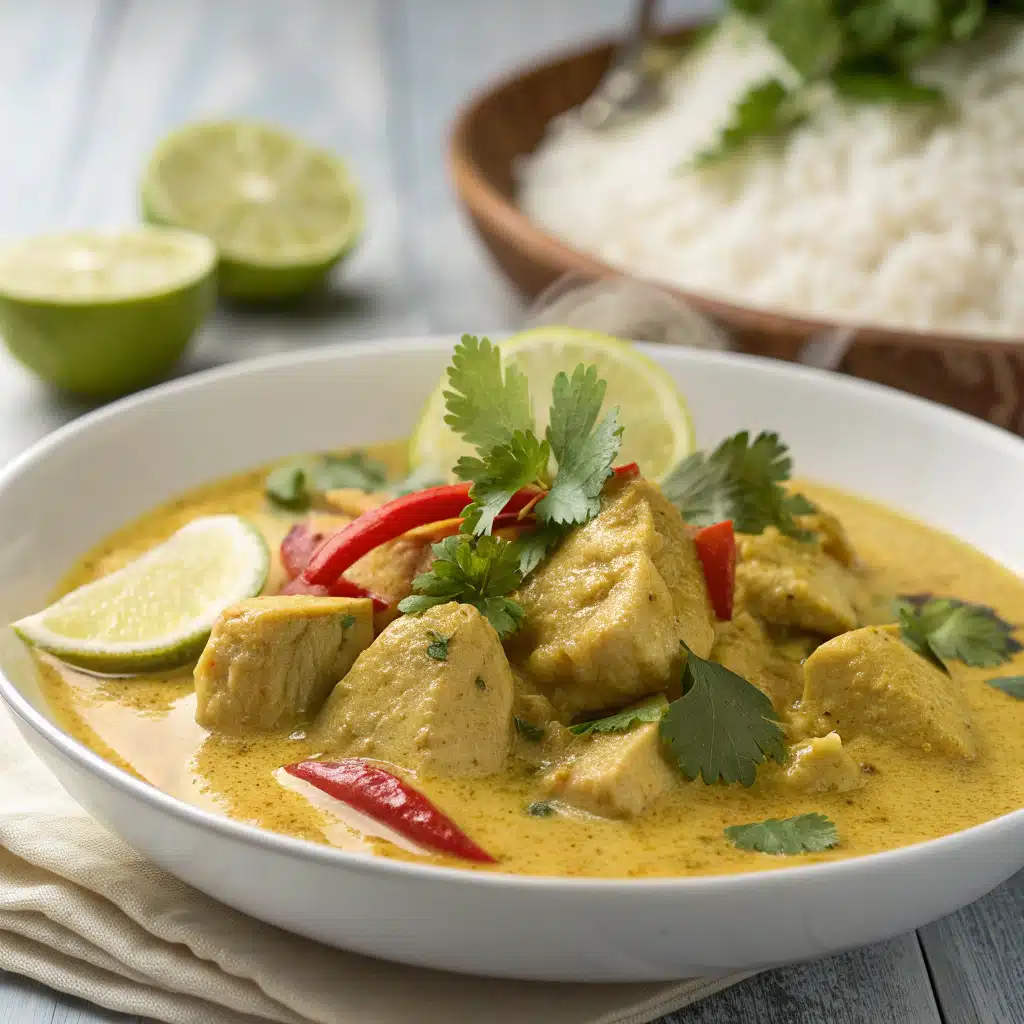
The final presentation of your coconut chicken curry can elevate it from a simple weeknight dinner to an impressive dish worthy of guests. Before serving, sprinkle freshly chopped cilantro and/or basil over the top, adding bright color and fragrant aroma. A scatter of chopped peanuts or cashews provides textural contrast and a decorative touch. Thin slices of red chili add a pop of color and a hint of what’s to come for heat-lovers, while lime wedges on the side invite diners to add a fresh squeeze of acidity to brighten their individual portions.
“Don’t miss our creamy garlic herb chicken recipe for another beautifully presented poultry dish.”
Family-Style Serving Suggestions
Coconut chicken curry shines as the centerpiece of a family-style meal. Serve it in a large, shallow bowl or a traditional karahi if you have one, allowing the vibrant colors of the curry to take center stage. Surround it with small bowls of complementary condiments like mango chutney, sliced banana with coconut (a traditional Thai accompaniment), and extra chopped herbs. For a complete spread, add side dishes like sautéed greens with garlic, a refreshing salad, or samosas as appetizers. This style of service encourages sharing and conversation, making coconut chicken curry perfect for bringing people together around the table.
FAQs: Common Questions About Coconut Chicken Curry
What makes coconut chicken curry so creamy and flavorful?
The creaminess in coconut chicken curry comes primarily from full-fat coconut milk, which contains natural coconut cream. This creates a luxurious mouthfeel while also carrying the complex flavors of the spices. The aromatic combination of sautéed onions, garlic, ginger, and toasted spices infuses the coconut milk with layers of flavor, while the lime juice and brown sugar create balance and depth. For maximum creaminess, always use full-fat coconut milk and allow the curry to simmer gently to thicken naturally.
Which coconut milk is best for chicken curry?
Full-fat coconut milk in a can is definitely the best choice for authentic coconut chicken curry. Avoid “light” versions, which contain more water and less coconut cream, resulting in a thinner, less flavorful sauce. Look for brands that list coconut and water as the only ingredients, without added gums or stabilizers. Thai brands like Chaokoh or Aroy-D are excellent choices, but any high-quality full-fat coconut milk will work well. For extra richness, some cooks use coconut cream for part of the liquid.
How can I make coconut chicken curry less spicy?
To reduce the spiciness in coconut chicken curry, start by using less red curry paste—perhaps just 1 tablespoon instead of 3. You can also increase the amount of coconut milk to dilute the heat, or add more brown sugar, as sweetness counterbalances spiciness. Adding a dollop of plain yogurt when serving also helps tame the heat while adding creaminess. Remember that removing seeds from chilies significantly reduces their spiciness, and serving the curry with cooling sides like cucumber salad or raita provides relief for sensitive palates.
Can I make coconut chicken curry ahead and freeze it?
Yes, coconut chicken curry freezes very well, making it perfect for meal prep. Cook the curry completely, then cool it before transferring to freezer-safe containers or heavy-duty freezer bags. It can be stored frozen for up to 3 months. For best results, thaw overnight in the refrigerator before reheating gently on the stovetop. You may need to add a splash of coconut milk when reheating to restore the original creamy texture. The flavor often improves after freezing as the spices have more time to meld.
What side dishes go best with coconut chicken curry?
Rice is the classic accompaniment—jasmine or basmati varieties work particularly well with the curry’s flavors. Naan bread or roti are excellent for sopping up the sauce. For a complete meal, add a cooling cucumber salad, raita (yogurt with cucumber), or a simple green salad with citrus dressing. Steamed vegetables like broccoli or green beans provide nutritional balance. For an authentic Thai experience, serve with a side of sliced bananas tossed with shredded coconut, which provides a sweet contrast to the curry’s savory spiciness.
How long should coconut chicken curry simmer for the best flavor?
Coconut chicken curry needs just enough simmering time to cook the chicken through (about 5-7 minutes for bite-sized pieces) and allow the sauce to thicken slightly. However, the flavor continues to develop the longer it cooks. For everyday meals, 15-20 minutes of total cooking time is sufficient for excellent results. If you have time, letting the finished curry rest for 30 minutes before serving allows the flavors to meld even better. Alternatively, making it a day ahead and reheating gently produces an even more flavorful curry as the spices have more time to infuse.
Conclusion: Mastering Your Coconut Chicken Curry
Why This Coconut Chicken Curry Recipe Works
This coconut chicken curry recipe succeeds because it balances authenticity with accessibility. By using readily available ingredients like curry powder and red curry paste, you can create authentic Thai flavors without hunting for specialty items. The method of toasting the spices before adding liquid extracts maximum flavor, while the combination of coconut milk, lime, and brown sugar creates the perfect balance of creamy, tangy, and sweet notes that defines great curry. The recipe is also incredibly versatile, allowing for personal adjustments to spice level, protein choice, and vegetable additions while maintaining its core deliciousness.
“Learn more about creamy garlic chicken pasta ready in 30 minutes for another quick and satisfying dinner option.”
Making Coconut Chicken Curry Part of Your Regular Rotation
Once you’ve mastered this coconut chicken curry recipe, it deserves a place in your regular meal planning. It’s versatile enough for weeknight dinners yet impressive enough for weekend entertaining. Create efficiency by prepping ingredients in advance—chopping vegetables and measuring spices can be done earlier in the day or even the night before.
Double the recipe to ensure delicious leftovers for lunch or a second dinner. Consider making a custom curry paste blend to keep on hand, speeding up future preparations. With practice, you’ll develop an intuitive feel for the balance of flavors, allowing you to customize the recipe to your family’s preferences and create your signature version of this beloved dish.
PrintCoconut Chicken Curry

This creamy coconut chicken curry balances aromatic spices with rich coconut milk for a restaurant-quality Thai dish at home.
- Prep Time: 15
- Cook Time: 25
- Total Time: 40 minutes
- Yield: 4 1x
- Category: Main Dish
- Cuisine: Thai
Ingredients
- 3 tablespoons coconut oil divided
- 1/2 medium yellow onion diced, 1/2 cup
- 3 cloves minced garlic about 1 and 1/2 teaspoons
- 2 tablespoons finely minced ginger from a 1 and 1/2-inch piece
- 2 teaspoons yellow curry powder
- 3 tablespoons red curry paste I use Thai Kitchen; reduce or increase as desired for spice levels
- 2 teaspoons ground coriander
- 1 large red bell pepper
- 1 pound boneless, skinless chicken breast or thighs, cut into 1-inch pieces
- Salt and pepper
- 1 (13.5-ounce) can coconut milk full-fat, not lite
- 1 lime
- 1 to 2 tablespoons brown sugar
- 2 teaspoons fish sauce optional
- 1/4 cup cilantro and/or basil, diced
- Chopped peanuts or cashews, optional
- Serving suggestions see note 1
Instructions
- Prepare all ingredients: dice onion, mince garlic and ginger, slice red bell pepper into strips, and cut chicken into 1-inch pieces.
- Heat 2 tablespoons coconut oil in a large skillet over medium-high heat. Sauté onion for 3-5 minutes until golden.
- Add garlic and ginger, stirring to coat with oil. Reduce heat to low, add curry powder, curry paste, and coriander. Toast spices for 2-3 minutes until fragrant.
- Return heat to medium-high. Add remaining coconut oil and red bell pepper, stir for 1-2 minutes.
- Add chicken pieces, season with salt and pepper. Cook for 4-5 minutes until browned but not fully cooked.
- Pour in coconut milk, 1 tablespoon lime juice, and brown sugar. Simmer until chicken is cooked through (165°F) and sauce slightly thickens. Add fish sauce if desired.
- Serve over rice and/or with naan. Garnish with cilantro, basil, and chopped nuts. Offer lime wedges on the side.
Notes
Serving suggestions include jasmine rice, basmati rice, or naan bread. For a lower-carb option, serve with cauliflower rice. Nutrition facts are estimates and may vary based on ingredients used, portion sizes, and preparation methods.
Nutrition
- Serving Size: 4
- Calories: 420Kcal
- Sugar: 5g
- Sodium: 650mg
- Fat: 32g
- Saturated Fat: 24g
- Carbohydrates: 12g
- Fiber: 2g
- Protein: 25g
- Cholesterol: 65mg
Keywords: coconut chicken curry, Thai curry, coconut milk curry, curry recipe, chicken curry
Let’s connect! Follow me for more Joylicious Recipes: Facebook, Instagram, Pinterest