Succulent Braised Beef Cheeks with Polenta: A Rustic Italian-Inspired Feast
The Ultimate Slow-Cooked Comfort Dish
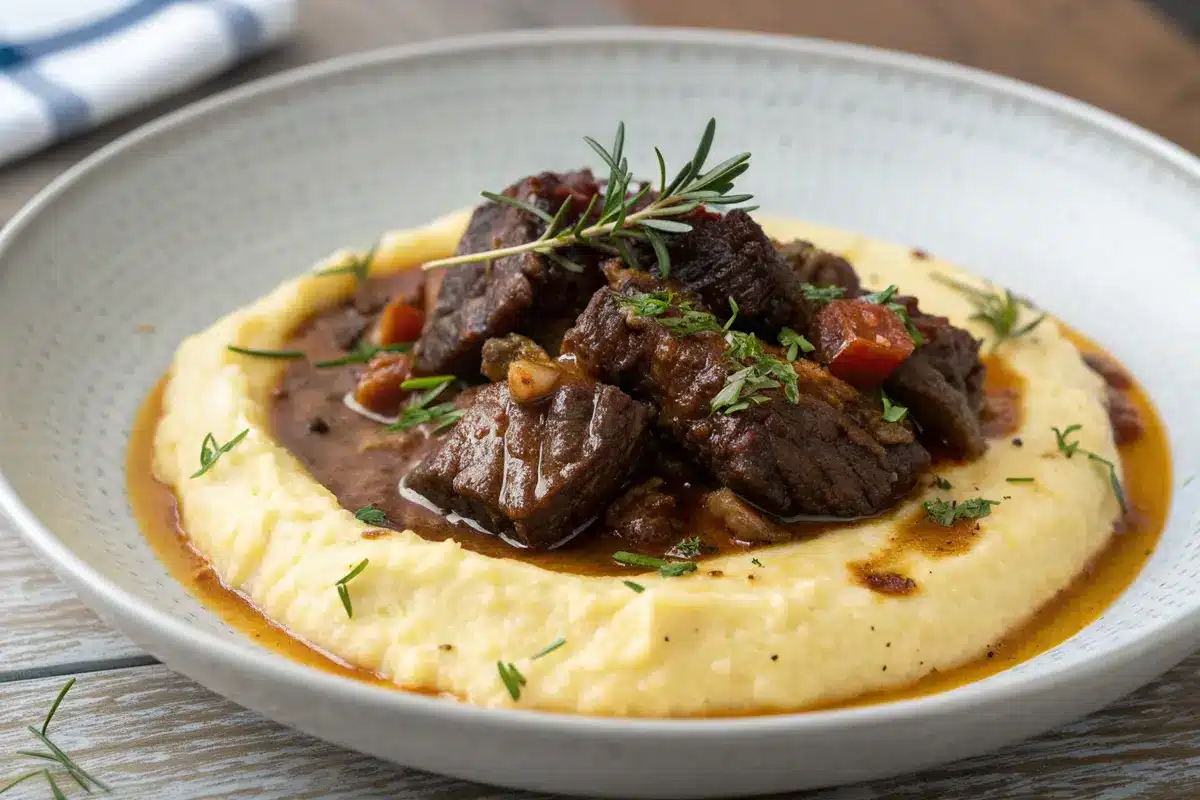
Braised Beef Cheeks with Polenta transforms an often overlooked cut into the star of your dinner table. This luxuriously tender meat, slowly cooked until it practically melts on your fork, pairs perfectly with creamy, cheese-infused polenta that soaks up all the rich, savory sauce. The depth of flavor created through the slow braising process simply cannot be rushed, making this the ultimate weekend cooking project with spectacular results.
“The Braised Beef with Apples technique offers similar staged-cooking approaches to prevent burning while developing maximum flavor.” This beef cheeks recipe, however, leans into more traditional Italian flavors and creates an impressive yet approachable main course perfect for special occasions, Sunday family dinners, or anytime you want to elevate your comfort food game.
Essential Components for Melt-in-Your-Mouth Beef Cheeks
Building Layers of Flavor
Creating this remarkable dish requires quality ingredients that work together to develop complex flavors during the long, slow cook. Here’s everything you’ll need:
| Main Ingredients | |
|---|---|
| 2 lbs beef cheeks, trimmed | The star protein that becomes fork-tender after slow cooking |
| 1 cup coarse polenta | Creates the creamy base for serving |
| 2 cups beef broth (low sodium) | Forms the foundation of the braising liquid |
| 1 cup dry red wine | Adds depth and acidity to balance the rich meat |
| 2 carrots, diced | Provides sweetness and aromatic foundation |
| 1 large onion, chopped | Essential aromatic that melts into the sauce |
| 3 cloves garlic, minced | Aromatic flavor enhancer |
| 2 tsp fresh thyme leaves | Herbal note that complements beef beautifully |
| Salt and freshly ground black pepper | For seasoning throughout the cooking process |
| 2 tbsp unsalted butter | Enriches the polenta |
| ¼ cup freshly grated Parmesan cheese | Adds umami and richness to the polenta |
| Flavor Enhancers & Optional Additions | |
| 2 tbsp tomato paste | Deepens the color and adds umami to the sauce |
| 1 bay leaf | Subtle aromatic that enhances the braising liquid |
| 2 celery stalks, diced | Completes the mirepoix aromatic base |
| 2 tbsp olive oil | For searing the meat and sautéing vegetables |
| 2-3 strips orange zest | Optional citrus note that brightens the long-cooked dish |
| 1 cup whole milk | Makes polenta extra creamy (can substitute with more broth) |
| Fresh rosemary sprig | Optional additional herb for aromatic depth |
| 2 tbsp fresh parsley, chopped | For garnish and fresh flavor contrast |
| 1 tbsp balsamic glaze | Optional finishing touch for sweet-tangy contrast |
“For those who enjoy Asian-inspired beef dishes with similar melt-in-your-mouth texture, the Moo Shu Beef provides a completely different but equally delicious flavor profile.” But today we’re focusing on this Italian-inspired classic that highlights beef cheeks’ remarkable texture.
Perfecting Your Braised Beef Cheeks: From Raw to Restaurant-Quality
Creating Restaurant-Worthy Results at Home
Follow these detailed steps to transform humble beef cheeks into a dish worthy of a high-end restaurant:
- Prepare the beef cheeks. Trim any excess fat or silver skin from the beef cheeks. Pat them completely dry with paper towels (this ensures proper browning). Season generously with salt and freshly ground black pepper on all sides.
- Sear the meat. Heat 2 tablespoons of olive oil in a large Dutch oven or heavy-bottomed pot over medium-high heat until shimmering. Working in batches to avoid overcrowding, sear the beef cheeks until deeply browned on all sides, about 3-4 minutes per side. The caramelization here is crucial for developing flavor, so be patient. Transfer the seared meat to a plate.
- Build the aromatic base. Reduce the heat to medium and add the diced carrots, chopped onion, and diced celery (if using) to the same pot, using the residual fat. Sauté for 5-6 minutes until the vegetables start to soften and the onions become translucent. Add the minced garlic and cook for another 30 seconds until fragrant, being careful not to burn it.
- Create the braising liquid. Add the tomato paste (if using) and stir constantly for 1-2 minutes to cook out the raw flavor and enhance its sweetness. Pour in the red wine to deglaze, using a wooden spoon to scrape up all the flavorful brown bits from the bottom of the pot. Allow the wine to simmer and reduce by about half, approximately 3-4 minutes.
- Begin the braise. Return the seared beef cheeks to the pot along with any accumulated juices. Add the beef broth, fresh thyme, bay leaf, and orange zest (if using). The liquid should come about ¾ of the way up the sides of the meat—add more broth if needed.
- Slow cook to tenderness. Bring the liquid to a gentle simmer, then reduce the heat to low. Cover the pot with a tight-fitting lid and allow the beef cheeks to braise for 3-3.5 hours until fork-tender. Check occasionally and turn the meat once or twice during cooking. The beef cheeks are done when they can be easily pulled apart with a fork.
- Make the polenta. About 30 minutes before the beef is finished, prepare the polenta. In a medium saucepan, bring 4 cups of water (or a mix of water and milk for creamier results) to a boil. Slowly whisk in the coarse polenta in a steady stream to prevent lumps. Reduce heat to low and cook, stirring frequently with a wooden spoon, for 25-30 minutes until the polenta is creamy and thick. Different varieties of polenta have varying cooking times, so check your package instructions.
- Finish the polenta. Once the polenta has reached your desired consistency, stir in the butter and grated Parmesan cheese until fully incorporated. Season to taste with salt and pepper. If the polenta becomes too thick, thin it with a little warm milk or broth.
- Reduce the sauce (optional). If you prefer a thicker sauce, transfer the beef cheeks to a warm plate and tent with foil. Increase the heat under the braising liquid to medium-high and simmer uncovered for 10-15 minutes until the sauce reduces and thickens slightly. Taste and adjust seasoning if needed.
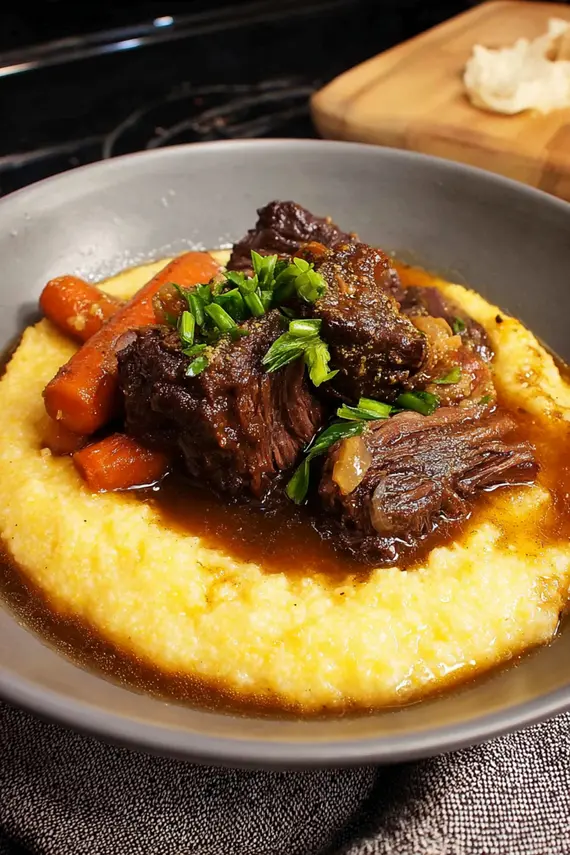
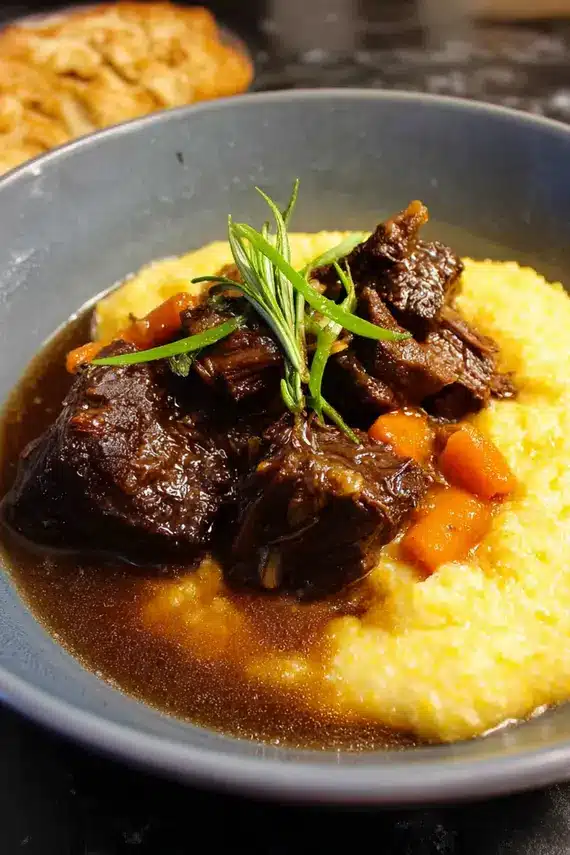
- Serve. Spoon a generous portion of the creamy polenta onto each plate. Place a beef cheek on top and ladle the rich sauce and vegetables over everything. Garnish with chopped fresh parsley and a drizzle of balsamic glaze if desired.
“If you’re looking for similar slow-cooked recipes that develop incredible depth of flavor, the Beef Stew Crock Pot method offers an even more hands-off approach while achieving wonderfully tender results.” The key difference with beef cheeks is their unique texture that transforms from tough to buttery soft during the long cook.
Pro Techniques for Braised Beef Cheek Success
Elevating Your Comfort Food Game
Use these expert tips to ensure your braised beef cheeks with polenta turn out perfectly every time:
- Source quality beef cheeks. Ask your butcher specifically for beef cheeks, as they’re not always displayed in the meat case. The membrane and excess fat should be trimmed, but some fat is desirable for flavor.
- Don’t rush the sear. Properly browning the meat creates the foundational flavor for the entire dish. Make sure your pot is hot enough (the meat should sizzle on contact) and don’t crowd the pan, which causes steaming instead of searing.
- Check for doneness, not time. Beef cheeks are done when they offer no resistance when pierced with a fork. Depending on the size and thickness of your beef cheeks, cooking time may vary by 30-60 minutes.
- Perfect polenta consistency. For ultra-creamy polenta, use a mixture of water and milk, and don’t stop stirring! If your polenta sets too firmly before serving, simply whisk in a bit more hot liquid to loosen it to your desired consistency.
- Make ahead option. Beef cheeks actually taste better the next day! Cook them a day ahead, refrigerate, and gently reheat before serving. Just prepare the polenta fresh for the best texture.
- Low and slow is the key. A true braise requires gentle heat. If your liquid is boiling rather than gently simmering, the meat will toughen instead of tenderize. Look for occasional small bubbles, not a rolling boil.
- Add umami boosters. A tablespoon of miso paste, anchovy paste, or fish sauce (none detectable in the final dish) can add remarkable depth to the braising liquid.
“For a Mediterranean-inspired side dish alternative to polenta, the Porcini Potato Gratin makes an equally satisfying base for these tender beef cheeks.” However, the traditional polenta pairing creates a perfect vehicle for capturing every drop of the delicious braising liquid.
Keeping Your Braised Beef Cheeks Fresh and Flavorful
Smart Storage for Leftovers
Properly storing your braised beef cheeks ensures you can enjoy this luxurious dish for days to come:
- Refrigerator storage. Allow the beef cheeks and sauce to cool completely, then transfer to an airtight container. They’ll keep in the refrigerator for up to 4 days. Store the polenta separately in its own container for up to 3 days.
- Reheating beef cheeks. The best way to reheat braised beef cheeks is gently in a covered saucepan over low heat, adding a splash of beef broth if needed to maintain moisture. Alternatively, reheat in a 325°F oven in a covered dish until warmed through, about 20-25 minutes.
- Refreshing polenta. Cold polenta firms up significantly. To refresh it, place in a saucepan with a splash of milk, water, or broth, and heat gently while stirring until creamy again. You may need to add more liquid to achieve the original consistency.
- Freezer-friendly main. The beef cheeks and sauce freeze beautifully for up to 3 months. Cool completely, then transfer to a freezer-safe container, leaving some headspace for expansion. Thaw overnight in the refrigerator before reheating.
- Don’t freeze the polenta. Fresh polenta is always best. Instead of freezing leftover polenta, consider repurposing it by slicing the chilled, firm polenta and pan-frying it until crisp on the outside.
- Sauce separation. If your sauce separates after refrigeration, simply whisk it while reheating to recombine the elements.
“If you’re looking for another grain-based side dish that stores well alongside rich meats, the Cilantro Lime Rice offers a bright, fresh alternative that reheats beautifully.” For this traditional Italian-inspired dish, however, polenta remains the classic pairing.
Delicious Twists on Classic Braised Beef Cheeks
Customizing Your Comfort Food
Once you’ve mastered the classic version, try these creative variations to keep the dish exciting:
Mushroom and Rosemary Beef Cheeks
Add 8 ounces of mixed mushrooms (cremini, shiitake, or porcini) to the vegetable sauté step. Replace the thyme with 1 tablespoon fresh rosemary leaves, finely chopped. The mushrooms add an earthy depth that complements the rich beef beautifully, while rosemary introduces a piney aromatic quality.
Red Wine and Cherry Braised Cheeks
Add ⅓ cup dried tart cherries to the braising liquid and use a full-bodied red wine like Cabernet Sauvignon. The cherries plump up during cooking and impart a subtle sweet-tart flavor that cuts through the richness of the beef. This variation works wonderfully for special occasions.
Smoky Paprika Beef Cheeks
Add 1 tablespoon smoked paprika and ½ teaspoon cayenne pepper (adjust to your heat preference) when seasoning the beef. Replace the thyme with 1 tablespoon fresh oregano and add a cinnamon stick to the braising liquid. This Spanish-inspired variation brings a warming, complex heat to the dish.
Citrus-Infused Braised Cheeks
Add the zest of one orange and one lemon along with 2 tablespoons of orange juice to the braising liquid. This brightens the dish considerably with subtle citrus notes that balance the richness. Finish with a sprinkle of fresh orange zest just before serving.
Beer-Braised Beef Cheeks
Replace the red wine with a dark beer such as stout or porter. Add 1 tablespoon brown sugar and 1 tablespoon whole grain mustard to the braising liquid. This creates a slightly different flavor profile with malty notes and a subtle sweetness that works wonderfully with the beef.
Asian-Inspired Fusion Cheeks
Replace the wine with 2 tablespoons soy sauce, 2 tablespoons rice vinegar, 1 tablespoon honey, and enough beef broth to make up the liquid volume. Add 1-inch of fresh ginger (sliced), a cinnamon stick, and 2 star anise pods to the braising liquid. Serve over polenta as usual or switch to steamed rice for a complete fusion approach.
Perfect Presentation: Serving Your Braised Beef Feast
Making the Most of Your Comfort Food Masterpiece
Elevate your braised beef cheeks with these serving suggestions that maximize the experience:
- Family-style presentation. For casual gatherings, serve the beef cheeks in a large, shallow bowl over a bed of polenta, with the sauce spooned over the top. Place in the center of the table for everyone to help themselves, accompanied by crusty bread to soak up every bit of sauce.
- Individual plating. For a more elegant presentation, use warmed dinner plates and create a bed of polenta slightly off-center. Place a beef cheek on top, spoon the sauce around (not just on top), and garnish with a small sprig of fresh thyme and a drizzle of high-quality olive oil.
- Texture contrast. Add a quick gremolata (minced parsley, lemon zest, and garlic) over the top just before serving to provide a bright contrast to the rich, long-cooked flavors.
- Vegetable accompaniments. Pair with roasted root vegetables in the winter or a bright green salad in warmer months. This simple salad dressing works wonderfully with mixed greens to complement the richness of the beef.
- Occasion pairing. This dish is perfect for special occasions like birthdays, anniversaries, or holiday gatherings when you want to impress but don’t want to be constantly attending to the stove.
- Portioning guide. Plan for one beef cheek per person as a main course. If serving as part of a multi-course meal, you might stretch to one cheek per two people, sliced after cooking to make portioning easier.
Common Questions About Braised Beef Cheeks
Solving Potential Challenges
Can I make this recipe in a slow cooker instead of on the stovetop?
Absolutely! You’ll still want to complete the searing and vegetable sautéing steps in a pan on the stovetop for maximum flavor development. After deglazing with wine, transfer everything to your slow cooker, add the remaining ingredients, and cook on low for 7-8 hours or until the meat is fork-tender. The polenta should still be made fresh on the stovetop.
My local grocery store doesn’t carry beef cheeks. What can I substitute?
Beef cheeks have a unique texture, but if you can’t source them, beef short ribs (bone-in or boneless), beef chuck roast (cut into large chunks), or beef shanks can work well. These cuts also benefit from long, slow cooking and will give you a similar tender result, though the texture won’t be identical. Adjust cooking times accordingly, as larger cuts may take longer.
The sauce seems too thin. How can I thicken it?
If your sauce needs thickening, remove the beef cheeks once they’re tender and increase the heat under the sauce to medium-high. Allow it to simmer uncovered for 10-15 minutes to reduce naturally. For a quicker solution, make a slurry with 1 tablespoon cornstarch mixed with 2 tablespoons cold water, then stir this into the simmering sauce until it reaches your desired consistency.
I don’t cook with alcohol. What can I use instead of wine?
Replace the wine with additional beef broth plus 1-2 tablespoons of balsamic vinegar or red wine vinegar to provide the acidity that wine would contribute. This maintains the depth of flavor while keeping the dish alcohol-free.
Your Journey to Italian-Inspired Comfort Food Excellence
Embracing Slow Food Traditions
Braised Beef Cheeks with Polenta embodies everything wonderful about traditional slow cooking – patience rewarded with extraordinary flavor, humble ingredients transformed into something magnificent, and a dish that brings people together around the table. The time investment pays off in a meal that delivers both comfort and elegance, making ordinary evenings feel special and celebrations truly memorable.
Don’t be intimidated by the cooking time; most of it is hands-off, allowing you to go about your day while delicious aromas fill your home. The techniques you’ll practice here – proper searing, building a flavor base, braising, and creating a complementary starch – form the foundation of countless other impressive dishes.
“For those interested in exploring other tender, slow-cooked meat options, the Lamb Steaks with Mushrooms offers another exceptional meal worthy of special occasions.” But there’s something uniquely satisfying about transforming beef cheeks from their tough beginnings into the meltingly tender centerpiece of a meal that will have everyone asking for seconds.
PrintBraised Beef Cheeks with Polenta
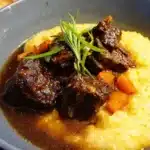
- Luxuriously tender beef cheeks slowly braised until melt-in-your-mouth perfection.
- Served over creamy, cheese-infused polenta that soaks up the rich, savory sauce.
- The ultimate Italian-inspired comfort food that’s impressive enough for special occasions.
- Prep Time: 30
- Cook Time: 210
- Total Time: 4 hours
- Yield: 4 servings 1x
- Category: Dinner
- Method: Braising
- Cuisine: Italian-Inspired
Ingredients
- 2 lbs beef cheeks, trimmed
- 2 tbsp olive oil
- Salt and freshly ground black pepper
- 2 carrots, diced
- 1 large onion, chopped
- 2 celery stalks, diced (optional)
- 3 cloves garlic, minced
- 2 tbsp tomato paste
- 1 cup dry red wine
- 2 cups beef broth (low sodium)
- 2 tsp fresh thyme leaves
- 1 bay leaf
- 2–3 strips orange zest (optional)
- 1 cup coarse polenta
- 4 cups water (or mixture of water and milk)
- 2 tbsp unsalted butter
- ¼ cup freshly grated Parmesan cheese
- 2 tbsp fresh parsley, chopped (for garnish)
- 1 tbsp balsamic glaze (optional, for serving)
Instructions
- Pat beef cheeks dry and season generously with salt and pepper.
- Heat olive oil in a Dutch oven over medium-high heat and sear beef cheeks until deeply browned on all sides, about 3-4 minutes per side. Transfer to a plate.
- Reduce heat to medium and add carrots, onion, and celery (if using) to the pot. Sauté for 5-6 minutes until vegetables soften.
- Add garlic and cook for 30 seconds until fragrant.
- Stir in tomato paste and cook for 1-2 minutes.
- Pour in red wine to deglaze the pot, scraping up browned bits, and simmer until reduced by half, about 3-4 minutes.
- Return beef cheeks to the pot along with any accumulated juices. Add beef broth, thyme, bay leaf, and orange zest (if using).
- Bring to a gentle simmer, cover, and reduce heat to low. Braise for 3-3.5 hours until beef cheeks are fork-tender.
- About 30 minutes before beef is done, prepare polenta. Bring 4 cups of water (or water-milk mixture) to a boil in a saucepan.
- Slowly whisk in polenta in a steady stream to prevent lumps. Reduce heat to low and cook, stirring frequently, for 25-30 minutes until creamy and thick.
- Stir butter and Parmesan into the polenta until fully incorporated. Season with salt and pepper to taste.
- Optional: Remove beef cheeks and reduce sauce over medium-high heat for 10-15 minutes if a thicker sauce is desired.
- Serve beef cheeks over polenta, spooning the rich sauce and vegetables over top.
- Garnish with fresh parsley and a drizzle of balsamic glaze if desired.
Notes
- For the best flavor, look for beef cheeks that are well-marbled but trimmed of excess fat and silver skin.
- The dish can be made a day ahead—the flavors actually improve overnight. Refrigerate meat and sauce together, but make fresh polenta when ready to serve.
- If you can’t find beef cheeks, beef short ribs or chuck roast cut into large pieces make good substitutes.
- Nutrition facts are estimates and may vary based on ingredients used, portion sizes, and preparation methods.
Nutrition
- Serving Size: 1 beef cheek with approximately 1 cup polenta
- Calories: 685
- Sugar: 6
- Sodium: 630
- Fat: 32
- Saturated Fat: 14
- Unsaturated Fat: 16
- Carbohydrates: 38
- Fiber: 3
- Protein: 48
- Cholesterol: 120
Keywords: Braised Beef Cheeks with Polenta, braised beef cheeks recipe, polenta side dish, comfort food beef, slow cooked beef cheeks
Let’s connect! Follow me for more Joylicious Recipes: Facebook, Instagram, Pinterest