
Gipfeli Recipe – Authentic Swiss Butter Croissants Made Easy
Gipfeli recipe lovers, get ready to bring the magic of Swiss bakeries into your kitchen. These buttery crescent-shaped pastries may look like croissants, but this Gipfeli recipe has a distinct Swiss twist. Slightly denser, mildly chewy, and perfectly golden, Gipfeli are a breakfast staple across Switzerland—and now, you can master them from scratch.
This complete guide walks you through every step: mixing the dough, folding in butter, shaping, and baking to golden perfection. You’ll also learn what makes Gipfeli different from croissants, how to avoid common mistakes, and even fun ways to serve them. With this step-by-step Gipfeli recipe, you’ll learn how to make them from scratch. Whether you’re a seasoned baker or trying laminated dough for the first time, this article has everything you need to bake success.
Looking for inspiration? Try our full recipe collection for more creative ideas
The Story Behind the Gipfeli Recipe
What Is a Gipfeli and Why This Swiss Butter Croissant Recipe Is Unique
A Gipfeli is a beloved Swiss pastry that resembles a croissant—but don’t let the looks fool you. While both are crescent-shaped and made with buttery dough, a Gipfeli has a denser bite and slightly less flaky layers. The result? A heartier roll that pairs beautifully with butter, jam, or savory spreads.
Found in nearly every Swiss bakery, Gipfeli are commonly enjoyed for breakfast or brunch. Whether plain, filled with chocolate, or topped with seeds, their rich flavor and satisfying texture make them a favorite comfort food.
Gipfeli vs. Croissants: Key Differences in Swiss Pastry Textures
Although they share some ingredients and techniques, the Gipfeli recipe differs in key ways from the classic French croissant. Here’s a quick breakdown:
| Feature | Gipfeli | Croissant |
|---|---|---|
| Texture | Slightly denser, soft inside | Flaky, light, airy layers |
| Butter Amount | Less butter | High butter content |
| Shape | Crescent, less curved | Tight crescent, often wider |
| Sweetness | Mild | Slightly sweet, rich flavor |
| Rise | Less proofed | Double proofed for fluffiness |
This difference makes Gipfeli recipe easier and quicker to prepare than croissants. They also stay fresh a little longer, making them ideal for baking in batches.
Ingredients for the Perfect Gipfeli Recipe
Essential Ingredients for Swiss Gipfeli Dough (with Measurements)
Making the perfect gipfeli recipe starts with choosing high-quality ingredients. You don’t need anything fancy—just a few basics done right. Below is a complete list of what you’ll need:
| Ingredient | Amount | Notes |
|---|---|---|
| All-purpose flour | 3 ½ cups (420g) | Bread flour can be used for more chew |
| Active dry yeast | 2 ¼ teaspoons (1 packet) | Helps the dough rise |
| Milk (warm) | 1 cup (240ml) | Whole milk is best |
| Sugar | 2 tablespoons | Adds mild sweetness |
| Salt | 1 ½ teaspoons | Balances the flavor |
| Unsalted butter | ¾ cup (170g) | For the dough and layering |
| Egg (for egg wash) | 1 large | Gives that golden, shiny finish |
These ingredients are easy to find and affordable, making it possible to bake Swiss Gipfeli without breaking the bank.
Best Flour and Butter for Gipfeli recipe Layering Success
Not all flour and butter are the same—and when it comes to gipfeli, your results will depend on what you use.
Flour Tips:
- Stick to all-purpose flour for a good balance of softness and structure.
- If you like a more structured texture, go for bread flour. It has more gluten, which helps create chewy layers.
- Avoid cake or pastry flour—it’s too soft and won’t hold the butter well during folding.
Butter Tips:
- Use European-style butter if possible. It has higher fat content and less water, which means flakier layers.
- Always use unsalted butter, so you can control the salt in the recipe.
- Cold butter is critical. If it softens too much, the layers can melt into each other and ruin the flakiness.
Want to see another unique breakfast recipe? Check out this Buttercup Squash Recipe
How to Make Gipfeli Dough from Scratch
Activating Yeast for Soft and Airy Swiss Croissants
The secret to a soft, fluffy gipfeli recipe starts with well-activated yeast. If the yeast doesn’t rise right, your dough won’t either. Here’s how to do it:
- Warm the milk to about 100–110°F (38–43°C). It should feel warm—not hot—when touched.
- In a bowl, mix the warm milk, sugar, and active dry yeast.
- Let it sit for 5 to 10 minutes. Foam or small bubbles should appear on the surface as the yeast activates.
If there’s no foam, your yeast might be expired or the milk was too hot. Always check the date on the packet before you start.
Mixing and Kneading the Dough for the Perfect Gipfeli Base
Once your yeast is ready, it’s time to make the dough. Follow these steps:
- Place the flour and salt in a big bowl and mix until evenly combined.
- Add in the yeast mixture and stir until a dough begins to form.
- Work the dough by hand on a floured surface for about 8 to 10 minutes. It should feel smooth and elastic, not sticky.
- Form the dough into a round ball, then transfer it to a bowl coated with oil or butter.
- Loosely cover it with a towel or plastic wrap and allow it to rise in a warm spot for 1 to 1.5 hours, or until it doubles in volume.
Pro Tip: Don’t rush the rise. The dough needs time to relax and develop flavor. A slow rise makes your Gipfeli more tender and easier to layer with butter later.
Preparing the Butter Layer for Gipfeli Pastries
How to Make a Butter Block for Swiss Croissant Dough
To achieve those iconic flaky layers in your gipfeli recipe, the butter block needs to be just right. This step might seem small, but it plays a big role in how your pastry turns out.
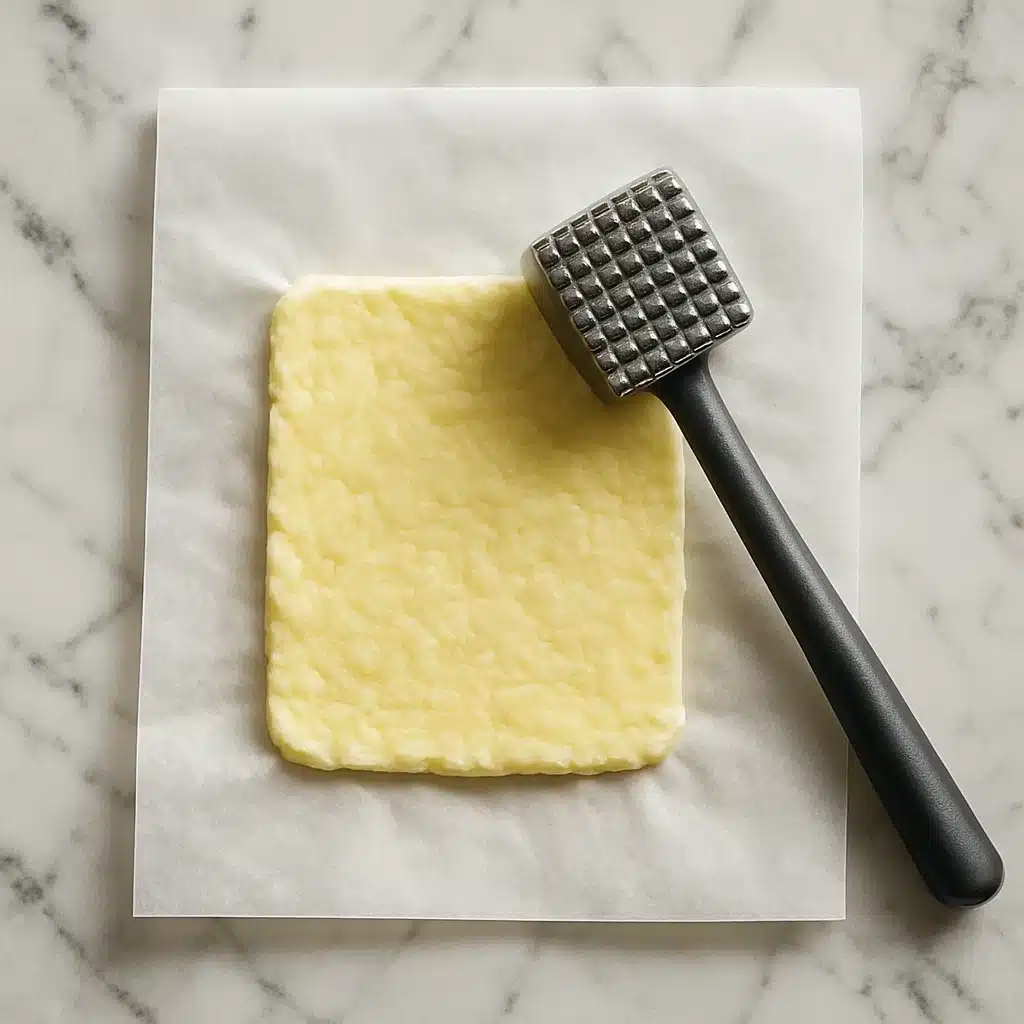
First, slice cold butter into thin pieces. Then, place the slices between two sheets of parchment paper. Using a rolling pin, pound and shape the butter into a square, about 5 inches wide and half an inch thick.
Next, transfer the butter block to the fridge. Let it chill for 10 to 15 minutes. At this stage, it should feel firm but still flexible. Why is this important? Because if the butter is too soft, it will melt into the dough. On the other hand, if it’s too hard, it may break through the dough during folding.
In short, the butter should bend without cracking. This balance is essential for good lamination.
Keeping Butter Cold When Making Gipfeli Recipe Layers
Working with butter can be frustrating, especially when the kitchen is warm. However, with a few smart tips, you can keep it in the perfect state for folding.
First, make sure to chill your tools—yes, even your rolling pin and countertop if possible. A cool environment helps slow down melting.
Second, work quickly. The more you handle the dough, the warmer it gets. To avoid this, use light pressure and steady hands.
Third, always use parchment paper when rolling. Not only does this reduce sticking, but it also helps maintain a smoother butter layer.
Finally, if your butter starts to soften too much, don’t panic. Wrap the dough and chill it again for 10 to 15 minutes. This short break can save your layers and keep the folding process clean.
By following these tips, you’ll be well on your way to creating buttery, golden Gipfeli that rival any Swiss bakery.
Interested in savory comfort food? Don’t miss this Garlic Parmesan Baked Chicken
Folding and Layering Gipfeli Dough Correctly
How to Roll and Fold Gipfeli Dough Step-by-Step
At this stage, your butter block is ready, and your dough has completed its first rise. Now comes the most important part of the gipfeli recipe—folding and layering, also called lamination. This process creates the soft, buttery layers you expect in a quality pastry.
Here’s how to do it right:
- On a floured surface, roll the dough into a rectangle that’s roughly double the size of your butter layer.
- Place the butter block in the center and fold the dough over it like an envelope, sealing the edges well.
- Then, gently roll the dough into a long rectangle without letting the butter break through.
- Fold it into thirds, like folding a letter—this is your first “turn.”
Once folded, wrap the dough in plastic wrap and chill for 30 minutes. This resting period is essential. It allows the butter to firm up and the gluten to relax, making it easier to roll again.
You’ll repeat this rolling and folding process two more times, chilling the dough for at least 30 minutes after each turn. By the end, you’ll have created hundreds of paper-thin layers of dough and butter.
Chill Times Between Folds for Flaky Swiss Butter Croissants
While folding is important, timing your chilling periods is what takes your Gipfeli from good to great. Each chill helps prevent the butter from melting into the dough. In addition, it allows the layers to stay distinct, which is what gives you that flaky bite.
Here are a few key tips:
- Don’t skip chilling, even if you’re in a hurry. It’s better to wait than to ruin your layers.
- Use a timer to stay on track—30 minutes per rest is ideal.
- If your kitchen is warm, you may need to chill a little longer. Trust your fingers—if the dough feels soft or sticky, pop it back in the fridge.
With every roll and rest, you’re building flavor and texture. If you want a bakery-style Gipfeli recipe, this folding step is critical. It might be a slow process, but the end result is well worth the effort.
Cutting, Shaping, and Proofing Gipfeli Rolls
How to Shape Swiss Gipfeli into Crescent Croissants
Now that your dough is fully laminated, the Gipfeli recipe enters its most hands-on stage. This is where the magic starts to take form—literally.
Start by rolling your chilled dough into a large rectangle, about ¼ inch thick. Try to keep the edges straight and even. Next, use a sharp knife or pastry wheel to cut the dough into long triangles. Each triangle should be about 4 inches wide at the base and 7 inches tall.
Here’s how to shape them:
- Lightly stretch each triangle by the tip to lengthen it.
- Starting from the wide base, roll the triangle up toward the tip, gently but firmly.
- While rolling, gently bend the ends inward to create that classic crescent form.
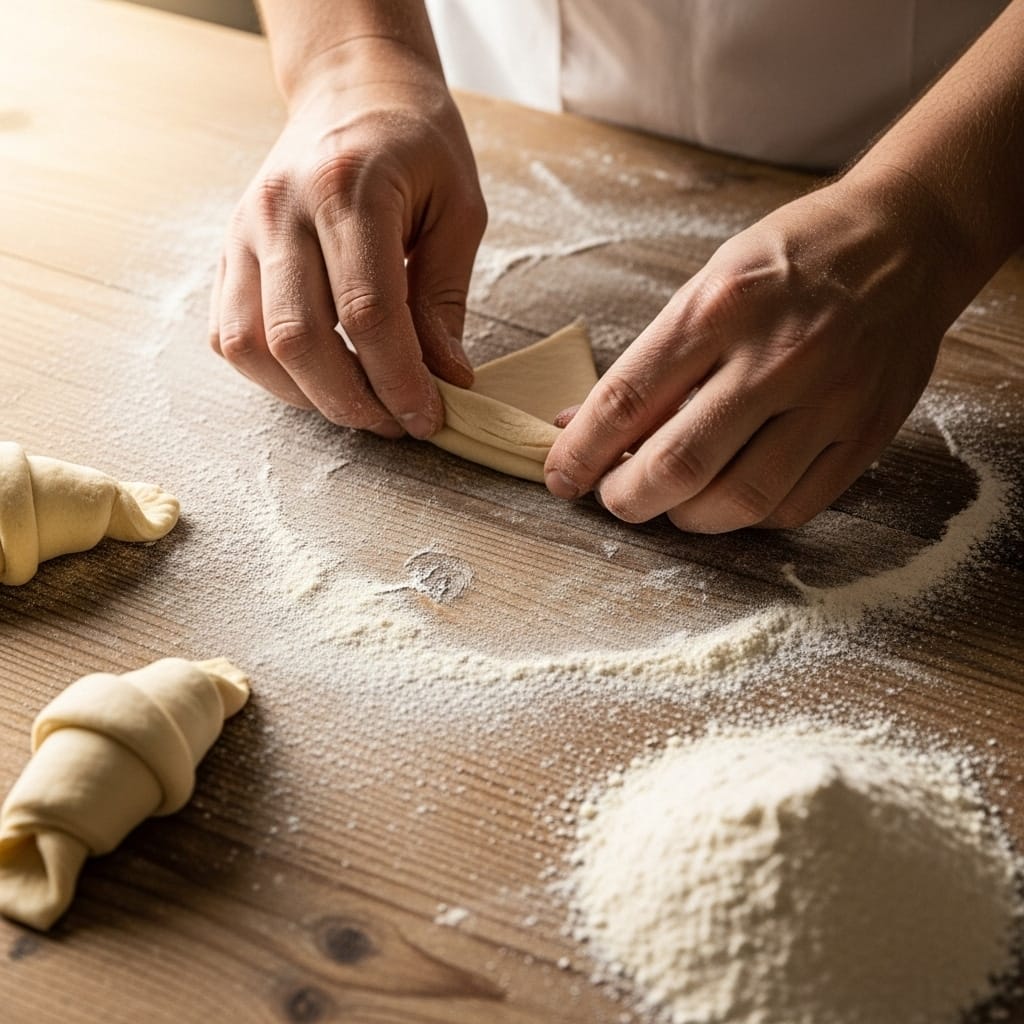
Make sure the tip ends up tucked underneath—this helps the gipfeli hold its shape during baking.
If you’d like to get creative, now’s a great time to add fillings. Try a teaspoon of Nutella, shredded cheese, or a piece of dark chocolate just before rolling them up.
Learn how to build rich creamy sauces like in our Creamy Skillet Chicken with Mushrooms and Cheese
Final Proofing Steps for Soft and Puffy Gipfeli Rolls
After shaping, it’s time to proof the Gipfeli one last time. This stage is just as important as folding, so don’t skip it.
Here’s what to do:
- Arrange the rolled pastries on a tray covered with parchment paper.
- Drape a clean kitchen towel or plastic wrap over the rolls without pressing down.
- Allow the shaped dough to rise in a warm, quiet spot for 1 to 1.5 hours, until puffed and slightly wobbly to the touch.
Why proofing matters: It gives the dough a chance to relax and rise again, making the texture soft on the inside with a nice, airy crumb. Baking them too early can lead to a heavy texture and poor rise.
Pro Tip: If your kitchen is cool, place the tray in your oven with the light on and a bowl of warm water inside. This creates the perfect proofing environment.
By the end of this step, your rolls should look full and ready for their final transformation in the oven.
Baking Swiss Gipfeli to Buttery Perfection
How Long to Bake Gipfeli and at What Temperature
After all that folding, shaping, and proofing, it’s finally time to bake your Gipfeli. This step brings everything together, giving your pastries their golden color, crisp edges, and soft centers.
Start by heating your oven to 375°F (190°C) before baking. It’s important that the oven is fully heated before the tray goes in—otherwise, the butter could melt too quickly, ruining those beautiful layers.
Once the oven is hot:
- Brush each Gipfeli with a light egg wash (1 beaten egg with a tablespoon of water).
- Position the baking sheet on the middle oven rack for even cooking.
- Bake for 18 to 22 minutes, or until golden brown and puffed.
Keep an eye on them during the last few minutes. Every oven is different, so they might bake a little faster or slower depending on your setup.
If you notice uneven browning, you can rotate the tray halfway through baking to keep things even.
Every Gipfeli recipe needs this final proof for the perfect texture.
Egg Wash Tips for Golden Swiss Butter Croissants
Egg wash may seem like a small detail, but it adds big impact. That golden, shiny finish you see in bakeries? It’s all thanks to a good egg wash.
Here’s how to get it right:
- Use one egg plus a splash of water or milk. This gives a balanced shine without over-darkening the pastry.
- Apply gently with a pastry brush, making sure not to press too hard or flatten the dough.
- For extra shine, you can do a second coat just before baking. Just wait 5 minutes after the first application to let it dry a bit.
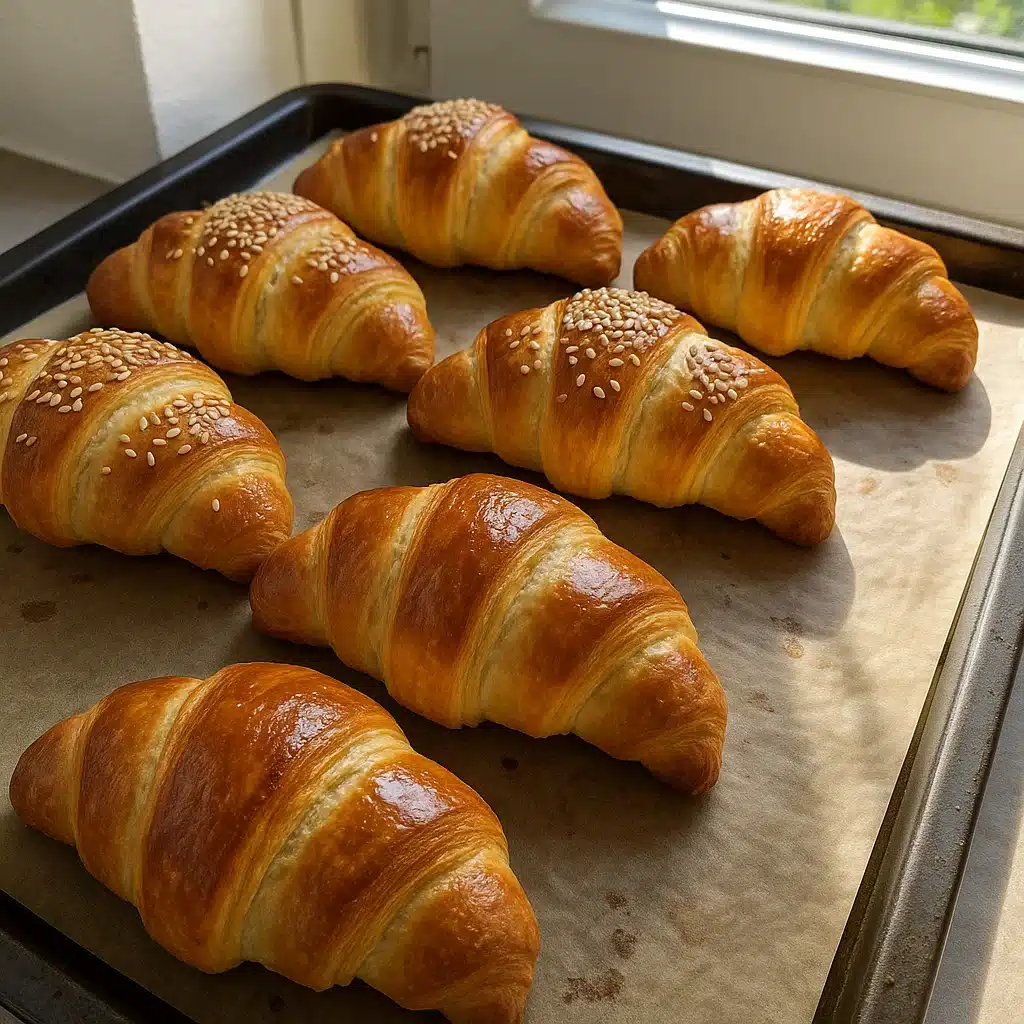
You can even add toppings at this stage—try sesame seeds, coarse salt, or sliced almonds for flavor and texture.
Once baked, let your Gipfeli cool on a wire rack for at least 10 minutes before serving. This allows the layers to settle and prevents soggy bottoms.
Serving Ideas for Your Homemade Gipfeli Recipe
When and How to Serve Swiss Croissants for Any Occasion
Freshly baked Gipfeli are best enjoyed warm, right out of the oven. Their buttery aroma and soft interior make them the perfect companion to your morning coffee or afternoon tea. While they’re traditionally served at breakfast in Switzerland, they also work wonderfully for brunch, snacks, or even light dinners.
Here are a few easy ways to serve them:
- Plain with butter: Classic and simple.
- With jam or honey: Strawberry, apricot, or even marmalade adds a sweet twist.
- As a sandwich: Slice the Gipfeli and fill with cheese, ham, or eggs.
- For brunch boards: Add them alongside meats, cheeses, fruit, and spreads.
Because Gipfeli are so versatile, they can fit into almost any mealtime. You can even freeze extras and reheat them for a quick weekday treat.
Interested in savory comfort food? Don’t miss this Garlic Parmesan Baked Chicken
Sweet and Savory Toppings for Flaky Gipfeli Pastries
Although traditional Gipfeli are often plain, you can easily add toppings or fillings to make them even more exciting. Whether you’re going sweet or savory, the options are endless.
Sweet ideas:
- Chocolate chips or Nutella
- Cinnamon sugar butter
- Lemon curd or raspberry jam
- Powdered sugar dusting after baking
Savory options:
- Swiss cheese and herbs
- Cream cheese and smoked salmon
- Spinach and feta
- Sliced ham with Dijon mustard
To fill them, simply add your filling near the base of the triangle before rolling. Don’t overfill—it can leak during baking.
If you want to go a step further, brush the tops with a flavored egg wash (like one mixed with honey or herbs) for extra shine and taste.
roubleshooting Your Gipfeli Recipe Like a Pro
Common Gipfeli Recipe Mistakes and How to Fix Them
Even with the best gipfeli recipe, mistakes can happen. No need to stress—most issues can be solved once you understand the cause. Below are some common issues and how to avoid them.
- Flat or greasy Gipfeli
This usually happens when the butter melts too early. To fix it, make sure you’re chilling the dough between folds. Also, work quickly to keep everything cold. - Dense texture
If your Gipfeli turn out heavy, the dough may not have risen long enough. Always let it rise until it doubles in size. Make sure your yeast hasn’t expired and is still working properly. - Butter leaking out
Leaking butter often means your dough wasn’t sealed tightly or rolled too thin. During folding, press gently around the edges to trap the butter inside. - Overbaked tops and pale bottoms
Uneven baking? Try using a dark baking sheet or rotating your pan halfway through. This helps everything brown more evenly.
By recognizing these issues early, you’ll improve your results every time. Plus, practice always makes better pastries.
Want to simplify your weeknight meals? Try our Easy Chicken Breakfast Sausage Recipe
Storage, Freezing, and Reheating Swiss Butter Croissants
Once you’ve baked the perfect batch, you’ll want to enjoy your Gipfeli over a few days. Luckily, they store well if handled right.
Storage tips:
- Let them cool completely before storing.
- Keep them in an airtight container at room temperature for up to 2 days.
- For longer storage, wrap individually and freeze for up to 1 month.
Reheating tips:
- Warm them up in a 350°F (175°C) oven for about 5 to 8 minutes.
- Avoid microwaving—they’ll get soggy instead of crisp.
Make-ahead tip:
You can also prepare the shaped dough the night before and refrigerate it. The next morning, let them proof at room temperature for an hour, then bake fresh.
These tips help you keep that bakery-fresh flavor even days later, with very little effort.
FAQs About the Gipfeli Recipe
What is the difference between a croissant and a gipfeli?
Croissants are lighter and flakier, while Gipfeli are a bit denser and less buttery. Both are crescent-shaped, but Gipfeli have a chewier bite.
What is a gipfeli?
A Gipfeli is a Swiss crescent roll similar to a croissant but made with less butter. It’s soft, slightly chewy, and often eaten for breakfast.
What ingredients are in a croissant?
Croissants are made with flour, yeast, milk, sugar, salt, and lots of butter. The dough is folded to create flaky layers.
Why are croissants not crescent-shaped?
Some modern croissants are made straight for convenience. Traditional ones are crescent-shaped, just like Gipfeli.
What is the best flour for croissants?
Bread flour gives a strong structure, but all-purpose flour works well too. It helps create light, airy layers.
Do you let croissant dough rise?
Yes, croissant (and Gipfeli) dough must rise before and after shaping. This gives the pastry its soft and airy texture.
Final Thoughts About Gipfeli Recipe
Mastering the gipfeli recipe at home may seem tricky at first, but once you understand the steps, it becomes a fun and rewarding process. From mixing soft dough to folding in butter and shaping those perfect crescents, each stage brings you closer to a warm, flaky bite of Swiss comfort.
Whether you’re baking for breakfast, brunch, or just because—you now have all the tools to do it right. Remember to take your time, keep things chilled, and follow each step closely.
Explore more early-morning favorites like our Chicken Waffle Breakfast Casserole
With a bit of practice, this Gipfeli recipe will become your go-to for a cozy, homemade treat.
PrintGipfeli Recipe

Easy, step-by-step guide to making traditional Swiss Gipfeli—flaky, golden crescent rolls made with layered butter dough.
- Prep Time: 45 minutes
- Resting Time: 3 hours 30 minutes
- Cook Time: 15 minutes
- Total Time: 4 hours 30 minutes
- Yield: 12 Rolls 1x
- Category: Breakfast, Pastry
- Cuisine: Swiss
Ingredients
- 2 1/4 teaspoons (7 grams) active dry yeast
- 1 1/3 cups (315 milliliters) lukewarm milk 105-115˚F, 40-46˚C
- 4 cups (500 grams) all-purpose flour
- 3 tablespoons (38 grams) granulated sugar
- 1 1/2 teaspoons salt
- 1 large egg
For Assembly:
- 1 cup (226 grams) unsalted butter chilled
- 1 egg yolk
- 1 tablespoon (15 milliliters) milk
Instructions
- Activate Yeast: Stir yeast into lukewarm milk. Let sit 10 mins until foamy.
- Make the Dough: In a bowl, mix flour, sugar, and salt. Add yeast-milk mix and egg. Stir until a soft dough forms. Adjust with more milk or flour if needed.
- Knead and Rise: Knead on a floured surface until smooth. Place in a greased bowl, cover, and let rise for 1.5 hours.
- Prepare Butter Block: Slice butter and arrange into an 8×8″ square between parchment. Pound and roll into a 9×9″ square. Chill 10 minutes.
- Roll Dough and Add Butter: Roll dough to 18×10″. Place butter over half. Fold dough to cover. Seal edges, wrap, and chill 30 minutes.
- Laminate Dough: Roll to 16×10″. Fold into thirds. Chill 30 mins. Repeat rolling and folding 2 more times, chilling between each.
- Shape the Gipfeli: Cut dough in half. Roll one half to 18×6″. Cut into triangles with 5″ bases. Make a 1″ slit in each base. Roll up and curve ends.
- Proof: Place shaped Gipfeli on lined trays, 2″ apart. Cover and let rise for 1 hour until puffy.
- Bake: Preheat oven to 400°F (200°C). Brush pastries with egg wash. Bake 5 mins, then lower to 375°F (190°C) and bake 10–12 mins more until golden.
- Serve: Enjoy warm with butter or jam. Best eaten fresh within a few hours.
Notes
Nutrition facts are estimates and may vary based on ingredients used, portion sizes, and preparation methods
Nutrition
- Serving Size: 12 Rolls
- Calories: 210kcal
- Sugar: 3g
- Sodium: 170mg
- Fat: 11g
- Saturated Fat: 7g
- Unsaturated Fat: 4g
- Carbohydrates: 24g
- Fiber: 1g
- Protein: 4g
Keywords: gipfeli recipe, swiss croissant, laminated dough, brunch
Let’s connect! Follow me for more Joylicious Recipes: Facebook, Instagram, Pinterest