The Ultimate Hummus Recipe: Creamy, Authentic, and Delicious
Hummus recipe enthusiasts know that this creamy, versatile Middle Eastern dip has rightfully earned its place as a staple in kitchens worldwide. This protein-packed, flavorful spread has ancient origins but continues to delight modern palates with its perfect balance of nutty tahini, zesty lemon, and earthy chickpeas. Whether you’re serving it as an appetizer, snack, or sandwich spread, mastering the perfect hummus recipe will elevate your culinary repertoire.
Why Homemade Hummus Is Superior
Store-bought hummus simply cannot compare to the fresh, vibrant flavors of homemade hummus. When you prepare this beloved dip at home, you can control the ingredients, adjust the seasonings to your preference, and achieve that restaurant-quality texture that makes hummus truly exceptional. Additionally, homemade hummus is more economical and lacks the preservatives often found in commercial versions.
“Discover great ideas like our creamy garlic herb chicken recipe for another homemade delight that outshines store-bought options.”
Ingredients: The Foundation of Perfect Hummus
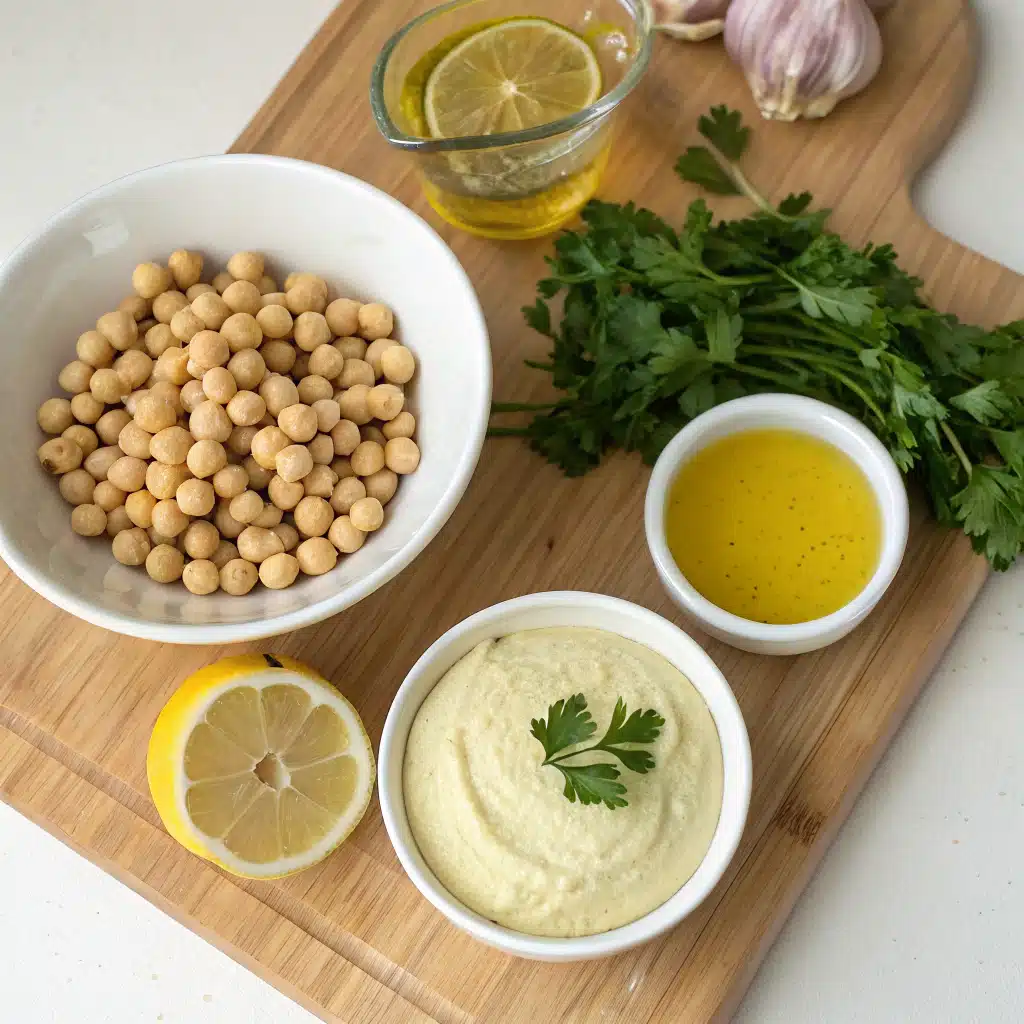
The beauty of a great hummus recipe lies in its simplicity. Traditional hummus requires just a few quality ingredients that work together to create its distinctive flavor profile. Each component plays a crucial role in developing the creamy texture and balanced taste that makes hummus so addictive.
Essential Components for Authentic Hummus
| Ingredient | Quantity | Notes |
|---|---|---|
| Chickpeas (garbanzo beans) | 1 can (15 ounces), rinsed and drained, or 1½ cups cooked | The base of hummus, providing protein and creamy texture |
| Baking soda | ½ teaspoon (if using canned chickpeas) | Helps soften chickpeas for smoother hummus |
| Fresh lemon juice | ¼ cup (from 1½ to 2 lemons), more to taste | Adds brightness and acidity |
| Garlic | 1 medium-to-large clove, roughly chopped | Provides aromatic flavor |
| Sea salt | ½ teaspoon, to taste | Enhances all flavors |
| Tahini | ½ cup | Creates rich, nutty flavor and creamy consistency |
| Ice water | 2 to 4 tablespoons, more as needed | Helps achieve ultra-smooth texture |
| Ground cumin | ½ teaspoon | Adds warm, earthy flavor |
| Extra-virgin olive oil | 1 tablespoon | Enriches flavor and texture |
Understanding Quality Ingredients
The quality of your ingredients significantly impacts your hummus recipe outcome. For the creamiest hummus, consider these factors:
- Chickpeas: While canned chickpeas work well (especially when boiled with baking soda), cooking dried chickpeas from scratch can yield an even better texture.
- Tahini: This sesame paste varies dramatically in quality. Look for tahini made from hulled, roasted sesame seeds with a smooth, pourable consistency and not bitter taste.
- Lemon juice: Always use fresh-squeezed lemon juice rather than bottled for bright, authentic flavor.
- Olive oil: Choose a good quality extra-virgin olive oil, particularly if using additional oil for garnish.
Step-by-Step: Creating the Perfect Hummus Recipe
Making exceptional hummus is a simple process that requires attention to detail. Following these steps will ensure your hummus achieves that coveted silky-smooth texture and balanced flavor profile that rivals any restaurant version.
Preparing the Chickpeas
- Place chickpeas in a medium saucepan and add the baking soda.
- Submerge the chickpeas in a few inches of water and bring them to a rapid boil over high heat.
- Let them boil for roughly 20 minutes, lowering the heat if needed to avoid boiling over.
- Look for chickpeas to become bloated with falling-off skins and very soft texture.
- Drain the chickpeas in a fine-mesh strainer and rinse with cool water for about 30 seconds.
- Set aside the chickpeas – no need to peel them for this recipe!
Creating the Base Mixture
“Check out our creamy skillet chicken mushrooms cheese recipe for another delicious dish with a creamy base.” While that’s cooking, you can begin your hummus prep:
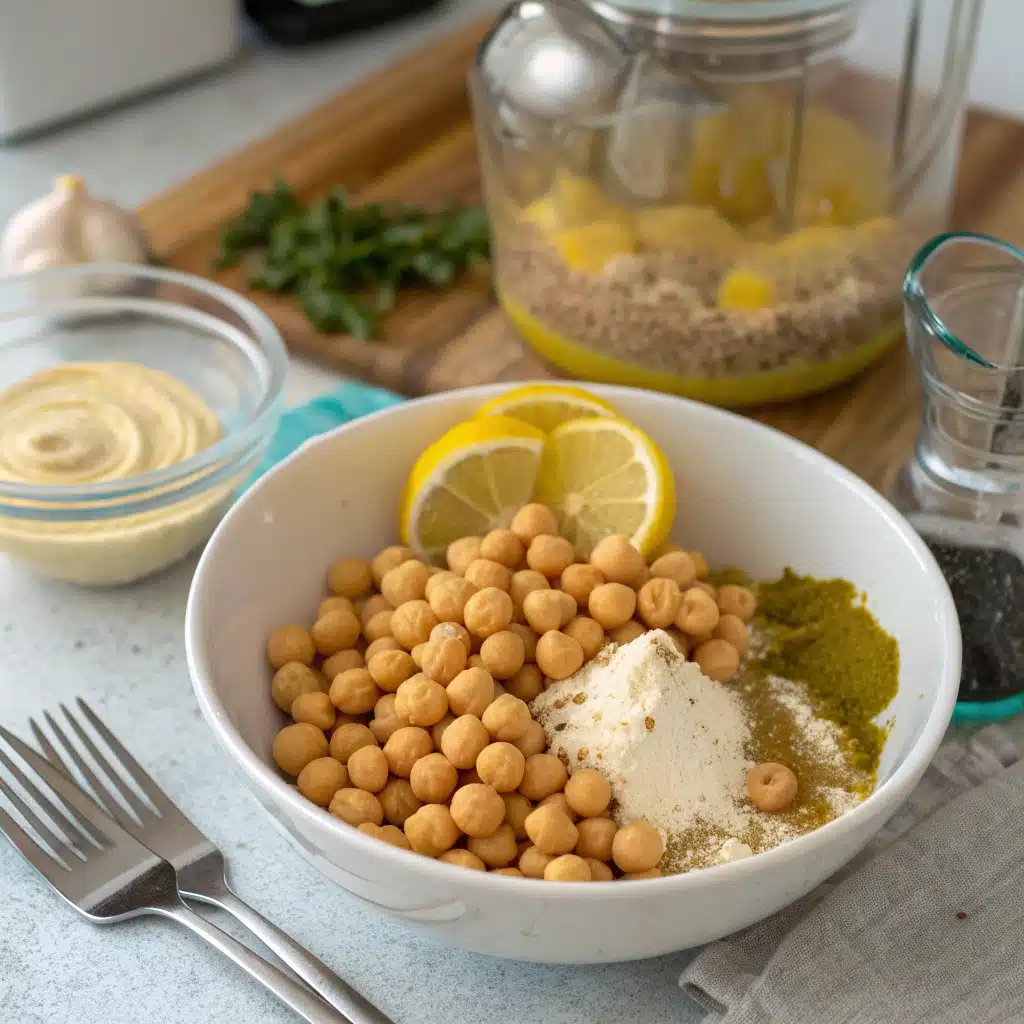
- In a food processor or high-powered blender, combine lemon juice, garlic, and salt.
- Process until the garlic is very finely chopped.
- Allow this mixture to rest for at least 10 minutes to mellow the garlic flavor.
- Add tahini to the food processor and blend until thick and creamy.
- Scrape down any tahini stuck to the sides and bottom of the processor as needed.
Achieving Perfect Texture
- While running the food processor, drizzle in 2 tablespoons of ice water.
- Pause to scrape the sides of the food processor, then continue blending until the hummus is silky, pale, and creamy.
- Add 1-2 additional tablespoons of ice water if your tahini was particularly thick.
- Add cumin and the drained, overcooked chickpeas to the food processor.
- While blending, drizzle in the olive oil.
- Continue blending for about 2 minutes until super smooth, scraping down the sides as necessary.
- Taste and adjust seasonings – typically adding another ¼ teaspoon salt for overall flavor and an additional tablespoon of lemon juice for extra zing.
Tips: Secrets to Exceptional Hummus
Creating truly outstanding hummus requires more than just following a recipe. These professional tips will elevate your hummus recipe from good to exceptional, helping you achieve restaurant-quality results every time.
The Secret to Ultra-Smooth Hummus
The most common complaint about homemade hummus is graininess. To achieve that silky-smooth texture:
- Overcook your chickpeas until they’re falling apart.
- Use baking soda when cooking the chickpeas – it raises the pH level, helping break down the pectin in the chickpeas.
- Process the hummus for longer than you think necessary – at least 2 full minutes of blending.
- Use ice water rather than room temperature water – this helps emulsify the mixture for a creamier result.
- Quality tahini makes a tremendous difference in achieving smoothness.
Balancing Flavors Like a Pro
“Looking for inspiration? Try our carne en su jugo recipe for another dish with perfectly balanced flavors.”
When making hummus, focus on:
- Allow the garlic to sit in lemon juice for 10+ minutes to mellow its harsh bite.
- Start with less salt and lemon, then gradually adjust after blending – it’s easier to add than subtract.
- Consider toasting your cumin before adding it for a more aromatic flavor.
- Let your hummus rest in the refrigerator for at least 30 minutes before serving to allow flavors to meld.
- Be sure to sample the flavor before serving and adjust the seasonings to your taste.
Common Hummus Recipe Mistakes to Avoid
Even skilled chefs often fall into these common mistakes when making hummus:
- Using chickpeas straight from the can without cooking them further
- Adding ingredients in the wrong order (proper emulsification requires processing the tahini and lemon juice first)
- Using too little tahini, which results in less creamy texture
- Rushing the processing time, leading to grainy texture
- Skipping the ice water, which helps achieve smoothness
- Using bottled lemon juice instead of fresh
- Adding too many competing flavors that overshadow the classic hummus profile
Storage: Keeping Your Hummus Fresh
Proper storage is essential for maintaining the flavor and texture of your homemade hummus. Following these guidelines will ensure your hummus recipe stays delicious for as long as possible.
Refrigeration Best Practices
Homemade hummus will keep well in the refrigerator when properly stored:
- Transfer hummus to an airtight container.
- Smooth the top with the back of a spoon and drizzle with a thin layer of olive oil to create a protective seal.
- Cover tightly with a lid or plastic wrap, ensuring no air is trapped inside.
- Keep refrigerated and consume within one week.
“Here’s your guide to easy homemade chicken pot pie recipe that also benefits from proper refrigeration techniques.”
Freezing Hummus for Longer Storage
If you’ve made a large batch of hummus or want to prepare it in advance:
- Portion hummus into smaller containers or ice cube trays for easier thawing.
- Leave some space at the top as hummus expands slightly when frozen.
- Drizzle a thin layer of olive oil on top to prevent freezer burn.
- Seal tightly in freezer-safe containers.
- Freeze for up to 3 months.
- Thaw overnight in the refrigerator before serving.
- After thawing, stir well and consider adding a fresh squeeze of lemon juice to revive flavors.
Reviving Day-Old Hummus
Hummus tends to thicken and lose some of its vibrancy after refrigeration. To restore it to its original glory:
- Allow hummus to come to room temperature for about 30 minutes before serving.
- Stir in a tablespoon of warm water or olive oil to loosen the consistency.
- Add a fresh squeeze of lemon juice to brighten the flavor.
- Re-garnish with fresh toppings just before serving.
- If the texture seems off, a quick pulse in the food processor can help restore creaminess.
Variations: Creative Hummus Recipe Ideas
While traditional hummus is delicious on its own, the versatile nature of this dip makes it perfect for customization. These creative variations maintain the integrity of classic hummus while introducing exciting new flavor profiles.
Flavor-Boosting Add-Ins
Enhance your basic hummus recipe with these complementary additions:
- Roasted Garlic Hummus: Replace raw garlic with a whole head of roasted garlic for sweet, mellow flavor.
- Herb-Infused Hummus: Add ¼ cup of fresh herbs like parsley, cilantro, basil, or dill.
- Roasted Red Pepper Hummus: Blend in ¾ cup roasted red peppers for a sweet, smoky flavor.
- Spicy Hummus: Add jalapeños, harissa paste, or cayenne pepper for heat.
- Sun-Dried Tomato Hummus: Incorporate ⅓ cup of oil-packed sun-dried tomatoes for umami richness.
- Olive Hummus: Blend in ½ cup of kalamata or green olives for a briny kick.
- Pesto Hummus: Swirl in 2-3 tablespoons of prepared pesto before serving.
International Hummus Inspirations
“Don’t miss our pistachio fluff recipe for another internationally-inspired dish with interesting flavors.”
For hummus with global flair:
- Mediterranean Hummus: Top with feta cheese, olives, cucumbers, and tomatoes.
- Moroccan Hummus: Add ras el hanout spice blend and top with preserved lemon and mint.
- Indian-Inspired Hummus: Incorporate curry powder, garam masala, and a touch of coconut milk.
- Mexican-Style Hummus: Blend in cumin, coriander, lime juice instead of lemon, and top with pico de gallo.
- Greek Hummus: Swirl in Greek yogurt for extra creaminess and top with cucumber, olives, and dill.
- Japanese Fusion Hummus: Add a touch of wasabi and soy sauce, garnished with sesame seeds and nori flakes.
Dietary Adaptation Options
Modify your hummus recipe to accommodate various dietary needs:
- Lower-Fat Hummus: Reduce tahini by half and replace with plain Greek yogurt.
- Higher-Protein Hummus: Add ¼ cup of unflavored protein powder or silken tofu.
- Bean-Free Hummus: Replace chickpeas with roasted zucchini, cauliflower, or white beans.
- Tahini-Free Hummus: Substitute sunflower seed butter or Greek yogurt for tahini.
- Extra Fiber Hummus: Add a handful of cooked lentils or white beans along with the chickpeas.
- Lower-Carb Option: Replace half the chickpeas with roasted cauliflower.
Serving: Creative Ways to Enjoy Your Hummus Recipe
The versatility of hummus extends well beyond a simple dip. This nutritious spread can be incorporated into numerous dishes and served in various creative ways to enhance meals throughout the day.
Traditional Serving Suggestions
For an authentic Middle Eastern presentation:
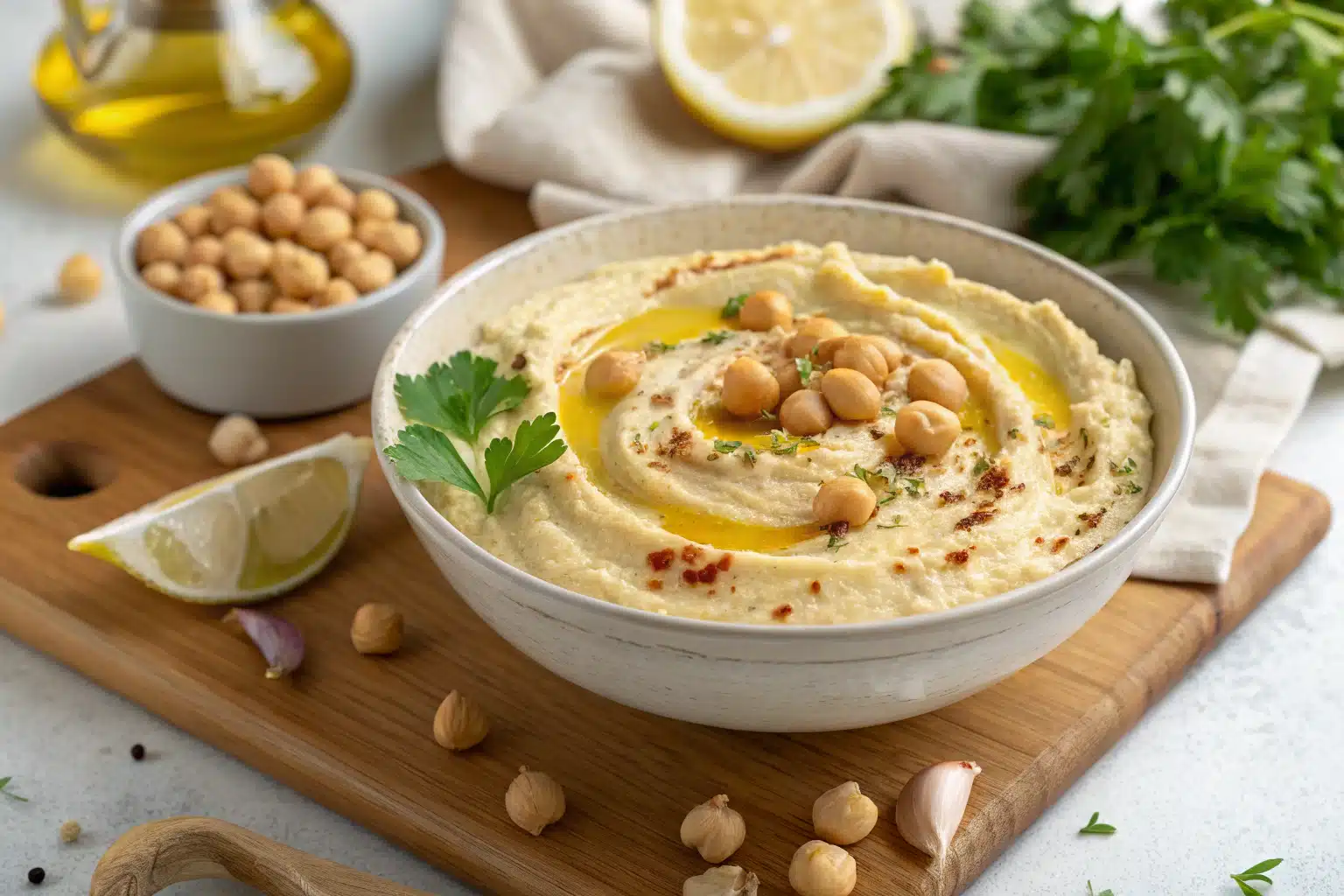
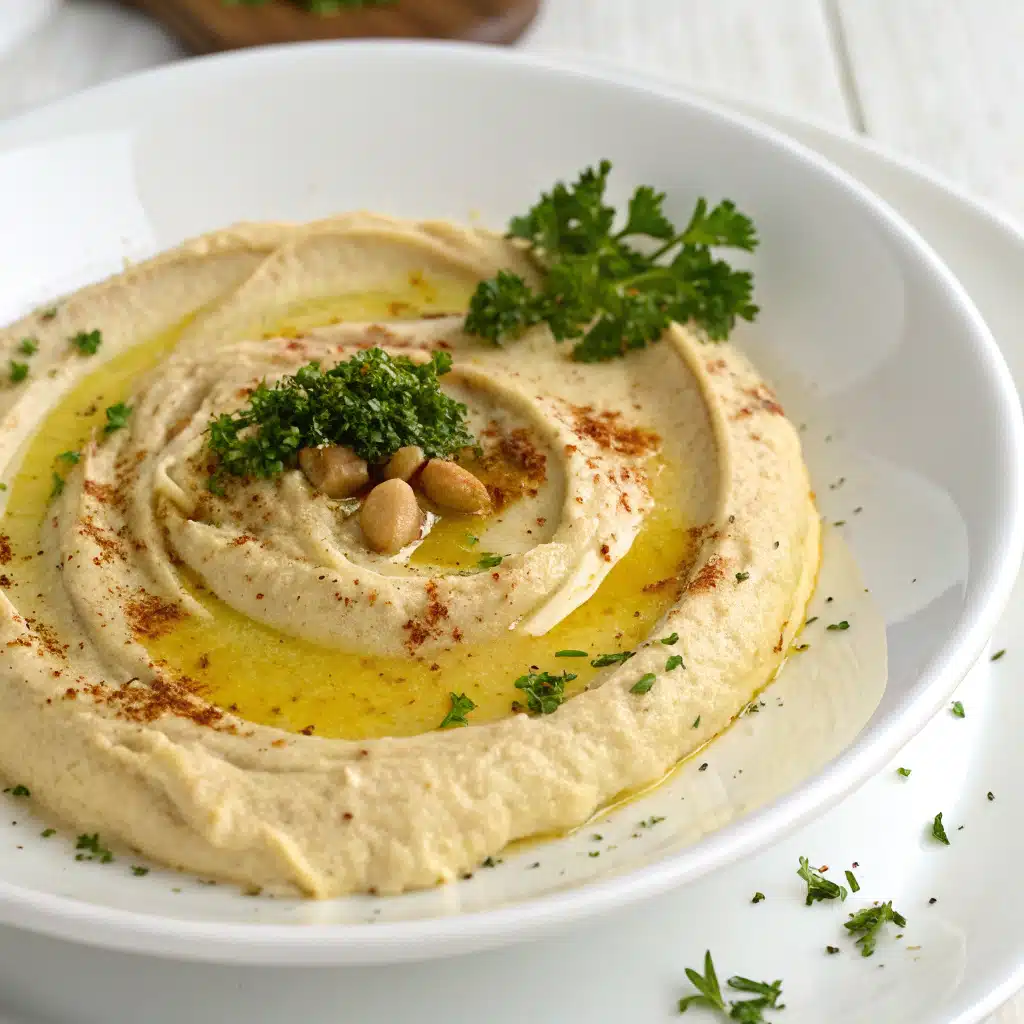
- Spread hummus on a shallow plate or bowl, creating swirls with the back of a spoon.
- Drizzle generously with quality olive oil, creating small pools in the swirls.
- Sprinkle with garnishes like paprika, sumac, za’atar, or fresh herbs.
- Add warm chickpeas, pine nuts, or pomegranate seeds for texture.
- Serve with warm pita bread, pita chips, or fresh vegetables for dipping.
- Consider serving alongside other mezze items like tabbouleh, baba ganoush, or stuffed grape leaves.
Beyond the Dip: Hummus as an Ingredient
“Want more ideas? Check out our chicken caesar salad wrap recipe which pairs wonderfully with hummus.”
Consider these creative ways to use hummus:
- Sandwich Spread: Replace mayo or mustard with hummus on sandwiches and wraps.
- Salad Dressing Base: Thin hummus with olive oil, lemon juice, and herbs for a creamy dressing.
- Pasta Sauce: Mix with pasta water to create a creamy, protein-rich sauce for pasta.
- Stuffed Vegetables: Use as filling for stuffed bell peppers, mushrooms, or tomatoes.
- Pizza Base: Spread on flatbread as an alternative to tomato sauce.
- Deviled Eggs: Replace or supplement mayonnaise in deviled egg filling.
- Mashed Potatoes: Fold into mashed potatoes for extra flavor and creaminess.
- Burger Topping: Dollop on burgers as a condiment.
Elegant Presentation Ideas
For dinner parties or special occasions, elevate your hummus presentation:
- Hummus Flight: Serve several small bowls of different hummus variations.
- Layered Dip: Create a layered dip with hummus as the base, topped with Greek yogurt, cucumber, tomatoes, olives, and feta.
- Individual Servings: Portion into small cups with dippers for easy grabbing.
- Hummus Board: Create a grazing board with hummus as the centerpiece, surrounded by various dippers, olives, cheeses, and other small bites.
- Hummus “Terrain”: Shape hummus into a landscape with valleys filled with olive oil and mountains of garnishes.
- Color Contrast: Serve in colorful bowls that complement the beige hummus and colorful toppings.
FAQs: Common Questions About Hummus Recipe
What are the ingredients in hummus?
Classic hummus is made from chickpeas, tahini, lemon juice, garlic, olive oil, salt, and cumin. Variations may add spices or herbs, but the authentic version highlights creamy chickpeas, nutty tahini, and bright lemon.
What is the secret to good hummus?
Great hummus comes from very soft chickpeas (often boiled with baking soda), quality tahini, and proper blending. Start with tahini and lemon, then add other ingredients, blending with ice water for smoothness. Letting garlic sit in lemon juice also softens its sharpness.
Is hummus healthy or unhealthy?
Hummus is generally healthy. It provides plant protein, fiber, healthy fats, and minerals. Chickpeas support steady energy, while tahini adds calcium and iron. Homemade versions are often more nutritious, with less sodium than store-bought.
Is hummus protein or carb?
Hummus is both. A ¼-cup serving gives around 4–6 grams of protein and 8–10 grams of carbs, including 2–3 grams of fiber. This balance makes it filling and energizing, with protein from chickpeas and tahini, and carbs mainly from chickpeas.
What are common hummus mistakes?
Frequent errors include undercooking chickpeas, skipping baking soda, using poor tahini, blending too little, or adding ingredients in the wrong order. Many also forget ice water, add too many competing flavors, or under-season. More salt and lemon usually improve the taste.
What is the best way to eat hummus?
Traditionally eaten with pita, hummus also works as a spread, dip, or sauce. Try it with veggies, in sandwiches, or alongside grilled meats. In Middle Eastern style, it’s topped with olive oil and scooped with flatbread.
Conclusion: Mastering the Art of Homemade Hummus
Why Your Homemade Hummus Recipe Matters
Creating your own hummus recipe from scratch is more than just a culinary exercise – it’s a connection to ancient food traditions that have sustained cultures for millennia. By mastering this versatile, nutritious dip, you’re adding a cornerstone recipe to your cooking repertoire that can be adapted endlessly to suit various meals and occasions. Homemade hummus surpasses store-bought versions in freshness, flavor, nutritional value, and cost-effectiveness.
Taking Your Hummus to the Next Level
As you become comfortable with the basic hummus recipe, don’t be afraid to experiment with different flavors, textures, and presentations.
“Learn more about creamy chicken and rice for another dish that pairs beautifully with hummus.”
The true joy of cooking comes from making recipes your own, adjusting them to your preferences, and sharing them with others. Moreover, consider hosting a hummus tasting party with several variations, creating a signature hummus flavor that becomes your specialty, or incorporating hummus into unexpected dishes for delightful culinary surprises.
Remember that the most important aspects of exceptional hummus are texture (ultra-smooth), balance (between lemon, garlic, tahini, and chickpeas), and quality ingredients. Master these elements, and you’ll create hummus that rivals or exceeds any restaurant version – a skill that will bring joy to your table for years to come.
PrintHummus Recipe
Authentic, ultra-creamy homemade hummus with perfectly balanced flavors of chickpeas, tahini, lemon, and garlic.
- Prep Time: 10 minutes
- Cook Time: 20 minutes
- Total Time: 30 minutes
- Yield: 1.75 cups 1x
- Category: Appetizers
- Cuisine: Middle Eastern
Ingredients
- 1 can (15 ounces) chickpeas, rinsed and drained, or 1 ½ cups cooked chickpeas
- ½ teaspoon baking soda (if you’re using canned chickpeas)
- ¼ cup lemon juice (from 1 ½ to 2 lemons), more to taste
- 1 medium-to-large clove garlic, roughly chopped
- ½ teaspoon fine sea salt, to taste
- ½ cup tahini
- 2 to 4 tablespoons ice water, more as needed
- ½ teaspoon ground cumin
- 1 tablespoon extra-virgin olive oil
- Any of the following garnishes: drizzle of olive oil or zhoug sauce, sprinkle of ground sumac or paprika, chopped fresh parsley
Instructions
- Place chickpeas in a saucepan with baking soda, cover with water, and boil for 20 minutes until very soft with skins falling off.
- Drain and rinse chickpeas with cool water for 30 seconds.
- In a food processor, blend lemon juice, garlic, and salt until garlic is finely chopped. Let rest for 10 minutes.
- Add tahini and blend until thick and creamy, scraping sides as needed.
- While processor is running, drizzle in 2 tablespoons ice water and blend until smooth and pale.
- Add cumin and chickpeas, then drizzle in olive oil while blending for about 2 minutes until ultra-smooth.
- Taste and adjust seasonings, typically adding another ¼ teaspoon salt and tablespoon of lemon juice.
- Transfer to a serving dish, create decorative swirls, and add desired garnishes before serving.
Notes
For the smoothest texture, don’t skip boiling the chickpeas with baking soda, even if using canned.
Nutrition facts are estimates and may vary based on ingredients used, portion sizes, and preparation methods.
Nutrition
- Serving Size: 1.75 cups
- Calories: 190
- Sugar: 0g
- Sodium: 240mg
- Fat: 11g
- Saturated Fat: 1.5g
- Carbohydrates: 17g
- Fiber: 5g
- Protein: 7g
- Cholesterol: 0mg
Keywords: hummus, chickpea dip, tahini dip, Middle Eastern food, Mediterranean dip, vegan dip, plant-based protein
Let’s connect! Follow me for more Joylicious Recipes: Facebook, Instagram, Pinterest