Authentic Korean Flavors Made Simple at Home
Experience Korea’s Most Beloved Rice Bowl
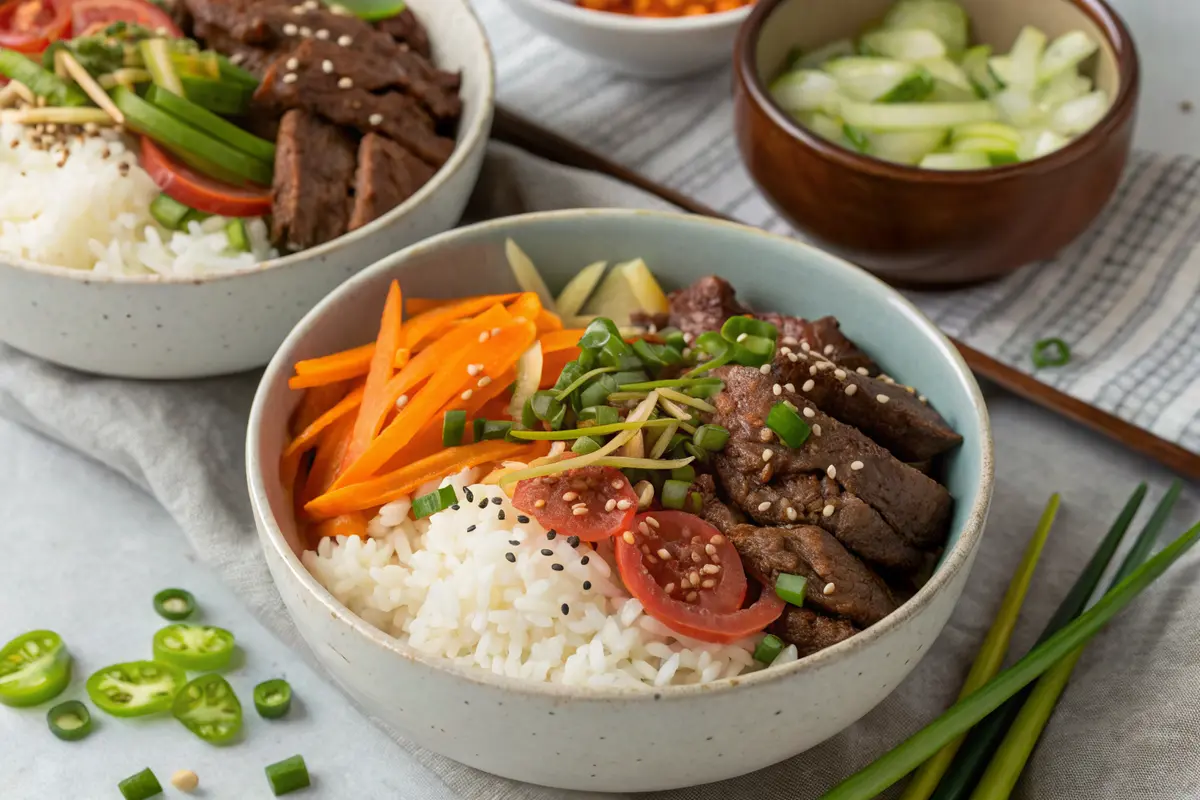
Korean Beef Rice Bowls combine savory, tender beef with fluffy rice and crisp vegetables for a perfect balance of flavors and textures. These vibrant bowls deliver an explosion of umami from the bulgogi-inspired marinade, with hints of sweetness, garlic, and ginger in every bite. “The Crispy Hot Honey Feta Chicken creates a similar sweet-savory flavor profile that many find irresistible in fusion cuisine.”
Ideal for busy weeknights when you need something quick yet impressive, these rice bowls can be customized to suit your taste preferences. Serve them family-style for a casual dinner gathering or pack them for lunch the next day—they’re versatile enough for any occasion!
Gather Your Bowl-Building Essentials
Quality Ingredients Make All the Difference
Creating restaurant-quality Korean Beef Rice Bowls starts with selecting the right ingredients. The combination of tender beef, aromatic seasonings, and fresh vegetables creates a harmonious blend that’s both satisfying and nutritious.
| Component | Ingredients |
|---|---|
| Protein Base | 1 lb thinly sliced beef sirloin (look for ribeye or sirloin sliced for bulgogi) |
| Marinade | 3 tbsp low-sodium soy sauce 2 tbsp toasted sesame oil 1 tbsp gochujang (Korean chili paste) 2 cloves garlic, minced 1 tsp grated fresh ginger 1 tbsp brown sugar (or honey) 1 tbsp rice vinegar 1 tbsp mirin (optional) |
| Rice Foundation | 1 cup jasmine rice 2 cups water ½ tsp salt |
| Fresh Vegetables | 1 carrot, julienned ½ cucumber, thinly sliced 2 green onions, sliced diagonally 1 cup fresh spinach (optional) ½ cup bean sprouts (optional) |
| Garnishes | 1 tbsp toasted sesame seeds 1 sheet nori, cut into thin strips (optional) Kimchi (store-bought, optional) Sliced avocado (optional) |
| Finishing Touches | Gochujang sauce (mix 1 tbsp gochujang with 1 tsp sesame oil and 1 tsp honey) Sriracha for extra heat (optional) |
“The Bacon Egg Rice Paper Wrap demonstrates another creative way to incorporate rice into a handheld format for busy mornings or quick lunches.”
For the best results, try to source authentic Korean ingredients like gochujang from Asian grocery stores or the international aisle of well-stocked supermarkets. The quality and authenticity of these ingredients will significantly enhance the flavor profile of your dish.
Perfect Your Korean Beef Bowl in Simple Steps
Creating Restaurant-Quality Results at Home
Follow these detailed instructions to create perfectly balanced Korean Beef Rice Bowls that rival your favorite restaurant. The key is in properly marinating the beef and cooking each component to its ideal doneness.
- Prepare the rice: Rinse 1 cup jasmine rice under cold water until the water runs clear. Add to a pot with 2 cups water and ½ teaspoon salt. Bring to a boil, reduce heat to low, cover, and simmer for 15-18 minutes until water is absorbed and rice is tender. Remove from heat and let stand, covered, for 5 minutes, then fluff with a fork.
- Create the marinade: In a medium bowl, whisk together soy sauce, sesame oil, gochujang, minced garlic, grated ginger, brown sugar, and rice vinegar until well combined. The mixture should be glossy and smooth with a rich reddish-brown color.
- Marinate the beef: Add the thinly sliced beef to the marinade, ensuring each piece is coated evenly. Cover and refrigerate for at least 15 minutes (or up to 4 hours for deeper flavor). If you’re short on time, you can marinate at room temperature for 15 minutes, but no longer for food safety.
- Prepare vegetables: While the beef marinates, julienne the carrots, slice the cucumber, and diagonally cut the green onions. If using spinach, wash thoroughly and set aside. Arrange all prepared vegetables on a plate for easy assembly.
- Cook the beef: Heat a large skillet or wok over high heat until very hot. Add a small amount of neutral oil if needed (the sesame oil in the marinade may be sufficient). Working in batches to avoid overcrowding, stir-fry the marinated beef until browned on the edges and just cooked through, about 3–4 minutes. Look for caramelized edges while ensuring the beef remains tender. Transfer cooked beef to a clean plate.
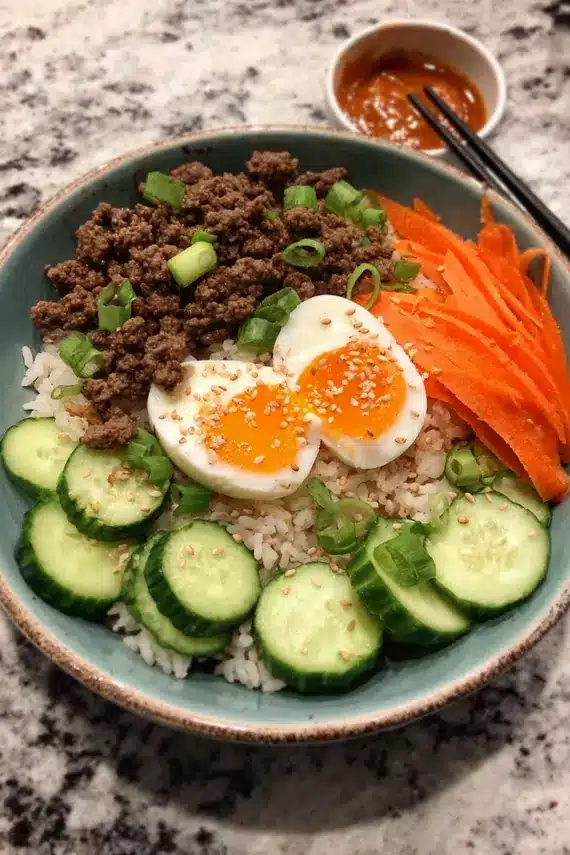
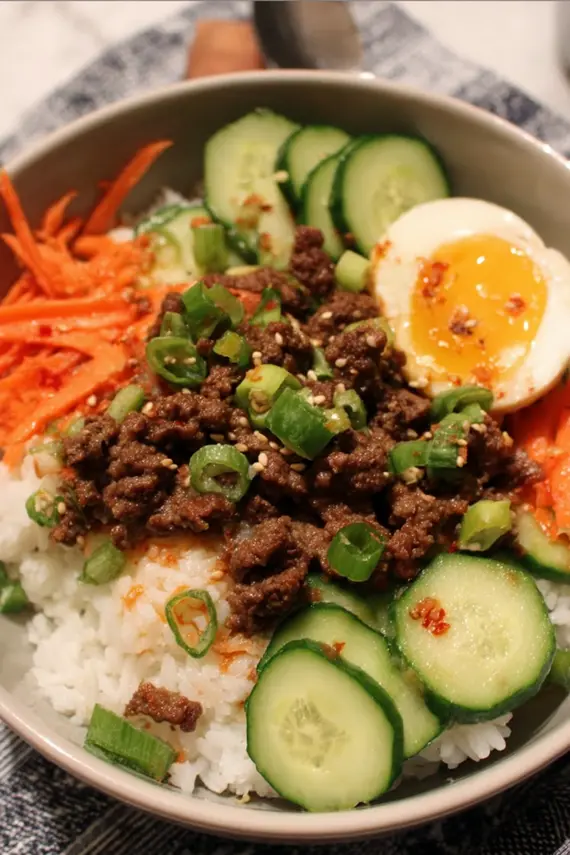
- Assemble the bowls: Divide the cooked rice among four serving bowls. Arrange the beef on top of the rice, positioning it slightly off-center to leave room for the vegetables. Add the carrot, cucumber, bean sprouts (if using), and spinach in separate sections around the bowl for visual appeal.
- Add finishing touches: Drizzle any remaining cooking sauce over the beef. Sprinkle with sliced green onions and toasted sesame seeds. If desired, add kimchi, nori strips, and sliced avocado to complete the presentation.
- Serve immediately: For the best experience, serve while the beef is still hot and the rice is warm, allowing everyone to mix the components together before eating.
“The Flavorful Chinese Chicken Salad incorporates similar Asian-inspired flavors but in a lighter, refreshing format perfect for warmer months.”
Expert Tricks for Irresistible Korean Beef Bowls
Elevate Your Recipe with Pro Techniques
These practical tips will help you achieve authentic Korean flavors and textures in your beef rice bowls, ensuring restaurant-quality results every time you make them.
- Freeze the beef for easy slicing: If you’re starting with a whole cut of beef instead of pre-sliced meat, place it in the freezer for 20-30 minutes before slicing. This firms up the meat just enough to make cutting paper-thin slices much easier.
- Don’t skip the marinating time: Even a quick 15-minute marinade makes a significant difference in flavor penetration. For meal prep, you can marinate the beef overnight in the refrigerator for even more intense flavor.
- Use cast iron for the perfect sear: A well-seasoned cast iron skillet provides the ideal high heat needed for quick cooking and beautiful caramelization on the beef. If you don’t have cast iron, any heavy-bottomed pan will work.
- Cook in small batches: Overcrowding the pan causes the meat to steam rather than sear. For the best texture and flavor, cook the beef in 2-3 batches, allowing space between each piece.
- Gochujang substitution: If you can’t find gochujang, you can substitute with 1 tablespoon of tomato paste mixed with 1 teaspoon of sriracha and ½ teaspoon of honey. The flavor won’t be identical, but it will provide a similar sweet-spicy element.
- Make extra sauce: Double the marinade recipe and set half aside (before adding raw meat) to drizzle over your finished bowls for extra flavor.
- Upgrade your rice: For extra flavor, cook your rice with a small piece of kombu (dried kelp) or substitute plain water with chicken or vegetable broth.
“The Creamy Pepper Jack Chicken also utilizes the technique of building complex flavors through layered ingredients, though with a completely different flavor profile.”
Keep Your Korean Beef Fresh for Days
Smart Storage Solutions for Leftovers
Proper storage is essential for maintaining the quality and flavor of your Korean Beef Rice Bowls. With the right approach, you can enjoy these delicious meals for several days after preparation.
For the best results, store the components of your Korean Beef Rice Bowls separately. This prevents the fresh vegetables from becoming soggy and preserves the texture of each element. The marinated beef will actually develop deeper flavor overnight as it continues to absorb the seasonings.
Refrigerator Storage:
Store cooked beef in an airtight container for up to 3-4 days in the refrigerator. The beef will maintain its flavor and can be quickly reheated when you’re ready to assemble a fresh bowl.
Rice should be cooled completely before refrigeration and can be stored for up to 4 days. To prevent bacterial growth, refrigerate rice within 1 hour of cooking, especially in warmer weather.
Fresh vegetables should be stored unwashed and uncut for maximum longevity. Once prepared, store them in separate containers with paper towels to absorb excess moisture. Most will last 2-3 days before losing their crispness.
Freezer Options:
The marinated and cooked beef freezes exceptionally well for up to 3 months. Portion it into serving sizes before freezing for easy meal prep. Thaw overnight in the refrigerator before reheating.
Cooked rice can also be frozen in airtight containers or freezer bags for up to 2 months. To reheat, sprinkle with a few drops of water before microwaving to restore moisture.
Reheating Tips:
For the best texture when reheating beef, use a skillet over medium heat rather than a microwave. Add a splash of water or broth to prevent drying out.
Rice reheats well in the microwave with a damp paper towel placed over the container to create steam, keeping the rice moist and fluffy.
“The Crack Chicken Instant Pot recipe shows how pressure cooking can create tender protein that also keeps well for meal prep throughout the week.”
Reimagine Your Korean Bowl with These Creative Twists
Customizable Options for Every Palate
Keep your meals exciting by trying these delicious variations of the classic Korean Beef Rice Bowl. Each offers a unique spin while maintaining the essence of Korean flavors.
Spicy Gochujang Explosion Bowl
For heat lovers, double the gochujang in the marinade and add 1-2 thinly sliced Thai chilies to the beef during cooking. Top the finished bowl with a spicy gochujang sauce made by mixing 2 tablespoons gochujang with 1 tablespoon honey and 1 teaspoon rice vinegar. The increased heat pairs wonderfully with cooling cucumber slices and a dollop of plain yogurt.
Vegetable-Forward Korean Bowl
Transform this dish into a vegetable celebration by doubling the fresh vegetables and adding quick-pickled radishes, sautéed mushrooms, and blanched bok choy. Reduce the beef to half a pound while keeping the same amount of marinade. This lighter version still delivers all the signature Korean flavors but with added nutritional benefits from the diverse vegetables.
Korean-Inspired Lettuce Wraps
Skip the rice and serve the marinated beef with butter lettuce leaves for wrapping. Include small dishes of diced cucumber, carrot, bean sprouts, and rice on the side, allowing everyone to build their own lettuce cups. Add a dipping sauce of soy sauce, rice vinegar, and a touch of honey for a lighter, lower-carb alternative.
Bibimbap-Style Rice Bowl
Transform your Korean beef bowl into a version of bibimbap by arranging the components in distinct sections around a bowl of rice. Add sautéed spinach, julienned zucchini, bean sprouts, and a fried egg on top. Serve with gochujang sauce on the side for mixing in at the table, creating that classic bibimbap experience.
Korean Beef Meal Prep Bowls
Create a week’s worth of lunches by preparing all components ahead of time and storing them separately. When assembling, add a tablespoon of rice vinegar and sesame oil to the cold rice to refresh it before topping with reheated beef and fresh vegetables. This method ensures your meal prep stays delicious throughout the week.
Korean Cauliflower Rice Bowl
For a lower-carb option, substitute cauliflower rice for traditional rice. Sauté riced cauliflower with a small amount of sesame oil and a pinch of salt until just tender but still firm. This variation reduces carbohydrates significantly while maintaining the satisfying bowl experience.
Serve Your Korean Beef Bowls with Style
Presentation Ideas for Different Occasions
Korean Beef Rice Bowls can be adapted for various dining occasions, from casual weeknight dinners to more elaborate weekend feasts. Here’s how to serve them for different settings and gatherings.
Weeknight Family Dinner
For a simple family meal, serve the components buffet-style, allowing everyone to build their own bowl according to their preferences. Set out the rice, beef, and prepared vegetables in separate serving dishes along with various toppings and sauces. This interactive approach is especially appealing to children and picky eaters who can choose exactly what goes into their bowl.
Casual Entertaining
When hosting friends for a relaxed gathering, create a Korean-inspired grazing table. Include your Korean beef as the centerpiece, surrounded by various banchan (Korean side dishes) like kimchi, pickled vegetables, and seasoned spinach. Add colorful serving bowls, chopsticks, and small dishes of sauces to create an authentic Korean dining experience that encourages conversation and sharing.
Meal Prep Solution
For a week of delicious lunches, portion the components into divided containers with the sauce in separate small containers. This quick Asian-inspired dressing can be a great alternative topping that stays fresh all week. Keep fresh components like cucumber separate until ready to eat to maintain their crispness.
Korean Fusion Dinner Party
Elevate your Korean beef bowls for a dinner party by using elegant ceramic serving bowls and arranging the components with artistic precision. Add unexpected garnishes like microgreens, edible flowers, or thin slices of watermelon radish for visual impact. Serve with traditional Korean sides like japchae (sweet potato noodles) and pajeon (scallion pancakes) for a complete feast.
Kid-Friendly Presentation
For younger diners, create a “build-your-own adventure” with divided plates where each section contains a different component. Reduce the gochujang if serving to spice-sensitive children, and offer milder sauces like a simple soy-honey blend. The interactive nature of assembling their own bowls makes mealtime more engaging for children.
Office Lunch Option
For a packed lunch that stands out in the break room, layer the components in a mason jar with the sauce and heavier items at the bottom, followed by the beef, vegetables, and toppings. At lunchtime, simply shake to distribute the sauce and enjoy a perfectly composed meal that’s sure to make your colleagues envious.
Common Questions About Korean Beef Bowls
Expert Answers to Your Cooking Concerns
Can I make Korean Beef Rice Bowls with other types of meat?
Absolutely! While thinly sliced beef is traditional for this dish, you can substitute with ground beef, chicken thighs, or even thinly sliced pork. For poultry, adjust the cooking time to ensure it’s fully cooked through. Vegetarians can use firm tofu or tempeh – just press the tofu first to remove excess moisture, then marinate and cook as you would the beef. Each protein will absorb the flavors differently, so feel free to adjust the marinating time accordingly.
How can I make this dish less spicy without losing authentic flavor?
Korean cuisine doesn’t always have to be spicy. To reduce the heat while maintaining authenticity, use less gochujang and substitute with more soy sauce and a touch of tomato paste for color and umami. You can also add a bit more brown sugar or honey to balance the reduced gochujang. Another approach is to serve the spicy components separately as condiments, allowing each person to add heat according to their preference.
What’s the best cut of beef to use for Korean beef bowls?
For authentic Korean beef bowls, ribeye, sirloin, or flank steak work exceptionally well. The key is to slice the meat very thinly against the grain. Many Asian grocery stores sell pre-sliced beef specifically for bulgogi or hot pot, which is ideal. If you’re slicing it yourself, place the meat in the freezer for 15-20 minutes first to firm it up for easier thin slicing. If budget is a concern, chuck or round steak can work well too, just be sure not to overcook these leaner cuts.
Your Gateway to Korean Culinary Adventures
Perfect for Beginners and Experienced Cooks Alike
Korean Beef Rice Bowls offer the perfect introduction to Korean cuisine’s vibrant flavors and balanced approach to meal composition. The combination of tender, marinated beef, fluffy rice, and fresh vegetables creates a satisfying meal that’s as nutritious as it is delicious.
What makes this dish special is its adaptability – you can easily adjust the heat level, swap ingredients based on availability, or transform it to suit dietary preferences without losing its essential Korean character. Whether you’re cooking for a quick weeknight dinner or impressing guests, these customizable bowls deliver restaurant-quality results at home.
“The Miso Mushroom Cabbage recipe offers another wonderful way to explore Asian flavors with simple ingredients available in most grocery stores.”
We encourage you to embrace the art of Korean cooking by experimenting with this versatile recipe. The techniques you’ll learn – from marinating meat to creating balanced bowls – will serve you well in countless other culinary adventures. So gather your ingredients, fire up the stove, and prepare to transport your taste buds to the vibrant streets of Seoul!
PrintKorean Beef Rice Bowls
- Authentic Korean beef rice bowls with tender marinated sirloin, fluffy jasmine rice, and fresh vegetables.
- The perfect balance of sweet, savory, and spicy flavors in one satisfying bowl.
- A quick 30-minute meal that’s easier than takeout but tastes like restaurant-quality!
- Prep Time: 15
- Cook Time: 20
- Total Time: 35 minutes
- Yield: 4 servings 1x
- Category: Dinner
- Method: Skillet
- Cuisine: Korean
Ingredients
- 1 lb thinly sliced beef sirloin
- 1 cup jasmine rice
- 2 cups water
- ½ tsp salt
- 3 tbsp low-sodium soy sauce
- 2 tbsp toasted sesame oil
- 1 tbsp gochujang (Korean chili paste)
- 2 cloves garlic, minced
- 1 tsp grated fresh ginger
- 1 tbsp brown sugar (or honey)
- 1 tbsp rice vinegar
- 1 carrot, julienned
- ½ cucumber, thinly sliced
- 2 green onions, sliced diagonally
- 1 tbsp toasted sesame seeds
- 1 cup fresh spinach (optional)
- ½ cup bean sprouts (optional)
- Kimchi for serving (optional)
Instructions
- Rinse rice under cold water until water runs clear. Add to pot with 2 cups water and salt. Bring to boil, reduce to low, cover and simmer 15-18 minutes until water is absorbed. Let stand covered 5 minutes, then fluff.
- In a medium bowl, whisk together soy sauce, sesame oil, gochujang, garlic, ginger, brown sugar, and rice vinegar until well combined.
- Add thinly sliced beef to the marinade, ensuring each piece is evenly coated. Cover and refrigerate for at least 15 minutes (up to 4 hours for deeper flavor).
- Prepare vegetables: julienne carrots, slice cucumber, and diagonally cut green onions. Set aside.
- Heat a large skillet or wok over high heat until very hot. Working in batches to avoid overcrowding, stir-fry the marinated beef until browned on edges and just cooked through, about 3-4 minutes.
- Divide cooked rice among four serving bowls. Arrange beef on top of rice, positioning it slightly off-center.
- Add carrot, cucumber, bean sprouts (if using), and spinach in separate sections around the bowl.
- Drizzle any remaining cooking sauce over the beef. Sprinkle with sliced green onions and toasted sesame seeds.
- Add kimchi on the side if desired. Serve immediately while beef is still hot and rice is warm.
Notes
- For easier slicing, freeze beef for 20-30 minutes first.
- For a spicier version, add more gochujang or a drizzle of sriracha.
- Store components separately in the refrigerator if meal prepping for up to 3 days.
- Nutrition facts are estimates and may vary based on ingredients used, portion sizes, and preparation methods.
Nutrition
- Serving Size: 1 bowl
- Calories: 410
- Sugar: 6
- Sodium: 820
- Fat: 18
- Saturated Fat: 5
- Unsaturated Fat: 11
- Carbohydrates: 38
- Fiber: 3
- Protein: 25
- Cholesterol: 65
Keywords: Korean Beef Rice Bowls, bulgogi sauce, rice bowl, Korean marinated beef, quick weeknight dinner
Let’s connect! Follow me for more Joylicious Recipes: Facebook, Instagram, Pinterest