Bakery-Fresh Seeded Spelt Sourdough Rolls: Artisanal Whole Grain Goodness
Wholesome Homemade Perfection
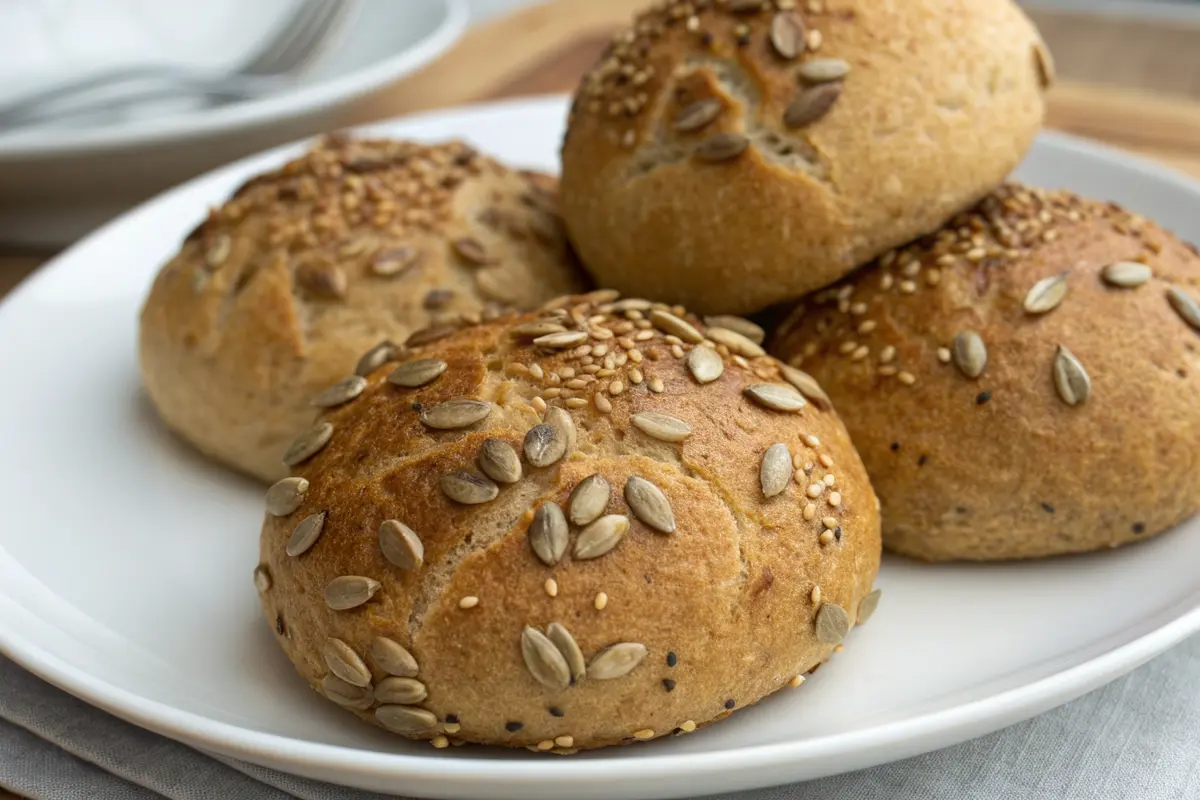
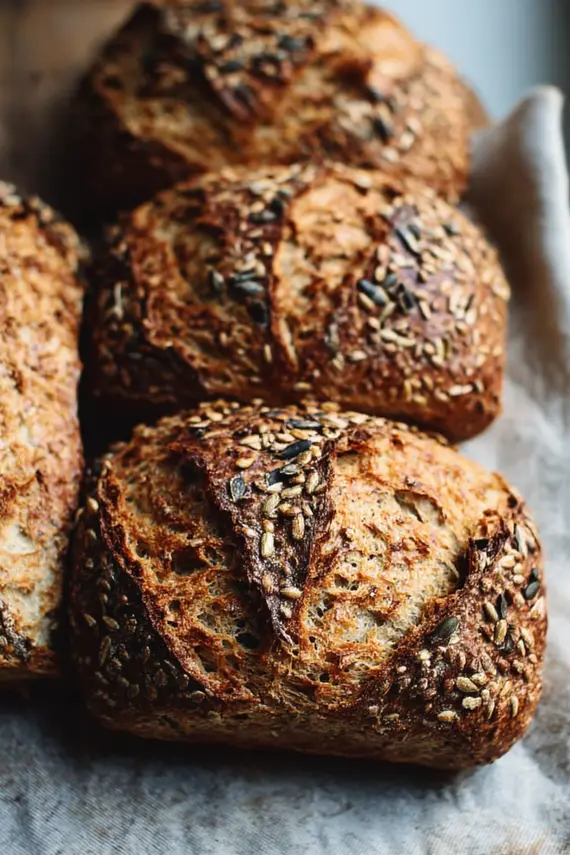
Seeded spelt sourdough rolls bring rustic, artisanal bread-making into your home kitchen with surprisingly little effort. These hearty whole grain rolls feature a perfect balance of nutty spelt flour, tangy sourdough fermentation, and the delightful crunch of mixed seeds for a texture and flavor experience that outshines anything store-bought. The natural fermentation process not only creates complex flavors but also makes these rolls more digestible than conventional bread. “The Banana Chocolate Chip Cookies recipe uses a similar folding technique to incorporate add-ins without overmixing the dough.”
These versatile rolls are perfect for breakfast with a smear of butter and jam, as sandwich bread for lunch, or alongside hearty soups and stews for dinner. The subtle tang from the sourdough starter pairs beautifully with the earthy notes of spelt flour, while the mixed seeds add both nutrition and a satisfying textural element that keeps you coming back for more.
Essential Ingredients for Perfect Seeded Whole Grain Rolls
Understanding Your Flour Base
The foundation of these seeded spelt sourdough rolls relies on quality ingredients that work together to create that perfect balance of flavor, texture, and nutrition. Each component plays a vital role in the final result:
| Ingredient | Quantity | Notes |
|---|---|---|
| Spelt flour | 2 cups | Ancient grain with nutty flavor and higher protein than regular wheat |
| Whole wheat flour | 1 cup | Adds structure and additional whole grain nutrition |
| Active sourdough starter | 1 cup | 100% hydration (equal parts flour and water), fed 8-12 hours before use |
| Mixed seeds | 1/4 cup | Combination of sunflower, pumpkin, sesame, and flax seeds |
| Honey | 2 tbsp | Provides slight sweetness and helps with browning |
| Salt | 1 tsp | Fine sea salt preferred for even distribution |
| Water | 3/4 cup | Filtered or spring water at room temperature |
| Olive oil | 2 tbsp | Extra virgin for best flavor |
| Additional seeds for topping | 2-3 tbsp | Optional but recommended for visual appeal and extra crunch |
| Egg wash (1 egg + 1 tbsp water) | As needed | Optional, helps seeds adhere to top of rolls |
| Rolled oats | 2 tbsp | Optional topping for visual appeal and texture |
| Vital wheat gluten | 1 tbsp | Optional, helps with rise when using 100% whole grain flours |
“For additional protein in your bread-making routine, you might enjoy the Peanut Chicken Bold Stir Fry as a hearty accompaniment to these wholesome rolls.”
Crafting Your Artisan Spelt Rolls: Step-by-Step Process
Perfecting the Dough Development
Follow these detailed instructions to create bakery-worthy seeded spelt sourdough rolls in your own kitchen. The process is methodical but rewarding, with each step building toward that perfect combination of crisp exterior and tender, flavorful interior:
- In a large bowl, combine 2 cups spelt flour, 1 cup whole wheat flour, and 1 teaspoon salt. Whisk together until well incorporated to ensure even distribution of salt throughout the dough.
- In a separate bowl, mix 3/4 cup room temperature water with 2 tablespoons honey and 2 tablespoons olive oil until the honey dissolves completely.
- Add 1 cup active sourdough starter to the wet ingredients and stir until fully combined. Your starter should be at peak activity—bubbly and doubled in volume.
- Pour the wet mixture into the flour mixture and stir with a wooden spoon until a shaggy dough forms. The dough will seem dry at first, but continue mixing until no dry flour remains at the bottom of the bowl.
- Turn the dough onto a lightly floured work surface and knead for 5-7 minutes until smooth and elastic. The dough should pass the windowpane test—when a small piece can be stretched thin enough to see light through without tearing.
- Gently fold in 1/4 cup mixed seeds (sunflower, pumpkin, sesame, and flax) until evenly distributed throughout the dough, being careful not to over-knead at this stage.
- Shape the dough into a ball and place in a lightly oiled bowl. Cover with a damp kitchen towel or plastic wrap and let bulk ferment for 3-4 hours at room temperature (68-72°F) until nearly doubled in size. The dough should look puffy and show visible air bubbles.
- Gently deflate the dough by folding the edges toward the center. Turn onto a clean work surface and divide into 12 equal pieces (about 75-85g each) using a bench scraper or knife.
- Shape each piece into a tight ball by cupping your hand around the dough and moving in small circles on an unfloured section of your work surface. This creates tension on the surface of the dough, which is essential for proper rising.
- Place the shaped rolls on a parchment-lined baking sheet, leaving about 2 inches between each roll to allow for expansion.
- If desired, brush the tops with egg wash and sprinkle with additional seeds or rolled oats for a professional bakery appearance.
- Cover the rolls loosely with a kitchen towel or plastic wrap and let proof for 1-2 hours until noticeably puffed. They won’t quite double in size but should spring back slowly when gently poked with a finger.
- Preheat your oven to 375°F about 30 minutes before baking. For extra crispness, place a shallow pan of water on the bottom rack to create steam.
- Bake the rolls for 20-25 minutes until deeply golden brown on top and bottom. They should sound hollow when tapped on the bottom and reach an internal temperature of approximately 200°F if using a thermometer.
- Transfer to a wire rack immediately after baking to prevent the bottoms from becoming soggy and allow to cool for at least 20 minutes before slicing.
“If you’re looking for a light and refreshing side to serve with these hearty rolls, the Kale Crunch Salad Recipe provides a perfect balance of textures and flavors to complement the bread.”
Expert Baking Insights for Sourdough Success
Troubleshooting Common Challenges
These helpful tips will elevate your seeded spelt sourdough rolls from good to exceptional, helping you navigate common challenges and personalize the recipe to suit your preferences:
- Starter activity matters – Use your sourdough starter at its peak activity (when doubled in volume with plenty of bubbles), usually 8-12 hours after feeding at room temperature. This ensures proper fermentation and the best rise.
- Hydration adjustments – Spelt flour typically absorbs less water than regular wheat flour. If your dough seems too dry, add water 1 tablespoon at a time until it feels tacky but not sticky. Conversely, if it’s too wet, add additional spelt flour 1 tablespoon at a time.
- Temperature control – Fermentation happens faster in warmer environments. On hot days (above 78°F), reduce bulk fermentation time by 30-60 minutes; on cold days (below 65°F), extend it by 1-2 hours or place the dough in a slightly warmer location.
- Seed variations – Toast seeds lightly before adding to the dough for enhanced flavor. You can customize the seed mix based on your preferences—chia, hemp, or poppy seeds work wonderfully too.
- Sweetener options – Honey can be substituted with maple syrup or agave for a vegan version without significant changes to the final product.
- Flour alternatives – If you don’t have spelt flour, you can substitute with all whole wheat flour, though the texture will be slightly denser. For a lighter roll, replace up to 1 cup of whole grain flour with bread flour or all-purpose flour.
- Scoring technique – For decorative rolls, use kitchen scissors or a sharp knife to snip small cuts on top of each roll just before baking. This creates attractive patterns and allows for controlled expansion.
Keeping Your Homemade Rolls Fresh and Delicious
Maximizing Shelf Life and Quality
Proper storage is key to maintaining the freshness and quality of your seeded spelt sourdough rolls. Unlike commercially produced bread with preservatives, homemade sourdough requires special attention to preserve its texture and flavor:
For same-day enjoyment, simply keep your cooled rolls in a paper bag or bread box at room temperature. The crusty exterior helps protect the soft interior for 8-10 hours after baking. If you’re planning to enjoy the rolls within 2-3 days, place them in a sealed container or zip-top bag with a paper towel to absorb excess moisture. Store at room temperature away from direct sunlight.
For longer storage up to 5 days, wrap each roll individually in a small piece of parchment paper, then place in an airtight container. This method helps maintain the crust’s integrity while preventing the interior from drying out too quickly. “The Mediterranean Lemon Basil Chicken keeps well alongside these rolls for packed lunches that stay fresh and flavorful.”
To extend shelf life beyond 5 days, freezing is your best option. Once completely cooled, place the rolls in a freezer-safe bag, removing as much air as possible before sealing. Frozen rolls will maintain excellent quality for up to 3 months. To reheat, thaw at room temperature for 30 minutes, then warm in a 350°F oven for 5-7 minutes to restore the crusty exterior.
Avoid refrigerating these rolls, as this temperature range (35-40°F) actually accelerates staling in bread products. The cold environment causes starch retrogradation—a process where the bread becomes firm and dry more quickly than at room temperature or when frozen.
Delightful Twists on Classic Seeded Sourdough
Creative Adaptations for Every Occasion
While the basic recipe yields wonderful results, these variations offer exciting ways to customize your spelt sourdough rolls for different meals and preferences:
Mediterranean Herb Edition – Add 2 tablespoons of mixed fresh herbs (rosemary, thyme, and oregano) to the dough along with 1/4 cup chopped olives and 2 tablespoons of sun-dried tomatoes. Top with flaky sea salt before baking for a savory Mediterranean-inspired roll perfect alongside soups and salads.
Breakfast Sweet Rolls – Increase honey to 3 tablespoons and add 1 teaspoon of cinnamon and 1/2 cup dried cranberries or raisins to the dough. Replace the mixed seeds with 1/3 cup chopped walnuts or pecans for a slightly sweet breakfast roll that’s delicious with butter or cream cheese.
Onion and Herb Variation – Sauté 1 medium onion until caramelized and fold into the dough along with 1 tablespoon fresh thyme leaves. This savory variation makes an excellent sandwich roll or accompaniment to hearty winter stews. Top with a sprinkle of dried onion flakes before baking.
High-Protein Power Rolls – Boost the protein content by adding 3 tablespoons of hemp seeds to the dough along with 2 tablespoons of vital wheat gluten. Replace half the mixed seeds with chopped walnuts for added protein and omega-3 fatty acids, creating a roll that’s perfect for health-conscious eaters.
Gluten-Friendly Version – While not gluten-free, you can make these more digestible for those with mild wheat sensitivities by using 100% spelt flour (3 cups total) instead of the wheat/spelt combination. Extend the fermentation time to 5-6 hours to further break down the gluten proteins.
Express Overnight Rolls – For busy schedules, mix the dough in the evening and use only 1/2 cup starter with cold water. After minimal kneading, place immediately in the refrigerator for 12-18 hours. The next morning, shape into rolls, let rise for just 1 hour at room temperature, then bake for fresh rolls with minimal active preparation time.
Serving Your Freshly Baked Sourdough Treasures
Perfect Pairings and Presentation
These versatile spelt sourdough rolls can enhance nearly any meal throughout the day. Here are some inspired ways to serve and enjoy them:
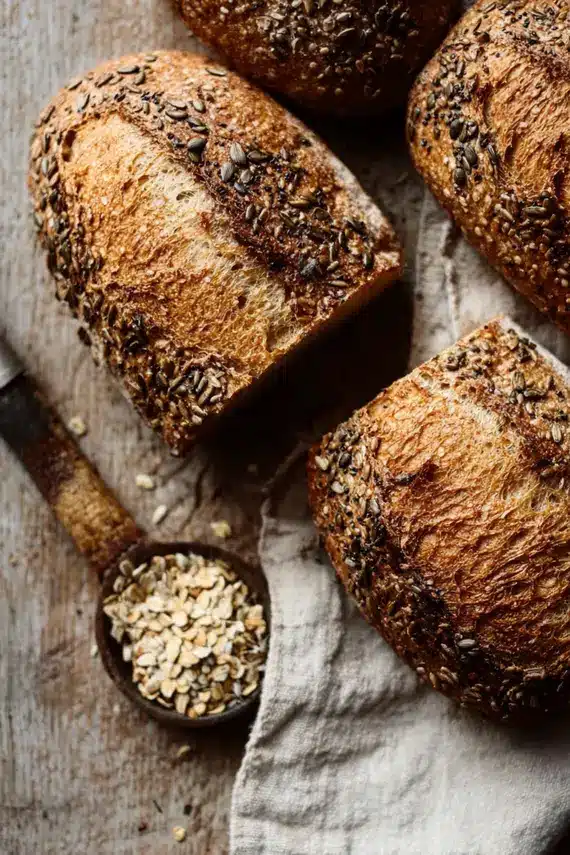
For a wholesome breakfast, slice rolls horizontally and lightly toast, then top with mashed avocado, sliced tomatoes, and a sprinkle of everything bagel seasoning. The nutty flavor of the spelt flour and seeds complements the creamy avocado perfectly. Alternatively, serve warm with a pat of grass-fed butter and a drizzle of raw honey for a simple yet satisfying morning treat.
At lunchtime, these rolls make exceptional sandwiches. Their sturdy texture stands up well to hearty fillings without becoming soggy. Try filling them with hummus, cucumber, sprouts, and roasted red peppers for a plant-based option, or layer with zesty Mexican tuna salad for a protein-rich midday meal that’s far from ordinary.
For dinner, serve alongside soups and stews to soak up the flavorful broths. The seeded exterior adds a wonderful textural contrast to creamy soups like butternut squash or tomato bisque. You can also slice the rolls in half, brush with olive oil, and toast under the broiler for a few minutes to make rustic crostini—perfect for topping with bruschetta or serving alongside a cheese board.
When entertaining, present these rolls in a cloth-lined basket with herb-infused olive oil for dipping. The artisanal appearance of the seeded crust makes them an impressive addition to any table. For an elevated presentation, slice rolls horizontally and use as the base for mini open-faced sandwiches topped with smoked salmon, cucumber, and dill for an elegant appetizer.
These rolls also make thoughtful homemade gifts. Package 4-6 rolls in a cloth-lined box or basket with a jar of homemade preserves or flavored butter for a heartwarming present that showcases your baking skills.
Answering Your Sourdough Questions
Solving Common Baking Challenges
Can I make these rolls with a young or unfed sourdough starter?
While an active, mature starter produces the best results, you can use a young starter (less than 2 weeks old) by adding 1/4 teaspoon of instant yeast to help with the rise. Unfed starter (straight from the refrigerator) is not recommended as it lacks the leavening power needed for proper fermentation, resulting in dense rolls. If you must use refrigerated starter, feed it and allow it to become active (at least 4-6 hours) before making the dough.
Why didn’t my rolls rise properly during proofing?
Several factors could affect rise: 1) Your starter might not have been active enough – it should double in volume and be bubbly before using; 2) The ambient temperature might be too cool – optimal proofing temperature is 70-75°F; 3) The dough might be too dry – spelt flour sometimes requires slightly more hydration than indicated; or 4) Over-kneading can damage the gluten structure. Next time, ensure your starter is very active, consider using a proofing box or warm oven (turned off) for consistent temperature, adjust water if needed, and be gentle when kneading.
How can I achieve a crispier crust on my spelt sourdough rolls?
For an exceptionally crispy crust: 1) Create steam in your oven by placing a shallow pan with hot water on the bottom rack during preheating; 2) Spray the oven walls with water just before putting the rolls in; 3) Bake at a slightly higher temperature (400°F) for the first 10 minutes, then reduce to 375°F for the remaining time; 4) Leave the rolls in the turned-off oven with the door cracked open for 5 minutes after baking. These techniques help develop that professional bakery-style crust while maintaining a tender interior.
Embracing the Art of Homemade Bread Making
Continuing Your Sourdough Journey
Mastering these seeded spelt sourdough rolls opens a world of artisanal bread-making possibilities right in your home kitchen. The wonderful blend of nutty spelt flour, tangy sourdough, and crunchy seeds creates rolls that are not only nutritionally superior to store-bought versions but infinitely more satisfying to create and share. “For another delicious recipe that combines wholesome ingredients with fantastic flavor, try the Garlic Parmesan Grilled Chicken as a protein-packed main dish alongside these fresh-baked rolls.”
With each batch, you’ll develop a deeper understanding of the fascinating relationship between flour, water, time, and temperature. Don’t be discouraged if your first attempt isn’t perfect—sourdough baking is as much about the journey as it is about the destination. Observe how your dough behaves, make notes, and adjust accordingly for your next bake. Soon you’ll be confidently creating variations of your own and experiencing the incomparable satisfaction of pulling perfectly golden, fragrant rolls from your oven.
We’d love to see your baking success! Share photos of your seeded spelt sourdough rolls and tag us on social media, or leave a comment below describing your experience with this recipe. Happy baking!
PrintSeeded Spelt Sourdough Rolls

- Rustic, artisanal bread rolls featuring nutty spelt flour, tangy sourdough, and crunchy mixed seeds.
- These wholesome rolls offer the perfect balance of flavor, nutrition, and texture.
- Ideal for breakfast, sandwiches, or alongside soups and stews.
- Prep Time: 30
- Cook Time: 25
- Total Time: 55 minutes
- Yield: 12 rolls 1x
- Category: Breakfast & Brunch
- Method: Baking
- Cuisine: Artisanal
Ingredients
- 2 cups spelt flour
- 1 cup whole wheat flour
- 1 cup active sourdough starter (100% hydration, fed 8–12 hours before use)
- 1/4 cup mixed seeds (sunflower, pumpkin, sesame, flax)
- 2 tbsp honey
- 1 tsp fine sea salt
- 3/4 cup room temperature water
- 2 tbsp extra virgin olive oil
- 2–3 tbsp additional seeds for topping (optional)
- 1 egg mixed with 1 tbsp water for egg wash (optional)
Instructions
- In a large bowl, combine spelt flour, whole wheat flour, and salt. Whisk until well incorporated.
- In a separate bowl, mix water with honey and olive oil until honey dissolves completely.
- Add active sourdough starter to wet ingredients and stir until combined.
- Pour wet mixture into dry ingredients and stir until a shaggy dough forms.
- Turn dough onto a lightly floured surface and knead for 5-7 minutes until smooth and elastic.
- Gently fold in mixed seeds until evenly distributed.
- Place dough in a lightly oiled bowl, cover, and let bulk ferment for 3-4 hours at room temperature until nearly doubled.
- Gently deflate dough and divide into 12 equal pieces (about 75-85g each).
- Shape each piece into a tight ball by creating tension on the surface.
- Place shaped rolls on a parchment-lined baking sheet, leaving 2 inches between each.
- If desired, brush with egg wash and sprinkle with additional seeds.
- Cover loosely and let proof for 1-2 hours until noticeably puffed.
- Preheat oven to 375°F about 30 minutes before baking.
- Bake for 20-25 minutes until deeply golden brown and hollow-sounding when tapped.
- Transfer to a wire rack and cool for at least 20 minutes before slicing.
Notes
- Use your sourdough starter at peak activity for best results.
- The dough should feel tacky but not sticky – adjust water or flour as needed.
- Extend fermentation time in cooler environments or shorten in warmer conditions.
- For extra-crispy crust, place a shallow pan of water in the oven during baking.
- Store in a paper bag or bread box at room temperature for 1-2 days, or freeze for longer storage.
- Nutrition facts are estimates and may vary based on ingredients used, portion sizes, and preparation methods.
Nutrition
- Serving Size: 1 roll
- Calories: 185
- Sugar: 3
- Sodium: 195
- Fat: 6
- Saturated Fat: 1
- Unsaturated Fat: 5
- Carbohydrates: 29
- Fiber: 4
- Protein: 6
Keywords: seeded spelt sourdough rolls, spelt bread, sourdough starter, seeded rolls, whole grain rolls, homemade bread
Let’s connect! Follow me for more Joylicious Recipes: Facebook, Instagram, Pinterest