
Mango Sorbet: The Ultimate Homemade Recipe for a Refreshing Treat
Mango sorbet is the ultimate summer dessert. It’s refreshing, naturally sweet, and incredibly easy to make at home using just a handful of clean ingredients. If you’re tired of overly processed ice cream or dairy-packed treats, mango sorbet delivers the cool satisfaction you crave—without the guilt. In fact, this frozen fruit-based dessert has gained massive popularity for its bright flavor and simple preparation.
In this guide, you’ll discover exactly how to make mango sorbet from scratch. We’ll explain the benefits of each ingredient, explore flavor-enhancing techniques, compare fresh and frozen mango, and share serving and storage tips. Along the way, you’ll learn how this healthy treat stacks up against traditional ice cream.
Looking for more tropical dessert inspiration? Don’t miss our mango panna cotta recipe for another fruit-forward favorite.
Introduction to Mango Sorbet
What Is Mango Sorbet?
Simply put, mango sorbet is a frozen dessert made from puréed mango, a natural liquid sweetener, lime juice, and salt. It contains no dairy, eggs, or artificial ingredients. As a result, it’s ideal for vegans and those avoiding processed foods.
This specific version includes:
- 2 (10-ounce) bags of frozen mango chunks (about 5 cups)
- 1/3 cup of your preferred liquid sweetener (maple syrup, simple syrup, honey, or agave)
- 2 tablespoons of freshly squeezed lime juice
- 1/4 teaspoon of kosher salt
Because it’s made in a high-speed blender or food processor, the texture turns out creamy and scoopable. However, you can also enjoy it soft-serve style if you prefer a lighter consistency.
Why Mango Sorbet Is the Ultimate Summer Treat
There’s a reason mango sorbet has become a must-have in warm-weather months. Not only does it cool you down quickly, but it also offers a tropical taste that feels like a mini vacation. Furthermore, the simplicity of the recipe means you can whip it up anytime—without needing an ice cream maker.
Health-conscious dessert lovers especially appreciate mango sorbet. Since it’s dairy-free and naturally low in fat, it fits effortlessly into most lifestyles. Plus, you control the sweetness and ingredients, which makes it even better than store-bought versions.
In addition, mango pairs beautifully with other fruits. For a fun flavor spin, try it with coconut, passionfruit, or pineapple. Want more frozen fruit recipes? Discover great ideas like our mango popsicles.
Whether you serve it as a light dessert, an afternoon treat, or even a brunch palate cleanser, mango sorbet never disappoints. Its vibrant color, smooth texture, and zesty flavor keep people coming back for more.
Key Ingredients and Their Benefits
Frozen Mango Chunks: Flavor & Nutrition
Let’s start with the star of the show—mango. Choosing high-quality, frozen mango chunks ensures your sorbet is naturally sweet, smooth, and full of rich tropical flavor. Because frozen mango has already been peeled, chopped, and chilled, it cuts prep time significantly. That makes it perfect for busy home cooks or last-minute dessert needs.
Nutritionally, mango is packed with vitamin C, vitamin A, and antioxidants. It promotes better skin health, supports the immune system, and delivers natural energy—without relying on processed sugars. Not to mention, its fiber content also aids digestion, which is a bonus when indulging in a sweet treat.
If you want maximum flavor, go for mangoes that are flash-frozen at peak ripeness. That way, you’ll get all the sweetness you need—without adding extra sugar.
Looking for a mango dessert with a creamy finish? Check out our peach ice cream recipe to experiment with fruit-based frozen blends.
Lime Juice and Natural Sweeteners: Taste & Balance
Although mango carries natural sweetness, a bit of acidity from fresh lime juice balances the flavor beautifully. Lime enhances the brightness of the mango while cutting any excess sweetness. It also gives the sorbet a refreshing zing that makes each bite feel lighter and cleaner.
The recipe calls for 2 tablespoons of freshly squeezed lime juice. While it might seem like a small amount, it plays a huge role in boosting overall flavor. Additionally, the lime helps to stabilize the frozen texture, so your sorbet doesn’t get icy or bland.
On the sweetener side, you have options:
- Maple syrup adds depth and earthiness
- Honey delivers a floral touch
- Agave nectar keeps it light and low-glycemic
- Simple syrup keeps it neutral and clean
Each one brings its own subtle flavor. So depending on your dietary preferences and what you have on hand, you can personalize the recipe easily. Regardless of which sweetener you use, 1/3 cup is enough to smooth out the mango’s tanginess while preserving its tropical notes.
Another secret weapon? Kosher salt. While it’s just 1/4 teaspoon, it intensifies the mango flavor and keeps the sweetness from overpowering the palate.
Trying to eat more plant-based? Don’t miss our vegan ice cream recipe for more dairy-free frozen treats that deliver full flavor.
Summary Table: Ingredient Breakdown & Purpose
| Ingredient | Quantity | Purpose |
|---|---|---|
| Frozen Mango Chunks | 2 bags (10 oz ea) | Provides natural sweetness, texture, and color |
| Liquid Sweetener | 1/3 cup | Enhances flavor and improves blendability |
| Fresh Lime Juice | 2 tbsp | Brightens flavor and balances sweetness |
| Kosher Salt | 1/4 tsp | Amplifies mango flavor and rounds out the sweetness |
How to Make Mango Sorbet at Home
Step-by-Step Mango Sorbet Recipe Process
Making mango sorbet at home is easier than you think. In fact, you don’t even need an ice cream machine. All you need is a high-speed blender or food processor and four simple ingredients. This no-churn mango sorbet comes together in just minutes and delivers a creamy texture that rivals anything you’ll find in a store.
Here’s how to do it:
Ingredients:
- 2 (10-ounce) bags frozen mango chunks (about 5 cups)
- 1/3 cup liquid sweetener of your choice (maple syrup, simple syrup, honey, or agave nectar)
- 2 tablespoons of lime juice, freshly squeezed from one medium-sized lime
- 1/4 teaspoon kosher salt
Instructions:
- Prep the mango: Let the frozen mango chunks sit at room temperature for about 10 minutes. This step helps soften them just slightly, making the blending smoother. However, don’t let them thaw completely—keep them mostly frozen.
- Blend it all together: In a food processor or high-speed blender, combine the mango chunks, sweetener, lime juice, and salt. Pulse until the bottom portion becomes smooth while the top remains chunky—this usually takes about 1 minute.
- Scrape and stir: Stop the blender, scrape down the sides with a spatula, and stir the mixture to redistribute the chunks.
- Blend again: Continue processing until the sorbet becomes smooth and creamy throughout. Depending on your machine, this might take 4 to 5 minutes total. Stop occasionally to scrape down the sides, ensuring a smooth and even blend.
- Serve or freeze:
- For soft-serve mango sorbet, serve immediately with a spoon.
- For a firmer texture, transfer the sorbet to an airtight container or loaf pan. Place a layer of parchment or wax paper directly over the surface.
- If using a loaf pan, wrap the whole pan in plastic wrap to prevent ice crystals.
- Freeze for 2 to 3 hours until solid.
Now you have the perfect homemade mango sorbet—silky, fruity, and packed with tropical flavor!
Craving another fruity summer option? Discover great ideas like our sunshine salad recipe to round out your warm-weather menu.
Tips for Blending the Perfect Smooth Texture
Even though the process is simple, a few tricks can make a big difference in your final result:
- If your blender includes a tamper, use it to push the mixture toward the blades for better blending. This helps push the mango down toward the blades.
- Add the sweetener and lime juice first. Liquids on the bottom help the blades turn better.
- Avoid over-blending. The friction from the motor can start to melt the sorbet, which affects the texture.
- Scrape the bowl regularly. This ensures even blending and prevents chunks from hiding at the top.
By following these tips, you’ll get that dreamy, creamy mango sorbet consistency every time—no iciness, no hassle.
Why It Works
Mango’s natural texture contains just the right amount of fiber and sugar to create a smooth, scoopable sorbet without needing dairy or thickeners. Plus, the combination of sweetener, acid (lime), and salt elevates the flavor, ensuring each bite is refreshing and well-balanced.
Fresh Mango vs Frozen Mango
How to Freeze Fresh Mango Like a Pro
While frozen mango chunks offer unbeatable convenience, using fresh mango is absolutely possible—and often just as flavorful. However, proper preparation is key to achieving that creamy sorbet consistency. If the mango isn’t frozen correctly, you risk ending up with a watery or icy texture.
Here’s how to do it right:
- Start with ripe mangoes: Choose mangoes that are slightly soft to the touch and fragrant. Overripe fruit may become too mushy when frozen, while under-ripe mango lacks sweetness and flavor.
- Peel and dice: Remove the skin, slice around the pit, and cut the mango into 3/4-inch cubes. Smaller pieces freeze faster and blend more easily.
- Line a tray: Arrange the mango cubes in a single layer on a parchment-lined baking sheet. This prevents them from sticking together during freezing.
- Freeze until solid: Place the tray in the freezer and let the mango chunks freeze completely, which usually takes a minimum of 4 hours.
- Transfer to a container: Once frozen, move the chunks into a resealable freezer-safe bag or airtight container. This step saves space and keeps the mango ready for sorbet at any time.
This technique ensures that your mango freezes evenly and remains blendable, making it perfect for crafting a smooth, dairy-free sorbet without any special equipment.
Want a creamy fruit-based dessert with a twist? Don’t miss our vegan ice cream recipe packed with plant-based flavor.
Does Fresh Mango Affect the Sorbet’s Texture?
Yes—the type of mango you use can significantly impact your sorbet’s final texture and taste. Here’s how:
Texture
Frozen mango is typically flash-frozen at peak ripeness, locking in sweetness and firmness. It blends well without turning watery. On the other hand, if you use mango that isn’t frozen completely—or wasn’t diced and frozen properly—it can create a thinner, more slushy consistency.
Additionally, fresh mango contains more water. So when it’s not frozen first, it may dilute the mixture and lead to a less creamy result.
Flavor
Fresh mango often has a slightly richer, more aromatic flavor—especially if you pick a premium variety like Ataulfo or Champagne mangoes. However, frozen mango is typically more consistent in sweetness, especially when bought from reliable brands.
Verdict
For best results, freeze your fresh mango first using the method above. This gives you the flavor advantage of fresh fruit with the creamy consistency you’d expect from pre-frozen chunks.
Quick Comparison Table
| Feature | Frozen Mango | Fresh Mango (Home-Frozen) |
|---|---|---|
| Convenience | Ready to use | Requires peeling, dicing, freezing |
| Flavor | Mild but sweet | Often richer and more fragrant |
| Texture Consistency | Smooth and predictable | May vary depending on ripeness |
| Prep Time | Instant | Adds 4+ hours of freeze time |
| Best For | Quick recipes | Homemade sorbet with flavor control |
Sweeteners & Flavor Enhancers
Comparing Maple Syrup, Honey, Agave, and Simple Syrup
While mango brings plenty of natural sweetness on its own, adding the right sweetener ensures that your sorbet has a smooth texture and balanced flavor. Plus, it helps prevent the sorbet from freezing too hard—thanks to the sugar content acting as a natural softener.
Here’s how each sweetener option stacks up:
| Sweetener | Flavor Profile | Benefits | Best Use Case |
|---|---|---|---|
| Maple Syrup | Deep, earthy sweetness | Adds complexity and richness | Pairs well with overripe mango |
| Honey | Floral, slightly tangy sweetness | Natural preservative, subtle fruit enhancer | Ideal if you enjoy bold, round flavors |
| Agave Nectar | Mild, neutral sweetness | Low glycemic index, smooth texture | Perfect for lighter, less assertive blends |
| Simple Syrup | Clean, sugar-like taste | Easiest to control sweetness level | Great if you want the mango to shine |
If you’re aiming for a vegan mango sorbet, stick to agave nectar or maple syrup. For those who love layered flavors, honey adds a lovely depth that complements mango’s tropical vibe.
Whichever sweetener you choose, the recommended amount—1/3 cup—strikes a great balance between sweetening the fruit and keeping that vibrant mango taste front and center.
Using Lime Juice and Salt to Enhance Mango Flavor
Sweetness alone isn’t enough. To truly make your mango sorbet pop, you need balance. That’s where lime juice and kosher salt come in.
Why Lime Juice Matters
In the same way salt boosts savory dishes, acidity sharpens and elevates sweet flavors. Freshly squeezed lime juice brings out the best in mango by cutting through its richness and highlighting its natural tang. In addition, it prevents the sorbet from tasting flat or overly sweet.
Use 2 tablespoons of lime juice, squeezed from one medium lime. It may seem small, but this amount adds just the right lift without overpowering the fruit.
The Underrated Power of Salt
Although it’s only 1/4 teaspoon, kosher salt acts like a flavor amplifier. It intensifies the mango’s tropical notes, evens out the sweetness, and adds subtle complexity.
When combined with mango and your chosen sweetener, this trifecta of fruit, acid, and salt creates a dessert that’s bright, creamy, and deeply satisfying.
Craving a fruity twist with herbs or spices? Try our blackberry basil ricotta pizza for a unique flavor combo that complements summer desserts like mango sorbet.
Customize to Your Taste
Because this mango sorbet recipe is flexible, you can easily tweak the flavor based on what you love. Want a more citrus-forward profile? Add some orange zest. Prefer less sweetness? Cut the sweetener by a tablespoon. Like it tropical? Toss in a little pineapple juice or coconut milk.
Mango is incredibly forgiving—it pairs well with nearly anything fresh and fruity. Don’t be afraid to experiment until you land on the version that makes your taste buds dance.
Storage, Shelf Life & Serving Suggestions
How to Store Mango Sorbet the Right Way
Once your mango sorbet is blended to perfection, you have two serving options: enjoy it immediately as a soft-serve or freeze it for a firmer, scoopable texture. But storage matters. Done wrong, and your sorbet becomes icy, bland, or rock-hard. Done right, and it remains creamy and vibrant every time you dig in.
Here’s how to store mango sorbet for optimal results:
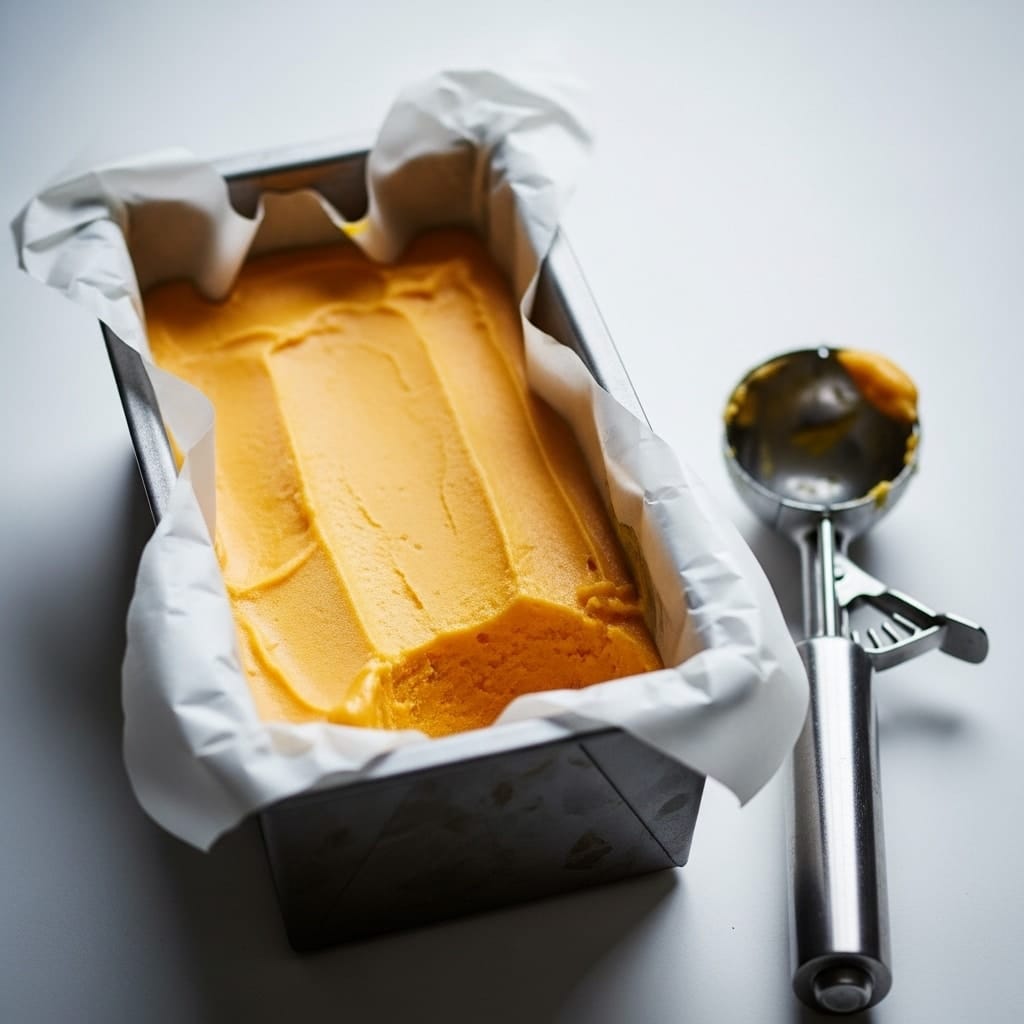
- Choose the right container: Use an airtight container or a metal loaf pan. If using a loaf pan, line the surface of the sorbet with parchment or wax paper to prevent air exposure and freezer burn.
- Wrap it tightly: For added protection, wrap the entire pan in plastic wrap before placing it in the freezer. This prevents ice crystals from forming on the surface and keeps flavors locked in.
- Freeze until solid: Let it firm up in the freezer for 2 to 3 hours. This short freeze creates a classic sorbet texture without turning it into an ice block.
- Scoop like a pro: When ready to serve, let the container sit at room temperature for 5–10 minutes. This makes scooping easier and returns the sorbet to its creamy, melt-in-your-mouth consistency.
- Storage life: Properly stored, mango sorbet stays fresh in the freezer for up to 2 weeks. After that, the flavor and texture can begin to degrade.
Serving Tips: Soft-Serve, Scooped, or Frozen Block
You can enjoy mango sorbet in more ways than one. Based on your texture preference and the sorbet’s freeze time, here are three enjoyable ways to serve it:
Soft-Serve Style
Right after blending, serve the sorbet as a light and creamy soft-serve. This version is perfect if you’re in a hurry or want something extra smooth and spoonable.
Classic Scoop
Once it’s been frozen for a few hours, the mango sorbet sets to a perfectly firm, scoopable consistency. It holds its shape and gives that classic scoop texture you expect from high-end sorbet shops.
Frozen Dessert Bar
Hosting a party? Spread the sorbet into a shallow tray, freeze until solid, then cut it into bars or chunks. Pair it with fresh fruit or drizzle with dark chocolate for an elevated presentation.
You can also layer it with other frozen treats. Want to impress your guests? Try pairing mango sorbet with strawberry shortcake ice cream for a fruity, colorful dessert duo.
Best Pairings for Mango Sorbet
To take your mango sorbet to the next level, consider pairing it with:
- Fresh berries or pomegranate seeds for contrast
- Toasted coconut flakes for a tropical crunch
- Mint leaves or basil for a herby refresh
- A drizzle of lime-infused agave for extra tang
- Crushed pistachios for texture and nutty flavor
These simple additions elevate the visual appeal and add complexity to the flavor without overpowering the mango.
Nutritional Facts and Health Benefits
Is Mango Sorbet Healthy Compared to Ice Cream?
When it comes to frozen desserts, many people wonder: Is mango sorbet healthier than ice cream? The short answer is yes—especially when it’s homemade using real fruit and natural sweeteners.
Here’s how mango sorbet stands out:
1. Lower in Calories and Fat
Mango sorbet contains no dairy or eggs, which immediately reduces its calorie and saturated fat content. While a single scoop of regular ice cream may have over 200 calories and 10 grams of fat, a scoop of homemade mango sorbet clocks in at about 90–120 calories with virtually zero fat—depending on the sweetener used.
2. No Cholesterol or Lactose
Because it’s made without cream or milk, mango sorbet is 100% lactose-free and cholesterol-free. This makes it ideal for those with lactose intolerance or anyone seeking heart-healthy options.
3. Fruit-Forward and Nutrient Dense
Mango is rich in vitamin C, vitamin A, and fiber. It supports immunity, skin health, and digestion. Even though it’s a dessert, mango sorbet still delivers essential nutrients, unlike heavily processed ice cream alternatives.
Low-Calorie Dessert Option or Sugar Bomb?
Now let’s talk sugar.
Even healthy desserts can go overboard on sweeteners—especially store-bought versions. But when you make mango sorbet at home, you have full control over what goes in. By sticking to 1/3 cup of natural liquid sweetener, you limit added sugars while letting the fruit’s natural sweetness shine.
If you’re managing your sugar intake, consider:
- Using agave nectar for a lower glycemic impact
- Blending in stevia or monk fruit as a partial replacement
- Choosing extra-ripe mangoes to reduce the need for added sugar
However, because mango contains natural fruit sugar, the overall carb content remains moderate. So while it’s a far better option than ice cream, moderation is still key.
Nutritional Snapshot: 1 Serving of Homemade Mango Sorbet (Approx. 1/2 Cup)
| Nutrient | Amount (Estimate) |
|---|---|
| Calories | 90–120 kcal |
| Fat | 0–1g |
| Sugar | 15–20g (mostly natural) |
| Fiber | 2–3g |
| Vitamin C | 60% Daily Value |
| Vitamin A | 10% Daily Value |
| Cholesterol | 0mg |
| Lactose | 0g |
Want another guilt-free frozen idea? Check out our cherry garcia ice cream for a fruity twist on a classic favorite.
Final Thoughts on Sorbet and Wellness
If you’re searching for a healthier dessert that doesn’t sacrifice flavor, mango sorbet fits the bill. It’s vibrant, refreshing, and nourishing—all while satisfying your sweet tooth.
Plus, you can customize it to fit any dietary need. Whether you’re eating low-fat, dairy-free, vegan, or just avoiding processed junk, this sorbet earns a place in your freezer.
Mango Sorbet Variations & Flavor Combos
Tropical Twists: Pineapple, Coconut, and Passionfruit
Mango is a powerhouse on its own—but pair it with other tropical fruits and you’ve got a vacation in a bowl. These add-ins not only intensify the flavor but also give your sorbet an exotic edge. Here are a few winning combinations:
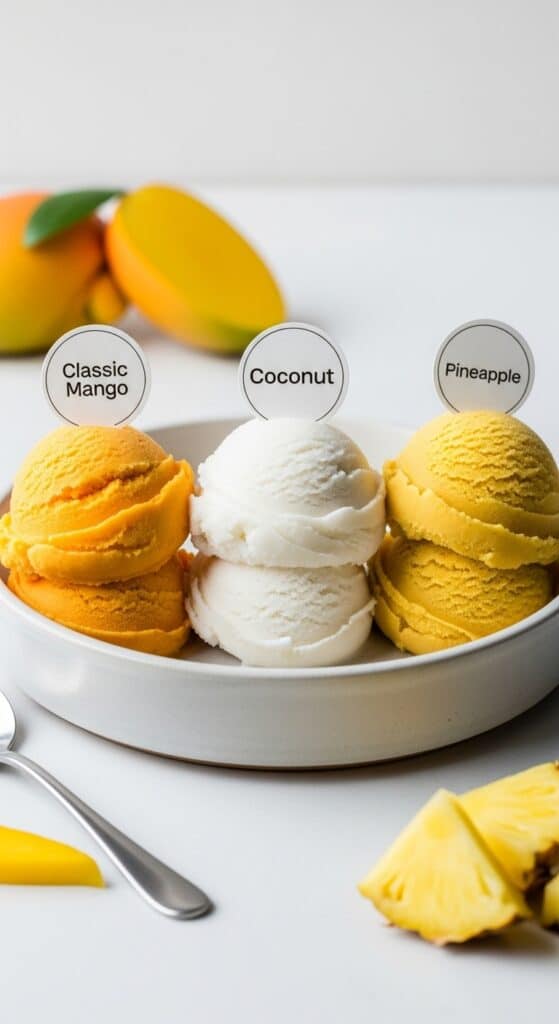
Mango Pineapple Sorbet
Add 1 cup of frozen pineapple chunks along with your mango. Pineapple brings brightness, extra vitamin C, and a naturally tangy bite that complements mango’s creamy sweetness.
Mango Coconut Sorbet
For a rich and silky version, replace the sweetener with 1/3 cup of full-fat coconut milk. This gives your sorbet a creamy, almost gelato-like feel while keeping it 100% dairy-free. Plus, coconut pairs perfectly with lime.
Mango Passionfruit Sorbet
Blend in 1/4 cup of passionfruit pulp (seeds removed) to add a tropical tang and bold aroma. The result is punchy, slightly floral, and irresistibly refreshing.
Each of these combos works seamlessly with the base mango sorbet recipe. No extra steps—just blend and enjoy.
Looking for more fruity flavor fusions? Don’t miss our mango panna cotta recipe for a creamy tropical dessert that pairs beautifully with sorbet.
Creamy Mango Sorbet Using Banana or Coconut Milk
If you prefer a smooth, almost ice cream-like consistency without using dairy, banana and coconut milk are your best friends.
Mango Banana Sorbet
Add one ripe banana to the base recipe before blending. The banana not only sweetens naturally but also adds creaminess and helps stabilize the texture. This version is perfect for kids or anyone who enjoys a softer, fuller-bodied sorbet.
Mango Coconut Cream Sorbet
Use 1/4 cup of coconut cream in place of part of the sweetener or lime juice. It makes the sorbet ultra-rich while still keeping it light and refreshing. Add a few toasted coconut flakes on top for texture and flavor.
These creamy options are still entirely plant-based and add a subtle twist without overpowering the mango.
Flavor Add-Ins and Natural Boosters
Want to go bold? Here are some natural ways to upgrade your mango sorbet:
- Mint or Basil: Add a few fresh leaves during blending for a cool herbal finish
- Ginger: A small knob of fresh ginger adds warmth and zing
- Lime Zest: Sprinkle it in for deeper citrus notes
- Cardamom: For a subtle spice that enhances mango’s sweetness
- Chili Powder: A pinch brings out mango’s flavor and adds heat for adventurous eaters
You can mix and match until you find the version that’s just right for your taste buds.
Pro Tip: Make a Mango Sorbet Flight
If you’re serving a crowd or just love options, create a mango sorbet flight. Make small batches using the same base recipe, then mix in different variations. Offer scoops of mango-pineapple, mango-ginger, and mango-coconut for a fun, colorful trio.
Need more serving inspiration? Try pairing sorbet with a cool glass of fresh watermelon juice for the ultimate summer duo.
FAQs About Mango Sorbet
What is mango sorbet made from?
It’s made with frozen mango chunks, a liquid sweetener (like maple syrup, honey, or agave), fresh lime juice, and a pinch of salt. No dairy, eggs, or artificial ingredients.
Is mango sorbet healthier than ice cream?
Yes. Mango sorbet has fewer calories, no saturated fat, and zero cholesterol. It’s lighter, plant-based, and naturally rich in vitamin C and fiber.
What makes sorbet creamy?
The creaminess comes from mango’s natural fiber and sugars. Blending thoroughly and using ripe mango or add-ins like banana or coconut milk can also boost smoothness.
What thickens sorbet?
Mango’s natural pectin and fiber create thickness. Freezing properly and blending well help maintain a rich, scoopable texture.
How to turn frozen mango into sorbet?
Let frozen mango sit for 10 minutes. Blend with lime juice, a sweetener, and salt until smooth. Serve soft or freeze for a firmer scoop.
Is sorbet full of sugar?
Not if you make it yourself. Homemade mango sorbet uses natural fruit sugar and a small amount of added sweetener. You can reduce or adjust sweetness to your liking.
Want another light and fruity dish? Check out our sunshine salad recipe for a fresh flavor pairing.
Conclusion: Mango Sorbet, Your New Favorite Guilt-Free Dessert
Whether you’re craving a cool treat on a summer afternoon or looking for a clean alternative to traditional ice cream, mango sorbet checks every box. It’s fruity, refreshing, naturally dairy-free, and ridiculously easy to make at home. With just a blender, a few basic ingredients, and a little freeze time, you can enjoy a smooth, scoopable sorbet that’s bursting with tropical flavor.
What makes this recipe shine is its simplicity and flexibility. From fresh or frozen mango to maple syrup or honey, you can customize each batch to suit your taste and dietary goals. Plus, the ability to pair it with herbs, spices, and other fruits means there’s always a new twist to try.
So the next time the heat hits—or you just want something sweet without the guilt—pull out that bag of mango and start blending. Your freezer (and your taste buds) will thank you.
Looking for more refreshing dessert ideas? Don’t miss our vegan ice cream recipe to keep the healthy frozen treats coming!
Mango Sorbet
This creamy mango sorbet is a refreshing 4-ingredient frozen treat made with real fruit, no dairy, and zero fuss. Perfect for summer desserts, smoothies, or clean-eating sweet cravings.
- Prep Time: 10 minutes
- freezing: 3 hours
- Total Time: 3 hours 10 minutes
- Yield: 4 1x
- Category: Dessert
Ingredients
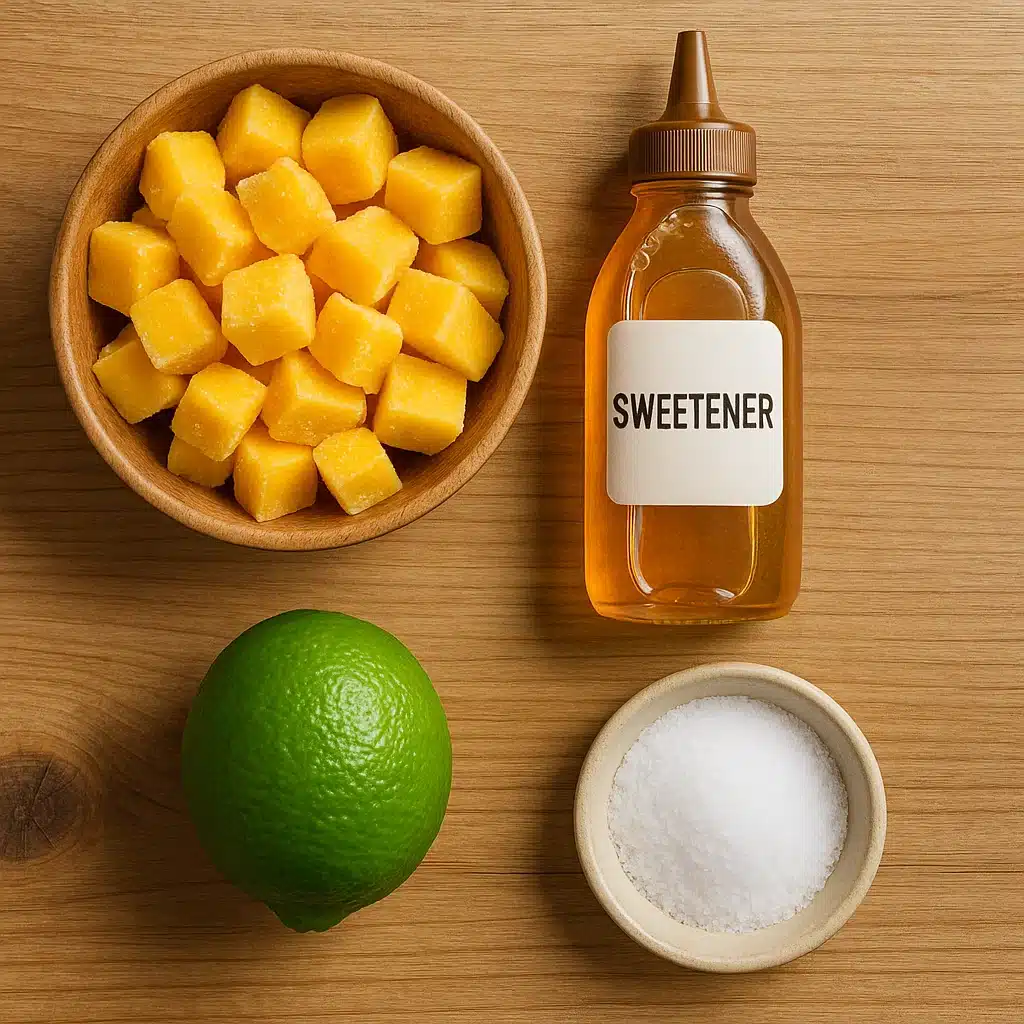
- 2 (10-ounce) bags frozen mango chunks (5 cups)
- 1/3 cup maple syrup, honey, agave, or simple syrup
- 2 tbsp lime juice
- 1/4 tsp kosher salt
Instructions
- Let mango sit 10 minutes to slightly soften.
- Blend with sweetener, lime juice, and salt until smooth.
- Serve immediately or freeze in container with parchment for 2–3 hours.
Storage: Airtight container, up to 2 weeks
Notes
For fresh mango, peel and freeze chunks before blending
Nutrition facts are estimates and may vary based on ingredients used, portion sizes, and preparation methods
Nutrition
- Serving Size: 4
- Calories: 129
- Sugar: 29.5 g
- Sodium: 82.1 mg
- Fat: 0.5 g
- Saturated Fat: 0.1 g
- Unsaturated Fat: 0.4 g
- Carbohydrates: 32.8 g
- Fiber: 2.2 g
- Protein: 1.2 g
Keywords: Mango Sorbet, frozen mango, maple syrup, lime juice, simple syrup, mint
Let’s connect! Follow me for more Joylicious Recipes: Facebook, Instagram, Pinterest