Pistachio Baklava Recipe – Rich, Sweet & Authentic Middle Eastern Dessert
Introduction to Pistachio Baklava
The Rich Heritage of Pistachio Baklava
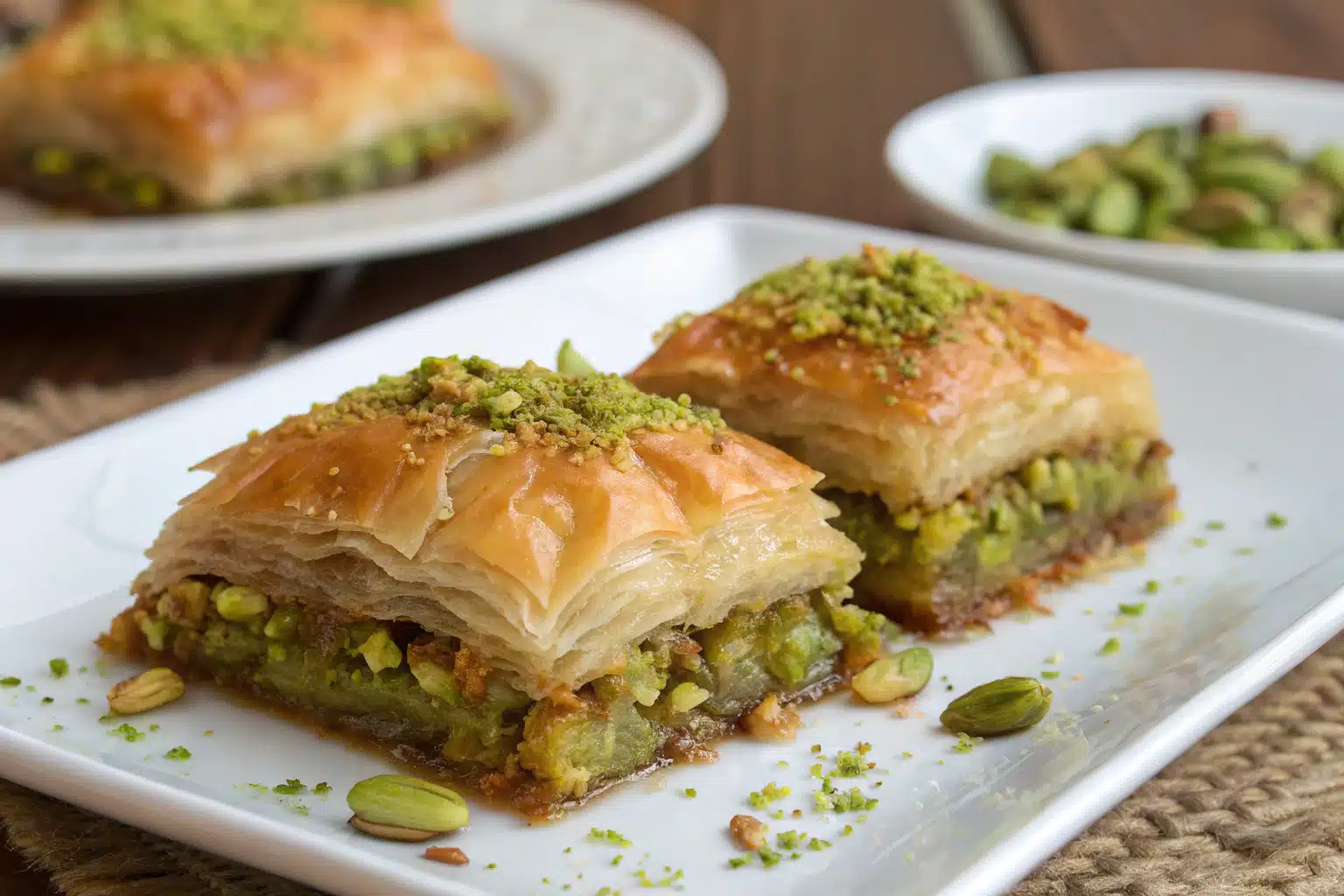
Pistachio baklava stands as one of the most celebrated Middle Eastern and Mediterranean desserts, combining layers of crisp phyllo dough, sweet syrup, and the distinctive nutty flavor of pistachios. This decadent treat has graced tables for centuries, evolving through Ottoman, Greek, Turkish, and Lebanese culinary traditions. The combination of delicate layers, sweet honey-like syrup, and the vibrant green of pistachios creates a dessert that’s both visually stunning and irresistibly delicious.
“Discover great ideas like our pistachio cream recipe for another way to enjoy this incredible nut.”
Why Pistachio Makes the Perfect Baklava Filling
Among all baklava variations, the pistachio version reigns supreme for many dessert enthusiasts. The natural sweetness and distinctive flavor of pistachios perfectly complement the honey syrup, creating a harmonious blend of flavors. Unlike other nut fillings, pistachios add a vibrant green color that makes this dessert visually appealing. Additionally, the texture of finely ground pistachios creates the perfect consistency between the delicate layers of phyllo, ensuring each bite offers the right balance of crunch and tenderness.
Ingredients for Perfect Pistachio Baklava
Essential Components for the Syrup and Filling
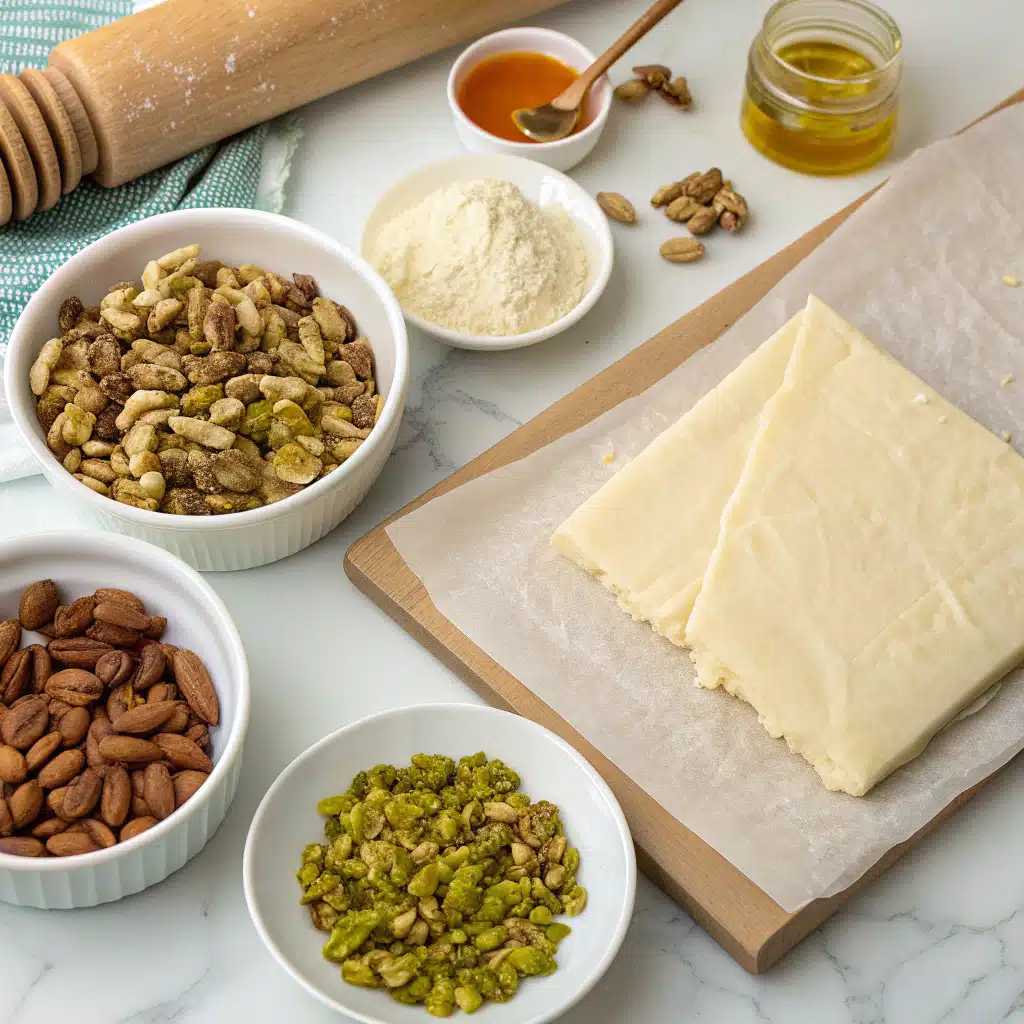
The heart of any good pistachio baklava lies in its quality ingredients. The following table outlines everything you’ll need to create this delectable dessert:
| For Sugar Syrup | For Nut Filling | For the Pastry |
|---|---|---|
| 1¾ cups (350g) granulated sugar | 3 cups (340g/12oz) shelled, raw unsalted pistachios | 2 packages (500g/8oz each) phyllo dough (30 sheets total) |
| ¾ cup water | Additional pistachios for garnish | 1⅛ cup (255g/9oz) melted ghee or clarified butter |
| 1½ tablespoons (28g/1oz) glucose syrup (optional) | ||
| A squeeze of lemon | ||
| ⅛ teaspoon table salt | ||
| 1 tablespoon orange blossom water |
Choosing the Best Pistachios for Baklava
For authentic pistachio baklava, raw unsalted pistachios are essential. The vibrant green Antep pistachios from Turkey are traditionally considered the gold standard, but any high-quality raw pistachios will work beautifully. Avoid using roasted or salted varieties as they’ll alter the intended flavor profile. Fresh pistachios will provide the brightest color and most robust flavor. When purchasing, look for pistachios with vivid green coloring and no signs of yellowing, which indicates age. The quality of your pistachios will directly impact the final taste and appearance of your baklava.
Step-by-Step Pistachio Baklava Recipe
Preparing the Sugar Syrup
The syrup is what transforms layers of nuts and pastry into the sweet, sticky dessert we know as baklava. Starting with the syrup ensures it has ample time to cool before being poured over the hot pastry.
- In a small saucepan, combine granulated sugar, water, glucose syrup (if using), a squeeze of lemon juice, and salt.
- Bring the mixture to a full boil over medium-high heat, stirring occasionally to ensure the sugar dissolves completely.
- Once boiling, remove from heat and stir in the orange blossom water, which adds a distinctive floral note.
- Transfer to a measuring cup with a spout or gravy boat and set aside to cool completely before using. “Learn more about sweet flavor combinations in our pistachio cake recipe that uses similar aromatic elements.”
- The cooled syrup can be refrigerated in an airtight container for up to 4 days; just bring it back to room temperature before using.
Assembling the Layers
Creating perfect layers is crucial for authentic pistachio baklava. This step requires patience but results in a beautifully structured dessert.
- Adjust your oven rack to the lower-middle position and preheat to 300°F (150°C).
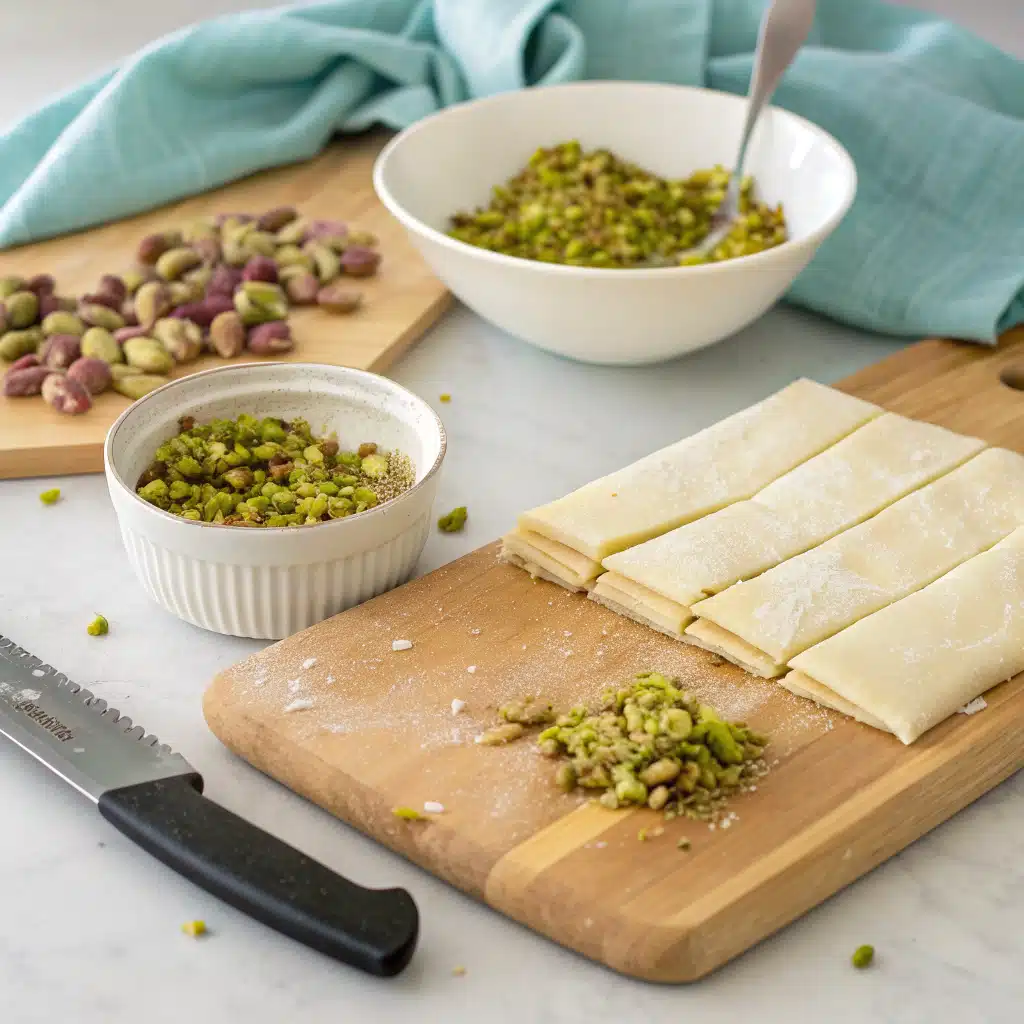
- Pulse pistachios in a food processor until very finely chopped, about fifteen 1-second pulses, then transfer to a bowl.
- Brush a 13×9-inch baking pan with ghee or clarified butter.
- Unwrap and unfold phyllo dough on a large cutting board and smooth with your hands to flatten. Using the pan as a guide, cut the phyllo to fit perfectly.
- Cover phyllo with plastic wrap, then top with a damp kitchen towel to prevent drying.
- Place 1 sheet of phyllo in the bottom of the prepared pan and brush with ghee/butter until completely coated.
- Layer 7 more sheets of phyllo into the pan, brushing each sheet with more ghee/butter. You should now have 8 layers of phyllo.
- Sprinkle 1 cup of the ground pistachios evenly over the phyllo.
- Layer 6 more sheets of phyllo, brushing each layer with ghee/butter, then add another cup of pistachios.
- Repeat with 6 more sheets of phyllo, more ghee/butter, and the remaining cup of pistachios.
- Layer the remaining 10 sheets of phyllo, using the nicest sheets, and brush each layer except the final one with ghee/butter.
Baking and Finishing Touches
The final steps transform your layered creation into the sweet, crisp dessert that has captivated dessert lovers for centuries.
- Working from the center outward, use the palms of your hands to compress the layers and press out any air pockets.
- With a sharp knife, cut the baklava into traditional diamond shapes: make 5 cuts vertically and about 8 cuts diagonally.
- Brush the remaining ghee/butter (about 4 tablespoons) over the surface.
- Bake until golden and crisp, about 1½ to 1¾ hours, rotating the pan halfway through baking.
- Immediately after removing the baklava from the oven, pour the cooled syrup along the cut lines until about 2 tablespoons remain, then drizzle the remaining syrup over the surface. The syrup will sizzle as it hits the hot pan.
- Garnish the center of each piece with a pinch of ground pistachios.
- Cool to room temperature on a wire rack, about 3 hours, then cover with foil and let stand at least 8 hours before serving to allow the flavors to meld perfectly.
Tips for Perfect Pistachio Baklava
Working with Phyllo Dough Successfully
Phyllo dough can be intimidating for first-time baklava makers, but these tips will help you handle it like a pro:
- Thaw frozen phyllo in the refrigerator overnight, never at room temperature.
- Only remove phyllo from its package when you’re ready to use it.
- Keep unused phyllo covered with plastic wrap and a damp (not wet) kitchen towel at all times.
- Don’t worry about small tears—multiple layers will hide minor imperfections.
- If a sheet tears badly, use it in the middle layers where it won’t be visible.
- Work quickly but carefully to minimize drying time. “Here’s your guide to working with other delicate pastries like our fry bread recipe which requires similar careful handling.”
- Use a soft pastry brush to apply ghee or butter to avoid tearing the delicate sheets.
The Art of Clarifying Butter
While ghee is convenient, clarifying butter yourself yields excellent results:
- Melt 1½ cups (340g/12oz) unsalted butter slowly over medium-low heat.
- Allow the butter to simmer gently until the milk solids separate from the butterfat and collect on the bottom of the saucepan.
- Remove the pan from heat and let the butter settle for 10 minutes.
- Carefully skim any foam from the surface with a spoon.
- Slowly pour the clear golden butterfat into a bowl, leaving all the milk solids behind in the saucepan.
- You should end up with about 1⅛ cup (255g/9oz) of clarified butter, which won’t burn as easily as regular butter and provides a cleaner flavor.
Perfecting the Cut for Beautiful Presentation
The traditional diamond cut creates the classic baklava appearance:
- Cut the baklava before baking for cleaner lines and easier serving later.
- Use a very sharp knife to avoid dragging the phyllo layers.
- For diamonds, make straight parallel cuts lengthwise, then make diagonal cuts across.
- Clean your knife between cuts for the sharpest appearance.
- Cut all the way to the bottom of the pan to ensure the syrup reaches all layers.
- For a different look, you can cut squares, triangles, or rectangles instead.
Storage and Freshness
How to Keep Baklava Crispy
Maintaining the perfect texture of pistachio baklava requires proper storage techniques:
- Allow freshly made baklava to cool completely before covering.
- Store at room temperature rather than refrigerating, which can make the phyllo soggy.
- Use loose foil rather than airtight containers to allow slight air circulation.
- Keep away from direct sunlight and heat sources that might melt the syrup.
- If baklava begins to soften, recrisp by placing in a 300°F (150°C) oven for 5-7 minutes, then cooling completely. “Don’t miss our tips for storing other sweet treats like cookie dough bites which have similar considerations.”
Shelf Life and Best Timing for Serving
Properly made pistachio baklava actually improves with a bit of time:
- While baklava can be served after cooling, the flavor and texture improve significantly if left to stand at least 8 hours after baking.
- The optimal time to serve baklava is 12-24 hours after preparation, when the syrup has fully permeated the layers but the pastry still retains some crispness.
- Properly stored baklava will remain delicious for up to 10 days at room temperature.
- For extended storage, wrap tightly and freeze for up to 3 months; thaw unwrapped at room temperature.
Make-Ahead Options for Special Occasions
Pistachio baklava is perfect for entertaining because it can be prepared well in advance:
- Make the complete dish 1-2 days before serving for optimal flavor development.
- Alternatively, assemble unbaked baklava up to 24 hours in advance, cover tightly with plastic wrap, and refrigerate before baking.
- The syrup can be prepared up to a week ahead and kept refrigerated until needed.
- For longer-term planning, freeze the unbaked, cut baklava for up to a month; thaw overnight in the refrigerator before baking.
Variations on Classic Pistachio Baklava
Regional Differences in Pistachio Baklava
While the basic concept remains consistent, pistachio baklava varies significantly across regions:
- Turkish-style baklava often uses a sugar syrup with lemon juice rather than honey and is typically cut in diamond or square shapes.
- Greek variations tend to use honey-based syrup and often include additional spices like cinnamon.
- Lebanese baklava frequently incorporates orange blossom or rose water for a floral note and is sometimes formed into rolls or bird’s nest shapes.
- Persian baklava often includes cardamom and sometimes saffron for distinctive coloring and flavor.
- Azerbaijani pakhlava is cut into diamond shapes with a whole clove inserted in each piece as decoration.
Alternative Sweeteners and Flavorings
While traditional recipes use specific ingredients, you can customize your pistachio baklava with these variations:
- Replace standard syrup with honey for a more complex flavor profile.
- Add cinnamon, cardamom, or cloves to the syrup for a spiced version.
- Experiment with rose water instead of orange blossom water for a different floral note. “Want more ideas? Check out our pistachio fluff recipe for another creative way to use this versatile nut.”
- Try maple syrup for a North American twist on this Middle Eastern classic.
- Add a splash of vanilla extract to the syrup for additional depth of flavor.
- For a less sweet version, reduce the sugar in the syrup by up to a quarter.
Combining Pistachios with Other Nuts
While pure pistachio baklava is sublime, combining nuts creates interesting flavor profiles:
- Mix pistachios with walnuts for a traditional Turkish variation.
- Combine pistachios with almonds for a subtle flavor that allows the pistachios to remain prominent.
- Add a small portion of hazelnuts for a rich, aromatic addition.
- Create layers with different nuts: walnuts on the bottom, pistachios in the middle, and almonds on top for a multi-dimensional experience.
- For texture contrast, leave some nuts coarsely chopped while finely processing the remainder.
Serving Pistachio Baklava
Traditional Accompaniments
In its countries of origin, pistachio baklava is often served with complementary beverages and additions:
- Turkish coffee, with its strong, rich flavor, provides the perfect bitter counterpoint to sweet baklava.
- Hot tea, particularly black tea or mint tea, is a traditional pairing in many Middle Eastern countries.
- A small scoop of mastic or pistachio ice cream can accompany baklava for a more substantial dessert.
- In some regions, a sprinkle of ground pistachios or a light dusting of powdered sugar is added just before serving.
- For special occasions, a small glass of rose water might be served alongside to cleanse the palate.
Modern Serving Suggestions
Contemporary chefs have expanded the ways to enjoy this classic dessert:
- Serve with unsweetened whipped cream to balance the sweetness of the baklava.
- Add a quenelle of mascarpone cheese flavored with a touch of honey.
- Place a piece of baklava atop vanilla panna cotta for an elegant plated dessert.
- Crumble baklava over good-quality vanilla ice cream for a deconstructed approach.
- For brunch, serve alongside fresh fruit for a balanced sweet offering. “Looking for inspiration? Try our coconut cream pie recipe for another dessert that pairs beautifully with fresh fruit.”
Portion Sizes and Presentation Ideas
Pistachio baklava is rich and sweet, so consider these serving approaches:
- Traditional diamond cuts should be about 1.5-2 inches on the longest side—a little goes a long way.
- For cocktail parties or large gatherings, consider cutting into smaller bite-sized pieces.
- Arrange on a decorative platter with fresh mint leaves and a few whole pistachios scattered artistically.
- For gift-giving, place individual pieces in mini cupcake liners in a beautiful box.
- When serving a crowd, create a tower of baklava pieces for a dramatic presentation.
- For an elegant dinner party, place a single piece on a small plate with a light dusting of ground pistachios and perhaps a thin drizzle of honey.

Frequently Asked Questions
What is pistachio baklava made of?
Pistachio baklava consists of layers of thin phyllo dough brushed with clarified butter or ghee, alternating with layers of finely ground pistachios. After baking, the entire dessert is soaked with a sweet syrup typically flavored with orange blossom water or rose water. The specific ingredients include phyllo dough, pistachios, clarified butter or ghee, sugar, water, and flavorings like citrus or floral waters. Some recipes may include additional spices like cinnamon or cardamom for added depth of flavor.
What kind of pistachios are best for baklava?
Raw, unsalted pistachios provide the best flavor and color for authentic baklava. Antep pistachios from Turkey are considered premium for this dessert due to their vibrant green color and intense flavor. However, any high-quality, fresh raw pistachios will work well. Avoid roasted or salted varieties as they’ll alter the traditional flavor profile. The fresher the pistachios, the more vivid the green color will be in your final dessert, making for a more authentic and attractive presentation.
How do you make authentic pistachio baklava at home?
Authentic pistachio baklava requires layering sheets of phyllo dough brushed with clarified butter, alternating with finely ground pistachios, then cutting into portions before baking until golden brown. After baking, immediately pour cool sugar syrup (flavored with orange blossom water) over the hot pastry. The key to authenticity lies in using high-quality ingredients, particularly fresh pistachios and good phyllo dough, and allowing the baklava to rest for at least 8 hours after baking for the flavors to properly develop.
What type of syrup is used in pistachio baklava?
Traditional pistachio baklava typically uses a simple sugar syrup rather than honey (though honey is sometimes used in Greek variations). The syrup is made by boiling sugar with water until dissolved, sometimes with the addition of glucose syrup for smoothness and a squeeze of lemon to prevent crystallization. This basic syrup is then flavored, most commonly with orange blossom water in Middle Eastern versions, though rose water is also popular. The syrup should be completely cooled before being poured over the hot baklava to ensure proper absorption.
Is pistachio baklava Greek or Turkish?
Pistachio baklava has roots in both Greek and Turkish cuisines, as well as throughout the Middle East and Mediterranean. The debate over its exact origins is ongoing, with both Greece and Turkey claiming it as their national dessert. The Ottoman Empire spread variations of baklava throughout its territories, leading to regional adaptations. Turkish baklava often features pistachios and is soaked in a sugar syrup, while Greek versions may use honey syrup and often include walnuts. Today, pistachio baklava is enjoyed throughout the Mediterranean, Middle East, and beyond, with each region adding their unique touches.
How do you keep baklava crispy?
To maintain baklava’s crispy texture, store it at room temperature rather than in the refrigerator. Cover loosely with foil rather than in an airtight container to allow slight air circulation. Properly made baklava with the right ratio of syrup should maintain its texture for several days. If it begins to soften, you can recrisp it by placing in a 300°F oven for 5-7 minutes and allowing it to cool completely. The key to crispy baklava also lies in the initial preparation—using enough butter between layers and not oversaturating with syrup.
Conclusion
The Joy of Homemade Pistachio Baklava
Creating pistachio baklava at home connects you to centuries of culinary tradition. While the process requires patience and attention to detail, the results far surpass store-bought versions in both flavor and satisfaction. The layering process becomes meditative, and the moment when you pour the aromatic syrup over the golden pastry creates an unforgettable sensory experience. There’s something truly special about sharing this homemade delicacy with friends and family, knowing you’ve crafted something that has brought joy to generations of dessert lovers across continents.
“Check out our recipes section for more desserts that bring joy to the table.”
Embracing the Art of Middle Eastern Pastry
Mastering pistachio baklava opens the door to a world of Middle Eastern pastries. The techniques you learn—working with phyllo dough, clarifying butter, making aromatic syrups, and properly cutting delicate pastries—transfer to countless other delicious creations. From Turkish börek to Greek spanakopita, the foundations remain similar. This rich culinary tradition celebrates the marriage of simple ingredients—flour, butter, nuts, and sugar—transformed through careful technique into something extraordinary. By creating authentic pistachio baklava in your home kitchen, you’re not just making a dessert; you’re preserving and participating in a beautiful culinary heritage that has delighted people for centuries.
PrintPistachio Baklava
Classic Middle Eastern dessert featuring layers of crisp phyllo dough, ground pistachios, and sweet syrup.
- Prep Time: 45
- Cook Time: 105
- Total Time: 2 hours 30 minutes
- Yield: 24 1x
- Category: Dessert
- Cuisine: Middle Eastern
Ingredients
For Sugar Syrup:
- 1¾ cups (350g) granulated sugar
- ¾ cup water
- 1 1/2 tablespoons (28g/1oz) glucose syrup (optional, but recommended)
- A squeeze of lemon
- ⅛ teaspoon table salt
- 1 tablespoon orange blossom water (more or less according to taste)
For the Nut Filling:
- 3 cups (340g/12oz) shelled, raw unsalted pistachios, plus more for garnish
- For the Pastry:
- 2 (500g/8oz each) packages phyllo dough, a total of 30 sheets, thawed
- 1 1/8 cup (255g/9oz) melted ghee (or 1 ½ cups (340g/12oz) unsalted butter, clarified)
Instructions
- Prepare sugar syrup by combining sugar, water, glucose syrup, lemon juice and salt in a saucepan. Bring to boil, remove from heat, and stir in orange blossom water. Cool completely.
- Preheat oven to 300°F (150°C) and position rack in lower-middle position.
- Process pistachios until finely chopped and set aside.
- Brush 13×9-inch baking pan with ghee/butter. Cut phyllo to fit pan if needed.
- Layer 8 sheets of phyllo in the pan, brushing each with ghee/butter.
- Spread 1 cup of ground pistachios over phyllo.
- Add 6 more sheets of phyllo with ghee/butter, then another cup of pistachios.
- Repeat with 6 more sheets and the remaining pistachios.
- Top with final 10 sheets of phyllo, brushing all but the top sheet with ghee/butter.
- Compress layers with palms and cut into diamond shapes.
- Brush surface with remaining ghee/butter and bake 1½-1¾ hours until golden.
- Immediately pour cooled syrup over hot baklava, letting it sizzle along cut lines.
- Garnish with ground pistachios and cool for 3 hours.
- Cover with foil and let stand at least 8 hours before serving.
Notes
For clarified butter, slowly melt unsalted butter until milk solids separate, then strain the clear butterfat. Nutrition facts are estimates and may vary based on ingredients used, portion sizes, and preparation methods.
Nutrition
- Serving Size: 24
- Calories: 285 Kcal
- Sugar: 18g
- Sodium: 95mg
- Fat: 17g
- Saturated Fat: 6g
- Carbohydrates: 30g
- Fiber: 2g
- Protein: 5g
- Cholesterol: 20mg
Keywords: pistachio baklava, Middle Eastern dessert, phyllo dough dessert, homemade baklava, sweet pastry
Let’s connect! Follow me for more Joylicious Recipes: Facebook, Instagram, Pinterest