Ultimate Seafood Pot Pie: A Luxurious Comfort Food Classic
Introduction: Why Seafood Pot Pie Deserves a Place at Your Table
The Perfect Marriage of Seafood and Comfort Food
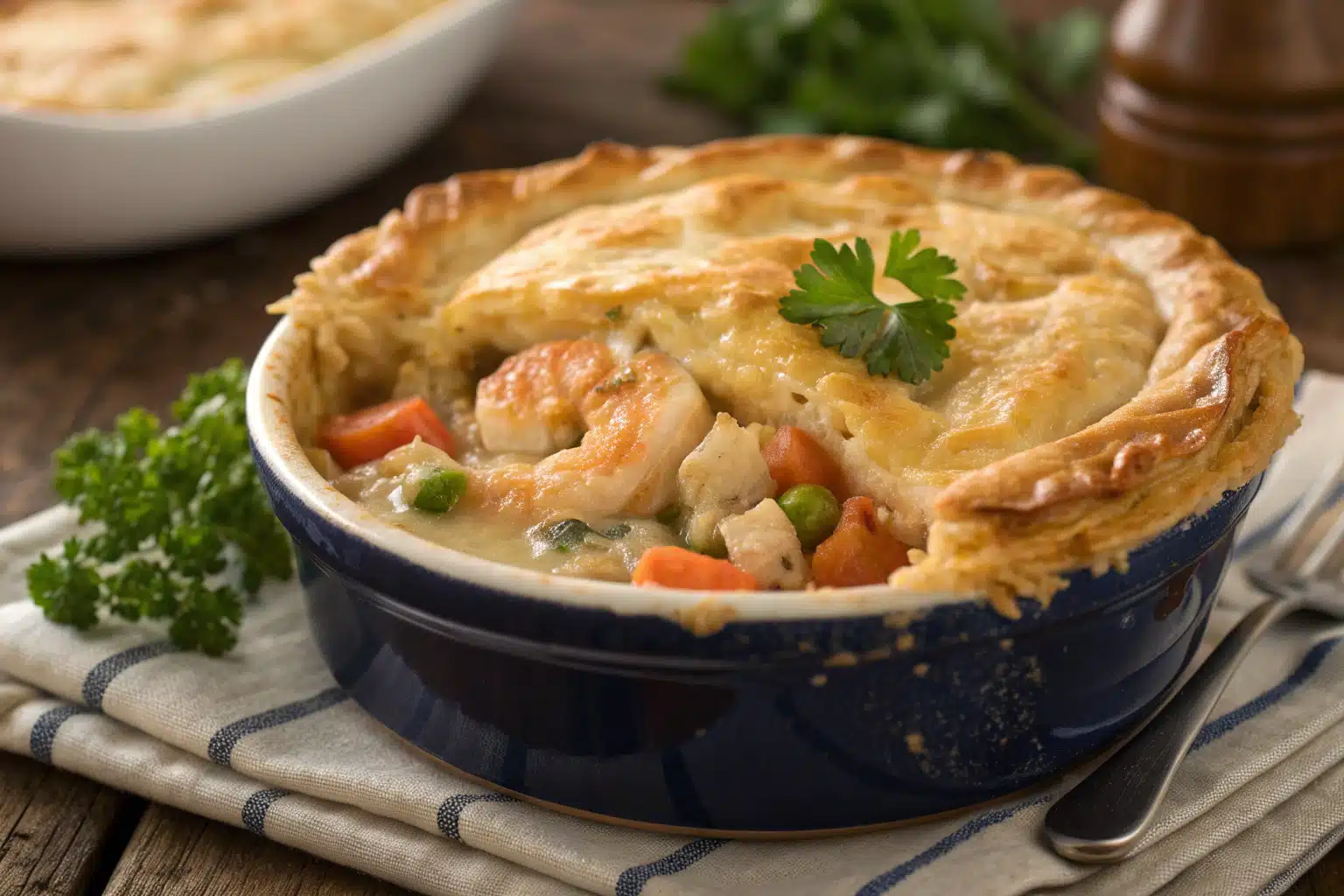
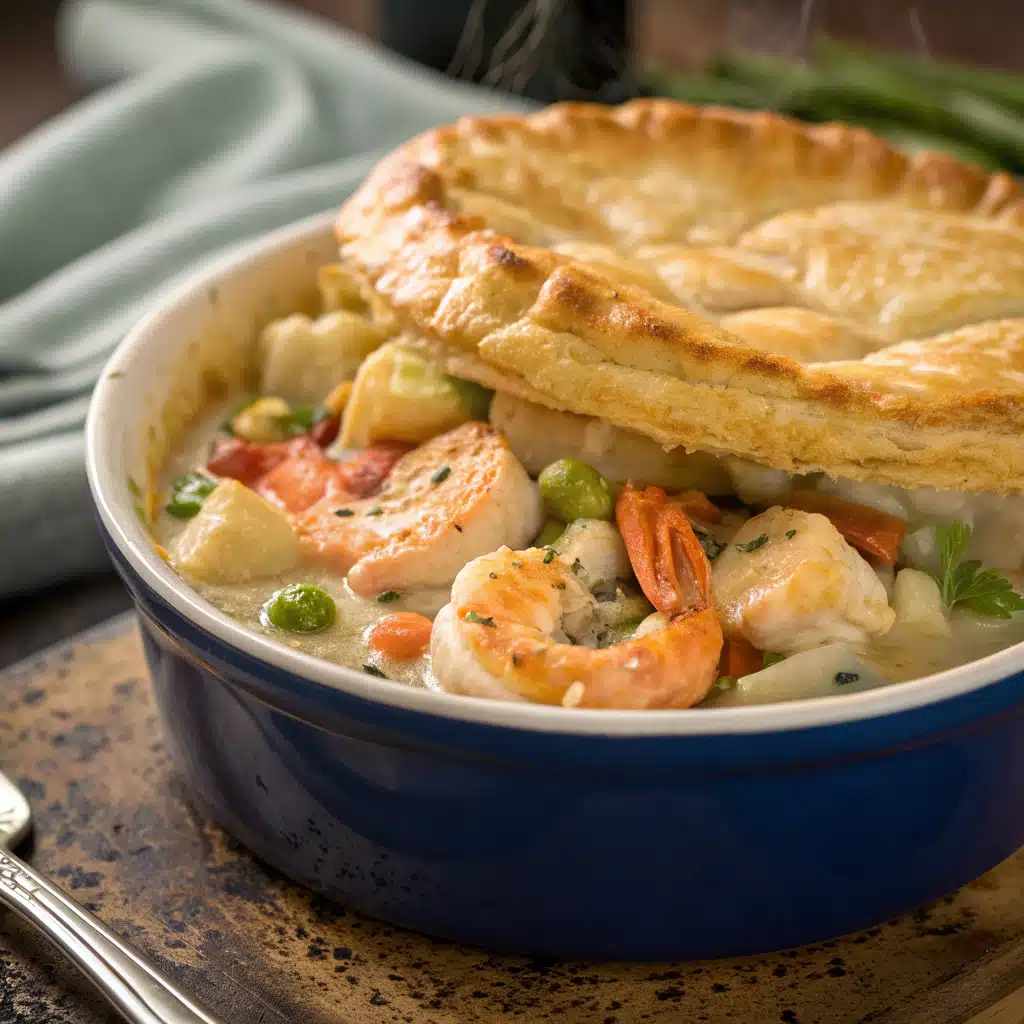
Seafood pot pie represents the ultimate fusion of luxury and comfort. This delectable dish combines the oceanic flavors of premium seafood with the homey warmth of a traditional pot pie. The rich, creamy filling studded with succulent shrimp, langostino tails, lump crab meat, and tender sea scallops creates a symphony of flavors that elevates the humble pot pie to gourmet status. Unlike its chicken counterpart, the seafood version offers a more sophisticated flavor profile that’s perfect for special occasions while still delivering that satisfying comfort food experience.
“Check out our chicken pot pie recipe for a more traditional take that’s equally delicious.”
A Brief History of Seafood Pot Pies
The concept of encasing food in pastry dates back centuries, with pot pies evolving from ancient Roman pastry dishes. Traditional meat pies have long been staples across cultures, but seafood pot pies gained popularity in coastal regions where fresh catch was abundant. In America, New England fishermen’s families created early versions using whatever seafood was available. Today, seafood pot pie has transformed from a practical use of leftovers into a celebrated dish that balances rustic tradition with gourmet flair. The modern version emphasizes fresh seafood, aromatic vegetables, and a creamy sauce, all nestled beneath a flaky, buttery crust.
Ingredients for the Perfect Seafood Pot Pie
Fresh Seafood Selection
The heart of any great seafood pot pie lies in the quality and variety of seafood used. This recipe calls for a luxurious combination that creates layers of texture and flavor:
| Seafood Component | Quantity | Preparation Notes |
|---|---|---|
| Shrimp | 1 pound | Peeled and deveined, medium to large size preferred |
| Langostino tails or lobster meat | 12 ounces | Thawed if frozen, drained well |
| Lump crab meat | 8 ounces | Picked through for shells |
| Sea scallops | 8 ounces | Side muscle removed, patted dry |
For optimal results, use the freshest seafood available. If using frozen seafood, ensure it’s fully thawed and patted dry to prevent excess moisture from diluting the sauce. Each type of seafood contributes something unique: shrimp provides a sweet, familiar flavor; langostino or lobster adds richness; crab meat brings delicate sweetness; and scallops contribute a buttery texture and subtle sweetness that rounds out the combination.
Base and Binding Ingredients
The foundation of the seafood pot pie’s luscious filling comes from a classic combination of vegetables, aromatics, and a rich roux-based sauce:
| Ingredient | Quantity | Function |
|---|---|---|
| Onion, chopped | 1 cup | Provides aromatic base |
| Bell pepper, chopped | 1/2 cup | Adds color and sweetness |
| Celery, chopped | 1/4 cup | Contributes subtle flavor and texture |
| Mushrooms, sliced | 1 cup | Adds earthy notes and meaty texture |
| Butter | 4 tablespoons | Forms the base of the roux |
| Flour | 5 tablespoons | Thickens the sauce when combined with butter |
| Chicken broth | 2 cups | Creates flavorful liquid base |
| Heavy cream | 1 cup | Adds richness and body to the sauce |
These ingredients work together to create a velvety sauce that coats the seafood and vegetables while providing a cohesive base for all the flavors to meld together. The combination of broth and cream ensures the filling is rich without being overwhelmingly heavy.
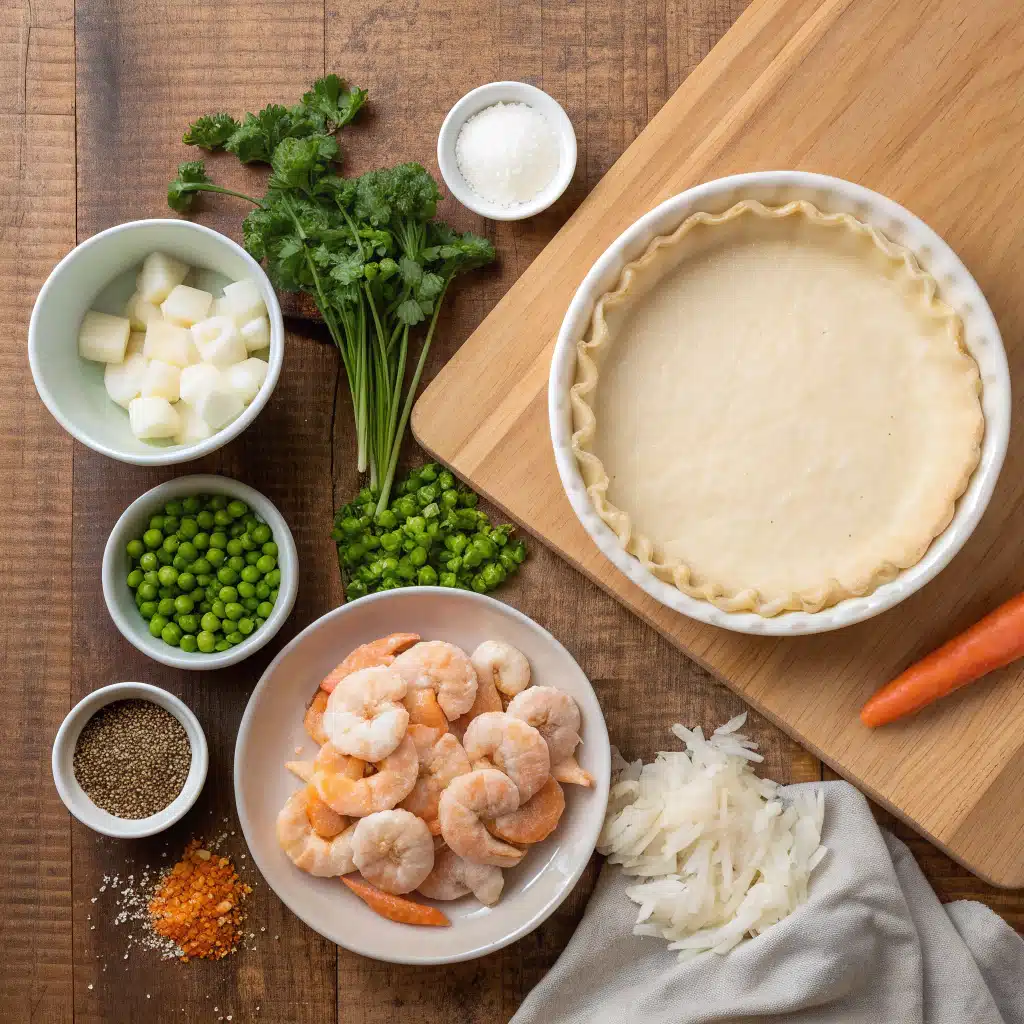
Step-by-Step Guide to Seafood Pot Pie Excellence
Preparing the Seafood
The key to perfect seafood in your pot pie is avoiding overcooking, as seafood cooks quickly and can become tough and rubbery if overcooked. Follow these steps to ensure perfectly cooked seafood:
- Prepare all seafood by cleaning, peeling, and deveining as needed. Pat everything dry with paper towels.
- Heat 2 tablespoons of butter in a large skillet over medium-high heat.
- Working in batches to avoid overcrowding, quickly sear the scallops for about 1 minute per side until just barely golden. Remove and set aside.
- In the same pan, quickly sauté the shrimp for about 1 minute per side until just turning pink. They should be slightly underdone. Remove and set aside.
- Add the langostino tails or lobster meat to the pan and toss just to coat with the residual butter and heat through for about 30 seconds. Remove and set aside.
- Gently fold in the crab meat with the other seafood without further cooking, as it’s already cooked and delicate.
This method ensures each type of seafood maintains its ideal texture while picking up flavor from the butter. Remember that the seafood will cook further in the oven, so it’s important not to fully cook it during this initial searing stage.
“If you’re a fan of seafood, you might also enjoy our garlic butter halibut recipe for another elegant seafood dinner option.”
Creating the Perfect Filling
The filling is where all the flavors come together to create the rich, creamy base that makes seafood pot pie so irresistible:
- In the same pan used for the seafood, add the remaining 2 tablespoons of butter and melt over medium heat.
- Add the chopped onion, bell pepper, and celery. Sauté for about 5 minutes until the vegetables begin to soften.
- Add the sliced mushrooms and continue cooking for another 3-4 minutes until they release their moisture and begin to brown.
- Sprinkle the flour over the vegetables and stir continuously for 2 minutes to cook out the raw flour taste and form a roux.
- Gradually whisk in the chicken broth, stirring constantly to prevent lumps from forming. Allow the mixture to simmer for 2-3 minutes until it begins to thicken.
- Slowly stir in the heavy cream and continue simmering for another 2-3 minutes until the sauce reaches a velvety consistency that coats the back of a spoon.
- Season with salt, pepper, and herbs of your choice (such as thyme, parsley, dill, or Old Bay seasoning for a traditional seafood flavor).
- Gently fold in the reserved seafood mixture, being careful not to break up the delicate pieces, especially the crab meat.
The result should be a thick, creamy filling with perfectly distributed seafood and vegetables. The sauce should be rich but not overly thick, as it will continue to thicken slightly during baking.
Assembly and Baking
The final steps bring everything together for that perfect golden-topped seafood pot pie:
- Preheat your oven to 375°F (190°C).
- Pour the seafood filling mixture into a deep 9-inch pie dish or a 2-quart baking dish.
- For the topping, you have several options:
- Use prepared refrigerated biscuit dough, cut into rounds and arranged over the filling
- Make a quick drop biscuit dough and spoon it over the top
- Use puff pastry cut to fit the top of your baking dish
- Use a traditional pie crust if you prefer a more classic pot pie appearance
- Whichever topping you choose, make sure to cut a few vents or slits to allow steam to escape during baking.
- For an extra touch of flavor and beautiful golden color, prepare an herb butter by mixing 1 tablespoon of melted butter with finely chopped fresh herbs (parsley, dill, and chives work well).
- Brush the prepared herb butter over your chosen topping.
- Place the pot pie on a baking sheet (to catch any potential overflow) and bake for 25-30 minutes, until the topping is golden brown and the filling is bubbling around the edges.
- Allow to rest for 10-15 minutes before serving, as the filling will be extremely hot and needs time to set.
This resting period is crucial not only for safety but also allows the flavors to meld and the filling to set to the perfect consistency for serving.
Expert Tips for Seafood Pot Pie Success
Selecting and Preparing Seafood
The quality of seafood makes or breaks this dish, so consider these expert tips:
- When selecting fresh seafood, look for bright colors, firm texture, and a fresh ocean smell without any strong fishy odor.
- If using frozen seafood, thaw it slowly in the refrigerator rather than using the microwave or warm water, which can partially cook and toughen the seafood.
- Don’t skip patting the seafood dry before cooking—excess moisture will prevent proper searing and can make your filling watery.
- Consider using seafood stock instead of chicken broth for a more intense seafood flavor, though chicken broth provides a milder base that lets the seafood shine.
- When cooking seafood for pot pie, remember the golden rule: undercook slightly during the initial sauté, as it will continue cooking in the oven.
These simple but crucial steps ensure that your seafood maintains its texture and flavor throughout the cooking process. “For more seafood inspiration, check out our savory crab cheesecake for an unexpected appetizer that’s sure to impress.”
Perfecting the Sauce
A velvety, perfectly seasoned sauce is what brings all the elements together:
- For the roux, cook the butter and flour mixture until it smells slightly nutty but hasn’t browned—this ensures your sauce has thickening power without discoloring the cream sauce.
- Add the liquids gradually, incorporating each addition fully before adding more to prevent lumps.
- If your sauce seems too thick, add more broth a tablespoon at a time; if too thin, mix a small amount of cornstarch with cold water and stir it in while the sauce simmers.
- Enhance flavor with white wine (replace 1/4 cup of the broth) or a splash of dry sherry for depth.
- Consider adding aromatic herbs like fresh thyme, tarragon, or dill, which pair beautifully with seafood.
- A pinch of cayenne or a few drops of hot sauce can add complexity without making the dish spicy.
- Always taste and adjust seasoning before adding the seafood, as it’s harder to correct once the delicate seafood is incorporated.
These techniques transform a basic white sauce into a restaurant-quality base that complements the seafood without overwhelming it.
Choosing the Right Topping
The crowning glory of your pot pie deserves special attention:
- For the flakiest puff pastry topping, ensure it’s very cold when it goes into the oven. You can even freeze it for 5-10 minutes before baking.
- If using homemade or refrigerated biscuit dough, don’t overwork it, which can lead to tough results.
- Consider adding flavor to your topping with grated Parmesan, Old Bay seasoning, or fresh herbs mixed into the dough.
- For a decorative touch, cut extra dough into shapes like fish or shells and place them on top of your main crust.
- If you want a golden, glossy finish, brush the topping with an egg wash (one beaten egg mixed with a tablespoon of water) before applying the herb butter.
- Ensure your baking dish isn’t filled too high—leave at least half an inch of space to prevent overflow during baking.
The right topping not only provides a beautiful presentation but also adds complementary flavor and texture to the creamy seafood filling.
Storage and Make-Ahead Options
Refrigeration Guidelines
Seafood pot pie requires proper storage to maintain both safety and quality:
- Completely cool the pot pie before refrigerating to prevent condensation that could make the crust soggy.
- Cover the cooled pot pie with plastic wrap or aluminum foil, or transfer portions to airtight containers.
- Properly stored seafood pot pie will keep in the refrigerator for 2-3 days. Beyond this timeframe, the quality deteriorates and food safety becomes a concern with seafood.
- When reheating, cover the pot pie with foil and warm in a 350°F oven until heated through (typically 15-20 minutes). This method preserves the texture better than microwave reheating.
- For individual portions, the microwave is convenient—heat on 50% power in 1-minute intervals until warmed through to avoid overheating the seafood.
Remember that seafood dishes generally have a shorter refrigeration life than other proteins, so it’s best to consume leftovers within a day or two for optimal flavor and safety.
Freezing Options
While fresh is best, you can freeze seafood pot pie with some special considerations:
- For best results, freeze the filling and crust separately. The filling can be frozen in airtight containers or heavy-duty freezer bags for up to 1 month.
- If freezing a fully assembled pot pie, it’s best to freeze it unbaked. Wrap tightly in plastic wrap, then aluminum foil, and freeze for up to 1 month.
- To bake from frozen, do not thaw first—simply add 15-20 minutes to the baking time and cover with foil for the first portion of baking to prevent over-browning.
- Already baked seafood pot pie can be frozen, but the texture of the seafood may change somewhat upon reheating. If freezing leftovers, wrap individual portions tightly and use within 3 weeks.
- Label all frozen items with the date and contents for easy identification.
While freezing is possible, be aware that previously frozen seafood that has been thawed should not be refrozen, so if you made your pot pie with thawed frozen seafood, it’s not recommended to freeze the finished dish. “For another delicious make-ahead seafood option, try our salmon cakes with aioli which freeze beautifully.”
Make-Ahead Strategies
Preparing components in advance can make assembling this dish much more manageable:
- The filling can be made up to one day ahead and refrigerated. Gently reheat it just until warm before assembling the pot pie, as cold filling takes longer to heat through and may result in an overcooked topping.
- If using homemade pastry or biscuit dough, it can be prepared up to two days ahead and refrigerated, or frozen for longer storage.
- Pre-cook and chill the seafood separately from the sauce base, then combine them just before assembling to prevent the seafood from absorbing too much liquid and becoming soggy.
- For a partially make-ahead option, prepare the filling and store it in the baking dish, covered and refrigerated. On serving day, bring it to room temperature while you prepare the topping, then assemble and bake.
- If entertaining, consider making individual pot pies in ramekins, which cook more quickly and create an elegant presentation.
These strategies help balance the fresh quality of seafood pot pie with the convenience of advance preparation, perfect for entertaining or busy weeknights.
Creative Variations on Classic Seafood Pot Pie
Regional and International Inspirations
Take your seafood pot pie on a global tour with these inspired variations:
- New England Style: Add diced potatoes to the vegetable mixture and season with Old Bay seasoning. Top with a traditional pie crust and serve with lemon wedges for a classic northeastern approach.
- Cajun Inspired: Incorporate the “holy trinity” (bell pepper, onion, celery) with additional cayenne pepper, paprika, and file powder. Consider adding andouille sausage for a hearty Louisiana flavor profile.
- Mediterranean Twist: Include artichoke hearts, olives, and sun-dried tomatoes in your filling. Season with oregano and thyme, and top with a phyllo dough crust brushed with olive oil instead of butter.
- Asian Fusion: Replace some of the broth with coconut milk and add lemongrass, ginger, and a touch of curry paste. Top with puff pastry and serve with fresh cilantro and lime wedges.
- Pacific Northwest: Focus on regional seafood like salmon and Dungeness crab, add leeks to your vegetable mix, and incorporate fresh herbs like dill and tarragon. Top with a rustic biscuit crust.
These variations maintain the comforting essence of pot pie while introducing exciting new flavor profiles inspired by culinary traditions around the world. “Looking for more international inspiration? Try our Thai red curry chicken noodles for another globally-inspired dinner.”
Dietary Adaptations
Make seafood pot pie accessible to everyone with these thoughtful adaptations:
- Gluten-Free: Substitute the all-purpose flour in the filling with a gluten-free blend or cornstarch. For the topping, use a gluten-free biscuit mix or a cauliflower-cheese crust for a creative alternative.
- Dairy-Free: Replace butter with olive oil or a plant-based butter alternative. Substitute heavy cream with full-fat coconut milk or a cashew cream for richness without dairy.
- Lower-Carb: Skip the traditional crust and top with a mixture of crushed pork rinds, almond flour, and Parmesan cheese for a crunchy, low-carb alternative. Or try a cauliflower mash topping similar to a shepherd’s pie.
- Pescatarian-Friendly: Use vegetable broth instead of chicken broth for a completely pescatarian dish.
- Budget-Conscious: Stretch expensive seafood by incorporating more vegetables like peas, carrots, and potatoes. Consider using one premium seafood item (like scallops) and supplementing with more affordable options like cod or tilapia.
These adaptations ensure that everyone can enjoy the luxury of seafood pot pie, regardless of dietary restrictions or preferences.
Seasonal Twists
Embrace seasonal ingredients to keep your seafood pot pie fresh and exciting year-round:
- Spring: Incorporate fresh peas, asparagus tips, and tender leeks. Top with a pastry crust cut into flower shapes for a beautiful presentation.
- Summer: Add corn kernels, cherry tomatoes, and fresh herbs like basil. Serve with a side of heirloom tomato salad for a lighter summer meal.
- Fall: Include butternut squash cubes, mushrooms, and sage. Top with a sweet potato biscuit crust for a cozy autumn dinner.
- Winter: Make a heartier version with root vegetables like parsnips and turnips. Add a splash of cognac to the sauce and top with an herb-infused puff pastry for an elegant holiday dinner option.
- Year-Round: Change up your seafood selection based on what’s freshest and in season at your local market, allowing the dish to evolve naturally throughout the year.
Adapting to seasonal availability not only provides better flavor but also typically reduces cost and environmental impact, making your seafood pot pie both delicious and responsible.
Serving Suggestions
Perfect Pairings
Complement your seafood pot pie with these thoughtfully selected sides and accompaniments:
- Simple Green Salad: Balance the richness of the pot pie with a crisp green salad dressed with a light vinaigrette. The acidity cuts through the creamy filling perfectly.
- Roasted Vegetables: For a heartier meal, serve alongside simply roasted asparagus, brussels sprouts, or root vegetables that won’t compete with the complex flavors of the pot pie.
- Crusty Bread: While the pot pie has its own starchy component, a piece of artisanal bread is perfect for soaking up any extra sauce on the plate.
- Citrus Accents: Offer lemon wedges on the side to brighten the seafood flavors—a squeeze of fresh citrus can transform each bite.
- White Wine: If serving wine, choose a crisp Sauvignon Blanc, unoaked Chardonnay, or dry Riesling that complements rather than overpowers the delicate seafood.
These pairings enhance the dining experience while letting your beautifully crafted seafood pot pie remain the star of the show.
Presentation Ideas
Elevate your seafood pot pie from homey to sophisticated with these presentation techniques:
- Individual Ramekins: Serve in personal-sized dishes for an elegant presentation that also helps control portions.
- Decorative Crust: Take time to create a decorative top crust with pastry cutouts shaped like sea creatures, shells, or waves to hint at the oceanic contents.
- Fresh Herb Garnish: Sprinkle freshly chopped herbs like dill, chives, or parsley over the top just before serving to add color and a burst of fresh flavor.
- Serving Board: Place individual pot pies on a rustic wooden board with small bowls of accompaniments like compound butter, lemon wedges, or flavored salt for guests to customize their experience.
- Table Setting: Consider a nautical-themed table setting with blue linens, shell decorations, or driftwood elements to create a cohesive dining theme.
Remember, people eat with their eyes first, so taking a few extra moments to consider presentation can transform your seafood pot pie from a simple meal into a memorable dining experience. “For another beautifully presented seafood option, check out our coconut shrimp recipe that always impresses guests.”
Entertaining with Seafood Pot Pie
Turn your seafood pot pie into the centerpiece of a successful gathering:
- Make-Ahead Timeline: Prepare components in advance and assemble just before guests arrive, so you can enjoy the company while the pot pie bakes to perfection.
- Buffet Service: For larger gatherings, consider a buffet of different pot pies with varying seafood combinations or regional influences, allowing guests to sample multiple variations.
- Wine Pairing: Create a special occasion by offering a curated wine pairing specifically selected to complement the flavors in your seafood pot pie.
- Story Sharing: Share the story behind your pot pie—perhaps it features locally sourced seafood or follows a family recipe—to create connection around the meal.
- Dessert Planning: Follow a rich seafood pot pie with a light, refreshing dessert like a citrus sorbet or fresh berry parfait rather than something heavy.
Seafood pot pie naturally lends itself to special occasions, combining impressive presentation with comforting familiarity that makes guests feel both pampered and at ease. “If you’re planning a full seafood-themed dinner party, don’t miss our classic seafood salad as a perfect starter before the main course.”
FAQs About Seafood Pot Pie
What seafood works best in a seafood pot pie?
The best seafood for pot pie includes a combination of textures and flavors: firm fish like cod or halibut, shellfish such as shrimp or scallops, and luxury additions like crab or lobster. Choose seafood that can withstand some cooking without becoming tough. For best results, use at least 2-3 different types of seafood to create layers of flavor. Pre-cooked seafood like crab meat should be added last to prevent overcooking.
Can seafood pot pie be made with frozen seafood?
Yes, frozen seafood can work well in pot pie, but proper thawing is crucial. Thaw seafood gradually in the refrigerator overnight rather than using quick methods that can affect texture. Once thawed, pat the seafood very dry to remove excess moisture that could make your filling watery. For shrimp and scallops, frozen often works nearly as well as fresh. Pre-cooked frozen options like langostino tails are particularly convenient for pot pies.
How do you keep seafood from overcooking in pot pie?
To prevent overcooking, sear or sauté seafood very briefly until just underdone before adding it to the filling. Alternatively, add raw seafood directly to the fully prepared sauce just before assembling the pot pie. Either way, the seafood will finish cooking perfectly during baking. For mixed seafood, consider adding different types at different times according to their cooking speeds—scallops and fish need less time than shrimp, for instance.
Can seafood pot pie be made ahead of time?
Seafood pot pie can be partially prepared ahead of time. Make the filling up to 24 hours in advance and refrigerate it separately from your topping. Alternatively, assemble the entire pot pie, refrigerate unbaked for up to 4 hours, then bake when ready to serve. For longer storage, freeze the unbaked pie for up to one month and bake directly from frozen, adding 15-20 minutes to the cooking time.
What crust works best for seafood pot pie?
The best crust depends on your preference: Traditional pie crust provides a classic approach and sturdy base; puff pastry offers dramatic height and flakiness; biscuit topping creates a homey, comfort-food feel; and phyllo dough makes a light, crispy alternative. Whichever you choose, ensure it complements rather than overpowers the delicate seafood. A buttery, herb-infused crust works particularly well with seafood flavors.
Can seafood pot pie be frozen?
Yes, seafood pot pie can be frozen, but with some caveats. For best results, freeze unbaked pot pies for up to one month. If using previously frozen seafood, be aware that refreezing may affect texture. When ready to use, bake directly from frozen at 375°F, covering with foil for the first 30 minutes, then uncovering to brown. Fully baked pot pies can also be frozen in individual portions, but the texture may not be as ideal upon reheating.
Conclusion: Mastering the Art of Seafood Pot Pie
Why Homemade is Worth the Effort
Creating seafood pot pie from scratch represents a culinary achievement worth celebrating. Unlike store-bought versions that often compromise on seafood quality and quantity, homemade allows you to control every element—from the freshness of the seafood to the richness of the sauce and the flakiness of the crust. The process itself becomes a rewarding kitchen project that builds fundamental cooking skills, from making a perfect roux to understanding the nuances of cooking various types of seafood. The result is incomparable: a bubbling, golden-topped masterpiece with tender seafood swimming in a velvety sauce that simply cannot be replicated in commercial products.
Moreover, making seafood pot pie at home allows you to customize according to preferences and dietary needs while avoiding preservatives and excessive sodium often found in prepared foods. The cost, while potentially higher than some everyday meals, remains significantly less than restaurant versions of similar quality, making it an accessible luxury for special occasions or weekend family dinners. “Want more homemade seafood ideas? Our cajun shrimp with mushrooms recipe offers another delicious way to enjoy seafood at home.”
Creating Your Own Signature Version
Now that you understand the fundamentals of seafood pot pie, consider it a canvas for your culinary creativity. Perhaps your signature version might include an unexpected herb like tarragon that brightens the sauce, or maybe you’ll become known for your dramatic puff pastry top that rises inches above the rim of the dish. You might develop a regional twist that incorporates local seafood and vegetables, creating a pot pie that tells the story of your particular coastline or food tradition.
The beauty of mastering any classic dish lies in the confidence to make thoughtful adaptations—adding a splash of your favorite spirits to the sauce, incorporating a family seasoning blend, or developing a special crust technique. These personal touches transform a recipe from instructions on a page into a treasured part of your cooking repertoire that friends and family come to associate specifically with you. As you continue to refine your technique and ingredients with each preparation, your seafood pot pie will evolve into a dish that’s not just delicious but meaningfully yours—a recipe worthy of passing down through generations.
PrintSeafood Pot Pie

A luxurious pot pie filled with shrimp, scallops, crab, and langostino in a creamy sauce beneath a golden, flaky crust.
- Prep Time: 25
- Cook Time: 35
- Total Time: 1 hour
- Yield: 6 1x
- Category: Main Dish
- Cuisine: American
Ingredients
- 1 pound shrimp, peeled and deveined
- 12 ounces langostino tails or lobster meat
- 8 ounces cooked lump crab meat
- 8 ounces sea scallops
- 1 cup chopped onion
- 1/2 cup chopped bell pepper
- 1/4 cup chopped celery
- 1 cup sliced mushrooms
- 2 cups chicken broth
- 1 cup heavy cream
- 4 tablespoons butter
- 5 tablespoons flour
- 1 teaspoon salt
- 1/2 teaspoon black pepper
- 1 tablespoon fresh dill, chopped
- 1 sheet puff pastry or refrigerated biscuit dough
- 1 tablespoon melted butter mixed with 1 teaspoon fresh herbs for brushing
Instructions
- Preheat oven to 375°F. Pat seafood dry with paper towels.
- Sear scallops and shrimp in 2 tablespoons butter until barely cooked. Remove from pan.
- Briefly heat langostino tails, then combine with other seafood and crab meat.
- In the same pan, sauté onion, bell pepper, and celery in remaining butter until soft.
- Add mushrooms and cook until they release moisture and brown slightly.
- Sprinkle flour over vegetables and cook for 2 minutes, stirring constantly.
- Gradually whisk in chicken broth until smooth, then simmer until thickened.
- Stir in cream, salt, pepper, and dill. Simmer until velvety.
- Fold seafood into sauce and transfer to a 2-quart baking dish.
- Top with pastry or biscuit dough, cutting vents for steam.
- Brush with herb butter and bake for 25-30 minutes until golden.
- Let rest 10-15 minutes before serving.
Notes
For best results, don’t overcook the seafood during initial cooking as it will continue to cook in the oven. Nutrition facts are estimates and may vary based on ingredients used, portion sizes, and preparation methods.
Nutrition
- Serving Size: 6
- Calories: 485 Kcal
- Sugar: 3g
- Sodium: 1250mg
- Fat: 28g
- Saturated Fat: 14g
- Carbohydrates: 26g
- Fiber: 2g
- Protein: 32g
- Cholesterol: 225mg
Keywords: seafood pot pie, shrimp pot pie, crab pot pie, lobster pot pie, scallop pot pie, seafood casserole, creamy seafood dish
Let’s connect! Follow me for more Joylicious Recipes: Facebook, Instagram, Pinterest