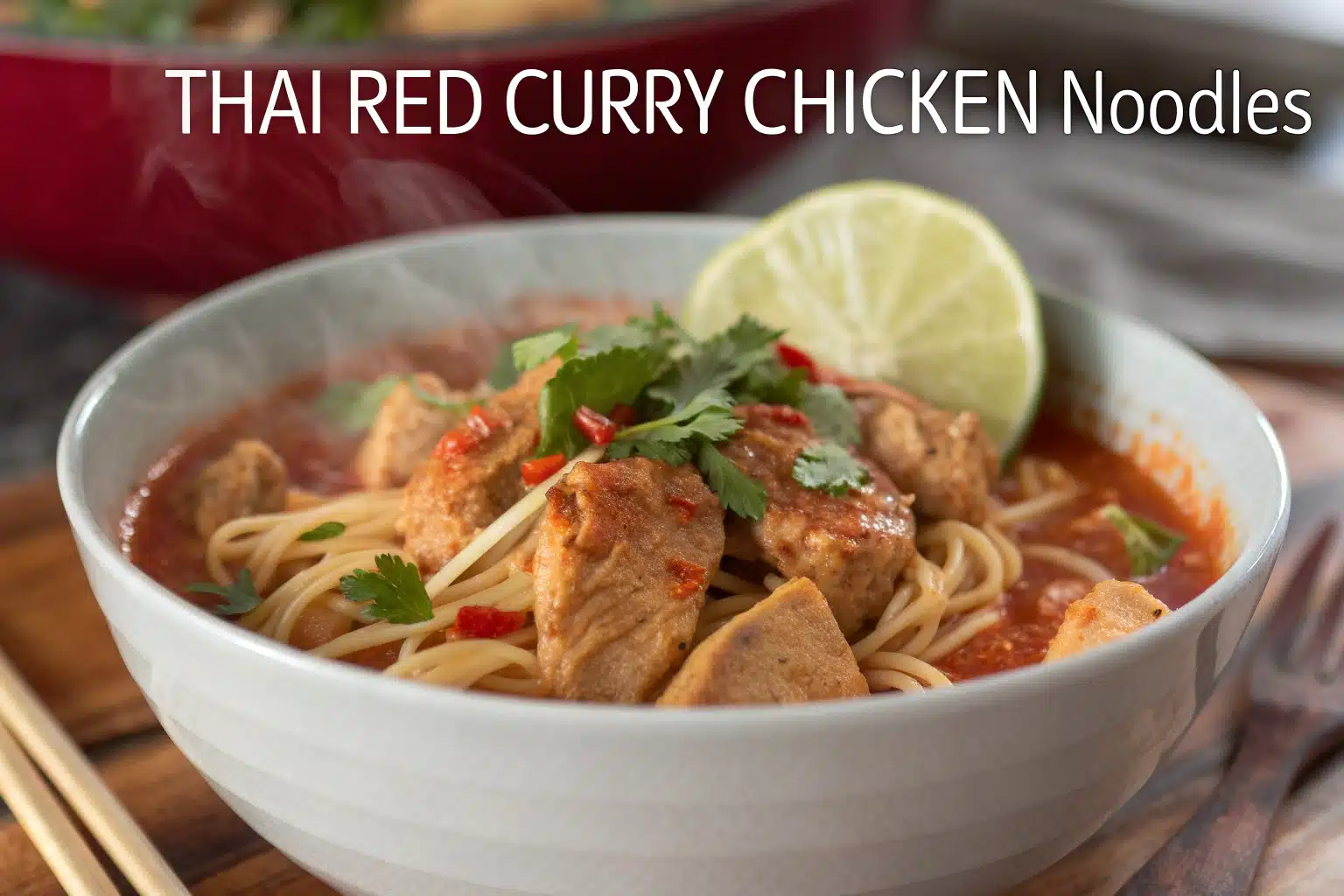
Thai Red Curry Chicken Noodles: A Creamy, Spicy One-Pan Dinner
Introduction: The Ultimate Comfort Food with an Asian Twist
Why Thai Red Curry Chicken Noodles Are a Game-Changer
Thai red curry chicken noodles combine the best of both worlds – the comforting familiarity of noodles with the exciting, aromatic flavors of Thai cuisine. This vibrant one-pan meal delivers a perfect balance of creaminess from coconut milk, spice from red curry paste, and texture from tender chicken and vegetables. “Looking for inspiration? Try our Thai coconut chicken curry for another delicious Thai-inspired dinner option.” Unlike many elaborate Asian recipes, this dish comes together quickly, making it ideal for busy weeknights when you crave something special without spending hours in the kitchen.
The Perfect Balance of Flavors and Textures
What makes Thai red curry chicken noodles truly exceptional is the harmonious blend of flavors and textures in every bite. The rice noodles soak up the rich, coconut-based sauce while retaining their slight chewiness. Fresh vegetables add crunch, while tender chicken provides satisfying protein. The red curry paste delivers complex flavors with notes of lemongrass, galangal, and chili, balanced perfectly by the slight sweetness from honey and the brightness of lime. Each forkful offers a multisensory experience that will transport you straight to Thailand without leaving your dining room.
Ingredients: Everything You Need for Perfect Thai Red Curry Chicken Noodles
The Essential Base Components
| Ingredient | Amount | Notes |
|---|---|---|
| Rice noodles | 8 oz | Regular or wide rice noodles work well |
| Coconut oil | 2 tbsp | For sautéing vegetables |
| Sweet onion | 1, diced | Adds natural sweetness |
| Zucchini or yellow squash | 2, diced | Provides texture and color |
| Fresh corn kernels | From 2 ears | Sweet contrast to spicy elements |
| Garlic | 2 cloves, minced | Essential aromatic base |
| Fresh ginger | 1 tbsp, grated | Adds warmth and depth |
| Thai red curry paste | 2-3 tbsp | Adjust according to spice preference |
| Full-fat coconut milk | 1 can | Creates rich, creamy sauce |
Flavor Enhancers and Garnishes
| Ingredient | Amount | Notes |
|---|---|---|
| Soy sauce | 1 tbsp | Adds umami and saltiness |
| Honey | 2 tsp | Balances the heat with sweetness |
| Lime | Zest and juice of 1/2 | Provides brightness and acidity |
| Cooked chicken | 1½-2 cups, shredded | Rotisserie chicken works great |
| Fresh cilantro or basil | ¼ cup, chopped | For herbal freshness |
| Jalapeño | Sliced, to taste | Optional for extra heat |
| Green onions | Sliced, for garnish | Adds color and mild onion flavor |
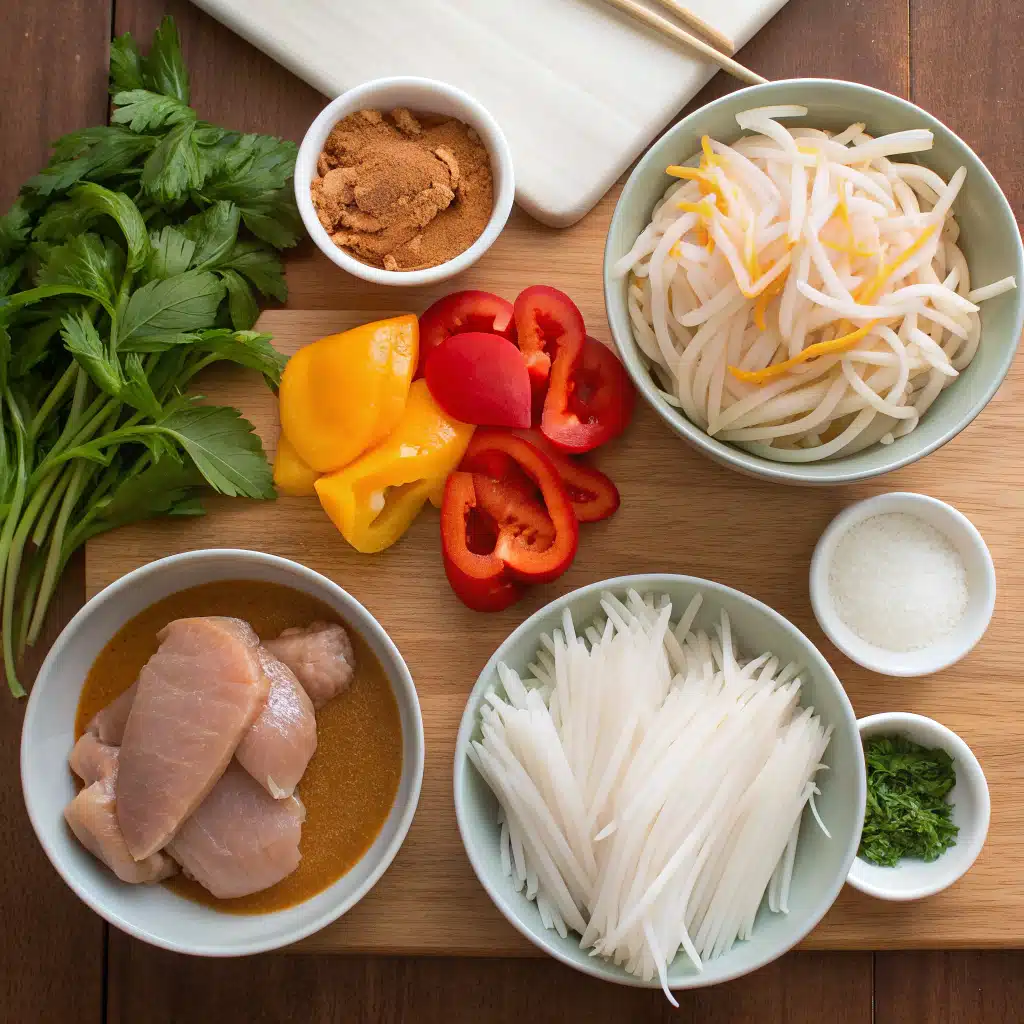
Step-by-Step: Making Perfect Thai Red Curry Chicken Noodles
Preparing the Noodles and Vegetables
Cook the rice noodles according to package directions, being careful not to overcook. They should remain slightly firm as they’ll continue cooking in the sauce. Drain and rinse with cold water to stop the cooking process, then set aside.
Heat coconut oil in a large skillet or wok over medium heat until shimmering. Add the diced sweet onion and sauté for about 5 minutes until it becomes translucent and begins to soften.
Add the diced zucchini (or yellow squash), fresh corn kernels, minced garlic, and grated ginger to the skillet. Sauté for an additional 3-4 minutes until the vegetables are slightly softened but still retain some crispness. “Don’t miss our chicken vegetable soup recipe if you love the combination of tender chicken and fresh vegetables.”
Creating the Rich Curry Sauce
Add the Thai red curry paste to the vegetable mixture and stir continuously for about 1 minute. This brief cooking period allows the aromatics in the curry paste to bloom and release their flavors.
Pour in the can of full-fat coconut milk, ½ cup water, soy sauce, and honey. Stir to combine all ingredients thoroughly and bring the mixture to a gentle simmer.
Allow the sauce to simmer for about 5 minutes, stirring occasionally. This cooking time helps the flavors meld and allows the sauce to thicken slightly.
Add the shredded cooked chicken to the simmering sauce and stir gently until the chicken is fully incorporated and warmed through, which should take about 2 minutes.
Finish the sauce by adding the lime zest, fresh lime juice, and most of the chopped herbs (reserving some for garnish). Stir to distribute these flavor-enhancing ingredients throughout the sauce.
Combining and Serving
You have two serving options: either add the cooked rice noodles directly to the skillet and toss until they’re coated with sauce, or serve the noodles in individual bowls and top with the curry sauce mixture.
Garnish each serving with the remaining fresh herbs, sliced jalapeños (if using), and sliced green onions. Serve immediately while hot.
Tips: Secrets to Exceptional Thai Red Curry Chicken Noodles
Choosing and Using the Right Curry Paste
The quality of your Thai red curry paste significantly impacts the final dish. While store-bought pastes offer convenience, not all brands deliver authentic flavor. Look for brands that list traditional ingredients like lemongrass, galangal, and kaffir lime among the first few ingredients. Adjust the amount based on your heat tolerance and the brand you’re using – some are significantly spicier than others. Start with a smaller amount if you’re uncertain, as you can always add more later.
“Here’s your guide to rice coconut milk recipe for another delicious way to use coconut milk in your cooking.”
Maximizing Flavor Through Technique
Several small but crucial techniques can elevate your Thai red curry chicken noodles from good to exceptional. First, don’t skip the step of cooking the curry paste before adding liquids – this “blooming” process releases essential oils and deepens the flavor. Second, use full-fat coconut milk for the richest, creamiest sauce; light versions simply won’t deliver the same luxurious texture. Finally, add the lime juice at the end of cooking rather than earlier, as heat can diminish its brightness and fresh flavor impact.
Time-Saving Preparation Shortcuts
Streamline your cooking process with smart preparation strategies. Rotisserie chicken makes an excellent time-saving option that still delivers great flavor. Alternatively, you can meal prep by cooking and shredding chicken in advance. For vegetables, many supermarkets offer pre-cut options that can save significant prep time. Consider measuring and organizing all ingredients before starting to cook (the French technique called “mise en place”) to make the actual cooking process smooth and stress-free.
Storage: Keeping Your Thai Red Curry Chicken Noodles Fresh
Refrigeration Methods for Optimal Freshness
Thai red curry chicken noodles will stay fresh in the refrigerator for up to 3-4 days when stored properly. For best results, allow the dish to cool completely before transferring to airtight containers. “Discover great ideas like our creamy chicken noodle casserole for another satisfying pasta dish that stores well.” If you’ve kept the noodles and sauce separate, store them in different containers to prevent the noodles from absorbing too much liquid and becoming soggy. For portion control and easy lunches, consider dividing the meal into individual containers right away.
Freezing Guidelines and Considerations
While Thai red curry chicken noodles can be frozen, some special considerations will help maintain quality. The sauce with chicken and vegetables freezes well for up to 2-3 months in airtight containers or freezer bags. However, the rice noodles may change texture when frozen and reheated. For best results, consider freezing only the curry sauce component and cooking fresh noodles when you’re ready to enjoy the dish again. Always label containers with the date and contents to keep track of what’s in your freezer.
Reheating for Maximum Flavor Retention
To reheat refrigerated Thai red curry chicken noodles without compromising texture or flavor, gentle heating methods work best. For stovetop reheating, place the noodles and sauce in a skillet over medium-low heat with a splash of water or coconut milk to restore moisture, stirring occasionally until heated through (about 5-7 minutes). Microwave reheating works too, but use 50-70% power in 1-minute intervals, stirring between each interval. Just before serving, add a squeeze of fresh lime juice and some additional fresh herbs to revive the bright flavors that may have diminished during storage.
Variations: Customize Your Thai Red Curry Chicken Noodles
Protein Alternatives for Every Diet
While chicken makes a classic protein choice for this dish, Thai red curry noodles adapt beautifully to various protein alternatives. For seafood lovers, shrimp or firm white fish like cod cook quickly and pair wonderfully with the curry flavors. Vegetarians can substitute firm tofu, tempeh, or a mixture of mushrooms for a hearty, satisfying meal. Those seeking higher protein options might consider adding thinly sliced beef sirloin or increasing the chicken amount.
“Check out our cowboy butter chicken linguine for another creative protein and pasta combination.”
Vegetable Variations for Seasonal Adaptation
The beauty of Thai red curry chicken noodles lies in their flexibility with vegetables. In spring, try adding snow peas, asparagus tips, or fresh peas. Summer calls for bell peppers, green beans, or eggplant alongside the recipe’s zucchini and corn. Fall and winter versions shine with butternut squash, sliced brussels sprouts, or baby bok choy. For added nutrition without altering the flavor profile significantly, consider folding in spinach or kale during the final minute of cooking. This adaptability makes the dish perfect for using seasonal produce or whatever vegetables need using from your refrigerator.
Adjusting Heat Levels and Flavor Profiles
Thai red curry chicken noodles can be customized to suit various heat preferences and flavor profiles. For a milder version ideal for children or heat-sensitive palates, reduce the curry paste and omit the jalapeños. Conversely, spice enthusiasts can increase the curry paste, add sriracha, or include Thai bird chilies for significant heat.
For flavor variations, try adding a tablespoon of creamy peanut butter for a satay-inspired twist, or incorporate lemongrass and extra lime for a brighter, more citrus-forward profile. Fish sauce can replace or supplement soy sauce for a more authentic Thai umami flavor, though it will intensify the dish’s seafood notes.
Serving: Perfect Pairings and Presentation Ideas
Complementary Side Dishes
While Thai red curry chicken noodles make a complete one-dish meal, thoughtfully chosen sides can enhance the dining experience. Light, refreshing options balance the rich, spicy main dish perfectly. Consider a simple cucumber salad with rice vinegar and a touch of sugar for cooling contrast. A plate of fresh herbs (mint, basil, and cilantro) allows diners to add brightness to their individual servings. For larger gatherings, spring rolls with a peanut dipping sauce make an appealing starter that complements the meal’s Thai flavors.
“Want more ideas? Check out our Asian cucumber salad for a perfect light accompaniment to these spicy noodles.”
Beverage Pairings for Maximum Enjoyment
The complex flavors in Thai red curry chicken noodles pair beautifully with several beverage options. For non-alcoholic choices, consider Thai iced tea, which provides cooling sweetness against the spice, or coconut water for tropical refreshment. Limeade or a cucumber-mint infused water also provides pleasant contrast to the dish’s heat. For hot beverages, jasmine tea complements the aromatic qualities of the curry without overwhelming them.
Presentation Tips for Impressive Serving
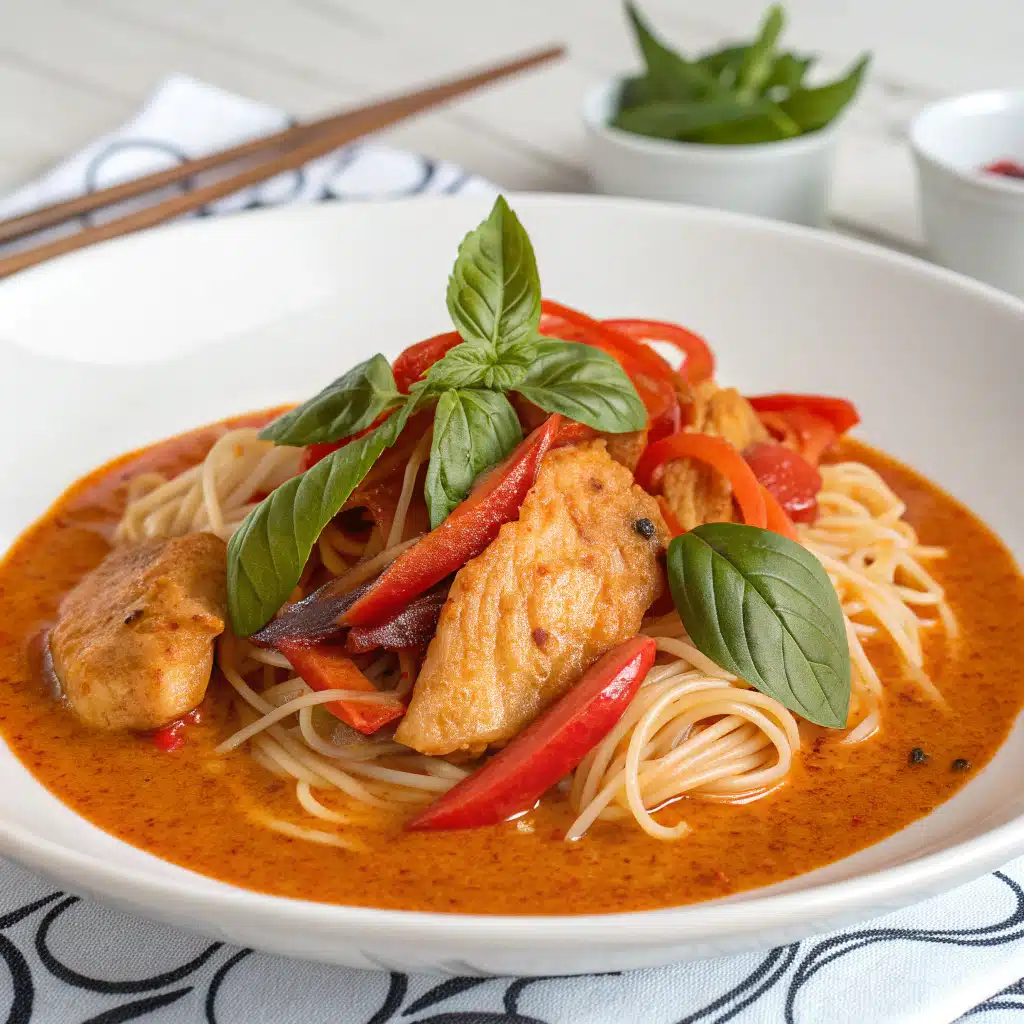
Elevate your Thai red curry chicken noodles from casual weeknight dinner to impressive entertainment fare with thoughtful presentation. Serve family-style in a large, shallow bowl or platter with high sides to contain the sauce while showcasing the colorful ingredients. Create a “garnish bar” with small bowls of extra toppings like sliced jalapeños, fresh herbs, bean sprouts, crushed peanuts, and lime wedges so guests can customize their portions. For individual servings, consider wide, shallow bowls that showcase the vibrant colors and allow space for the noodles without crowding. A pair of serving tongs or a pasta server makes portioning easy while maintaining the dish’s visual appeal.
FAQs: Common Questions About Thai Red Curry Chicken Noodles
What noodles work best in Thai red curry chicken noodles?
Rice noodles are traditional and work best because they complement the Thai flavors while absorbing the sauce beautifully. Medium or wide rice noodles (often labeled as pad thai or rice stick noodles) are ideal choices. In a pinch, you could substitute ramen noodles, udon, or even linguine, though the texture and flavor will differ somewhat from the authentic version. For a lower-carb option, try shirataki noodles or spiralized zucchini “zoodles,” keeping in mind they won’t absorb sauce the same way rice noodles do.
Can I make Thai red curry chicken noodles with coconut milk alternatives?
Yes, though the flavor and texture will change somewhat. Cashew cream (blended soaked cashews with water) provides richness similar to coconut milk. Almond milk or oat milk can work if thickened slightly with a cornstarch slurry. For those avoiding nuts, silken tofu blended with water creates a creamy base. Just remember that these alternatives lack coconut’s distinctive flavor, so you might want to add a few drops of coconut extract or increase other aromatics to compensate.
How spicy are Thai red curry chicken noodles?
The spice level in Thai red curry chicken noodles is highly customizable. With 2 tablespoons of typical grocery store red curry paste, the dish will have moderate heat – noticeable but not overwhelming for most palates. For a milder version, use just 1 tablespoon of curry paste and omit the jalapeños. For extra heat, increase to 3-4 tablespoons of paste and add additional fresh chilies. Remember that different brands of curry paste vary significantly in spice level, so start conservatively if you’re unfamiliar with a particular brand.
Can I use leftover chicken in Thai red curry chicken noodles?
Absolutely! Leftover chicken is perfect for Thai red curry chicken noodles, making this an excellent recipe for repurposing yesterday’s roasted or grilled chicken. Any cooked chicken works well – rotisserie, baked, grilled, or even poached. Simply shred or dice the chicken into bite-sized pieces before adding it to the sauce. Since the chicken is already cooked, you only need to warm it through in the sauce rather than cooking it, which helps prevent it from becoming tough or dry.
How do I thicken the sauce for Thai red curry chicken noodles?
If your Thai red curry chicken noodles sauce seems too thin, several methods can help thicken it. The simplest approach is to continue simmering the sauce uncovered for a few extra minutes, allowing more liquid to evaporate. Alternatively, create a cornstarch slurry by mixing 1 tablespoon cornstarch with 2 tablespoons cold water, then stir this mixture into the simmering sauce. For a more authentic approach that adds flavor along with thickness, add 1-2 tablespoons of creamy peanut butter. Finally, remember that the sauce will naturally thicken slightly as it cools.
Are Thai red curry chicken noodles good for meal prep?
Yes, Thai red curry chicken noodles are excellent for meal prep with some strategic planning. For best results, prepare the curry sauce with chicken and vegetables, then refrigerate it separately from the cooked noodles. When ready to eat, gently reheat the sauce and combine with the noodles just before serving. If you prefer to store everything together, slightly undercook the noodles so they don’t become mushy during reheating. Portion the complete dish into microwave-safe containers for convenient grab-and-go lunches throughout the week. The flavors often improve after a day as the ingredients meld together.
Conclusion: Why Thai Red Curry Chicken Noodles Deserve a Place in Your Recipe Rotation
A Versatile Dish for Any Occasion
Thai red curry chicken noodles effortlessly bridge the gap between everyday cooking and special occasions. On busy weeknights, this one-pan wonder delivers restaurant-quality flavor without extensive preparation or cleanup. For weekend entertaining, it offers an impressive yet approachable main course that can be scaled up easily to feed a crowd. The dish’s adaptability to seasonal ingredients and dietary preferences makes it especially valuable for households with varying tastes. “Learn more about drunken noodles recipe for another Thai noodle dish to add to your culinary repertoire.” Whether you’re cooking for yourself, your family, or guests, Thai red curry chicken noodles consistently deliver satisfaction.
Final Tips for Thai Red Curry Mastery
To truly master Thai red curry chicken noodles, remember a few key principles. First, balance is essential – the interplay between spicy, sweet, sour, and savory elements creates the complex flavor profile that makes this dish special. Don’t skip the lime, herbs, or honey, as each contributes crucially to this balance. Second, embrace the dish’s flexibility rather than worrying about perfect authenticity; adapt it to your taste preferences and available ingredients. Finally, treat this recipe as a foundation for creativity rather than a rigid formula. As you make it repeatedly, you’ll develop intuition about adjustments that suit your palate, transforming this dish into a signature creation that reflects your unique cooking style.
PrintThai Red Curry Chicken Noodles
Creamy, spicy Thai red curry chicken noodles with vegetables in a coconut milk sauce – a delicious one-pan meal ready in 30 minutes.
- Prep Time: 10
- Cook Time: 20
- Total Time: 30 minutes
- Yield: 4 1x
- Category: Main Dish
- Cuisine: Thai
Ingredients
- 8 oz rice noodles
- 2 tbsp coconut oil
- 1 sweet onion, diced
- 2 zucchini or yellow squash, diced
- Kernels from 2 ears of fresh corn
- 2 cloves garlic, minced
- 1 tbsp grated fresh ginger
- 2–3 tbsp Thai red curry paste
- 1 can full-fat coconut milk
- 1 tbsp soy sauce
- 2 tsp honey
- Zest and juice of 1/2 lime
- 1 1/2–2 cups cooked, shredded chicken
- 1/4 cup chopped fresh cilantro or basil
- Sliced jalapeño
- Sliced green onions
Instructions
- Cook rice noodles according to package directions, drain and set aside.
- Heat coconut oil in a large skillet over medium heat; sauté onion for 5 minutes until softened.
- Add zucchini, corn, garlic, and ginger; cook 3-4 minutes until vegetables begin to soften.
- Stir in curry paste and cook for 1 minute to release flavors.
- Add coconut milk, 1/2 cup water, soy sauce, and honey; bring to a simmer for 5 minutes.
- Stir in shredded chicken and warm through for 2 minutes.
- Add lime zest, lime juice, and most of the fresh herbs.
- Serve by placing noodles in bowls and topping with the curry mixture, or toss everything together in the pan.
- Garnish with remaining herbs, sliced jalapeño, and green onions.
Notes
For meal prep, store the sauce and noodles separately for best results. Adjust spice levels by increasing or decreasing the amount of curry paste and jalapeños. Nutrition facts are estimates and may vary based on ingredients used, portion sizes, and preparation methods.
Nutrition
- Serving Size: 4
- Calories: 425 Kcal
- Sugar: 8g
- Sodium: 680mg
- Fat: 22g
- Saturated Fat: 18g
- Carbohydrates: 42g
- Fiber: 4g
- Protein: 18g
- Cholesterol: 45mg
Keywords: Thai red curry chicken noodles, coconut curry noodles, chicken curry, Thai noodle recipe, spicy noodle dish
Let’s connect! Follow me for more Joylicious Recipes: Facebook, Instagram, Pinterest