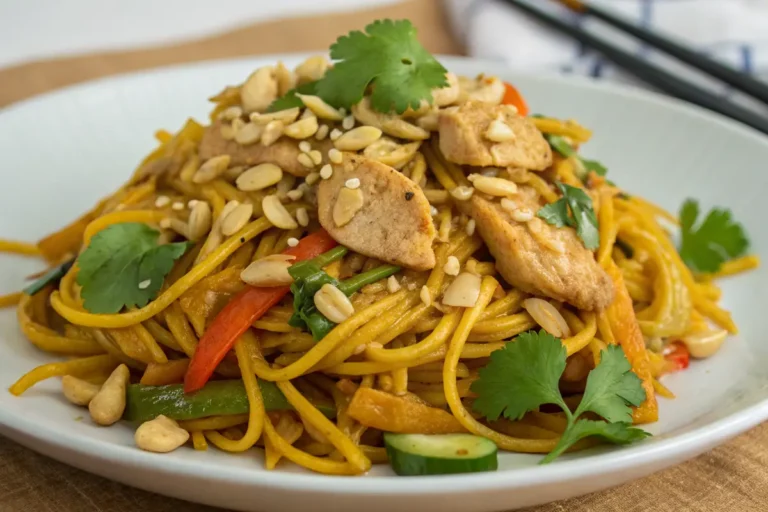
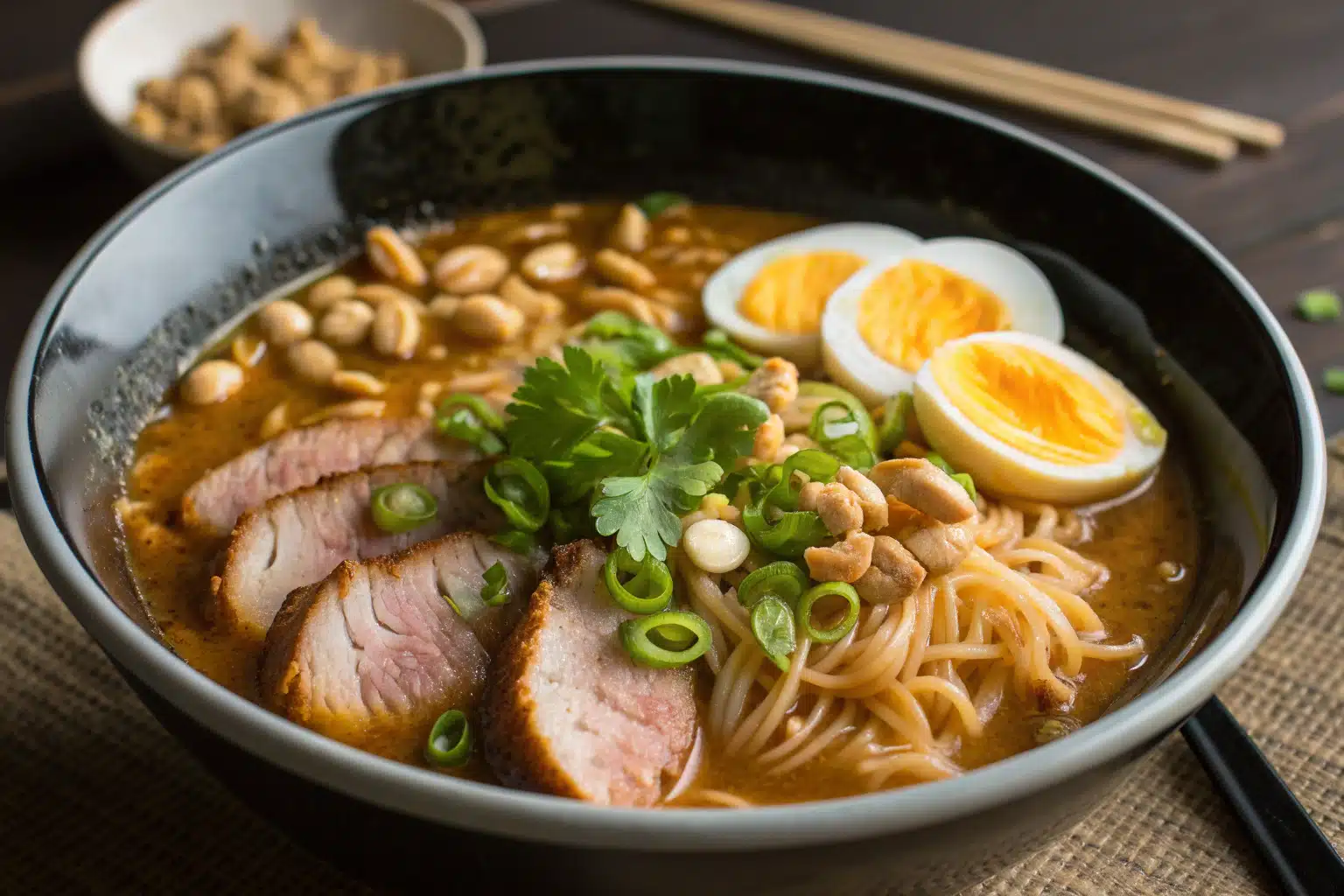
Miso Peanut Ramen: The Ultimate Savory-Sweet Asian Fusion Bowl
Introduction to Miso Peanut Ramen
The Perfect Fusion of Japanese and Thai Flavors
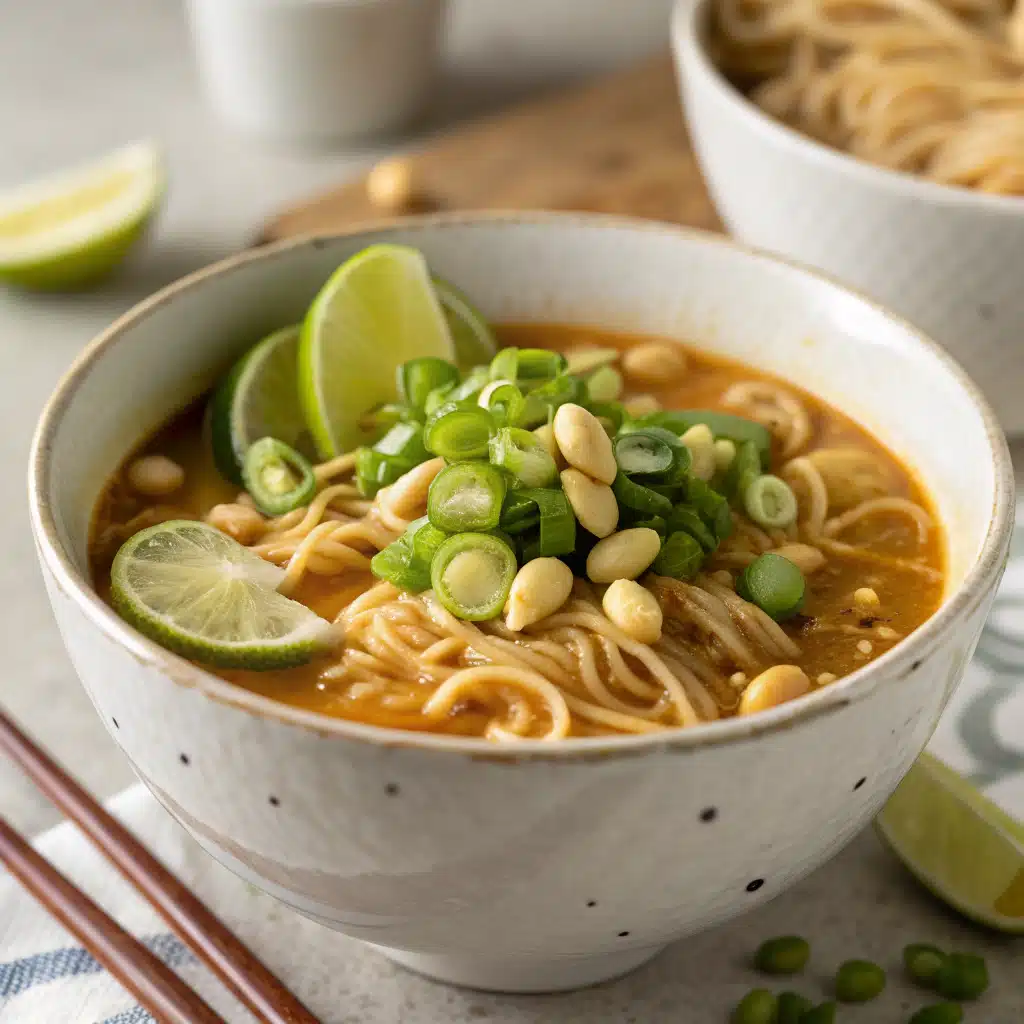
Miso peanut ramen brings together the umami richness of Japanese cuisine and the nutty complexity of Southeast Asian flavors in one harmonious bowl. This delightful fusion combines the fermented depth of miso paste with the creamy texture of peanut butter, creating a broth that’s simultaneously comforting, complex, and crave-worthy. What makes miso peanut ramen so special is its ability to balance savory and sweet notes while offering a silky, satisfying texture that coats each noodle perfectly.
“Learn more about fusion cuisine in our Thai Red Curry Chicken Noodles recipe that combines similar flavor profiles.”
A Versatile Dish for Any Season
While traditional ramen is often associated with cold weather comfort, miso peanut ramen works beautifully year-round. In winter, its rich broth warms you from the inside out, while during warmer months, the vibrant flavors and customizable toppings keep the dish feeling fresh and exciting. Moreover, this recipe features a unique twist—crispy grated tofu that adds wonderful texture contrast to the silky noodles and broth. The combination of red curry paste, miso, and peanut butter creates a complex flavor profile that evolves with each spoonful.
Ingredients for Perfect Miso Peanut Ramen
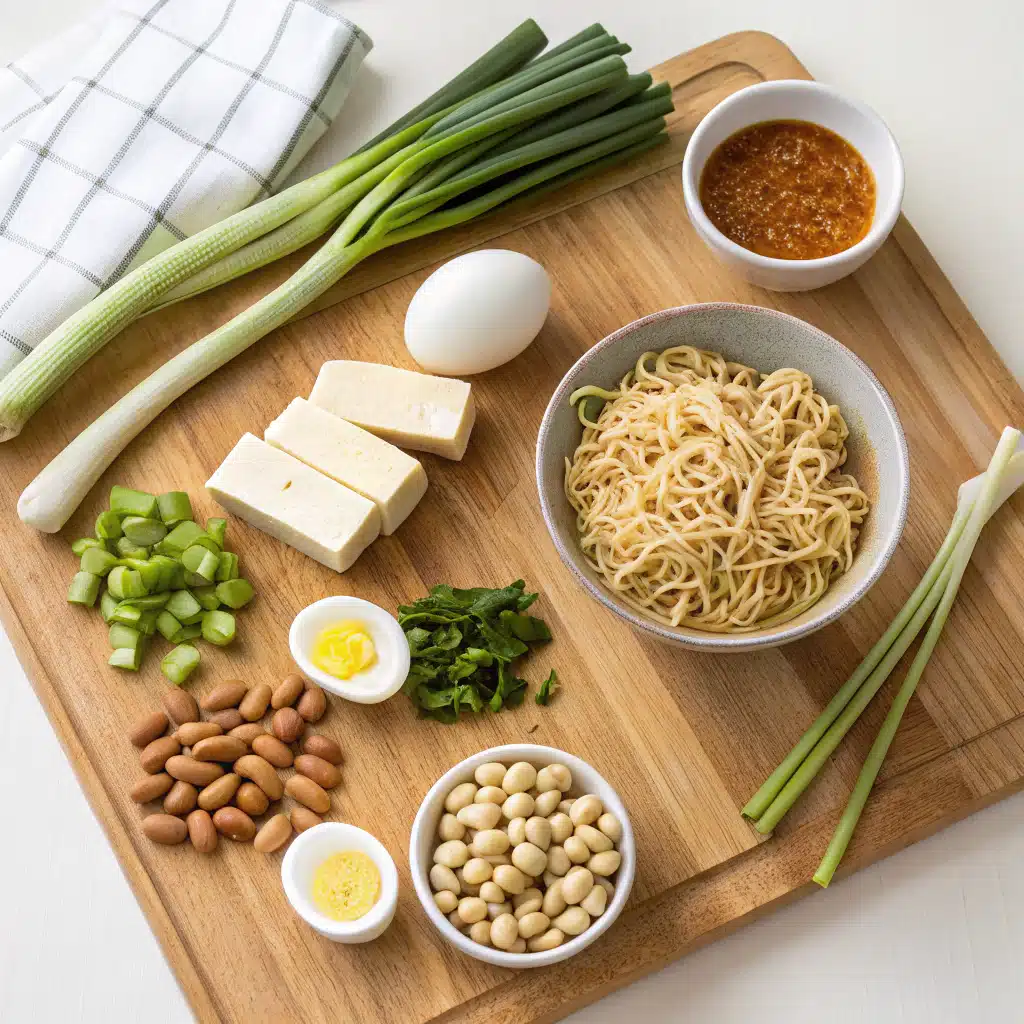
Foundation Ingredients
| Main Ingredients | Quantity | Notes |
|---|---|---|
| Extra-firm tofu | 14 ounces | Pressed and grated |
| Olive oil | 2 tablespoons | Divided |
| Red curry paste | 2 tablespoons | Adds depth and heat |
| White miso | 1 tablespoon | Provides umami base |
| Peanut butter | 1-2 tablespoons | Creamy variety preferred |
| Soy sauce | 2 tablespoons | For saltiness and umami |
| Brown sugar | 1 tablespoon | Balances flavors |
| Water or vegetable broth | 1½ cups | Base for broth |
| Vegetable bouillon paste | 1½ teaspoons | Omit if using broth |
| Full-fat coconut milk | 14 ounces (1 can) | For creaminess |
| Mushrooms | 8 ounces | Thinly sliced |
| Ramen noodles | 6 ounces | Uncooked |
Toppings and Garnishes
The toppings transform your miso peanut ramen from delicious to exceptional, adding texture, freshness, and visual appeal:
| Toppings | Function |
|---|---|
| Thinly sliced cucumbers | Adds freshness and crunch |
| Chopped cilantro or sliced green onion | Provides herbal notes |
| Chili crisp | Adds spice and texture |
Understanding Key Ingredients
The magic of miso peanut ramen lies in understanding how each component contributes to the final dish. White miso offers a mild, slightly sweet fermented flavor that forms the umami foundation of the broth. The peanut butter adds creaminess and nutty depth, while red curry paste brings complex aromatics and gentle heat. Full-fat coconut milk is essential for creating that luscious, silky texture that makes this ramen so satisfying. The grated tofu technique creates wonderful texture, absorbing flavors while maintaining its structure.
Step-by-Step Miso Peanut Ramen Preparation
Preparing the Crispy Tofu
- Pat the tofu thoroughly dry using paper towels or a clean kitchen towel. Press for at least 30 minutes to remove excess moisture.
- Using the large holes of a box grater, grate the pressed tofu into a bowl.
- Heat 1 tablespoon olive oil in a large skillet over medium-high heat until shimmering.
- Add the grated tofu to the skillet, spreading it out evenly to maximize surface contact.
- Cook undisturbed for 5-7 minutes, then stir and continue cooking for another 5-8 minutes until the tofu becomes golden and crispy.
- Drizzle soy sauce over the tofu, stir to incorporate, and cook for 5 more minutes until the sauce is absorbed and the tofu develops deeper flavor.
- Transfer the crispy tofu to a bowl and set aside.
Creating the Flavorful Broth
“Discover great ideas like our Chicken Pho Noodle Soup which uses similar broth-building techniques for maximum flavor.”
- Using the same skillet (no need to clean it), add the remaining tablespoon of olive oil over medium heat.
- Add the thinly sliced mushrooms and sauté for 6-8 minutes until they release their moisture and begin to brown.
- Reduce heat to medium-low and add the red curry paste, white miso, peanut butter, soy sauce, and brown sugar to the pan.
- Stir the ingredients together to form a thick paste, allowing them to cook for 1-2 minutes to activate the aromatics.
- Slowly pour in the coconut milk while whisking constantly to prevent lumps from forming.
- Add water or vegetable broth (and bouillon paste if using water) to the pan, continuing to whisk until the mixture is smooth.
- Bring the broth to a gentle simmer and let it cook for 5-10 minutes to thicken slightly and allow flavors to meld.
Assembling Your Miso Peanut Ramen
- While the broth simmers, cook the ramen noodles in a separate pot according to package instructions, usually 3-4 minutes until al dente.
- Drain the noodles thoroughly but do not rinse, as the starch helps the broth adhere better.
- Add the cooked noodles directly to the simmering broth and gently toss to coat each strand.
- Allow the noodles to simmer in the broth for 1-2 minutes to absorb flavors.
- Divide the noodles and broth among serving bowls.
- Top each bowl with a generous portion of the crispy tofu.
- Garnish with thinly sliced cucumbers, chopped cilantro or sliced green onions, and a drizzle of chili crisp.
- Serve immediately while hot.
Tips for Miso Peanut Ramen Success
Perfecting the Broth Balance
The key to exceptional miso peanut ramen lies in achieving the perfect balance between salty, sweet, umami, and creamy elements. If your broth tastes too salty, add a touch more brown sugar or coconut milk. If it’s too sweet, balance with additional soy sauce or a squeeze of lime juice. For more depth, consider adding a dash of rice vinegar or a splash of toasted sesame oil just before serving.
“Check out our Hot and Sour Tofu Soup for more Asian broth-balancing techniques.”
The consistency of your broth is equally important—it should be rich enough to coat the noodles but not so thick that it becomes gloppy. If your broth is too thick, thin it with additional water or broth; if too thin, simmer a bit longer or add a touch more peanut butter.
Noodle Know-How
Choosing the right noodles and cooking them properly greatly impacts the final dish. Traditional ramen noodles work best in this recipe because their alkaline nature gives them a springy texture that stands up well to the rich broth. However, you can substitute other Asian noodles like udon, soba, or even rice noodles if needed.
Always cook noodles separately from your broth, and slightly undercook them (aim for very al dente) since they’ll continue cooking when added to the hot broth. This prevents them from becoming mushy. If you’re planning to prepare components ahead of time, store noodles and broth separately until just before serving.
Tofu Techniques
The grated tofu technique in this recipe creates a unique texture similar to ground meat but completely plant-based. For the best results, ensure your tofu is very well pressed before grating—the drier it starts, the crispier it will become. If you don’t have time to press tofu, super-firm or high-protein tofu varieties contain less water and work well as alternatives.
For extra flavor in your crispy tofu, consider adding minced garlic, grated ginger, or a dash of five-spice powder along with the soy sauce during cooking. This infuses the tofu with even more dimension that complements the rich broth.
Storing and Reheating Miso Peanut Ramen
Proper Storage Methods
“Want more ideas? Check out our Ginger Sesame Soba Bowl for another Asian dish with similar storage considerations.”
Miso peanut ramen components should be stored separately for maximum freshness and texture. The broth can be refrigerated in an airtight container for up to 4 days, while properly stored crispy tofu remains good for 2-3 days. Cooked noodles should be tossed with a small amount of oil to prevent sticking, then refrigerated separately for no more than 2 days before they begin to degrade in texture.
If you’ve already combined all components, the complete dish will keep in the refrigerator for about 2 days, though the noodles will gradually absorb more liquid and become softer. For longer storage, the broth alone can be frozen for up to 3 months—just be sure to leave some expansion space in your container.
Reviving Leftover Ramen
Reheating miso peanut ramen requires careful attention to preserve its textures and flavors. The best method is to heat the broth separately until steaming hot, then add the noodles for just long enough to warm through. This prevents overcooking the noodles, which quickly become mushy when reheated too aggressively.
To revive refrigerated crispy tofu, briefly reheat it in a dry skillet over medium heat or in an air fryer at 350°F for 3-4 minutes until warm and crisp again. If you stored the complete dish together, add a splash of water or broth when reheating, as the noodles will have absorbed much of the liquid during storage.
Making Components Ahead
For meal prep or entertaining, you can make certain components ahead of time. The broth actually improves after a day in the refrigerator as flavors meld. The crispy tofu can be made up to two days ahead and quickly reheated. However, always cook noodles fresh just before serving for the best texture, as they deteriorate more quickly than other components.
Variations of Miso Peanut Ramen
Protein Alternatives
While the grated tofu in this recipe creates a wonderful texture, you can easily substitute or add other proteins to customize your miso peanut ramen:
- Thinly sliced chicken breast or thighs, marinated in soy sauce and briefly sautéed
- Sliced beef sirloin, quickly seared to maintain tenderness
- Grilled shrimp for a seafood variation
- Soft-boiled eggs (ajitama) for traditional ramen appeal
- Tempeh or seitan for alternative plant-based options
For any protein substitution, ensure it’s cooked separately and added as a topping rather than simmered in the broth, which can make proteins tough or overcooked.
Vegetable Variations
“Looking for inspiration? Try our Mushroom Ratatouille for more creative ways to incorporate vegetables into your meals.”
One of the most adaptable aspects of miso peanut ramen is the vegetable component. Beyond the mushrooms in the base recipe, consider these additions:
- Thinly sliced bell peppers for color and sweetness
- Baby bok choy or spinach, wilted into the hot broth just before serving
- Julienned carrots or snow peas for crunch
- Kimchi for fermented tang and heat
- Corn kernels for sweet pops of flavor
- Bean sprouts for traditional ramen texture
Seasonal vegetables can be rotated throughout the year to keep this dish fresh and exciting. For harder vegetables like carrots or broccoli, briefly blanch them before adding to ensure they’re tender-crisp.
Spice Level Adjustments
The beauty of homemade ramen is controlling exactly how spicy you want your bowl. This miso peanut ramen can be adapted from mild to fiery:
- For milder ramen: Reduce red curry paste to 1 tablespoon and omit chili crisp
- For medium heat: Follow the recipe as written
- For spicy ramen: Add 1-2 teaspoons of sriracha or sambal oelek to the broth
- For extra-spicy: Include thinly sliced fresh jalapeños or Thai bird chiles as a topping
Remember that coconut milk helps temper heat, so you can always add more if you’ve accidentally made your broth too spicy. Conversely, reducing coconut milk intensifies the spice components.
Serving Miso Peanut Ramen
Bowl Selection and Presentation
The right vessel enhances both the experience and temperature retention of your miso peanut ramen. Traditional ramen bowls are wide, deep, and made of ceramic to hold heat—but any large bowl with similar properties works well. Pre-warming bowls by filling them with hot water for a minute before emptying and adding your ramen helps keep everything hot longer.
For impressive presentation, arrange components methodically: place noodles and broth first, then position crispy tofu slightly off-center. Arrange cucumber slices in a fan pattern, sprinkle herbs over one quadrant of the bowl, and add a controlled drizzle of chili crisp rather than spreading it throughout. This creates a visually striking bowl with distinct flavor zones that diners can mix as they eat.
Side Dishes and Complementary Flavors
“Here’s your guide to Spicy Salmon Crispy Rice Bites, which make an excellent appetizer before serving this ramen.”
While miso peanut ramen is satisfying as a standalone meal, light side dishes can enhance the dining experience:
- Simple cucumber sunomono salad for refreshing contrast
- Edamame with sea salt for protein-rich finger food
- Pickled vegetables for palate-cleansing acidity
- Japanese-style gyoza dumplings for a traditional pairing
- Miso-glazed eggplant for complementary umami flavors
For beverages, consider unsweetened iced or hot green tea, which cleanses the palate between bites. Sparkling water with cucumber or yuzu also pairs beautifully with the rich broth.
Customization Stations for Gatherings
For entertaining, create a ramen bar where guests can customize their own bowls. Prepare the broth and noodles, then offer an array of toppings in separate dishes:
- The crispy tofu from this recipe
- Additional protein options
- Various vegetables, both raw and cooked
- Fresh herbs like cilantro, Thai basil, and mint
- Various spice options from mild to wild
- Condiments like sesame seeds, furikake, or bonito flakes
This interactive approach makes ramen night fun for gatherings and allows everyone to create their perfect bowl according to their preferences.
FAQs About Miso Peanut Ramen
What type of miso works best in peanut ramen?
White miso (shiro miso) works best in peanut ramen because its mild, slightly sweet profile harmonizes beautifully with peanut butter without overwhelming the dish. Yellow miso (awase) is an acceptable substitute, providing a slightly stronger flavor. However, red miso (aka miso) is generally too intense and may dominate the delicate balance of flavors. Whichever type you choose, always add miso toward the end of cooking and avoid boiling it, which destroys its probiotic benefits and can create bitterness.
Can miso peanut ramen be made vegan or vegetarian?
Yes, this miso peanut ramen recipe is already vegetarian and can easily be made vegan by ensuring your ramen noodles don’t contain egg. Many traditional ramen noodles contain egg, so look for specific vegan varieties or substitute rice noodles, udon, or soba (check that they’re 100% buckwheat for vegan options). Also verify that your curry paste doesn’t contain shrimp paste or fish sauce, as some brands do. With these considerations, this dish makes an excellent plant-based meal packed with flavor.
How do you balance sweet and savory flavors in peanut ramen?
Balancing sweetness and savoriness in miso peanut ramen requires careful attention to several key ingredients. The miso and soy sauce provide savory umami notes, while brown sugar and coconut milk contribute sweetness. If your broth tastes too sweet, add a splash of rice vinegar or lime juice to brighten it with acidity. If it’s too savory or salty, a touch more brown sugar or coconut milk will help. Remember that balance is personal—taste frequently while cooking and adjust according to your preferences.
What noodles work best for miso peanut ramen?
Fresh or dried ramen noodles are ideal for miso peanut ramen because their wavy texture and alkaline composition help them maintain a pleasantly chewy texture even in hot broth. However, you have several alternatives if ramen noodles aren’t available: udon provides a thicker, chewier texture; soba offers nutty flavor that complements the peanut; rice noodles work for gluten-free diets; and even linguine or spaghetti can substitute in a pinch. The key is to cook any noodles slightly underdone since they’ll continue softening in the hot broth.
Can miso peanut ramen be made spicy?
Absolutely! This miso peanut ramen is highly adaptable to different spice preferences. The recipe includes red curry paste and optional chili crisp for moderate heat, but you can easily increase spiciness by adding sriracha, sambal oelek, gochujang, or fresh chiles to the broth. For extra dimension, try adding a dash of toasted chili oil as a finishing touch. Remember that spice builds as the dish sits, so if serving guests with varying spice tolerances, it’s better to keep the base broth milder and offer spicy condiments on the side.
How long does miso peanut ramen keep in the fridge?
When storing miso peanut ramen, it’s best to keep components separate: the broth will keep for up to 4 days, the crispy tofu for 2-3 days, and cooked noodles (tossed with a little oil to prevent sticking) for 1-2 days. If you’ve already combined everything, the complete dish will last about 2 days before the noodles become too soft. For best results when reheating, warm the broth separately until hot, then briefly add the noodles just long enough to heat through without overcooking them. The crispy tofu can be revived in a dry skillet or air fryer.
Conclusion
Why Miso Peanut Ramen Deserves a Spot in Your Recipe Collection
Miso peanut ramen represents culinary fusion at its finest—bringing together Japanese depth, Southeast Asian creaminess, and universally appealing comfort food qualities. What makes this dish special is its remarkable balance of flavors, textures, and aromas that create a multidimensional eating experience. The combination of silky broth, chewy noodles, and crispy tofu satisfies on multiple levels, while the customizable nature of toppings and spice levels means it can be adapted to please nearly any palate.
“Don’t miss our Chicken Lo Mein for another Asian noodle dish to add to your collection.”
Beyond its delicious profile, miso peanut ramen offers practical advantages: it’s economical, uses widely available ingredients, works year-round, and many components can be prepared in advance. Its vegetarian-friendly (and easily vegan) nature makes it inclusive for diverse dietary needs without sacrificing flavor or satisfaction.
Final Tips for Miso Peanut Ramen Mastery
To truly master miso peanut ramen, remember these key principles: respect the broth as the foundation of flavor, paying careful attention to balance; understand that noodle timing and temperature are critical for texture; embrace the various toppings as opportunities for contrast and personalization; and don’t be afraid to adapt the recipe to your preferences or what’s available seasonally.
With practice, you’ll develop an intuition for this dish that allows you to create your perfect bowl without strictly measuring ingredients. The best miso peanut ramen is ultimately the version that you enjoy most—whether that means extra spicy, loaded with vegetables, or topped with a protein that makes it your own signature creation. This adaptability is perhaps the recipe’s greatest strength, ensuring it can become a beloved staple in your culinary repertoire for years to come.
PrintMiso Peanut Ramen

Creamy, umami-rich ramen that combines the depth of miso with the nutty sweetness of peanut butter, topped with crispy grated tofu.
- Prep Time: 20 minutes
- Cook Time: 30 minutes
- Total Time: 50 minutes
- Yield: 4 1x
- Category: Main Dish
- Cuisine: Asian Fusion
Ingredients
- 14 ounces extra-firm tofu, pressed and grated
- 2 tablespoons olive oil, divided
- 2 tablespoons red curry paste
- 1 tablespoon white miso
- 1–2 tablespoons peanut butter
- 2 tablespoons soy sauce
- 1 tablespoon brown sugar
- 1 1/2 cups water or vegetable broth
- 1 1/2 teaspoons vegetable bouillon paste (omit if using broth)
- 1 (14-ounce) can full-fat coconut milk
- 8 ounces mushrooms, thinly sliced
- 6 ounces uncooked ramen noodles
- Thinly sliced cucumbers, for topping
- Chopped cilantro or sliced green onion, for topping
- Chili crisp, for topping
Instructions
- Pat tofu dry and grate using large holes of a box grater. Heat 1 tablespoon oil in skillet over medium-high heat.
- Add grated tofu; cook 10–15 minutes until crisp, then stir in soy sauce and cook 5 more minutes. Transfer to a bowl.
- In same pan, add remaining oil and sauté mushrooms 6–8 minutes until browned.
- Add curry paste, miso, peanut butter, soy sauce, and brown sugar; stir into a paste.
- Pour in coconut milk and water/broth; whisk until smooth. Simmer 5–10 minutes.
- Cook ramen separately according to package directions; drain.
- Add noodles to broth; simmer 1–2 minutes to combine flavors.
- Serve topped with crispy tofu, cucumbers, herbs, and chili crisp.
Notes
Nutrition facts are estimates and may vary based on ingredients used, portion sizes, and preparation methods. Store components separately for best results when saving leftovers.
Nutrition
- Serving Size: 4
- Calories: 485 Kcal
- Sugar: 7g
- Sodium: 890mg
- Fat: 28g
- Saturated Fat: 15g
- Carbohydrates: 42g
- Fiber: 4g
- Protein: 21g
Keywords: miso ramen, peanut broth, tofu ramen, fusion noodles, coconut ramen
Let’s connect! Follow me for more Joylicious Recipes: Facebook, Instagram, Pinterest