Discover the Vibrant World of Shrimp Mango Rice Paper Rolls
A Perfect Balance of Flavors and Textures
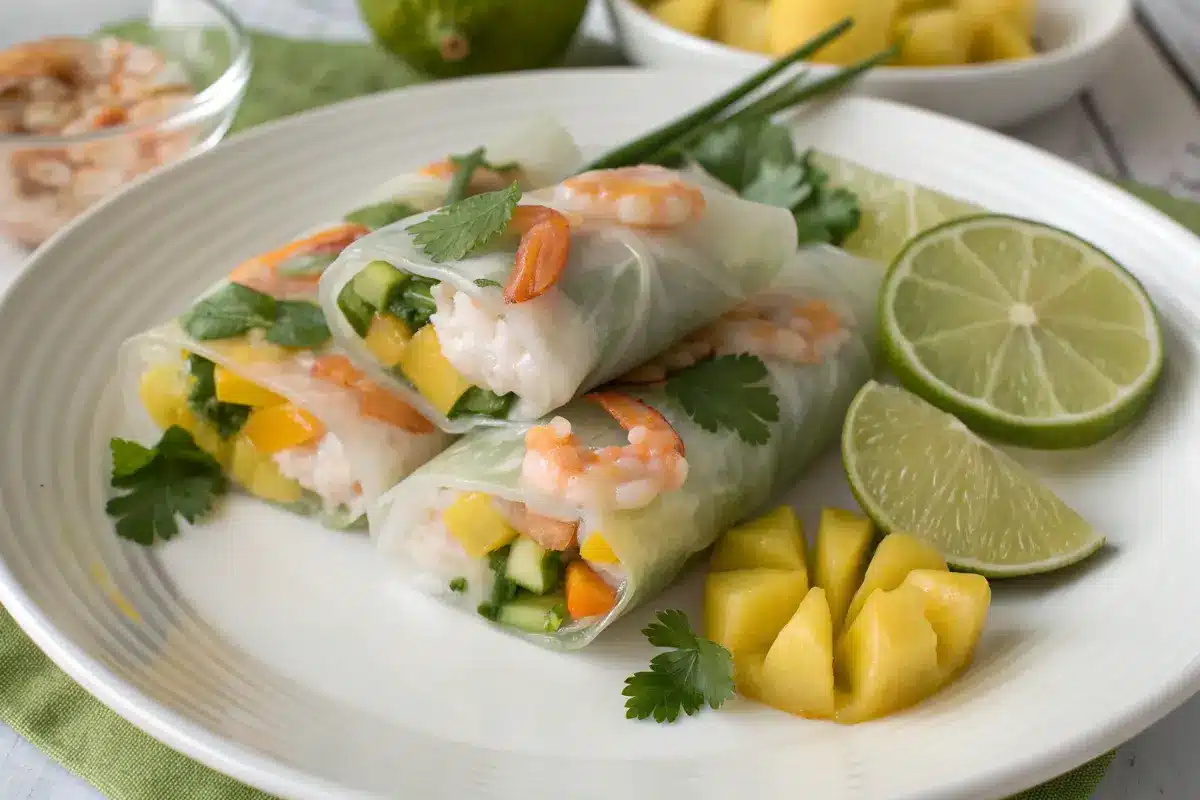
Shrimp Mango Rice Paper Rolls combine succulent shrimp, sweet juicy mango, and fresh herbs wrapped in delicate rice paper for a refreshing and satisfying meal. These translucent bundles deliver an explosion of complementary flavors and textures—from the tender bite of shrimp to the sweet tropical mango and the aromatic herbs that bring everything together. “The Cajun Shrimp with Mushrooms technique offers similar staged-cooking approaches to prevent burning while developing maximum flavor.”
These versatile rolls are perfect for summer gatherings, light lunches, or elegant appetizers when you want to impress without spending hours in the kitchen. They’re ideal for meal prep, picnics, poolside snacks, or anytime you crave something light yet satisfying that doesn’t weigh you down but still provides plenty of nutrition and flavor.
Fresh Ingredients That Make These Rolls Shine
Core Components for Perfect Rice Paper Rolls
A successful shrimp mango rice paper roll starts with quality ingredients that complement each other beautifully. Here’s everything you’ll need to create these delightful bundles:
| Ingredient | Amount | Notes |
|---|---|---|
| Rice paper wrappers | 12-15 sheets | 8-inch round sheets work best |
| Medium shrimp | 1 pound | Cooked, peeled, deveined, and halved lengthwise |
| Ripe mango | 1 large | Julienned into thin strips |
| Rice vermicelli noodles | 4 ounces | Thin variety, cooked according to package |
| Fresh mint leaves | 1 bunch | Whole leaves, stems removed |
| Fresh cilantro leaves | 1 bunch | Whole leaves with tender stems |
| Butter lettuce or green leaf lettuce | 1 head | Leaves separated and torn into manageable pieces |
| Cucumber | 1 medium | Seeded and cut into thin matchsticks |
| Red bell pepper | 1 medium | Julienned into thin strips |
| Avocado | 1 ripe | Thinly sliced (optional) |
| Green onions | 3-4 stalks | Thinly sliced on a diagonal |
| Carrots | 2 medium | Julienned or grated |
| Bean sprouts | 1 cup | Fresh, rinsed |
For the Peanut Dipping Sauce
| Ingredient | Amount | Notes |
|---|---|---|
| Creamy peanut butter | 1/3 cup | Natural, unsweetened preferred |
| Hoisin sauce | 2 tablespoons | For sweetness and depth |
| Low-sodium soy sauce | 1 tablespoon | Adds umami flavor |
| Rice vinegar | 1 tablespoon | For tanginess |
| Lime juice | 1 tablespoon | Fresh is best |
| Garlic | 1 clove | Minced or grated |
| Ginger | 1 teaspoon | Freshly grated |
| Water | 2-4 tablespoons | To adjust consistency |
| Honey or maple syrup | 1 teaspoon | Optional, for added sweetness |
| Sriracha or chili garlic sauce | 1-2 teaspoons | Optional, for heat |
| Toasted sesame oil | 1/2 teaspoon | For nutty aroma |
| Crushed peanuts | 2 tablespoons | For garnish |
“The Mango Popsicles recipe demonstrates another wonderful way to incorporate this tropical fruit into refreshing summer treats.”
Mastering the Art of Perfect Rice Paper Roll Assembly
Prepare Your Ingredients Before You Start Rolling
Proper preparation ensures smooth assembly and beautiful results. Follow these detailed steps to create picture-perfect shrimp mango rice paper rolls every time:
- Cook the shrimp: Bring a pot of lightly salted water to a simmer. Add the shrimp and cook until they turn pink and opaque, about 2-3 minutes. Immediately transfer to an ice bath to stop the cooking process. Once cooled, peel, devein, and slice them in half lengthwise.
- Prepare the noodles: Cook the rice vermicelli noodles according to package instructions until just tender, about 2-3 minutes. Drain and rinse under cold water to stop cooking. Use kitchen shears to cut the noodles into more manageable lengths (about 3-4 inches long). Toss with a few drops of sesame oil to prevent sticking.
- Prepare the vegetables: Wash and thoroughly dry all produce. Julienne the mango, cucumber, and bell pepper into thin matchstick pieces about 3 inches long. Gently separate mint and cilantro leaves from stems. Tear lettuce into pieces that will fit neatly in your rolls. Arrange all prepped ingredients on a large platter or cutting board for easy access.
- Make the dipping sauce: In a medium bowl, whisk together peanut butter and 2 tablespoons of warm water until smooth. Add hoisin sauce, soy sauce, rice vinegar, lime juice, minced garlic, and grated ginger. Mix thoroughly. Adjust consistency with additional water if needed—it should be thick enough to coat the back of a spoon but thin enough to dip. Add sriracha or chili garlic sauce if desired. Transfer to a serving bowl and sprinkle with crushed peanuts.
- Set up your rolling station: Fill a large, shallow dish or pie plate with warm (not hot) water. Arrange a clean, damp kitchen towel on your work surface. Have all prepped ingredients within easy reach.
- Soften the rice paper: Dip one rice paper wrapper into the warm water for 10-15 seconds, until it begins to soften but is still slightly firm (it will continue to soften as you work). Place the softened wrapper flat on the damp towel.
- Layer your fillings: Place a piece of lettuce on the bottom third of the rice paper, about 1 inch from the edge closest to you. Add a small portion (about 2 tablespoons) of rice noodles, then layer a few strips each of mango, cucumber, carrot, and bell pepper. Add 3-4 shrimp halves (pink side down), 2-3 mint leaves, and a few sprigs of cilantro.
- Roll with care: Fold the bottom edge of the rice paper up and over the filling, tucking it under to create a tight cylinder. Fold in both sides, then continue rolling away from you until sealed. The rice paper is self-adhering and will seal naturally when pressed gently.
- Repeat the process: Continue making rolls with the remaining ingredients. If the water cools too much, replace it with fresh warm water.
- Slice and serve: For the best presentation, use a sharp, clean knife to slice each roll diagonally in half just before serving. Arrange on a serving platter with the dipping sauce. For added visual appeal, place extra herbs or mango slices around the platter.
“If you’re looking for another refreshing seafood option, try the California Roll Cucumber Salad for a similar deconstructed approach to classic sushi flavors.”
Expert Tips for Rice Paper Roll Success
Troubleshooting Common Rice Paper Challenges
Even experienced cooks can find rice paper rolls challenging at first. These helpful tips will ensure your rolls turn out perfect every time:
- Don’t oversoak the rice paper: The biggest mistake is soaking the rice paper too long. It should still have some firmness when you remove it from the water—it will continue to soften as you add fillings. If it’s too soft, it will tear easily and be difficult to roll.
- Work on a damp surface: A slightly damp kitchen towel provides the perfect non-stick surface for rolling. The moisture prevents the rice paper from sticking while still allowing you to roll effectively.
- Less is more with fillings: It’s tempting to overstuff, but smaller amounts of filling make tighter, more attractive rolls that hold together better. Aim for about 3-4 tablespoons total filling per roll.
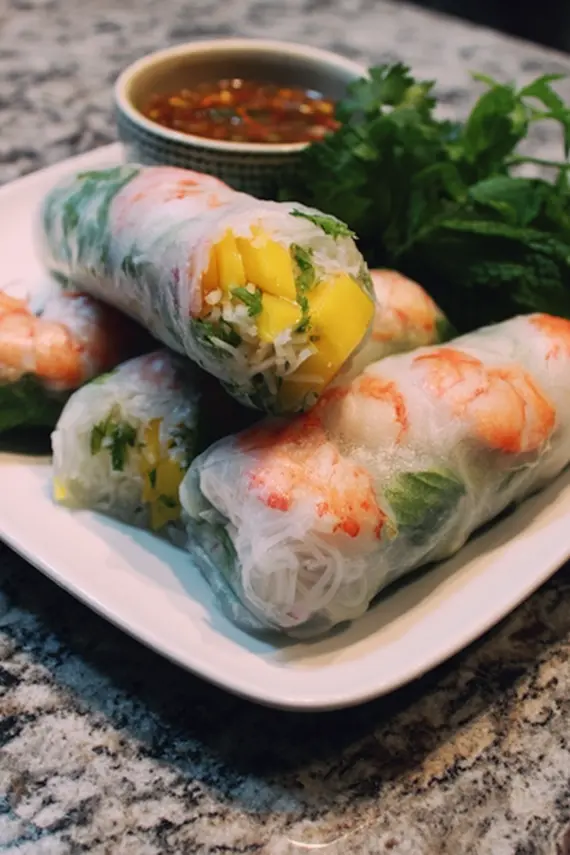
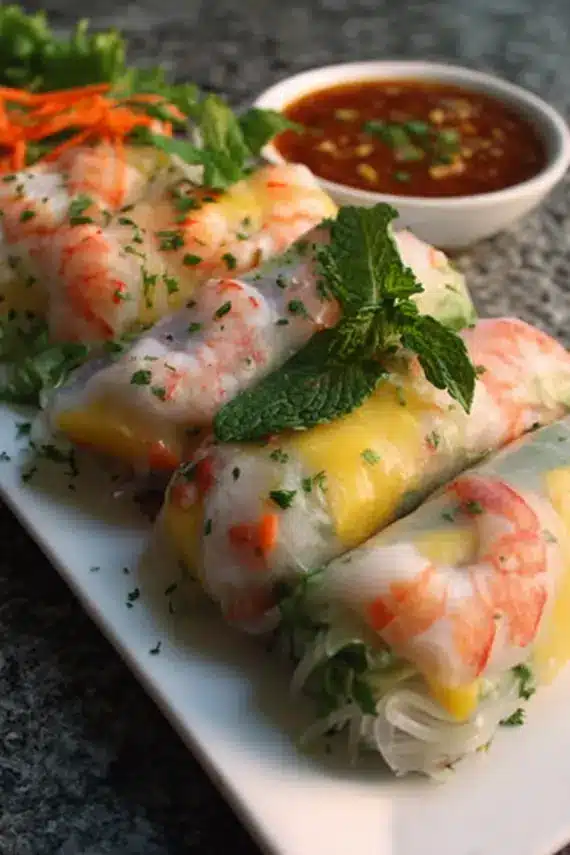
- Strategic arrangement matters: Place shrimp halves pink-side down in a row—they’ll show beautifully through the translucent wrapper. Position herbs so their leaves are visible against the wrapper for a professional presentation.
- Double-wrapping technique: If you’re having trouble with tears or overstuffed rolls, try using two rice paper wrappers overlapped slightly. This creates a stronger roll that’s less likely to tear, though it will be slightly chewier.
- Prep everything in advance: Have all ingredients prepped, arranged, and ready before you start soaking any rice paper. Once the paper is wet, you need to work quickly.
- Keep finished rolls separated: Don’t allow completed rolls to touch each other as they’ll stick together. Place them on a lightly oiled plate or separate with damp paper towels.
Achieving the Perfect Texture Balance
- Drain ingredients thoroughly: Excess moisture will make your rolls soggy. After washing vegetables or rinsing noodles, dry them thoroughly with paper towels or a clean kitchen towel.
- Create textural contrasts: Combine soft ingredients (mango, avocado) with crunchy elements (bell pepper, cucumber) for a more satisfying bite.
- Consider blanching: For vegetables like bean sprouts or snow peas, a quick 30-second blanch followed by an ice bath softens them slightly while maintaining crispness.
“The Seafood Pot Pie recipe shows how seafood can be transformed into warming comfort food for cooler days when these fresh spring rolls might not satisfy your hunger.”
Keeping Your Rice Paper Rolls Fresh and Delicious
Short-Term Storage Solutions
Shrimp mango rice paper rolls are at their absolute best when freshly made, but with proper storage techniques, you can prepare them a few hours ahead or save leftovers for the next day without sacrificing quality.
For same-day serving, arrange the finished rolls in a single layer on a platter or baking sheet lined with a damp paper towel. Cover loosely with another damp paper towel, then wrap the entire platter with plastic wrap. Store in the refrigerator for up to 3-4 hours. The damp towels prevent the rice paper from drying out and becoming tough or brittle.
If you need to stack the rolls for storage, place a sheet of damp paper towel between each layer to prevent sticking. Remove from refrigeration about 15 minutes before serving to allow them to come closer to room temperature, which enhances their flavor.
Preparing Components in Advance
For maximum freshness with minimum last-minute effort, prepare all components separately in advance and assemble just before serving:
Cooked shrimp can be prepared up to 24 hours ahead and stored in an airtight container in the refrigerator.
Rice vermicelli noodles can be cooked, rinsed in cold water, tossed with a few drops of sesame oil (to prevent sticking), and refrigerated for up to 2 days.
All vegetable components can be washed, dried, and cut 24 hours in advance. Store each component separately in airtight containers lined with paper towels to absorb excess moisture.
The peanut dipping sauce can be made up to 3 days ahead. Store in an airtight container in the refrigerator and bring to room temperature before serving. If it thickens during storage, thin with a little warm water and whisk to recombine.
Reviving Leftover Rolls
If you have leftover assembled rolls, they can be stored for up to 24 hours, though the texture will decline somewhat. To revive leftover rolls, remove from the refrigerator and allow them to sit at room temperature for 15-20 minutes. Gently dab the outside with a damp paper towel to rehydrate the rice paper slightly.
Note that rolls containing avocado will not store well, as the avocado will brown and become unappealing. If planning for leftovers, consider making some rolls without avocado.
“For another refreshing summer appetizer idea that holds well for parties, try these Fruit Salad Recipe combinations that complement these spring rolls beautifully.”
Delicious Twists on Traditional Rice Paper Rolls
International Flavor Inspirations
These creative variations maintain the essence of shrimp mango rice paper rolls while introducing exciting new flavor profiles:
Mediterranean-Style: Replace the traditional Asian flavors with Mediterranean ingredients. Use poached shrimp seasoned with lemon and herbs, substitute the mango with roasted red peppers, and add thin strips of cucumber, kalamata olives, and feta cheese. For the dipping sauce, blend Greek yogurt with minced garlic, lemon juice, olive oil, and fresh dill.
Spicy Thai-Inspired: Amp up the heat by marinating the shrimp in Thai red curry paste before cooking. Add thin slices of Thai bird chilies to the filling along with the standard ingredients. For the dipping sauce, create a spicy-sweet combination with red curry paste, coconut milk, brown sugar, and lime juice.
Tropical Paradise: Enhance the tropical notes by adding pineapple alongside the mango. Season the shrimp with a touch of coconut milk and lime during cooking. Include toasted coconut flakes in your filling, and add a splash of coconut milk to your peanut dipping sauce for a delightful tropical twist.
Mexican Fiesta: Create a fusion by incorporating Mexican flavors. Season the shrimp with cumin, chili powder, and lime zest. Replace the mango with fresh pineapple and add thin slices of jalapeño for heat. Include fresh corn kernels and black beans in the filling. Serve with an avocado-lime dipping sauce instead of peanut sauce.
Dietary-Specific Adaptations
Vegetarian Version: Substitute the shrimp with firm tofu that’s been pressed, marinated in soy sauce, sesame oil, and ginger, then baked until golden. Alternatively, use sliced avocado or grilled king oyster mushrooms cut into “scallop” shapes for a meaty texture without the meat.
Keto-Friendly Option: Replace the rice paper wrappers with large lettuce leaves (butter lettuce or romaine hearts work well) and skip the rice noodles. Add extra avocado for healthy fats, and serve with an almond butter dipping sauce made without hoisin (which contains sugar).
High-Protein Fitness Version: Double the shrimp content and add thinly sliced grilled chicken breast for extra protein. Reduce the rice noodles by half and add more vegetables. For the dipping sauce, use powdered peanut butter mixed with protein powder, coconut aminos instead of soy sauce, and omit any added sweeteners.
This refreshing mango jicama salad makes an excellent side dish to serve alongside any of these rice paper roll variations, adding even more tropical flavor and crunch to your meal.
Perfect Pairings and Presentation Ideas
Creating a Memorable Meal Experience
Elevate your shrimp mango rice paper rolls from a simple appetizer to a complete dining experience with these thoughtful serving suggestions:
For an elegant dinner party starter, arrange the rolls on a large white platter lined with banana leaves or butter lettuce. Place small individual dipping bowls at each place setting with a mixture of peanut sauce and sweet chili sauce. Garnish the platter with edible flowers, lime wedges, and fresh herb sprigs for a stunning visual presentation.
Create a DIY rice paper roll bar for casual entertaining. Set out bowls of prepped ingredients, softened rice paper wrappers, and different dipping sauces. Allow guests to customize their own rolls, making it an interactive and fun dining experience. Provide small cards with rolling instructions for first-timers.
For a light summer lunch, serve 3-4 rolls per person alongside a small cucumber salad dressed with rice vinegar and sesame oil. Add a cup of miso soup for a satisfying but light meal that won’t weigh you down on hot days.
Make a family-friendly rice paper roll night by setting out options that appeal to different preferences. Include some non-spicy fillings and dipping sauces for children, along with more adventurous options for adults. Let everyone participate in the rolling process for a fun hands-on meal.
Complementary Side Dishes
Enhance your meal with these perfect accompaniments to rice paper rolls:
Asian Cucumber Salad: Thinly sliced cucumbers, red onion, and carrots marinated in rice vinegar, a touch of sugar, and sesame oil create a refreshing side that complements the rolls beautifully.
Miso Soup: A light miso soup with tofu, seaweed, and green onions provides a warming contrast to the cool, fresh rolls.
Edamame: Simple steamed edamame pods sprinkled with sea salt make an easy protein-rich finger food that pairs perfectly with rice paper rolls.
Coconut Rice: For a more substantial meal, serve coconut rice on the side. The subtle sweetness pairs beautifully with the rolls and dipping sauce.
Fresh Fruit Platter: Continue the fresh theme with sliced tropical fruits like papaya, kiwi, and additional mango, perhaps with a light honey-lime drizzle.
Ginger-Carrot Soup: A small cup of chilled ginger-carrot soup makes an elegant accompaniment for a more formal meal.
“The BBQ Veggie Kabobs make a perfect accompaniment to these rolls when you’re hosting a summer gathering, offering a hot grilled option alongside these cool, fresh spring rolls.”
Common Questions About Rice Paper Rolls
Solving Rice Paper Puzzles
Why do my rice paper wrappers keep tearing?
This usually happens because the wrappers are soaked too long. Rice paper only needs a quick dip in warm water—about 10-15 seconds—until it begins to soften but still has some rigidity. It will continue to soften as you add fillings. Another common cause is overfilling. Start with a smaller amount of filling than you think you need, and use gentle pressure when rolling. If tears occur despite these precautions, try the double-wrapper method by overlapping two wrappers slightly.
Can I make these rolls completely ahead of time for a party?
For the best quality, complete rolls should be made no more than 3-4 hours ahead. The rice paper tends to become tough and chewy when refrigerated for longer periods. However, you can prepare all components separately up to 24 hours in advance and assemble just before serving. Alternatively, consider setting up a DIY roll station where guests can make their own—it’s interactive and ensures maximum freshness.
What’s the best substitute for rice paper if I can’t find it?
If rice paper isn’t available, try these alternatives: Large lettuce leaves (butter lettuce or romaine hearts) make excellent low-carb wrappers. Japanese soy wrappers (used for sushi) provide a similar thin texture. Spring roll wrappers can work, but they need to be cooked, creating a different final texture. Nori (seaweed sheets) offer a unique flavor but work similarly. For a completely different take, try using thinly sliced cucumber as a wrapper—simply use a vegetable peeler to create long strips.
Bringing Fresh Flavors to Your Table
Why Shrimp Mango Rice Paper Rolls Deserve a Regular Spot in Your Recipe Rotation
Shrimp Mango Rice Paper Rolls represent the perfect balance of convenience, nutrition, and impressive presentation. They embody the essence of fresh, vibrant eating without requiring complicated techniques or special equipment. The combination of succulent shrimp, sweet mango, and aromatic herbs creates a sensory experience that’s both satisfying and refreshing—perfect for today’s health-conscious home cook looking for recipes that deliver maximum flavor without excessive calories.
What makes these rolls truly special is their versatility. They can be adapted to suit any dietary preference, modified based on seasonal ingredients, and served in countless settings from casual lunches to elegant dinner parties. The transparent wrappers showcase the beautiful ingredients inside, making them as visually appealing as they are delicious—no food styling required.
“The Fruit Salad Recipe provides another fresh and healthy option that pairs wonderfully with these spring rolls for a complete light meal.”
I encourage you to experiment with different fillings and dipping sauces to create your own signature version of these delightful rolls. They’re an excellent way to introduce fresh, Asian-inspired flavors to your family or guests, and the interactive nature of both making and eating them creates a memorable dining experience. Master this recipe, and you’ll have a go-to dish that impresses every time while keeping your kitchen cool and your meals light and satisfying.
PrintShrimp Mango Rice Paper Rolls

- Fresh and vibrant rice paper rolls filled with succulent shrimp, sweet mango, and crisp vegetables.
- A perfect balance of flavors and textures wrapped in delicate rice paper.
- Served with a creamy peanut dipping sauce for a refreshing appetizer or light meal.
- Prep Time: 30
- Cook Time: 10
- Total Time: 40 minutes
- Yield: 12–15 rolls (4–5 servings) 1x
- Category: Lunch
- Method: No-Cook
- Cuisine: Asian-Inspired
Ingredients
- 12–15 rice paper wrappers (8-inch round)
- 1 pound medium shrimp, cooked, peeled, deveined, and halved lengthwise
- 1 large ripe mango, julienned
- 4 ounces rice vermicelli noodles, cooked according to package instructions
- 1 bunch fresh mint leaves, stems removed
- 1 bunch fresh cilantro leaves
- 1 head butter lettuce or green leaf lettuce, leaves separated
- 1 medium cucumber, seeded and cut into matchsticks
- 1 medium red bell pepper, julienned
- 2 medium carrots, julienned
- 1 cup bean sprouts, rinsed
- 3–4 green onions, thinly sliced
- For Peanut Dipping Sauce:
- 1/3 cup creamy peanut butter (natural, unsweetened preferred)
- 2 tablespoons hoisin sauce
- 1 tablespoon low-sodium soy sauce
- 1 tablespoon rice vinegar
- 1 tablespoon fresh lime juice
- 1 clove garlic, minced
- 1 teaspoon freshly grated ginger
- 2–4 tablespoons water
- 1–2 teaspoons sriracha or chili garlic sauce (optional)
- 1/2 teaspoon toasted sesame oil
- 2 tablespoons crushed peanuts for garnish
Instructions
- Cook shrimp in lightly salted simmering water until pink and opaque, about 2-3 minutes. Transfer to an ice bath to cool, then peel, devein, and slice in half lengthwise.
- Cook rice vermicelli noodles according to package instructions until just tender, about 2-3 minutes. Drain, rinse under cold water, and cut into 3-4 inch lengths. Toss with a few drops of sesame oil to prevent sticking.
- Prepare all vegetables: julienne the mango, cucumber, bell pepper, and carrots into thin matchsticks. Wash and separate mint and cilantro leaves. Tear lettuce into pieces.
- Make the dipping sauce by whisking peanut butter with 2 tablespoons warm water until smooth. Add hoisin sauce, soy sauce, rice vinegar, lime juice, garlic, and ginger. Mix thoroughly. Adjust consistency with additional water if needed. Add sriracha if desired. Transfer to a serving bowl and top with crushed peanuts.
- Fill a large, shallow dish with warm water. Arrange a clean, damp kitchen towel on your work surface.
- Dip one rice paper wrapper into warm water for 10-15 seconds, until it begins to soften but is still slightly firm.
- Place the softened wrapper flat on the damp towel. Position a piece of lettuce on the bottom third of the rice paper.
- Add about 2 tablespoons of rice noodles on top of the lettuce, then layer a few strips each of mango, cucumber, carrot, and bell pepper.
- Arrange 3-4 shrimp halves (pink side down), 2-3 mint leaves, and a few sprigs of cilantro.
- Fold the bottom edge of the rice paper up and over the filling, tucking it under to create a tight cylinder. Fold in both sides, then continue rolling until sealed.
- Repeat the process with remaining ingredients.
- Slice each roll diagonally in half just before serving. Arrange on a platter with the peanut dipping sauce.
Notes
- Work quickly once rice paper is wet as it continues to soften.
- Don’t overfill the rolls—less is more for a tight, neat roll.
- For make-ahead preparation, store components separately and assemble just before serving.
- Double-wrap technique: Use two overlapping rice paper wrappers if you’re having trouble with tears.
- Nutrition facts are estimates and may vary based on ingredients used, portion sizes, and preparation methods.
Nutrition
- Serving Size: 3 rolls
- Calories: 285
- Sugar: 8
- Sodium: 390
- Fat: 11
- Saturated Fat: 2
- Unsaturated Fat: 8
- Carbohydrates: 35
- Fiber: 4
- Protein: 15
- Cholesterol: 90
Keywords: Shrimp Mango Rice Paper Rolls, shrimp spring rolls, mango salsa, rice paper roll filling, fresh summer appetizers, vietnamese rolls, summer rolls
Let’s connect! Follow me for more Joylicious Recipes: Facebook, Instagram, Pinterest