Thai Peanut Chicken Ramen Soup | Creamy Asian Comfort Food
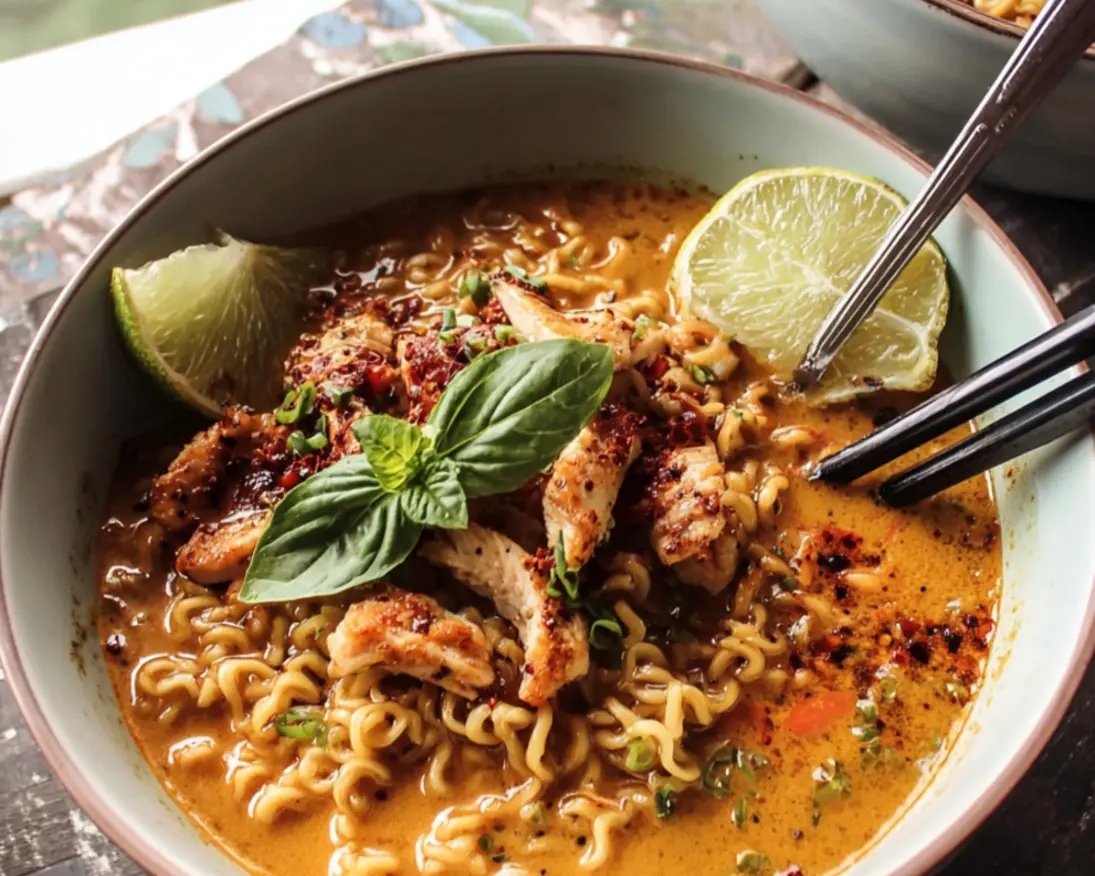
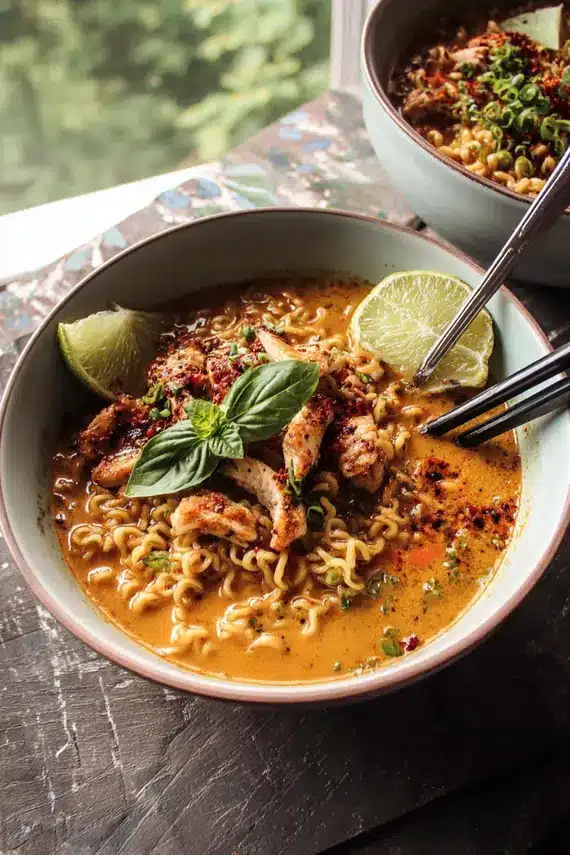
Thai peanut chicken ramen soup combines the rich creaminess of peanut sauce with the comforting warmth of ramen noodles for a truly satisfying meal. This fusion dish brings together classic Thai flavors with Japanese-inspired noodles, creating a hearty soup that’s perfect for weeknight dinners or whenever you’re craving something both familiar and exotic.
Ready in under 30 minutes, this soup strikes the perfect balance between spicy, savory, and slightly sweet notes. The combination of tender chicken, silky broth, and chewy ramen noodles creates layers of texture in every spoonful, while fresh herbs and a hint of lime brighten the entire dish.
Essential Ingredients for Thai-Inspired Ramen Excellence
The Foundation Components
The beauty of this thai peanut chicken ramen soup lies in its harmonious blend of ingredients that create deep, complex flavors. Each component plays an important role in building the signature taste profile that makes this soup so irresistible.
| Ingredient | Amount | Notes |
|---|---|---|
| Chicken breast | 1 lb | Thinly sliced against the grain for tenderness |
| Ramen noodles | 200 g | Fresh or dried (discard flavor packets if using instant) |
| Chicken broth | 4 cups | Low-sodium preferred for better flavor control |
| Creamy peanut butter | 3 tbsp | Natural, no sugar added varieties work best |
| Coconut milk | 1 cup | Full-fat for richest texture |
| Soy sauce | 2 tbsp | Regular or low-sodium |
| Lime juice | 1 tbsp | Fresh squeezed for brightest flavor |
| Ginger | 1 tsp | Freshly grated |
| Garlic | 2 cloves | Minced |
| Scallions | 2 tbsp | Chopped, white and green parts divided |
| Cilantro | 1 tbsp | Chopped, plus more for garnish |
| Red pepper flakes | To taste | Adjust according to spice preference |
“The white chicken chili recipe technique offers similar staged-cooking approaches to prevent burning while developing maximum flavor.”
Crafting Your Thai Peanut Chicken Ramen Masterpiece
Preparing the Flavorful Foundation
This step-by-step process ensures your soup develops layers of flavor while maintaining the perfect texture for both the noodles and chicken.
- Prepare the noodles: Cook the ramen noodles according to package directions until just al dente (slightly undercooked). Drain thoroughly, rinse with cold water to stop the cooking process, and set aside. This prevents them from becoming soggy when added to the soup later.
- Create the aromatic base: In a large pot over medium heat, sauté the minced garlic and grated ginger for 30-45 seconds until fragrant but not browned. This releases their essential oils for maximum flavor.
- Build the broth: Add the chicken broth, coconut milk, peanut butter, soy sauce, and lime juice to the pot. Whisk continuously until the peanut butter is fully incorporated and the mixture is smooth. This ensures no clumps of peanut butter remain.
- Simmer and develop flavors: Bring the soup to a gentle simmer (not a rolling boil). Add the thinly sliced chicken breast, stirring occasionally. Cook for 5-7 minutes until the chicken is fully cooked through and no longer pink inside.
- Combine components: Stir in the cooked and drained ramen noodles. Heat for an additional 1-2 minutes to warm the noodles through and allow them to absorb some of the broth’s flavor.
- Finish and garnish: Remove from heat and garnish generously with chopped scallions, fresh cilantro, and red pepper flakes to taste. The garnishes add freshness, color, and a customizable level of heat.
“The Korean beef rice bowl technique offers similar staged-cooking approaches to prevent burning while developing maximum flavor.”
Expert Tips for Thai Peanut Chicken Ramen Success
Elevating Your Soup Experience
These professional tips will help you achieve restaurant-quality results with your thai peanut chicken ramen soup at home:
- Protein preparation: Freezing the chicken breast for 15-20 minutes before slicing makes it easier to get thin, even slices that will cook quickly and remain tender.
- Noodle perfection: Always slightly undercook your ramen noodles as they’ll continue to soften in the hot broth. This prevents them from becoming mushy.
- Flavor balancing: Taste your broth before adding the chicken and adjust the balance of peanut butter (richness), lime juice (acidity), and soy sauce (saltiness) as needed.
- Heat customization: Instead of adding all the red pepper flakes to the pot, serve them on the side so each person can adjust their own spice level.
- Texture variety: Add a small handful of bean sprouts or thinly sliced vegetables like bell peppers or snow peas in the last minute of cooking for added crunch and nutrition.
- Peanut butter selection: Natural, unsweetened peanut butter creates the most authentic flavor. If using sweetened varieties, reduce any added sweeteners in the recipe.
- Garnish freshness: Always add herbs like cilantro just before serving to maintain their vibrant color and fresh flavor.
“The creamy garlic herb chicken recipe technique offers similar staged-cooking approaches to prevent burning while developing maximum flavor.”
Smart Storage Solutions for Leftover Ramen
Preserving Flavor and Texture
Proper storage techniques help maintain the quality of your thai peanut chicken ramen soup for enjoyment beyond the initial meal.
For refrigeration, store the broth and noodles separately whenever possible. The broth can be kept in an airtight container in the refrigerator for up to 3-4 days. The noodles should be stored separately in their own container to prevent them from absorbing all the liquid and becoming soggy.
If you’ve already combined the broth and noodles, expect the texture to change somewhat upon reheating, as the noodles will continue to absorb liquid while stored. These leftovers will still taste delicious but may have more of a noodle-forward consistency than the original soup.
When freezing, freeze only the broth portion without noodles or garnishes. Store in freezer-safe containers, leaving about an inch of headspace to allow for expansion. The broth will maintain quality for up to 2-3 months. When ready to enjoy, thaw overnight in the refrigerator, reheat thoroughly, and add freshly cooked noodles.
“The hibachi steak and shrimp fried rice technique offers similar staged-cooking approaches to prevent burning while developing maximum flavor.”
Delicious Variations to Customize Your Ramen
Creative Twists on the Classic
One of the joys of this thai peanut chicken ramen soup recipe is how adaptable it is to different preferences and ingredients you might have on hand.
Vegetarian Version: Replace the chicken with firm tofu (pressed and cubed) and use vegetable broth instead of chicken broth. The peanut sauce works beautifully with tofu, which absorbs all the wonderful flavors of the broth.
Seafood Twist: Substitute the chicken with shrimp or a mixture of seafood like shrimp and scallops. Cook the seafood just until it turns opaque to prevent it from becoming rubbery.
Spice Level Variations: For an authentic Thai heat experience, add a tablespoon of red curry paste along with the garlic and ginger. For a milder version, omit the red pepper flakes and focus on the creamy peanut flavor.
Veggie-Packed Option: Transform this into a more nutrient-dense meal by adding sliced mushrooms, baby bok choy, thinly sliced bell peppers, or sugar snap peas in the last few minutes of cooking.
Noodle Alternatives: While ramen noodles are traditional, you can experiment with rice noodles, udon, or even spiralized vegetables like zucchini for a lower-carb version.
Crunchy Topping Bar: Set up a topping station with crushed peanuts, fried shallots, bean sprouts, lime wedges, and extra herbs so everyone can customize their bowl.
If you’re looking for added heat, homemade mango habanero sauce can add an interesting sweet-spicy dimension to this dish when used sparingly as a garnish.
Perfect Serving Suggestions for Maximum Enjoyment
Creating a Complete Dining Experience
Elevate your thai peanut chicken ramen soup from a simple meal to a memorable dining experience with these serving ideas:
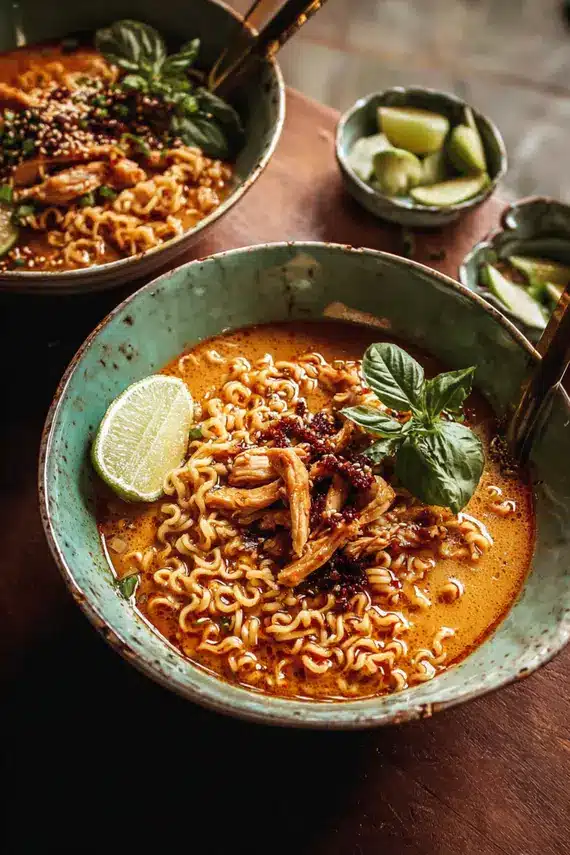
Individual Ramen Bowls: Serve in large, wide bowls that allow space for all the components while keeping the broth hot. Traditional ramen bowls or deep pasta bowls work perfectly.
Garnish Display: Create a beautiful presentation by arranging the scallions, cilantro, and red pepper flakes in small piles on top of the soup rather than mixing them in. This creates visual appeal and allows diners to incorporate them as they eat.
Accompaniments: Serve with additional lime wedges on the side for those who enjoy extra brightness, along with bottles of soy sauce and sriracha for personalized flavor adjustments.
Fresh Side Salad: Balance the rich soup with a light cucumber salad dressed simply with rice vinegar, a touch of sugar, and sesame seeds for textural contrast.
Beverage Pairings: Light, crisp beverages work best with this flavorful soup. Try iced jasmine tea, coconut water, or a sparkling water with a slice of lime.
“The pesto chicken pasta recipe technique offers similar staged-cooking approaches to prevent burning while developing maximum flavor.”
“The garlic shrimp pasta recipe technique offers similar staged-cooking approaches to prevent burning while developing maximum flavor.”
FAQ
Can I make this soup ahead of time for meal prep?
Absolutely! The broth actually develops even more flavor when made a day ahead. Store the broth separately from the noodles and garnishes. When ready to serve, reheat the broth, cook fresh noodles, and combine just before eating. This prevents the noodles from becoming soggy and maintains the perfect texture.
My peanut butter isn’t incorporating smoothly into the broth. How can I fix this?
This happens because peanut butter can be difficult to blend into liquids. For a smoother incorporation, mix the peanut butter with a small amount of hot broth in a separate bowl until it forms a smooth slurry, then add this mixture back to the main pot. A whisk works better than a spoon for this process.
Can I use a different protein instead of chicken?
Yes, this soup is extremely versatile! Shrimp works wonderfully and cooks even faster than chicken (about 2-3 minutes). Thinly sliced beef (like sirloin) is delicious too. For a vegetarian option, extra-firm tofu cut into cubes or strips makes an excellent protein alternative.
Is there a way to make this soup less spicy for children?
Definitely. The heat in this recipe comes primarily from the red pepper flakes, so simply omit them from the main pot. Instead, serve the pepper flakes on the side so adults can add them to their individual portions. You might also reduce the amount of ginger and black pepper for very sensitive palates.
What if I can’t find ramen noodles? What substitutes work well?
Rice noodles, udon, or even linguine can work as substitutes. The key is to cook them separately until they’re slightly undercooked, then add them to the hot broth to finish cooking. This prevents them from becoming mushy. Each alternative will give the soup a slightly different texture and mouthfeel.
Wrapping Up This Flavor-Packed Noodle Adventure
The Perfect Balance of Comfort and Excitement
There’s something truly magical about how this thai peanut chicken ramen soup bridges familiar comfort with exciting flavors. The rich, nutty broth infused with aromatic spices creates a base that’s both satisfying and complex, while the tender chicken and chewy noodles provide substance that makes this a complete meal in a bowl.
What makes this dish so special is its adaptability—whether you prefer it milder or spicier, loaded with vegetables or focused on the protein, this soup can be easily customized to suit your preferences while maintaining its essential character. The fusion of Thai and Japanese elements represents home cooking at its best: borrowing brilliant ideas from different traditions to create something uniquely delicious.
Next time you’re caught between craving comfort food and wanting something with a bit more adventure, remember that this thai peanut chicken ramen soup satisfies both desires perfectly. From its simple preparation to its complex flavors, it’s a recipe that deserves a regular spot in your dinner rotation.
Thai Peanut Chicken Ramen Soup
Thai peanut chicken ramen soup combines the rich creaminess of peanut sauce with the comforting warmth of ramen noodles for a truly satisfying meal. This fusion dish brings together classic Thai flavors with Japanese-inspired noodles, creating a hearty soup that’s perfect for weeknight dinners or whenever you’re craving something both familiar and exotic.
Category: Dinner
Cuisine: Thai-Japanese Fusion
Calories: 450 kcal
Ingredients
- 1 lb chicken breast, thinly sliced
- 200 g ramen noodles
- 4 cups chicken broth (low-sodium preferred)
- 3 tbsp creamy peanut butter (natural, no sugar added)
- 1 cup coconut milk (full-fat)
- 2 tbsp soy sauce
- 1 tbsp fresh lime juice
- 1 tsp freshly grated ginger
- 2 cloves garlic, minced
- 2 tbsp chopped scallions
- 1 tbsp chopped cilantro, plus more for garnish
- Red pepper flakes to taste
Equipment
- Mixing Bowl
- Measuring Cups
- Cooking Tool
Instructions
- Cook ramen noodles according to package directions until just al dente. Drain, rinse with cold water, and set aside.
- In a large pot over medium heat, sauté minced garlic and grated ginger for 30-45 seconds until fragrant but not browned.
- Add chicken broth, coconut milk, peanut butter, soy sauce, and lime juice. Whisk continuously until the peanut butter is fully incorporated and the mixture is smooth.
- Bring to a gentle simmer and add thinly sliced chicken breast. Cook for 5-7 minutes until chicken is fully cooked through.
- Stir in the cooked ramen noodles and heat for 1-2 additional minutes.
- Remove from heat and garnish with chopped scallions, fresh cilantro, and red pepper flakes to taste.
Notes
- For meal prep, store broth and noodles separately. The broth freezes well without the noodles. For a spicier version, add 1 tbsp of red curry paste. Natural peanut butter works best for authentic flavor.
Let’s connect! Follow me for more Joylicious Recipes: Facebook, Instagram, Pinterest