
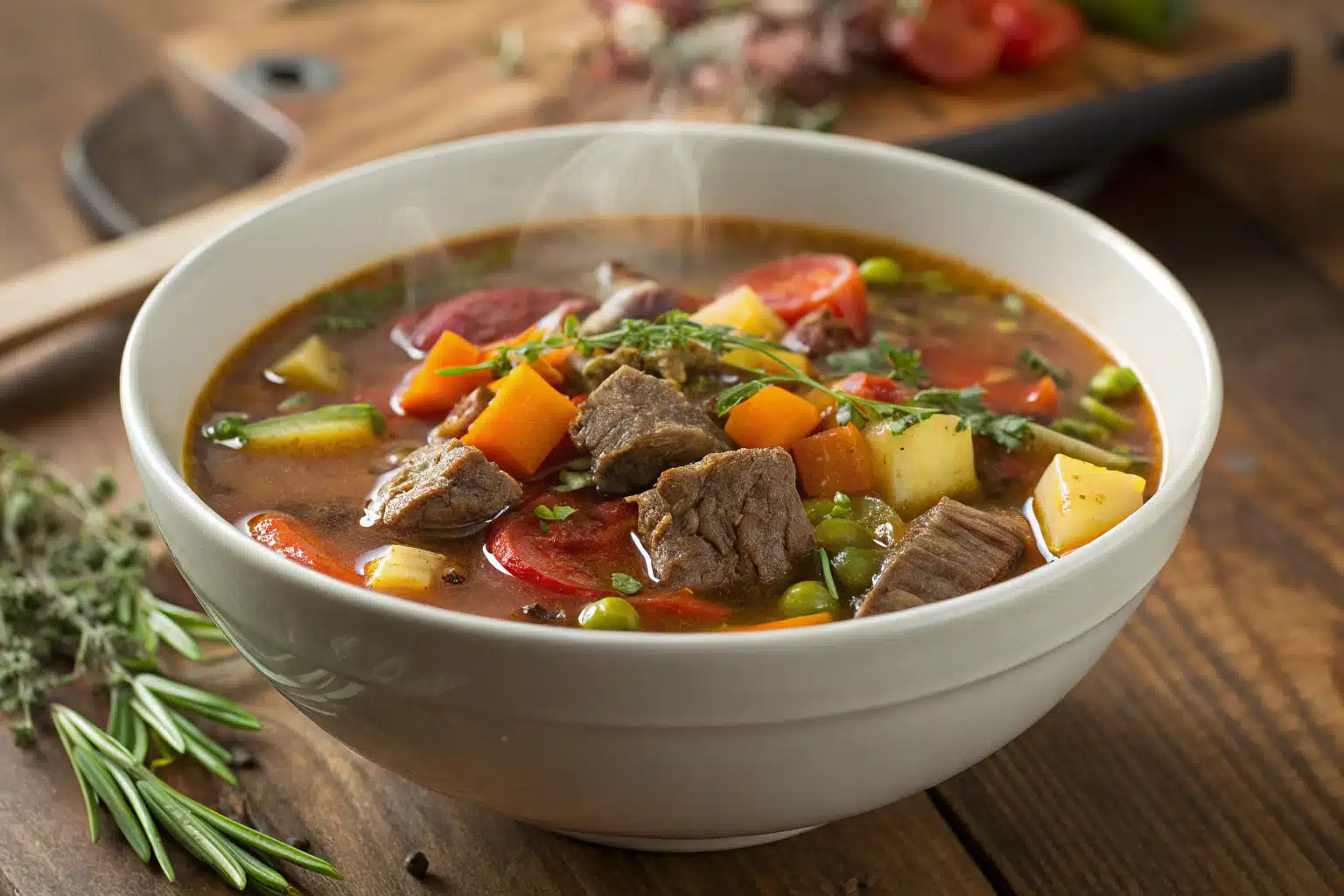
The Ultimate Hearty Vegetable Beef Soup Recipe: Comfort in a Bowl
The Warmth of Tradition
Vegetable beef soup recipe brings together the heartiness of tender beef and the nourishment of colorful vegetables in a rich, flavorful broth. This timeless classic has been warming kitchens and hearts for generations, offering both comfort and sustenance in equal measure. Whether you’re looking for a satisfying weeknight dinner or a remedy for cold weather blues, this soup delivers on all fronts.
“Learn more about our comforting soup collection at our recipes section.”
Why This Recipe Works
What makes this vegetable beef soup recipe stand out is the perfect balance of flavors and textures. The slow-simmered beef becomes incredibly tender, while the vegetables maintain their individual character. The aromatic herbs infuse the broth with depth, creating a soup that’s far more than the sum of its parts. This recipe is both accessible for beginners and satisfying for experienced cooks, making it a reliable addition to any culinary repertoire.
Essential Ingredients for Perfect Vegetable Beef Soup
The Foundation: Meat and Broth
The heart of any great vegetable beef soup recipe starts with selecting the right cut of meat. Beef stew meat delivers the perfect texture and flavor as it simmers and becomes tender. Paired with a robust beef broth, these elements create the rich foundation upon which the entire soup is built. The slow cooking process allows the beef to release its flavors into the broth, creating a deep, satisfying base.
| Key Ingredients | Amount | Notes |
|---|---|---|
| Beef stew meat | 1½ pounds | Cut into bite-sized pieces |
| Olive oil | 2½ tablespoons | Divided for browning meat and sautéing vegetables |
| Low-sodium beef broth | 8 cups | Creates the flavorful base |
| Diced tomatoes | 2 (14 oz.) cans | Adds acidity and depth |
| Yellow onion | 1¾ cups chopped | One large onion |
| Carrots | 1¼ cups chopped | About three medium carrots |
| Celery | 1 cup chopped | About three medium stalks |
| Garlic | 1½ tablespoons minced | Approximately four cloves |
The Vibrant Vegetables and Seasonings
The beauty of a vegetable beef soup recipe lies in its colorful array of vegetables and perfectly balanced seasonings. Each vegetable contributes its own texture and flavor profile, creating a soup that’s visually appealing and nutritionally complete. The herbs and seasonings tie everything together, elevating a simple soup to something truly special.
| Fresh Vegetables | Amount | Notes |
|---|---|---|
| Red or yellow potatoes | 1 pound | Chopped into ¾-inch cubes |
| Green beans | 1½ cups | Trimmed and chopped |
| Frozen corn | 1½ cups | No need to thaw |
| Frozen peas | 1 cup | No need to thaw |
| Fresh parsley | ⅓ cup chopped | Added at the end for brightness |
| Herbs & Seasonings | Amount | Notes |
|---|---|---|
| Dried basil | 1½ teaspoons | Adds aromatic sweetness |
| Dried oregano | 1 teaspoon | Provides earthy notes |
| Dried thyme | ½ teaspoon | Contributes subtle complexity |
| Salt and pepper | To taste | Adjust according to preference |
Step-by-Step Instructions for Delicious Vegetable Beef Soup
Preparing the Beef Base
Creating a flavorful foundation is crucial for a standout vegetable beef soup recipe. Taking the time to properly brown the meat creates depth and richness that elevates the entire dish. “Looking for inspiration? Try our creamy garlic herb chicken recipe for another comforting meal option.”
- Heat 1 tablespoon of olive oil in a large pot over medium-high heat.
- Pat the beef dry with paper towels and season generously with salt and pepper.
- Add half of the beef to the pot and brown for about 4 minutes, turning halfway through to ensure even browning on all sides.
- Transfer the browned beef to a plate and add another ½ tablespoon of oil to the pot.
- Repeat the browning process with the remaining beef, then set aside.
Building Layers of Flavor
The aromatic vegetables and seasonings form the flavor base of your soup. Properly sautéing these ingredients releases their essential oils and creates a complex foundation for your vegetable beef soup recipe.
- Add the remaining 1 tablespoon of olive oil to the now-empty pot.
- Add the chopped onions, carrots, and celery, then sauté for 3 minutes until they begin to soften.
- Add the minced garlic and sauté for 1 minute longer, until fragrant.
- Pour in the beef broth and diced tomatoes with their juice.
- Return the browned beef to the pot and add the dried basil, oregano, and thyme.
- Season with salt and pepper to taste.
- Bring the mixture to a boil, then reduce heat to low, cover, and simmer for 30 minutes, stirring occasionally.
Adding Vegetables in Stages
For perfect texture, vegetables need to be added at different times in this vegetable beef soup recipe. This ensures each component is cooked to perfection – not too firm and not too mushy.
- Add the potato cubes to the simmering soup. (You can also add green beans now if you prefer them very soft.)
- Continue to simmer, covered, for 20 minutes, or until the potatoes begin to soften.
- Stir in the green beans (if you haven’t added them already) and simmer for an additional 15 minutes, or until all vegetables and the beef are tender.
- Pour in the frozen corn and peas, and simmer until heated through, about 5 minutes.
- Stir in the freshly chopped parsley just before serving for a burst of color and fresh flavor.
Expert Tips for Exceptional Vegetable Beef Soup
Selecting and Preparing the Best Ingredients
The quality of ingredients significantly impacts the final result of your vegetable beef soup recipe. Being selective and preparing each component with care elevates the soup from good to exceptional.
“Discover great ideas like our vegetable soup recipe for more plant-based inspiration.”
For the beef, choose well-marbled stew meat or chuck roast cut into cubes. The marbling adds flavor and keeps the meat tender during the long cooking process. Pat the meat completely dry before seasoning and browning to achieve a proper sear rather than steaming the meat.
Fresh vegetables generally provide the best flavor, but frozen vegetables like corn and peas actually work better in soup as they’re preserved at peak freshness and maintain their texture well during cooking.
Enhancing Flavor Throughout the Cooking Process
Creating a deeply flavorful vegetable beef soup recipe requires attention to detail at every stage. Small adjustments can make a significant difference in the final result.
Don’t rush the browning process for the meat or the sautéing of the aromatics. These steps build the foundation of flavor for your entire soup. Consider deglazing the pot with a splash of red wine after cooking the vegetables and before adding the broth for an additional layer of complexity.
For an even richer broth, use homemade beef stock if available, or enhance store-bought broth by simmering it with additional aromatics like onion peels, celery leaves, and herb stems for 30 minutes before straining and using in your soup.
Time-Saving Techniques Without Compromising Quality
While traditional vegetable beef soup recipe methods require time, there are several ways to streamline the process without sacrificing flavor.
Prep vegetables in advance and store them in the refrigerator to make assembly quicker when you’re ready to cook. Many supermarkets also offer pre-chopped mirepoix (onions, carrots, and celery), which can save significant prep time.
For weeknight cooking, consider browning the beef and sautéing the aromatics the night before. Refrigerate overnight, then continue with the recipe the next day, adding 5-10 minutes to the simmering time to ensure everything comes back up to temperature.
Storage and Make-Ahead Instructions for Vegetable Beef Soup
Refrigeration Best Practices
Proper storage extends the life of your vegetable beef soup recipe while maintaining its quality and flavor. Following best practices ensures you can enjoy your soup for days after preparation.
Allow the soup to cool completely before transferring to airtight containers. Refrigerate promptly and consume within 4-5 days for optimal freshness and food safety. When reheating, bring the soup to a gentle simmer on the stovetop, adding a splash of broth if needed to restore the original consistency.
“Want more ideas? Check out our homemade chicken soup with potatoes for another hearty option.”
For individual portions, store soup in single-serving containers for quick and easy meals throughout the week. This makes weekday lunches or dinners effortless while allowing the flavors to continue developing.
Freezing and Thawing Methods
Vegetable beef soup recipe freezes exceptionally well, making it perfect for meal prep and future quick dinners. With proper freezing techniques, you can preserve the soup’s quality for months.
For freezing, cool the soup completely, then portion into freezer-safe containers, leaving about an inch of headspace to allow for expansion. For easiest thawing, freeze in flat, zipper-top freezer bags placed on a baking sheet until solid, then stack to save freezer space.
Properly frozen vegetable beef soup will maintain quality for up to 3 months. To thaw, transfer from freezer to refrigerator 24 hours before needed, or use the defrost function on your microwave. Reheat gently on the stovetop, stirring occasionally until heated through.
Revitalizing Leftover Soup
Leftover vegetable beef soup often develops even better flavor as it sits, but sometimes needs a little refresh before serving again.
Add a splash of fresh beef broth when reheating to rejuvenate the soup’s consistency. A squeeze of lemon juice or a sprinkle of fresh herbs just before serving can brighten the flavors that may have mellowed during storage.
To transform leftovers into a new meal, consider thickening the soup with a cornstarch slurry and serving it over rice or noodles, or use it as a filling for a pot pie topped with puff pastry or biscuits.
Delicious Variations on the Classic Vegetable Beef Soup Recipe
Regional and International Twists
The basic vegetable beef soup recipe serves as a canvas for countless variations, each reflecting different culinary traditions and flavor profiles from around the world.
For an Italian-inspired soup, add a Parmesan rind during simmering (remove before serving), incorporate small pasta like ditalini in the last 10 minutes of cooking, and top with fresh basil and grated Parmesan. A Mexican variation might include cumin, chili powder, corn, and black beans, topped with lime wedges, avocado, and cilantro.
For a taste of France, try adding a bouquet garni (tied bundle of thyme, parsley, and bay leaf), along with leeks instead of onions, and finish with a splash of good quality red wine. A hearty Eastern European version might incorporate cabbage, dill, and a dollop of sour cream for serving.
Dietary Adaptations
Modern vegetable beef soup recipe variations can easily accommodate various dietary needs without sacrificing flavor or satisfaction.
For a lower-carb version, replace potatoes with cauliflower florets or turnips, which provide a similar texture with fewer carbohydrates. Those following a paleo diet can ensure all ingredients are compliant and consider adding more root vegetables like parsnips and turnips.
To increase protein content, add white beans or lentils during the last 30 minutes of cooking. For a dairy-free creamy variation, puree a portion of the cooked vegetables and broth, then stir back into the soup for a naturally thickened consistency without cream.
Seasonal Ingredient Substitutions
Adapting your vegetable beef soup recipe to use seasonal produce ensures the freshest flavors while supporting sustainable eating practices.
In summer, lighten up the soup by using fresh tomatoes instead of canned, and incorporate zucchini, yellow squash, and fresh green beans. For fall and winter versions, incorporate hearty root vegetables like sweet potatoes, parsnips, or butternut squash for additional sweetness and depth. “Here’s your guide to buttercup squash recipes for more seasonal cooking ideas.”
Spring variations might feature asparagus, fresh peas instead of frozen, and tender greens like spinach or kale stirred in just before serving to wilt in the residual heat.
Serving Suggestions for a Complete Meal Experience
Complementary Side Dishes
- The right accompaniments enhance and complete a vegetable beef soup recipe, creating a satisfying and balanced meal experience.
- Crusty artisan bread or warm dinner rolls are classic partners for soup, perfect for dipping and soaking up the flavorful broth. A simple side salad with a light vinaigrette provides a fresh, crisp contrast to the hearty soup—consider mixed greens, cucumber, and cherry tomatoes dressed with a simple balsamic or lemon vinaigrette.
- For a heartier meal, serve cornbread muffins or cheese biscuits alongside your soup. The slight sweetness of cornbread or richness of cheese biscuits pairs beautifully with the savory flavors of vegetable beef soup.
Garnishing for Visual Appeal and Flavor Enhancement
Thoughtful garnishes elevate both the presentation and flavor of your vegetable beef soup recipe, turning a humble dish into something special.
Fresh herbs add brightness and color—consider a sprinkle of finely chopped parsley, chives, or dill just before serving. A small dollop of sour cream or Greek yogurt adds richness and visual contrast while tempering the soup’s heat.
“Don’t miss our biscuits and gravy southern recipe for another comforting classic to serve with your soup.”
For texture and flavor variation, try topping with homemade croutons, a sprinkle of grated Parmesan cheese, or even a few drops of high-quality olive oil for a luxurious finish.
Creating a Soup Bar for Entertaining
When serving vegetable beef soup recipe for a gathering, consider setting up an interactive soup bar that allows guests to customize their bowls.
Arrange an assortment of toppings in small bowls—options might include fresh herbs, diced avocado, crumbled cheese, crispy fried onions, or croutons. Include a variety of breads, from sliced baguette to breadsticks or crackers, allowing guests to choose their preferred accompaniment.
For larger gatherings, consider serving the soup in mugs or cups rather than bowls for easier handling during mingling. A soup bar works wonderfully for casual gatherings, game days, or winter celebrations where comfort food takes center stage.
Frequently Asked Questions About Vegetable Beef Soup
What’s the secret to a rich and flavorful vegetable beef soup?
The foundation of a truly exceptional vegetable beef soup recipe is proper browning of the beef and aromatics. Take time to sear the beef until it develops a deep brown crust, which creates rich flavor compounds. Additionally, don’t rush the sautéing of onions, carrots, celery, and garlic—this develops their natural sweetness. Using a combination of herbs, both dried during cooking and fresh added at the end, creates layers of flavor. Finally, allowing the soup to simmer slowly gives ingredients time to meld and develop depth.
What cut of beef is best for vegetable beef soup?
For the best vegetable beef soup recipe, chuck roast or beef stew meat are ideal choices. These cuts contain enough fat marbling to remain tender during long cooking and contribute richness to the broth. Other excellent options include bottom round, rump roast, or brisket. Whichever cut you choose, ensure it’s cut into uniform, bite-sized pieces for even cooking. Avoid using extremely lean cuts like eye of round, as they can become tough when simmered for extended periods.
Can I make vegetable beef soup in a slow cooker or Instant Pot?
Absolutely! This vegetable beef soup recipe adapts beautifully to both slow cookers and pressure cookers. For slow cookers, brown the beef and sauté aromatics first, then transfer to the slow cooker with remaining ingredients (except peas, corn, and parsley). Cook on low for 7-8 hours or high for 4-5 hours, adding the frozen vegetables in the last 30 minutes. For Instant Pot preparation, use the sauté function for browning steps, then pressure cook on high for 25 minutes with natural pressure release. Add the quick-cooking vegetables after pressure cooking and use the sauté function to simmer until tender.
How can I thicken vegetable beef soup naturally?
Several methods can thicken your vegetable beef soup recipe without using flour or cornstarch. The simplest approach is to puree a portion of the cooked vegetables and broth, then stir this back into the soup for a naturally thickened consistency. Another option is to add more starchy vegetables like potatoes or parsnips, which release starch as they cook. For a rustic approach, mash some of the potatoes against the side of the pot as they become tender. Adding a small amount of tomato paste can also provide body while enhancing flavor.
Can I freeze vegetable beef soup for later?
Yes, this vegetable beef soup recipe freezes exceptionally well. Cool the soup completely before transferring to freezer-safe containers, leaving about an inch of headspace for expansion. For best quality, use within 3 months. Thaw overnight in the refrigerator before reheating gently on the stovetop. The texture of potatoes may change slightly after freezing, becoming a bit softer, but the flavor remains excellent. If planning ahead specifically for freezing, consider slightly undercooking the vegetables so they don’t become overly soft when reheated.
How long does vegetable beef soup stay fresh?
When stored properly in airtight containers in the refrigerator, vegetable beef soup recipe stays fresh for 4-5 days. The flavor often improves after a day as ingredients have time to meld. For longer storage, freeze portions for up to 3 months. Follow food safety guidelines by cooling soup quickly (within 2 hours of cooking) and refrigerating promptly. When reheating, bring soup to a full simmer to ensure food safety. If the soup develops an off odor or appearance, discard it regardless of storage time.
Conclusion: Mastering the Art of Vegetable Beef Soup
Bringing Tradition to Your Modern Kitchen
Vegetable beef soup recipe represents more than just a meal—it’s a connection to culinary traditions that have sustained generations. By mastering this foundational recipe, you gain an adaptable cooking skill that can be adjusted to any season, preference, or occasion. The basic techniques—properly browning meat, layering flavors, and adding vegetables at appropriate times—translate to countless other dishes in your cooking repertoire.
“Check out our beef stew crock pot recipe for another classic comfort food option.”
As you become comfortable with this recipe, you’ll likely find yourself customizing it to your family’s preferences or experimenting with seasonal ingredients from your local market. This evolution is the true joy of home cooking—taking a classic foundation and making it uniquely yours.
The Joy of Sharing Comfort Food
There’s something inherently generous about preparing a pot of vegetable beef soup recipe. It’s a dish meant for sharing, whether with family around your dinner table, delivering to a friend in need, or serving at a casual gathering. The nourishing qualities of this soup make it more than just sustenance—it’s care in edible form.
Consider establishing your own tradition around this soup, perhaps making a large batch at the first sign of autumn or whenever someone in your household could use extra comfort. The simple act of sharing homemade soup creates connections and memories that extend far beyond the kitchen.
As you ladle steaming portions into bowls, remember that you’re participating in one of humanity’s oldest and most universal culinary traditions—transforming simple ingredients into something greater than their parts, and nourishing both body and spirit in the process.
PrintVegetable Beef Soup Recipe
A hearty, flavorful vegetable beef soup packed with tender beef and colorful vegetables in a rich broth.
- Prep Time: 20
- Cook Time: 1 hour 15 minutes
- Total Time: 1 hour 35 minutes
- Yield: 8 1x
- Category: Soups
- Cuisine: American
Ingredients
- 1 1/2 lbs beef stew meat
- 2 1/2 Tbsp olive oil, divided
- Salt and freshly ground black pepper
- 1 3/4 cups chopped yellow onion (1 large)
- 1 1/4 cups peeled and chopped carrots (3 medium)
- 1 cup chopped celery (3 medium)
- 1 1/2 Tbsp minced garlic (4 cloves)
- 8 cups low-sodium beef broth or chicken broth
- 2 (14 oz.) cans diced tomatoes
- 1 1/2 tsp dried basil
- 1 tsp dried oregano
- 1/2 tsp dried thyme
- 1 lb red or yellow potatoes, chopped into 3/4-inch cubes
- 1 1/2 cups (5 oz.) chopped green beans (trim ends first)
- 1 1/2 cups frozen corn
- 1 cup frozen peas
- 1/3 cup chopped fresh parsley
Instructions
- Heat 1 Tbsp olive oil in a large pot over medium-high heat. Pat beef dry with paper towels, season with salt and pepper, then brown half the beef for about 4 minutes, turning halfway through.
- Transfer browned beef to a plate. Add another 1/2 Tbsp oil to pot and repeat with remaining beef.
- Add remaining 1 Tbsp oil to empty pot. Add onions, carrots, and celery; sauté 3 minutes. Add garlic and sauté 1 minute longer.
- Pour in broth and tomatoes. Return browned beef to pot and add basil, oregano, thyme, salt, and pepper. Bring to a boil, reduce heat to low, cover and simmer for 30 minutes.
- Add potatoes and continue simmering, covered, for 20 minutes.
- Stir in green beans and simmer 15 minutes longer, until vegetables and beef are tender.
- Add corn and peas; simmer until heated through, about 5 minutes.
- Stir in parsley and serve warm.
Notes
Nutrition facts are estimates and may vary based on ingredients used, portion sizes, and preparation methods.
Nutrition
- Serving Size: 8
- Calories: 320Kcal
- Sugar: 8g
- Sodium: 640mg
- Fat: 12g
- Saturated Fat: 3.5g
- Carbohydrates: 28g
- Fiber: 5g
- Protein: 24g
- Cholesterol: 55mg
Keywords: beef soup, vegetable soup, comfort food, winter soup, beef stew, homemade soup
Let’s connect! Follow me for more Joylicious Recipes: Facebook, Instagram, Pinterest