
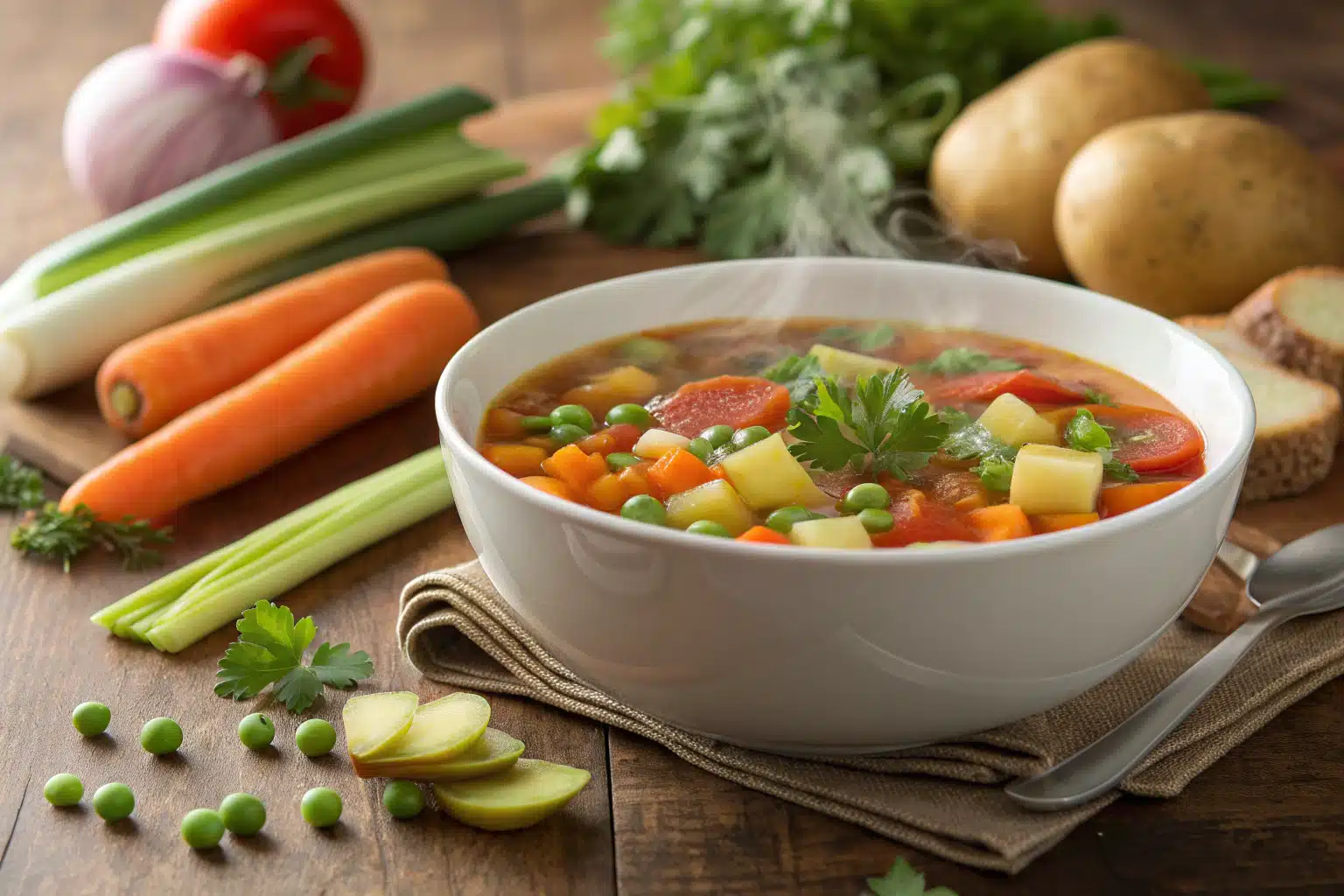
The Best Homemade Vegetable Soup Recipe: Easy, Nutritious, and Flavorful
The Timeless Appeal of Vegetable Soup
Vegetable soup recipe enthusiasts know there’s nothing quite like a steaming bowl of homemade goodness on a chilly day. This classic dish has earned its place as a comfort food staple in American kitchens for generations. Not only is vegetable soup delicious and warming, but it’s also incredibly nutritious, versatile, and budget-friendly.
“Want more ideas? Check out our creamy chicken spaghetti casserole for another comforting meal option.”
Unlike store-bought alternatives, homemade vegetable soup allows you to control exactly what goes into your pot, resulting in a fresher, more flavorful experience without unnecessary preservatives or excess sodium.
Health Benefits of Homemade Vegetable Soup
A well-crafted vegetable soup recipe delivers an impressive array of nutrients in one satisfying bowl. This nutrient-dense meal packs vitamins, minerals, and dietary fiber from various vegetables while keeping calories reasonably low. The combination of colorful vegetables provides antioxidants that support immune function and overall health. Additionally, homemade vegetable soup is hydrating and can be tailored to suit specific dietary needs, whether you’re looking for a hearty meal or a lighter option. Many health-conscious cooks appreciate that vegetable soup helps incorporate more produce into their diets in a delicious, satisfying way.
Ingredients: Everything You Need for Perfect Vegetable Soup
Essential Base Ingredients
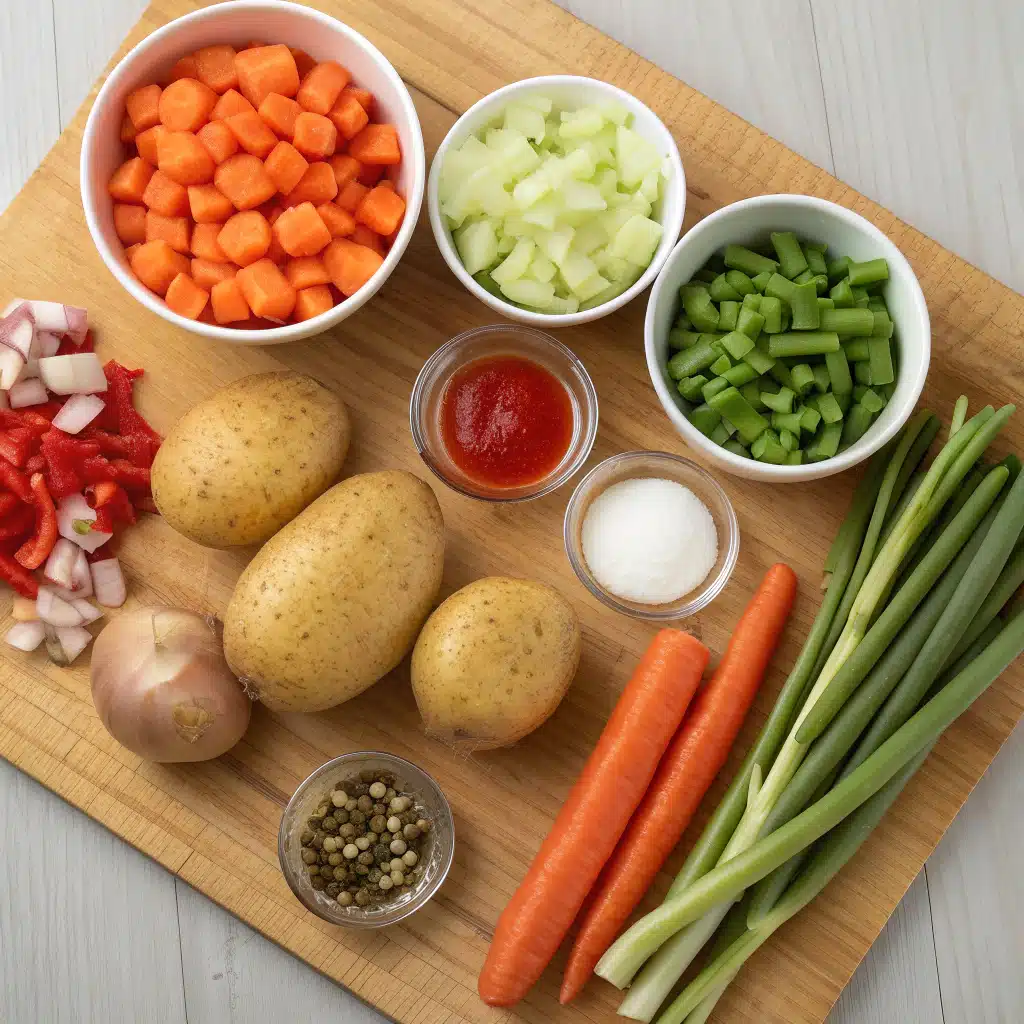
The foundation of any excellent vegetable soup recipe starts with quality ingredients. Here’s what you’ll need for this classic version:
| Ingredient | Quantity | Notes |
|---|---|---|
| Olive oil | 3 tablespoons | Extra virgin preferred for best flavor |
| Onion | 2 cups (1 large) | Yellow or white, finely chopped |
| Carrots | 1 ½ cups (3-4) | Peeled and chopped into bite-sized pieces |
| Celery | 1 ½ cups (2-3 stalks) | Chopped, include some leaves for extra flavor |
| Tomato paste | 2 tablespoons | Adds richness and depth of flavor |
| Garlic | 4 teaspoons (4 cloves) | Minced or finely chopped |
| Ground fennel seed | ¾ teaspoon | Provides subtle anise-like flavor |
| Ground black pepper | ½ teaspoon | Freshly ground recommended |
| Fine sea salt | ½ teaspoon (plus more to taste) | Adjust according to your preference |
| Crushed red pepper flakes | ⅛ to ¼ teaspoon (optional) | Adjust based on desired heat level |
Fresh Vegetables and Additional Components
The vegetables are truly the stars of any vegetable soup recipe. Here are the remaining ingredients that round out this nourishing dish:
| Ingredient | Quantity | Notes |
|---|---|---|
| Diced tomatoes | 1 (15oz) can with liquid | Fire-roasted adds extra flavor |
| Stock or broth | 6 cups (1.42L) | Vegetable or chicken, low-sodium preferred |
| Potatoes | 2 cups (2 medium) | Russet or Yukon Gold, peeled and chopped |
| Cabbage | 3-4 heaped cups | Green cabbage, chopped or shredded |
| Bay leaves | 2 | Remove before serving |
| Frozen peas | 1 cup | Adds color and sweetness |
| Apple cider vinegar or lemon juice | ½ teaspoon (optional) | Brightens flavors |
Step-by-Step: How to Make the Perfect Vegetable Soup
Preparing Your Vegetables
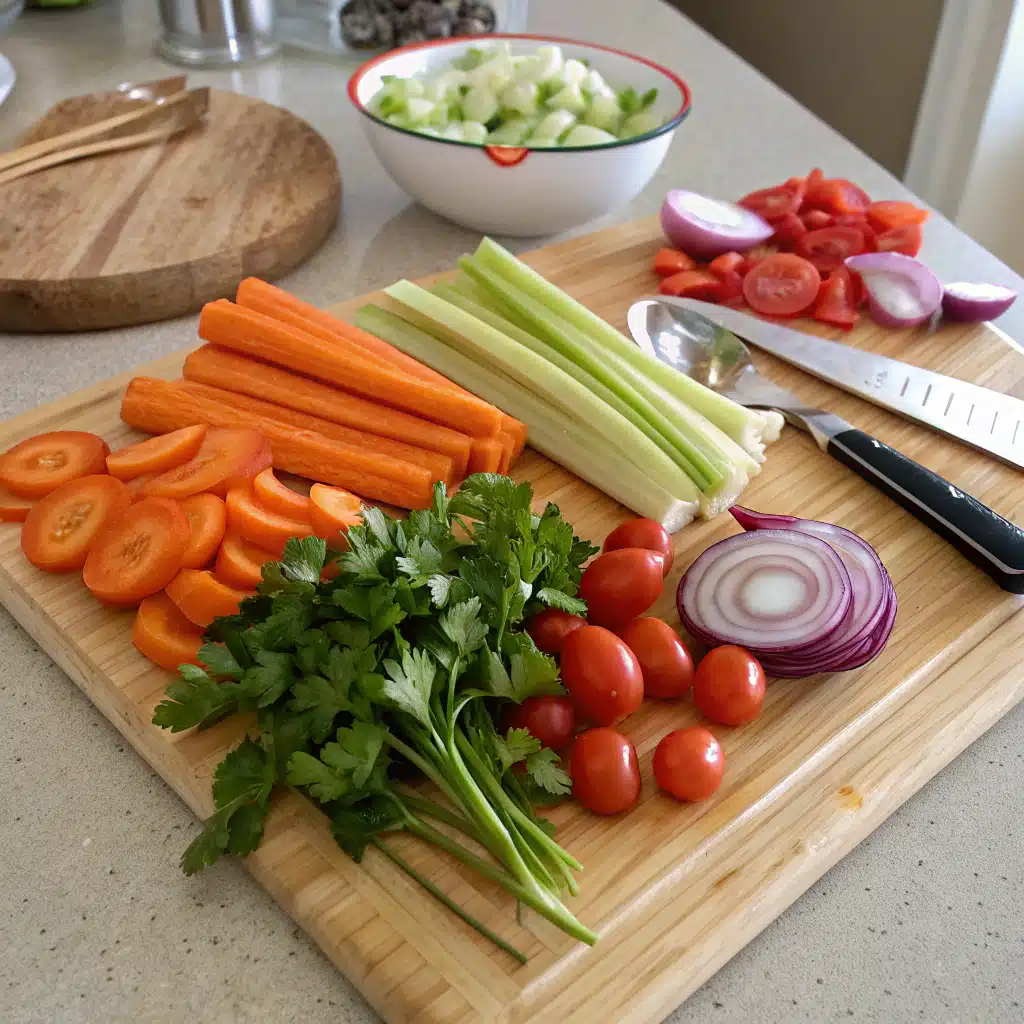
Before diving into the cooking process, proper preparation of your vegetables ensures the best vegetable soup recipe results. First, wash all vegetables thoroughly under cold running water. Then, chop them into similarly sized pieces for even cooking—aim for bite-sized chunks that will fit comfortably on a spoon. For the onions, a fine dice works best to distribute flavor throughout the soup. Carrots and potatoes should be peeled before chopping, while the celery can include some of the leaves for added flavor. The cabbage should be cored and then thinly sliced or roughly chopped depending on your texture preference.
Cooking Process: Building Layers of Flavor
Creating a delicious vegetable soup recipe requires layering flavors through proper technique:
Warm the olive oil in a heavy pot or Dutch oven over medium heat until it begins to shimmer.
Add the chopped onions, carrots, celery, and tomato paste to the pot. Cook for 8-10 minutes, stirring frequently, until the vegetables have softened and the onions become translucent. This step, known as “sweating” the vegetables, releases their natural sweetness and builds the flavor foundation.
Add the minced garlic, ground fennel seed, black pepper, salt, and red pepper flakes (if using). Stir continuously for one minute until fragrant. This brief cooking time allows the spices to bloom without burning the garlic.
Pour in the canned tomatoes with their juices and the vegetable or chicken stock. Stir well, scraping the bottom of the pot to release any browned bits (these contain concentrated flavor).
Add the chopped potatoes, cabbage, and bay leaves to the pot. Raise the temperature to medium-high and let the mixture come to a boil.
Once boiling, partially cover the pot with a lid and reduce the heat to maintain a gentle simmer.
Simmer for approximately 20 minutes, or until the potatoes and other vegetables are tender when pierced with a fork. Stir occasionally to prevent sticking.
Add the frozen peas and cook for an additional 5 minutes, just enough to heat them through while maintaining their bright green color.
Remove the pot from the heat and fish out the bay leaves with a spoon.
Stir in the apple cider vinegar or lemon juice if using. This small amount of acid brightens all the flavors without making the soup taste sour.
Taste and adjust the seasoning with additional salt, pepper, or vinegar as needed.
“Learn more about how to cook cubed chicken perfectly to add protein to your vegetable soup.”
Final Touches for Perfect Vegetable Soup
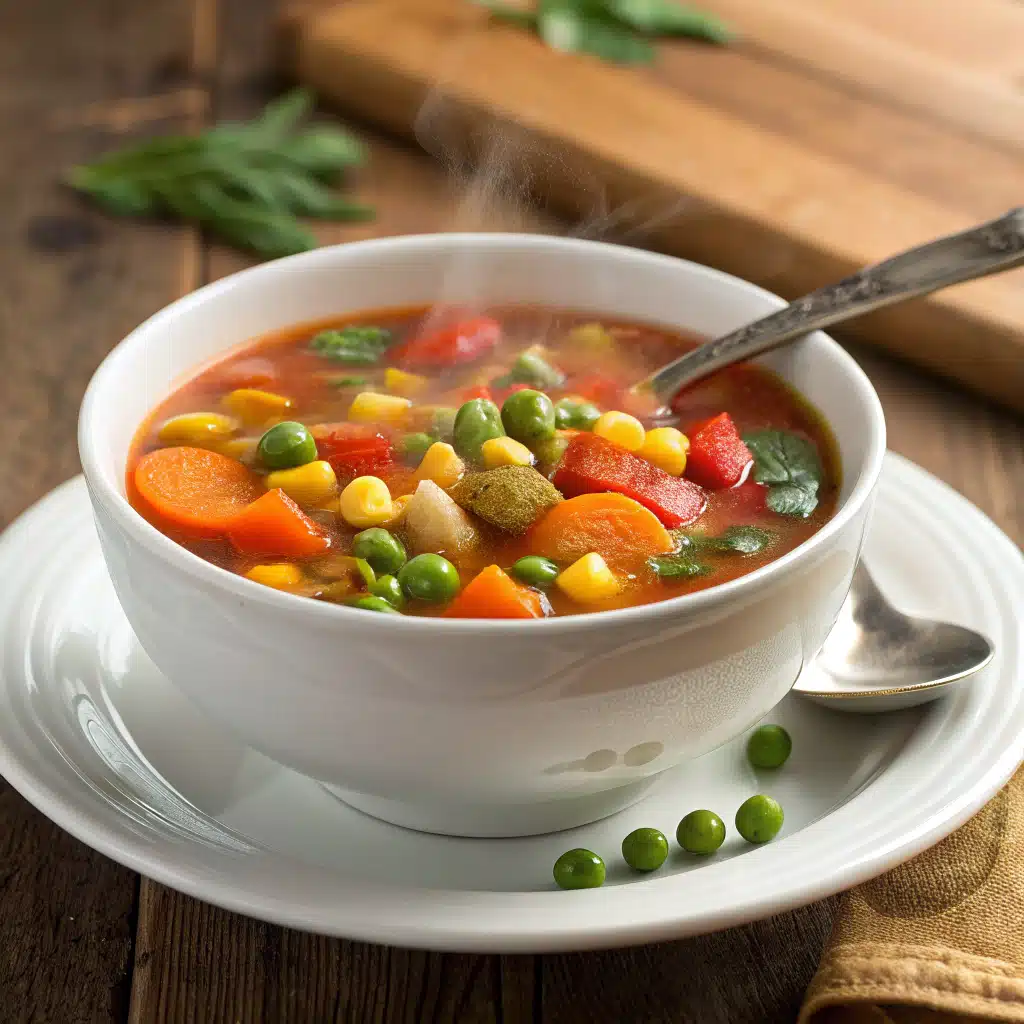
The final touches can elevate your vegetable soup recipe from good to exceptional. After removing from heat, let the soup rest for about 5 minutes before serving. This allows the flavors to further meld together. For a smoother consistency, you can blend a portion of the soup and return it to the pot. If the soup is too thick, add a bit more broth; if too thin, simmer uncovered for a few more minutes. Finish each serving with fresh herbs like parsley or dill, a drizzle of good olive oil, or a sprinkle of grated Parmesan cheese for an extra layer of flavor.
Tips: Secrets to Making Your Vegetable Soup Recipe Even Better
Selecting the Best Vegetables
For the most flavorful vegetable soup recipe, ingredient selection matters significantly. Choose fresh, in-season vegetables whenever possible for maximum flavor and nutrition. Look for firm carrots, crisp celery, and dense potatoes without sprouts. When fresh tomatoes are in season, consider substituting them for canned—simply peel, seed, and chop about 2 cups of fresh tomatoes. For out-of-season options, frozen vegetables (besides the peas already in the recipe) can be excellent alternatives to fresh, as they’re typically harvested and frozen at peak ripeness. Consider adding seasonal vegetables like corn in summer, butternut squash in fall, or leeks in winter to adapt your vegetable soup to the time of year.
Enhancing Flavor with Herbs and Spices
The right blend of herbs and spices can transform a basic vegetable soup recipe into something truly special. While this recipe includes fennel, garlic, and bay leaves for flavor, don’t be afraid to experiment with additional herbs. Fresh herbs like thyme, rosemary, or oregano can be added during cooking (use sprigs and remove before serving), while tender herbs like parsley, basil, or dill are best stirred in just before serving. For additional flavor dimensions, consider a Parmesan rind added during simmering (remove before serving), a splash of coconut milk for creaminess, or a spoonful of pesto stirred into each bowl.
“Discover great ideas like our pastina soup recipe for another comforting soup option.”
Common Mistakes to Avoid
Even experienced cooks can make mistakes when preparing a vegetable soup recipe. Avoid these common pitfalls for the best results:
Rushing the sautéing process. The initial step of cooking the aromatic vegetables creates a crucial flavor foundation—don’t hurry it.
Cutting vegetables inconsistently. Uniformly sized pieces ensure even cooking.
Over-salting early in the cooking process. Add salt gradually and taste as you go, as the soup will reduce and intensify in flavor.
Overcooking the vegetables. Perfectly cooked vegetables should be tender but still retain some texture—mushy vegetables lead to a less appealing soup.
Adding all vegetables at once. Stagger additions based on cooking time—root vegetables need longer than leafy greens or peas.
Storage: Making the Most of Your Vegetable Soup
Refrigerating Vegetable Soup
One of the greatest advantages of making a vegetable soup recipe is that it often tastes even better the next day as the flavors continue to develop. To properly store leftover soup, first allow it to cool completely at room temperature, but don’t leave it out for more than two hours for food safety reasons. Transfer the cooled soup to airtight containers, leaving a little headspace if the soup contains ingredients that might expand. Properly stored vegetable soup will keep in the refrigerator for 3-4 days. When reheating, bring to a gentle simmer on the stovetop or heat in the microwave until steaming hot throughout. You may need to add a splash of water or broth if the soup has thickened during storage.
Freezing for Later Enjoyment
This vegetable soup recipe freezes exceptionally well, making it perfect for meal prep or batch cooking. To ensure the best outcome, let the soup cool fully before placing it in the freezer. Portion the soup into freezer-safe containers or heavy-duty freezer bags, allowing about an inch of headspace for expansion. For added convenience, freeze in individual serving sizes for quick lunches or dinners. Label each container with the date and contents—frozen vegetable soup maintains best quality for about 2-3 months but remains safe indefinitely if kept at 0°F or below.
“Check out our chicken soup with potatoes for another freezer-friendly option.”
Creative Uses for Leftover Soup
Don’t just reheat leftover vegetable soup—reimagine it! Leftover vegetable soup can be transformed into entirely new meals. Use it as a flavor-packed cooking liquid for grains like rice or quinoa. Puree it into a smooth base for a creamy vegetable sauce to serve over pasta. Reduce it further on the stovetop until thickened to create a savory sauce for proteins. You can also use it as the base for a quick casserole by adding cooked proteins, topping with cheese or breadcrumbs, and baking until bubbly. These creative repurposing ideas ensure no drop of your delicious vegetable soup recipe goes to waste.
Variations: Customize Your Vegetable Soup Recipe
Protein-Packed Vegetable Soup
While this classic vegetable soup recipe is satisfying on its own, adding protein creates a more substantial meal. For meat options, consider adding:
- 1 pound of browned ground beef, turkey, or Italian sausage
- 2 cups of shredded rotisserie chicken added in the final minutes of cooking
- 8 ounces of diced ham added with the vegetables
For vegetarian or vegan protein sources, try:
- 1 can (15 oz) of drained and rinsed white beans, chickpeas, or lentils
- 1 cup of cooked quinoa added in the last 5 minutes
- 8 ounces of firm tofu, cubed and added with the potatoes
Whichever protein you choose, adjust seasonings accordingly as some options (like ham or sausage) add their own saltiness to the soup.
“Here’s your guide to sous vide chicken breast perfect results made easy for another protein option to add to your soup.”
International Flavor Variations
Take your vegetable soup recipe around the world by incorporating different flavor profiles:
Italian-Style: Add 1 teaspoon of Italian seasoning, substitute white beans for potatoes, add a cup of small pasta like ditalini in the last 8 minutes of cooking, and serve with grated Parmesan.
Mexican-Inspired: Add 1 tablespoon of cumin, 1 teaspoon of oregano, a diced jalapeño, and a can of black beans. Finish with lime juice instead of vinegar and garnish with avocado, cilantro, and tortilla strips.
Asian-Fusion: Use sesame oil instead of olive oil, add 1 tablespoon of grated ginger with the garlic, substitute bok choy for cabbage, add a tablespoon of soy sauce, and finish with a drizzle of sesame oil and chopped green onions.
Mediterranean: Include 1 teaspoon of oregano, add a diced bell pepper with the initial vegetables, include 1/2 cup of orzo pasta in the last 10 minutes of cooking, and finish with fresh lemon juice, crumbled feta, and chopped olives.
Dietary Adaptations
This vegetable soup recipe is naturally accommodating to various dietary needs, but here are specific adaptations:
Gluten-Free: The base recipe is already gluten-free, but double-check your broth/stock ingredients and any additional seasonings to ensure they contain no hidden gluten.
Low-Carb/Keto: Omit the potatoes and carrots, and instead add more low-carb vegetables like cauliflower, zucchini, or bell peppers. Consider adding extra healthy fats with a drizzle of olive oil or avocado garnish.
Vegan: Use vegetable broth instead of chicken stock and consider adding nutritional yeast for a savory umami flavor boost.
Low-Sodium: Use no-salt-added canned tomatoes, homemade unsalted vegetable stock, and enhance flavor with additional herbs and spices rather than salt.
Serving: Perfect Pairings for Your Vegetable Soup
Bread and Cracker Accompaniments
A warm bowl of vegetable soup recipe pairs wonderfully with the right bread or crackers. For a traditional approach, serve with a crusty artisan bread, sourdough, or French baguette—perfect for dipping and soaking up the flavorful broth. Garlic bread or cheese toast makes for a more indulgent pairing that complements the vegetables beautifully. For lighter options, whole grain crackers, breadsticks, or crisp melba toast provide textural contrast without overpowering the soup. For a homemade touch that’s sure to impress, try making simple drop biscuits or cornbread muffins to serve alongside. The combination of soft, warm bread and steaming vegetable soup creates a comfort food experience that’s hard to beat.
Salad Pairings
Balance your meal by pairing this hearty vegetable soup recipe with a complementary salad. A simple green salad with a light vinaigrette provides freshness and crunch that contrasts nicely with the warm, tender vegetables in the soup. For more substance, consider a Caesar salad with homemade croutons or a crisp Greek salad with feta cheese and olives.
“Don’t miss our watermelon cucumber feta salad for a refreshing side dish option.”
In cooler months, a winter salad with bitter greens, nuts, and dried fruits offers seasonal harmony. Remember to keep the salad dressing relatively light—a simple lemon and olive oil vinaigrette works perfectly—so it doesn’t compete with the rich flavors of your vegetable soup.
Beverage Suggestions
The right beverage can elevate your vegetable soup recipe experience. For non-alcoholic options, consider hot tea (particularly chamomile or ginger), apple cider, or a sparkling water with a squeeze of lemon. Coffee enthusiasts might enjoy the contrast of a light roast coffee alongside their soup. If you prefer wine, this versatile soup pairs well with many options: try a crisp Sauvignon Blanc, a light Pinot Noir, or a dry rosé. For beer lovers, a wheat beer or light lager complements without overwhelming the soup’s flavors. When serving kids or looking for something special, homemade lemonade or iced tea provides a refreshing counterpoint to the warm soup.
“Looking for inspiration? Try our fresh watermelon juice recipe as a refreshing beverage option.”
FAQs: Your Vegetable Soup Questions Answered
What are the best ingredients for vegetable soup?
Start with onions, carrots, and celery (mirepoix) for a flavor base, then add garlic, tomatoes, and potatoes for richness. Cabbage brings volume, while peas add sweetness and color. Use homemade or quality broth, and finish with fresh herbs like thyme or parsley. A Parmesan rind adds savory depth.
Which vegetables are best for soup?
Sturdy options work best: carrots, potatoes, parsnips, and turnips for heartiness; onions, leeks, celery, and garlic for aromatics; kale, spinach, or collards added at the end for freshness. Green beans, corn, zucchini, and mushrooms add variety. Layer vegetables by cooking time for best results.
How to make simple veg soup?
Sauté onion, carrot, and celery in oil until soft. Add garlic, broth, diced potatoes, and any extra vegetables. Simmer 15–20 minutes until tender. Season with salt, pepper, and a bay leaf. Finish with herbs or a splash of lemon for brightness.
What can I add to vegetable soup to make it more tasty?
Enhance flavor with Parmesan rind, soy sauce, or miso for umami; lemon or vinegar for acidity; fresh herbs at the end; or spice blends like Italian seasoning. Add heat with red pepper flakes or ginger. A drizzle of olive oil or sprinkle of cheese makes a great finish.
What spices taste good in vegetable soup?
Bay leaves, thyme, oregano, and black pepper are classics. Paprika, cumin, coriander, or a pinch of nutmeg add warmth. Red pepper flakes bring heat, while blends like curry powder or Italian seasoning create global twists.
How to thicken vegetable soup?
Puree part of the soup, add starch slurry or roux, or simmer uncovered to reduce. Potatoes, beans, or squash naturally thicken. For creamier texture, stir in coconut milk, cream, or grated cheese.
Conclusion: Making This Vegetable Soup Recipe Your Own
Why This Recipe Works
This vegetable soup recipe has stood the test of time for good reason. It balances simplicity with flavor complexity, creating a dish that’s both accessible and deeply satisfying. The technique of building flavors—starting with a properly sautéed aromatic base, layering in seasonings, and adding vegetables in stages—ensures maximum flavor development. The combination of textures from the various vegetables creates an interesting eating experience, while the light touch with seasonings allows the natural flavors to shine through. This soup strikes the perfect balance between healthy and comforting, making it suitable for everything from weeknight dinners to special occasions.
“Discover great ideas like our eggplant rollatini for another vegetable-forward dish.”
Final Tips for Success
As you make this vegetable soup recipe your own, keep these final tips in mind. First, taste and adjust seasonings throughout the cooking process—soup flavors develop over time, and what seems perfect early on might need tweaking later. Second, consider the season and what vegetables are at their peak—substituting seasonal produce often results in better flavor. Third, don’t rush the process; allowing time for proper sautéing and simmering develops the complex flavors that make homemade soup special. Fourth, make it ahead when possible—like many soups, this one tastes even better the next day as flavors meld. Finally, trust your instincts and preferences; cooking should be a joyful experience of discovery and creation. With these principles in mind, you’ll be able to craft the perfect vegetable soup for any occasion, season, or dietary preference.
PrintVegetable Soup Recipe
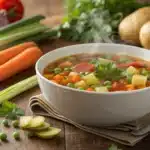
A hearty, flavorful vegetable soup packed with fresh vegetables and aromatic herbs and spices. Perfect for any season!
- Prep Time: 15 minutes
- Cook Time: 35 minutes
- Total Time: 50 minutes
- Yield: 6 1x
- Category: Dinner
- Cuisine: American
Ingredients
- 3 tablespoons olive oil
- 2 cups chopped onion, 1 large
- 1 ½ cups chopped carrot, 3 to 4 carrots
- 1 ½ cups chopped celery, 2 to 3 stalks
- 2 tablespoons tomato paste
- 4 teaspoons minced garlic, 4 cloves
- ¾ teaspoon ground fennel seed
- ½ teaspoon ground black pepper
- ½ teaspoon fine sea salt, plus more to taste
- ⅛ to ¼ teaspoon crushed red pepper flakes, optional for heat
- 1 (15oz) can diced tomatoes with their liquid
- 6 cups stock or broth, see our veggie broth or chicken stock (1.42L)
- 2 cups chopped potato, 2 medium
- 3 to 4 heaped cups chopped or shredded cabbage
- 2 bay leaves
- 1 cup frozen peas
- ½ teaspoon apple cider vinegar or fresh lemon juice, optional
Instructions
- Heat olive oil in a large Dutch oven over medium heat. Add onions, carrots, celery, and tomato paste. Cook for 8-10 minutes, stirring often, until vegetables soften and onions become translucent.
- Add garlic, fennel seed, black pepper, salt, and red pepper flakes. Cook while stirring for one minute until fragrant.
- Pour in canned tomatoes with juices and broth. Add potatoes, cabbage, and bay leaves. Turn the heat up to medium-high and allow it to reach a boil. Partially cover with lid, then reduce heat to maintain a simmer.
- Simmer for 20 minutes or until potatoes and vegetables are tender. Add frozen peas and cook for five more minutes.
- Remove from heat and discard bay leaves. Stir in vinegar or lemon juice. Taste and adjust seasonings as needed before serving.
Notes
For best results, use seasonal vegetables and allow the soup to rest before serving to let flavors develop.
Nutrition facts are estimates and may vary based on ingredients used, portion sizes, and preparation methods.
Nutrition
- Serving Size: 6
- Calories: 186
- Sugar: 9g
- Sodium: 620mg
- Fat: 8g
- Saturated Fat: 1g
- Trans Fat: 0g
- Carbohydrates: 26g
- Fiber: 6g
- Protein: 5g
- Cholesterol: 0mg
Keywords: vegetable soup, homemade soup, healthy soup, vegetable broth, cabbage soup
Let’s connect! Follow me for more Joylicious Recipes: Facebook, Instagram, Pinterest