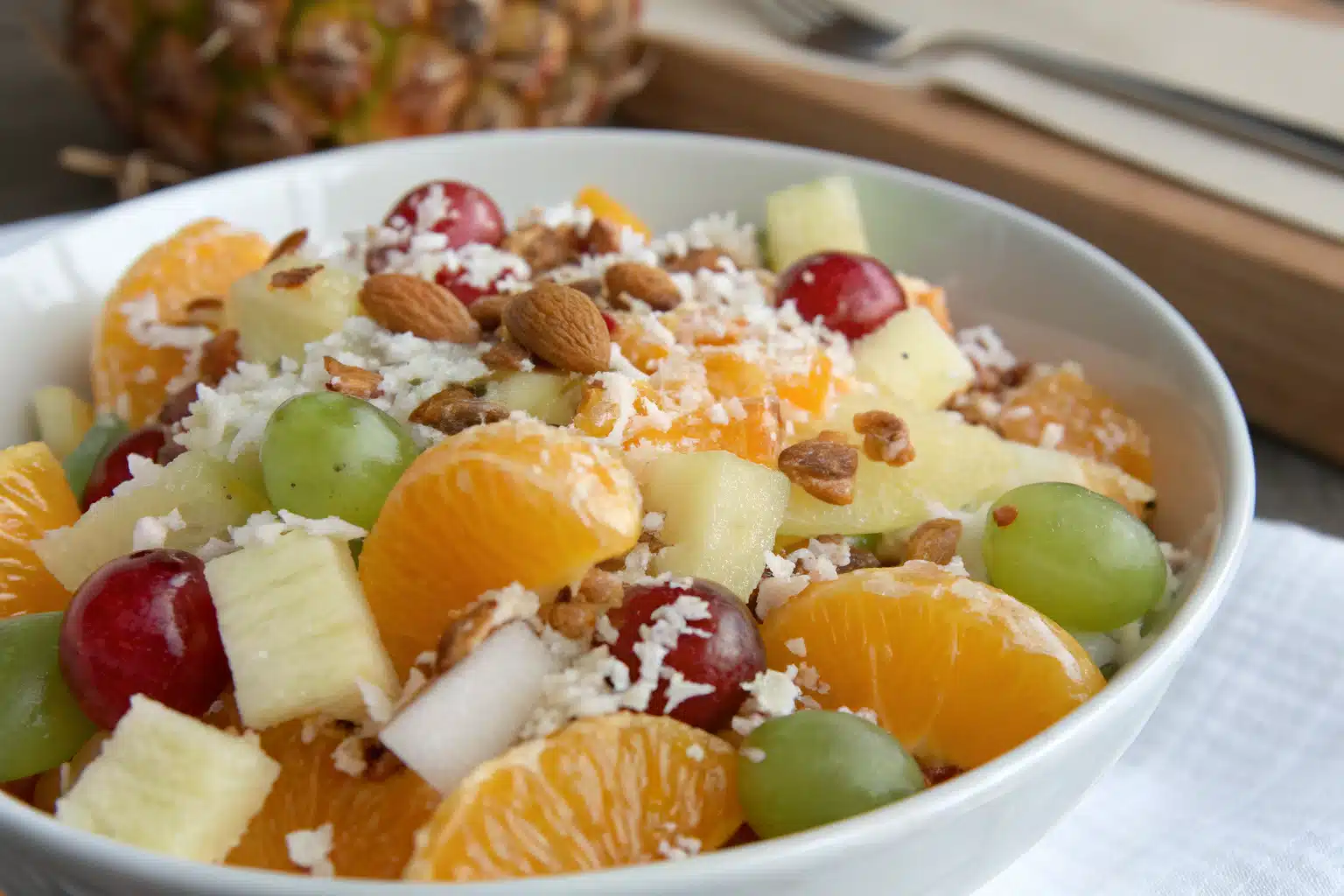
Classic Ambrosia Salad: A Sweet, Creamy Fruit Delight That Wows Every Time
What is Ambrosia Salad?
Ambrosia salad has been gracing American tables for generations, bringing its sweet, creamy goodness to countless gatherings. This beloved dish, often called “food of the gods” (which is what “ambrosia” literally means), combines juicy fruits, fluffy marshmallows, coconut, and a deliciously creamy dressing. Unlike typical green salads, ambrosia salad falls firmly in the dessert category, though many families serve it as a sweet side dish during holiday meals. The beauty of ambrosia salad lies in its simplicity and adaptability, making it a perfect addition to any meal, from casual backyard barbecues to elegant holiday feasts.
“Looking for inspiration? Try our fresh watermelon juice recipe for another refreshing treat to complement your ambrosia salad!”
The History and Evolution of This Classic Dish
Ambrosia salad first appeared in American cookbooks in the late 19th century, though its origins stretch back further. Initially, this dish was a simple combination of fresh oranges, coconut, and sugar—exotic ingredients that were once rare treats. As refrigeration became commonplace and processed foods more available, ambrosia evolved to include marshmallows, whipped cream, and canned fruits. Through the 1950s and 60s, it became a staple at potlucks and holiday dinners, symbolizing both abundance and hospitality. Today’s ambrosia salad maintains its nostalgic charm while adapting to modern tastes with ingredients like Greek yogurt that add protein and reduce sweetness. While its appearance has changed over decades, its purpose remains the same: bringing joy through a sweet, fruit-filled delight that promises a burst of flavor in every spoonful.
Ingredients: Everything You Need for Perfect Ambrosia Salad
The Creamy Base Components
The foundation of any great ambrosia salad is its creamy, luxurious base. This recipe creates the perfect texture by combining heavy whipping cream, powdered sugar, and Greek yogurt. The whipping cream provides richness and fluffiness when beaten to stiff peaks, while powdered sugar dissolves seamlessly, adding sweetness without grittiness. The addition of Greek yogurt brings a subtle tanginess that balances the sweetness and adds protein. You can use plain Greek yogurt for a more pronounced tang or vanilla Greek yogurt for additional sweetness. This dreamy base coats each fruit piece perfectly, creating a cohesive dish where every bite contains the ideal balance of creaminess and fruit. For those watching calories, light whipping cream can work, though the texture won’t be quite as rich and stable.
Fruits and Mix-ins for Classic Ambrosia
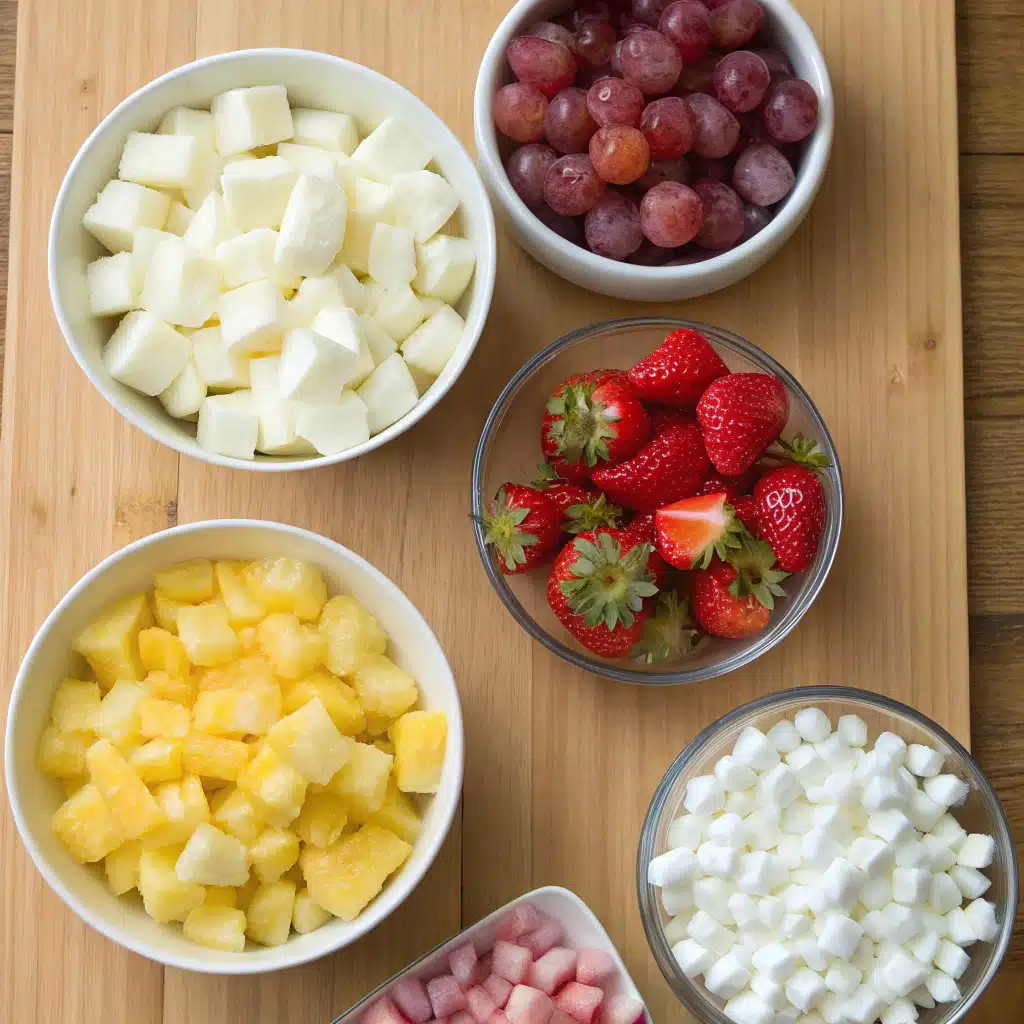
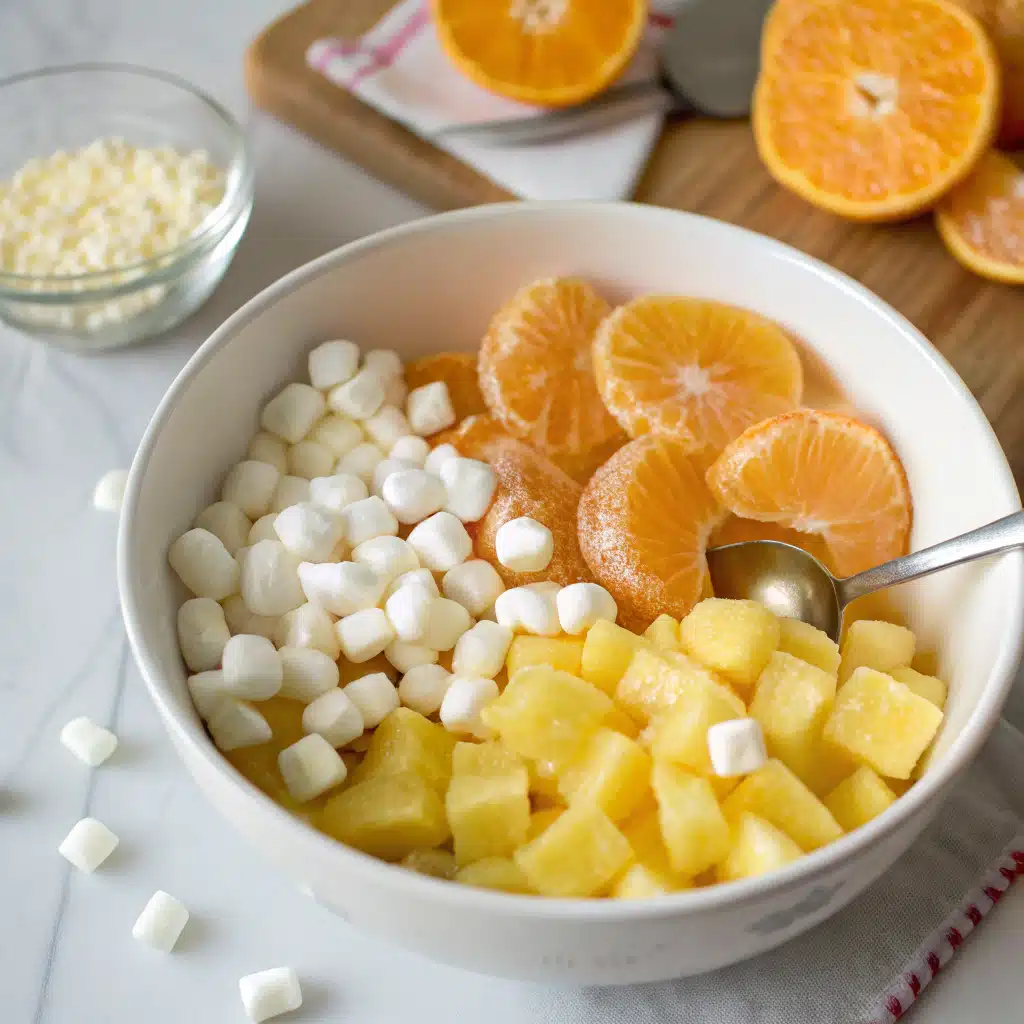
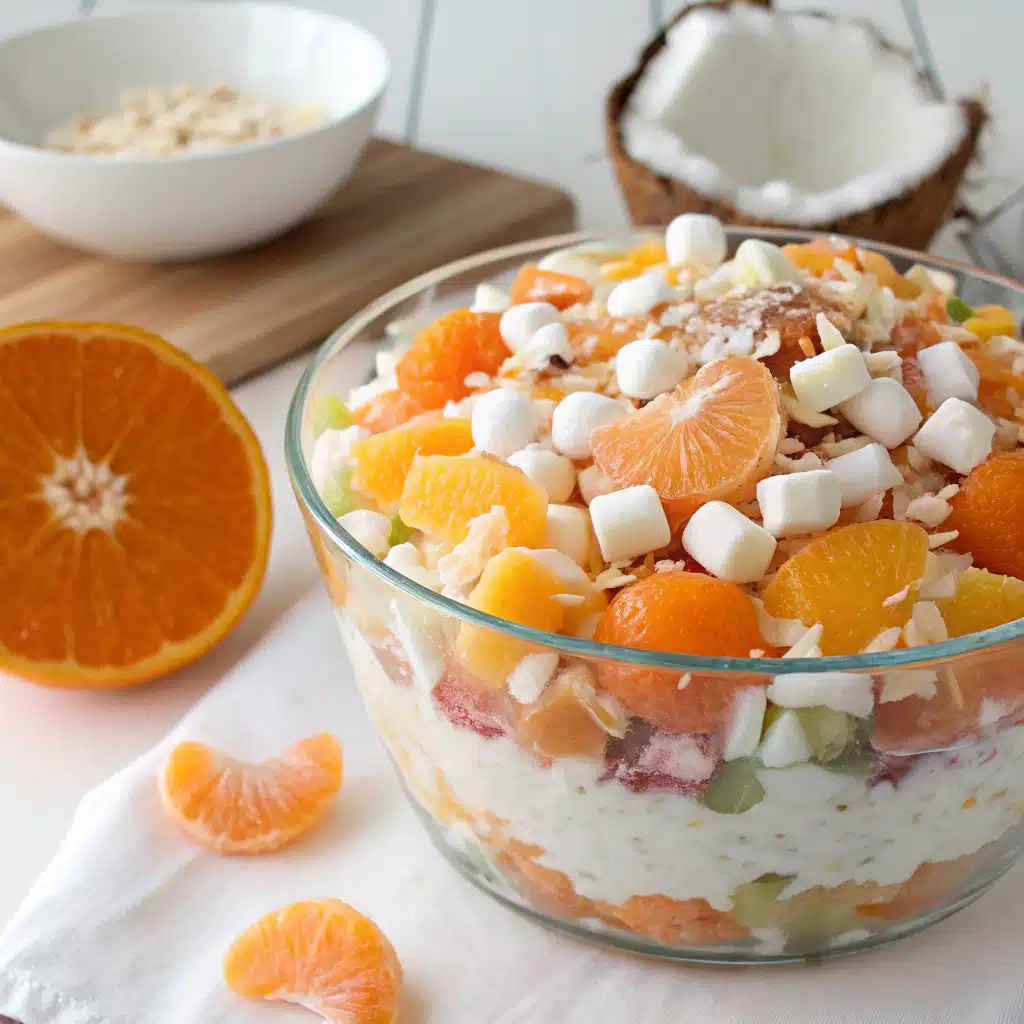
The colorful array of fruits and mix-ins transforms the creamy base into the beloved ambrosia salad. Traditional ingredients include sweetened shredded coconut, which adds texture and tropical flavor, alongside canned mandarin oranges and pineapple tidbits that provide juicy sweetness. Maraschino cherries bring vibrant color and nostalgic flavor, while mini fruit-flavored marshmallows add a playful bounce and sweetness. Together, these ingredients create a beautiful rainbow effect in your bowl.
| Ingredient | Amount | Notes |
|---|---|---|
| Heavy whipping cream | 1 cup | Cold for best whipping results |
| Powdered sugar | 1/4 cup | Sifted to prevent lumps |
| Plain Greek yogurt | 1/2 cup | Can substitute with vanilla |
| Sweetened shredded coconut | 1 cup | Adds texture and tropical flavor |
| Mandarin oranges | 11 oz can, drained | Pat dry to prevent watery salad |
| Pineapple tidbits | 8 oz can, drained | Tidbits mix better than chunks |
| Maraschino cherries | 1 cup, drained | Halve for better distribution |
| Mini fruit-flavored marshmallows | 1 1/2 cups | Regular marshmallows can be quartered |
Step-by-Step: Creating Your Perfect Ambrosia Salad
Preparing the Creamy Dressing
- Take your cold heavy whipping cream and add it to a large mixing bowl or the bowl of your stand mixer. Ensuring the cream is cold helps it whip to stiff peaks more easily.
- Using electric beaters or a stand mixer with the whisk attachment, beat the cream on medium-high speed for 1-2 minutes until it begins to thicken.
- Slowly incorporate the powdered sugar while beating continuously. Adding it slowly prevents lumps and allows it to incorporate fully.
- Continue beating until stiff peaks form – this means when you lift the beater, the cream stands up with peaks that don’t fold over.
- Gently fold in the Greek yogurt using a rubber spatula with a light hand. Use a folding motion rather than stirring to maintain the air in the whipped cream.
The resulting creamy dressing should be light, fluffy, and able to hold its shape. This provides the perfect base for the fruits and other ingredients to nestle into.
“Don’t miss our creamy peach salad recipe for another delicious fruit-based treat!”
Assembling and Chilling the Salad
- Before adding the canned fruits to your ambrosia salad, drain them thoroughly in a colander. For extra insurance against a watery salad, pat them gently with paper towels to remove excess moisture.
- Place all the well-drained fruits (mandarin oranges, pineapple tidbits, and maraschino cherries) in a large serving bowl.
- Add the sweetened shredded coconut and mini fruit-flavored marshmallows to the bowl with the fruits.
- Gently fold in your prepared whipped cream mixture, being careful not to crush the fruit. Use a rubber spatula and a light hand to coat everything evenly.
- Once combined, cover the bowl with plastic wrap and refrigerate for at least 30 minutes, though 1-2 hours is even better.
The chilling time serves two important purposes: it allows the flavors to meld together beautifully, and it gives the marshmallows time to slightly soften and absorb some of the flavors around them. This resting period transforms the individual ingredients into a cohesive, delightful ambrosia salad.
Final Touches Before Serving
Just before serving your ambrosia salad, take a moment for these final touches that elevate the dish from good to spectacular:
- Gently stir the salad to redistribute any settled ingredients, ensuring every serving has a good mix of fruits and marshmallows.
- Taste test your ambrosia salad and adjust if needed – a tiny splash of vanilla extract or an extra tablespoon of powdered sugar can fine-tune the flavor.
- Transfer to a beautiful serving bowl if your mixing bowl isn’t presentation-worthy.
- Consider adding a fresh garnish for visual appeal – a sprinkle of additional coconut, a few reserved maraschino cherries, or even a light dusting of cinnamon can make the salad look extra special.
- For an elegant touch at formal gatherings, you can portion the ambrosia salad into individual serving cups or small bowls before guests arrive.
These small details make a big difference in both presentation and taste, ensuring your ambrosia salad is as delightful to look at as it is to eat.
Tips: Expert Advice for Ambrosia Salad Success
Avoiding a Watery Salad
Nothing ruins an ambrosia salad faster than excess liquid pooling at the bottom of your bowl. To ensure your salad maintains its perfect creamy consistency, follow these expert tips: First, drain all canned fruits extremely well, allowing them to sit in a colander for at least 10 minutes. For extra insurance, pat them gently with paper towels to remove surface moisture. When using fresh fruits like bananas or apples, add them just before serving to prevent them from releasing juices during storage. Additionally, whip your cream to firm peaks rather than soft peaks – this creates a more stable base that resists breaking down. Finally, if your Greek yogurt seems particularly watery, strain it through a coffee filter or cheesecloth for 30 minutes before adding it to your recipe. These simple precautions will ensure your ambrosia salad maintains its delightful texture from the first serving to the last.
Making Ahead and Transport Tips
Ambrosia salad is ideal for make-ahead situations, which makes it perfect for busy holidays and potlucks. For best results, prepare it up to 24 hours in advance, keeping it tightly covered in the refrigerator. If you’re planning even further ahead, you can prepare the whipped cream mixture and store it separately from the drained fruits and marshmallows, combining them 2-3 hours before serving. For transporting to gatherings, choose a container with a tight-fitting lid and place it in a cooler with ice packs.
“Learn more about make-ahead desserts like our easy strawberry shortcake bars that pair wonderfully with ambrosia salad!”
When traveling with ambrosia salad, keep it chilled until the last possible moment, and consider bringing a fresh garnish of coconut or cherries to add just before serving. If you’re concerned about presentation after transport, bring a clean serving bowl and transfer the salad once you arrive. These strategies ensure your ambrosia salad will be just as impressive and delicious at its destination as it was in your kitchen.
Achieving the Perfect Sweetness Balance
Finding the ideal sweetness level for ambrosia salad can be tricky, as canned fruits and marshmallows already contribute significant sweetness. To create a balanced flavor profile, start with slightly less powdered sugar than the recipe calls for – you can always add more after tasting. Using plain Greek yogurt rather than vanilla yogurt gives you more control over the final sweetness. Consider the natural sweetness of your fruits as well; if using particularly sweet mandarin oranges or pineapple packed in heavy syrup, you might reduce the added sugar accordingly.
For those preferring a less sweet version, try these adjustments: use fruits packed in juice rather than syrup, choose plain Greek yogurt, reduce the powdered sugar by half, and use regular mini marshmallows instead of fruit-flavored ones. Conversely, if you prefer a sweeter dessert, add an extra tablespoon of powdered sugar, use vanilla Greek yogurt, and consider a small drizzle of honey folded into the cream mixture. Remember that the salad will taste less sweet when very cold, so allow it to sit at room temperature for 5-10 minutes before making final sweetness adjustments.
Storage: Keeping Your Ambrosia Salad Fresh and Delicious
Refrigeration Guidelines
Proper refrigeration is crucial for maintaining both the safety and quality of your ambrosia salad. Always store the salad in an airtight container to prevent it from absorbing other flavors from your refrigerator and to maintain its moisture level. The ideal temperature range is between 34-38°F (1-3°C), which is the sweet spot for most refrigerators. When properly stored, ambrosia salad will maintain its best quality for 2-3 days, though the texture begins to change after the first 24 hours.
If you notice any separation occurring during storage, simply give the salad a gentle stir before serving to redistribute the ingredients. For optimal freshness, store your ambrosia salad in the main body of the refrigerator rather than the door, where temperatures fluctuate more. It’s also wise to place the container on a middle shelf rather than the bottom (where it’s coldest) or the top (where it’s warmest). These simple storage practices ensure each serving of your ambrosia salad will be as delightful as possible.
How Long Will Ambrosia Salad Last?
Ambrosia salad has a relatively short but reasonable shelf life when stored properly. Here’s what to expect: When kept in an airtight container in the refrigerator, your ambrosia salad will be at its peak quality for the first 24 hours. During this time, the texture remains perfect and the marshmallows maintain their pleasant chewiness. Between 24-48 hours, the salad is still very good, though you may notice the marshmallows softening further and the whipped cream mixture beginning to lose some of its fluffy texture. Beyond 48 hours and up to 3 days, the salad remains safe to eat but undergoes more significant texture changes – the fruits may release more juice and the cream mixture may begin to break down slightly.
For food safety reasons, never leave ambrosia salad at room temperature for more than 2 hours (or 1 hour if the ambient temperature is above 90°F/32°C).
“Discover great ideas like our berries and cream recipe for more delicious ways to enjoy seasonal fruit!”
Freezing – Not Recommended
While many desserts freeze beautifully, ambrosia salad is unfortunately not one of them. Freezing this delicate dessert salad leads to several undesirable changes that significantly impact its quality. The primary issue is that the creamy dressing, which contains whipped cream and yogurt, separates and becomes watery upon thawing. Additionally, the canned fruits, which have already undergone processing, release excessive moisture after freezing and thawing, resulting in a soggy texture.
The marshmallows in ambrosia salad also don’t fare well in the freezer. They become hard when frozen and then gummy and sticky when thawed, losing their pleasant texture completely. The coconut, while technically freezable on its own, absorbs too much moisture in the context of the salad and becomes unpleasantly soggy after thawing.
If you absolutely must prepare ambrosia salad in advance, it’s better to prepare the components separately and assemble them shortly before serving rather than attempting to freeze the completed salad. This approach preserves the delightful texture contrasts that make ambrosia salad so special.
Variations: Customizing Your Ambrosia Salad
Seasonal Fruit Adaptations
One of the joys of ambrosia salad is its adaptability to seasonal fruits, allowing you to create unique versions throughout the year. In summer, try adding fresh blueberries, diced peaches, or halved grapes for a refreshing twist. These juicy additions bring brightness and natural sweetness that complements the creamy base. For fall gatherings, diced apples tossed with a squeeze of lemon juice (to prevent browning) add a pleasant crispness, while pomegranate seeds provide beautiful color and texture contrast. Winter adaptations might include sectioned blood oranges or ruby red grapefruit for a tangy element that cuts through the richness of holiday meals.
When incorporating fresh fruits, timing is key. Add firmer fruits like apples or pears up to a few hours before serving, but save softer fruits like bananas, strawberries, or raspberries to add just before serving to prevent them from breaking down. For each seasonal adaptation, consider adjusting the sweetness of your base accordingly – less sugar for naturally sweet summer fruits, perhaps a touch more for tart winter citrus. These seasonal variations keep this classic dish exciting year-round.
Dietary Adaptations (Lighter, Vegan, Etc.)
Ambrosia salad can be adapted to accommodate various dietary needs without sacrificing its delightful flavor and texture. For a lighter version with fewer calories, substitute light whipping cream or whipped topping, use fat-free Greek yogurt, and reduce the marshmallows by half. This creates a still-indulgent dessert with significantly less fat and sugar.
“Here’s your guide to vegan ice cream recipes that share similar creamy textures to this classic salad!”
For a dairy-free or vegan ambrosia, use coconut whipped cream (made from chilled coconut cream) and dairy-free yogurt as your base. Ensure your marshmallows are gelatin-free (several brands now make vegan versions), and you’ll have a plant-based dessert everyone can enjoy. Those following gluten-free diets will be pleased to know that traditional ambrosia salad is naturally gluten-free, though always check marshmallow labels as some brands may contain trace gluten.
For diabetic-friendly adaptations, use sugar-free whipped topping, sugar-free vanilla Greek yogurt, and fruits packed in juice rather than syrup. Replace regular marshmallows with a smaller amount of mini marshmallows to maintain the texture while reducing sugar. These thoughtful modifications ensure that everyone at your table can enjoy this beloved dessert regardless of dietary restrictions.
Creative Twists on the Classic
While traditional ambrosia salad has undeniable charm, creative variations can bring new excitement to this classic dish. For a tropical twist, add diced mango and kiwi while substituting a portion of the Greek yogurt with cream of coconut. This creates a piña colada-inspired dessert that’s perfect for summer gatherings. Nutty variations add delightful texture and sophistication – try folding in 1/2 cup of toasted pecans, slivered almonds, or chopped macadamia nuts. The contrast between creamy fruits and crunchy nuts creates an elevated eating experience.
For a chocolate-infused version that children and adults alike will love, add 1/3 cup of mini chocolate chips and substitute chocolate marshmallows for the fruit-flavored ones. The small bursts of chocolate complement the fruit beautifully. Holiday variations might include folding in 1/4 cup of cranberry sauce at Thanksgiving or adding green and red cherries for Christmas color.
For an elegant dinner party version, consider serving individual portions in stemmed glasses with layers of ambrosia salad alternating with vanilla wafer or graham cracker crumbs, creating a trifle-like presentation. These creative adaptations demonstrate the versatility of ambrosia salad while maintaining its nostalgic appeal and delicious flavor profile.
Serving: Presentation Ideas for Ambrosia Salad
Garnishing for Visual Appeal
The right garnishes transform ambrosia salad from a simple dish to a visually stunning centerpiece. Start with a sprinkle of additional toasted coconut across the top – the slight color variation and extra texture add immediate visual interest. For a touch of elegance, add a few mint leaves, which provide a beautiful color contrast against the creamy white background and fruity colors. Strategically place a few reserved maraschino cherries on top, creating focal points of vibrant red throughout the dish.
For special occasions, consider creating a decorative border around the edge of your serving bowl using sliced almonds or finely chopped pistachios. This frames the salad beautifully and adds a sophisticated touch. Chocolate lovers might appreciate a light dusting of cocoa powder or a few chocolate curls scattered across the top. For holiday gatherings, match your garnishes to the occasion – perhaps sugared cranberries for Christmas or edible flower petals for spring celebrations. These thoughtful garnishes take just moments to add but significantly enhance the presentation of your ambrosia salad.
Complementary Dishes and Menu Planning
Ambrosia salad pairs beautifully with a variety of main courses and other side dishes, making it a versatile addition to your menu planning. For casual summer gatherings, serve it alongside grilled meats like barbecue chicken – the cool, sweet salad provides a refreshing contrast to smoky, savory flavors. During holiday meals, ambrosia salad offers a light, fruit-based alternative to heavier desserts like pies and cakes.
“Check out our honey BBQ chicken rice skillet for a main dish that pairs wonderfully with ambrosia salad as a sweet side!”
When planning a potluck menu, ambrosia salad complements other classic American dishes like macaroni and cheese, potato salad, and fried chicken. For a brunch spread, place it alongside savory egg dishes, breakfast casseroles, and bread baskets – the sweet notes balance the savory elements perfectly.
Consider your overall menu’s color palette as well – ambrosia salad’s colorful appearance adds visual interest to a table of beige or brown foods. If serving multiple desserts, pair ambrosia salad with options that offer different textures and temperatures, such as warm fruit crisp, chocolate brownies, or buttery shortbread cookies. This variety ensures there’s something to please every palate at your gathering.
Serving Sizes and Occasions
Ambrosia salad works wonderfully for various occasions, with serving sizes that should be adjusted accordingly. For casual family dinners, plan for about 1/2 cup per person, served in a medium-sized bowl that allows everyone to help themselves. At potlucks and buffets, where guests will be sampling multiple dishes, prepare about 1/3 cup per expected guest – this recipe easily serves 8-10 people and can be doubled for larger gatherings.
For more formal occasions like holiday dinners or dinner parties, consider individual servings in small glass bowls or decorative glasses, using about 1/4 to 1/3 cup per serving. These pre-portioned servings create an elegant presentation and eliminate the need for guests to serve themselves from a communal bowl.
“Want more ideas? Check out our ice cream cone cupcakes for another fun individual dessert option!”
Baby showers and children’s parties often feature ambrosia salad, where it can be served in colorful paper cups for easy eating. For these events, smaller portions of about 1/4 cup are appropriate. When serving ambrosia salad as part of a dessert buffet, keep portions small (about 2-3 tablespoons) so guests can sample multiple sweets. Remember that because ambrosia salad is rich and sweet, a little goes a long way, especially after a substantial meal.
FAQs: Common Questions About Ambrosia Salad
What is ambrosia salad made of?
Ambrosia salad typically includes a creamy mixture of whipped cream or yogurt combined with canned fruits like pineapple and mandarin oranges, maraschino cherries, mini marshmallows, and shredded coconut. Some variations use fresh fruits or nuts, but these essentials create the salad’s signature sweet, creamy, and tropical flavor.
Is ambrosia salad unhealthy?
Ambrosia salad can be high in sugar and fat due to whipped cream, marshmallows, and sweetened coconut. However, it’s easy to make a lighter version. Use Greek yogurt or light whipped topping, reduce the marshmallows, and add more fresh fruit. This keeps the creamy sweetness while lowering calories and sugar.
What is the original Ambrosia Salad?
The original ambrosia salad from the 1800s featured only oranges, grated coconut, and sugar. Once a luxury dessert, it later evolved with marshmallows and whipped cream.
What’s the difference between Ambrosia Salad and Watergate Salad?
Ambrosia salad centers on fruit, coconut, and whipped cream for a sweet tropical flavor. Watergate salad, also called pistachio delight, uses pistachio pudding mix, crushed pineapple, whipped topping, marshmallows, and nuts. The result is a light-green, nutty, pistachio-flavored dessert rather than a fruit-forward one.
How much coconut do you put in ambrosia salad?
For most recipes serving 8–10 people, 1 cup of sweetened shredded coconut gives a balanced flavor and texture. You can adjust to taste—use less for subtlety or more for richness. Toasting part of the coconut boosts aroma and flavor without increasing the amount.
How to make ambrosia?
Whip 1 cup of heavy cream with ¼ cup powdered sugar until stiff. Fold in ½ cup Greek yogurt, then mix with drained fruits (pineapple, mandarin oranges, cherries), 1 cup coconut, and 1½ cups mini marshmallows. Gently combine and chill for 30 minutes before serving.
Conclusion: The Enduring Appeal of Ambrosia Salad
Why This Recipe Works
Ambrosia salad has stood the test of time for good reasons, blending simplicity with delightful complexity. This recipe works so beautifully because it balances multiple elements perfectly – the light, airy whipped cream against the chewy marshmallows; the tropical coconut against the bright, juicy fruits; and the sweet, creamy base against the occasional tang of certain fruits. The Greek yogurt addition provides a modern twist that adds protein and reduces overwhelming sweetness while maintaining the traditional creamy texture everyone loves. Each bite offers a multi-sensory experience of flavors and textures that create a uniquely satisfying dessert.
From a practical standpoint, ambrosia salad earns its place in our recipe collections because it requires no baking, can be prepared ahead of time, and uses ingredients that are readily available year-round. It’s also inherently beautiful, with its rainbow of fruits creating a visually appealing dish that requires minimal effort. Most importantly, this recipe works because it connects us to culinary traditions and memories – whether it reminds us of holidays at grandma’s house or church potlucks from childhood, ambrosia salad carries emotional resonance that enhances its delicious flavor.
“Want more nostalgic desserts? Try our pistachio fluff recipe for another classic treat!”
Final Thoughts and Serving Suggestions
Ambrosia salad represents more than just a sweet treat – it’s a connection to American culinary heritage that has evolved while maintaining its essential character. Consider serving this versatile dish in ways that highlight its special qualities: in clear glass bowls that showcase its colorful ingredients, in individual portions for elegant presentations, or in a large family-style bowl that invites sharing and conversation. For a special touch at holiday gatherings, serve ambrosia salad in hollowed-out orange halves or pineapple boats to emphasize its fruity character.
Beyond being delicious, ambrosia salad creates moments of joy and nostalgia around the table. It’s a dish that bridges generations, pleasing both grandparents who remember it from their youth and children experiencing its sweet delight for the first time. Whether you make it exactly as written or adapt it to your family’s preferences, ambrosia salad deserves its place in your recipe collection as a reliable crowd-pleaser that brings smiles to faces and creates sweet memories with every serving. As you share this dish with loved ones, you’re not just offering a delightful dessert – you’re participating in a long tradition of hospitality and joy through food.
PrintAmbrosia Salad

This classic ambrosia salad combines juicy fruits, marshmallows, and coconut in a creamy whipped topping for a delightful dessert that’s perfect for potlucks, holidays, and family gatherings.
- Prep Time: 15 minutes
- Cook Time: 0 minutes
- Total Time: 15 minutes
- Yield: 8 servings 1x
- Category: Dessert
- Cuisine: American
Ingredients
- 1 cup heavy whipping cream
- 1/4 cup powdered sugar
- 1/2 cup plain Greek yogurt, or vanilla
- 1 cup shredded sweetened coconut
- 11 ounce can mandarin oranges, drained
- 8 ounce can pineapple tidbits, drained
- 1 cup maraschino cherries, drained
- 1 1/2 cups mini fruit-flavored marshmallows
- Other optional add-ins: chopped pecans, sliced bananas, chopped apples
Instructions
- In a large bowl or stand mixer, beat heavy whipping cream for 1-2 minutes until beginning to thicken.
- Gradually add powdered sugar while continuing to beat until stiff peaks form.
- Gently fold in the Greek yogurt with a rubber spatula until combined.
- In a separate large serving bowl, combine well-drained fruits, coconut, and marshmallows.
- Fold the whipped cream mixture into the fruit mixture until everything is evenly coated.
- Cover the dish and chill it in the refrigerator for at least 30 minutes to let the flavors blend together.
Notes
Ensure all canned fruits are very well drained to prevent a watery salad. For best results, prepare 2-3 hours before serving.
Nutrition facts are estimates and may vary based on ingredients used, portion sizes, and preparation methods.
Nutrition
- Serving Size: 8 servings
- Calories: 275
- Sugar: 28g
- Sodium: 45mg
- Fat: 15g
- Saturated Fat: 11g
- Trans Fat: 0g
- Carbohydrates: 33g
- Fiber: 2g
- Protein: 3g
- Cholesterol: 40mg
Keywords: ambrosia salad, fruit salad, marshmallow salad, creamy fruit salad, coconut dessert
Let’s connect! Follow me for more Joylicious Recipes: Facebook, Instagram, Pinterest