The Ultimate German Chocolate Cake Recipe: Rich, Decadent, and Traditional
A Sweet Slice of History
German chocolate cake stands as one of America’s most beloved desserts, despite its somewhat misleading name. Contrary to popular belief, this decadent treat isn’t German in origin at all. The cake was actually named after Samuel German, an American chocolatier who developed a type of dark baking chocolate for Baker’s Chocolate Company in 1852. When a Texas homemaker’s recipe using this chocolate was published in a Dallas newspaper in 1957, it became a nationwide sensation. Today, German chocolate cake remains a fixture at celebrations, family gatherings, and dessert tables across the country.
What Makes It Special
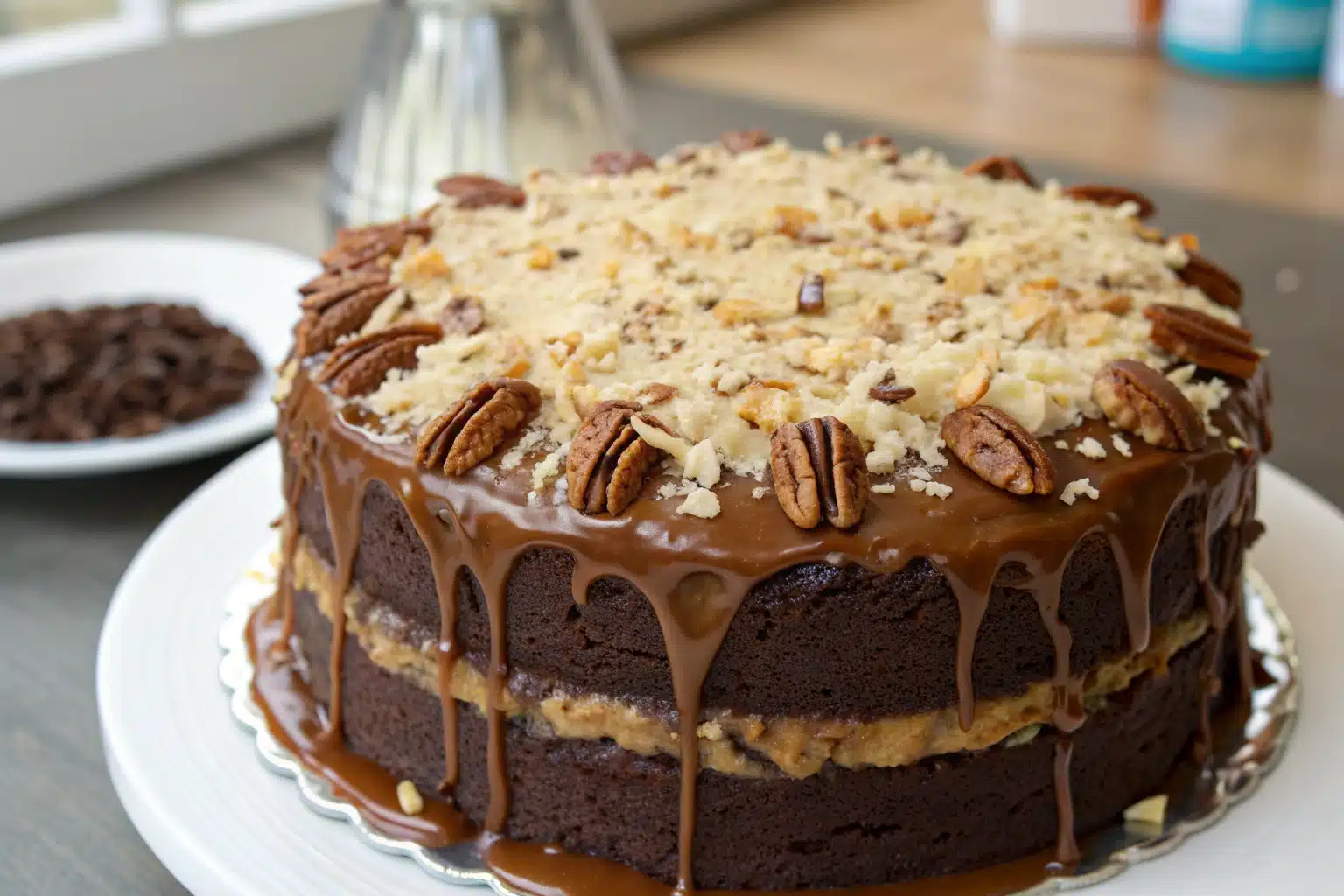
What truly sets German chocolate cake apart from other chocolate cakes is its distinctive coconut-pecan frosting. This caramel-like topping combines toasted pecans, shredded coconut, and a rich custard base that creates an irresistible contrast to the deep chocolate cake layers. Unlike traditional frosted cakes, German chocolate cake typically features this sweet, nutty mixture between and on top of the layers, while the sides often remain bare to showcase the cake’s beautiful layers.
“Looking for inspiration? Try our coconut cream pie recipe for another delicious coconut dessert.”
Ingredients for German Chocolate Cake
For the Chocolate Cake Layers
The foundation of any great German chocolate cake is a moist, rich chocolate cake. Our recipe uses a combination of unsweetened cocoa powder and a secret technique involving boiling water to intensify the chocolate flavor while ensuring a tender crumb.
| Ingredient | Amount | Metric |
|---|---|---|
| Granulated sugar | 2 cups | 400 g |
| All-purpose flour | 1¾ cups | 210 g |
| Unsweetened cocoa powder | ¾ cup | 75 g |
| Baking powder | 1½ teaspoons | 6 g |
| Baking soda | 1½ teaspoons | 7.5 g |
| Salt | 1 teaspoon | 5 g |
| Large eggs | 2 | 2 |
| Buttermilk | 1 cup | 240 ml |
| Vegetable or canola oil | ½ cup | 120 ml |
| Vanilla extract | 2 teaspoons | 10 ml |
| Boiling water | 1 cup | 240 ml |
For the Signature Coconut-Pecan Frosting
The star of German chocolate cake is undoubtedly its unique frosting. This caramel-like mixture combines toasted pecans and sweet coconut flakes in a rich, custard base.
| Ingredient | Amount | Metric |
|---|---|---|
| Light brown sugar | ½ cup | 100 g |
| Granulated sugar | ½ cup | 100 g |
| Butter | ½ cup | 115 g |
| Large egg yolks | 3 | 3 |
| Evaporated milk | ¾ cup | 180 ml |
| Vanilla extract | 1 tablespoon | 15 ml |
| Chopped pecans | 1 cup | 120 g |
| Shredded sweetened coconut | 1 cup | 80 g |
For the Chocolate Frosting
While traditional German chocolate cake often leaves the sides unfrosted, our recipe includes an optional chocolate frosting to cover the sides for an extra indulgent treat.
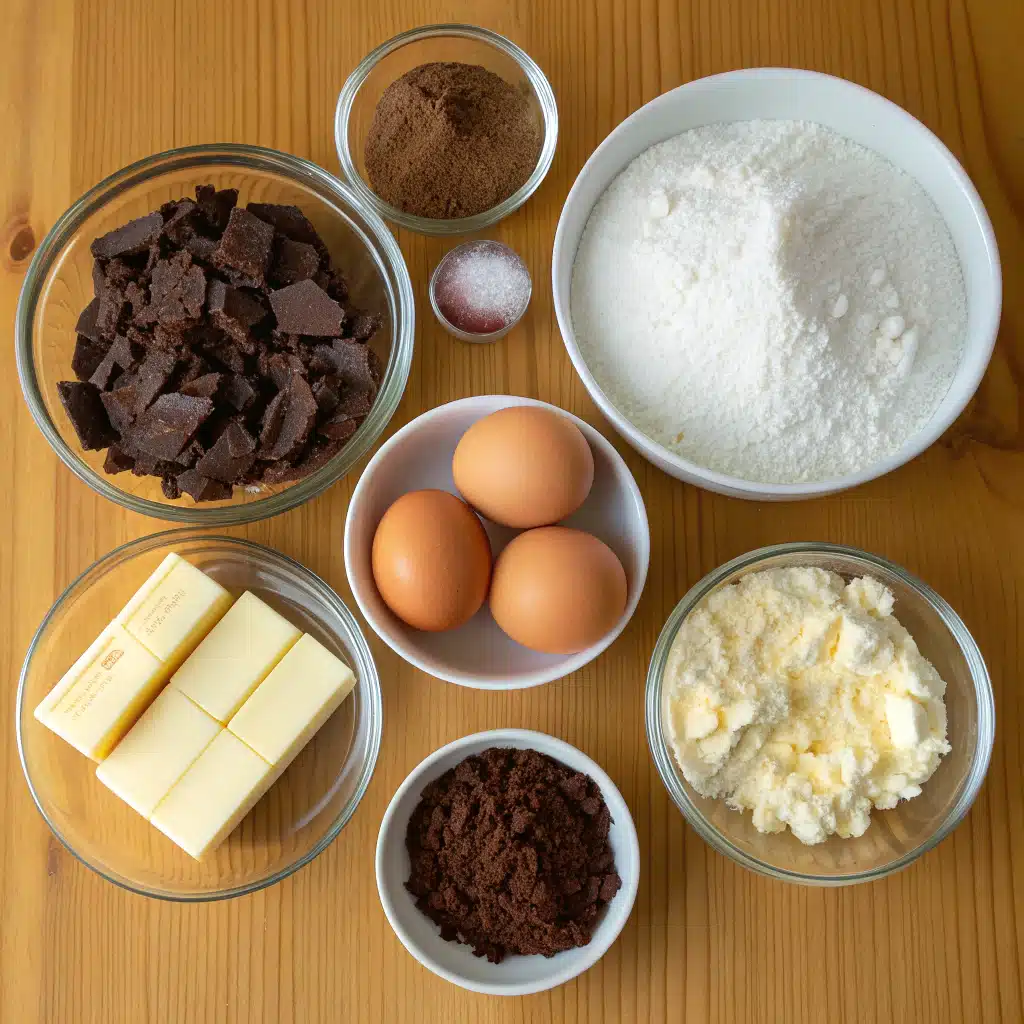
| Ingredient | Amount | Metric |
|---|---|---|
| Butter | ½ cup | 115 g |
| Unsweetened cocoa powder | ⅔ cup | 65 g |
| Powdered sugar | 3 cups | 360 g |
| Evaporated milk | ⅓ cup | 80 ml |
| Vanilla extract | 1 teaspoon | 5 ml |
Step-by-Step Guide to Perfect German Chocolate Cake
Preparing the Chocolate Cake Layers
Preheat your oven to 375°F (190°C). Thoroughly grease two 8-inch or 9-inch round cake pans. For easy removal, cut parchment paper circles to line the bottom of each pan.
In a large bowl, whisk together the dry ingredients: sugar, flour, cocoa powder, baking powder, baking soda, and salt until well combined.
In a separate medium bowl, beat the eggs, then add buttermilk, oil, and vanilla extract. Mix these wet ingredients until smooth and well incorporated.
Gradually combine the wet ingredients with the dry mixture, mixing gently until everything is just incorporated. Don’t overmix at this stage.
Carefully stir in the boiling water. The batter will become quite thin – this is normal and exactly what you want for a moist cake.
Divide the batter evenly between the prepared cake pans.
Bake for 25-35 minutes, depending on your pan size (9-inch pans will require less time). The cake is fully baked when a toothpick inserted into the center comes out clean or with only a few moist crumbs clinging to it.
Let the cakes rest in their pans for about 5 minutes, then carefully turn them out onto wire racks to cool completely.
“Check out our chocolate waffle recipe for another delicious chocolate treat.”
Creating the Coconut-Pecan Frosting
In a medium saucepan, combine the brown sugar, granulated sugar, butter, egg yolks, and evaporated milk over medium heat.
Keep stirring the mixture as you bring it to a gentle boil. This prevents the egg yolks from curdling and ensures a smooth texture.
Continue stirring constantly for 5-7 minutes, until the mixture thickens noticeably. It should coat the back of a spoon and hold a line when you run your finger through it.
Remove from heat and stir in the vanilla extract, chopped pecans, and shredded coconut.
Allow the frosting to cool completely to room temperature. As it cools, it will thicken to a spreadable consistency. This usually takes about 30-45 minutes.
Making the Chocolate Frosting (Optional)
Melt the butter in a medium bowl.
Stir in the cocoa powder until smooth and well-combined.
Alternately add powdered sugar and evaporated milk, beating until you reach a smooth, spreadable consistency.
If needed, adjust the thickness by adding a little more milk to thin it or more powdered sugar to thicken.
Stir in the vanilla extract for flavor depth.
Assembling Your German Chocolate Cake
Set one cooled cake layer on a serving plate or cake stand as the base.
If using the chocolate frosting, spread a thin layer over the top of this first layer. This creates a barrier that helps hold the coconut frosting in place.
Carefully spread half of the coconut-pecan frosting on top of the first layer, leaving about ½ inch from the edge unfrosted.
Position the second cake layer on top of the frosted first layer.
For a traditional look, spread the remaining coconut-pecan frosting just on the top of the cake.
If using chocolate frosting, cover the sides of the cake with it for a finished appearance.
For an extra touch, you can reserve some pecan halves to decorate the top of the cake.
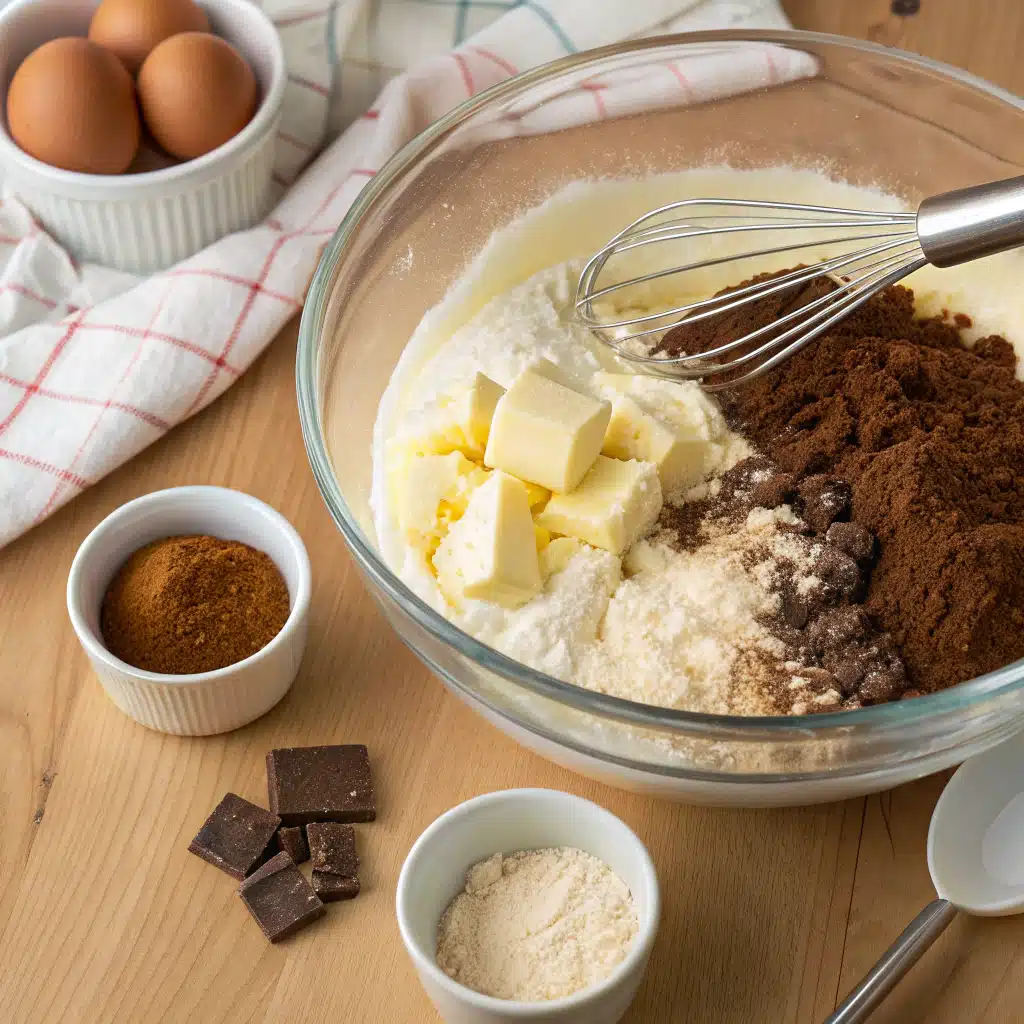
Tips for German Chocolate Cake Success
Cake Layer Perfection
For the most flavorful and moist German chocolate cake, pay special attention to a few key techniques. First, don’t skip the boiling water – it helps bloom the cocoa powder, intensifying the chocolate flavor while creating a tender crumb. Second, measure your flour correctly by spooning it into the measuring cup and leveling it off rather than scooping directly from the container, which can compact the flour and lead to a dense cake.
“Here’s your guide to carrot cake, another classic dessert option.”
Frosting Finesse
The coconut-pecan frosting requires patience and attention. When cooking the custard base, maintain a medium-low heat and stir constantly to prevent the egg yolks from scrambling. The mixture should thicken gradually – rushing this process can lead to a grainy texture. If you’re concerned about egg yolks curdling, you can temper them first by whisking a small amount of the hot sugar-butter mixture into the yolks before adding them to the pan. Additionally, toasting the pecans before adding them to the frosting will enhance their flavor significantly.
Assembly Advice
For a professional-looking cake, allow both the cake layers and frosting to cool completely before assembly. Warm frosting will soak into the cake rather than creating distinct layers. If your cake layers have domed tops, you can level them with a serrated knife for a more uniform appearance. When frosting, place strips of parchment paper under the edges of your cake to keep your serving plate clean. Once frosted, simply slide them out for a pristine presentation.
Storage and Shelf Life
Refrigeration Guidelines
German chocolate cake contains perishable ingredients in the frosting, so proper storage is essential. After assembling the cake, you can keep it at room temperature for up to 24 hours if your kitchen isn’t too warm. For longer storage, refrigeration is necessary. Place the cake in a covered cake carrier or loosely tent with foil, being careful not to disturb the frosting.
“Don’t miss our raspberry ice cream recipe for another delightful dessert option.”
Freezing Options
German chocolate cake freezes remarkably well, allowing you to prepare it well in advance of special occasions. For best results, freeze unfrosted cake layers wrapped tightly in plastic wrap and aluminum foil for up to 3 months. The coconut-pecan frosting can also be frozen separately in an airtight container. Defrost both parts in the refrigerator overnight before putting the cake together. Alternatively, you can freeze a completely assembled cake for up to 2 months – just be sure to let it thaw completely in the refrigerator before serving.
Optimal Freshness Timeline
For the best flavor and texture, enjoy the German chocolate cake within three to five days of baking. The coconut-pecan frosting actually tastes even better the next day as the flavors blend together. If stored properly in the refrigerator, the cake will remain delicious for up to a week, though the texture may gradually become more dense. Allow refrigerated cake to sit at room temperature for 30-60 minutes before serving for the best taste and texture.
Delicious Variations on Classic German Chocolate Cake
Modern Twists
While the classic version is undeniably delicious, contemporary bakers have created numerous variations that build on the original German chocolate cake recipe. For a sophisticated twist, try adding a tablespoon of espresso powder to the cake batter – the coffee enhances the chocolate flavor without adding coffee taste. Another popular variation includes a thin layer of ganache between the cake and coconut-pecan frosting for an extra chocolate punch. Some bakers even add a touch of bourbon or rum to the frosting for a grown-up version with complex flavor notes.
“Discover great ideas like our pistachio cake recipe for more dessert inspiration.”
Alternative Formats
German chocolate cake translates beautifully into other dessert formats. Try making German chocolate cupcakes for portable individual servings – just reduce the baking time to 18-22 minutes. For a quick weeknight treat, German chocolate sheet cake bakes in a 9×13-inch pan and requires no stacking or complicated assembly. German chocolate brownies offer an even richer, fudgier base for the coconut-pecan topping. For a stunning presentation at special occasions, consider a German chocolate layer cake with four thinner layers instead of the traditional two.
Dietary Adaptations
Modern dietary needs have led to many successful adaptations of this classic dessert. For gluten-free German chocolate cake, substitute a quality one-to-one gluten-free flour blend for the all-purpose flour. Those reducing sugar can use coconut sugar in place of some of the granulated sugar for a lower glycemic impact with complementary flavor notes. For dairy sensitivities, coconut milk can replace evaporated milk in the frosting, while plant-based butters substitute well in both cake and frostings. Vegans can replace eggs with flax eggs and use coconut cream-based frosting alternatives that maintain the traditional flavors.
Serving Suggestions
“Want more ideas? Check out our cupcakes basic recipe for more dessert options.”
Presentation Ideas
Elevate your German chocolate cake presentation with thoughtful serving techniques. For a beautiful display, consider decorating the top with additional pecan halves arranged in a circular pattern or chocolate curls scattered across the surface. When slicing, wipe your knife clean between cuts for the neatest presentation. Individual slices look stunning when served on white plates with a dusting of cocoa powder or a small dollop of whipped cream on the side. For special occasions like birthdays, add a ring of chocolate-dipped strawberries around the base of the cake for an impressive visual impact.
Special Occasion Adaptations
German chocolate cake makes a wonderful foundation for celebration cakes. For birthdays, consider adding a decorative chocolate drip edge or fresh berries as garnish. When serving as a holiday dessert, incorporate seasonal elements like sugared cranberries for Christmas or edible flowers for spring celebrations. For wedding tiers, many couples choose German chocolate for one layer of their multi-cake display, often covering the coconut-pecan frosting with a thin layer of fondant or buttercream while preserving the traditional filling between layers.

Frequently Asked Questions About German Chocolate Cake
What goes in German chocolate cake?
German chocolate cake features two main parts: a moist chocolate cake and a coconut-pecan frosting. The cake is made with flour, sugar, cocoa, baking agents, eggs, buttermilk, oil, and vanilla. The frosting combines butter, egg yolks, evaporated milk, sugar, vanilla, pecans, and shredded coconut. Some modern versions add chocolate frosting on the sides, though traditional recipes leave the layers exposed.
What is a misconception about German chocolate cake?
Many assume the cake originated in Germany, but it’s actually American. It was named after Samuel German, who created a sweet baking chocolate for Baker’s Chocolate Company in 1852. The first recipe using his chocolate appeared in a Texas newspaper in 1957 as “German’s Chocolate Cake.” Over time, the apostrophe was dropped, sparking the false belief that the dessert is German.
Why is there coconut in German chocolate cake?
Coconut became essential thanks to the original 1957 recipe, which mixed a custard-like base of egg yolks, sugar, and milk with pecans and sweetened coconut. This combination added a chewy, tropical contrast to the rich chocolate layers, giving the cake its signature flavor and texture.
What is German chocolate cake supposed to taste like?
It should taste deeply chocolatey yet not overly sweet. The frosting delivers a buttery caramel flavor with crunchy pecans and sweet coconut, creating a rich but balanced dessert.
How long will a German chocolate cake last?
At room temperature, it keeps 3–5 days when covered; refrigerated, up to a week. For longer storage, freeze up to 3 months, wrapped tightly to preserve moisture.
Is there cream cheese in German chocolate cake?
No. The traditional frosting uses egg yolks, milk, butter, sugar, pecans, and coconut—not cream cheese. Modern twists may add it, but that’s not authentic.
Conclusion
Why German Chocolate Cake Endures
German chocolate cake has maintained its popularity for over six decades because it offers something truly unique in the dessert world. Its combination of moist chocolate cake with the distinctive coconut-pecan frosting creates a memorable flavor experience that stands apart from other chocolate cakes. The dessert strikes a perfect balance between sophistication and comfort – elegant enough for special occasions yet familiar enough for family gatherings. While food trends come and go, German chocolate cake remains a steadfast favorite because it delivers consistent satisfaction and a taste of nostalgia with every bite.
“Learn more about fudgy brownie recipes for more chocolate dessert options.”
Mastering the Classic
Creating a perfect German chocolate cake is an achievable goal for bakers of all skill levels. The key lies in understanding the techniques that make each component shine – properly blooming the cocoa with boiling water for the cake, patiently stirring the custard base for the frosting until it reaches the ideal thickness, and allowing everything to cool completely before assembly.
With practice and attention to detail, you’ll develop an intuition for how the batter should look, how the frosting should feel when properly cooked, and how to achieve that picture-perfect slice. The skills you gain making German chocolate cake transfer beautifully to other baking projects, making this recipe not just delicious but educational as well.
PrintGerman Chocolate Cake
A rich chocolate cake layered with traditional coconut-pecan frosting for an indulgent dessert experience.
- Prep Time: 30 minutes
- Cook Time: 35 minutes
- Total Time: 1 hour 5 minutes
- Yield: 12 servings 1x
- Category: Dessert
- Cuisine: American
Ingredients
For the Chocolate Cake:
- 2 cups granulated sugar (400 g)
- 1 3/4 cups all-purpose flour (210 g)
- 3/4 cup unsweetened cocoa powder (75 g)
- 1 1/2 teaspoons baking powder (6 g)
- 1 1/2 teaspoons baking soda (7.5 g)
- 1 teaspoon salt (5 g)
- 2 large eggs
- 1 cup buttermilk (240 ml)
- 1/2 cup oil (vegetable or canola oil) (120 ml)
- 2 teaspoons vanilla extract (10 ml)
- 1 cup boiling water (240 ml)
For the Coconut Frosting:
- 1/2 cup light brown sugar (100 g)
- 1/2 cup granulated sugar (100 g)
- 1/2 cup butter (115 g)
- 3 large egg yolks
- 3/4 cup evaporated milk (180 ml)
- 1 Tablespoon vanilla extract (15 ml)
- 1 cup chopped pecans (120 g)
- 1 cup shredded sweetened coconut (80 g)
For the Chocolate Frosting:
- 1/2 cup butter (115 g)
- 2/3 cup unsweetened cocoa powder (65 g)
- 3 cups powdered sugar (360 g)
- 1/3 cup evaporated milk (80 ml)
- 1 teaspoon vanilla extract (5 ml)
Instructions
- Preheat oven to 375°F. Grease two 8 or 9-inch round pans and line bottoms with parchment paper.
- Whisk together sugar, flour, cocoa, baking powder, baking soda and salt in a large bowl.
- In a separate bowl, combine eggs, buttermilk, oil and vanilla, then mix with dry ingredients.
- Slowly stir in the boiling water — the batter will be quite thin — then divide it evenly between the prepared pans.
- Bake for 25-35 minutes or until toothpick inserted comes out clean. Cool in pans for 5 minutes, then transfer to wire racks.
- For frosting, combine brown sugar, granulated sugar, butter, egg yolks, and evaporated milk in a saucepan over medium heat.
- Stir constantly until mixture thickens, about 5-7 minutes.
- Remove from heat and stir in vanilla, pecans, and coconut. Cool completely.
- For chocolate frosting, melt butter, stir in cocoa powder, then alternately add powdered sugar and milk until spreadable.
- Assemble cake by placing one layer on serving plate, adding chocolate frosting and half the coconut frosting.
- Add second layer, frost sides with chocolate frosting, and top with remaining coconut frosting.
Notes
Nutrition facts are estimates and may vary based on ingredients used, portion sizes, and preparation methods.
Nutrition
- Serving Size: 12 servings
- Calories: 680
- Sugar: 78g
- Sodium: 410mg
- Fat: 32g
- Saturated Fat: 14g
- Trans Fat: 0g
- Carbohydrates: 95g
- Fiber: 5g
- Protein: 7g
- Cholesterol: 105mg
Keywords: German chocolate cake, coconut pecan frosting, chocolate dessert, layer cake
Let’s connect! Follow me for more Joylicious Recipes: Facebook, Instagram, Pinterest