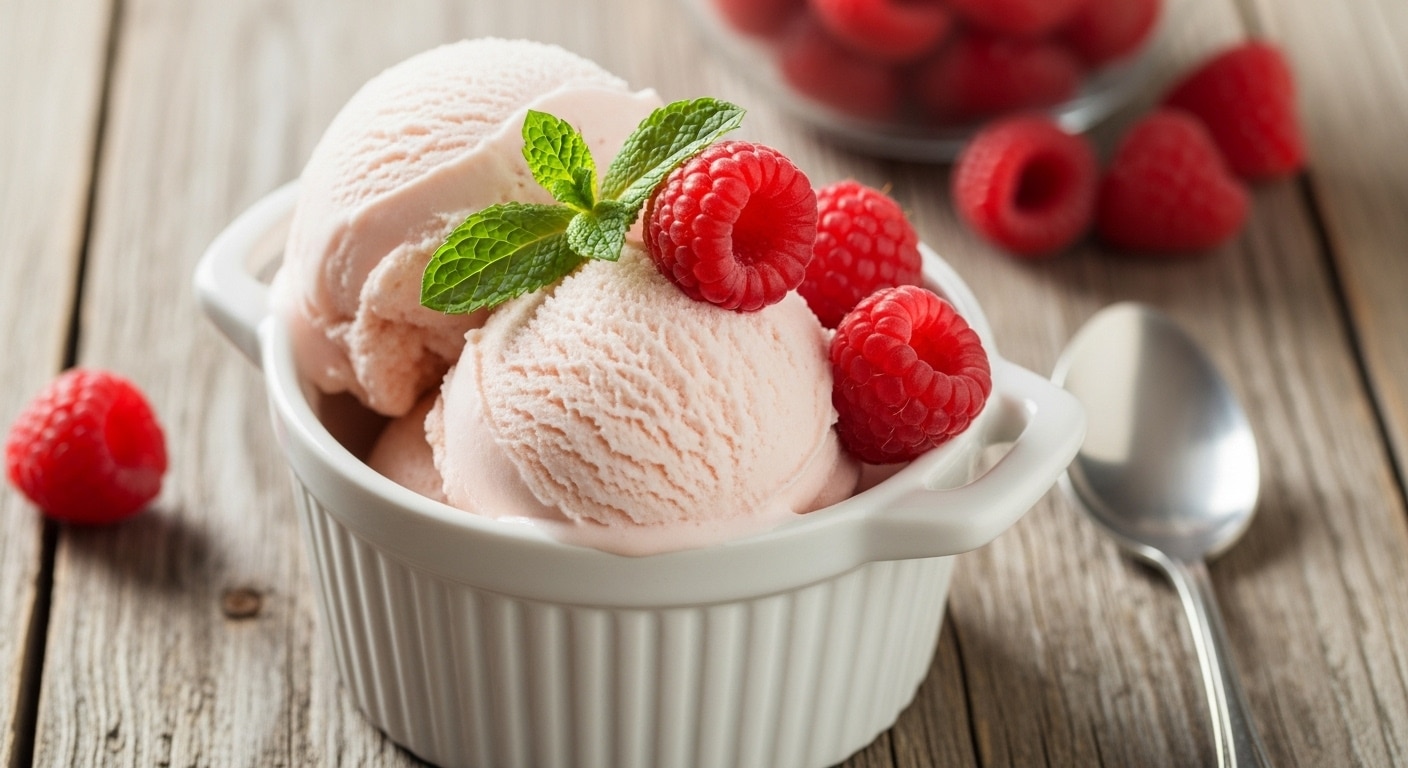
Raspberry Ice Cream: The Best Homemade Recipe + Fruity Twists
Raspberry ice cream is a creamy, fruity dessert that’s perfect for hot days or sweet cravings. It blends rich dairy with the tart, vibrant flavor of real raspberries. The result is a treat that’s both refreshing and satisfying.
In this guide, you’ll learn how to make homemade raspberry ice cream from scratch. We’ll cover everything—from ingredients to expert tips for a smooth, scoopable texture. You’ll also discover flavor variations, like black raspberry or even dairy-free options.
Plus, we’ll answer your top questions, like whether blue raspberry ice cream exists, and how to add fresh fruit without making your ice cream icy. Check out our vegan ice cream recipe for a plant-based option that’s just as delicious.
Let’s dive in and make your freezer a little more joyful—one berry scoop at a time.
Why Raspberry Ice Cream Deserves a Spot in Your Freezer
The Irresistible Taste of Raspberry Ice Cream
Without a doubt, raspberry ice cream offers a flavor experience that’s hard to beat. While many ice creams lean heavily on sweetness, raspberry introduces a refreshing tartness that makes each bite feel balanced and bright. It’s not just another fruity dessert—it’s a layered, flavorful treat that keeps you coming back.
Moreover, the contrast between the creamy base and the bold raspberry notes gives this ice cream a special place in dessert menus. It’s rich, but not too heavy. Tart, but not sour. Altogether, it’s a refreshing option, especially when compared to chocolate or caramel-based varieties.
In addition to taste, texture plays a big role. Raspberry ice cream often includes fine raspberry seeds, giving it a slight crunch that contrasts beautifully with its smooth base. Thanks to its naturally bold color, it’s also one of the most eye-catching frozen desserts you can make or serve.
Even better, it pairs well with other fruits. For instance, mix it with strawberries or blueberries to create a colorful triple-berry scoop. Or serve it between two cookies for a berry ice cream sandwich everyone will love.
Don’t miss our strawberry cheesecake ice cream for another berry-forward dessert you can try next.
Health Benefits of Raspberries in Frozen Desserts
Not only is raspberry ice cream delicious, but it can also be nutritious. Raspberries are naturally low in calories and packed with fiber, vitamin C, and powerful antioxidants. So, when you use real fruit instead of artificial flavoring, you’re adding more than just taste—you’re adding health benefits.
Here’s a simple look at the nutrients found in a single cup of raspberries:
| Nutrient | Per 1 Cup (123g) |
|---|---|
| Calories | 64 |
| Dietary Fiber | 8g |
| Vitamin C | 54% Daily Value |
| Manganese | 41% Daily Value |
| Antioxidants | Very High |
Because of their high fiber and antioxidant content, raspberries support digestion and fight inflammation. So, if you’re trying to make better dessert choices, this fruit is a great ingredient to start with.
Even though ice cream has sugar and cream, you can still make it healthier. For example, use less sugar or swap heavy cream for Greek yogurt or coconut milk. These small changes can go a long way in boosting the health value of your dessert.
Discover great ideas like blueberry ice cream for more healthy fruit-based frozen treats.
How to Make the Perfect Raspberry Ice Cream at Home
Ingredients You’ll Need (With Tips for Best Results)
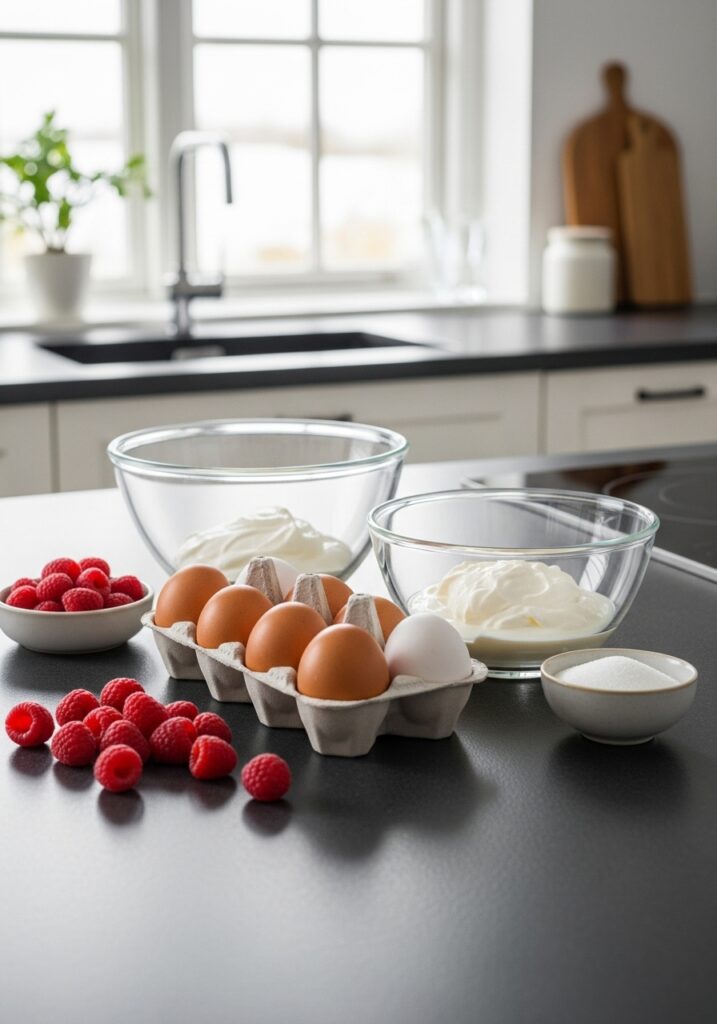
Making raspberry ice cream at home is easier than you think—especially when you have the right ingredients. This custard-based version gives you a rich, smooth, and flavorful ice cream that’s hard to beat.
Here’s what you’ll need:
- 4 egg yolks from large eggs
- 100g (½ cup) granulated sugar
- Pinch of fine sea salt
- 480g (2 cups) heavy cream
- 340g ripe raspberries, fresh or frozen (taste first if fresh!)
- 1 tablespoon freshly squeezed lemon juice
Each ingredient serves a purpose. The egg yolks give the ice cream a creamy texture. The sugar sweetens it just enough without overpowering the raspberry flavor. And that splash of lemon juice? It brightens everything up and makes the berry taste even fresher.
Pro Tip: If using frozen raspberries, don’t thaw them first. Toss them straight into the blender for best flavor and texture. Also, if you want an extra burst of flavor, a dash of vanilla or even a hint of almond extract can work wonders.
Looking for inspiration? Try our cherry Garcia ice cream if you want to mix fruits and chocolate.
Step-by-Step Instructions for Creamy Raspberry Ice Cream
To get that rich, scoopable texture, follow these steps exactly. The custard base is what makes this recipe stand out. Don’t rush the cooking or cooling process—your patience will pay off.
- Cook the custard base:
In a medium pot, combine sugar, salt, egg yolks, and heavy cream. Stir gently over medium-low heat until the mixture thickens slightly and reaches 165°F. You’ll know it’s ready when it coats the back of a spoon. - Strain and chill:
Pour the hot custard through a fine mesh sieve into a clean bowl to remove any bits of cooked egg. Set it aside to cool. - Prepare the raspberry puree:
Pulse the raspberries using a food processor or high-speed blender. Then press the puree through a sieve into the custard base, removing seeds. Scrape the bottom of the sieve to get every drop. - Add lemon juice and chill overnight:
Stir in the lemon juice until fully combined. Cover the bowl with plastic wrap and refrigerate for at least 6–8 hours, or overnight. This step is crucial for proper texture. - Churn the mixture:
Transfer the chilled mixture to your ice cream maker and churn it as directed by the manufacturer. Usually, this takes about 20–25 minutes. - Freeze and enjoy:
Once churned, transfer the ice cream into a freezer-safe, airtight container. Let it freeze for a few additional hours until it firms up. It can be stored in the freezer for up to a month.
Don’t miss our mini ice cream cones for the perfect serving idea that pairs with any homemade ice cream.
Key Techniques for Smooth & Creamy Raspberry Ice Cream
Why Custard Base Is a Game-Changer
When it comes to texture, a custard base makes all the difference. It creates a creamy, rich consistency that’s smooth and scoopable—not icy or grainy like some no-churn recipes. The secret lies in the egg yolks.
Egg yolks contain natural emulsifiers. These help bind the cream, sugar, and fruit together, creating a silkier texture. Without a custard base, your raspberry ice cream might turn out thin or icy, especially when using high-water fruits like berries.
If you’re short on time, you can skip the custard step—but be prepared for a lighter texture. For the best results, always follow a method that includes cooking the base to 165°F. This ensures the yolks are safe to eat and your final product is ultra-smooth.
Looking for a creamy twist? Check out our strawberry cheesecake ice cream for another rich and fruity option.
Chilling, Churning, and Freezing Tips for Perfection
To get a professional-level finish, each stage of the process matters. Let’s break it down:
1. Chill thoroughly before churning:
Always cool your ice cream mixture for at least 6–8 hours, or overnight. A cold base churns better and traps more air, which makes the final ice cream softer and easier to scoop.
2. Don’t overfill the ice cream machine:
Leave space in the churn bowl for the mixture to expand. Overfilling traps less air and can result in a dense, icy texture.
3. Use the right freezer container:
After churning, transfer the ice cream into a shallow, airtight container. This allows the ice cream to freeze faster and more evenly.
4. Press plastic wrap directly on the surface:
Place a layer of plastic wrap directly over the surface of the ice cream before sealing the container. This helps stop ice crystals from developing on top.
5. Let it soften slightly before scooping:
Frozen raspberry ice cream straight from the freezer can be hard. Let it sit on the counter for 5–10 minutes before serving for a smoother scoop.
Check out our ice cream cones guide to learn how to pair your homemade ice cream with the perfect cone.
With these techniques, you’ll always get consistent results. Each tip may seem small, but together they help you avoid common issues like icy texture or uneven freezing.
In the next section, we’ll explore fun variations of raspberry ice cream you can try at home—from bold black raspberry to dairy-free fruit blends.
Raspberry Ice Cream Variations You’ll Love
Black Raspberry vs. Red Raspberry Ice Cream
If you think all raspberry ice cream tastes the same, think again. The type of raspberry you use can change the flavor more than you might expect.
Red raspberries are the most common. They taste sweet but also a little tart. This gives raspberry ice cream its bold, fruity kick. Red raspberries are also easy to find fresh or frozen in most grocery stores.
Black raspberries, on the other hand, have a deeper, almost wine-like flavor. They’re sweeter and more complex than red raspberries. When used in ice cream, they give it a darker color and richer taste.
So which is better? It depends on your taste. If you like tangy, bright flavors, go with red raspberries. If you prefer something more mellow and smooth, try black raspberries.
Want more fruity combos? Check out our blueberry ice cream recipe for another colorful and rich flavor.
Low-Sugar, Vegan, and Dairy-Free Raspberry Ice Cream Ideas
You don’t need heavy cream or refined sugar to enjoy raspberry ice cream. There are plenty of easy swaps that still give you a creamy, delicious result—no dairy required.
Vegan Raspberry Ice Cream:
Swap the heavy cream for full-fat coconut milk or cashew cream. Both give a rich texture while keeping it plant-based. Sweeten naturally with maple syrup or agave nectar.
Low-Sugar Version:
Reduce the sugar and add a few drops of liquid stevia or monk fruit extract. You can also use ripe bananas or dates to add sweetness without processed sugar.
Dairy-Free Tips:
Choose non-dairy milks like almond, oat, or coconut. Full-fat versions give the best texture. Also, add a tablespoon of coconut oil to help the ice cream stay soft and creamy.
Here’s a simple chart to guide your swaps:
| Ingredient | Vegan or Low-Sugar Swap |
|---|---|
| Heavy Cream | Full-fat coconut milk |
| Sugar | Maple syrup, monk fruit, or stevia |
| Egg Yolks | Cornstarch or arrowroot powder |
| Milk | Almond or oat milk |
Don’t miss our vegan ice cream recipe for more plant-based frozen treats that deliver on both taste and texture.
With a few tweaks, you can enjoy raspberry ice cream in many forms—classic, creamy, or completely dairy-free. In the next part, we’ll show you how to fold in fresh fruit the right way to keep your ice cream smooth and flavorful.
Enhancing Flavor – How to Add Fresh Fruit into Ice Cream
Fresh vs. Frozen Fruit in Ice Cream – Which Is Better?
Adding real fruit to ice cream makes it more flavorful and naturally sweet. But should you use fresh or frozen fruit? The answer depends on the result you’re going for.
Fresh raspberries often have a stronger, more natural flavor—especially when they’re in season. They’re easy to mash or blend and mix right into your base. However, they also carry more water, which can cause ice crystals if not prepared the right way.
Frozen raspberries are flash-frozen at peak ripeness, so you get strong flavor year-round. They’re also more convenient. Just make sure to blend them directly from frozen, or you might end up with a watery base.
If you’re going for the creamiest texture, many ice cream experts recommend blending frozen fruit into a smooth puree before adding it to the mix. This gives you a thick, flavorful swirl without any icy chunks.
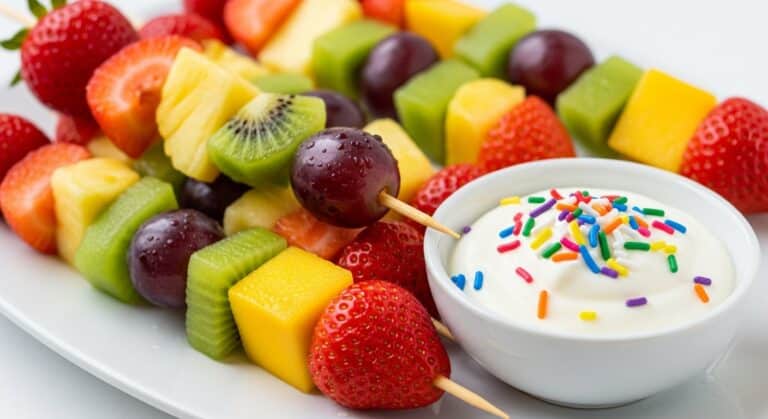
Don’t miss our fruit kabobs guide for more fun ways to use fresh fruit in desserts.
How to Add Fruit Puree Without Icy Texture
One common mistake in homemade ice cream is adding chopped fruit directly into the mix. This often results in frozen chunks of fruit that feel hard and icy—not what you want in a smooth dessert.
To avoid this, follow these simple tips:
1. Puree the fruit first:
Use a food processor or blender to create a smooth raspberry puree. This helps distribute the flavor evenly and avoids chunky bites.
2. Strain the puree:
Strain the mixture through a fine mesh sieve to get rid of seeds and pulp. You’ll be left with a silky fruit mixture that blends better with your base.
3. Add after cooking, not before:
If you’re making a custard base, wait until it cools before mixing in the puree. Adding fruit too early can mess with texture or make the flavor taste cooked.
4. Balance the water content:
If the puree feels watery, reduce it in a saucepan over low heat. Let it simmer until thicker. This gives you a strong flavor without extra moisture.
5. Chill the fruit mixture:
Before adding to your base, make sure the fruit puree is completely cold. This keeps the overall mix at the right temperature for churning.
Want to go beyond raspberries? Try combining them with other fruits like peaches, mangos, or blueberries for a custom blend. Just make sure to treat each fruit the same way—blend, strain, and chill.
Discover great ideas like our watermelon sorbet recipe for more frozen fruit desserts that keep things smooth and fresh.
With the right method, adding real fruit makes your raspberry ice cream not only tastier but also more visually stunning. Up next, let’s look at the best toppings and ways to serve your creation for any occasion.
Raspberry Ice Cream Toppings and Serving Ideas
Best Toppings to Complement Raspberry Flavors
Once you’ve made your raspberry ice cream, the fun truly begins—adding toppings. Not only do they boost flavor, but they also add texture and color that make each scoop stand out.
Here are some of the best toppings to try:
- Dark chocolate shavings or chips: These add a rich, slightly bitter contrast to the fruity sweetness.
- Crushed graham crackers or shortbread cookies: They bring a buttery crunch that complements the soft creaminess.
- Fresh berries: For extra fruitiness, add strawberries, blueberries, or even more raspberries.
- Whipped cream: This light topping softens the tart flavor and adds fluffiness.
- Chopped nuts: Almonds or pistachios offer a crunchy, nutty depth.
- Honey or maple drizzle: A little drizzle adds warmth and natural sweetness.
Moreover, if you’re looking to go beyond a plain scoop, try building a sundae. Layer raspberry ice cream with chocolate sauce, fresh berries, and whipped cream for a dessert that feels extra special. Alternatively, sandwich a scoop between cookies to create a chewy, creamy ice cream sandwich.
Don’t miss our mini ice cream cones for creative ways to serve single scoops at parties or family events.

How to Serve for Parties, Kids, and Special Occasions
Raspberry ice cream is incredibly versatile. Whether you’re hosting a fancy dinner or serving dessert at a kid’s birthday, there are plenty of ways to make it shine.
1. Kid-Friendly Cones:
For younger guests, scoop raspberry ice cream into sugar cones and top with mini marshmallows or sprinkles. In fact, letting kids add their own toppings makes dessert even more fun.
2. Elegant Bowls for Guests:
On the other hand, for formal dinners, serve it in glass bowls with a mint sprig and a drizzle of dark chocolate. This gives it a classy, restaurant-style look without much effort.
3. Party Sundae Bar:
At large gatherings, a DIY sundae bar is a hit. Set out bowls filled with toppings like caramel sauce, berries, crushed cookies, and chopped nuts. Guests will enjoy building their own creations.
4. Raspberry Ice Cream Floats:
For a refreshing twist, drop a scoop into sparkling water or lemon soda. Not only is it tasty, but it’s also a fun summer drink that doubles as dessert.
5. Holiday-Themed Presentation:
During the holidays, dress up your raspberry ice cream with white chocolate curls and a few pomegranate seeds. As a result, you get a red-and-white treat perfect for Christmas, Valentine’s Day, or even the Fourth of July.
Looking for a fun way to present frozen desserts? Try our ice cream cone cupcakes for a party-ready option that kids and adults will love.
By using the right toppings and presentation, your homemade raspberry ice cream can be the star of any event. In the next section, we’ll explore how raspberry ice cream is enjoyed around the world—from black raspberry in the U.S. to fruity gelatos in Europe.
Raspberry Ice Cream Around the World
Popular Raspberry Flavors in Different Countries
Raspberry ice cream may be popular in the U.S., but it’s also enjoyed in many other parts of the world. Each country adds its own twist, making this fruity dessert even more exciting.
In Italy, raspberry gelato is a summer favorite. It’s smoother and denser than regular ice cream, and it often uses fresh fruit for a bold, natural flavor. Italians sometimes pair raspberry with lemon or dark chocolate for added depth.
In France, raspberry sorbet is light, elegant, and often served between courses to cleanse the palate. While it doesn’t contain cream, the smooth texture and intense berry taste make it just as satisfying.
In Germany, you might find raspberry ice cream paired with hazelnuts or layered into cakes and desserts. It’s not just for cones—it’s used in baked treats and parfaits too.
In Japan, raspberry is a newer flavor but growing in popularity. It’s often combined with green tea or yuzu for a more balanced and interesting profile.
Meanwhile, in South America, raspberry flavors are sometimes blended with tropical fruits like passionfruit or mango. This gives the ice cream a sweet-tart twist that’s both refreshing and bold.
Wherever you go, raspberry ice cream continues to delight taste buds in new and creative ways.
Cultural Takes: Blue Raspberry and Black Raspberry Explained
You’ve probably seen blue raspberry flavor in candies or slushies. But have you ever had blue raspberry ice cream?
Surprisingly, blue raspberries don’t exist in nature. The flavor was created for the candy industry and is based loosely on whitebark raspberries, which have a slight blue tint. The blue color simply made it easier to stand out among red candies.
While blue raspberry ice cream is rare, some shops offer it as a novelty. It’s more about fun color than true fruit flavor, often tasting like a sweet, tangy version of regular raspberry.
On the other hand, black raspberry is very real—and very flavorful. It’s darker, richer, and often used in gourmet ice creams and desserts. The flavor is deeper and slightly floral, making it a perfect base for high-end frozen treats.
So, while blue raspberry is more playful and artificial, black raspberry brings bold, natural flavor that elevates your dessert.
Discover more frozen flavor inspiration in our strawberry cheesecake ice cream—a creamy, fruity classic with global appeal.
Raspberry flavors may vary by country, but one thing stays the same: they’re all delicious in their own way. From gelatos to floats to cakes, raspberry ice cream continues to evolve across cultures.
Next, we’ll answer some of the most common questions about raspberry ice cream—from fruit techniques to rare flavors and fun facts.
Raspberry Ice Cream FAQs Answered
What Flavor Is Black Raspberry Ice Cream?
Black raspberry ice cream has a deep, rich berry flavor that’s slightly sweeter and less tart than red raspberry. It often tastes smoother and more complex, with earthy and floral notes. Many people describe it as a mix between raspberry and blackberry, but with its own unique twist.
The dark purple color also makes it stand out in any ice cream lineup. It’s often used in gourmet brands because of its bold taste and vibrant look.
Is Blue Raspberry Ice Cream a Thing?
Yes, it is—but it’s rare. Blue raspberry ice cream is mostly found in novelty shops or at carnivals. It’s usually made from artificial flavoring and doesn’t taste like real raspberries.
The flavor is more sweet than tart, with a hint of citrus. While it’s fun and colorful, it’s not a natural or fruit-based ice cream like red or black raspberry versions.
What Is the Rarest Flavor of Ice Cream?
Some of the rarest ice cream flavors in the world include:
Lobster Ice Cream – Found in Maine, made with real lobster chunks.
Wasabi Ice Cream – A spicy-sweet mix popular in Japan.
Black Garlic Ice Cream – Rich, savory, and surprisingly smooth.
Cactus Pear Ice Cream – Sweet, floral, and mostly seen in Mexico.
Compared to these, raspberry ice cream is much more common—but still unique when you make it from scratch.
What’s the Difference Between Raspberry and Black Raspberry Taste?
Red raspberry is bright, tart, and a bit acidic. It has a clean, refreshing flavor that stands out. Black raspberry is darker, sweeter, and more mellow. The taste is smoother, with hints of wild berries or even grape.
They look similar at first glance, but their flavors are very different. Each works well in ice cream, depending on your flavor preference.
Final Tips + Storage & Serving Recommendations
How to Store Raspberry Ice Cream for Maximum Freshness
Once you’ve churned and frozen your raspberry ice cream, the next step is proper storage. Storing it the right way helps maintain its creamy texture and bold berry flavor.
Use an airtight, freezer-safe container. A shallow container works best because it freezes the ice cream evenly. Metal tins or plastic tubs with tight-fitting lids are both great choices.
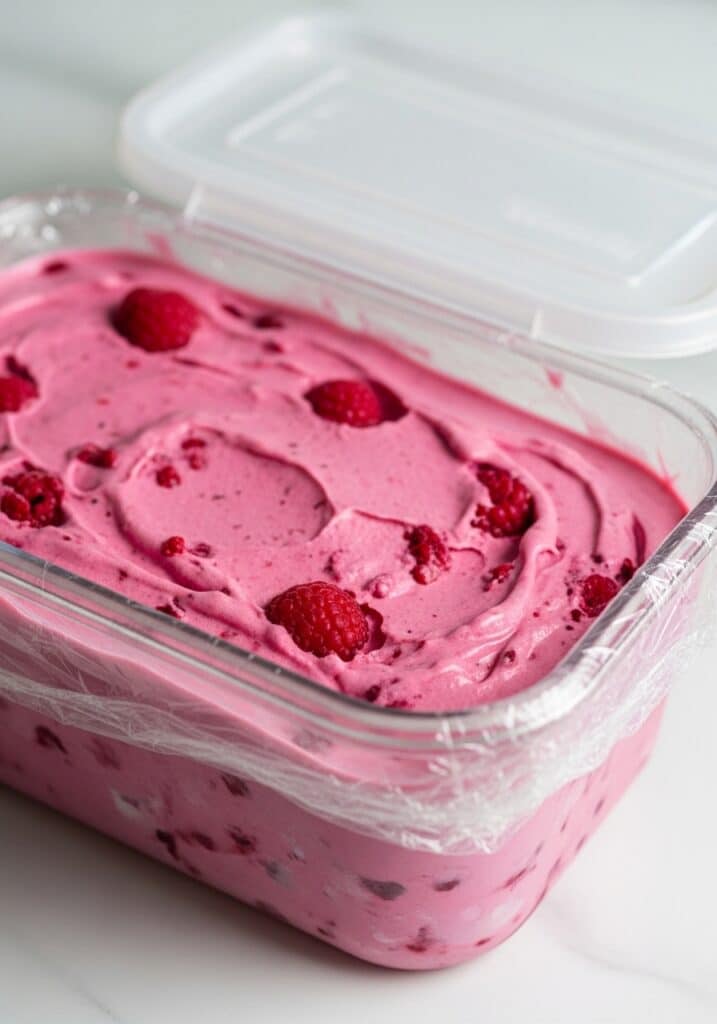
Place a sheet of plastic wrap directly on the surface before closing the lid. This helps prevent ice crystals from forming and keeps the surface smooth.
Keep your freezer at a consistent temperature. Avoid placing the container near the freezer door, where the temperature can rise when opened. Instead, store it at the back of the freezer where it stays coldest.
Label your ice cream with the date. Homemade raspberry ice cream is best enjoyed within one month for peak flavor and texture.
Want to explore more freezing tips? Learn more in our guide to ice cream cones—a helpful pairing to every frozen treat.
Creative Ways to Use Leftover Raspberry Ice Cream
If you have leftover raspberry ice cream, don’t let it go to waste. There are plenty of fun ways to enjoy it beyond the scoop!
- Ice Cream Sandwiches: Place a scoop between two cookies or brownies. Freeze again for a grab-and-go treat.
- Milkshakes: Blend a scoop or two with milk and a splash of vanilla for a fruity twist on a classic shake.
- Fruit Parfaits: Layer it with granola, yogurt, and fresh berries in a cup or jar.
- Ice Cream Cake Layers: Spread raspberry ice cream between cake rounds for a refreshing summer dessert.
- Float It: Add a scoop to sparkling lemonade or lemon-lime soda for a refreshing float.
Looking for more fun desserts? Don’t miss our ice cream cone cupcakes—a playful way to enjoy ice cream in cake form.
Raspberry Ice Cream: The Best Homemade Recipe + Fruity Twists

Raspberry ice cream made easy. Enjoy this rich, fruity homemade recipe with expert tips, variations, and fun serving ideas.
- Prep Time: 10
- Chill Time: 8 hours
- Cook Time: 15
- Total Time: 8 hours 25 minutes
- Yield: 8 1x
- Category: Dessert
- Cuisine: American
Ingredients
4 egg yolks from large eggs
100g or ½ cup granulated sugar
Pinch of fine sea salt
480g or 2 cups heavy cream
340g ripe raspberries (fresh or frozen)
1 tablespoon freshly squeezed lemon juice
Instructions
Make the custard base:
In a medium saucepan, whisk together egg yolks, sugar, salt, and cream. Cook over medium-low heat, stirring constantly, until the mixture thickens slightly and reaches 165°F.Strain and cool:
Pour the custard through a fine mesh sieve into a bowl to remove any solids. Let it cool to room temperature.Puree the raspberries:
Blend raspberries in a food processor until smooth. Strain the puree through a mesh sieve to remove seeds.Combine flavors:
Stir the raspberry puree and lemon juice into the custard. Mix well and cover with plastic wrap, pressing it directly on the surface.Chill:
Refrigerate for at least 6 hours or overnight for best results.Churn:
Pour the chilled mixture into your ice cream machine. Churn according to manufacturer instructions, about 20–25 minutes.Freeze:
Transfer the churned ice cream to a freezer-safe container. Cover with plastic wrap and seal. Freeze for several hours until firm.
Notes
If using frozen raspberries, blend directly—no need to thaw.
For a seedless finish, strain the puree thoroughly.
Add ½ tsp vanilla extract for extra depth, if desired.
Ice cream will keep for up to 1 month in an airtight container.
Nutrition facts are estimates and may vary based on ingredients used, portion sizes, and preparation methods
Nutrition
- Serving Size: ½ Cup Serving
- Calories: 230 kcal
- Sugar: 14g
- Sodium: 45mg
- Fat: 17g
- Carbohydrates: 16g
- Fiber: 2g
- Protein: 3g
- Cholesterol: 120mg
Keywords: lemon juice, egg yolks,white sugar, whole milk, vanilla, fresh raspberries,raspberry puree, frozen raspberries, Heavy whipping cream, half cream, sea salt
Let’s connect! Follow me for more Joylicious Recipes: Facebook, Instagram, Pinterest