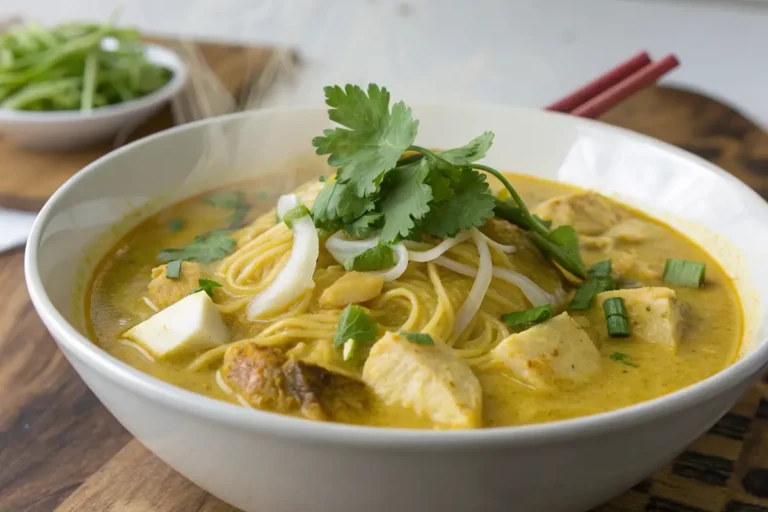
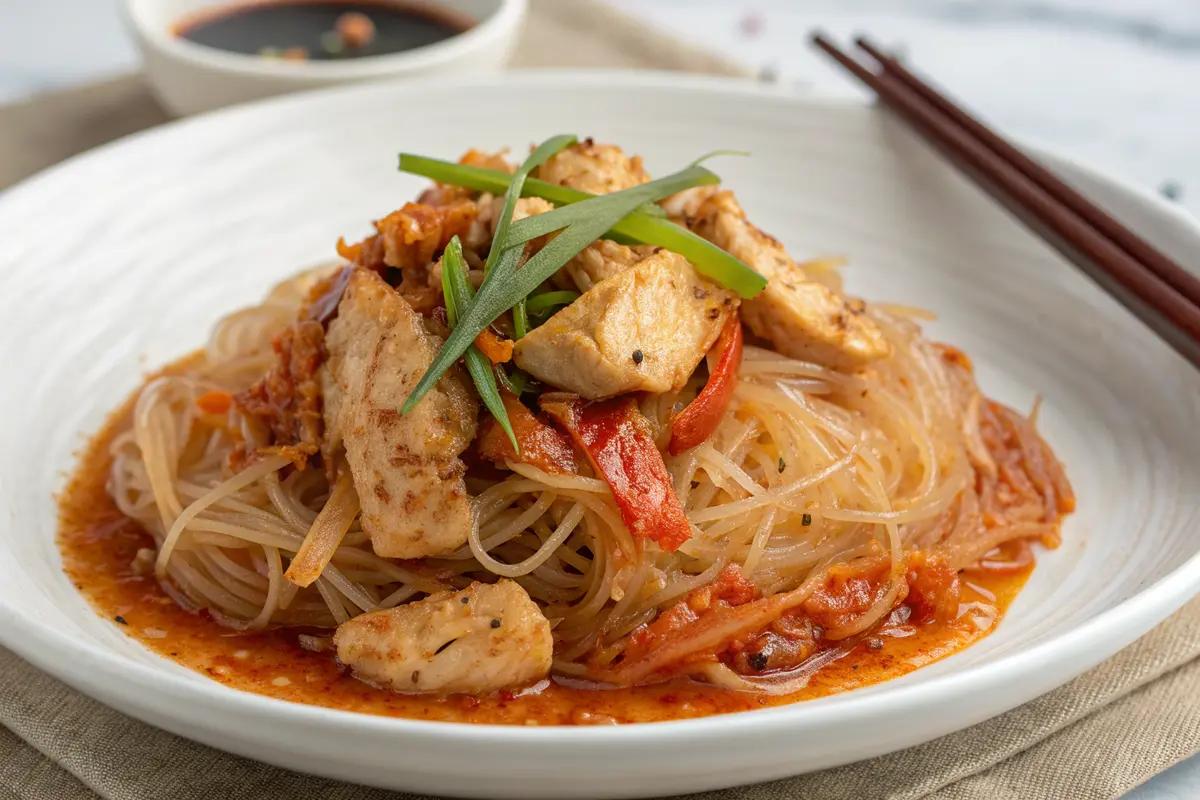
Spicy-Sweet Gochujang Chicken Glass Noodles: A Korean-Inspired Delight
A Perfect Blend of Flavors and Textures
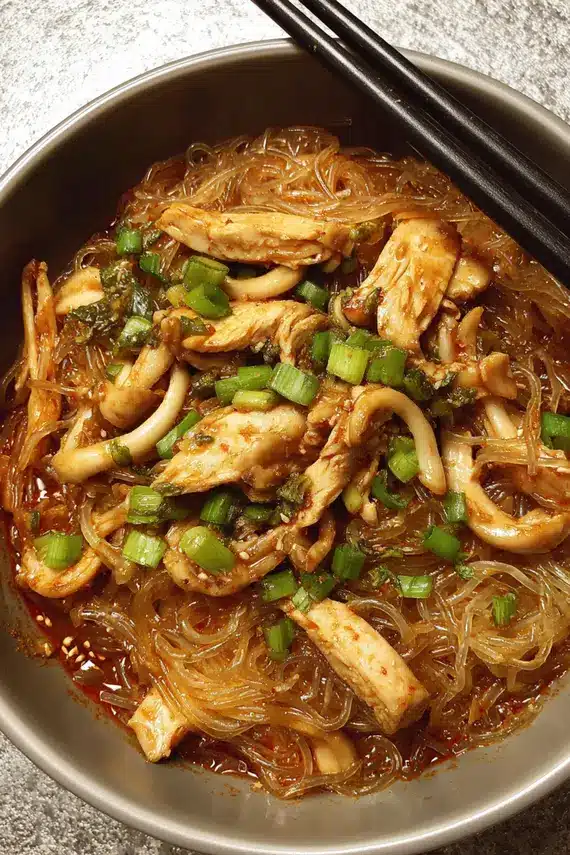
Gochujang Chicken Glass Noodles combines the sweet-spicy complexity of Korean chili paste with tender chicken and chewy, translucent noodles for a dinner that’s both satisfying and vibrant. The glossy sauce clings to each strand, delivering a perfect balance of sweet, savory, and spicy notes with every bite. “The Spicy Chicken Ramen uses similar flavor-building techniques to create a harmonious blend of heat and umami.”
This delicious dish makes an impressive yet easy weeknight dinner, weekend lunch, or potluck contribution. Serve it hot as a main course or chilled as a refreshing noodle salad – either way, the bold flavors and contrasting textures make this a standout meal that’s sure to become a regular in your cooking rotation.
Essential Components for Your Korean-Inspired Noodle Bowl
Building Layers of Flavor
The beauty of this gochujang chicken dish lies in its balance of ingredients that work together to create a memorable meal. Each component plays an essential role in developing the signature flavor profile.
| Category | Ingredients |
|---|---|
| Noodles | 8 oz glass noodles (dangmyeon or sweet potato starch noodles) |
| Protein | 2 chicken breasts (about 1 pound), thinly sliced |
| Sauce Base | 2 tbsp gochujang paste 2 tbsp soy sauce 1 tbsp honey 2 cloves garlic, minced 1 tsp sesame oil |
| Aromatics | 1 tablespoon fresh ginger, grated 3 green onions, sliced (white parts for cooking, green parts for garnish) 2 cloves garlic, minced |
| Vegetables | 1 red bell pepper, thinly sliced 1 carrot, julienned 2 cups baby spinach 1/2 cup sliced mushrooms (shiitake or cremini) |
| Garnishes | 1 tsp toasted sesame seeds 1 tbsp cilantro, chopped (optional) Lime wedges Sliced cucumber |
| Optional Flavor Boosters | 1 tbsp rice vinegar (for brightness) 1 tbsp brown sugar (for extra sweetness) 1/2 tsp gochugaru (Korean chili flakes) for additional heat 1 tbsp mirin (sweet rice wine) |
“The Chicken Pho Noodle Soup demonstrates how the right combination of aromatics and spices can transform a simple noodle dish into something extraordinary.”
Crafting Perfect Gochujang Chicken Glass Noodles: Your Cooking Guide
Preparing Each Component for Maximum Flavor
Follow these carefully expanded instructions to ensure each element of your dish develops its full flavor potential while maintaining proper textures.
- Prepare the noodles: Soak glass noodles in cold water for 15-20 minutes until softened. Then cook according to package directions, usually 4-6 minutes in boiling water until transparent and chewy but not mushy. Drain immediately, rinse under cold water to stop cooking, and toss with 1/2 teaspoon sesame oil to prevent sticking. Set aside.
- Create the gochujang sauce: In a medium bowl, whisk together gochujang paste, soy sauce, honey, minced garlic, grated ginger, and sesame oil until completely smooth. For a more complex sauce, add optional rice vinegar and/or brown sugar. The sauce should have a glossy appearance and smooth consistency.
- Prep protein and vegetables: Slice chicken breasts against the grain into thin strips (about 1/4-inch thick) for quick, even cooking. Julienne vegetables to similar sizes for consistent cooking times. Pat chicken dry with paper towels to promote better browning.
- Cook the chicken: Heat 1 tablespoon vegetable oil in a large skillet or wok over medium-high heat until shimmering. Add chicken in a single layer (work in batches if needed) and cook undisturbed for 2-3 minutes until golden brown on the bottom. Stir and continue cooking until no longer pink, about 2-3 more minutes. The chicken should be just cooked through with slightly crispy edges.
- Add aromatics: Lower heat to medium, then add white parts of green onions, remaining minced garlic, and ginger to the chicken. Stir-fry for 30-45 seconds until fragrant but not burned. The aromatics should sizzle gently and become aromatic.
- Introduce vegetables: Add bell pepper, carrots, and mushrooms to the skillet. Stir-fry for 2-3 minutes until vegetables begin to soften but still maintain some crispness. They should be vibrant in color and slightly tender but not limp.
- Combine with sauce: Pour the prepared gochujang sauce over the chicken and vegetable mixture. Stir continuously until everything is evenly coated and the sauce begins to thicken slightly, about 1-2 minutes. The sauce should cling to the ingredients and become glossy.
- Add baby spinach: Fold in baby spinach and cook just until wilted, about 30 seconds. Don’t overcook – the residual heat will continue to wilt the greens.
- Incorporate the noodles: Add the prepared glass noodles to the skillet. Using tongs, gently toss everything together until the noodles are evenly coated with sauce and heated through, about 1-2 minutes. If the noodles seem dry, add 1-2 tablespoons of water to loosen the sauce.
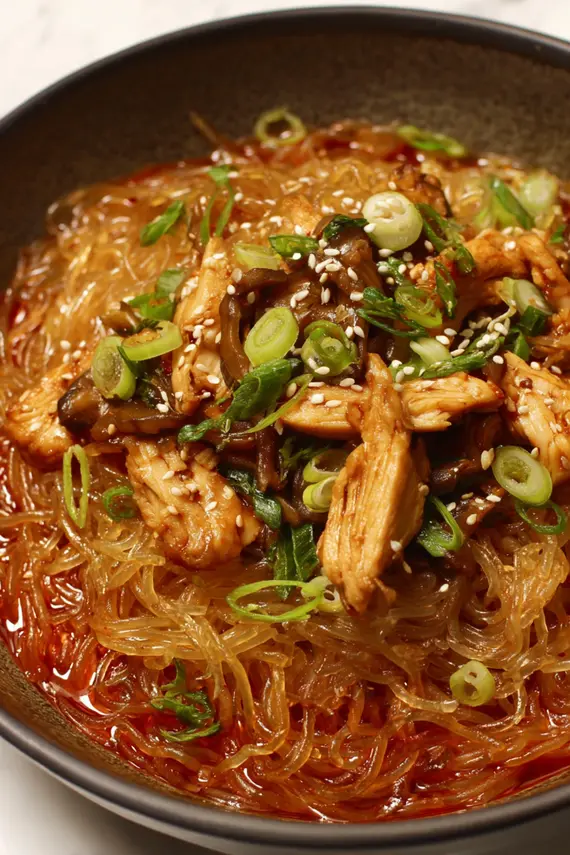
- Garnish and serve: Transfer to serving plates or bowls. Sprinkle with sesame seeds, green parts of sliced green onions, and optional cilantro. Serve immediately while hot, with lime wedges and sliced cucumber on the side for freshness.
Master Your Korean-Inspired Noodle Dish with These Expert Tips
Elevate Your Cooking Experience
Follow these professional tips to ensure your Gochujang Chicken Glass Noodles turn out perfectly every time:
- Noodle perfection: Don’t skip the cold water rinse after cooking your glass noodles. This stops the cooking process immediately and preserves their distinctive chewy texture. Without this step, they can quickly become mushy and clump together.
- Sauce adjustments: Gochujang pastes vary significantly in spiciness between brands. Start with less if you’re heat-sensitive and add more to taste. For a milder version that maintains flavor, substitute 1 tablespoon of gochujang with 1 tablespoon of tomato paste plus a pinch of paprika.
- Protein alternatives: This recipe works beautifully with thinly sliced beef (ribeye or flank steak), shrimp, or even tofu for a vegetarian option. For tofu, use extra-firm, press out excess water, and pan-fry until golden before adding to the sauce.
- Temperature control: Cook your vegetables in stages according to density. Start with firmer vegetables like carrots, then add quicker-cooking ones like bell peppers, and finally add leafy greens just before finishing. This ensures everything is perfectly cooked without anything becoming mushy.
- Textural balance: Add a handful of bean sprouts or chopped peanuts at the end for a fresh crunch that contrasts beautifully with the soft noodles and tender chicken. This small addition makes a significant difference in the overall eating experience.
- Flavor development: For deeper flavor, marinate the sliced chicken in 1 tablespoon of soy sauce, 1 teaspoon of sesame oil, and 1 minced garlic clove for 15-30 minutes before cooking. This simple step enhances the protein’s flavor and tenderness.
- Noodle alternatives: If you can’t find glass noodles, rice noodles make a good substitute, though the texture will be slightly different. Soba noodles also work well for a nuttier flavor profile.
“The Garlic Butter Chicken Bites recipe demonstrates similar protein preparation techniques that ensure perfectly tender, flavorful pieces every time.”
Keeping Your Gochujang Noodle Dish Fresh and Flavorful
Smart Storage Solutions for Leftovers
Proper storage is essential for maintaining the vibrant flavors and textures of your Gochujang Chicken Glass Noodles. Follow these guidelines to enjoy this delicious dish for days after preparation:
For refrigerator storage, allow the dish to cool completely before transferring to airtight containers. The complete dish (noodles, chicken, and sauce together) will keep well for 3-4 days. For best results, store the components separately if possible – keep the cooked noodles in one container and the chicken with sauce mixture in another. This prevents the noodles from absorbing too much moisture and becoming soggy.
When reheating, add a splash of water or chicken broth to restore moisture, especially if the noodles have dried out slightly. For the best texture, reheat gently in a skillet over medium-low heat, stirring frequently. Microwave reheating works but may result in slightly less optimal texture – use 50% power in 30-second intervals, stirring between each.
For longer storage, this dish can be frozen, though the texture of the noodles will change somewhat upon thawing. If you plan to freeze portions, slightly undercook the noodles initially, as they’ll soften more during reheating. Freeze in individual portions for up to 2 months. Thaw overnight in the refrigerator before reheating.
Fresh garnishes like green onions and sesame seeds should always be added just before serving, never before storing. Add a small drizzle of sesame oil when reheating to refresh the flavors and restore some of the original aromatic quality.
“The Thai Coconut Chicken Curry employs similar storage techniques for preserving complex flavors in refrigerated leftovers.”
Creative Twists on Your Korean-Inspired Chicken Noodle Bowl
Customizing Your Dish for Any Occasion
Explore these delicious variations to keep your Gochujang Chicken Glass Noodle dish exciting every time you make it:
Extra-Spicy Fire Noodles Version
Double the gochujang to 4 tablespoons and add 1-2 teaspoons of gochugaru (Korean chili flakes) to the sauce. Include 1 thinly sliced fresh red chili with the vegetables for a dish that brings serious heat. Balance the increased spice with an extra tablespoon of honey. This version is perfect for spice enthusiasts who enjoy the endorphin rush of a properly hot dish.
Family-Friendly Mild Adaptation
Reduce gochujang to 1 tablespoon and blend with 1 tablespoon tomato paste plus 1 teaspoon brown sugar. This maintains the umami depth while reducing the spice significantly. Add extra vegetables like zucchini and corn for sweetness and nutrition. The result is an approachable dish that introduces Korean flavors to sensitive palates or young eaters.
Protein-Packed Fitness Bowl
Double the chicken to 4 breasts (about 2 pounds) and add 1 cup edamame beans. Reduce noodles to 4 ounces and increase vegetables. Include a soft-boiled egg as garnish for even more protein. This protein-rich variation makes an excellent post-workout meal or meal prep option with approximately 40g protein per serving.
Vegetable-Forward Garden Version
Replace chicken with 8 ounces of sliced king oyster or shiitake mushrooms sautéed until golden. Double all vegetables and add 1 cup sugar snap peas and 1 cup broccoli florets. This plant-based alternative delivers remarkable umami depth while showcasing seasonal produce. The mushrooms provide a meaty texture while absorbing the flavorful sauce beautifully.
15-Minute Weeknight Express
Use pre-cooked rotisserie chicken shredded into bite-sized pieces and quick-cooking rice noodles instead of glass noodles. Prepare sauce in advance and store in the refrigerator for up to a week. Use pre-cut vegetable mixes to eliminate chopping time. This streamlined version delivers all the flavor in a fraction of the time, perfect for busy weeknights when cooking from scratch seems impossible.
Chilled Summer Noodle Salad
Cook all components as directed but chill completely before combining. Add 1 tablespoon rice vinegar and 2 teaspoons sugar to the sauce for brightness. Toss with fresh cucumber, radish, and herbs before serving cold. This refreshing variation makes an excellent dish for hot summer days or picnics when something cool yet satisfying is needed.
Perfect Pairings and Serving Ideas for Your Gochujang Glass Noodles
From Casual Dinners to Special Occasions
Transform your Gochujang Chicken Glass Noodles into a complete dining experience with these thoughtful serving suggestions:
For everyday family dinners, serve the noodles in deep bowls with extra sauce on the side and quick pickled vegetables for brightness. A simple cucumber and radish salad dressed with rice vinegar makes an excellent cooling counterpoint to the spicy noodles. This creates a balanced meal that satisfies without requiring extensive preparation.
When entertaining friends, present the noodles as part of a Korean-inspired spread. Arrange the gochujang noodles as the centerpiece, surrounded by small dishes of kimchi, quick-pickled vegetables, and steamed edamame. This easy noodle salad preparation method works beautifully for creating visually impressive serving presentations that encourage sharing and conversation.
For meal prep purposes, portion the noodles into individual containers with a side of fresh vegetables to add just before eating. This keeps everything fresh and prevents the noodles from absorbing too much moisture during storage. A standard portion size is approximately 1½ cups of the noodle mixture, which provides a satisfying meal without excess.
During warmer months, serve the dish at room temperature or chilled as a refreshing alternative to hot meals. Add extra fresh vegetables and herbs just before serving to enhance the cooling effect. Garnish with a squeeze of fresh lime juice to brighten the flavors.
For special occasions, elevate the presentation by serving individual portions in beautiful bowls, garnished artfully with sliced green onions arranged in a fan pattern, a sprinkle of black and white sesame seeds, and small wedges of lime. This attention to presentation transforms a casual dish into something worthy of celebration.
As a lunch option, pack the components separately—noodles in one container, chicken and vegetables in another—and combine just before eating. This prevents the noodles from becoming soggy while ensuring the flavors meld beautifully when mixed.
Common Questions About Gochujang Chicken Noodles Answered
Expert Solutions to Your Recipe Concerns
Can I make this dish ahead for a party or gathering?
Yes, this dish works wonderfully for make-ahead situations. Prepare all components up to 24 hours in advance but store them separately: cooked noodles (tossed with a little oil to prevent sticking), chicken and vegetable mixture with sauce, and garnishes. Reheat the chicken mixture in a wok or large skillet, then add the noodles and heat until warmed through. Add fresh garnishes just before serving. This method preserves textures while allowing the flavors to develop more deeply.
My glass noodles always clump together. How can I prevent this?
Clumping is a common issue with glass noodles that can be solved with proper technique. First, rinse cooked noodles thoroughly under cold water immediately after cooking. Then, toss them with 1-2 teaspoons of sesame oil or neutral cooking oil while still warm. If preparing in advance, periodically separate them with a fork or chopsticks while cooling. When ready to use, briefly immerse in hot water for 10-15 seconds, then drain well before adding to your dish. This keeps the noodles silky and separated.
Is there a substitute for gochujang if I can’t find it?
While authentic gochujang provides a unique flavor profile, you can create a workable substitute by combining 1 tablespoon tomato paste, 1 tablespoon sriracha sauce, 1 teaspoon miso paste (or soy sauce), and ½ teaspoon brown sugar. This won’t perfectly replicate gochujang’s complex fermented flavor, but it provides a similar sweet-spicy-umami foundation. Alternatively, Thai chili paste (sambal oelek) mixed with a little honey can work in a pinch, though the flavor profile will be slightly different.
My sauce seems too thick/thin. How can I adjust it?
For sauce that’s too thick, add water, chicken broth, or a splash of rice vinegar, one tablespoon at a time, until you reach your desired consistency. For sauce that’s too thin, mix 1 teaspoon of cornstarch with 1 tablespoon of cold water to form a slurry, then stir into the simmering sauce. Continue cooking for 30-60 seconds until the sauce thickens to your preference. Remember that the sauce will naturally thicken slightly as it cools.
Your Next Flavorful Adventure Awaits with Gochujang Chicken Glass Noodles
A Versatile Addition to Your Recipe Collection
Gochujang Chicken Glass Noodles represents the perfect blend of comfort, excitement, and nourishing ingredients that can transform an ordinary meal into something memorable. The beautiful harmony of sweet-spicy gochujang sauce, tender chicken, and chewy glass noodles creates a dish that satisfies on multiple levels – from its visual appeal to its complex flavor profile and satisfying textures.
What makes this recipe particularly valuable is its adaptability. Whether you’re cooking for spice lovers, preparing a family-friendly dinner, or creating a make-ahead meal for busy weeknights, the core techniques and flavor principles remain consistent while allowing endless personalization. The basic cooking method teaches valuable skills that transfer to many other Asian-inspired dishes.
I encourage you to make this recipe your own by adjusting the spice level, switching proteins, or adding seasonal vegetables that speak to your taste preferences. The true joy of cooking comes from this kind of confident experimentation built on solid fundamentals.
“The Elote Grilled Mexican Corn Pasta Salad with Chicken demonstrates similarly versatile techniques that can be adapted to your family’s preferences while maintaining the core flavors that make the recipe special.”
Don’t hesitate to share your creations with us in the comments section below – we’d love to hear about your variations and serving suggestions! And remember, cooking is as much about the journey as the destination, so enjoy the process of creating this vibrant, flavorful dish.
PrintGochujang Chicken Glass Noodles
- Spicy-sweet Korean-inspired glass noodles with tender chicken and vegetables in a flavorful gochujang sauce.
- A perfect balance of chewy noodles, protein, and vegetables with complex sweet-spicy flavors.
- Ready in under 30 minutes for a satisfying weeknight dinner or impressive meal for guests.
- Prep Time: 15
- Cook Time: 15
- Total Time: 30 minutes
- Yield: 4 servings 1x
- Category: Dinner
- Method: Stir-Frying
- Cuisine: Korean-Inspired
Ingredients
- 8 oz glass noodles (dangmyeon)
- 2 chicken breasts (about 1 pound), thinly sliced
- 2 tbsp gochujang paste
- 2 tbsp soy sauce
- 1 tbsp honey
- 2 cloves garlic, minced
- 1 tsp sesame oil
- 1 tablespoon fresh ginger, grated
- 3 green onions, sliced (white and green parts separated)
- 1 red bell pepper, thinly sliced
- 1 carrot, julienned
- 2 cups baby spinach
- 1/2 cup sliced mushrooms (shiitake or cremini)
- 1 tsp vegetable oil for cooking
- 1 tsp toasted sesame seeds
- Lime wedges for serving
Instructions
- Soak glass noodles in cold water for 15-20 minutes, then cook according to package directions until transparent and chewy.
- Drain noodles, rinse under cold water, and toss with 1/2 teaspoon sesame oil to prevent sticking. Set aside.
- In a medium bowl, whisk together gochujang paste, soy sauce, honey, minced garlic, grated ginger, and sesame oil until smooth.
- Heat 1 tablespoon vegetable oil in a large skillet over medium-high heat.
- Add chicken in a single layer and cook until golden brown on one side, about 2-3 minutes.
- Stir and continue cooking until chicken is no longer pink, about 2-3 more minutes.
- Add white parts of green onions, remaining garlic, and ginger to the chicken. Stir-fry for 30-45 seconds until fragrant.
- Add bell pepper, carrots, and mushrooms. Stir-fry for 2-3 minutes until vegetables begin to soften.
- Pour the prepared gochujang sauce over the chicken and vegetable mixture. Stir until everything is evenly coated.
- Fold in baby spinach and cook just until wilted, about 30 seconds.
- Add the prepared glass noodles to the skillet. Gently toss everything together until noodles are evenly coated with sauce.
- Transfer to serving plates or bowls. Garnish with sesame seeds and green parts of sliced green onions.
- Serve immediately with lime wedges on the side.
Notes
- For a milder version, reduce the gochujang to 1 tablespoon and add 1 tablespoon of tomato paste.
- Glass noodles absorb sauce quickly, so serve immediately after combining for best texture.
- Store leftover components separately in the refrigerator for up to 3 days.
- Nutrition facts are estimates and may vary based on ingredients used, portion sizes, and preparation methods.
Nutrition
- Serving Size: 1 1/2 cups
- Calories: 385
- Sugar: 12
- Sodium: 876
- Fat: 8
- Saturated Fat: 2
- Unsaturated Fat: 5
- Carbohydrates: 55
- Fiber: 3
- Protein: 25
- Cholesterol: 65
Keywords: gochujang chicken glass noodles, gochujang sauce, glass noodles, spicy chicken, Korean-inspired noodles
Let’s connect! Follow me for more Joylicious Recipes: Facebook, Instagram, Pinterest