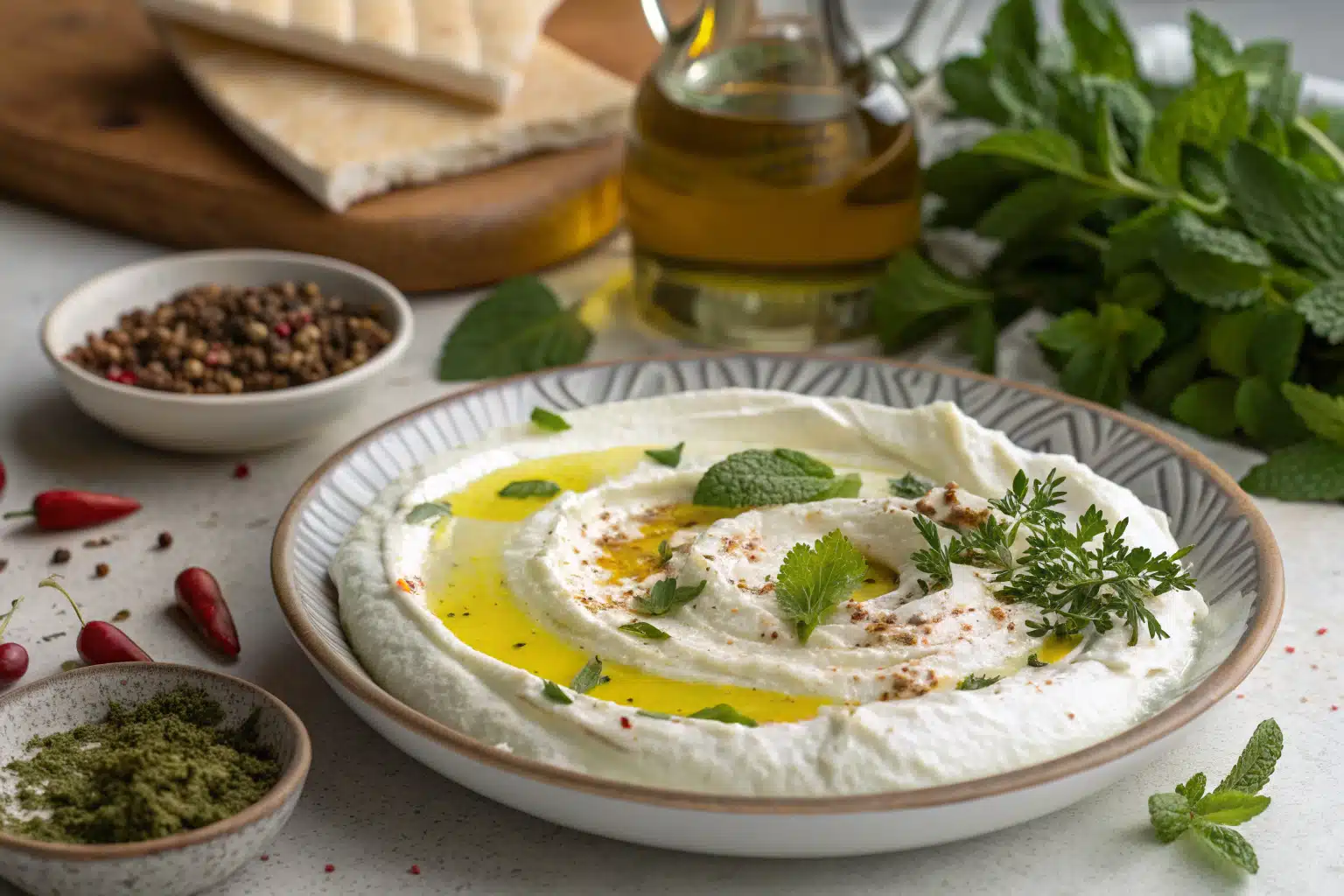
Ultimate Labneh Platter: A Mediterranean-Inspired Creamy Delight
Introduction: Discover the Creamy World of Labneh
What is Labneh?
Labneh platter brings the taste of the Mediterranean right to your table with its rich, creamy texture and versatile flavor profile. This strained yogurt cheese has been a staple in Middle Eastern cuisine for centuries, offering a tangy yet mild base that pairs beautifully with both savory and sweet toppings.
“Discover great ideas like our juicy garlic parmesan chicken skewers” for another Mediterranean-inspired dish that would complement your labneh platter perfectly.
Why Labneh Platters Are Perfect for Entertaining
The labneh platter isn’t just delicious—it’s also incredibly impressive when served as an appetizer or part of a mezze spread. With its striking presentation and customizable nature, this dish allows you to create a stunning centerpiece that guests can gather around. Moreover, most of the components can be prepared ahead of time, making it ideal for entertaining without the last-minute stress.
Essential Ingredients for Your Labneh Platter
The Star Component: Homemade Labneh
The foundation of any great labneh platter is, of course, the labneh itself. While store-bought options are available, nothing compares to the fresh, tangy flavor of homemade labneh. The process is surprisingly simple—it just requires a bit of patience as the yogurt strains.
| Ingredient | Quantity | Notes |
|---|---|---|
| Plain yogurt | 3 cups | Full-fat works best |
| Salt | To taste | Start with 1/2 teaspoon |
Colorful and Flavorful Toppings
What makes a labneh platter truly special is the array of vibrant, flavorful toppings that complement the creamy base. From protein-rich smoked salmon to crisp vegetables and bold Mediterranean flavors, these toppings create a feast for both the eyes and palate.
| Toppings | Quantity | Preparation |
|---|---|---|
| Smoked salmon | 6 ounces | Thinly sliced or torn into pieces |
| Persian cucumber | 1 | Thinly sliced or chopped |
| Cherry tomatoes | 1/2 cup | Halved |
| Kalamata olives | 1/4 cup | Pitted |
| Capers | 2 tablespoons | Drained |
| Radishes | 3-4 | Thinly sliced |
| Olive oil | 3 tablespoons | High-quality extra virgin |
| Za’atar seasoning | 1 tablespoon | For sprinkling |
| Fresh dill | For garnish | Chopped or sprigs |
| Fresh chives | For garnish | Snipped |

Step-by-Step Guide to Creating Your Labneh Platter
Preparing Homemade Labneh
The key to exceptional labneh is allowing enough time for the yogurt to properly strain. This process removes excess whey, resulting in that thick, spreadable consistency that makes labneh so distinctive.
- Mix the plain yogurt with salt in a bowl, starting with about 1/2 teaspoon of salt and adjusting to your preference.
- Line a strainer or colander with cheesecloth or several layers of paper towels and place it over a bowl.
- Transfer the salted yogurt to the lined strainer and place a light weight on top (a small plate works well).
- Refrigerate for 12-48 hours, depending on your desired thickness. Longer straining produces a firmer, cheese-like texture.
- Once strained to your liking, transfer the labneh to a serving bowl and discard the liquid whey (or save it for other culinary uses).
“Want more ideas? Check out our buttermilk ranch dressing recipe which uses similar straining techniques for achieving perfect consistency.”
Assembling Your Stunning Labneh Platter
Creating a visually appealing labneh platter is as much about artful arrangement as it is about flavor combinations. Follow these steps to create a platter that’s both beautiful and delicious.
- Spread the prepared labneh onto a large, shallow serving dish, creating swirls and valleys with the back of a spoon for visual interest.
- Arrange the smoked salmon in loose folds around the platter.
- Distribute the cucumber slices, halved cherry tomatoes, olives, capers, and radish slices evenly over and around the labneh.
- Sprinkle the za’atar seasoning generously over the labneh.
- Drizzle olive oil over the entire platter, allowing it to pool slightly in the valleys of the labneh.
- Finish with a generous sprinkling of fresh dill and snipped chives.
Serving Suggestions for Maximum Enjoyment
The final touch to your labneh platter is providing the perfect accompaniments for scooping, dipping, and enjoying.
- Arrange warm pita bread, pita chips, or flatbread around the platter.
- Include additional bread options like toasted bagel pieces or crackers for variety.
- Add some fresh vegetables like carrot sticks or cucumber spears for low-carb options.
- Provide small serving spoons or spreaders so guests can easily help themselves.
Expert Tips for Labneh Platter Success
Achieving the Perfect Labneh Texture
Creating labneh with the ideal consistency takes a bit of practice, but these tips will help you get it right every time.
First, always start with high-quality, full-fat yogurt for the richest flavor and creamiest texture. Greek yogurt can speed up the process since it’s already partially strained. Additionally, the straining time significantly affects the final product—12 hours yields a soft, spreadable consistency while 24-48 hours creates a firmer, more cheese-like texture that can even be rolled into balls.
Balancing Flavors and Textures
The key to an unforgettable labneh platter lies in thoughtful combinations of flavors, textures, and colors. “Learn more about creamy cucumber onion salad” for another fresh, tangy dish that complements the Mediterranean flavors of a labneh platter.
Try to include elements that hit different flavor profiles: salty (olives, capers), sweet (cherry tomatoes, honey drizzle), spicy (za’atar, red pepper flakes), and herbal (fresh dill, chives). Similarly, incorporate varying textures from creamy labneh to crisp vegetables, chewy dried fruits, and crunchy nuts to create a dynamic eating experience.
Seasonal Adaptations for Year-Round Enjoyment
One of the beauties of the labneh platter is its adaptability to seasonal produce. In summer, showcase juicy tomatoes, crisp cucumbers, and fresh berries. Fall brings opportunities for roasted squash, pomegranate seeds, and spiced nuts. Winter can feature citrus segments, preserved vegetables, and hearty roasted garlic. Spring calls for tender greens, radishes, and early berries.
Proper Storage and Make-Ahead Options
How to Store Homemade Labneh
Properly stored, homemade labneh can last surprisingly long while maintaining its quality. “Here’s your guide to creamy peach salad recipe” which, like labneh, benefits from proper storage techniques to maintain its fresh flavors.
For basic refrigerator storage, place the strained labneh in an airtight container and cover with a thin layer of olive oil to prevent it from drying out. This way, it will keep for up to two weeks. For longer preservation, roll the labneh into small balls, completely submerge them in olive oil (possibly infused with herbs and spices), and refrigerate for up to a month.
Preparing Components in Advance
The labneh platter is ideal for entertaining because so much can be prepared ahead of time.
The labneh itself can be made 2-3 days before serving. Chop vegetables and herbs the morning of your event and store them separately in the refrigerator. For maximum freshness, assemble the platter no more than 30 minutes before serving. If you need to prepare it further in advance, leave off the fresh herbs and olive oil drizzle until just before serving.
Handling Leftovers Creatively
Should you find yourself with leftover components from your labneh platter, they needn’t go to waste. Leftover labneh makes an excellent spread for sandwiches, a creamy addition to scrambled eggs, or a base for a quick dressing when thinned with a bit of lemon juice and olive oil. Vegetables can be chopped and added to salads or grain bowls, while herbs can be used in a variety of dishes or frozen in olive oil for future use.
Exciting Variations on the Classic Labneh Platter
Regional Labneh Platter Inspirations
The basic labneh platter concept adapts beautifully to various regional cuisines. “Don’t miss our stuffed bell pepper recipe” for another Mediterranean-inspired dish that shares many of the same flavor profiles as a labneh platter.
For a Greek-inspired version, incorporate feta cheese, oregano, and Kalamata olives. A Turkish variation might include sumac, pomegranate seeds, and pistachios. For a Lebanese twist, add a sprinkle of Aleppo pepper and some fresh mint. Meanwhile, an Israeli-inspired platter could feature za’atar, fresh figs when in season, and a drizzle of date honey.
Sweet Labneh Platter Options
While savory labneh platters are traditional, sweet variations offer a delightful change of pace, especially for brunches or dessert spreads.
For a sweet version, strain the yogurt without salt and instead sweeten the finished labneh lightly with honey or maple syrup. Top with fresh berries, sliced stone fruits, candied nuts, a sprinkle of cinnamon or cardamom, and perhaps some chocolate shavings. A drizzle of good quality honey or fruit preserves completes this dessert-worthy presentation.
Dietary Adaptations for Every Guest
One of the greatest strengths of the labneh platter is its adaptability to various dietary needs.
For vegetarians, simply omit the smoked salmon and perhaps add more vegetables or some roasted mushrooms for umami flavor. Vegans can enjoy this dish by making plant-based labneh from coconut or almond milk yogurt. Those following gluten-free diets can enjoy the platter with gluten-free crackers or fresh vegetable dippers instead of traditional breads. Low-carb or keto enthusiasts can focus on the labneh, proteins, and vegetables while skipping the bread components.
Serving Your Labneh Platter for Maximum Impact
Creating an Aesthetically Pleasing Presentation
The visual impact of your labneh platter can elevate the entire dining experience. “Check out our watermelon cucumber feta salad” for another visually stunning dish that makes a great addition to a Mediterranean spread.
Start by selecting a beautiful serving platter—ceramic, wood, or slate all work wonderfully. Consider color contrast when arranging components; alternate colors for visual interest. Create height and dimension by mounding some ingredients and spreading others. Leave some negative space on the platter rather than overcrowding it. Finally, add last-minute touches like fresh herb sprinkles and olive oil drizzles just before serving for maximum freshness and visual appeal.
Accompaniments to Complete the Experience
The right accompaniments can transform your labneh platter from a simple appetizer to a complete meal or mezze experience.
Warm, fresh flatbreads or pita are traditional and perfect for scooping up the creamy labneh. Consider adding a basket of various breads like seeded crackers, lavash, or even toasted baguette slices. For a more substantial spread, include additional mezze items like hummus, baba ganoush, tabbouleh, or stuffed grape leaves. A carafe of cold water infused with cucumber and mint provides a refreshing beverage option.
Serving Occasions Perfect for Labneh Platters
The versatility of the labneh platter makes it suitable for a wide range of dining occasions.
For casual gatherings, a labneh platter makes an ideal centerpiece for grazing. At more formal dinner parties, serve it as a sophisticated appetizer. Brunches benefit from a labneh platter that bridges sweet and savory options. For outdoor entertaining like picnics or barbecues, component parts can be packed separately and assembled on site. Holiday gatherings also welcome the festive appearance and shareable nature of a beautiful labneh platter.

Frequently Asked Questions About Labneh Platters
Can I use Greek yogurt instead of making labneh from scratch?
Yes, you can definitely use Greek yogurt as a shortcut! Since Greek yogurt is already strained, it has a thicker consistency than regular yogurt. For the closest texture to traditional labneh, start with full-fat Greek yogurt and strain it for just 4-6 hours instead of the usual 12-48. You’ll still want to mix in some salt before straining. While the texture won’t be quite as rich and cheese-like as traditional labneh, it makes a perfectly acceptable substitute when you’re short on time.
What bread works best for serving with a labneh platter?
Warm, soft pita bread is the traditional choice and works beautifully with labneh. However, many other options can complement your platter nicely. Toasted flatbreads like lavash or naan provide a slightly crisp yet chewy base. Seeded crackers add interesting texture and flavor. For a more substantial option, lightly toasted sourdough or bagel pieces work wonderfully. If serving gluten-free guests, consider rice crackers or gluten-free pita. The key is offering something with enough structure to hold the creamy labneh but not so hard that it competes with the delicate flavors.
Can I make this platter ahead of time?
Partially, yes! The labneh itself can be prepared 2-3 days in advance and stored in the refrigerator. Most toppings can be prepared the morning of your event and kept separate until assembly. For the best presentation and flavor, assemble the complete platter no more than 30 minutes before serving. If you must prepare further ahead, leave off the fresh herbs, olive oil drizzle, and any delicate items like smoked salmon until just before serving. Cover the assembled platter loosely with plastic wrap and refrigerate for up to 2 hours before the final garnishes.
What toppings go well with labneh?
The beauty of labneh is its versatility! Traditional Mediterranean toppings include olive oil, za’atar, fresh herbs, cucumbers, tomatoes, and olives. For protein, smoked salmon, as in our recipe, works beautifully, as do other smoked or cured fish. Roasted vegetables like bell peppers, eggplant, or zucchini add wonderful flavor. For a touch of sweetness, try pomegranate seeds, honey drizzle, or fresh figs when in season. Nuts like pistachios, pine nuts, or walnuts add crunch, while spices such as sumac, Aleppo pepper, or dukkah bring aromatic complexity.
How do I assemble a labneh platter attractively?
Start by spreading the labneh across your serving dish, creating swirls and valleys with the back of a spoon for visual interest and to catch the olive oil. Arrange larger items like sliced vegetables or smoked salmon first, creating visual “anchors” around the platter. Distribute smaller items like olives, capers, and cherry tomatoes in small clusters. Create color contrast by placing items with different colors next to each other. Add height variation with small piles of chopped herbs or nuts. Finish with a generous drizzle of olive oil and a final sprinkle of fresh herbs or spices just before serving.
Can I make this platter vegetarian?
Absolutely! This labneh platter is easily adapted for vegetarians by simply omitting the smoked salmon. To replace the savory, umami flavor that fish provides, consider adding roasted mushrooms, sun-dried tomatoes, or a sprinkle of nutritional yeast. You might also include additional vegetables like roasted red peppers, artichoke hearts, or grilled eggplant. For added protein, consider adding some feta cheese crumbles, toasted nuts, or even a small bowl of hummus alongside the labneh. The result will be just as satisfying and visually appealing as the original version.
Conclusion: Embracing the Labneh Platter Tradition
The Cultural Significance of Shared Mezze
The labneh platter represents more than just a delicious appetizer—it embodies the communal dining spirit central to Mediterranean and Middle Eastern cultures. “Looking for inspiration? Try our mediterranean salad” which shares the same cultural roots as the traditional labneh platter.
In these regions, food is rarely served in individual portions but rather presented in shared plates that bring people together. The mezze tradition—of which the labneh platter is a part—encourages conversation, connection, and a leisurely approach to dining. By serving a labneh platter in your home, you’re not just offering a delicious spread but inviting your guests to participate in this rich cultural tradition of breaking bread together.
Making Labneh Platters Part of Your Culinary Repertoire
Once you’ve mastered the basic labneh platter, you’ll likely find it becoming a regular feature in your entertaining arsenal. Its combination of make-ahead convenience, impressive presentation, and crowd-pleasing flavors makes it perfect for countless occasions.
Consider developing your own signature version with favorite toppings and accompaniments that reflect your personal taste. Experiment with seasonal variations throughout the year. The labneh platter can evolve from a special-occasion dish to a weeknight dinner solution, a lunch option, or even a creative breakfast spread. With practice, you’ll develop an intuitive sense for balancing flavors and creating beautiful arrangements that will delight family and friends alike.
PrintLabneh Platter
A stunning Mediterranean-inspired appetizer featuring creamy strained yogurt cheese topped with smoked salmon, fresh vegetables, and aromatic herbs.
- Prep Time: 20
- Total Time: 20 minutes
- Yield: 8 1x
- Category: Appetizer
- Cuisine: Mediterranean
Ingredients
- 3 cups plain yogurt
- Salt, to taste
- For the Toppings
- 6 ounces smoked salmon
- 1 Persian cucumber, thinly sliced or chopped
- 1/2 cup cherry tomatoes, halved
- 1/4 cup pitted Kalamata olives
- 2 tablespoons capers, drained
- 3–4 radishes, thinly sliced
- 3 tablespoons olive oil
- 1 tablespoon za’atar seasoning
- Fresh dill, for garnish
- Fresh chives, for garnish
Instructions
- Mix yogurt with salt and transfer to a cheesecloth-lined strainer set over a bowl.
- Refrigerate for 12-48 hours until it reaches desired thickness.
- Spread strained labneh onto a large serving dish.
- Arrange smoked salmon, cucumber, tomatoes, olives, capers, and radishes over the top.
- Sprinkle with za’atar and garnish with fresh herbs.
- Drizzle with olive oil just before serving.
- Serve with warm pita bread, crackers, or fresh vegetables.
Notes
Labneh can be made 2-3 days ahead and stored in the refrigerator. Assemble the platter no more than 30 minutes before serving for best results. Nutrition facts are estimates and may vary based on ingredients used, portion sizes, and preparation methods.
Nutrition
- Serving Size: 8
- Calories: 180 Kcal
- Sugar: 3g
- Sodium: 320mg
- Fat: 14g
- Saturated Fat: 4g
- Carbohydrates: 5g
- Fiber: 1g
- Protein: 10g
- Cholesterol: 25mg
Keywords: labneh platter, yogurt cheese, Mediterranean appetizer, mezze, strained yogurt, Middle Eastern appetizer
Let’s connect! Follow me for more Joylicious Recipes: Facebook, Instagram, Pinterest