Peanut Ginger Noodle Soup: The Ultimate Comfort Bowl
Introduction: A Symphony of Flavors
The Magic of Peanut and Ginger Together
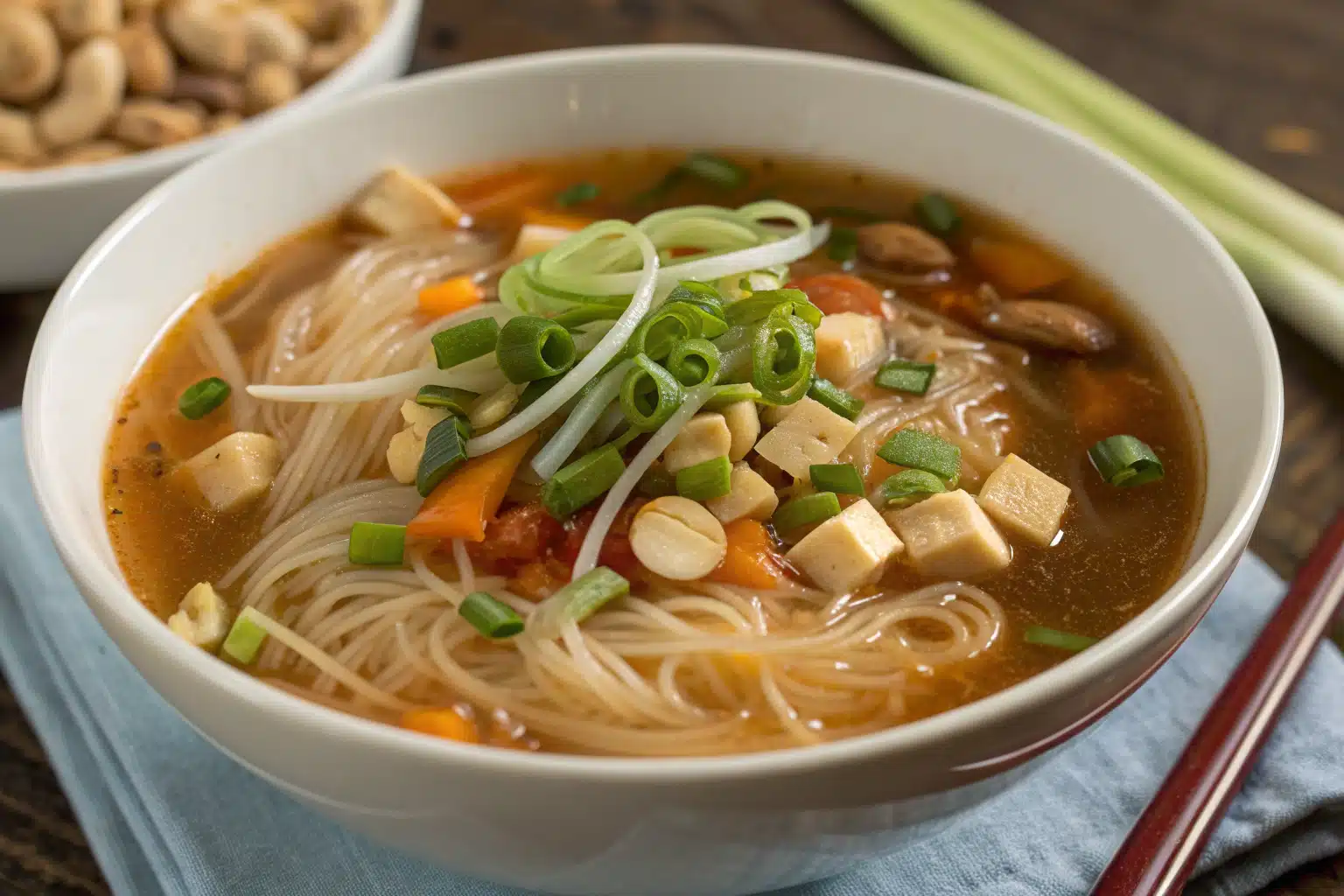
Peanut ginger noodle soup represents the perfect marriage of Eastern and Western culinary traditions. This soul-warming dish combines the nutty richness of peanut butter with the aromatic zing of fresh ginger to create a symphony of flavors that dance on your taste buds. Not only is peanut ginger noodle soup incredibly satisfying, but it also offers a balanced meal with protein, vegetables, and complex carbohydrates all in one beautiful bowl. As temperatures drop, there’s nothing quite like cradling a steaming bowl of this fragrant soup between your hands, allowing the exotic aromas of ginger and garlic to transport you to faraway places.
“Looking for inspiration? Try our chicken pho noodle soup for another Asian-inspired comfort meal.”
Health Benefits of Peanut Ginger Noodle Soup
Beyond its irresistible flavor profile, peanut ginger noodle soup boasts numerous health benefits. Ginger has been used for centuries as a natural anti-inflammatory and digestive aid, while peanut butter provides healthy fats and plant-based protein. Furthermore, this versatile soup can be easily customized to include additional vegetables and lean proteins. The combination of warming spices and nutritious ingredients makes peanut ginger noodle soup an ideal choice for boosting immunity during cold weather seasons. Additionally, the broth-based nature of this dish ensures proper hydration while delivering complex flavors that satisfy cravings for comfort food without excessive calories.
Ingredients: Building Blocks for Perfect Peanut Ginger Noodle Soup
The Flavorful Sauce Foundation
| Sauce Ingredients | Amount | Notes |
|---|---|---|
| Low-sodium soy sauce or tamari | ½ cup plus 2 tablespoons | Provides umami depth |
| Honey | ¼ cup | Balances heat with sweetness |
| Balsamic vinegar | 2 tablespoons | Adds complex acidity |
| Rice vinegar | 2 tablespoons | Brightens flavors |
| Creamy peanut butter or tahini | 3 tablespoons | Creates silky texture |
| Molasses (optional) | 1 tablespoon | Adds rich sweetness |
| Fresh grated ginger | 2 tablespoons, divided | Star flavor component |
| Garlic cloves, finely minced | 3 cloves | Aromatic foundation |
| Water | ⅓ cup | Adjusts consistency |
The sauce for peanut ginger noodle soup forms the flavor foundation of this incredible dish. The combination of soy sauce, honey, and two types of vinegar creates a perfectly balanced sweet-tangy-savory profile. Meanwhile, the peanut butter lends creaminess and body to the soup, while fresh ginger provides that distinctive warm, spicy note that makes this soup truly special. For the best results, use natural creamy peanut butter without added sugars or oils, as this will give your soup the cleanest, most authentic flavor.
Core Soup Components
| Soup Components | Amount | Notes |
|---|---|---|
| Egg noodles or rice noodles | 8 ounces | Foundation of the dish |
| Low-sodium chicken or vegetable broth | 2½ cups | Creates soup base |
| Cooked shredded chicken | 2 cups | Protein element |
| Fresh baby spinach, roughly chopped | 2 cups | Adds color and nutrition |
| Sesame oil or olive oil | 2 tablespoons | For sautéing mushrooms |
| Shiitake or cremini mushrooms, sliced | 3 cups | Provides earthy flavor |
| Shallots, finely chopped | 2 | Aromatic element |
| Freshly ground black pepper | To taste | Seasoning |
| Sesame seeds | 2 tablespoons | Texture and garnish |
| Green onions, chopped | 2 | Fresh garnish |
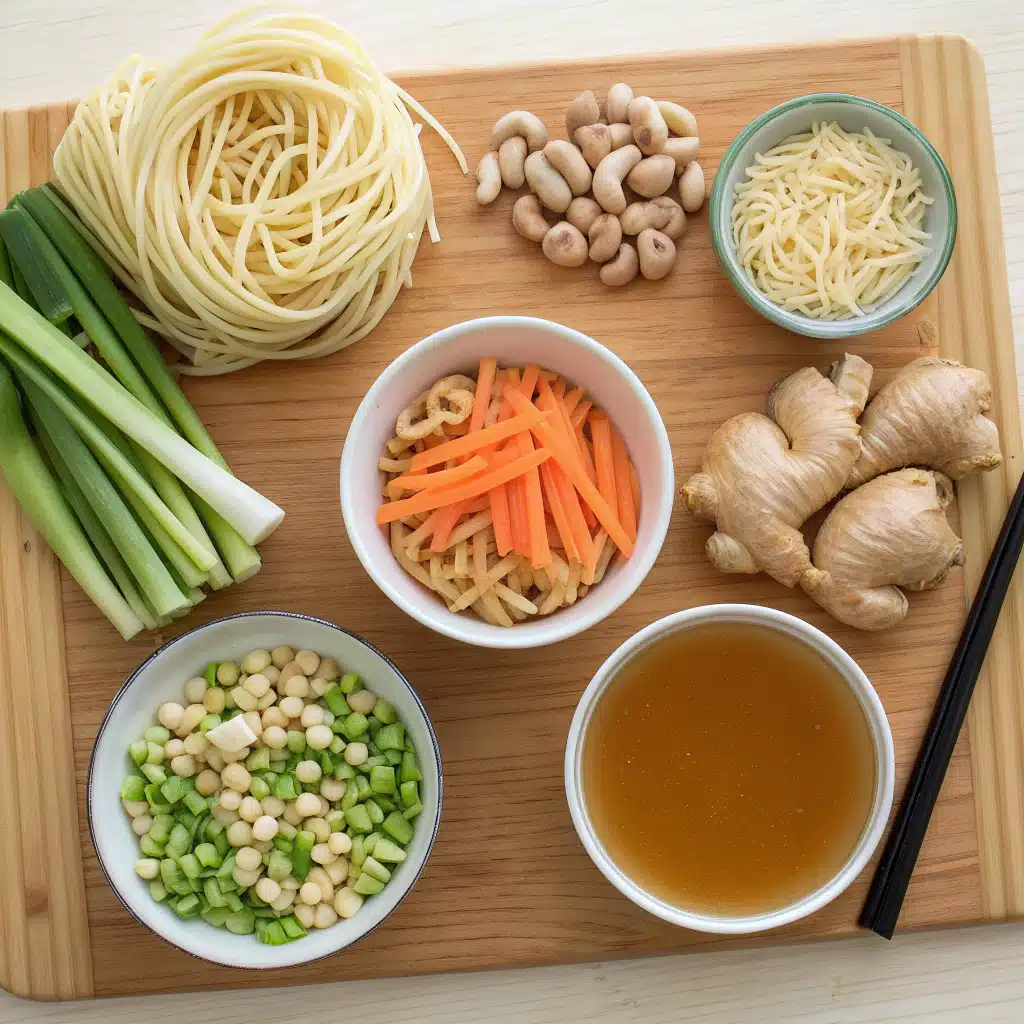
The core components of peanut ginger noodle soup bring together various textures and flavors. The noodles provide a satisfying base, while the broth carries the aromatic sauce throughout. Shredded chicken adds protein, making this soup hearty enough for a main course. The mushrooms contribute an earthy depth that complements the peanut butter beautifully, while fresh spinach adds color, nutrition, and a slight bitterness that balances the sweetness. Together, these ingredients create a harmonious bowl that’s as nutritious as it is delicious.
Step-by-Step: Creating Your Peanut Ginger Noodle Soup Masterpiece
Preparing the Signature Sauce
- In a medium bowl, combine ½ cup plus 2 tablespoons of low-sodium soy sauce or tamari with ¼ cup honey.
- Add 2 tablespoons each of balsamic vinegar and rice vinegar, whisking continuously.
- Incorporate 3 tablespoons of creamy peanut butter, whisking until completely smooth.
- If using, add 1 tablespoon of molasses for added depth.
- Stir in 1 tablespoon of freshly grated ginger (reserving the other tablespoon for later) and all 3 minced garlic cloves.
- Gradually add ⅓ cup water while whisking until the sauce reaches a smooth, pourable consistency.
- Set the sauce aside to allow flavors to meld while you prepare the other components.
The secret to a perfectly balanced peanut ginger noodle soup lies in this luxurious sauce. The key is achieving a silky-smooth texture, so take your time whisking the peanut butter until completely incorporated. If your sauce seems too thick, don’t hesitate to add a bit more water, one tablespoon at a time, until you reach the desired consistency. “Don’t miss our hot and sour tofu soup for another Asian soup variation with bold flavors.”
Noodle Preparation and Broth Building
- Cook 8 ounces of egg noodles or rice noodles according to package directions until just al dente.
- Drain the noodles thoroughly and rinse under cool water to stop the cooking process.
- In a large pot, bring 2½ cups of low-sodium chicken or vegetable broth to a gentle simmer.
- Add half of the prepared peanut ginger sauce to the simmering broth, whisking to incorporate.
- Let the flavored broth simmer for 2-3 minutes to allow the flavors to meld.
- Add 2 cups of roughly chopped fresh baby spinach and 2 cups of cooked shredded chicken to the broth.
- Simmer for another 2 minutes until the spinach wilts and the chicken is heated through.
Properly preparing the noodles is crucial for peanut ginger noodle soup success. Cooking them just until al dente ensures they’ll maintain their texture when combined with the hot broth. Meanwhile, infusing the broth with the peanut ginger sauce creates layers of flavor that permeate every component of the finished dish. The addition of spinach at this stage allows it to gently wilt into the broth, distributing its nutrients and color throughout.
Preparing the Mushroom Component
- Heat 2 tablespoons of sesame oil or olive oil in a large skillet over medium-high heat.
- Add 3 cups of sliced shiitake or cremini mushrooms to the hot oil and sauté until golden brown, about 5-6 minutes.
- Add the finely chopped shallots to the mushrooms and continue cooking for 2-3 minutes until softened.
- Stir in the remaining tablespoon of grated ginger and cook for 30 seconds until fragrant.
- Season with freshly ground black pepper to taste.
- Sprinkle 2 tablespoons of sesame seeds over the mushroom mixture and toss to combine.
- Remove the pan from heat and set aside.
The mushroom component adds incredible depth to peanut ginger noodle soup. Properly sautéed mushrooms develop a meaty texture and rich umami flavor that perfectly complements the peanut and ginger notes in the broth. Taking the time to brown them thoroughly before adding the shallots and remaining ginger ensures maximum flavor development. The sesame seeds add a pleasant textural contrast and nutty flavor that echoes the peanut butter in the sauce.
Assembly and Serving
- Toss the cooked noodles with the remaining peanut ginger sauce until evenly coated and glossy.
- To serve, divide the sauce-coated noodles among four serving bowls.
- Ladle the hot broth mixture with spinach and chicken over the noodles.
- Top each bowl with an equal portion of the sautéed mushroom mixture.
- Garnish each serving with freshly chopped green onions.
- Serve immediately while hot, providing extra sesame seeds at the table if desired.
The layered assembly method for peanut ginger noodle soup ensures that each component retains its distinct texture while still harmonizing in the final dish. Coating the noodles with sauce before adding the broth prevents them from clumping together and ensures every bite is flavorful. The final garnish of fresh green onions adds a bright, sharp contrast to the rich, savory soup. For the most authentic experience, serve with chopsticks and a soup spoon to appreciate all the different textures and flavors.
Tips: Mastering Peanut Ginger Noodle Soup
Perfecting the Peanut Flavor
The peanut butter component is central to the success of your peanut ginger noodle soup. For optimal results, choose a high-quality natural peanut butter that contains only peanuts and perhaps a touch of salt. Avoid brands with added sugars, oils, or stabilizers as these can affect the soup’s texture and flavor. If your peanut butter seems particularly thick or dry, warm it slightly before incorporating it into the sauce to ensure it blends smoothly. For a deeper peanut flavor, you can also add a tablespoon of toasted crushed peanuts as a garnish just before serving.
“Check out our spinach mushroom soup for another comforting recipe with earthy flavors.”
Balancing Ginger Intensity
Ginger can be a polarizing ingredient, with its intensity varying significantly between roots. When making peanut ginger noodle soup, taste your ginger before adding the full amount to gauge its potency. Young ginger tends to be milder and less fibrous than older ginger, making it ideal for this soup. To extract maximum flavor, grate the ginger on a microplane rather than chopping it. If you prefer a milder ginger flavor, reduce the amount to 1 tablespoon total. Conversely, ginger lovers can increase to 3 tablespoons or add a pinch of ground ginger to intensify the warming spice notes. Remember that the ginger flavor will develop and mellow slightly as the soup sits.
Noodle Selection Strategies
The noodle choice for your peanut ginger noodle soup significantly impacts the final texture and experience. Traditional egg noodles provide a rich, slightly chewy texture that stands up well to the robust flavors. Rice noodles offer a lighter, gluten-free alternative with a tender bite. For an authentic Asian twist, try using ramen, udon, or soba noodles. Whichever type you choose, be careful not to overcook them, as they’ll continue to soften slightly in the hot broth. If preparing in advance, cook the noodles until slightly underdone and store them separately from the broth until serving time. This prevents them from absorbing too much liquid and becoming soggy.
Storage: Keeping Your Peanut Ginger Noodle Soup Fresh
Refrigeration Best Practices
Peanut ginger noodle soup can be refrigerated for optimal freshness and flavor preservation. For best results, store the components separately: keep the broth mixture with chicken and spinach in one container, the sauce-coated noodles in another, and the mushroom mixture in a third. This prevents the noodles from absorbing too much liquid and losing their texture. When properly stored in airtight containers, the soup components will keep well in the refrigerator for up to 3 days. Before serving refrigerated soup, allow the components to come to room temperature for about 15 minutes to ensure even reheating.
“Here’s your guide to mushroom orzo risotto for another comforting dish perfect for meal prep.”
Freezing for Later Enjoyment
While peanut ginger noodle soup can be frozen, some special considerations will ensure the best quality upon thawing. The broth mixture with chicken freezes exceptionally well, but the noodles and mushrooms are best prepared fresh. If you want to meal prep this soup for freezing, prepare and freeze only the broth component, then make fresh noodles and mushrooms when you’re ready to enjoy it.
Store the broth in freezer-safe containers with about an inch of headspace to allow for expansion during freezing. The broth can be frozen for up to 3 months without significant quality loss. When ready to use, thaw overnight in the refrigerator before reheating gently on the stovetop.
Reheating Without Compromising Quality
Reheating peanut ginger noodle soup requires care to maintain its vibrant flavors and textures. For the best results when reheating from refrigerated, warm the broth mixture in a saucepan over medium-low heat until just simmering. Meanwhile, refresh the noodles by briefly dipping them in hot water for 15-30 seconds, then drain thoroughly.
The mushroom mixture can be reheated in a small skillet over medium heat until warmed through. Assemble as directed in the original recipe. If reheating from frozen, allow the broth to thaw completely before warming gently on the stovetop, adding a splash of fresh broth if needed to restore the original consistency. Fresh noodles and newly prepared mushrooms will significantly improve the quality of your reheated soup.
Variations: Customizing Your Peanut Ginger Noodle Soup
Vegetarian and Vegan Adaptations
Peanut ginger noodle soup can easily be transformed into a plant-based delight without sacrificing flavor. For a vegetarian version, simply use vegetable broth instead of chicken broth and replace the chicken with plant-based protein alternatives. Excellent vegetarian protein options include cubed extra-firm tofu, tempeh, or a cup of edamame beans.
For a completely vegan peanut ginger noodle soup, ensure your noodles are egg-free (rice noodles work perfectly) and substitute maple syrup or agave nectar for the honey in the sauce. Adding extra vegetables like bell peppers, snow peas, or broccoli florets not only increases the nutritional value but also creates a vibrant, colorful bowl. The peanut ginger flavor profile works beautifully with these plant-based adaptations, creating a satisfying meal for everyone.
Spice Level Adjustments
The beauty of homemade peanut ginger noodle soup is that you can customize the heat level to suit your preferences. For a mild version that’s family-friendly, stick with the recipe as written, letting the ginger provide a gentle warmth without overwhelming heat. To create a medium-spicy soup, add 1-2 teaspoons of sriracha or sambal oelek to the sauce mixture. For those who enjoy significant heat, incorporate 1-2 teaspoons of red pepper flakes or a finely diced Thai chili into the sauce.
Additionally, you can serve the soup with various hot sauces on the side, allowing each diner to adjust their bowl to their preferred spice level. Remember that spice tends to develop over time, so a soup that seems mildly spicy when first made may become spicier after sitting for a day.
“Discover great ideas like our ginger sesame soba bowl for more Asian-inspired flavors.”
Protein Variations
While shredded chicken is the traditional protein choice for peanut ginger noodle soup, numerous alternatives can create exciting flavor variations. For seafood lovers, try adding sautéed shrimp or chunks of firm white fish like cod or halibut during the final minutes of cooking. Red meat enthusiasts might enjoy thinly sliced beef sirloin or flank steak, briefly cooked in the hot broth just before serving.
For a unique twist, consider using shredded duck or pork, which pair beautifully with the rich peanut flavor. Each protein brings its own distinctive character to the soup, creating virtually endless possibilities for customization. When substituting proteins, be mindful of cooking times – seafood and thinly sliced beef cook much more quickly than chicken and may become tough if overcooked.
Serving: Presentation and Pairings
Beautiful Bowl Presentation
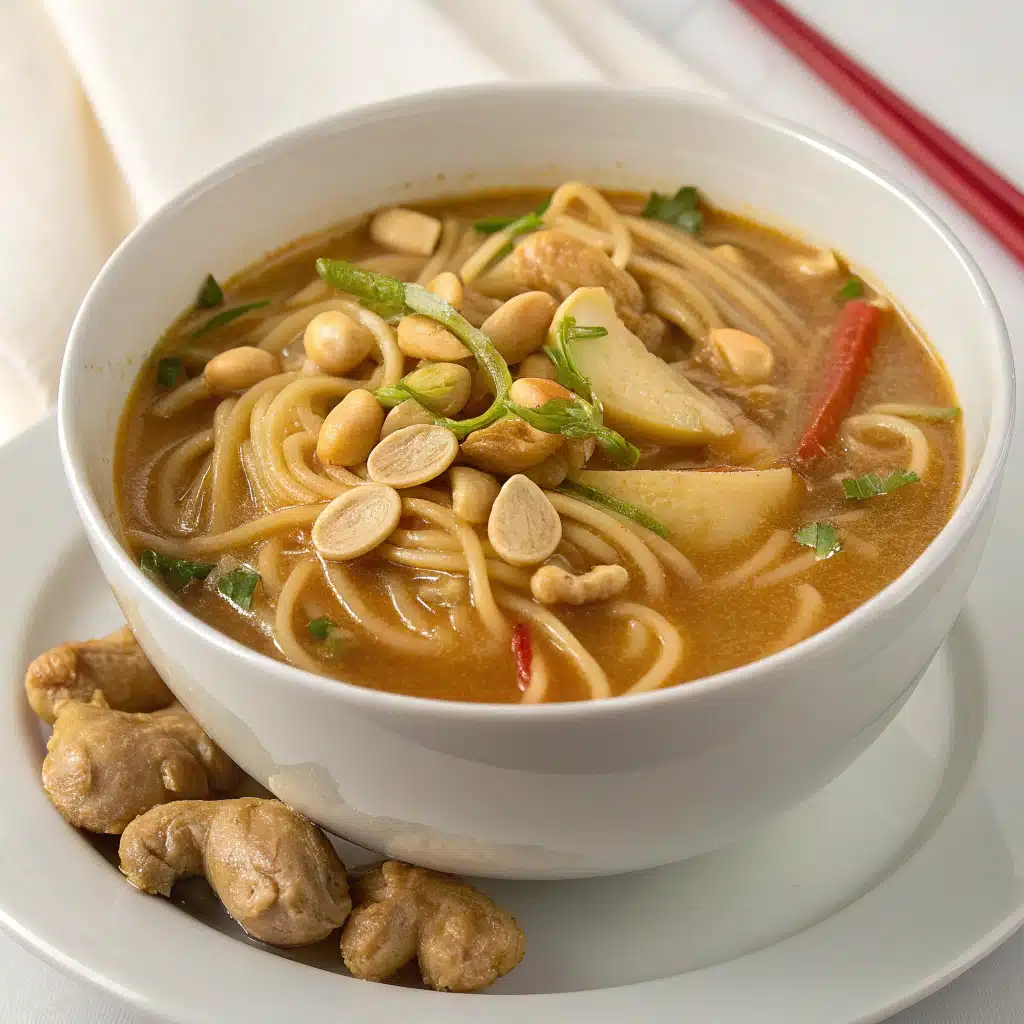
Presenting peanut ginger noodle soup attractively enhances the dining experience, making it as visually appealing as it is delicious. Start with warmed, wide bowls that showcase all the components. Layer the elements thoughtfully, beginning with the sauce-coated noodles as a base, then adding the broth with chicken and spinach, and finally topping with the mushroom mixture. Garnish with a sprinkle of freshly chopped green onions, additional sesame seeds, and perhaps a few sprigs of cilantro for color contrast. For an Instagram-worthy presentation, add thin slices of red chili, lime wedges, and a small pile of bean sprouts to one side of the bowl. The vibrant colors and varied textures create an inviting bowl that promises the complex flavors waiting inside.
Complementary Side Dishes
While peanut ginger noodle soup is satisfying as a standalone meal, thoughtfully chosen side dishes can create a more rounded dining experience. Light, crisp accompaniments provide textural contrast to the soup’s warmth and softness. Consider serving simple cucumber salad dressed with rice vinegar and a touch of sugar, or a small plate of quick-pickled vegetables like radishes or carrots. For added crunch, offer crispy wonton strips or toasted sesame rice crackers that can be dipped into the broth or sprinkled over the soup. A side of steamed or stir-fried bok choy dressed with a light garlic sauce makes an excellent vegetable accompaniment that complements rather than competes with the soup’s bold flavors.
“Want more ideas? Check out Thai red curry chicken noodles for another Asian-inspired dish that pairs well with this soup.”
Beverage Pairings
The right beverage can elevate your peanut ginger noodle soup experience to new heights. For non-alcoholic options, consider jasmine tea, whose floral notes complement the soup’s spicy, savory profile. Coconut water provides a sweet, refreshing counterpoint to the rich flavors, while a ginger-lemongrass iced tea echoes and enhances the soup’s aromatic qualities.
If you’re feeling creative, a smoothie with mango, banana, and a hint of lime makes a surprisingly good match, with its tropical sweetness balancing the soup’s savory depth. For added hydration with a twist, serve cucumber-mint infused water alongside your soup. These thoughtfully paired beverages cleanse the palate between bites while highlighting different aspects of the soup’s complex flavor profile.
FAQs: Your Peanut Ginger Noodle Soup Questions Answered
What type of peanut butter works best for noodle soup?
Natural creamy peanut butter works best for peanut ginger noodle soup because it blends smoothly into the broth without grittiness. Look for varieties containing only peanuts and salt, avoiding those with added sugars, oils, or stabilizers that can affect the soup’s texture and authentic flavor. If using a particularly thick natural peanut butter, warm it slightly before adding to help it incorporate more easily. While chunky peanut butter can be used, it will create a different texture in the finished soup and may require additional whisking to distribute evenly.
How do you balance ginger flavor in peanut ginger noodle soup?
Balance ginger flavor by introducing it at different stages of cooking. Add half during sauce preparation for a mellow background note, then add the remaining half to the mushrooms for a brighter accent. If your ginger tastes particularly strong, reduce the total amount to 1-1½ tablespoons. For those who find fresh ginger too pungent, substitute 1 teaspoon ground ginger for a milder effect. Remember that ginger flavor tends to mellow slightly as the soup sits, so a soup that initially seems too gingery may achieve perfect balance after resting for 30 minutes.
Can peanut ginger noodle soup be made vegetarian?
Absolutely! Peanut ginger noodle soup is easily adapted to a vegetarian diet. Simply substitute vegetable broth for chicken broth and replace the chicken with protein-rich alternatives like cubed tofu, tempeh, or edamame. For added texture and nutrition, incorporate additional vegetables such as sliced bell peppers, snow peas, or broccoli florets. The umami-rich mushrooms already in the recipe help create a satisfying depth of flavor that makes the absence of meat completely unnoticeable. For a fully vegan version, also substitute maple syrup or agave nectar for the honey in the sauce.
What noodles work best in peanut ginger soup?
Several noodle varieties work exceptionally well in peanut ginger noodle soup. Traditional egg noodles offer a rich flavor and chewy texture that stands up nicely to the robust broth. For a gluten-free option, rice noodles provide a lighter alternative with a tender bite. Ramen or Chinese wheat noodles contribute an authentic Asian character, while soba (buckwheat) noodles add a nutty flavor that complements the peanut butter. Udon noodles create a heartier soup with their thick, chewy texture. Whichever type you choose, avoid overcooking as they’ll continue to soften slightly in the hot broth.
Can peanut ginger noodle soup be meal prepped?
Peanut ginger noodle soup is excellent for meal prep when components are stored properly. Prepare the sauce, cook the chicken and mushrooms, and store these elements separately in airtight containers for up to 3 days in the refrigerator. Cook noodles just before serving, or if preparing completely in advance, cook them slightly underdone and store separately from the broth to prevent them from becoming soggy. For longer storage, freeze just the broth component (without noodles or mushrooms) for up to 3 months, then prepare fresh noodles and mushrooms when ready to serve for the best texture and flavor.
Is peanut ginger noodle soup spicy?
Peanut ginger noodle soup as presented in this recipe has a mild to medium warmth from the fresh ginger, but is not notably spicy. The ginger provides aromatic heat that’s balanced by the sweetness of honey and the richness of peanut butter. For those who prefer a spicier soup, easily increase the heat by adding sriracha, sambal oelek, red pepper flakes, or fresh chilies to taste. Conversely, reducing the ginger to 1 tablespoon total creates an even milder version suitable for those sensitive to spice. The customizable nature of this soup makes it adaptable to any spice preference.
Conclusion: The Enduring Appeal of Peanut Ginger Noodle Soup
A Versatile Comfort Food for All Seasons
Peanut ginger noodle soup stands as a testament to the universal appeal of comfort food that transcends cultural boundaries. While particularly satisfying during cold weather, its balanced flavors and customizable nature make it a welcome meal year-round. The soup’s versatility accommodates dietary preferences from omnivore to vegan, and its adaptable spice level makes it appropriate for everyone from spice-averse children to heat-seeking adults.
Whether served as a weeknight family dinner, packed for office lunches, or presented at a casual gathering, peanut ginger noodle soup never fails to impress with its complex flavors and satisfying textures. The recipe’s forgiving nature invites experimentation and personalization, ensuring it can become a signature dish in any home cook’s repertoire.
“Learn more about gochujang chicken sheet pan for another Asian-inspired recipe to add to your collection.”
Final Tips for Peanut Ginger Noodle Soup Success
The key to truly exceptional peanut ginger noodle soup lies in the quality of ingredients and attention to detail during preparation. Invest in fresh ginger root rather than pre-grated options, as the flavor difference is significant. Similarly, choosing a high-quality natural peanut butter creates a cleaner, more authentic taste. Don’t rush the sauce-making process – thorough whisking ensures a silky-smooth texture without clumps of peanut butter.
Pay careful attention to noodle cooking times, as properly cooked noodles maintain their texture in the hot broth rather than becoming mushy. Finally, embrace the layered serving method, which preserves the distinct character of each component while allowing them to harmonize in the bowl. With these considerations in mind, your peanut ginger noodle soup will deliver restaurant-quality results from your home kitchen.
PrintPeanut Ginger Noodle Soup
A comforting bowl of noodle soup featuring a rich peanut-ginger sauce, tender chicken, and umami mushrooms.
- Prep Time: 15
- Cook Time: 25
- Total Time: 40 minutes
- Yield: 4 1x
- Category: Soups
- Cuisine: Asian Fusion
Ingredients
- For the sauce
- ½ cup plus 2 tablespoons low-sodium soy sauce or tamari
- ¼ cup honey
- 2 tablespoons balsamic vinegar
- 2 tablespoons rice vinegar
- 3 tablespoons creamy peanut butter or tahini
- 1 tablespoon molasses (optional)
- 2 tablespoons fresh grated ginger, divided
- 3 garlic cloves, finely minced
- ⅓ cup water
- For the soup
- 8 ounces egg noodles or rice noodles
- 2½ cups low-sodium chicken or vegetable broth
- 2 cups cooked shredded chicken
- 2 cups fresh baby spinach, roughly chopped
- For the mushrooms
- 2 tablespoons sesame oil or olive oil
- 3 cups sliced shiitake or cremini mushrooms
- 2 shallots, finely chopped
- Freshly ground black pepper, to taste
- 2 tablespoons sesame seeds
- For serving
- 2 green onions, chopped
Instructions
- Whisk together all sauce ingredients in a medium bowl until smooth and set aside.
- Cook noodles according to package directions until al dente, drain, and set aside.
- In a large pot, bring broth to a simmer and add half the sauce. Simmer for 2-3 minutes, then add spinach and chicken. Cook until spinach wilts and chicken is heated through.
- Heat oil in a skillet over medium-high heat. Add mushrooms and sauté until golden brown, about 5-6 minutes.
- Add shallots to mushrooms and cook for 2-3 minutes until softened. Stir in remaining ginger and cook for 30 seconds.
- Season mushrooms with black pepper and sprinkle with sesame seeds. Remove from heat.
- Toss cooked noodles with remaining sauce until glossy.
- To serve, divide noodles among four bowls, ladle broth mixture over noodles, top with mushroom mixture, and garnish with green onions.
Notes
Nutrition facts are estimates and may vary based on ingredients used, portion sizes, and preparation methods.
Nutrition
- Serving Size: 4
- Calories: 450 Kcal
- Sugar: 18g
- Sodium: 890mg
- Fat: 16g
- Saturated Fat: 3g
- Carbohydrates: 52g
- Fiber: 4g
- Protein: 28g
- Cholesterol: 65mg
Keywords: peanut ginger noodle soup, asian noodle soup, peanut soup, ginger soup, comfort food
Let’s connect! Follow me for more Joylicious Recipes: Facebook, Instagram, Pinterest