Thai Peanut Chicken Ramen: A Flavor-Packed Twist on Traditional Ramen
Introduction: The Ultimate Comfort Bowl
The Delicious Fusion of Thai and Japanese Flavors
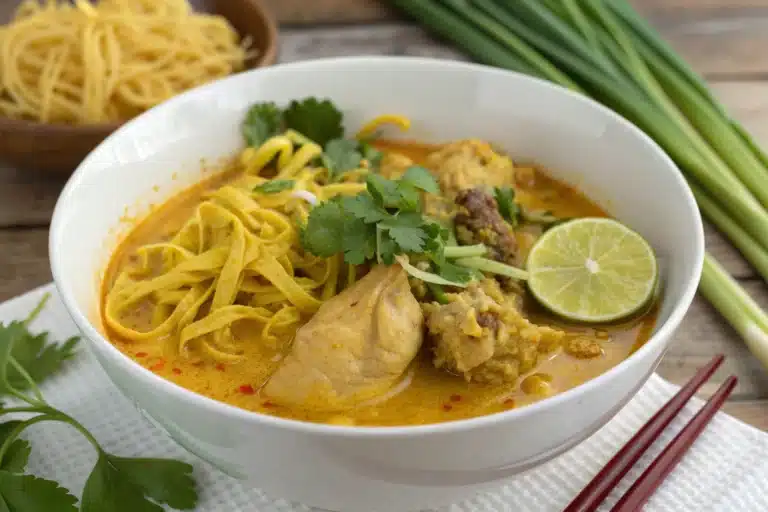
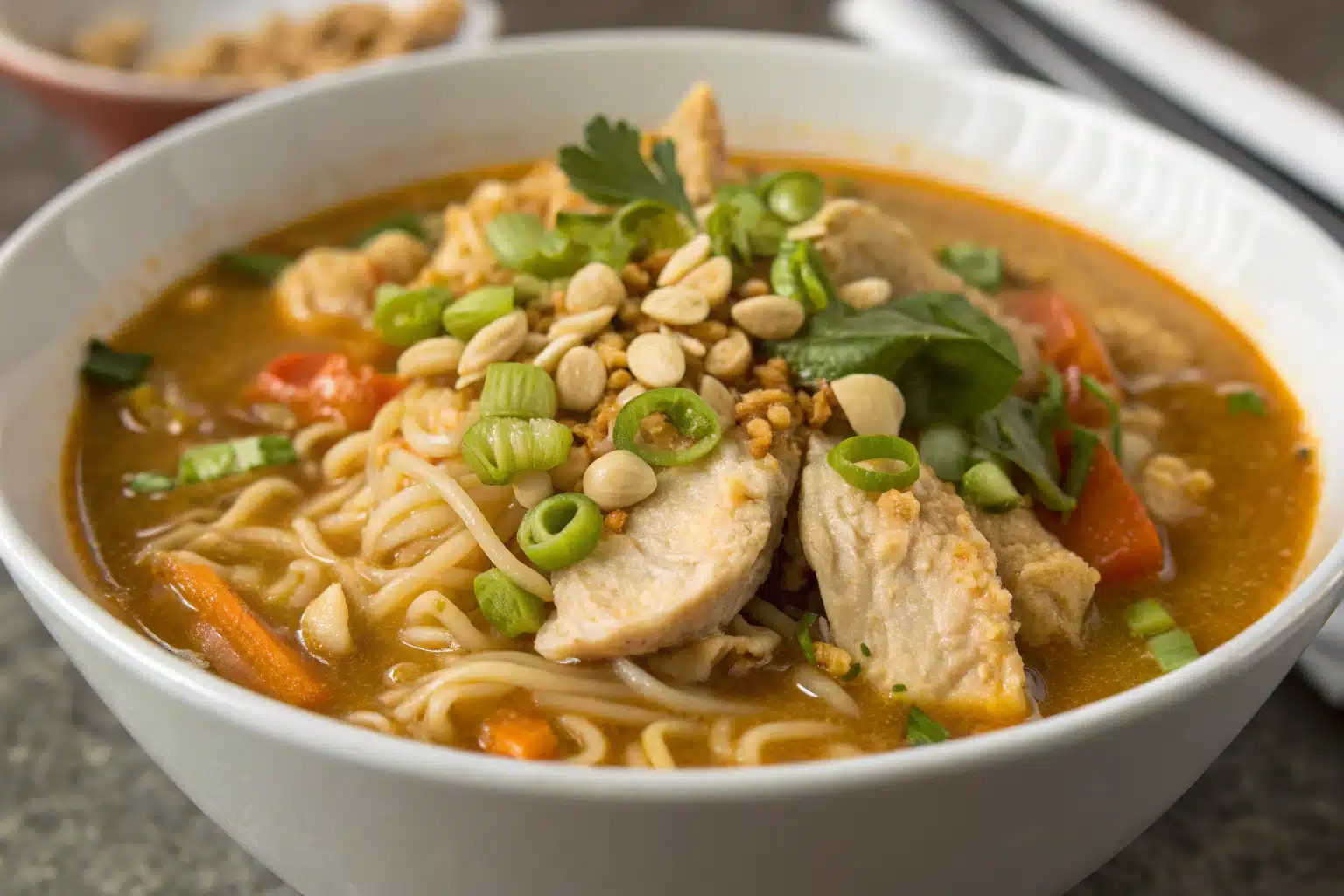
Thai peanut chicken ramen combines the comforting warmth of Japanese ramen with the bold, aromatic flavors of Thai cuisine. This fusion dish brings together creamy coconut milk, rich peanut butter, and aromatic Thai curry paste to create a broth that’s simultaneously creamy, savory, and slightly spicy. The addition of tender chicken, fresh vegetables, and chewy ramen noodles makes this a complete meal in one bowl. Unlike traditional ramen which often relies on a clear, umami-rich broth, Thai peanut chicken ramen offers a luxurious, creamy texture with complex layers of flavor that tantalize your taste buds with every spoonful.
“Discover great ideas like our Thai Red Curry Chicken Noodles for another Asian-inspired comfort dish that’s equally satisfying.”
Why This Recipe Works So Well
What makes this Thai peanut chicken ramen truly special is its perfect balance of flavors and textures. The rich, creamy broth gets depth from the combination of chicken broth, coconut milk, and peanut butter, while Thai red curry paste adds complexity and a gentle heat. The dish features tender slices of chicken that absorb all those amazing flavors, while mushrooms add an earthy note and vegetables like bell pepper and kale bring freshness and color. The ramen noodles cook directly in the flavorful broth, absorbing all those wonderful tastes while maintaining their satisfying chew. This recipe is both accessible for home cooks and impressive enough for guests, making it a versatile addition to your recipe collection.
Ingredients: Everything You Need for Thai Peanut Chicken Ramen
Key Components for the Perfect Bowl
| Ingredient | Amount | Notes |
|---|---|---|
| Boneless, skinless chicken thighs or breasts | 1 pound | Thinly sliced for quick cooking |
| All-purpose flour or cornstarch | 2 tablespoons | For coating the chicken |
| Butter | 3 tablespoons, divided | For sautéing |
| Garlic cloves | 4, finely chopped | For aromatic base |
| Sesame seeds | 1 tablespoon | Adds nutty flavor and texture |
| Mushrooms | 8 ounces, sliced | Provides earthy flavor |
| Chicken broth | 4 cups | Forms the base of the broth |
| Coconut milk | 1 (14-ounce) can | Creates creamy texture |
| Soy sauce or tamari | 1/4 cup, divided | Adds umami and saltiness |
| Fish sauce or additional soy sauce | 2 tablespoons | Enhances savory depth |
| Creamy peanut butter | 1/3 cup | Key for Thai peanut flavor |
| Thai red curry paste | 1/4 cup | Provides authentic Thai flavor |
| Fresh ginger | 1 tablespoon, grated | Adds bright, spicy notes |
| Bell pepper | 1, chopped | For color and freshness |
| Kale | 2 cups, chopped | Adds nutrition and texture |
| Ramen noodles | 3 squares (discard seasoning packets) | For the noodle base |
| Fresh basil or cilantro | 1/3 cup, chopped | For fresh herbal garnish |
Special Ingredients and Where to Find Them
While most ingredients for Thai peanut chicken ramen are available in regular grocery stores, some items might require a visit to the international foods aisle or an Asian market. Thai red curry paste can typically be found in the Asian section of most supermarkets – look for brands like Thai Kitchen or Mae Ploy for authentic flavor. For the best results, use unsweetened coconut milk (not cream of coconut or coconut cream, which are sweetened products).
Fish sauce, while optional, adds an authentic depth to the broth and can be found near other Asian condiments. For the peanut butter, choose a creamy variety without added sugar or stabilizers for the smoothest texture in your broth. Fresh ramen noodles will give the best texture, but the dried square packets work well too – just discard the seasoning packets.

Step-by-Step: Creating Your Thai Peanut Chicken Ramen
Preparing the Chicken and Base Flavors
Begin by tossing the thinly sliced chicken with flour or cornstarch in a large bowl until each piece is lightly coated. This will help create a light crust on the chicken and slightly thicken the broth later.
In a large pot or Dutch oven, melt 2 tablespoons of butter over medium-high heat. Once hot, add the coated chicken pieces in a single layer (work in batches if needed to avoid overcrowding).
Cook the chicken until lightly golden brown on all sides, about 3-4 minutes. The chicken doesn’t need to be fully cooked through at this point, as it will finish cooking later in the broth.
Add the finely chopped garlic, 2 tablespoons of soy sauce, and the sesame seeds to the pot with the chicken. Cook for just 30 seconds until fragrant, then transfer the chicken mixture to a plate and set aside.
In the same pot, add the remaining tablespoon of butter and the sliced mushrooms. Cook until the mushrooms have softened and begun to brown, about 4-5 minutes, stirring occasionally. “Check out our Garlic Basil Roasted Mushrooms for another delicious way to prepare mushrooms with fantastic flavor.”
Building the Flavorful Broth
With the mushrooms nicely browned, it’s time to build the broth. Pour in the chicken broth, scraping the bottom of the pot with a wooden spoon to release any browned bits – these contain tremendous flavor!
Add the coconut milk, remaining soy sauce, fish sauce (or additional soy sauce if not using fish sauce), creamy peanut butter, and Thai red curry paste to the pot.
Whisk the mixture thoroughly until the peanut butter and curry paste are fully incorporated into the liquid. This might take a minute of continuous whisking to achieve a smooth consistency.
Add the freshly grated ginger, chopped bell pepper, and chopped kale to the broth. Bring the mixture to a gentle boil, then reduce to a simmer.
Allow the broth to simmer for about 5 minutes, giving the vegetables time to soften slightly while the flavors meld together.
Finishing and Serving Your Ramen
Break the ramen noodle squares into the simmering broth. Push them down with a spoon to ensure they’re fully submerged in the liquid.
Return the partially cooked chicken and any accumulated juices back to the pot, stirring gently to distribute everything evenly.
Cover the pot and continue to simmer for about 3-4 minutes, or until the noodles have softened and the chicken is completely cooked through.
Just before serving, stir in the chopped fresh basil or cilantro to add a bright, herbal note to the finished dish.
Ladle the Thai peanut chicken ramen into deep bowls, ensuring each serving has a good balance of broth, noodles, chicken, and vegetables.
Tips for Perfect Thai Peanut Chicken Ramen
Achieving the Ideal Texture and Flavor Balance
For the absolute best Thai peanut chicken ramen, consider these professional tips to elevate your dish. First, slice your chicken against the grain for the most tender results – freezing the chicken for about 15 minutes before slicing makes this much easier. When adding the peanut butter to your broth, make sure it’s at room temperature to help it incorporate more smoothly. If your peanut butter is straight from the refrigerator, warm it slightly in the microwave before adding.
For the richest flavor development, try toasting your curry paste in a little oil before adding the liquids – this helps “bloom” the spices and release their full aromatic potential. Finally, taste your broth before adding the noodles and adjust the seasonings as needed – you might want more soy sauce for saltiness, a squeeze of lime for brightness, or a drizzle of honey if you prefer a touch of sweetness.
Ingredient Substitutions and Variations
Don’t worry if you don’t have every ingredient on hand – this recipe is flexible! If you don’t have Thai red curry paste, you can substitute with a combination of curry powder, garlic, ginger, and a touch of cayenne pepper, though the flavor profile will be slightly different. No fish sauce? Simply use more soy sauce or add a splash of Worcestershire sauce for that umami depth.
Vegetable broth works perfectly well instead of chicken broth for a vegetarian version (just omit the chicken and add more vegetables or tofu). For the kale, any hearty green like spinach, bok choy, or Swiss chard works beautifully. If you’re not a fan of mushrooms, simply leave them out or replace with another vegetable like carrots or broccoli florets.
“Want more ideas? Check out our Spinach Mushroom Soup for inspiration on working with greens and mushrooms together.”
Troubleshooting Common Issues
Even experienced cooks sometimes encounter challenges. If your broth is too thin, try simmering it longer with the lid off to reduce and concentrate the flavors. Conversely, if it’s too thick, add a splash more chicken broth or water to reach your desired consistency. If the peanut butter isn’t incorporating well, remove a small amount of the hot broth to a separate bowl, whisk the peanut butter into this smaller amount until smooth, then return the mixture to the pot.
For noodles that are too soft, remember that they’ll continue cooking in the hot broth even after the heat is turned off, so slightly undercook them. If your dish lacks flavor depth, try adding a splash more soy sauce, a squeeze of lime juice, or a drizzle of sesame oil to brighten the taste. Finally, if the spice level isn’t to your liking, adjust with more curry paste for heat or a dollop of coconut cream to temper spiciness.
Storage: Making the Most of Leftovers
Proper Refrigeration Techniques
Thai peanut chicken ramen makes excellent leftovers, but proper storage is key to maintaining its quality. For refrigeration, allow the ramen to cool completely before transferring to airtight containers. Ideally, store the broth and noodles separately, as the noodles will continue to absorb liquid and can become soggy. If that’s not practical, accept that the texture will change somewhat, with the noodles becoming softer and the broth thickening considerably. Refrigerated Thai peanut chicken ramen will keep well for 3-4 days. Before reheating, you may need to add a splash of chicken broth or water to loosen the consistency, as the peanut butter in the broth tends to thicken substantially when chilled.
Freezing and Reheating Guidelines
While Thai peanut chicken ramen can be frozen, it’s best to freeze only the broth with the chicken and vegetables, omitting the noodles. Fresh noodles can be cooked when you’re ready to enjoy the dish again. If freezing the complete dish (including noodles), be aware that the texture of the noodles will change considerably upon thawing and reheating. To freeze, cool the ramen completely, then transfer to freezer-safe containers, leaving about an inch of space at the top for expansion. Label with the date and freeze for up to 2 months.
“Here’s your guide to Chicken Pho Noodle Soup which includes more tips on working with Asian-style noodle soups.”
Making Ahead for Meal Prep
Thai peanut chicken ramen components can be prepared in advance for convenient meal prep. The broth base (without noodles) can be made up to 2 days ahead and refrigerated. Simply reheat the broth on the stovetop and cook fresh noodles directly in the hot broth when ready to serve. Alternatively, prepare all the components separately: cook and slice the chicken, prepare the broth, chop the vegetables, and cook the noodles.
Store each component in separate containers in the refrigerator, then assemble bowls as needed throughout the week. This method provides the freshest texture and prevents the noodles from becoming overly soft. For the best flavor when using this method, bring the broth to a simmer before adding the pre-cooked components to heat through.
Variations: Creative Twists on Thai Peanut Chicken Ramen
Vegetarian and Vegan Adaptations
Creating a vegetarian or vegan version of Thai peanut chicken ramen is surprisingly simple and equally delicious. Replace the chicken broth with vegetable broth and omit the chicken, adding extra vegetables like broccoli, carrots, snow peas, or baby corn for substance. For protein, add cubed tofu (preferably extra-firm, pressed, and pan-fried until golden) or edamame beans.
Ensure your Thai curry paste is vegetarian (some contain shrimp paste), and replace fish sauce with additional soy sauce or liquid aminos. Instead of butter, use coconut oil or a plant-based butter alternative for sautéing. The rest of the recipe remains essentially the same, resulting in a rich, satisfying plant-based meal that doesn’t compromise on flavor. The creamy peanut butter and coconut milk base ensures the broth remains luxuriously thick and satisfying even without animal products.
Protein Alternatives for Every Preference
While chicken thighs offer tender, juicy results in this Thai peanut ramen, there are numerous protein alternatives to suit various preferences. Thinly sliced beef (such as sirloin or flank steak) works beautifully, requiring just a brief cooking time to maintain tenderness. Shrimp or firm white fish like cod can be added directly to the simmering broth for the last few minutes of cooking until just cooked through. For a seafood twist, try adding scallops quickly seared before being set aside and returned to the broth at the end.
“Looking for inspiration? Try our Honey Sesame Salmon which would be a delicious protein alternative in this ramen.”
Adjusting Heat Levels and Flavor Profiles
One of the best aspects of Thai peanut chicken ramen is how easily you can customize the flavor profile. To increase the heat level, add more Thai red curry paste, a few thinly sliced Thai chili peppers, or a squirt of sriracha sauce. For a more mild version, reduce the curry paste and add a touch of honey or brown sugar to balance the flavors. To make the dish more aromatic, try adding lemongrass, kaffir lime leaves, or a splash of lime juice at the end.
For an earthier flavor profile, increase the mushrooms and add a dash of five-spice powder. If you enjoy a more tangy profile, add a tablespoon of rice vinegar or lime juice before serving. The versatility of this dish allows you to adapt it to suit your personal taste preferences while maintaining its delicious Thai-inspired essence.
Serving: Creating a Complete Thai Peanut Chicken Ramen Experience
Presentation Ideas for Impressive Serving
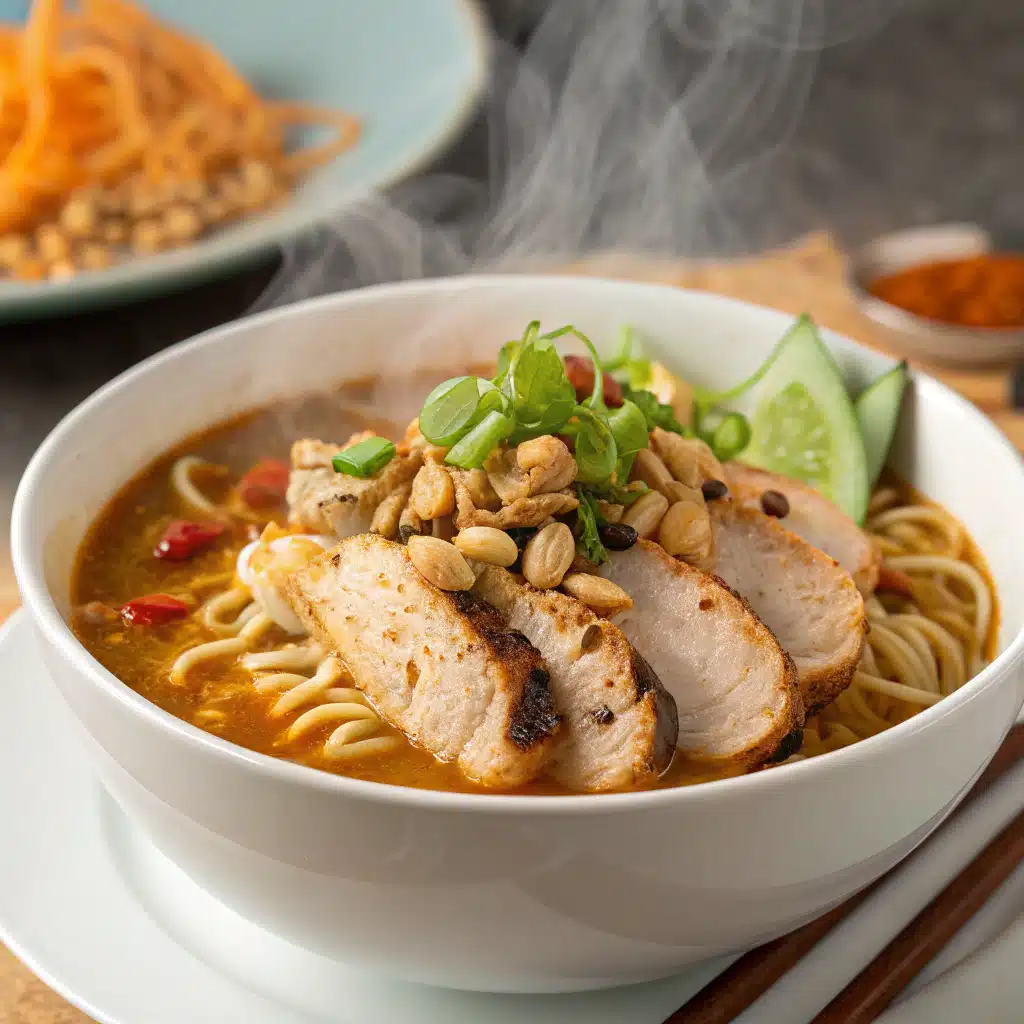
The visual appeal of Thai peanut chicken ramen can elevate the dining experience significantly. For restaurant-worthy presentation, serve in large, deep bowls that showcase all the components while keeping the broth hot. Arrange the noodles in the center, then place the chicken and vegetables artfully on top, allowing some to peek through the broth.
Garnish with a variety of colorful toppings: thinly sliced red chilis for color and heat, lime wedges on the rim of the bowl, a sprinkle of sesame seeds, and a generous handful of fresh herbs like cilantro, Thai basil, or mint. For special occasions, place small bowls of extra garnishes on the table so diners can customize their bowls. Serve with Asian-style soup spoons and chopsticks for an authentic experience, along with forks for those less comfortable with chopsticks.
Perfect Garnishes and Toppings
The right garnishes can transform Thai peanut chicken ramen from delicious to extraordinary. Consider these finishing touches for maximum flavor impact: a squeeze of fresh lime juice brightens the entire dish; thinly sliced green onions add color and a mild onion flavor; crushed peanuts or cashews provide welcome crunch against the soft noodles; bean sprouts offer freshness and texture contrast; crispy fried shallots deliver savory crunch; sliced jalapeños or Thai chilis cater to heat-lovers; additional fresh herbs like mint, Thai basil, or cilantro add aromatic freshness; a drizzle of chili oil creates an appealing visual while adding pleasant heat. Allow each diner to add their preferred garnishes to personalize their ramen experience.
“Don’t miss our Ginger Sesame Soba Bowl for more Asian-inspired topping ideas that would work beautifully with this ramen.”
Complementary Side Dishes
While Thai peanut chicken ramen is substantial enough to stand alone as a complete meal, light side dishes can enhance the dining experience. Consider serving simple vegetable-forward sides that won’t compete with the ramen’s rich flavors. Fresh spring rolls with a light dipping sauce offer a crisp contrast to the warm, rich soup. A simple cucumber salad dressed with rice vinegar, a touch of sugar, and sesame oil provides cooling relief between spoonfuls of spicy broth.
Crispy wonton strips or tempura vegetables add textural interest. For a more substantial meal, consider Thai-inspired chicken satay skewers which complement the peanut flavors in the ramen. Keep portions of side dishes small – the ramen itself is the star of the show, with sides playing a supporting role to round out the meal experience.
FAQs About Thai Peanut Chicken Ramen
What makes Thai peanut chicken ramen different from regular ramen?
Traditional Japanese ramen typically features a clear, umami-rich broth based on pork, chicken, or seafood, while Thai peanut chicken ramen incorporates distinctly Thai flavors like coconut milk, peanut butter, and Thai curry paste. This fusion creates a creamy, rich broth with complex sweet, savory, and spicy notes not found in traditional ramen. The garnishes also differ, with Thai peanut ramen often featuring lime, peanuts, and Thai herbs rather than traditional Japanese toppings.
Can Thai peanut chicken ramen be made dairy free?
Absolutely! Thai peanut chicken ramen is very easy to make dairy-free. Simply replace the butter with coconut oil or a neutral vegetable oil for sautéing. The creamy texture comes primarily from coconut milk and peanut butter, which are naturally dairy-free. Just be sure to check your curry paste ingredients, as some specialty brands might contain dairy-derived ingredients, though most commercial varieties are dairy-free.
What cut of chicken works best for ramen soup?
Boneless, skinless chicken thighs are ideal for ramen soup because they remain tender and juicy even after simmering in the broth. Their higher fat content adds flavor and prevents them from drying out. Chicken breasts can also work well if sliced thinly and added toward the end of cooking to prevent them from becoming tough. For either cut, slicing against the grain helps maintain tenderness in the finished dish.
How do you thicken peanut ramen broth?
The easiest way to thicken peanut ramen broth is to add more peanut butter, which naturally thickens as it incorporates into the hot liquid. Alternatively, you can create a cornstarch slurry (1 tablespoon cornstarch mixed with 2 tablespoons cold water) and stir it into the simmering broth. Reducing the broth by simmering it longer without a lid will also concentrate flavors and increase thickness. For a creamier texture without changing the flavor profile, a few tablespoons of coconut cream can be added.
Can Thai peanut chicken ramen be frozen?
Yes, but with some considerations. The broth with chicken and vegetables freezes well for up to 2 months. However, the noodles will become very soft when frozen and reheated, so it’s best to freeze only the broth component and cook fresh noodles when reheating. If you must freeze the complete dish, be prepared for a change in noodle texture upon reheating, as they’ll absorb more liquid and become softer.
What toppings pair well with Thai peanut chicken ramen?
The best toppings for Thai peanut chicken ramen include chopped peanuts or cashews for crunch, fresh herbs like cilantro, Thai basil, or mint, thinly sliced green onions, bean sprouts for freshness, lime wedges for brightness, sliced chilis for heat, a soft-boiled egg for richness, crispy fried shallots for texture, and a drizzle of chili oil or sesame oil for depth of flavor. “Learn more about Chicken Lo Mein for additional Asian topping inspiration that would work wonderfully with this ramen.”
Conclusion: Thai Peanut Chicken Ramen Perfection
Why You’ll Love This Recipe
Thai peanut chicken ramen stands out as a truly remarkable fusion dish that brings together the best elements of Thai and Japanese cuisines. The rich, creamy broth balances complex flavors – nutty peanut butter, aromatic curry paste, savory chicken, and bright herbs – in perfect harmony. What makes this recipe so special is its adaptability; it can be adjusted to suit any preference, whether you enjoy intense spice or prefer a milder flavor profile. The dish also offers tremendous value, transforming simple ingredients into a restaurant-worthy meal that feels indulgent yet is reasonably economical to prepare. Perhaps most importantly, it delivers true comfort food satisfaction while introducing exciting flavors that break away from everyday meals, making dinnertime something to look forward to.
Final Tips for Ramen Success
As you embark on your Thai peanut chicken ramen journey, keep these final tips in mind for guaranteed success. First, don’t rush the process of building flavors – allowing the mushrooms to properly brown and the broth to simmer develops depth that can’t be achieved through shortcuts. Pay attention to the noodles, cooking them just until tender but still chewy for the ideal texture; they’ll continue to soften in the hot broth even after the heat is turned off. Taste and adjust seasoning before serving – sometimes a squeeze of lime or an extra dash of soy sauce can make all the difference.
Remember that this dish, like many soups and stews, often tastes even better the next day as the flavors continue to develop, so don’t hesitate to make a full batch even for a small household. Finally, embrace the customization aspect by setting out various toppings and allowing each diner to create their perfect bowl – this interactive element makes the meal more engaging and ensures everyone gets exactly what they love.
“Discover great ideas like our Creamy Baked Mushrooms which would make an excellent appetizer before serving this flavorful ramen.”
Thai Peanut Chicken Ramen
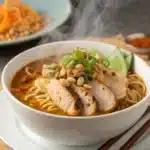
A delicious fusion of creamy Thai peanut sauce and traditional ramen, featuring tender chicken, vegetables, and chewy noodles in a rich coconut-peanut broth.
- Prep Time: 15
- Cook Time: 25
- Total Time: 40 minutes
- Yield: 4 1x
- Category: Main Dish
- Cuisine: Asian Fusion
Ingredients
- 1 pound boneless, skinless chicken thighs or breasts, thinly sliced
- 2 tablespoons all-purpose flour or cornstarch
- 3 tablespoons butter, divided
- 4 garlic cloves, finely chopped
- 1 tablespoon sesame seeds
- 8 ounces mushrooms, sliced
- 4 cups chicken broth
- 1 (14-ounce) can coconut milk
- 1/4 cup soy sauce or tamari, divided
- 2 tablespoons fish sauce or additional soy sauce
- 1/3 cup creamy peanut butter
- 1/4 cup Thai red curry paste
- 1 tablespoon freshly grated ginger
- 1 bell pepper, chopped
- 2 cups chopped kale
- 3 squares ramen noodles, seasoning packets discarded
- 1/3 cup chopped fresh basil or cilantro
Instructions
- Toss chicken with flour until evenly coated. Heat 2 tablespoons butter in a large pot over medium-high heat and brown chicken until lightly golden, about 3-4 minutes.
- Add garlic, 2 tablespoons soy sauce, and sesame seeds to chicken; cook 30 seconds until fragrant. Remove chicken mixture to a plate.
- Add remaining butter and mushrooms to pot. Sauté until mushrooms are softened and beginning to brown, about 4-5 minutes.
- Pour in chicken broth, coconut milk, remaining soy sauce, fish sauce, peanut butter, curry paste, and ginger. Whisk until smooth.
- Add bell pepper and kale. Bring to a gentle boil, then reduce to a simmer for 5 minutes.
- Add ramen noodles and return chicken to the pot. Cover and simmer 3-4 minutes until noodles are tender and chicken is cooked through.
- Stir in fresh herbs just before serving. Ladle into bowls and top with optional garnishes.
Notes
Nutrition facts are estimates and may vary based on ingredients used, portion sizes, and preparation methods. For a spicier version, add more curry paste or sriracha. For a milder version, reduce the curry paste and add a touch of honey.
Nutrition
- Serving Size: 4
- Calories: 625 Kcal
- Sugar: 6g
- Sodium: 1780mg
- Fat: 38g
- Saturated Fat: 22g
- Carbohydrates: 42g
- Fiber: 5g
- Protein: 32g
- Cholesterol: 115mg
Keywords: Thai ramen, peanut chicken soup, Asian fusion noodle soup, coconut peanut broth
Let’s connect! Follow me for more Joylicious Recipes: Facebook, Instagram, Pinterest