Spicy Peanut Ramen: Creamy, Bold and Irresistible
Introduction: The Allure of Spicy Peanut Ramen
A Comforting Fusion of Flavors
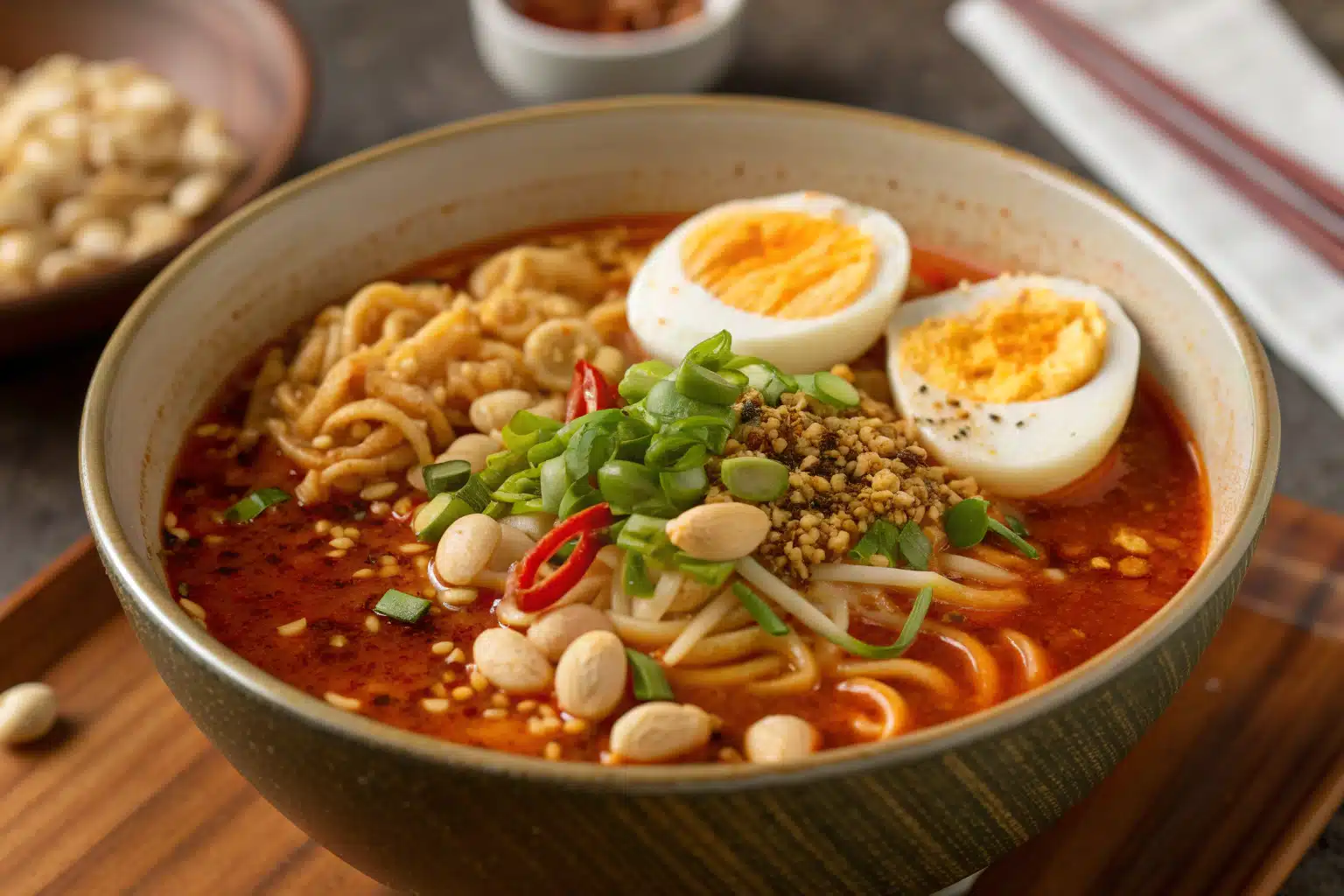
Spicy peanut ramen combines the best elements of traditional Asian noodle dishes with the creamy richness of peanut sauce and a kick of spice. This craveable comfort food has gained immense popularity for its balanced flavor profile and adaptability. In just one bowl, you’ll experience the perfect harmony of heat, umami, and nuttiness that makes spicy peanut ramen truly special. Whether you’re a seasoned ramen enthusiast or new to the world of Asian-inspired soups, this dish offers something extraordinary for everyone.
“Looking for inspiration? Try our Thai Red Curry Chicken Noodles for another flavorful Asian-inspired dish.”
The Perfect Bowl for Any Season
Though often associated with cold weather comfort, spicy peanut ramen transcends seasonal boundaries. During winter months, the warming spices and rich broth provide the perfect antidote to chilly evenings. In warmer seasons, the customizable heat level can actually help cool you down—many cultures traditionally enjoy spicy foods in hot weather for this very reason. The versatility of spicy peanut ramen makes it an ideal meal solution year-round, easily adapted with seasonal vegetables and protein options to match any occasion or craving.
Ingredients: Everything You Need for Perfect Spicy Peanut Ramen
For the Flavorful Broth Base
| Ingredient | Quantity | Notes |
|---|---|---|
| Neutral cooking oil | 2 tablespoons | Canola or vegetable oil works well |
| Shallots | 2, finely chopped | Adds aromatic sweetness |
| Chinese five-spice powder | 2 teaspoons | Optional but adds complexity |
| Chili paste | 2-3 tablespoons | Adjust according to heat preference |
| Red curry paste | 2 tablespoons | Provides depth and color |
| Mushrooms | 8 ounces, sliced | Cremini or shiitake recommended |
| Chicken or vegetable broth | 8 cups | Use homemade for best results |
| Coconut milk | 1 can | Provides essential creaminess |
| Soy sauce or tamari | 1/4 cup | For umami depth |
| Creamy peanut butter | 1/4 cup | Natural, unsweetened works best |
| Pickled ginger | 1 tablespoon | Adds bright notes |
| Baby bok choy | 4 heads | For fresh, green element |
| Ramen noodles | 4 squares | Fresh or dried both work |
| Toasted sesame oil | 1 tablespoon | For finishing touch |
For the Sesame Chicken Topping
| Ingredient | Quantity | Notes |
|---|---|---|
| Chicken cutlets or tenders | 1 pound | Sliced thinly for quick cooking |
| Panko breadcrumbs | 1 cup | For crispy texture |
| Sesame seeds | 2 tablespoons | For flavor and presentation |
| Salt | To taste | Kosher salt recommended |
| Olive oil or butter | 3 tablespoons | For frying chicken |
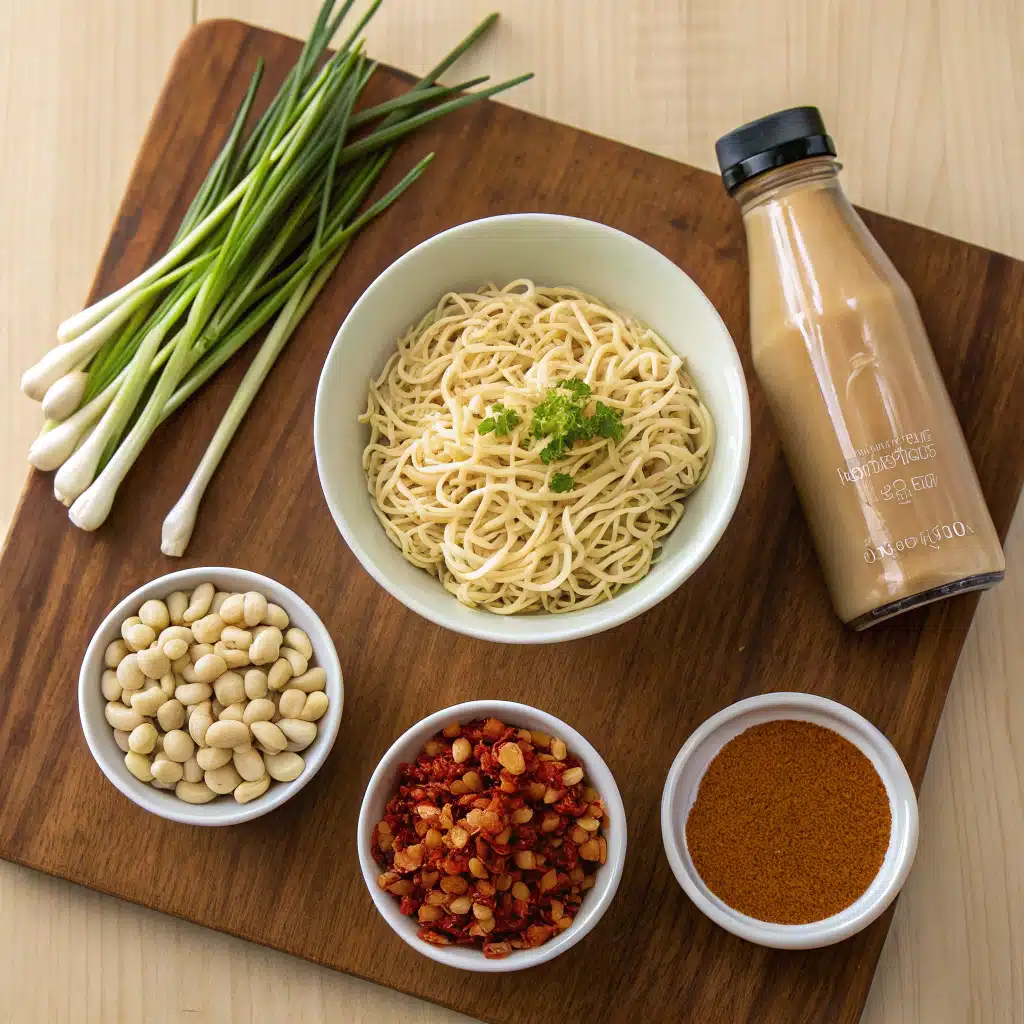
Step-by-Step: Creating Your Spicy Peanut Ramen
Preparing the Flavorful Broth
- Heat 2 tablespoons of neutral oil in a large pot over medium heat until it shimmers but doesn’t smoke.
- Add the finely chopped shallots and cook for 3-4 minutes until they become translucent and soft.
- Stir in the Chinese five-spice powder (if using), chili paste, and red curry paste. Cook for another minute until fragrant, continuously stirring to prevent burning.
- Add the sliced mushrooms and cook for 2-3 minutes until they begin to soften and release their moisture.
- Pour in the chicken or vegetable broth, coconut milk, soy sauce, creamy peanut butter, and pickled ginger. Whisk thoroughly to ensure the peanut butter fully incorporates into the broth.
- Bring the mixture to a gentle boil, then reduce to a simmer and cook for 10 minutes to allow the flavors to meld together beautifully.
Creating the Sesame Chicken Topping
- While the broth simmers, prepare the chicken by placing cutlets between two sheets of plastic wrap and gently pounding to even thickness.
- In a shallow dish, combine panko breadcrumbs with sesame seeds and a pinch of salt.
- Press the chicken pieces into the breadcrumb mixture, ensuring even coating on both sides.
- Heat olive oil or butter in a large skillet over medium-high heat until hot but not smoking.
- Cook the breaded chicken for 3-4 minutes per side until golden brown and cooked through (internal temperature of 165°F).
- Transfer to a paper towel-lined plate, let rest for 3 minutes, then slice into strips.
Finishing and Assembling the Dish
- When ready to serve, remove the broth from heat and add the ramen noodles and baby bok choy directly to the pot.
- Cover and let sit for 2-3 minutes until the noodles soften and the bok choy wilts slightly.
- Stir in the toasted sesame oil for a final flavor enhancement.
- Ladle the spicy peanut ramen into bowls, including broth, noodles, and vegetables.
- Top each bowl with sliced sesame chicken and your choice of garnishes such as sliced green onions, extra sesame seeds, or cilantro.
“Don’t miss our Chicken Pho Noodle Soup for another delicious Asian soup option!”
Tips: Mastering Your Spicy Peanut Ramen
Perfecting the Broth Consistency
The hallmark of exceptional spicy peanut ramen is achieving the ideal broth consistency—rich and creamy without being overly thick. If your broth becomes too thick after adding the peanut butter, simply add a splash more broth or water until you reach the desired consistency. Conversely, if your broth seems too thin, simmer it uncovered for a few additional minutes to reduce and concentrate the flavors. Remember that the broth will naturally thicken slightly as it cools, so aim for a consistency that’s just slightly thinner than your ideal when the soup is piping hot.
Managing the Spice Level
One of the most customizable aspects of spicy peanut ramen is the heat level. For a milder version that still delivers flavor, start with just 1 tablespoon of chili paste and gradually increase to taste. For spice enthusiasts, complement the chili paste with additional heat elements like thinly sliced fresh jalapeños, a drizzle of chili oil, or a sprinkle of crushed red pepper flakes as a garnish. Always remember that it’s easier to add more spice than to remedy an overly spicy broth, so start conservatively and adjust according to your preference. The coconut milk and peanut butter help tame the heat, creating a perfectly balanced spicy peanut ramen experience.
Noodle Know-How
While the recipe calls for standard ramen noodles, the type you choose significantly impacts the final dish. Traditional curly ramen noodles offer nostalgic appeal and excellent broth absorption, while straight ramen or even rice noodles provide interesting textural alternatives. For the best results, slightly undercook the noodles initially as they’ll continue to soften in the hot broth. If preparing components ahead of time, consider cooking and storing the noodles separately from the broth, combining them only when ready to serve to prevent the noodles from becoming soggy. This simple step ensures your spicy peanut ramen maintains the perfect bite every time.
Storage: Keeping Your Spicy Peanut Ramen Fresh
Refrigerating Leftovers
Properly stored spicy peanut ramen can make an excellent meal for days after initial preparation. For best results, separate the components before refrigerating. Store the broth in an airtight container for up to 3 days, keeping the noodles in a separate container to prevent them from absorbing all the liquid and becoming mushy. The sesame chicken can be refrigerated for up to 2 days, though it will lose some of its crispness. When ready to enjoy your leftover spicy peanut ramen, gently reheat the broth on the stovetop until just simmering, then add the noodles and chicken for the final minute to warm through without overcooking.
Freezing the Broth
The flavorful broth base of your spicy peanut ramen freezes exceptionally well, making this recipe perfect for meal prep or batch cooking. After cooking, allow the broth to cool completely before transferring to freezer-safe containers, leaving about an inch of headspace to allow for expansion. Freeze for up to 3 months for optimal flavor. When ready to use, thaw overnight in the refrigerator or defrost using your microwave’s defrost setting.
“Here’s your guide to Mushroom Ratatouille if you’re looking for more make-ahead meals.”
Make-Ahead Options
Spicy peanut ramen components can be prepared in advance for quick assembly later, making it perfect for busy weeknights. The broth base actually benefits from being made a day ahead, as the flavors have more time to develop and meld together. Store the prepared broth in the refrigerator for up to 3 days. The sesame chicken can be breaded in advance and stored uncooked in the refrigerator for up to 24 hours before frying. For the freshest experience, cook the noodles and add the bok choy just before serving. This advance preparation makes assembling your spicy peanut ramen quick and stress-free while maintaining optimal texture and flavor.
Variations: Creative Spins on Spicy Peanut Ramen
Vegan Peanut Ramen Delight
Creating a delicious vegan version of spicy peanut ramen requires just a few thoughtful substitutions. Start with a rich vegetable broth as your base instead of chicken broth. For added depth, consider adding dried mushrooms like shiitake when simmering your broth. Replace the sesame chicken with crispy tofu—simply press extra-firm tofu, cut into cubes, coat with cornstarch, and pan-fry until golden. Alternatively, roasted mushrooms provide a meaty texture without animal products. The coconut milk already makes the broth creamy without dairy, and the peanut butter adds richness and body. This vegan adaptation maintains all the complex flavors of traditional spicy peanut ramen while being completely plant-based.
Protein Alternatives
While the sesame chicken provides a delicious topping for spicy peanut ramen, numerous protein alternatives can transform this versatile dish. For seafood lovers, seared shrimp or scallops add a sweet, delicate counterpoint to the spicy broth. Thinly sliced beef, briefly cooked in the hot broth shabu-shabu style, creates a rich variation. For a simpler approach, shredded rotisserie chicken saves time while still providing protein. Plant-based options beyond tofu include tempeh or seitan for hearty texture. Each protein option brings its own character to the dish while complementing the creamy, spicy peanut broth.
“Discover great ideas like our Ginger Sesame Soba Bowl for more Asian-inspired protein options.”
Regional Flavor Adaptations
Spicy peanut ramen lends itself beautifully to regional flavor adaptations. For a Thai-inspired version, increase the curry paste and add a splash of fish sauce and lime juice for brightness. A Japanese twist might include miso paste stirred into the broth for depth, topped with a soft-boiled egg and nori. For Korean-inspired flavors, incorporate gochujang instead of standard chili paste and top with kimchi. A Chinese-influenced adaptation might include star anise and Sichuan peppercorns in the broth, topped with Chinese broccoli instead of bok choy. Each regional adaptation maintains the core elements of spicy peanut ramen while introducing exciting new flavor profiles that expand your culinary horizons.
Serving: Presentation and Pairings for Spicy Peanut Ramen
Garnishes That Elevate
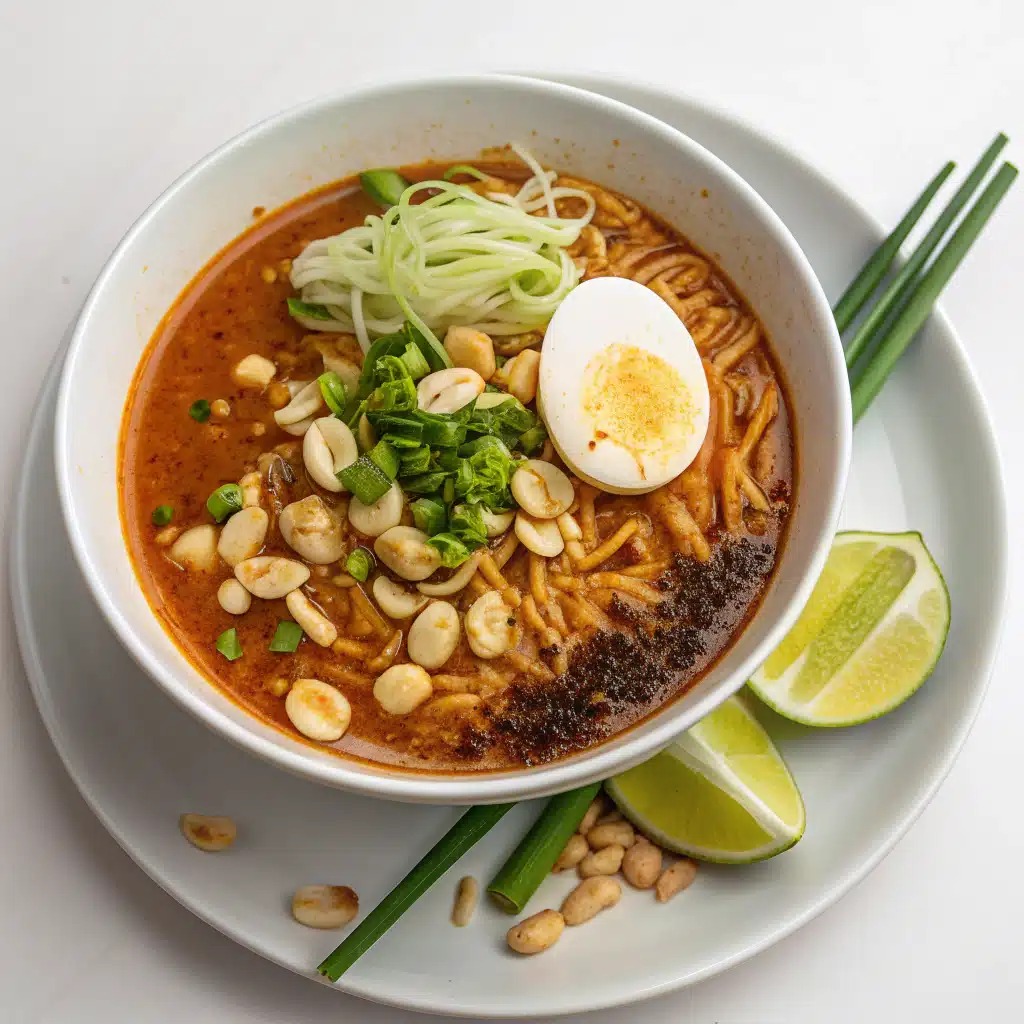
The finishing touches on your spicy peanut ramen can transform it from a simple soup to an Instagram-worthy masterpiece. Fresh elements provide contrast to the rich, spicy broth—try thinly sliced green onions, fresh cilantro leaves, or delicate bean sprouts. For texture, consider crushed peanuts, toasted sesame seeds, or crispy fried shallots scattered on top. A wedge of lime on the side allows diners to add brightness as desired. For those who enjoy extra heat, thinly sliced fresh chilies or a drizzle of chili oil makes a beautiful and functional garnish. These thoughtful additions not only enhance the visual appeal of your spicy peanut ramen but also provide complementary flavors and textures that elevate the entire eating experience.
Side Dishes and Accompaniments
While spicy peanut ramen works perfectly as a standalone meal, thoughtfully chosen sides can create a more complete dining experience. Simple cucumber salad dressed with rice vinegar provides a cooling counterpoint to the spicy broth. Gyoza or vegetable spring rolls offer a pleasing textural contrast. For a refreshing element, consider a small bowl of quick-pickled vegetables like radishes or carrots, which cut through the richness of the peanut broth. If serving spicy peanut ramen as part of a larger meal, keep accompanying dishes light and fresh to balance the hearty soup. A simple green salad with ginger dressing or steamed edamame with sea salt makes perfect companions to this flavorful main dish.
Serving Vessel Considerations
The vessel you choose for serving spicy peanut ramen impacts both presentation and functionality. Traditional ramen bowls are ideal—their wide, deep shape allows room for all components while keeping the broth hot. The wide opening makes it easier to access noodles and toppings with chopsticks. For a contemporary presentation, consider dark-colored bowls that create dramatic contrast with the colorful ingredients.
If traditional ramen bowls aren’t available, any deep bowl with at least a 20-ounce capacity works well. For an interactive dining experience, serve the hot broth in a separate vessel, allowing guests to pour it over noodles and toppings arranged in their bowls. This method preserves the perfect texture of each component until the moment of consumption.
“Check out our Beef Rolls for another dish with impressive presentation.”
FAQs: Common Questions About Spicy Peanut Ramen
What makes spicy peanut ramen creamy?
The creaminess in spicy peanut ramen comes from two key ingredients: coconut milk and peanut butter. Coconut milk provides a silky, dairy-free base that enriches the broth without making it heavy, while the natural oils in peanut butter emulsify into the broth, creating a velvety texture. For the creamiest results, use full-fat coconut milk and natural creamy peanut butter without added sugar or stabilizers. Whisking thoroughly while the broth simmers ensures these ingredients fully incorporate for the smoothest texture.
Can spicy peanut ramen be made vegan?
Absolutely! Spicy peanut ramen is easily adaptable for vegan diets. Simply substitute vegetable broth for chicken broth and replace the sesame chicken with plant-based proteins like crispy tofu, tempeh, or roasted mushrooms. The coconut milk already provides dairy-free creaminess, and the remaining ingredients are naturally vegan. This makes spicy peanut ramen an excellent option for plant-based eaters seeking a satisfying, flavor-packed meal.
What noodles work best for peanut ramen?
While traditional ramen noodles are the classic choice, several alternatives work beautifully in spicy peanut ramen. Fresh or dried ramen noodles offer authentic texture, but rice noodles, soba (buckwheat) noodles, or even udon can substitute effectively. For gluten-free options, rice noodles or 100% buckwheat soba provide similar satisfaction. The key is selecting noodles with enough texture to stand up to the rich broth without becoming soggy too quickly.
How do you adjust spice level in peanut ramen?
Customizing the heat in your spicy peanut ramen is simple with these adjustments. For milder ramen, reduce the chili paste to 1 tablespoon and ensure you’re using a milder variety. To increase heat, add more chili paste, incorporate fresh chilies, or finish with chili oil. The coconut milk and peanut butter naturally temper spiciness, so you can add more of these ingredients if your broth becomes too spicy. Always start with less heat and add gradually, as it’s easier to increase spiciness than to reduce it.
Can spicy peanut ramen be made ahead of time?
Spicy peanut ramen components work wonderfully for make-ahead meal preparation. The broth actually improves with time as flavors meld, and can be refrigerated for up to 3 days or frozen for 3 months. Store noodles separately to prevent them from absorbing too much liquid and becoming soggy. The sesame chicken can be prepared a day ahead, though it will lose some crispness upon reheating. For the freshest experience, prepare the broth in advance but cook noodles and add bok choy just before serving.
What toppings pair well with spicy peanut ramen?
Beyond the sesame chicken, numerous toppings complement spicy peanut ramen beautifully. Fresh additions like bean sprouts, sliced green onions, cilantro, or Thai basil add brightness. For texture, try crushed peanuts, fried shallots, or toasted sesame seeds. Soft-boiled eggs provide richness, while kimchi or pickled vegetables offer contrast. Lime wedges on the side allow for customizable acidity. These diverse toppings enable everyone to create their perfect bowl of spicy peanut ramen.
Conclusion: Why Spicy Peanut Ramen Deserves a Place in Your Recipe Collection
The Perfect Balance of Comfort and Adventure
Spicy peanut ramen represents the ideal balance between familiar comfort and culinary adventure. The warming, creamy broth offers immediate satisfaction, while the complex layering of spices, aromatics, and umami elements provides an exciting flavor journey with every spoonful. Unlike traditional ramen that can require days of preparation for authentic results, this spicy peanut variation delivers incredible depth of flavor in just over 30 minutes, making it accessible for weeknight cooking.
Its versatility allows for endless customization without losing the core elements that make it so craveable. Whether you’re introducing yourself to Asian flavors or expanding your existing repertoire, spicy peanut ramen offers a perfectly balanced entry point that’s both approachable and impressive.
“Want more ideas? Check out our Creamy Spicy Chicken Ramen for another ramen variation.”
An Adaptable Recipe for Every Kitchen
Perhaps the greatest strength of spicy peanut ramen lies in its adaptability across dietary preferences, ingredient availability, and cooking skill levels. The recipe functions beautifully as written but welcomes substitutions based on what you have on hand. No bok choy? Spinach or kale work perfectly. Out of ramen noodles? Almost any Asian noodle variety creates a delicious result.
The base recipe accommodates vegetarian, vegan, gluten-free, and protein-focused diets with simple modifications. Additionally, the fundamental techniques required—sautéing aromatics, simmering a broth, and cooking noodles—make this an achievable recipe even for those new to Asian cuisine. This adaptability ensures that spicy peanut ramen can become a reliable favorite in any kitchen, regardless of constraints or experience level.
PrintSpicy Peanut Ramen
Creamy, bold, and satisfying spicy peanut ramen with sesame chicken – the perfect balance of heat, umami and nutty flavors in one comforting bowl.
- Prep Time: 10
- Cook Time: 25
- Total Time: 35 minutes
- Yield: 4 1x
- Category: Main Course
- Cuisine: Asian Fusion
Ingredients
- For the Soup
- 2 tablespoons neutral cooking oil
- 2 shallots, finely chopped
- 2 teaspoons Chinese five-spice powder (optional)
- 2 to 3 tablespoons chili paste
- 2 tablespoons red curry paste
- 8 ounces mushrooms, sliced
- 8 cups chicken or vegetable broth
- 1 can coconut milk
- 1/4 cup soy sauce or tamari
- 1/4 cup creamy peanut butter
- 1 tablespoon pickled ginger
- Baby bok choy
- 4 squares ramen noodles
- 1 tablespoon toasted sesame oil
- For the Sesame Chicken
- Chicken cutlets or tenders
- Panko breadcrumbs
- Sesame seeds
- Salt
- Olive oil or butter
Instructions
- Heat oil in a large pot and cook shallots until soft.
- Stir in Chinese five-spice, chili paste, curry paste, and then add mushrooms.
- Pour in broth, coconut milk, soy sauce, peanut butter, and pickled ginger. Simmer for 10 minutes.
- Meanwhile, coat chicken in panko breadcrumbs mixed with sesame seeds and pan-fry until golden on both sides.
- Once broth has simmered, remove from heat and add ramen noodles and bok choy.
- Let sit covered for 2-3 minutes until noodles soften and bok choy wilts.
- Stir in sesame oil.
- Slice cooked chicken and serve on top of the ramen with additional toppings as desired.
Notes
Nutrition facts are estimates and may vary based on ingredients used, portion sizes, and preparation methods.
Nutrition
- Serving Size: 4
- Calories: 520 Kcal
- Sugar: 5g
- Sodium: 1280mg
- Fat: 28g
- Saturated Fat: 12g
- Carbohydrates: 42g
- Fiber: 4g
- Protein: 26g
- Cholesterol: 45mg
Keywords: spicy ramen, peanut ramen, coconut ramen, sesame chicken, Asian soup
Let’s connect! Follow me for more Joylicious Recipes: Facebook, Instagram, Pinterest