
Chirashi Sushi: Colorful, Fresh & Easy to Make at Home
The Beauty of Chirashi Sushi
Chirashi sushi, a vibrant Japanese dish meaning “scattered sushi,” has gained immense popularity beyond Japan for its stunning presentation and incredible flavors. Unlike traditional rolled sushi, chirashi sushi features colorful toppings artfully arranged on a bed of seasoned sushi rice. This visually appealing dish not only delights the senses but also offers a more accessible way to enjoy sushi at home. The combination of fresh fish, vegetables, and perfectly prepared sushi rice creates a balanced meal that’s both nutritious and satisfying.
“Looking for inspiration? Try our creamy salmon pasta recipe if you enjoy seafood dishes beyond sushi.”
History and Cultural Significance
Chirashi sushi has deep roots in Japanese culinary history, originating as a practical way to serve sushi without the precision required for rolls. Traditionally prepared during festivals and celebrations, this dish symbolizes prosperity and good fortune, with each ingredient contributing vibrant colors and distinct flavors. In Japan, regional variations abound, with some areas featuring local specialties and seasonal ingredients. Today, chirashi sushi has evolved into both an everyday meal and a gourmet experience, offering endless possibilities for creativity while maintaining its cultural significance as a communal dish meant to be shared.
Ingredients for Perfect Chirashi Sushi
Essential Components
The foundation of exceptional chirashi sushi begins with high-quality ingredients that work harmoniously together. The core components include:
| Ingredient | Amount | Notes |
|---|---|---|
| Short-grain sushi rice | 2 cups | Must be rinsed thoroughly |
| Water | 2 ½ cups | For cooking rice |
| Rice vinegar | ¼ cup | For seasoning |
| Sugar | 2 tablespoons | Balances acidity |
| Salt | 1 teaspoon | Enhances flavor |
| Sashimi-grade tuna | 6 oz | Thinly sliced |
| Sashimi-grade salmon | 6 oz | Thinly sliced |
| Eggs | 2 | For tamago (Japanese omelet) |
| Cucumber | 1 small | Thinly sliced |
| Nori (seaweed) | 1 sheet | Cut into thin strips |
| Toasted sesame seeds | 1 tablespoon | For garnish |
Selecting High-Quality Fish
The star of chirashi sushi is undoubtedly the fish, and quality is paramount. Always seek sashimi-grade fish from reputable sources, as this designation ensures the fish is safe to consume raw. Fresh fish should have a clean, oceanic smell—never fishy—and display vibrant color with firm, translucent flesh. Tuna should be deep red without brown spots, while salmon should appear bright orange-pink with even marbling. If you’re concerned about sourcing raw fish, consider starting with sushi-grade salmon, which is generally easier to find. Alternatively, you can incorporate cooked seafood options like shrimp or crab.
“Discover great ideas like our easy salmon sushi balls for another approachable way to enjoy Japanese flavors at home.”
Step-by-Step Chirashi Sushi Preparation
Mastering Sushi Rice
The foundation of excellent chirashi sushi lies in properly prepared sushi rice:
- Thoroughly rinse the short-grain rice in cold water, changing the water several times until it runs clear. This removes excess starch that would make the rice too sticky.
- After draining well, combine the rice with 2½ cups water in a rice cooker or heavy-bottomed pot.
- If using a rice cooker, simply follow the manufacturer’s instructions. For stovetop cooking, bring to a boil, then reduce to low heat, cover tightly, and simmer for exactly 15 minutes.
- Once cooked, leave the rice covered and undisturbed for an additional 10 minutes to complete the steaming process.
- Meanwhile, prepare the seasoning by gently warming rice vinegar, sugar, and salt in a small saucepan just until dissolved. Don’t boil this mixture as it will intensify the vinegar aroma.
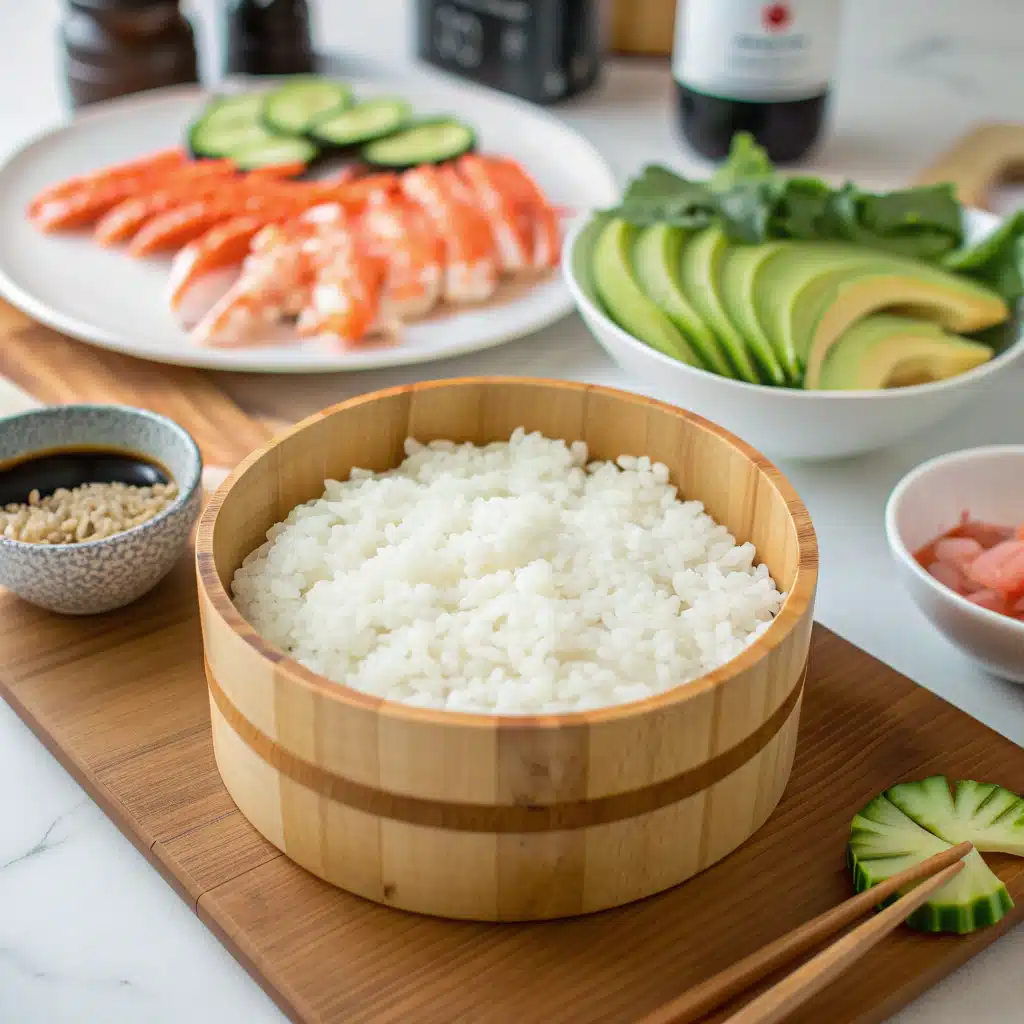
- Transfer the cooked rice to a large, wide bowl (traditionally a wooden hangiri, but any non-metallic bowl works).
- Drizzle the vinegar mixture over the rice while using a cutting and folding motion with a wooden rice paddle or spatula. Fan the rice simultaneously to cool it and create a glossy finish.
- Continue until the rice reaches room temperature with each grain distinct yet sticky enough to hold together.
Preparing Toppings
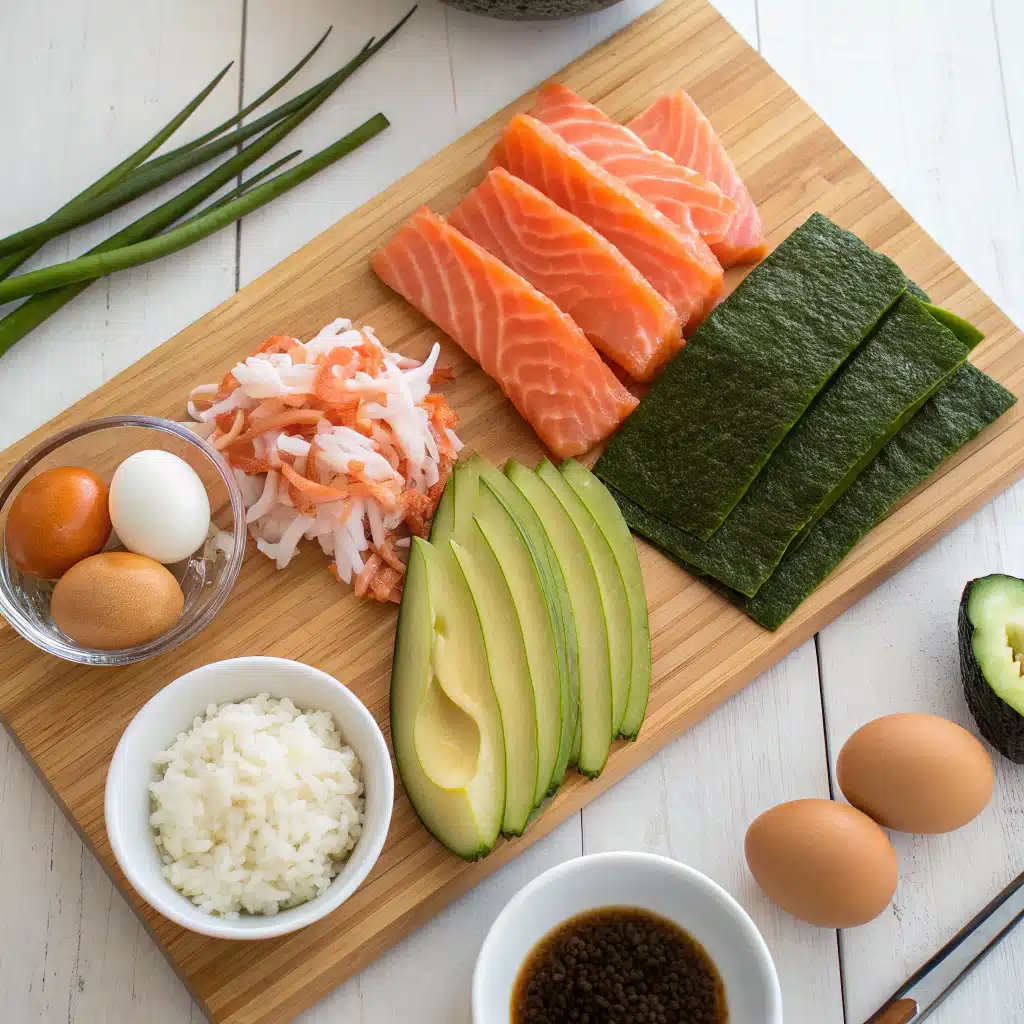
Creating beautiful toppings for your chirashi sushi requires attention to detail:
- For the tamago (sweet omelet), beat two eggs with a pinch of sugar and salt. Heat a non-stick rectangular pan over medium-low heat with a small amount of oil.
- Pour a thin layer of egg mixture into the pan, allowing it to cook until just set but not browned.
- Roll the omelet to one side of the pan, add more oil if needed, and pour another thin layer of egg. Continue this process until all egg mixture is used.
- Allow the tamago to cool completely before slicing into thin strips.
- Slice cucumber into paper-thin rounds or julienne for elegant presentation.
- Cut nori sheets into thin strips using sharp kitchen scissors.
- Most importantly, slice the sashimi-grade fish across the grain into even, thin pieces approximately ¼-inch thick. Keep refrigerated until ready to assemble.
“Check out our miso salmon recipe for another delicious way to enjoy Japanese-inspired seafood dishes.”
Assembly Techniques
The artful arrangement of chirashi sushi elevates this dish from merely delicious to visually spectacular:
- Begin with a layer of seasoned sushi rice in individual bowls or a large serving platter, spreading it evenly but not compacting it too firmly.
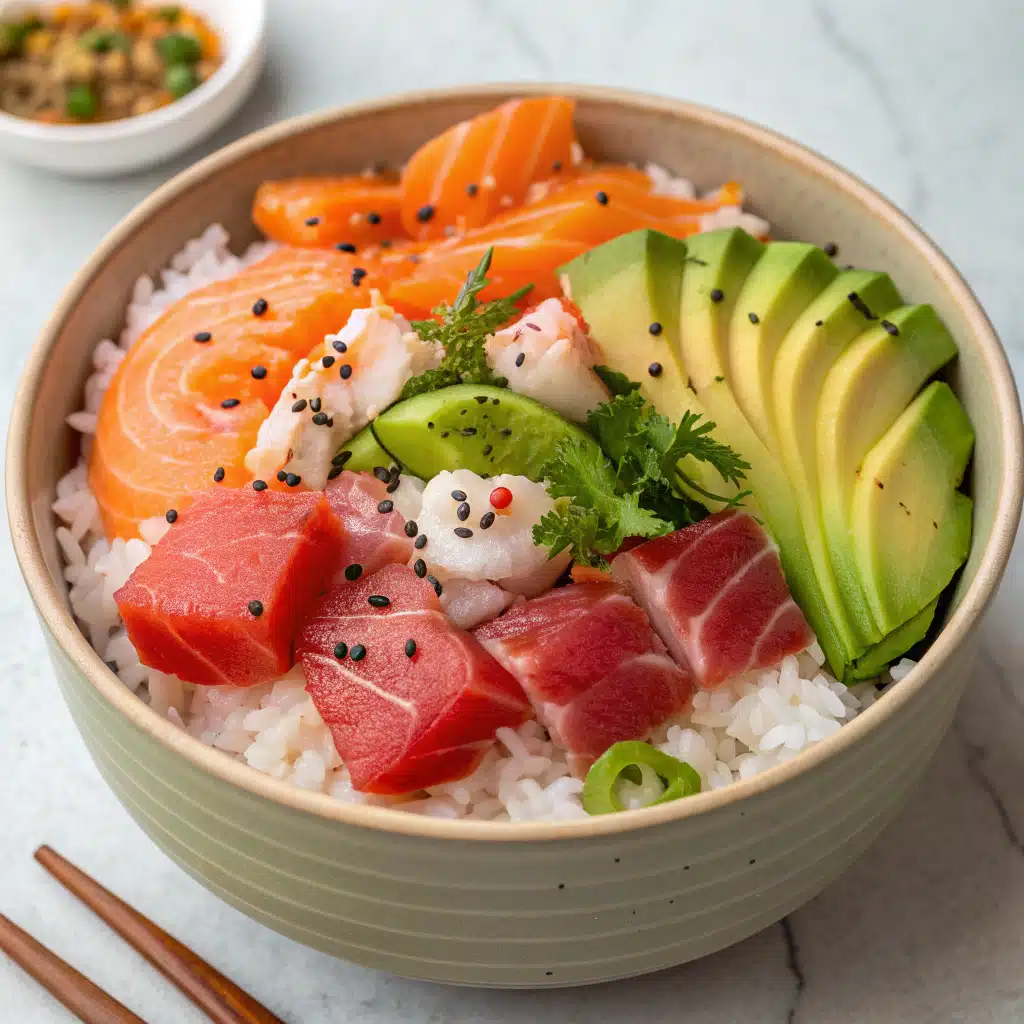
- Create a balanced composition by considering color contrasts and textures when arranging toppings.
- Place larger pieces like fish slices first, arranging them in an overlapping pattern or fan formation.
- Add tamago strips, cucumber slices, and any other ingredients in separate sections to create a color-blocked effect.
- Sprinkle nori strips and toasted sesame seeds to add texture and visual interest.
- Optional garnishes like thinly sliced avocado, radish, or scallions can be added for additional color and flavor complexity.
- Serve immediately with small dishes of soy sauce, wasabi, and pickled ginger on the side.
Tips for Chirashi Sushi Success
Knife Skills and Techniques
Proper knife skills are crucial for creating beautiful chirashi sushi:
Invest in a sharp, high-quality knife dedicated to fish preparation. A traditional yanagiba (sushi knife) is ideal, but a sharp chef’s knife will work.
Keep your blade clean between cuts by wiping with a damp cloth and slicing in one smooth motion rather than sawing.
For fish, slice against the grain at a 45-degree angle to achieve tender pieces with maximum surface area for flavor.
When preparing tamago, use a sharp knife dipped in water between cuts to prevent sticking and achieve clean edges.
Practice the technique of drawing the knife toward you rather than pushing away, which provides better control and cleaner cuts.
Rice Troubleshooting
Achieving perfect sushi rice can be challenging, but these solutions help address common issues:
If your rice is too sticky, you may have used too little vinegar seasoning or over-mixed it. Next time, ensure you’re using the proper vinegar-to-rice ratio and fold gently rather than stirring.
For rice that’s too dry or falling apart, you likely used too little water when cooking or didn’t allow sufficient steaming time. Increase water slightly or extend the resting period after cooking.
If rice has a gummy texture, you probably didn’t rinse it thoroughly before cooking. Always rinse until the water runs clear to remove excess starch.
Temperature matters—rice that’s too warm will continue cooking when seasoned, while rice that’s too cold won’t absorb seasoning properly. Aim for just above body temperature.
Freshness and Safety
Working with raw fish requires strict attention to food safety:
Purchase fish the same day you plan to prepare chirashi sushi, or freeze sashimi-grade fish according to FDA guidelines to eliminate parasite concerns.
Keep all ingredients refrigerated until ready to use, and work quickly during assembly to maintain proper temperatures.
Use separate cutting boards and utensils for raw fish to prevent cross-contamination with other ingredients.
Consume chirashi sushi within two hours of preparation for optimal safety and flavor.
“Here’s your guide to scallops recipe for another seafood option that emphasizes freshness and proper handling.”
If you’re pregnant, elderly, or immunocompromised, consider using fully cooked seafood options like poached shrimp or smoked salmon instead of raw fish.
Storage and Preparation Timing
Make-Ahead Components
While chirashi sushi is best enjoyed immediately after assembly, certain elements can be prepared in advance:
The sushi rice can be made up to 4 hours ahead and kept at room temperature covered with a damp cloth. Never refrigerate sushi rice as it becomes hard and loses its delicate texture.
Tamago (Japanese omelet) can be prepared a day in advance and stored in the refrigerator, wrapped tightly in plastic wrap.
Vegetables like cucumber and radish can be sliced a few hours ahead and stored in cold water to maintain crispness, then patted dry before using.
Nori strips should be cut just before serving to prevent them from becoming soggy or stale.
Proper Storage
If you must store leftover chirashi sushi, follow these guidelines to preserve quality:
Store any leftovers in an airtight container in the refrigerator for no more than 24 hours. The rice texture will deteriorate, but the dish will remain safe to eat.
Never freeze assembled chirashi sushi, as the texture of both the rice and fish will be irrevocably damaged.
Leftover sashimi-grade fish should be consumed within 24 hours or properly frozen according to food safety guidelines if it hasn’t been mixed with other ingredients.
When storing components separately, keep all items well-wrapped and refrigerated at temperatures below 40°F (4°C).
Optimal Timing
For the best chirashi sushi experience, timing is everything:
Plan your preparation schedule backwards from serving time, allowing approximately 2 hours total for rice cooking, cooling, and assembly.
Cook rice first, as it needs time to cool properly while you prepare the other ingredients.
Slice fish last, just before assembly, to ensure maximum freshness and food safety.
Aim to serve chirashi sushi immediately after assembly when flavors and textures are at their peak.
“Don’t miss our salmon sushi bake for another convenient way to enjoy sushi flavors when timing is challenging.”
Variations of Chirashi Sushi
Regional Japanese Styles
Chirashi sushi varies significantly throughout Japan, with distinct regional interpretations:
Kansai-style chirashi (particularly from Osaka) features cooked or preserved ingredients mixed throughout the rice rather than arranged on top. Ingredients like shiitake mushrooms, carrots, and lotus root are simmered in sweet soy sauce before being incorporated.
Tokyo-style chirashi (Edo-mae) showcases fresh seasonal seafood artfully arranged on top of seasoned rice, similar to the style most commonly seen outside Japan.
Gomoku chirashi from eastern Japan incorporates five or more ingredients (hence the name “five items”) like shiitake, carrots, bamboo shoots, and egg mixed with seasoned rice.
Bara chirashi, popular in coastal areas, features diced sashimi mixed throughout the rice rather than arranged on top, resembling a seafood rice bowl.
Seasonal Adaptations
True Japanese cuisine celebrates seasonality, and chirashi sushi is no exception:
Spring chirashi might feature sakura denbu (pink fish flakes), snow peas, and bamboo shoots with seasonal fish like tai (sea bream).
Summer versions could incorporate refreshing elements like cucumber, corn, and shiso leaves with lighter fish options such as squid or scallops.
Fall chirashi often includes mushrooms, chestnuts, and fatty fish like yellowtail that peaks during cooler months.
Winter variations might feature heartier ingredients like salmon roe, yellowtail, and preserved vegetables to reflect the season’s bounty.
Vegetarian and Vegan Options
Chirashi sushi can be wonderfully adapted for plant-based diets:
Replace fish with marinated tofu, avocado slices, or colorful roasted vegetables like bell peppers and sweet potato.
Incorporate protein-rich options like edamame beans, tempeh, or seasoned seitan for satisfying texture.
Experiment with pickled vegetables like daikon, carrots, and beets for vibrant colors and complex flavors.
Consider adding unique Japanese ingredients like kanpyo (dried gourd strips), umeboshi (pickled plum), or kinpira (sautéed burdock root) for authentic flavors without animal products.
Serving and Presentation
Traditional Serving Vessels
The presentation of chirashi sushi significantly enhances the dining experience:
Individual lacquered bowls (donburi) with flat bottoms and wide openings showcase the colorful ingredients beautifully while being practical for eating.
For special occasions, ornate wooden boxes called “oke” or “hangiri” (similar to but smaller than the vessels used for mixing sushi rice) create an impressive presentation for family-style serving.
Some traditional presentations use seasonally appropriate vessels, like bamboo baskets in summer or ceramic bowls with seasonal motifs throughout the year.
Consider the size and depth carefully—vessels that are too deep hide the beautiful arrangement, while those too shallow make eating difficult.
Garnishing Techniques
Thoughtful garnishes elevate chirashi sushi from simply delicious to truly memorable:
Arrange ingredients with intention, considering color contrasts and the Japanese aesthetic principle of asymmetrical balance.
Create height by leaning some ingredients against each other rather than laying everything flat.
Use microgreens, shiso leaves, or edible flowers for sophisticated color accents and fresh flavors.
Consider Japanese garnishes like benishoga (red pickled ginger), yuzu zest, or a small mound of wasabi shaped into a leaf for authentic touches.
Sprinkle ingredients like tobiko (flying fish roe) or toasted black sesame seeds just before serving for textural contrast and visual appeal.
Accompaniments and Pairings
Complete your chirashi sushi experience with traditional accompaniments:
Serve small dishes of high-quality soy sauce, preferably in individual vessels for each diner to control dipping.
Offer freshly grated wasabi rather than pre-made paste when possible, as the flavor difference is remarkable.
Include gari (pickled ginger) on the side to cleanse the palate between bites of different fish.
A light, clear soup like miso or suimono complements the meal without overwhelming the delicate flavors of the chirashi.
For dessert, consider something light and refreshing like seasonal fruit or matcha-flavored sweets to end the meal elegantly.
“Want more ideas? Check out our Japanese-inspired hibachi chicken recipe for another authentic meal option.”
Frequently Asked Questions
How is chirashi sushi different from regular sushi?
Chirashi sushi differs from regular sushi primarily in its presentation and construction. While traditional sushi typically features rice and fillings rolled in nori seaweed or shaped by hand, chirashi sushi consists of seasoned sushi rice topped with an assortment of raw fish, vegetables, and other ingredients arranged in a bowl. This “scattered” style (which is what “chirashi” means in Japanese) offers a more casual, approachable way to enjoy sushi flavors without requiring the rolling technique. It’s also more customizable, allowing for creative presentation and personalized topping combinations.
What ingredients are typically used in chirashi sushi?
Traditional chirashi sushi typically includes sashimi-grade fish (such as tuna, salmon, yellowtail, or sea bream), tamago (Japanese sweet omelet), cucumber, shredded nori, and occasionally ingredients like tobiko (flying fish roe), shiso leaves, pickled vegetables, or avocado. The base always consists of properly seasoned sushi rice made with rice vinegar, sugar, and salt. Regional variations might include cooked ingredients like mushrooms, carrots, or bamboo shoots. The selection often reflects seasonal availability, with premium versions featuring luxury items like uni (sea urchin) or ikura (salmon roe).
What kind of fish is best for chirashi sushi?
The best fish for chirashi sushi must be sashimi-grade (safe for raw consumption) and extremely fresh. Popular choices include:
Maguro (tuna): Bluefin, yellowfin, or bigeye tuna offer rich flavor and vibrant red color
Sake (salmon): Known for its buttery texture and appealing orange hue
Hamachi (yellowtail): With a mild flavor and creamy texture, perfect for beginners
Tai (sea bream): A white-fleshed fish with delicate flavor, considered prestigious
Hirame (fluke): A light, clean-tasting white fish with subtle sweetness
The key is freshness and proper handling rather than specific varieties. Always purchase from reputable seafood suppliers who specialize in sushi-grade products.
How do you make chirashi sushi at home?
To make chirashi sushi at home, start by preparing properly seasoned sushi rice by mixing cooked short-grain rice with a vinegar-sugar-salt mixture. While the rice cools to room temperature, prepare your toppings by slicing sashimi-grade fish, making tamago (Japanese omelet), and cutting vegetables like cucumber. Once the rice has cooled, spread it evenly in serving bowls, then artistically arrange your toppings on top. Finish with garnishes like nori strips, sesame seeds, and shiso leaves. Serve immediately with side dishes of soy sauce, wasabi, and pickled ginger. The entire process takes about 1-2 hours, with most of the time dedicated to rice preparation and cooling.
Can I make vegetarian or vegan chirashi sushi?
Absolutely! Vegetarian and vegan chirashi sushi can be delicious and visually stunning. Replace fish with protein-rich alternatives like marinated tofu, tempeh, or avocado. Create color and texture variety with ingredients like roasted bell peppers, pickled daikon, carrots, cucumber, asparagus, and mushrooms. Traditional Japanese vegetarian ingredients like inari (seasoned fried tofu pouches), kampyo (dried gourd strips), and various pickles add authentic flavors. Ensure your sushi rice is vegan by using regular sugar rather than bone char-processed varieties. The presentation and enjoyment remain the same, with the plant-based version offering equally impressive nutritional benefits and visual appeal.
What type of rice is used for chirashi sushi?
Chirashi sushi requires short-grain Japanese rice, sometimes labeled as “sushi rice” in Western markets. Varieties like Koshihikari, Calrose, or Nishiki work well because of their high starch content, which creates the sticky consistency necessary for proper sushi rice. This is different from jasmine, basmati, or other long-grain rice varieties, which won’t achieve the right texture. The rice must be thoroughly rinsed before cooking to remove excess starch, then properly seasoned with a mixture of rice vinegar, sugar, and salt while still warm. Proper preparation includes careful folding to coat each grain without crushing them, resulting in distinct, glossy grains that stick together gently.
Conclusion
Embracing the Art of Chirashi Sushi
Chirashi sushi represents the perfect intersection of culinary artistry and accessibility, offering an approachable entry point into Japanese cuisine that doesn’t compromise on authenticity. As you’ve seen throughout this guide, creating this colorful dish at home allows for personal expression while honoring traditional techniques. The beauty of chirashi sushi lies in its flexibility—you can adapt it to seasonal ingredients, dietary preferences, and skill levels while maintaining its essential character. By mastering the fundamentals of properly seasoned rice and thoughtful presentation, you open the door to endless variations that can be tailored to any occasion. Whether prepared as an impressive dinner party centerpiece or a nutritious weeknight meal, chirashi sushi brings the refined flavors of Japan to your table with a personal touch.
Cultural Appreciation Through Food
Preparing chirashi sushi at home goes beyond simply following a recipe—it offers a meaningful way to connect with Japanese culinary traditions. Each element of this dish, from the carefully seasoned rice to the artistic arrangement of toppings, reflects centuries of refinement and the Japanese aesthetic principles of balance, seasonality, and respect for ingredients. By taking time to learn these techniques and understand their cultural context, we participate in a form of culinary diplomacy that bridges distances through shared appreciation of good food.
“Learn more about authentic Japanese teriyaki chicken as another way to explore this rich culinary tradition.”
As you continue your journey with Japanese cooking, remember that perfection comes with practice, and even in Japan, chirashi sushi varies from region to region and home to home. Embrace the process, celebrate small successes, and most importantly, enjoy the delicious results of your efforts. Your chirashi sushi will only improve with each preparation, eventually becoming a signature dish that reflects both Japanese tradition and your personal culinary style.
PrintChirashi Sushi

A vibrant Japanese dish featuring colorful toppings beautifully arranged on seasoned sushi rice, offering the delicious flavors of sushi in an approachable bowl format.
- Prep Time: 30
- Cook Time: 25
- Total Time: 55 minutes
- Yield: 4 1x
- Category: Main Dish
- Cuisine: Japanese
Ingredients
- 2 cups short-grain sushi rice
- 2 ½ cups water
- ¼ cup rice vinegar
- 2 tablespoons sugar
- 1 teaspoon salt
- 6 oz sashimi-grade tuna, thinly sliced
- 6 oz sashimi-grade salmon, thinly sliced
- 2 eggs
- 1 small cucumber, thinly sliced
- 1 sheet nori (seaweed), cut into thin strips
- 1 tablespoon toasted sesame seeds
- Pickled ginger, for serving
- Soy sauce, for serving
- Wasabi, for serving
- Optional: sliced avocado, radish, or scallions for garnish
Instructions
- Rinse sushi rice repeatedly until water runs clear, then drain thoroughly.
- Cook rice with water according to rice cooker instructions or bring to boil in pot, reduce heat, cover and simmer for 15 minutes, then let rest covered for 10 minutes.
- Mix rice vinegar, sugar and salt in small saucepan, heat just until dissolved, then cool.
- Transfer cooked rice to large bowl and gently fold in vinegar mixture using a wooden paddle. Allow to cool to room temperature.
- Beat eggs with pinch of sugar and salt, then cook thin omelet sheets in non-stick pan. Cool and slice into strips.
- Prepare all toppings: slice fish, cucumber, and cut nori into strips.
- Assemble bowls by spreading seasoned rice as base, then artistically arrange fish, omelet strips, cucumber and other toppings.
- Sprinkle with sesame seeds and nori strips, then serve immediately with soy sauce, wasabi and pickled ginger.
Notes
Nutrition facts are estimates and may vary based on ingredients used, portion sizes, and preparation methods.
Nutrition
- Serving Size: 4
- Calories: 420 kcal
- Sugar: 6g
- Sodium: 680mg
- Fat: 8g
- Saturated Fat: 2g
- Carbohydrates: 65g
- Fiber: 2g
- Protein: 24g
- Cholesterol: 115mg
Keywords: chirashi sushi, sushi bowl, Japanese rice bowl, scattered sushi, raw fish rice bowl, homemade sushi
Let’s connect! Follow me for more Joylicious Recipes: Facebook, Instagram, Pinterest