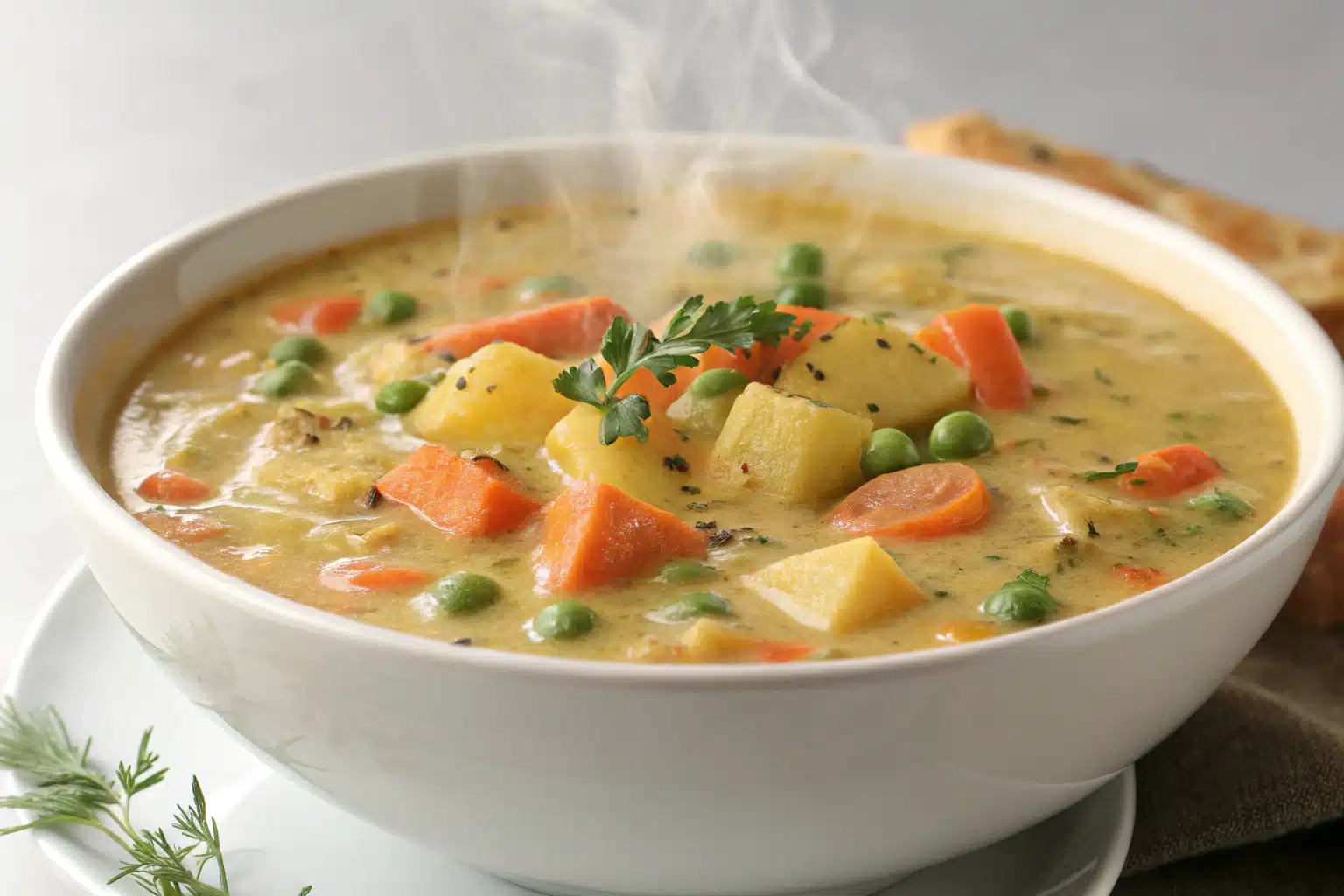
Ultimate Creamy Vegetable Chowder Recipe: Hearty Comfort in a Bowl
Introduction: The Perfect Bowl of Warmth
Why Creamy Vegetable Chowder Is the Ultimate Comfort Food
When winter winds howl or rainy days leave you feeling chilled, there’s nothing quite like a bowl of creamy vegetable chowder to warm your soul. This hearty, velvety soup combines wholesome vegetables with a rich, cheesy base that satisfies even the heartiest appetites. Unlike thin soups that leave you hungry an hour later, this creamy vegetable chowder is substantial enough to serve as a complete meal while still delivering the nourishing benefits of fresh vegetables.
“Looking for inspiration? Try our chicken vegetable soup recipe for another cozy option during cold weather.”
The History and Appeal of Vegetable Chowder
Chowders have a rich history dating back to coastal communities, where hearty, thick soups provided sustenance for hardworking fishermen and their families. While seafood chowders might be more famous, vegetable chowders have carved out their own beloved place at the family table. The beauty of creamy vegetable chowder lies in its versatility and accessibility – using everyday ingredients to create something truly special. This particular recipe has been perfected over time, balancing the earthy flavors of root vegetables with the brightness of broccoli and corn, all enveloped in a silky, cheese-enriched broth that will have everyone asking for seconds.
Ingredients: Building Blocks for Perfect Creamy Vegetable Chowder
Essential Base Ingredients and Aromatics
| Ingredient Category | Items |
|---|---|
| Base | 6 tablespoons butter |
| 1 white onion, diced | |
| 1 ½ cups chopped carrots | |
| 1 ½ cups chopped celery | |
| 6 garlic cloves, minced | |
| Herbs & Seasonings | 2 teaspoons dried oregano |
| 2 teaspoons dried thyme | |
| 1 teaspoon dried sage | |
| Kosher salt, to taste | |
| Freshly cracked black pepper, to taste | |
| Thickener | 1/3 cup all-purpose flour |
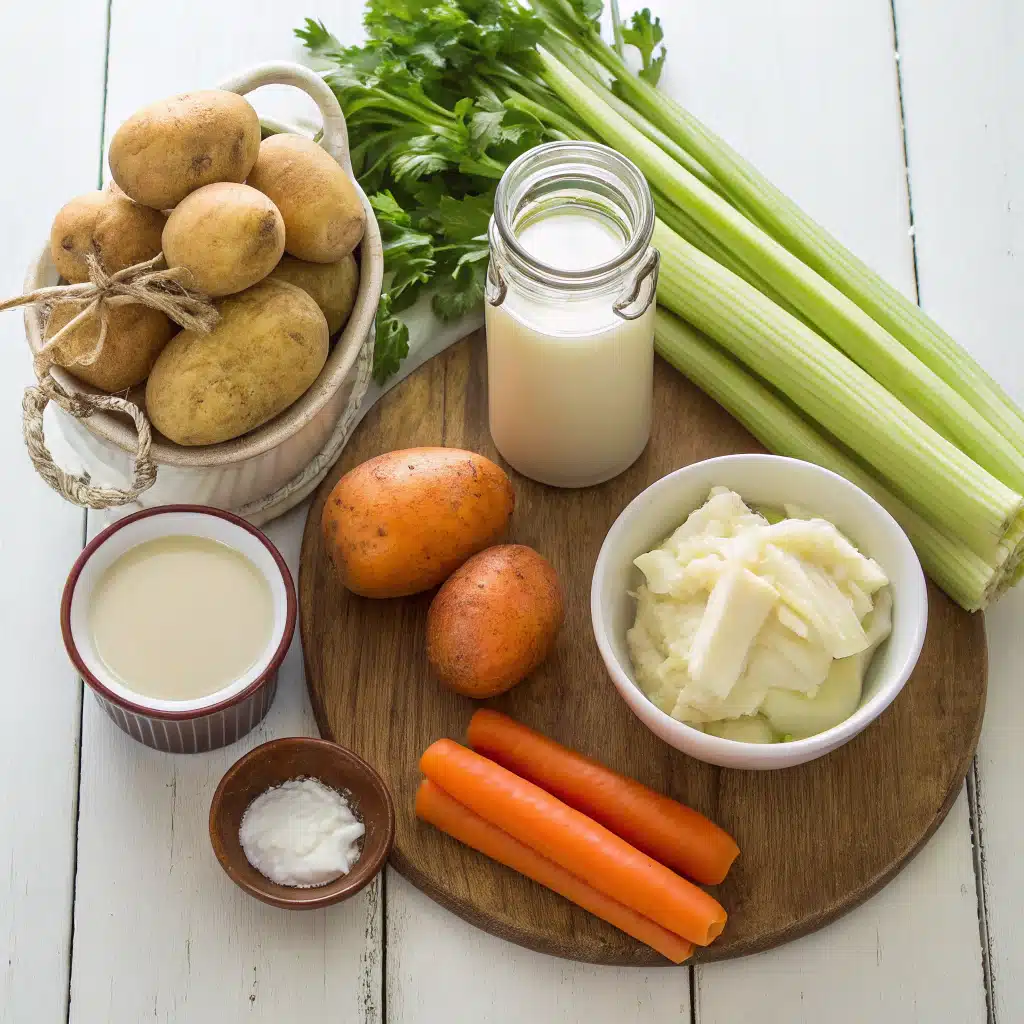
The foundation of any great creamy vegetable chowder starts with the classic mirepoix – the trio of onion, carrot, and celery sautéed in butter. This aromatic base builds the flavor foundation that supports everything else. Adding minced garlic and dried herbs creates aromatic depth that transforms simple vegetables into something extraordinary. The butter not only adds richness but also provides the fat needed to create a roux with flour, which will give your chowder that perfect, velvety thickness.
Liquid, Vegetables, and Finishing Touches
| Ingredient Category | Items |
|---|---|
| Broth & Vegetables | 6 cups vegetable broth |
| 3 cups diced potatoes | |
| 2 cups chopped broccoli florets | |
| 1 can (15 oz) corn, drained | |
| Finishing | 1/2 cup heavy cream |
| 4 ounces sharp cheddar cheese, shredded | |
| 1 teaspoon balsamic vinegar | |
| Garnish | Fresh chopped parsley |
| Extra shredded cheese | |
| Oyster crackers |
The vegetable broth forms the liquid base of your chowder, while potatoes add heartiness and natural thickening. Broccoli brings color and nutrition, and corn adds a delightful sweetness and texture. The finishing ingredients transform a good soup into an exceptional chowder – heavy cream adds luxurious richness, sharp cheddar brings savory depth, and a surprise addition of balsamic vinegar brightens all the flavors with a subtle tang. Don’t skip the garnishes – they add texture, fresh flavor, and visual appeal to your finished bowl of creamy vegetable chowder.
Step-by-Step: Creating Your Creamy Vegetable Chowder
Building the Flavorful Base
- Melt the butter in a Dutch oven over medium heat until it foams slightly.
- Add the diced white onion, chopped carrots, and chopped celery, along with a generous pinch of kosher salt and freshly cracked black pepper.
- Increase the heat to medium-high and cook for 10 minutes, stirring occasionally. You’re looking for the onions to become translucent and the vegetables to soften but not brown.
- Reduce heat back to medium and add the minced garlic, dried oregano, thyme, and sage.
- Cook for 1 additional minute, stirring frequently. The herbs and garlic should become very fragrant – this is a sign the essential oils are being released.
The base-building stage is where the magic begins. Taking time to properly cook the vegetables releases their natural sweetness and creates a foundation of flavor.
“Check out our vegetable soup recipe for another healthy option that starts with a similar flavorful base.”
Creating the Creamy Texture and Adding Vegetables
- Sprinkle the all-purpose flour evenly over the cooked vegetables and stir constantly for 1 minute. This creates a roux that will thicken your chowder.
- Pour in a small splash of vegetable broth and use a wooden spoon to scrape up any browned bits from the bottom of the pot – these contain concentrated flavor.
- Gradually stir in the remaining vegetable broth, then add the diced potatoes, broccoli florets, and drained corn.
- Season with additional salt and pepper to taste.
- Cover and bring the mixture to a gentle simmer over medium-high heat.
- Once simmering, lower the heat to maintain a low, steady simmer. Keep covered and cook for 10-12 minutes, stirring occasionally, until the potatoes are fork-tender but still hold their shape.
This stage is all about building body and texture. The flour-based roux combines with the starchy potatoes to create the characteristic thick, hearty consistency that defines a proper chowder. The vegetables cook just until tender, preserving their texture and nutritional value.
Finishing Touches for Perfect Creamy Vegetable Chowder
- Remove the pot from heat once the potatoes are tender.
- Stir in the heavy cream, gently incorporating it into the hot soup.
- Add the shredded sharp cheddar cheese in small handfuls, stirring between additions to ensure it melts smoothly.
- Finish with the teaspoon of balsamic vinegar and stir to combine.
- Taste and adjust seasoning with additional salt and pepper if needed.
- Ladle the creamy vegetable chowder into warmed bowls and garnish with fresh chopped parsley, extra shredded cheddar, and oyster crackers.
These final additions transform your vegetable soup into a true chowder. The cream adds richness, the cheese brings savory depth, and the unexpected touch of balsamic vinegar brightens all the flavors with its subtle acidity. Don’t rush this final stage – these finishing elements are what elevate your creamy vegetable chowder from good to unforgettable.
Tips: Perfecting Your Creamy Vegetable Chowder
Ingredient Selection and Preparation
For the best creamy vegetable chowder, ingredient quality matters significantly. Choose firm, fresh vegetables with vibrant colors and no soft spots. Yukon Gold potatoes are ideal for chowder as they hold their shape while adding natural creaminess. When it comes to cheese, opt for a good-quality sharp cheddar that you grate yourself – pre-shredded cheeses contain anti-caking agents that can affect how smoothly they melt.
Preparation technique also impacts your final result. Cut vegetables uniformly to ensure even cooking – aim for ½-inch dice for the potatoes, carrots, and celery. For the broccoli, choose smaller florets that will cook quickly and fit comfortably on a spoon.
“Don’t miss our garlic parmesan green beans which would make a perfect side dish to serve with this creamy vegetable chowder.”
Texture and Consistency Secrets
The perfect creamy vegetable chowder should be thick enough to coat the back of a spoon but not gluey or paste-like. If your chowder seems too thick, thin it with additional vegetable broth or a splash of milk. Conversely, if it’s too thin, you can create a slurry by mixing 1 tablespoon of cornstarch with 2 tablespoons of cold water, then stirring this mixture into the simmering chowder.
For an ultra-silky texture, consider using an immersion blender to partially blend the chowder. Blend just briefly, leaving plenty of vegetable chunks for texture. Alternatively, remove about 2 cups of the vegetable mixture (avoiding the broccoli), blend it smooth, then return it to the pot for a naturally thickened base with visible vegetable pieces.
Flavor Enhancements and Professional Touches
Professional chefs know that layering flavors creates depth in soups and chowders. Consider these enhancements for an exceptional creamy vegetable chowder:
- Add a bay leaf to the simmering broth (remove before serving)
- Use a blend of cheeses, such as cheddar with a bit of Gruyère or Parmesan
- Finish with a tiny amount of fresh lemon zest for brightness
- Add a pinch of smoked paprika or a few drops of liquid smoke for a subtle smoky note
- Garnish with microgreens or finely sliced scallions for color and fresh flavor
Remember that seasoning is crucial – taste and adjust salt levels at several points during cooking. Vegetables need proper seasoning to shine, and the cheese and cream will mellow the flavors, requiring a final adjustment before serving.
Storage: Enjoying Your Creamy Vegetable Chowder Later
Refrigeration and Proper Containers
Properly stored, creamy vegetable chowder makes excellent leftovers, with flavors that often improve overnight. Allow the chowder to cool completely before transferring it to airtight containers. Glass containers with secure lids work particularly well for soups and don’t absorb flavors or stains. Refrigerate promptly once cooled, and your creamy vegetable chowder will keep fresh for 3-4 days.
When reheating refrigerated chowder, do so gently over medium-low heat, stirring frequently to prevent scorching. The chowder will likely thicken considerably when chilled – add a splash of broth or milk while reheating to restore the original consistency.
“Here’s your guide to making cream of mushroom soup which uses similar storage techniques.”
Freezing Techniques for Creamy Vegetable Chowder
While cream-based soups can sometimes separate when frozen, creamy vegetable chowder can be successfully frozen with the right approach. For best results, consider these tips:
- If planning to freeze, slightly undercook the vegetables so they don’t become mushy when reheated
- Freeze the base without adding the heavy cream and cheese – these can be added after thawing and reheating
- Cool the chowder completely before freezing to prevent ice crystals
- Freeze in portion-sized containers or freezer bags with the air pressed out
- Leave about an inch of headspace in containers to allow for expansion
- Label clearly with contents and date
Frozen creamy vegetable chowder will maintain optimal quality for up to 2 months. When ready to enjoy, thaw overnight in the refrigerator, then reheat gently on the stovetop, adding fresh cream and cheese if you froze the base alone.
Make-Ahead Tips for Entertaining
Creamy vegetable chowder is perfect for entertaining because much of the preparation can be done ahead of time. Consider this make-ahead strategy:
- Prepare the soup through the vegetable cooking stage up to 2 days ahead
- Cool and refrigerate the base in an airtight container
- On serving day, reheat the base gently, then add the cream, cheese, and balsamic vinegar
- Prepare garnishes fresh on serving day
This approach gives you a stress-free entertaining option while ensuring optimal flavor and texture. The chowder actually benefits from the flavors melding overnight, making it taste even better when served.
Variations: Creative Twists on Creamy Vegetable Chowder
Seasonal Adaptations
One of the joys of creamy vegetable chowder is its adaptability to seasonal produce. Consider these seasonal variations to keep your chowder fresh and exciting throughout the year:
Spring Vegetable Chowder: Replace broccoli with asparagus pieces and fresh peas. Add a handful of tender baby spinach just before serving and garnish with fresh chives or dill.
Summer Garden Chowder: Add diced zucchini or yellow squash, fresh corn kernels cut from the cob (instead of canned), and finish with fresh basil instead of parsley.
Autumn Harvest Chowder: Incorporate diced butternut squash, substitute part of the potatoes with sweet potatoes, and add a pinch of nutmeg to the herb mixture.
Winter Comfort Chowder: Add parsnips along with the carrots, use leeks instead of onion, and increase the quantity of root vegetables for a heartier winter meal.
Each variation maintains the essential creamy character of the original while celebrating the best produce of the season. “Want more ideas? Check out our roasted sweet potatoes with honey and cinnamon for a perfect fall side dish.”
Dietary Modifications and Substitutions
Creamy vegetable chowder can be adapted for various dietary needs without sacrificing flavor:
Dairy-Free Version: Replace butter with olive oil or plant-based butter. Instead of heavy cream, use full-fat coconut milk or cashew cream. Substitute the cheddar with a dairy-free cheese alternative that melts well.
Gluten-Free Adaptation: Replace the all-purpose flour with either cornstarch (mixed with cold water to create a slurry, added later in cooking) or a cup-for-cup gluten-free flour blend.
Lower-Calorie Option: Use light butter or half the butter plus olive oil. Substitute half-and-half for the heavy cream, and use less cheese while selecting a sharper variety for more flavor impact with less quantity.
Vegan Transformation: Use olive oil instead of butter, vegetable broth, coconut cream instead of heavy cream, and nutritional yeast or vegan cheese for the cheesy flavor. A dash of miso paste can add savory depth.
Protein Additions for a Complete Meal
While creamy vegetable chowder is satisfying on its own, adding protein can transform it into an even heartier, complete meal:
Chicken Vegetable Chowder: Add 2 cups of shredded rotisserie chicken or poached chicken breast when you add the vegetables to the broth.
Seafood Variation: Stir in cooked shrimp, lump crabmeat, or flaked cooked salmon during the final 5 minutes of cooking.
Bean-Enhanced Chowder: Add a can of drained and rinsed white beans or chickpeas for plant-based protein that complements the creamy texture.
Ham and Vegetable Chowder: Include 1 cup of diced ham along with the vegetables for a smoky, savory flavor that pairs beautifully with the creamy base.
These additions maintain the essential character of creamy vegetable chowder while creating new dimensions of flavor and increasing the nutritional profile.
Serving: Presenting Your Creamy Vegetable Chowder
Bowl Selection and Presentation
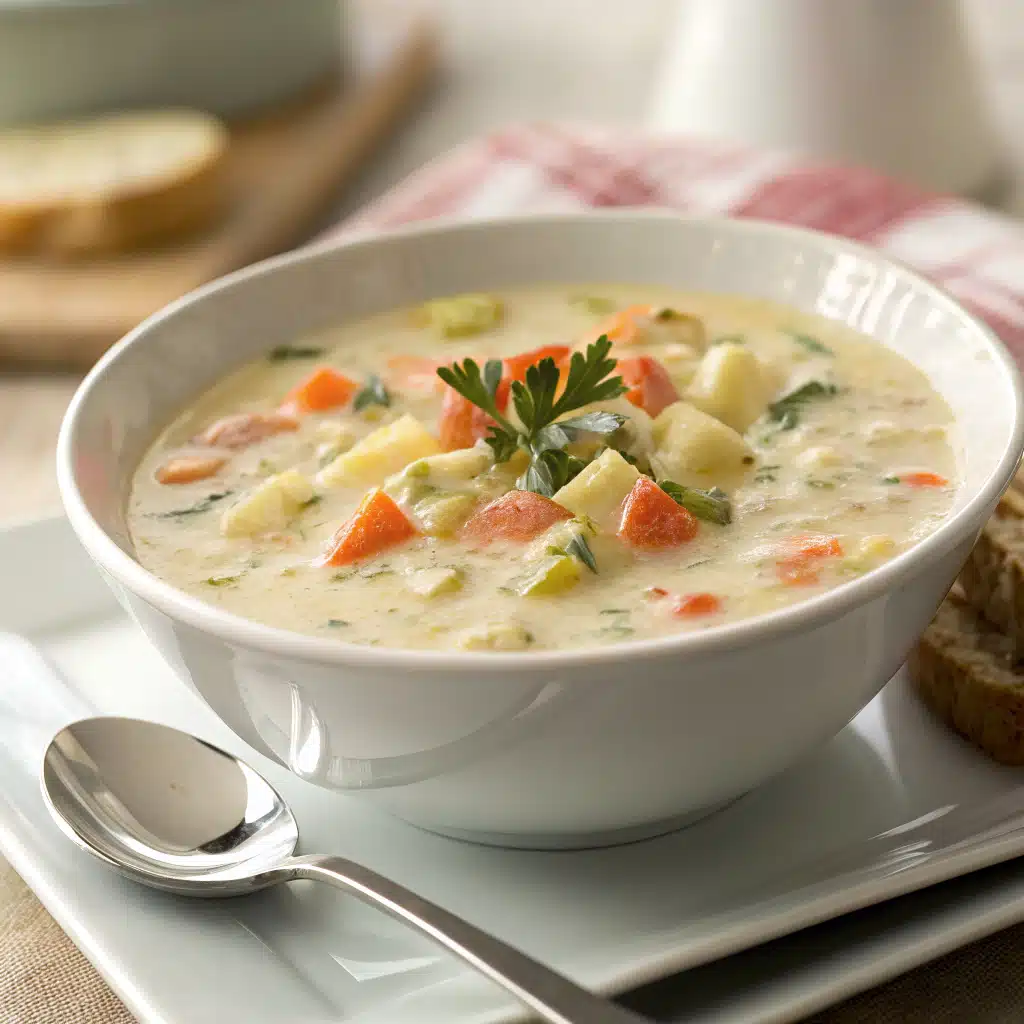
The way you present your creamy vegetable chowder can enhance the dining experience significantly. Wide, shallow bowls are ideal for chowder as they allow the garnishes to be displayed beautifully and help the soup cool to an enjoyable temperature more quickly. For a rustic presentation, consider bread bowls – hollow out small round sourdough loaves, toast the insides briefly, and fill with the hot chowder.
Create visual impact by arranging your garnishes thoughtfully. Rather than sprinkling everything evenly, consider creating little zones of garnishes – a small mound of extra cheese, a sprinkle of parsley, and a few oyster crackers grouped separately creates an appealing presentation. A drizzle of good olive oil or a tiny swirl of cream on top adds a professional touch.
“Discover great ideas like our loaded mashed potato bake that would pair wonderfully with this creamy vegetable chowder for a comforting meal.”
Accompaniment Suggestions
While creamy vegetable chowder is substantial enough to serve as a meal, thoughtful accompaniments can create a more complete dining experience:
Bread Options: Serve with warm, crusty bread, garlic bread, or homemade biscuits for dipping. Cheese bread or herb-infused focaccia particularly complement the flavors in the chowder.
Salad Pairings: Balance the richness of the chowder with a crisp, acidic salad. A simple green salad with vinaigrette or a tangy slaw provides welcome contrast.
Sandwich Combinations: For a classic soup-and-sandwich meal, pair with grilled cheese sandwiches, open-faced melts, or small tea sandwiches for a more elegant presentation.
Protein Sides: A simple roasted chicken breast or baked fish fillet can accompany a smaller portion of chowder for a protein-forward meal.
Serving Occasions and Menu Planning
Creamy vegetable chowder works beautifully in various dining contexts:
Casual Family Dinner: Serve in generous bowls with plenty of crusty bread and a simple side salad for a cozy weeknight meal.
Elegant First Course: Present in smaller, more sophisticated bowls as a starter before a main course. Keep garnishes minimal but elegant – perhaps just a few snipped chives and a small swirl of cream.
Luncheon Centerpiece: Make the chowder the star of a lunch gathering by offering a variety of toppings and accompaniments that guests can customize to their preference.
Thermos Lunch: Send in a wide-mouth thermos for school or work lunches, packing garnishes separately to add just before eating.
For special occasions, consider a soup bar approach – offer the creamy vegetable chowder alongside another soup option with various toppings, breads, and spreads, allowing guests to create their perfect combination.
FAQs: Common Questions About Creamy Vegetable Chowder
Can I make this chowder without dairy?
Yes, creamy vegetable chowder can be made dairy-free while maintaining its rich, velvety texture. Replace the butter with olive oil or a plant-based butter alternative. Instead of heavy cream, use full-fat coconut milk, which provides similar richness, or cashew cream made by blending soaked raw cashews with water until smooth. For the cheese component, either omit it entirely or use a dairy-free cheese alternative designed for melting. Adding nutritional yeast (2-3 tablespoons) will provide a cheesy flavor without actual cheese. The result will have a slightly different flavor profile but will still be deliciously creamy and satisfying.
How do I thicken the chowder naturally?
Several methods can thicken creamy vegetable chowder without additional flour. The easiest approach is to puree a portion of the soup – remove about 2 cups of the vegetables and broth (avoiding broccoli pieces), blend until smooth, then return to the pot. Alternatively, you can mash some of the potatoes against the side of the pot with a wooden spoon. For starchier thickening, add a diced russet potato along with the Yukon Golds, as russets break down more and release more starch. White beans pureed with some broth also make an excellent natural thickener while adding protein. Finally, allowing the soup to simmer uncovered for 5-10 additional minutes will reduce the liquid and naturally concentrate the soup.
Can I add chicken or ham?
Absolutely! Protein additions work wonderfully in creamy vegetable chowder. For chicken, add 2 cups of cooked, shredded, or diced chicken when you add the vegetables to the broth. Rotisserie chicken is a convenient, flavorful option. For ham, add 1 cup of diced ham at the same stage – choose a good quality ham with robust flavor as it will infuse the entire chowder. The cooking time remains the same. Both proteins complement the creamy, vegetable-rich base beautifully and transform the chowder into a complete one-pot meal with minimal additional effort.
“Learn more about cheesy cauliflower chicken casserole for another comforting dish featuring chicken.”
What vegetables work best?
While this recipe specifies carrots, celery, potatoes, broccoli, and corn, many vegetables work beautifully in creamy vegetable chowder. Root vegetables like parsnips, turnips, and sweet potatoes are excellent choices as they maintain their texture while adding sweetness. Cauliflower florets can substitute for or complement broccoli. Leeks provide wonderful flavor in place of or alongside onions. Green beans, cut into 1-inch pieces, add vibrant color and texture. Avoid very watery vegetables like zucchini or delicate greens which can become mushy. Hard winter squashes like butternut work well when diced small. For best results, ensure all vegetables are cut to similar sizes for even cooking, with denser vegetables cut slightly smaller than quicker-cooking ones.
Does this chowder freeze well?
Cream-based soups can sometimes separate when frozen, but with proper technique, creamy vegetable chowder can be successfully frozen. For best results, slightly undercook the vegetables, as they’ll soften more when reheated. Cool the chowder completely before transferring to freezer-safe containers, leaving about an inch of headspace for expansion. For optimal quality, consider freezing the base before adding cream and cheese, then adding these fresh when reheating. Label with the date and contents and use within 2-3 months. Thaw overnight in the refrigerator, then reheat gently on the stovetop, stirring frequently. If the chowder separates slightly, whisk vigorously while reheating to re-emulsify the ingredients.
Can I use vegetable broth instead of chicken broth?
Yes, vegetable broth works perfectly in this creamy vegetable chowder recipe, and it’s actually the recommended broth in the ingredients list. Using vegetable broth keeps the dish vegetarian-friendly while providing plenty of flavor. For the richest taste, use a high-quality store-bought vegetable broth or make your own by simmering vegetables, herbs, and aromatics. If the broth seems less robust than you’d like, intensify it by adding a teaspoon of vegetable bouillon paste or a splash of soy sauce for umami depth. You can also enhance store-bought broth by simmering it with aromatic vegetable scraps like onion skins, celery leaves, and carrot tops for 20 minutes, then straining before using in your chowder.
Conclusion: Mastering the Art of Creamy Vegetable Chowder
Embracing Seasonal Variations
The beauty of creamy vegetable chowder lies in its adaptability throughout the changing seasons. As you become comfortable with the basic technique, experiment with incorporating the best seasonal produce available. Spring asparagus, summer sweet corn freshly cut from the cob, autumn squashes, and winter root vegetables can all find their place in this versatile recipe.
By following the seasonal rhythms of produce, you’ll not only enjoy peak flavors but also generally save money by buying vegetables at their most abundant. This approach keeps your creamy vegetable chowder rotation feeling fresh and exciting year-round, even as you rely on the same comforting cooking method.
“Discover great ideas like our broccoli cheddar soup for another creamy, comforting option.”
Creating Your Signature Version
While this creamy vegetable chowder recipe provides a wonderful starting point, the true joy comes in making it your own. Perhaps you’ll discover that a hint of curry powder adds warmth you love, or that your family particularly enjoys when you include pearl barley for extra heartiness. Maybe you’ll develop your own signature garnish combination or find that a splash of white wine added before the broth brings complexity you enjoy.
Don’t be afraid to take notes on your modifications and reactions – these personal touches transform a good recipe into a treasured family favorite that can be passed down through generations. The best home cooks know that recipes are guidelines, not strict rules, and creamy vegetable chowder offers the perfect canvas for your culinary creativity.
PrintCreamy Vegetable Chowder

A rich, velvety soup packed with tender vegetables and finished with sharp cheddar cheese. The perfect comfort food for any day of the year.
- Prep Time: 15
- Cook Time: 30
- Total Time: 45 minutes
- Yield: 6 1x
- Category: Soups & Stews
- Cuisine: American
Ingredients
- 6 tablespoons butter
- 1 white onion, diced
- 1 ½ cups chopped carrots
- 1 ½ cups chopped celery
- 6 garlic cloves, minced
- 2 teaspoons dried oregano
- 2 teaspoons dried thyme
- 1 teaspoon dried sage
- Kosher salt, to taste
- Freshly cracked black pepper, to taste
- 1/3 cup all-purpose flour
- 6 cups vegetable broth
- 3 cups diced potatoes
- 2 cups chopped broccoli florets
- 1 can (15 oz) corn, drained
- 1/2 cup heavy cream
- 4 ounces sharp cheddar cheese, shredded
- 1 teaspoon balsamic vinegar
- Fresh chopped parsley
- Extra shredded cheese
- Oyster crackers
Instructions
- Melt butter in a Dutch oven over medium heat. Add onion, carrots, celery, salt, and pepper. Increase heat to medium-high and cook for 10 minutes until vegetables soften.
- Reduce heat to medium. Add garlic, oregano, thyme, and sage. Cook for 1 minute until fragrant.
- Sprinkle flour over vegetables and cook for 1 minute, stirring constantly.
- Add a splash of broth, scraping up any browned bits from the pot’s bottom.
- Stir in remaining broth, potatoes, broccoli, corn, and additional salt and pepper. Cover and bring to a simmer over medium-high heat.
- Reduce heat to low and simmer covered for 10-12 minutes until potatoes are fork-tender.
- Remove from heat. Stir in heavy cream, cheddar cheese, and balsamic vinegar until cheese melts completely.
- Ladle into bowls and garnish with parsley, extra cheese, and oyster crackers.
Notes
For a thicker chowder, mash some potatoes against the side of the pot. For a dairy-free version, substitute coconut milk for cream and use dairy-free cheese alternatives. Nutrition facts are estimates and may vary based on ingredients used, portion sizes, and preparation methods.
Nutrition
- Serving Size: 6
- Calories: 410 Kcal
- Sugar: 6g
- Sodium: 890mg
- Fat: 24g
- Saturated Fat: 14g
- Carbohydrates: 39g
- Fiber: 5g
- Protein: 10g
- Cholesterol: 65mg
Keywords: creamy vegetable chowder, vegetable soup, potato soup, chowder recipe, comfort food, creamy soup, vegetarian soup
Let’s connect! Follow me for more Joylicious Recipes: Facebook, Instagram, Pinterest