Flaky and Buttery Pie Crust Recipe Made Simple
The Art of Pie Crust Making
Pie crust recipe mastery is often considered the holy grail of home baking. A perfect pie crust should be flaky, buttery, and sturdy enough to hold your favorite fillings. Whether you’re a seasoned baker or trying your hand at homemade pie crust for the first time, this comprehensive guide will walk you through creating a perfect pie crust every time. The secret to an exceptional pie crust lies in understanding a few fundamental techniques and having the patience to follow them.
“Looking for inspiration? Try our coconut cream pie recipe that pairs beautifully with this crust.”
Why Homemade Pie Crust Matters
Store-bought crusts might be convenient, but nothing compares to the flavor and texture of a homemade pie crust recipe. When you make your own crust, you control the ingredients and can customize the flavor to complement your fillings. Moreover, the satisfaction of creating a beautiful pie from scratch is unmatched. This pie crust recipe yields enough for a double-crust pie, but you can easily halve it if you only need a single crust. Additionally, the dough freezes beautifully, making it perfect for advance preparation.
Ingredients
Essential Components for Perfect Pie Crust
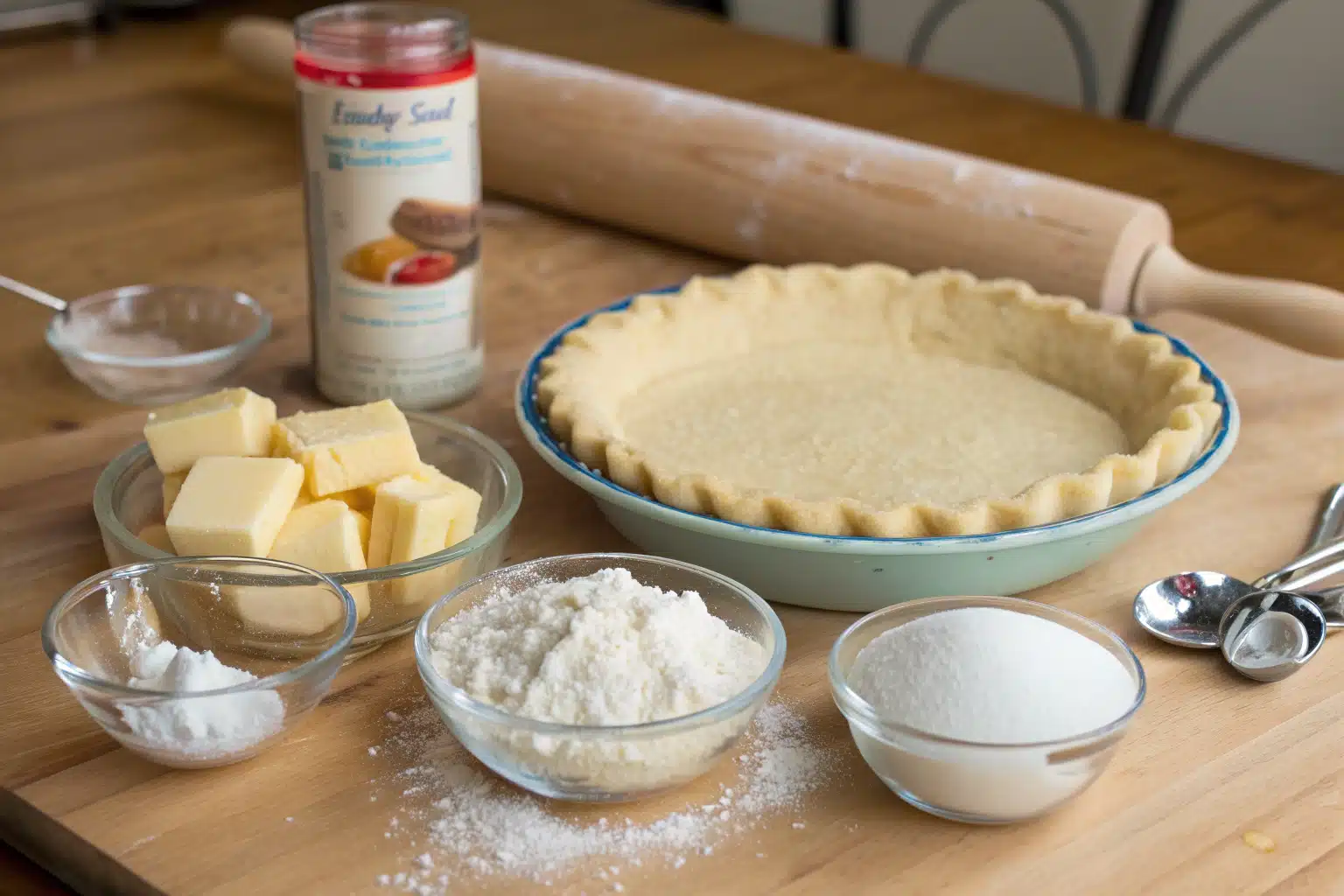
The beauty of pie crust lies in its simplicity. With just a handful of ingredients, you can create a masterpiece that serves as the foundation for countless desserts.
| Ingredient | Amount | Notes |
|---|---|---|
| All-purpose flour | 2 ½ cups (325g), spooned and leveled | The backbone of your crust |
| Fine sea salt or kosher salt | ½ teaspoon fine sea salt or 1 teaspoon kosher salt | Enhances flavor |
| Sugar | 1 tablespoon (optional) | Adds slight sweetness and helps with browning |
| Unsalted butter | 1 cup (230g), very cold, cut into ½-inch cubes | For flakiness and flavor |
| Ice water | 6 to 8 tablespoons, or more as needed | Binds the dough without activating gluten |
Understanding Your Ingredients
The key to a successful pie crust recipe lies in understanding how each ingredient contributes to the final result. Flour provides structure, while butter creates those coveted flaky layers. Salt enhances flavor, and sugar adds a touch of sweetness while promoting browning. Ice water binds everything together without activating too much gluten, which would make your crust tough rather than tender.
Step-by-Step Pie Crust Recipe
Making Pie Dough in a Food Processor
Combine the first portion of flour and butter: Add 1 ½ cups of flour, salt, and sugar to your food processor. Pulse 3-4 times to combine. Distribute the chilled butter cubes evenly over the flour blend. Process for about 15 seconds until a dough or paste forms with no dry flour remaining. The mixture should take on a pale yellow color and hold together when pressed.
Add the remaining flour: Scrape down the sides of the food processor bowl. Incorporate the final cup of flour and pulse the mixture 4–5 times. The dough should now appear crumbly with the flour evenly distributed throughout.
Add water and bring the dough together: Transfer the mixture to a medium bowl. Sprinkle 4 tablespoons of ice water over it and use a rubber spatula to press the dough into itself. The crumbs should begin forming larger clusters. Test the dough by pinching a small amount; if it holds together, it’s ready. If it crumbles, add 2 to 4 more tablespoons of water and continue pressing until the dough comes together.
Form and chill the dough: Remove the dough from the bowl and gently form it into a ball on a clean surface. Cut the ball in half, then flatten each half into a disk about 1-inch thick. Wrap each disk tightly in plastic wrap and refrigerate for at least 1 hour (or up to 3 days).
Making Pie Dough By Hand
“Here’s your guide to perfect homemade chicken pot pie that will showcase this incredible pie crust.”
Combine the first portion of flour and butter: In a medium bowl, whisk together 1 ½ cups of flour, salt, and sugar. Scatter the cold butter cubes over the flour, briefly mixing with a fork to coat. Using a pastry blender, cut the butter into the flour until the mixture has a coarse, mealy texture resembling breadcrumbs (about 1-2 minutes).
Add the remaining flour: Scatter the remaining 1 cup of flour over the butter-flour mixture. Work it in with the pastry blender for about 20 seconds until the flour is evenly distributed. The dough should appear crumbly with some pea-sized butter pieces still visible.
Add water and bring the dough together: Sprinkle 4 tablespoons of ice water over the mixture, then use a rubber spatula to press the dough into itself. The crumbs should begin forming larger clusters. Test readiness by pinching a small amount; if it holds together, it’s ready. If it falls apart, add more water, 1-2 tablespoons at a time.
Form and chill the dough: Gently form the dough into a ball, then cut it in half. Flatten each half into a disk, wrap tightly in plastic wrap, and refrigerate for at least 1 hour before rolling.
Rolling Out Pie Dough
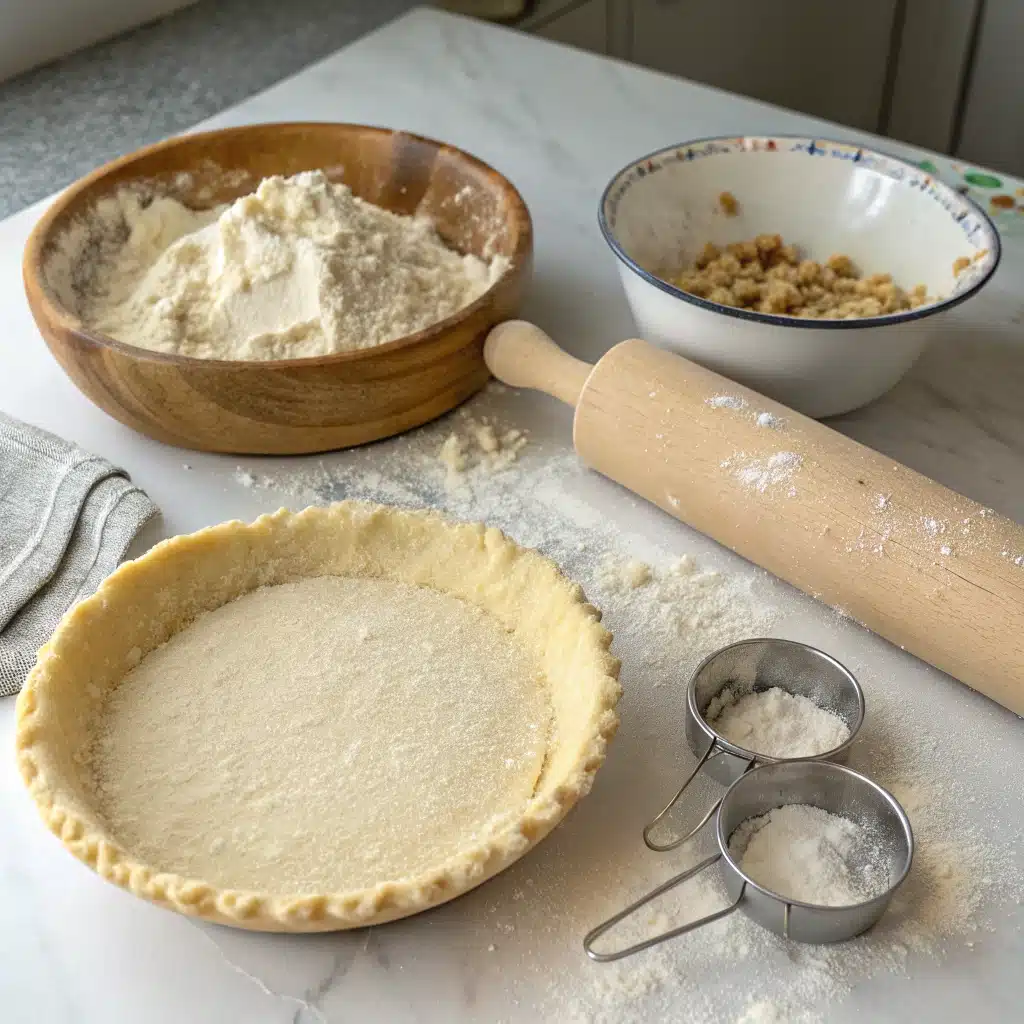
Prepare the dough: Remove one disk from the refrigerator and let it sit at room temperature for 5-10 minutes to soften slightly. Dust your work surface, the dough’s surface, and your rolling pin with a light coating of flour.
Roll the dough: Roll the dough, turning it a quarter turn after every few rolls, until you have a circle about 12 inches in diameter (ideal for a 9-inch pie dish). Periodically check that the dough isn’t sticking by lifting an edge and adding flour underneath as needed.
Transfer to the pie dish: Carefully roll the dough around your rolling pin, then unroll it over your pie dish. Gently press the dough down into the dish without stretching it, ensuring it lines the bottom and sides completely.
Crimp the edges: For a single-crust pie, fold any overlapping dough underneath itself to create a thicker border that rests on the lip of the dish. Crimp by pressing the pointer finger of one hand against the inside of the dough while gently pressing with the knuckles of your other hand from the outside.
Chill the crust: Refrigerate the unbaked pie crust for at least 30 minutes before baking to prevent shrinkage.
Tips for Perfect Pie Crust
The Cold Ingredient Secret
The secret to making a good pie crust lies primarily in temperature control. Cold ingredients are absolutely essential for a flaky crust. The butter should be very cold—some bakers even freeze their butter and grate it into the flour. The water must be ice cold as well. This prevents the butter from melting and helps create those distinctive flaky layers when the crust bakes.
Handling the Dough
One common mistake when making pie crust is overworking the dough, which develops gluten and results in a tough crust. Handle the dough as little as possible, and if it becomes too warm or soft during preparation, don’t hesitate to return it to the refrigerator for 15-20 minutes to firm up.
“Want more ideas? Check out our Texas trash pie recipe for a delicious filling option.”
The Importance of Resting
After mixing your pie crust dough, allowing it to rest in the refrigerator is not optional—it’s essential. This resting period does several important things: it allows the gluten to relax (preventing shrinkage), it gives the flour time to fully hydrate, and it firms up the butter. A minimum of 1 hour is necessary, but longer (up to overnight) is even better for developing flavor and ensuring a perfect texture.
Storage
Refrigerating Pie Crust Dough
Properly wrapped pie crust dough can be refrigerated for up to 3 days. Wrap each disk tightly in plastic wrap, then place in a resealable plastic bag for extra protection against drying out. When you’re ready to use it, let the dough sit at room temperature for about 10-15 minutes to soften slightly before rolling.
Freezing Pie Crust for Later
“Discover great ideas like our blackberry crisp that would be even more amazing with this homemade crust.”
This pie crust recipe freezes beautifully, making it perfect for advance preparation. Wrap the dough disks tightly in plastic wrap, then place in a freezer bag. Frozen pie crust dough will keep for up to 3 months. When you’re ready to use it, transfer the dough to the refrigerator to thaw overnight before proceeding with your recipe.
Storage After Baking
If you’ve blind-baked your pie crust for later use, allow it to cool completely, then wrap it carefully and store at room temperature for up to 2 days. For longer storage, you can freeze a baked, unfilled pie crust for up to 1 month, well-wrapped in plastic and aluminum foil.
Variations
Sweet Pie Crust Variations
While the basic pie crust recipe is versatile for both sweet and savory applications, you can enhance it for sweet pies. For a sweeter crust, increase the sugar to 2 tablespoons. You can also add flavorings like 1 teaspoon of vanilla extract, ½ teaspoon of cinnamon, or the zest of one lemon or orange for citrus pies.
Savory Pie Crust Alternatives
For savory pies, you can omit the sugar entirely and add herbs or spices to complement your filling. Try adding 1 teaspoon of dried herbs like thyme, rosemary, or sage, or ½ teaspoon of black pepper for a more savory profile. You might also consider substituting up to ¼ cup of the all-purpose flour with whole wheat flour for a nuttier flavor.
Alternative Fats for Pie Crust
While butter creates the most flavorful crust, you can experiment with other fats. Some bakers swear by a combination of butter and shortening (using half of each) for the perfect balance of flavor and flakiness. Lard makes an incredibly flaky crust that’s traditional for savory pies. Is it better to make pie crust with butter or oil? Butter generally produces a superior flavor and flakiness, but oil can be used to create a more tender, less flaky crust that’s easier to work with.
Serving
Blind Baking for Various Fillings
“Don’t miss our lemon shortbread cookies that make a perfect accompaniment to a slice of pie.”
For pies with no-bake fillings (like cream pies) or very wet fillings (like custard pies), blind baking is essential. To blind bake a pie crust:
- Preheat your oven to 375°F (190°C).
- Pierce the bottom of the chilled crust all over with a fork.
- Line the crust with parchment paper and fill with pie weights or dried beans.
- Bake for 15 minutes (partially baked) or 25-30 minutes (fully baked, removing weights for the last 10-15 minutes).
- For a shiny finish, brush with egg wash (1 egg yolk mixed with 1 tablespoon cream) during the last 5 minutes of baking.
Pairing Crust with Fillings
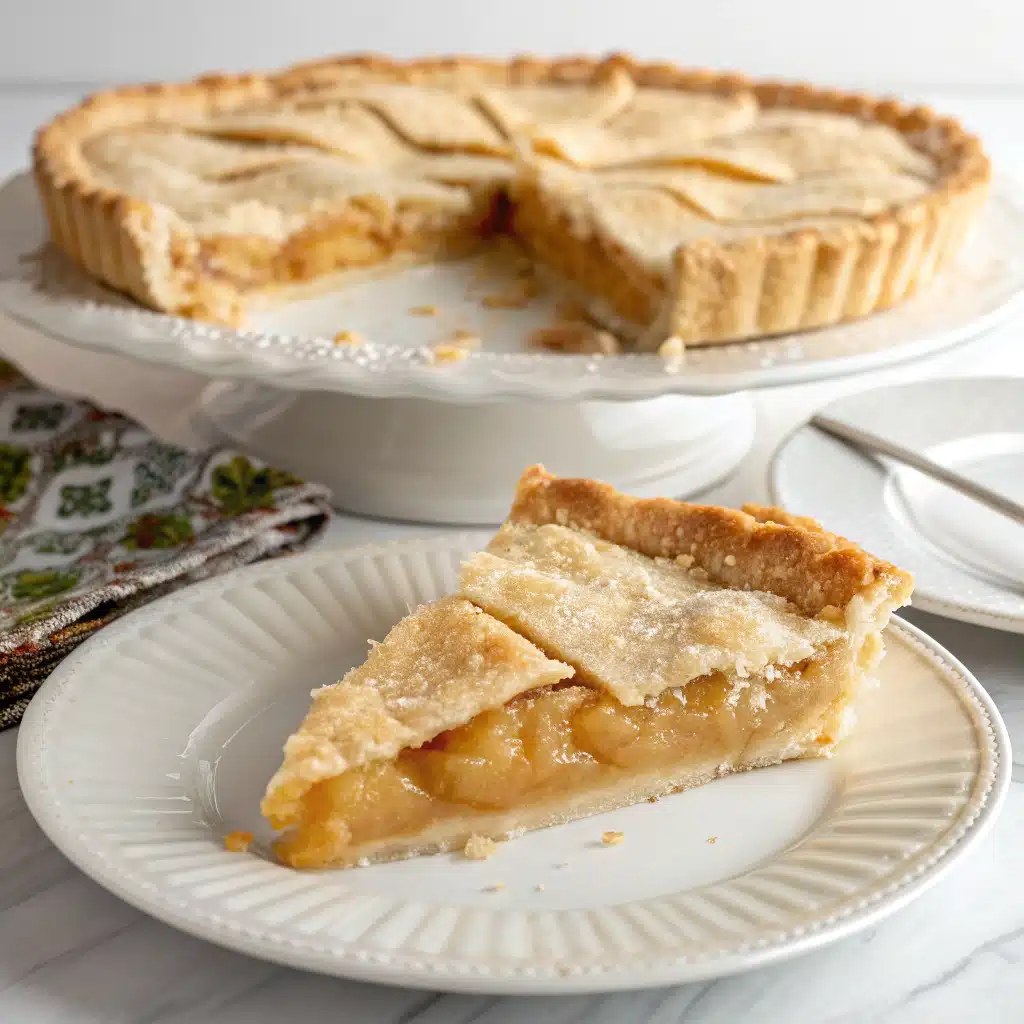
Different fillings call for different approaches to your pie crust. Fruit pies generally benefit from a double crust or lattice top, while custard-based pies usually use a single, blind-baked crust. For very sweet fillings, consider reducing the sugar in your crust to provide contrast. For savory pies, herbs and spices in the crust can enhance the overall flavor profile.
Decorative Techniques
Elevate your pie crust recipe by incorporating decorative techniques. For a lattice top, cut the rolled dough into strips and weave them over the filling. Alternatively, use small cookie cutters to create decorative vents on a double-crust pie. Braided edges, leaf cutouts, and other designs can transform a simple pie into a showstopping dessert. Just remember that any decorative elements should be added to the chilled crust right before baking.
FAQs
What are the basic ingredients of pie crust?
Pie crust usually requires flour, fat (butter, shortening, or lard), salt, and cold water. Some versions add sugar for sweetness and better browning.
What is the secret to making a good pie crust?
Success comes from using cold ingredients, handling the dough lightly, and letting it rest. Cold butter ensures flakiness, minimal handling prevents toughness, and chilling relaxes the gluten.
What should one avoid when making a pie crust?
Don’t overwork the dough, use warm ingredients, add excess water, or stretch it into the pan. These lead to a dense, shrinking, or soggy crust. Skipping chilling also hurts the final texture.
What flour is best for pie crust?
All-purpose flour works well, balancing structure and tenderness. Pastry flour makes it softer, while a mix of all-purpose and cake flour creates an even lighter crumb.
Is shortcrust pastry the same as pie crust?
Yes, they share the same base of flour, fat, salt, and water. American pie crust is typically flakier, while British shortcrust pastry leans more crumbly due to slight technique differences.
Is it better to make pie crust with butter or oil?
Butter delivers rich flavor and flaky layers as its water content steams during baking. Oil makes the crust tender and easy to press into a pan but less flaky. Many bakers prefer butter alone or blended with shortening.
Conclusion
Mastering Your Pie Crust Recipe
“Check out our cherry Garcia ice cream that would be perfect alongside a slice of homemade pie.”
The perfect pie crust recipe may take a few attempts to master, but the principles remain consistent: keep everything cold, handle the dough gently, and give it time to rest. With practice, you’ll develop an intuitive feel for the right consistency and texture. Remember that even imperfect homemade pie crust will taste better than store-bought alternatives, so don’t be discouraged by early attempts.
Building Confidence in Pie Making
As with any culinary skill, confidence in making pie crust comes with practice. Each time you make this pie crust recipe, you’ll gain more understanding of the dough and how it responds to different conditions. Soon, you’ll be able to make adjustments based on your kitchen’s temperature, humidity, and your preferred style of crust. Before long, you’ll be creating pies that not only taste incredible but look professionally crafted as well. The journey to pie crust mastery is as rewarding as the destination.
PrintPie Crust Recipe
A classic, flaky, all-butter pie crust that’s perfect for both sweet and savory pies.
- Prep Time: 20 minutes
- Total Time: 20 minutes
- Yield: 1 double crust (for two 9-inch pies) 1x
- Category: Dessert
- Cuisine: American
Ingredients
- 2 ½ cups (325g) all-purpose flour, spooned and leveled
- 1/2 teaspoon fine sea salt or 1 teaspoon kosher salt
- 1 tablespoon sugar, optional
- 1 cup (230g) very cold unsalted butter, cut into 1/2-inch cubes
- 6 to 8 tablespoons ice water, or more as needed
Instructions
- Combine 1 ½ cups flour with salt and sugar in a food processor; pulse to mix. Add cold butter cubes and process until no dry flour remains (about 15 seconds).
- Add remaining 1 cup flour and pulse 4-5 times until mixture is crumbly.
- Transfer to a bowl, add 4 tablespoons ice water, and press mixture together with a spatula. If it holds when pinched, it’s ready; if not, add more water 1-2 tablespoons at a time.
- Form dough into a ball, divide in half, and shape each half into a 1-inch thick disk. Wrap in plastic and refrigerate for at least 1 hour.
- Roll dough on a floured surface to 12-inch circle, turning regularly to prevent sticking.
- Transfer to pie dish, gently press into place without stretching, and trim/crimp edges as desired.
- Chill shaped crust for 30 minutes before filling or blind baking.
Notes
For blind baking, preheat oven to 375°F, line crust with parchment and weights, and bake for 15 minutes for partial bake or 25-30 minutes for full bake (removing weights halfway through).
Nutrition facts are estimates and may vary based on ingredients used, portion sizes, and preparation methods.
Nutrition
- Serving Size: 1
- Calories: 235
- Sugar: 1g
- Sodium: 110mg
- Fat: 16g
- Saturated Fat: 10g
- Carbohydrates: 20g
- Fiber: 1g
- Protein: 3g
- Cholesterol: 41mg
Keywords: pie crust, flaky crust, butter crust, homemade pie dough
Let’s connect! Follow me for more Joylicious Recipes: Facebook, Instagram, Pinterest