Perfect Roasted Leg of Lamb: A Showstopping Holiday Centerpiece
The Timeless Appeal of Roasted Leg of Lamb
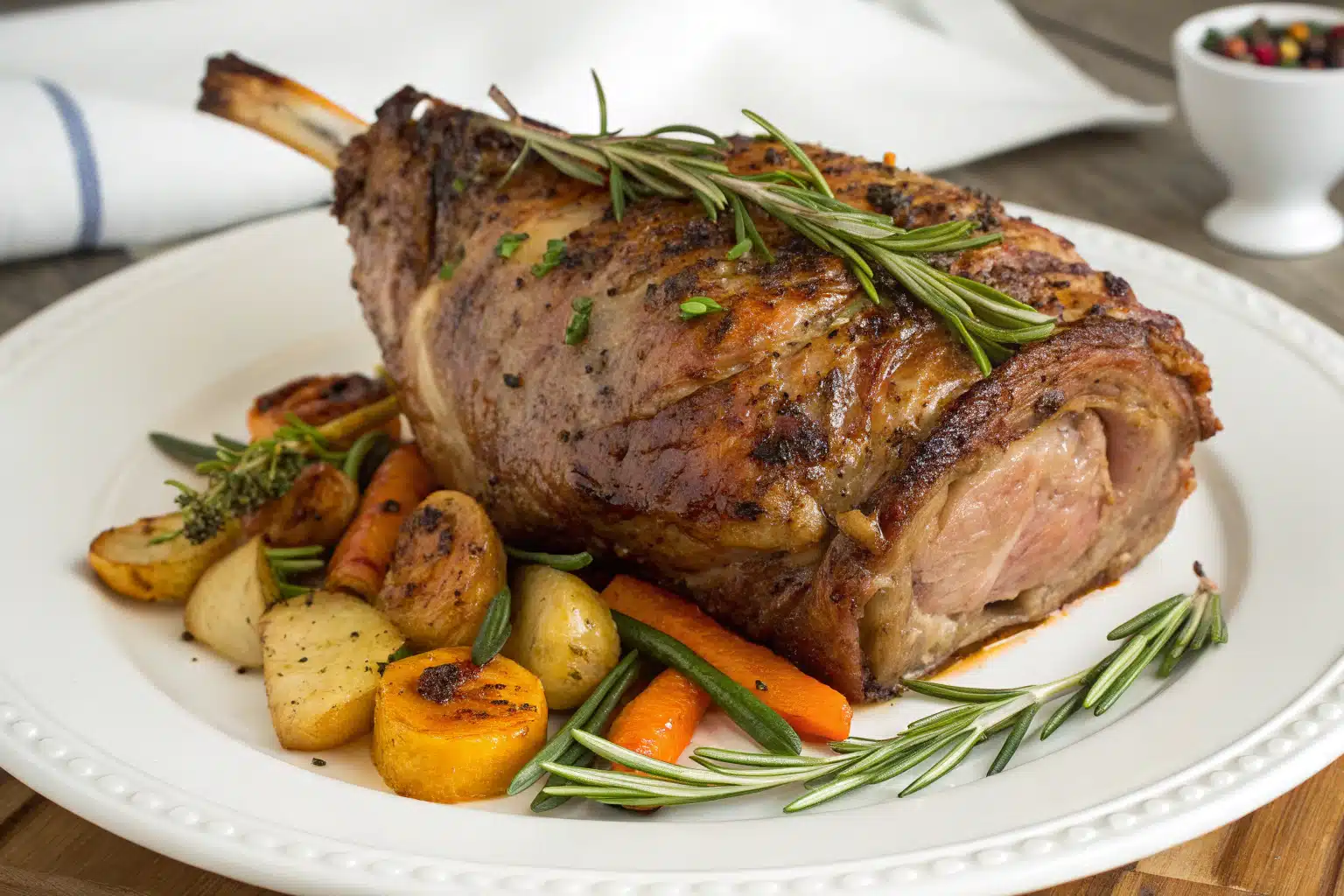
Roasted leg of lamb stands as one of the most impressive centerpieces for special occasions and holiday gatherings. This majestic cut of meat, when properly seasoned and roasted, delivers a tender interior with a beautifully caramelized exterior that captivates both the eye and palate. The natural richness of lamb pairs wonderfully with herbs and spices, creating a dish that has graced tables for centuries across numerous cultures.
Whether you’re planning an Easter celebration, holiday feast, or simply want to elevate your Sunday dinner, a perfectly roasted leg of lamb commands attention and deserves a place in your culinary repertoire.
Why This Roasted Leg of Lamb Recipe Works
This roasted leg of lamb recipe strikes the perfect balance between simplicity and sophistication. The combination of aromatic spices, fresh herbs, and careful cooking technique ensures a consistently impressive result. The initial high-temperature sear locks in juices, while the lower-temperature slow roast guarantees tender, evenly cooked meat. The addition of caramelized onions brings sweetness that complements the lamb’s robust flavor profile. Moreover, the marinade penetrates deep into the meat, infusing it with complex flavors that transform an already excellent cut into something truly extraordinary.
“Learn more about balancing flavors in meat dishes with our herb roasted turkey recipe that uses similar principles.”
Ingredients for Perfect Roasted Leg of Lamb
The Star of the Show: Selecting Your Lamb
| Main Ingredient | Specifications |
|---|---|
| Leg of lamb | 1 whole leg, about 8–9 pounds, trimmed |
| Garlic cloves | 4 halved + 6 whole |
| Yellow onions | 1 for marinade + 3 large for caramelizing |
| Tomato | ½ medium |
| Bell pepper | ½ medium |
| Fresh parsley | For garnish |
| Toasted nuts | For garnish |
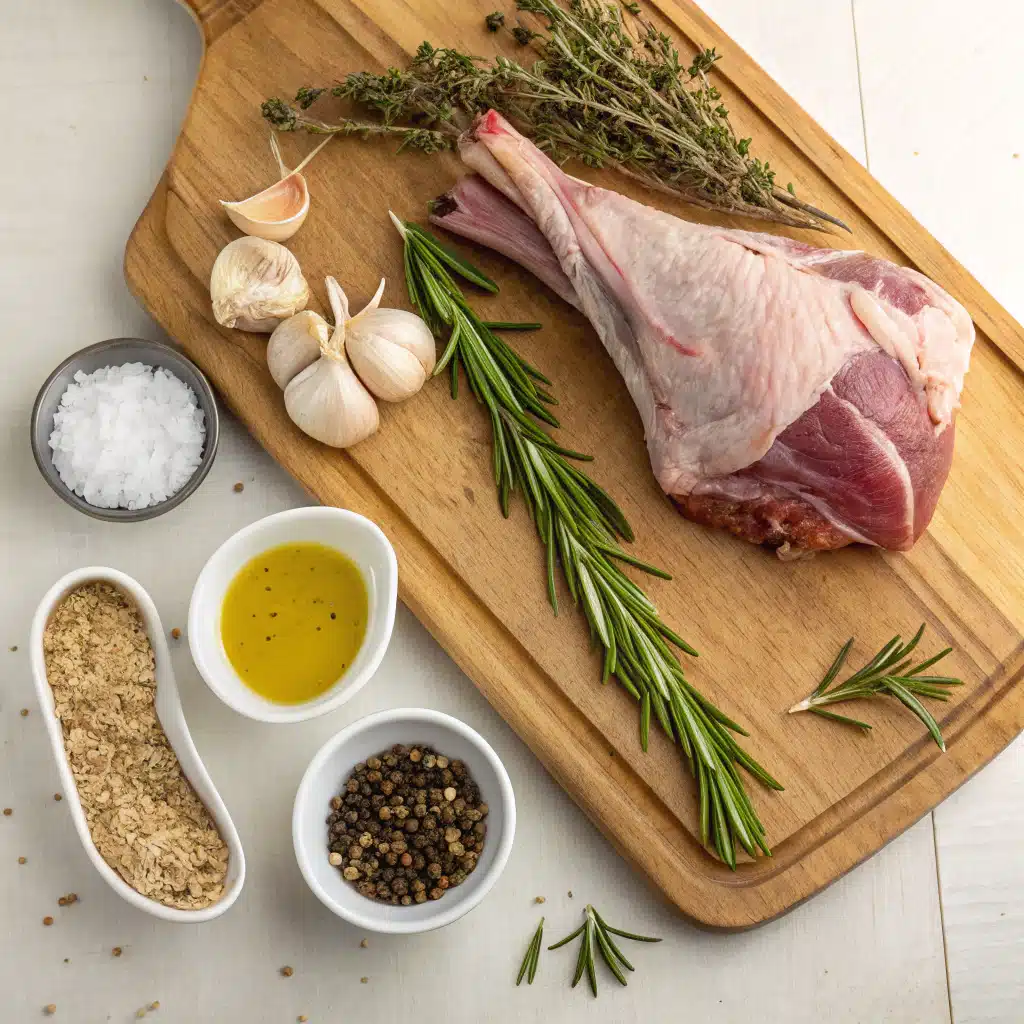
The foundation of this dish is a high-quality leg of lamb. Look for meat with a bright pink color and white, firm fat. While a bone-in leg offers more flavor during roasting, a boneless leg (often sold rolled and tied) proves easier to carve. Either option works beautifully in this recipe, though cooking times may vary slightly. When possible, source locally raised lamb for the freshest flavor.
The Flavor Builders: Spices and Aromatics
| Spices & Seasonings | Wet Ingredients |
|---|---|
| Salt and black pepper | Olive oil |
| Allspice | Tomato paste |
| Garlic powder | |
| Onion powder | |
| Smoked paprika | |
| Turmeric | |
| Cinnamon | |
| Cumin | |
| Bay leaves | |
| Cardamom pods |
The complex spice blend in this recipe creates layers of flavor that complement the natural richness of lamb. The aromatic combination of allspice, cinnamon, and cardamom adds warmth, while smoked paprika contributes a subtle smokiness. Garlic serves multiple roles—both as whole cloves inserted directly into the meat and as a component of the marinade. Fresh vegetables in the marinade infuse the lamb with moisture and additional flavor dimensions.
Step-by-Step Roasting Process
Preparing and Seasoning the Lamb
- Remove the leg of lamb from the refrigerator and allow it to come to room temperature for about 1 hour before cooking. This ensures even roasting.
- Preheat your oven to 450°F (232°C).
- Using a sharp knife, make several deep incisions all over the lamb.
- Insert the halved garlic cloves into these incisions, pushing them deep into the meat.
- Season the lamb generously with salt and black pepper, rubbing it all over the surface.
- In a small bowl, combine the allspice, garlic powder, onion powder, smoked paprika, turmeric, cinnamon, and cumin to create a dry spice rub.
- Apply this spice mixture evenly over the entire surface of the lamb, patting it gently to adhere.
The Magic of Marination
Creating a flavorful marinade significantly elevates your roasted leg of lamb. The acid from the tomato helps tenderize the meat, while the aromatics infuse it with complex flavors:
- In a food processor, blend the 6 whole garlic cloves, yellow onion, tomato, bell pepper, and tomato paste until smooth.
- Drizzle in olive oil while the processor is running until you achieve a smooth, slightly thick consistency.
- Place the seasoned lamb in a large roasting pan or deep dish.
- Pour the marinade over the lamb, ensuring it coats all sides.
- Add bay leaves and cardamom pods around the lamb.
- Cover the pan tightly with plastic wrap or aluminum foil.
- Refrigerate for at least 4 hours, preferably overnight, turning the lamb once halfway through the marination period. “Discover great ideas like our lamb steaks with mushrooms recipe, which uses a similar marination technique for maximum flavor.”
Roasting to Perfection
The roasting process combines both high and low-temperature cooking for optimal results:
- Remove the marinated lamb from the refrigerator 1 hour before roasting to take the chill off.
- Preheat the oven to 450°F (232°C).
- Remove the bay leaves and cardamom pods from the marinade (or leave them in the pan for added flavor).
- Place the lamb in a roasting pan, fatty side up, and pour any remaining marinade over the top.
- Cover the roasting pan tightly with aluminum foil.
- Roast at 450°F for 20 minutes to sear the exterior.
- Reduce the oven temperature to 325°F (163°C) and continue roasting for approximately 15-20 minutes per pound for medium-rare (internal temperature of 135°F/57°C) or 20-25 minutes per pound for medium (internal temperature of 145°F/63°C).
- During the last 30 minutes of cooking, remove the foil to allow the exterior to brown.
- While the lamb is roasting, thinly slice the 3 large yellow onions.
- In a large skillet over medium-low heat, heat 2-3 tablespoons of olive oil.
- Add the sliced onions with a pinch of salt and cook slowly, stirring occasionally, until caramelized and golden brown, about 30-40 minutes.
- Once the lamb reaches your desired internal temperature, remove it from the oven and tent loosely with foil. Allow it to rest for at least 20-30 minutes before carving.
Tips for Roasted Leg of Lamb Success
Achieving the Perfect Temperature
The internal temperature of your roasted leg of lamb determines both its doneness and juiciness. For optimal results:
• Rare: 125°F (52°C) – Very pink center
• Medium-rare: 135°F (57°C) – Pink center, most flavorful
• Medium: 145°F (63°C) – Slightly pink center
• Medium-well: 150°F (66°C) – Barely pink center
• Well-done: 160°F (71°C) – No pink
Always use an instant-read thermometer inserted into the thickest part of the meat, away from the bone, for the most accurate reading. Remember that during resting, the temperature will rise approximately 5-10 degrees, so remove the lamb from the oven when it’s 5-10 degrees below your target temperature.
The Crucial Resting Period
Resting your roasted leg of lamb isn’t optional—it’s essential. During cooking, heat drives the meat’s juices toward the center. Resting allows these juices to redistribute throughout the meat, resulting in a moist, tender final product. For a whole leg of lamb:
- After removing from the oven, place the lamb on a cutting board or platter.
- Tent loosely with aluminum foil to keep it warm without trapping steam (which would soften the exterior crust).
- Rest for at least 20-30 minutes before carving.
- Use this time to finish your side dishes and caramelized onions.
Carving Techniques for Presentation
Proper carving transforms your roasted leg of lamb from rustic to refined:
- Place the rested lamb on a stable cutting board with a groove to catch juices.
- If using bone-in lamb, position it so the bone runs parallel to the cutting board.
- Begin at the thickest end, cutting perpendicular to the bone in thin, even slices.
- For boneless lamb, simply slice across the grain in even portions.
- Arrange slices on a warmed platter, slightly overlapping for an elegant presentation.
- Pour any collected juices over the meat for additional flavor.
Storage and Reheating
Proper Storage Methods
Properly stored, roasted leg of lamb remains delicious for several days:
- Allow leftover lamb to cool completely but don’t leave it at room temperature for more than 2 hours.
- Slice the remaining meat from the bone for easier storage and future use.
- Place in airtight containers or wrap tightly in heavy-duty aluminum foil or plastic wrap.
- Refrigerate for 3-4 days.
- For longer storage, freeze the lamb:
• Wrap slices tightly in freezer paper or heavy-duty aluminum foil.
• Place wrapped portions in freezer bags, removing as much air as possible.
• Label with the date and contents.
• Freeze for up to 2-3 months for best quality. “Check out our mushroom roast lamb for another delicious lamb recipe that stores wonderfully.”
Reheating Without Drying Out
Reheating lamb without compromising its tenderness requires gentle methods:
Oven method (best for larger portions):
• Preheat oven to 325°F (163°C).
• Place lamb slices in a baking dish with a few tablespoons of broth or water.
• Cover tightly with foil to create steam.
• Heat until warm throughout, about 15-20 minutes.Stovetop method (best for single servings):
• Heat a skillet over medium-low heat.
• Add a small amount of olive oil or butter.
• Place lamb slices in the skillet.
• Add a splash of broth or water and cover with a lid.
• Heat gently for 3-5 minutes, turning once.Microwave method (quickest, but less ideal):
• Place lamb slices on a microwave-safe plate.
• Cover with a damp paper towel to add moisture.
• Heat on 50% power in 30-second increments until just warmed through.
Creative Uses for Leftover Lamb
Transform leftover roasted leg of lamb into entirely new meals:
• Lamb sandwiches with mint yogurt sauce on crusty bread
• Mediterranean lamb wraps with hummus and cucumber
• Lamb and vegetable soup
• Lamb hash with potatoes and a fried egg
• Lamb shepherd’s pie
• Lamb and rice stuffed peppers
• Lamb tacos with tzatziki and fresh vegetables
• Greek-style lamb salad with feta cheese
Variations on Roasted Leg of Lamb
Herb-Forward Mediterranean Style
For a bright, herb-focused variation:
- Replace the spice rub with a paste made from:
• ½ cup fresh rosemary leaves
• ¼ cup fresh thyme leaves
• 8 fresh mint leaves
• 6 garlic cloves
• Zest of 1 lemon
• 2 tablespoons olive oil
• Salt and pepper to taste - Process these ingredients into a paste and rub all over the lamb.
- Skip the liquid marinade and instead squeeze fresh lemon juice over the herb-coated lamb.
- Let sit for at least 4 hours before roasting as directed.
- Serve with roasted lemon halves for squeezing over the carved meat.
Moroccan-Inspired Flavor Profile
For exotic North African flavors:
- Adjust the spice blend to include:
• 2 teaspoons ground coriander
• 1 teaspoon ground ginger
• ½ teaspoon cayenne pepper
• ¼ teaspoon ground cloves
• 2 tablespoons honey - Add preserved lemon (finely chopped) and green olives to the roasting pan during the last hour.
- Garnish with fresh mint, cilantro, and toasted almonds instead of the standard garnishes.
- Serve with harissa sauce on the side for those who enjoy heat. “Looking for inspiration? Try our Greek lamb meatballs that feature similar Moroccan-inspired spices.”
Garlic and Herb Butter Infusion
For a richly decadent variation:
- Create a compound butter by mixing:
• 1 stick (½ cup) softened unsalted butter
• 6 cloves minced garlic
• 2 tablespoons fresh rosemary, finely chopped
• 2 tablespoons fresh thyme leaves
• 1 tablespoon fresh oregano, chopped
• 1 teaspoon lemon zest
• Salt and pepper to taste - After making incisions in the lamb, stuff them with this compound butter instead of garlic cloves.
- Rub the exterior with olive oil, salt, and pepper only.
- Roast as directed, basting occasionally with the melted herb butter that collects in the pan.
- For extra richness, brush more compound butter over the lamb during the final 15 minutes of roasting.
Serving Your Roasted Leg of Lamb
Complementary Side Dishes
The right accompaniments enhance your roasted leg of lamb:
• Roasted potatoes with rosemary and garlic
• Creamy mashed potatoes with roasted garlic
• Honey-glazed carrots with thyme
• Mint-infused couscous
• Lemon-herb rice pilaf
• Roasted Brussels sprouts with balsamic glaze
• Green beans with toasted almonds
• Spring pea and mint salad
• Roasted root vegetables
• Grilled asparagus with lemon
Traditional sauces and condiments that pair beautifully include:
• Mint jelly or mint sauce
• Tzatziki
• Chimichurri
• Red wine reduction
• Rosemary-infused gravy
• Pomegranate molasses drizzle
Presentation Techniques
Elevate your roasted leg of lamb’s visual appeal:
- Use a large, pre-warmed platter as your serving vessel.
- Arrange sliced lamb in a fan or overlapping pattern in the center.
- Spoon the caramelized onions over one section of the meat.
- Surround with small piles of fresh herbs like parsley, mint, and rosemary.
- Scatter toasted nuts (such as pine nuts, almonds, or pistachios) around the platter.
- Add colorful elements like pomegranate seeds, lemon wedges, or small roasted vegetables.
- Pour a small amount of the roasting juices over the meat just before bringing to the table.
- For a rustic presentation, consider serving on a wooden board with small bowls of sauce. “Want more ideas? Check out our Greek lamb orzo stew for inspiration on Mediterranean presentation styles.”
Wine Pairing Suggestions
The rich flavors of roasted leg of lamb pair wonderfully with:
• Red wines: Cabernet Sauvignon, Syrah/Shiraz, Malbec, or Bordeaux blends
• For lighter preparations: Pinot Noir or Grenache
• With herb-focused preparations: Côtes du Rhône or Rioja
• For Moroccan-spiced versions: Zinfandel or Tempranillo
Non-alcoholic pairings include:
• Pomegranate juice spritzer
• Sparkling water with cucumber and mint
• Iced hibiscus tea
• Lemon-rosemary infused water

Frequently Asked Questions
How long should a leg of lamb be roasted per pound?
For bone-in leg of lamb, the general rule is 15-20 minutes per pound for medium-rare (internal temperature of 135°F/57°C) and 20-25 minutes per pound for medium (internal temperature of 145°F/63°C). For boneless leg, reduce cooking time by about 5 minutes per pound. However, always rely on a meat thermometer rather than time alone, as oven temperatures and meat thickness can vary.
What seasoning works best for roasted leg of lamb?
Traditional Mediterranean herbs like rosemary, thyme, garlic, and mint complement lamb beautifully. Middle Eastern spice blends featuring cumin, coriander, cinnamon, and allspice also enhance lamb’s natural flavor. The recipe provided uses a balanced combination of aromatic spices that create depth without overpowering the meat’s natural flavor.
Should leg of lamb be marinated before roasting?
While not strictly necessary, marinating leg of lamb significantly improves flavor and tenderness. A marinade with acidic components (like yogurt, citrus, or tomato) helps break down muscle fibers for more tender results. For best results, marinate for at least 4 hours or preferably overnight, turning occasionally to ensure even flavor distribution.
How do you keep roasted leg of lamb juicy?
To maintain juiciness: (1) Don’t trim all the fat—it bastes the meat during roasting; (2) Roast at high temperature initially, then reduce to moderate heat; (3) Use a meat thermometer and avoid overcooking; (4) Cover with foil during most of the cooking time; (5) Allow the meat to rest for at least 20-30 minutes before carving to redistribute juices.
What internal temperature is best for lamb?
Medium-rare (135°F/57°C) is generally considered optimal for lamb, providing the best balance of tenderness, juiciness, and flavor. However, preferences vary: rare (125°F/52°C), medium (145°F/63°C), medium-well (150°F/66°C), or well-done (160°F/71°C) are all acceptable. Remember that temperature will rise 5-10 degrees during resting.
“Here’s your guide to beef and vegetable roast that uses similar temperature principles.”
Can roasted leg of lamb be reheated?
Yes, leftover roasted leg of lamb can be reheated successfully if done gently. The best methods include: (1) Oven reheating at 325°F with added moisture and foil covering; (2) Stovetop reheating in a covered pan with a splash of liquid; or (3) Gentle microwave reheating at reduced power. To preserve maximum juiciness, slice the lamb before storing and reheat only the portions you plan to eat immediately.
Conclusion
Mastering the Art of Roasted Leg of Lamb
Roasted leg of lamb represents one of cooking’s most rewarding achievements. The impressive presentation, complex flavors, and tender texture make it worthy of celebration meals and special gatherings. This recipe’s careful balance of spices, thorough marination, and precise temperature control ensures consistent success, even for those new to preparing this magnificent cut. The addition of caramelized onions and aromatic garnishes elevates the dish to restaurant quality while remaining accessible to home cooks.
“Don’t miss our osso buco with mushrooms for another impressive main dish option.”
Creating Food Traditions with Roasted Lamb
Beyond its immediate appeal, roasted leg of lamb has the power to establish enduring food traditions within families and communities. Whether it becomes your signature Easter dish, holiday centerpiece, or the meal that marks significant life events, this recipe offers a foundation for personalization and memory-making. As you master the techniques—from selecting the perfect cut to achieving the ideal doneness—you’ll gain confidence in making this spectacular dish your own. The versatility of lamb allows for endless variations reflecting seasonal availability and cultural influences, ensuring that your roasted leg of lamb can evolve alongside your culinary journey.
PrintRoasted Leg of Lamb
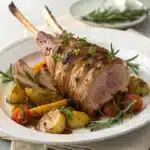
A perfectly seasoned, tender roasted leg of lamb with aromatic spices and caramelized onions for an impressive centerpiece dish.
- Prep Time: 30 minutes
- Cook Time: 2 hours 30 minutes
- Total Time: 3 hours
- Yield: 8–10 1x
- Category: Main Dish
- Cuisine: Mediterranean
Ingredients
- 1 whole leg of lamb, about 8–9 pounds, trimmed
- 4 garlic cloves, halved
- Salt and black pepper
- Allspice, garlic powder, onion powder, smoked paprika, turmeric, cinnamon, cumin
- 6 garlic cloves
- 1 yellow onion
- ½ tomato
- ½ bell pepper
- Tomato paste
- Olive oil
- Bay leaves
- Cardamom pods
- 3 large yellow onions
- Fresh parsley
- Toasted nuts
Instructions
- Make incisions in lamb and insert halved garlic cloves. Season with salt, pepper and dry spices.
- Blend 6 garlic cloves, onion, tomato, bell pepper, and tomato paste for marinade. Coat lamb thoroughly.
- Marinate covered for 4 hours or overnight, turning once.
- Preheat oven to 450°F. Roast covered for 20 minutes, then reduce to 325°F.
- Continue roasting 15-20 minutes per pound for medium-rare (135°F).
- Remove foil during last 30 minutes to brown exterior.
- Meanwhile, slowly caramelize sliced onions in olive oil for 30-40 minutes.
- Let lamb rest 20-30 minutes before carving.
- Serve topped with caramelized onions, parsley, and toasted nuts.
Notes
Nutrition facts are estimates and may vary based on ingredients used, portion sizes, and preparation methods.
Nutrition
- Serving Size: 8
- Calories: 480 Kcal
- Sugar: 3g
- Sodium: 420mg
- Fat: 28g
- Saturated Fat: 12g
- Carbohydrates: 5g
- Fiber: 1g
- Protein: 53g
- Cholesterol: 170mg
Keywords: roasted leg of lamb, holiday lamb, Easter dinner, lamb with spices, caramelized onions
Let’s connect! Follow me for more Joylicious Recipes: Facebook, Instagram, Pinterest