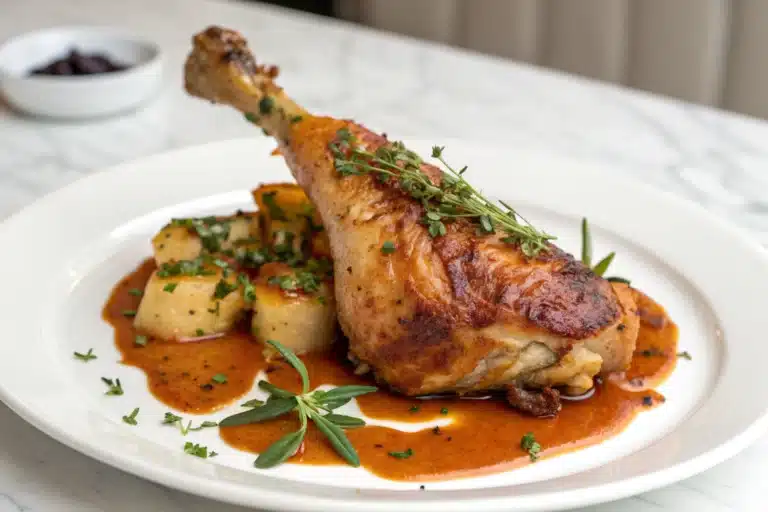
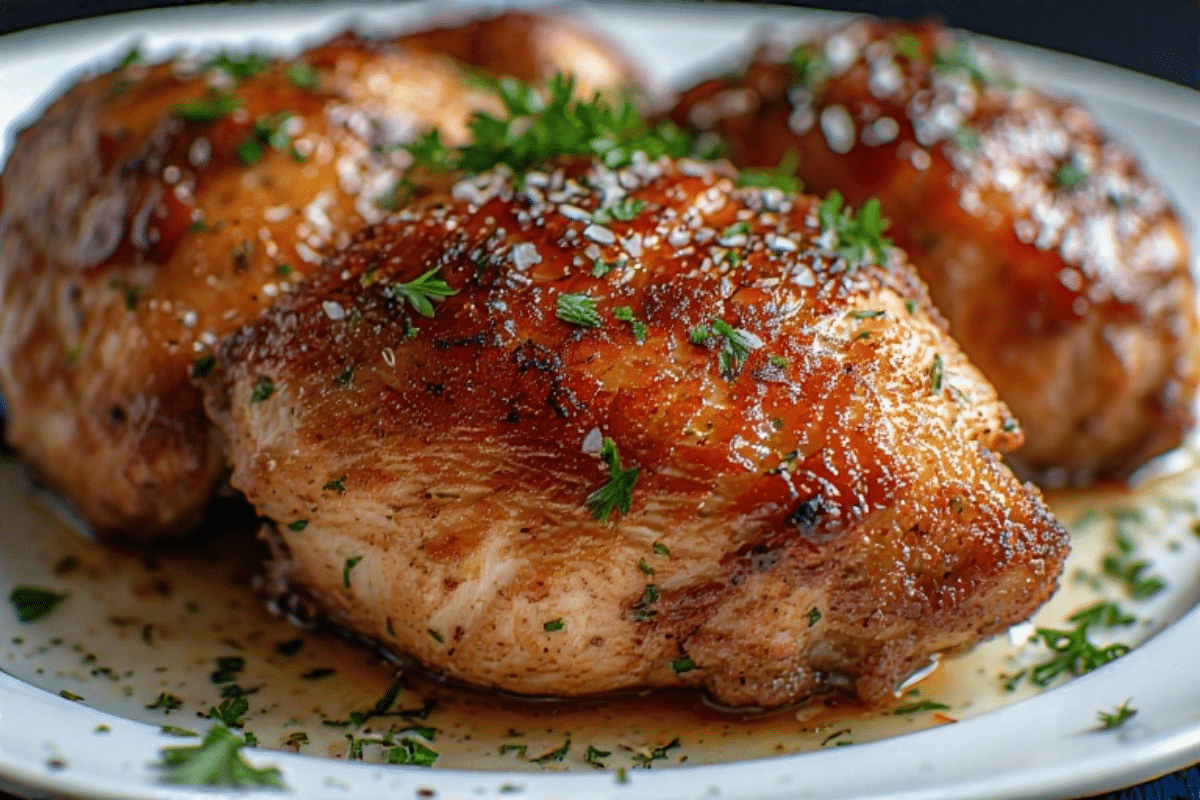
Sous Vide Chicken Thighs Made Easy – Juicy, Tender & Glazed Every Time
Sous vide chicken thighs are a game-changer if you want juicy, tender meat with crispy skin and bold flavor. This cooking method locks in moisture and delivers consistent results every single time. No more guessing if the chicken is undercooked or dry. With sous vide, your thighs come out perfectly done—every time.
This guide covers everything you need to make the best sous vide chicken thighs. From temperature and timing to seasoning, finishing techniques, and meal prep tips—we’ve got it all. You’ll also learn how to make a flavorful peach balsamic glaze and avoid common issues like rubbery texture or bland results.
We’ll answer top questions like:
- Should I marinate before cooking?
- Is searing necessary after sous vide?
- What’s the safest temperature?
Check out How to Cook Bone-In Chicken Breast if you’re exploring other juicy cuts.
Let’s dig into why these sous vide chicken thighs are the best thing to hit your dinner table.
Why Sous Vide Chicken Thighs Are a Game-Changer
What Makes Sous Vide Cooking Unique?
Sous vide relies on a carefully regulated water bath to cook food slowly and evenly with precise temperature control. Instead of blasting chicken with high heat, you allow it to cook slowly at a set temperature. As a result, your meat never turns out overdone or undercooked.
In fact, it removes the guesswork completely. Unlike traditional methods where the outer parts dry out before the inside cooks through, sous vide provides consistent doneness from edge to center.
Additionally, it saves you time and stress. Once your chicken is sealed and placed in the water bath, you’re free to focus on other tasks—no constant checking, no flipping, no timing anxiety.
Benefits of Sous Vide for Chicken Thighs
There are plenty of reasons to love sous vide chicken thighs, but here are a few top benefits that set this method apart:
- Juicy Results: Moisture stays locked in thanks to low, steady heat
- Even Cooking: No gray edges or raw spots—just perfect texture throughout
- Time Flexibility: Cook for 1 to 4 hours without losing quality
- Hands-Free Method: Minimal effort, maximum reward
Most importantly, you get professional-level results without special training or restaurant equipment. Whether you’re a beginner or a kitchen pro, this method works every time.
Looking for inspiration? Try our Creamy Skillet Chicken with Mushrooms for another rich and juicy dinner idea.
Common Mistakes People Make
Although sous vide is a forgiving technique, a few missteps can lead to less-than-stellar results. For instance, if you don’t vacuum-seal the bag properly, water can seep in and ruin the texture. Similarly, skipping the searing or broiling step leaves your chicken looking pale and unappetizing.
Moreover, cooking at the wrong temperature can cause the thighs to feel rubbery or underdone. Another common issue? Using a marinade that’s too acidic or salty—it breaks down the protein too much, giving you mushy meat.
To ensure success, always double-check your seal, stick to trusted temps, and use moderate seasoning. You’ll find more detailed fixes and pro tips in the next sections.
Discover great ideas like our Crispy Baked Hot Honey Chicken for extra inspiration on achieving crispy, flavorful skin at home.
Ingredients for Perfect Sous Vide Chicken Thighs
Essential Ingredients You’ll Need
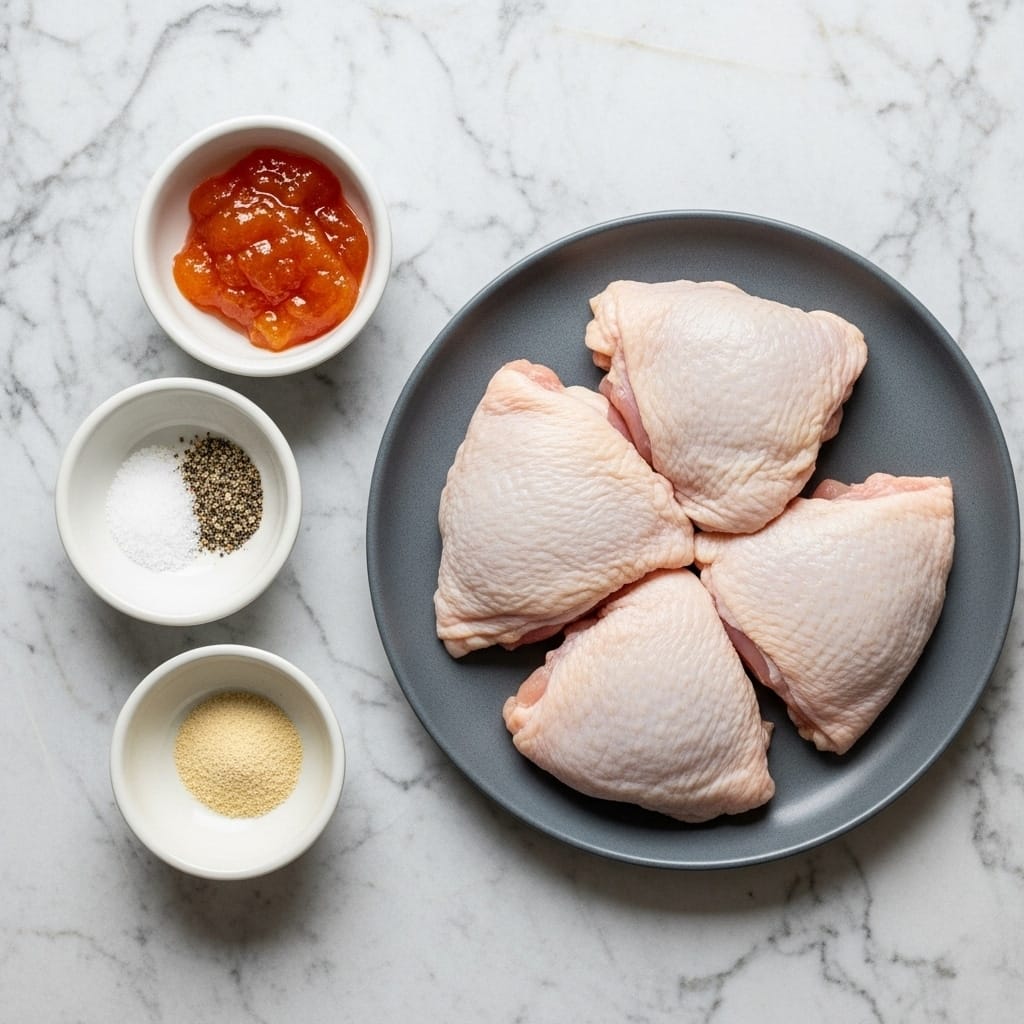
Before diving into the cooking process, make sure you’ve gathered everything needed for flavorful, juicy sous vide chicken thighs. The recipe is simple but packed with taste. Here’s what you’ll use:
- 2.25 pounds (1 kg) of chicken thighs with bone in and skin on — approximately 6 pieces
- Kosher salt, black pepper, garlic powder – For seasoning
- Chopped fresh parsley – Optional, for garnish
This base offers a savory and well-balanced flavor. Bone-in and skin-on cuts hold moisture well and develop rich taste during sous vide.
Need a delicious way to cook boneless thighs too? Don’t miss our Garlic Butter Chicken Bites for quick, juicy bites using different cuts.
Seasoning Variations and Flavor Ideas
Although salt, pepper, and garlic powder work great on their own, you can easily switch things up. Want bold or exotic flavor? Try:
- Smoked paprika and cumin for smoky depth
- Curry powder and coriander for a warm, spiced profile
- Fresh thyme or rosemary to add earthy freshness
- Lemon zest or sumac for citrusy brightness
Just be cautious with acidic marinades when cooking long sous vide sessions. Over time, acid can break down muscle fibers too much and create a mushy texture. You’ll learn more about this in Part 7.
Sauce Spotlight: Peach Balsamic Glaze Ingredients
To elevate the flavor, you’ll top the chicken with a simple but elegant glaze. It adds sweet, tangy contrast to the savory chicken. Here’s what goes into it:
- ½ cup (118 ml) peach jam or preserves – You can also use apricot or raspberry jam
- 2 tablespoons high-quality balsamic vinegar – Choose aged for smoother flavor
- 1 teaspoon Dijon mustard – Balances the sweetness
- Pinch of cayenne pepper – Optional, for heat
This glaze not only complements the chicken but also creates a beautiful, glossy finish after broiling or searing.
Learn more about glazing techniques in our Brown Sugar Garlic Chicken that balances sweet and savory like a pro.
Step-by-Step: How to Cook Sous Vide Chicken Thighs
Setting Up Your Sous Vide Bath Correctly
First things first—let’s get your water bath ready. Start by filling your sous vide container or large pot with water, following your device’s instructions. Then, set the temperature to 165°F (73.9°C) for tender, juicy chicken that’s not overly soft. This is the sweet spot for perfectly cooked sous vide chicken thighs.
While the water heats up, prep your chicken. It’s important to give the bath a few minutes to reach the correct temp before adding anything in.
Need tips on other temp settings? Check out our Sous Vide Chicken Breast Guide for a full chart of safe, effective temperatures for poultry.
Prepping Chicken Thighs for Sous Vide
Now it’s time to prepare your meat. Start by patting the chicken dry with paper towels. Next, season generously on both sides using kosher salt, black pepper, and garlic powder. This simple blend enhances the chicken’s natural flavor without overpowering it.
Then, fold back the top inch of each sous vide-safe bag. This flap prevents food from getting near the sealing edge, which is key for a proper seal. Place the thighs inside the bags—make sure they don’t overlap. Overlapping leads to uneven cooking.
Vacuum Sealing vs. Displacement Method
To seal your chicken, you’ve got two great options:
- Vacuum Sealer: This method removes air entirely, allowing for better water circulation and consistent heat transfer.
- Water Displacement (Ziploc) Method: Don’t have a vacuum sealer? No problem. Just lower a Ziploc bag with chicken into the bath slowly. The pressure from the water pushes the air out. When the bag’s top edge is just above the waterline, close it securely to lock out air.
Be sure to double-check the seals before placing the chicken into the water bath. Even a tiny leak can mess with the results.
Don’t miss our Garlic Butter Baked Chicken Breast for more tips on sealing and prep techniques that help lock in flavor.
After the water hits the target temperature, gently lower the sealed bag of chicken thighs into the bath. For best results, cook them for at least 1 hour and no more than 4 hours. Many sous vide fans go with 75 minutes for ideal tenderness.
Perfect Cooking Time and Temperature for Sous Vide Chicken Thighs
How Long to Sous Vide Chicken Thighs?
One of the greatest benefits of cooking sous vide chicken thighs is the flexibility in timing. You can cook them for as little as 1 hour or as long as 4 hours, and still get tender, flavorful results. That wide window gives you freedom—especially helpful for busy evenings or entertaining.
Most home cooks find that 75 to 90 minutes delivers the best balance between texture and juiciness. The thighs will be fully cooked, moist, and easy to finish with a glaze or a quick sear.
Need help with other proteins too? Explore our Sous Vide Prime Rib if you’re branching into beef with the same precision.
What’s the Best Temperature for Chicken Thighs?
The ideal temperature depends on your texture preference. However, 165°F (73.9°C) is widely recommended for bone-in, skin-on thighs. At this level, the collagen begins to break down just enough, leaving the meat soft but not mushy.
Here’s a quick sous vide chicken thigh temperature guide:
| Temperature (°F) | Texture Result | Cook Time |
|---|---|---|
| 150°F (65.6°C) | Meaty and slightly chewy | 1–4 hours |
| 160°F (71.1°C) | Tender and juicy | 1–4 hours |
| 165°F (73.9°C) | Very tender, soft texture | 1–4 hours |
If you prefer thighs with more bite and structure, consider 150°F for a slightly firmer result.
Is 145 Degrees Safe for Chicken Thighs?
Technically, 145°F (62.8°C) can be safe if held long enough. However, for dark meat like thighs, that temperature isn’t ideal for breaking down connective tissue. The texture may turn out rubbery or too chewy—especially if you’re not cooking for at least 2 hours or more.
According to USDA guidelines, 165°F is the benchmark for chicken safety. While sous vide allows for lower temps over longer times, it’s best to stick with 160–165°F for thighs to ensure both safety and great eating quality.
Don’t miss our Sous Vide Ribeye Guide if you’re curious how temp and time play out with red meat too.
Finishing Techniques for Texture and Flavor
How to Sear After Sous Vide (Do You Need To?)
Yes, searing—or broiling—is highly recommended after sous vide. While sous vide delivers juicy, evenly cooked meat, it doesn’t create the crispy skin or caramelized exterior most people love. A quick high-heat finish adds flavor, texture, and visual appeal.
Here’s why finishing matters:
- It locks in glaze or sauces
- It crisps up the skin (especially for bone-in, skin-on thighs)
- It adds that final golden-brown look that screams “delicious”
For a stovetop sear, heat a cast-iron skillet over medium-high. Add a teaspoon or two of oil. Place the chicken thighs skin side down, then press lightly with a spatula to help the skin crisp up evenly. Sear for 3–5 minutes or until the skin turns golden and crackly.
Don’t feel like using a skillet? Broiling works great too.
Learn more about oven finishing in our Garlic Parmesan Baked Chicken—an easy way to finish poultry with less mess.
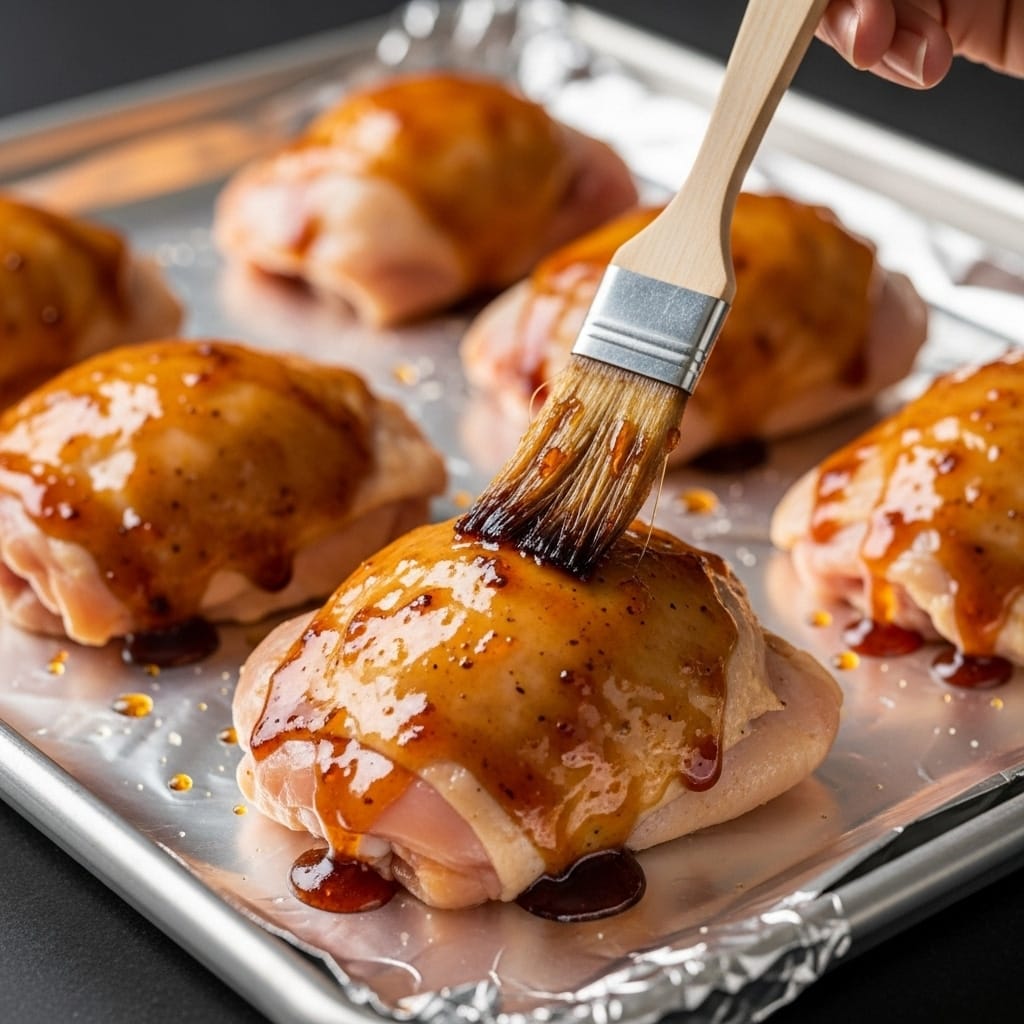
Using Broiler vs. Cast Iron Skillet for Crispy Skin
Both options get the job done, but each has its strengths:
| Method | Pros | Best For |
|---|---|---|
| Cast Iron Sear | Superior control, deeper browning | Skin-on thighs, quick browning |
| Broiler | Hands-free, perfect for batch cooking | Glazed chicken, minimal oil |
To broil:
- Cover a baking sheet with foil and lightly coat it with cooking spray.
- Preheat the broiler and move the oven rack near the top.
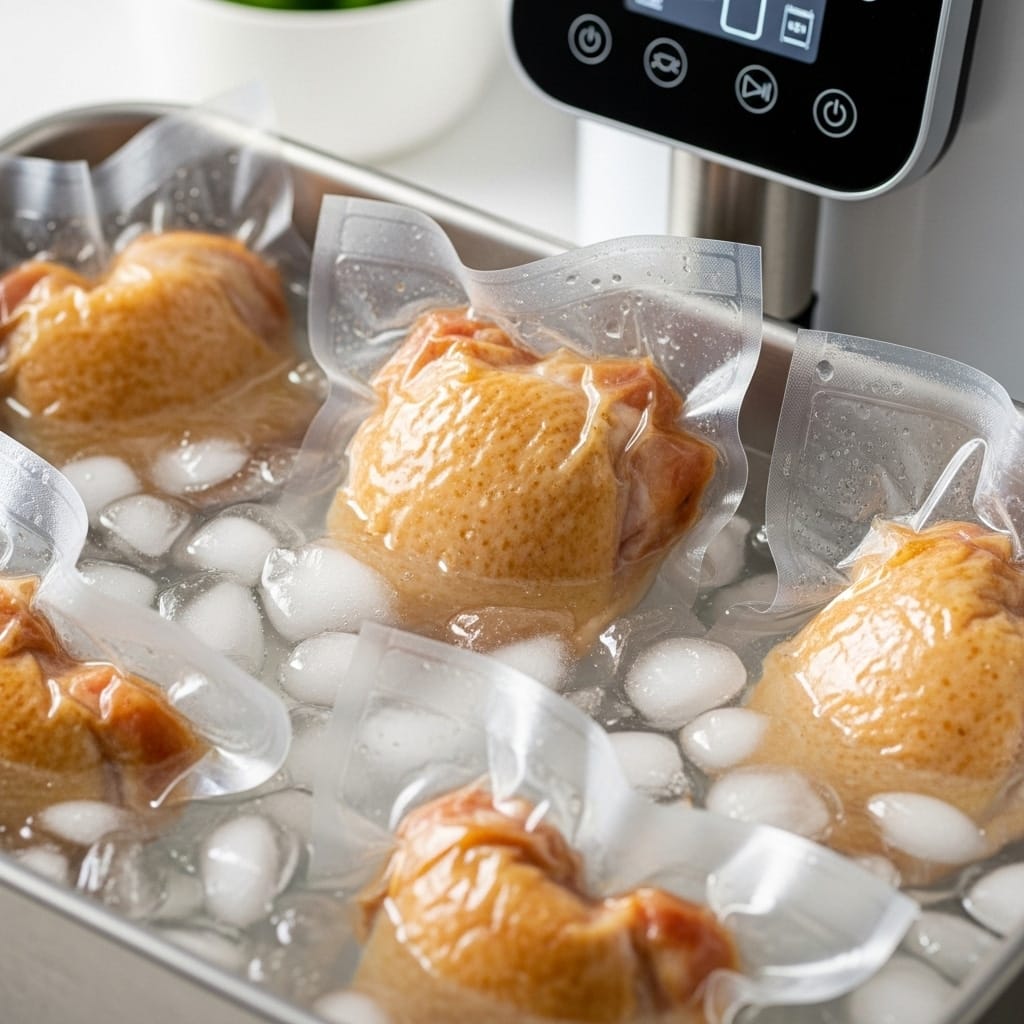
- After sous vide, chill thighs in an ice bath for 10 minutes.
- Pat dry thoroughly. Brush on most of the glaze, then place skin-side up on the sheet.
- Broil for 3–4 minutes until lightly browned. Drizzle with reserved glaze before serving.
This method gives you a beautiful, sticky finish without overcooking the meat.
Don’t miss our Creamy One-Pan Chicken and Rice if you love juicy chicken with flavor-packed sides.
Applying the Peach Balsamic Glaze Properly
Now let’s talk flavor. This peach balsamic glaze brings a sweet and tangy punch that complements the richness of the thighs. Here’s how to apply it for best results:
- After cooking, cool chicken in an ice bath for 8–10 minutes
- Pat dry thoroughly with paper towels (important for glaze to stick)
- Reserve 2–3 tablespoons of glaze for serving
- Brush the remaining glaze on both sides of the thighs before broiling
- After broiling or searing, drizzle on the reserved glaze as a finishing touch
That glossy glaze not only looks amazing but adds layers of flavor that make this dish restaurant-worthy.
Looking for another sweet-savory combo? Try our Crispy Parmesan Crusted Chicken—you’ll love the texture contrast!
Avoiding Texture Issues in Sous Vide Chicken
Why Your Chicken Might Be Rubbery
One of the most common complaints with sous vide chicken thighs is a rubbery or chewy texture. While sous vide is usually foolproof, small missteps can affect the final result. So, what causes it?
- Incorrect Temperature: Cooking below 150°F often leaves the collagen in dark meat under-processed, resulting in a tough bite.
- Insufficient Cook Time: Even with correct temp, cooking too briefly can lead to rubbery meat.
- Poor Sealing: Bags that trap air reduce even heat transfer and may cook chicken unevenly.
- Overly Acidic Marinades: Ingredients like vinegar or lemon juice, if used too long, can denature proteins too early, creating a strange, spongy texture.
By adjusting your method slightly, you can easily avoid these problems. And when you do, the result is incredibly tender meat every single time.
Explore our Creamy Garlic Herb Chicken for another texture-friendly recipe using proper heat and timing.
Solutions for Better Texture and Juiciness
Fortunately, fixing texture issues is simple when you follow the right process. Here are the top tips:
- Stick to 160°F–165°F for dark meat to break down collagen properly
- Cook for at least 75 minutes to ensure even tenderness
- Always use the ice bath method before finishing—this prevents overcooking during searing or broiling
- Pat chicken completely dry before searing or glazing. Moisture left on the skin will steam it instead of crisping
Need more chicken techniques? Check out our Easy Sheet Pan Chicken and Potatoes for a simple, flavorful approach to poultry without texture drama.
Tips to Get Crispy, Not Chewy Skin
Even after sous vide, skin-on thighs can still be crispy—but only if you dry and finish them properly. Here’s how:
- Chill them in an ice bath for 8–10 minutes post-cooking
- Blot skin thoroughly with paper towels (no shortcuts here)
- Preheat your skillet or broiler to high heat before placing the chicken in
- Use a bit of oil and press the chicken skin-down for even contact
- Avoid glazing before pan-searing; brush glaze on after searing or before broiling
Following these steps guarantees crispy, golden skin—never chewy or soggy.
Try pairing it with our Garlic Parmesan Chicken Rice for a satisfying, balanced plate that highlights texture and taste.
Marinating Before Sous Vide – Does It Help or Hurt?
Should I Marinate Chicken Before Sous Vide?
The short answer: it depends. While marinating chicken before sous vide can add flavor, it’s not always necessary—and in some cases, it can backfire.
Unlike grilling or baking, where high heat caramelizes and intensifies marinade flavors, sous vide doesn’t create that same reaction. The meat cooks gently in a sealed bag, so strong or acidic marinades can actually break down the chicken too much, giving it a mushy or chalky texture.
That said, light marinades made with herbs, garlic, oil, and gentle spices can work beautifully. Just keep the acid low (or skip it altogether) if you’re cooking for more than an hour.
Want bold flavor without marinating? Simply season generously and use a glaze or finishing sauce like our peach balsamic glaze instead.
Try our Cajun Chicken Cheesy Grits for an example of seasoning without marinade that’s still packed with punch.
Best Types of Marinades for Sous Vide Chicken
If you do choose to marinate your chicken thighs before cooking sous vide, stick with these guidelines:
- Keep acids low – Use just a splash of lemon juice or vinegar, if any
- Emphasize fresh herbs and aromatics – Garlic, rosemary, thyme, and oregano work well
- Use oil-based marinades – Olive oil helps flavors infuse without breaking down proteins
- Marinate for 30–60 minutes max – Avoid overnight soaks when using acid
Alternatively, you can apply a dry rub before vacuum sealing and allow the flavors to bloom during the sous vide bath.
Seasoning vs. Marinating: What Works Better?
For sous vide chicken thighs, seasoning is often more effective than marinating. Why?
- Seasoning is quicker and more predictable
- Salt helps retain moisture without changing meat texture
- You can add flavor later with a glaze, compound butter, or spice rub
- Seasoned chicken won’t suffer if cooked for longer periods
Ultimately, the sous vide method itself enhances natural flavor and juiciness, so you don’t need a marinade to get delicious results. Instead, focus on quality seasoning and proper finishing.
Learn more about seasoning alternatives in our Easy Homemade Chicken Breakfast Sausage—a no-marinade recipe packed with flavor.
Storage, Meal Prep & Reheating Instructions
How to Make Sous Vide Chicken Thighs Ahead
One of the best things about sous vide chicken thighs is how well they fit into meal prep routines. Since you can cook the chicken in advance and store it safely for days—or even months—it’s an ideal solution for busy households or weekly planning.
Here’s how to do it right:
- Cook the chicken sous vide as usual
- After cooking, immediately place the sealed bag in an ice bath for 10 minutes
- Once chilled, store in the refrigerator for up to 4 days or freeze for up to 3 months
This process locks in moisture and prevents bacteria growth, ensuring your chicken stays safe and delicious.
Don’t miss our Slow Cooker Cheesy Ranch Chicken for another make-ahead favorite that brings the flavor without the fuss.
Storing in Fridge or Freezer (3–4 Day and 3-Month Methods)
Here’s a quick breakdown of how long your cooked chicken will last:
| Storage Method | Shelf Life | Prep Tips |
|---|---|---|
| Fridge | 3–4 days | Store in original sous vide bag; keep sealed |
| Freezer | Up to 3 months | Label with date; freeze flat for easy stacking |
To make things even easier, you can divide the cooked chicken into portions before freezing. That way, you only thaw what you need.
Looking for side dish pairings? Try our Oven-Roasted Boneless Chicken Thighs Recipe which pairs well with anything from roasted veggies to rice bowls.
Reheating for the Best Results Without Overcooking
Reheating sous vide chicken thighs is simple—but timing matters if you want to maintain that tender texture. You have two main options:
- Reheat in Sous Vide Water Bath:
- Set your sous vide device a few degrees below the original cooking temp (around 150°F)
- Reheat the sealed chicken for 30–60 minutes depending on thickness
- Finish with a glaze or quick sear if desired
- Room Temp Shortcut (if not frozen):
- Allow the chicken to come to room temperature for about 20 to 30 minutes before reheating.
- Reheat in the sous vide bath for 20 minutes at 150°F
Avoid reheating in the microwave, which can toughen the meat and dry out the skin.
Pair it with our Creamy Chicken Linguine to turn your leftovers into a comforting, flavorful meal.
Serving Ideas, Pairings & Variations
Top Side Dishes for Sous Vide Chicken Thighs
Once your sous vide chicken thighs are glazed, broiled, and ready, it’s time to plate them like a pro. Luckily, they’re versatile enough to match with everything from casual sides to fancy dinner pairings.
Here are some favorite sides that complement both the flavor and texture:
- Garlic mashed potatoes or cheesy grits for a creamy base
- Grilled or roasted vegetables, like asparagus, Brussels sprouts, or carrots
- Cilantro-lime rice or wild grain blends for texture and balance
- Crispy smashed potatoes or sweet potato fries for crunch
- Fresh garden salad with citrus vinaigrette for a light contrast
Want more comfort food classics? Don’t miss our Melt-in-Your-Mouth Chicken—a hearty companion for cozy evenings.
Creative Glaze Variations (Apricot, Raspberry, Teriyaki)
The peach balsamic glaze is delicious, but don’t be afraid to experiment. You can change the flavor profile by simply swapping the jam or sauce base:
- Apricot preserves + rice vinegar + ginger for a light, Asian-inspired twist
- Raspberry jam + red wine vinegar for a sweet-tart glaze
- Teriyaki sauce + a splash of honey and garlic for a bold umami finish
- Sugar-free jam options for low-carb or keto-friendly versions
Simply follow the same glaze steps—whisk, brush, broil, and drizzle—for amazing results every time.
Looking for another balanced blend of sweet and savory? Check out our Brown Sugar Banana Pancakes—they’re not just for breakfast!
Other Cuts: Can You Sous Vide Chicken Breasts or Drumsticks?
Absolutely! Although this guide focuses on thighs, sous vide works beautifully with chicken breasts and drumsticks. Each cut has its own best temperature range:
- Chicken breasts (boneless): 144–150°F for 1.5 to 4 hours
- Chicken drumsticks: 160–165°F for 1.5 to 4 hours
The key is adjusting both temperature and timing to suit the texture you’re after.
Breasts are leaner, so they need lower temps to stay juicy. Drumsticks, like thighs, have more connective tissue and do best with slightly higher heat and longer cook times.
Explore our Sous Vide Brisket Recipe if you’re ready to expand your sous vide skills beyond chicken.
Frequently Asked Questions
How long do you sous vide chicken thighs?
You can sous vide chicken thighs for 1 to 4 hours. Most people find that 75 to 90 minutes provides the perfect balance between tenderness and texture. The meat becomes juicy without becoming too soft or falling apart.
What is the perfect temperature for chicken thighs?
The best temperature for sous vide chicken thighs is typically 165°F (73.9°C). It helps break down collagen, producing meat that’s tender and juicy. For a firmer texture, you can try 150°F (65.6°C), but cook it longer—at least 1.5 to 4 hours.
Is 145 degrees safe for chicken thighs?
Technically, 145°F is safe if held for a long enough time. However, it’s not ideal for chicken thighs, which contain more connective tissue than breasts. Cooking at 160–165°F ensures safety and gives you better texture and taste.
Why is my sous vide chicken rubbery?
Rubbery chicken usually happens when the temperature is too low or cook time is too short. Another cause is using high-acid marinades for too long, which can alter the meat’s texture. Aim for 165°F and cook for at least 75 minutes for optimal results.
Should I marinate chicken before sous vide?
Marinating isn’t required for sous vide. In fact, acidic marinades can over-tenderize the meat if left too long. Instead, try using a spice rub or seasoning before cooking and finish with a flavorful glaze afterward.
Do I need to sear chicken after sous vide?
Yes, searing or broiling after sous vide is highly recommended. While the sous vide process cooks your chicken through, it doesn’t brown the skin. A quick sear adds color, flavor, and that satisfying crispy texture.
Conclusion
Cooking sous vide chicken thighs is one of the easiest ways to achieve juicy, flavorful results with minimal effort. From precise temperature control to flexible timing, this method gives you full control over texture and doneness.
Whether you finish with a cast iron sear or a peach balsamic glaze under the broiler, your chicken is bound to impress. Remember to seal properly, stick to safe temps, and avoid over-marinating. With a few tweaks, you can turn a simple chicken thigh into a restaurant-worthy dish.
Explore even more flavor with our Buttercup Squash Recipes—a perfect fall pairing with glazed chicken.
Let’s connect! Follow me for more Joylicious Recipes:
PrintSous Vide Chicken Thighs Made Easy – Juicy, Tender & Glazed Every Time
These sous vide chicken thighs are perfectly juicy and tender, then finished with a sweet and tangy peach balsamic glaze. A foolproof recipe ideal for weeknight dinners, meal prep, or special occasions.
- Prep Time: 5 minutes
- Cook Time: 1 h 20 min
- Total Time: 1h 25 min
- Yield: 3 servings 1x
Ingredients
Chicken Thighs
2.25 pounds (1 kg) bone-in, skin-on chicken thighs (approx. 6 pieces)
1 ½ teaspoons kosher salt (adjust to taste)
1 teaspoon black pepper
1 teaspoon garlic powder
Chopped fresh parsley (optional garnish)
Peach Balsamic Glaze
½ cup (118 ml) peach jam or preserves
2 tablespoons balsamic vinegar (preferably aged)
1 teaspoon Dijon mustard
Pinch of cayenne pepper (optional)
Instructions
1. Prepare the Sous Vide Bath
Fill your sous vide container with water according to your device’s guidelines. Set the temperature to 165°F (73.9°C) for tender, juicy chicken thighs. Allow the water to come fully to temperature before adding the chicken.
2. Season and Bag the Chicken
Generously season both sides of the chicken thighs with kosher salt, black pepper, and garlic powder. Fold back the top inch of each sous vide bag to create a clean sealing area. Place the thighs into the bag, making sure they don’t overlap. Unfold the top flap and vacuum seal the bag.
Tip: If using a Ziploc bag, use the water displacement method to remove air before sealing.
3. Cook the Chicken Sous Vide
Once the water is ready, carefully lower the sealed bag into the bath. Cook for at least 1 hour and up to 4 hours. For ideal tenderness and texture, 75 minutes is recommended.
4. Make the Peach Balsamic Glaze
While the chicken cooks, combine peach jam, balsamic vinegar, Dijon mustard, and cayenne pepper in a small bowl. Whisk until smooth and set aside.
5. Cool the Chicken Before Broiling
After cooking, transfer the sealed chicken to an ice water bath for 8–10 minutes. This helps cool the chicken and gives you more time to glaze and broil without overcooking.
6. Glaze and Broil the Chicken
Line a baking sheet with foil and lightly spray with oil.
Preheat your oven to broil and position the rack a few inches below the heat source.
Remove chicken from the bags and pat dry thoroughly with paper towels.
Brush most of the glaze onto both sides of each thigh. Place them skin-side up on the prepared pan.
Broil for 3–4 minutes until the skin is slightly browned and crispy.
Drizzle the reserved glaze (2–3 tablespoons) over the top before serving.
Optional: Garnish with chopped fresh parsley for extra color and flavor.
Nutrition
- Serving Size: 3 servings
- Calories: 739kcal
- Sugar: 19g
- Sodium: 647mg
- Fat: 48g
- Saturated Fat: 13g
- Trans Fat: 1g
- Carbohydrates: 28g
- Fiber: 1g
- Protein: 47g
- Cholesterol: 283mg
Keywords: Chicken thighs, balsamic vinegar, peach jam, whole grain mustard, lemon, heavy cream, peanut oil, sauce, rosemary, jalapeno, smoked paprika, olive oil
Let’s connect! Follow me for more Joylicious Recipes: Facebook, Instagram, Pinterest