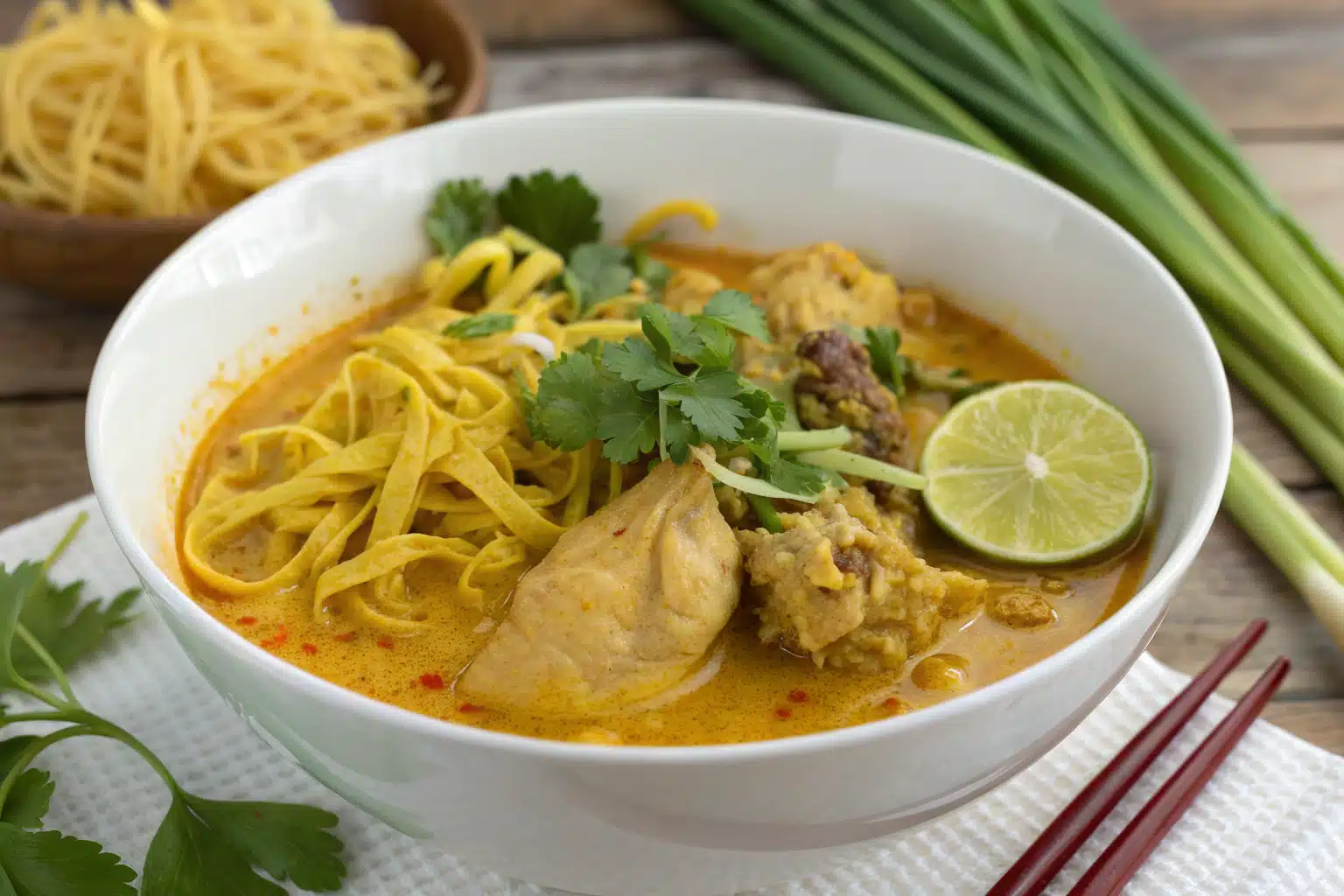
Authentic Chicken Khao Soi Recipe: Rich Northern Thai Coconut Curry Noodle Soup
Introduction to Chicken Khao Soi
The Heritage of Khao Soi
Chicken khao soi is a beloved Northern Thai curry noodle soup that perfectly balances rich coconut creaminess with aromatic spices. This iconic dish originates from Northern Thailand, particularly the Chiang Mai region, and shows influences from Burmese cuisine. The name “khao soi” translates roughly to “cut rice,” though the dish features egg noodles rather than rice noodles. What makes chicken khao soi truly special is its harmonious combination of a creamy coconut curry broth, tender chicken, and both soft and crispy egg noodles for textural contrast.
“Learn more about authentic Thai cuisine in our Thai Red Curry Chicken Noodles” which shares similar flavor profiles but with different preparation techniques.
What Makes Chicken Khao Soi Special
Chicken khao soi stands out from other Thai curries with its distinctive blend of spices including turmeric, coriander, and curry powder, giving it a beautiful golden color. The dish features a signature contrast between the soft, boiled egg noodles swimming in savory curry and the crispy fried noodles sprinkled on top. This textural interplay, combined with the rich coconut milk-based broth and tender chicken, creates an unforgettable culinary experience. Additionally, the customary accompaniments of lime wedges, pickled vegetables, shallots, and fresh herbs allow each diner to personalize their bowl according to taste preferences.
Ingredients for Authentic Chicken Khao Soi
For the Curry Broth
Creating the perfect chicken khao soi starts with a flavorful curry broth that serves as the foundation of this dish. Here are the essential ingredients needed for the curry broth:
| Ingredient | Amount | Purpose |
|---|---|---|
| Khao Soi curry paste | 1/2 cup | Provides the core flavor profile |
| Boneless chicken thighs or drumsticks | 1 1/2 pounds | Main protein that absorbs the curry flavors |
| Coconut milk | 1 (13.5-ounce) can | Creates a creamy, rich base |
| Low-sodium chicken stock | 3 cups | Adds depth while balancing richness |
| Soy sauce | 2 1/2 tablespoons | Contributes savory umami flavor |
| Fish sauce | 1 1/2 tablespoons | Enhances authenticity and depth |
| Brown sugar | 1 1/2 tablespoons | Balances spice with subtle sweetness |
| Mushrooms, sliced | 8 ounces | Adds texture and earthy flavor |
| Neutral cooking oil | For frying | Used for crisping noodles |
For the Homemade Khao Soi Paste
While pre-made curry paste works well, creating your own khao soi paste elevates this dish to restaurant quality. The homemade paste includes these ingredients:
| Ingredient | Amount | Purpose |
|---|---|---|
| Dried chilies, soaked and deseeded | 2 to 6 | Provides customizable heat level |
| Salt | 1 teaspoon | Enhances all flavors |
| Fresh turmeric, grated | 1 tablespoon | Gives characteristic golden color |
| Coriander seeds | 1 tablespoon | Adds warm, citrusy notes |
| Curry powder | 1 tablespoon | Contributes complex spice profile |
| Shallots, finely chopped | 2 ounces | Offers aromatic sweetness |
| Garlic, finely chopped | 1 tablespoon | Provides pungent depth |
| Fresh ginger, finely chopped | 2 tablespoons | Adds bright, spicy notes |
| Water | 1 tablespoon | Helps blend ingredients smoothly |
| Egg noodles or wonton noodles | 1 pound | The essential foundation of the dish |
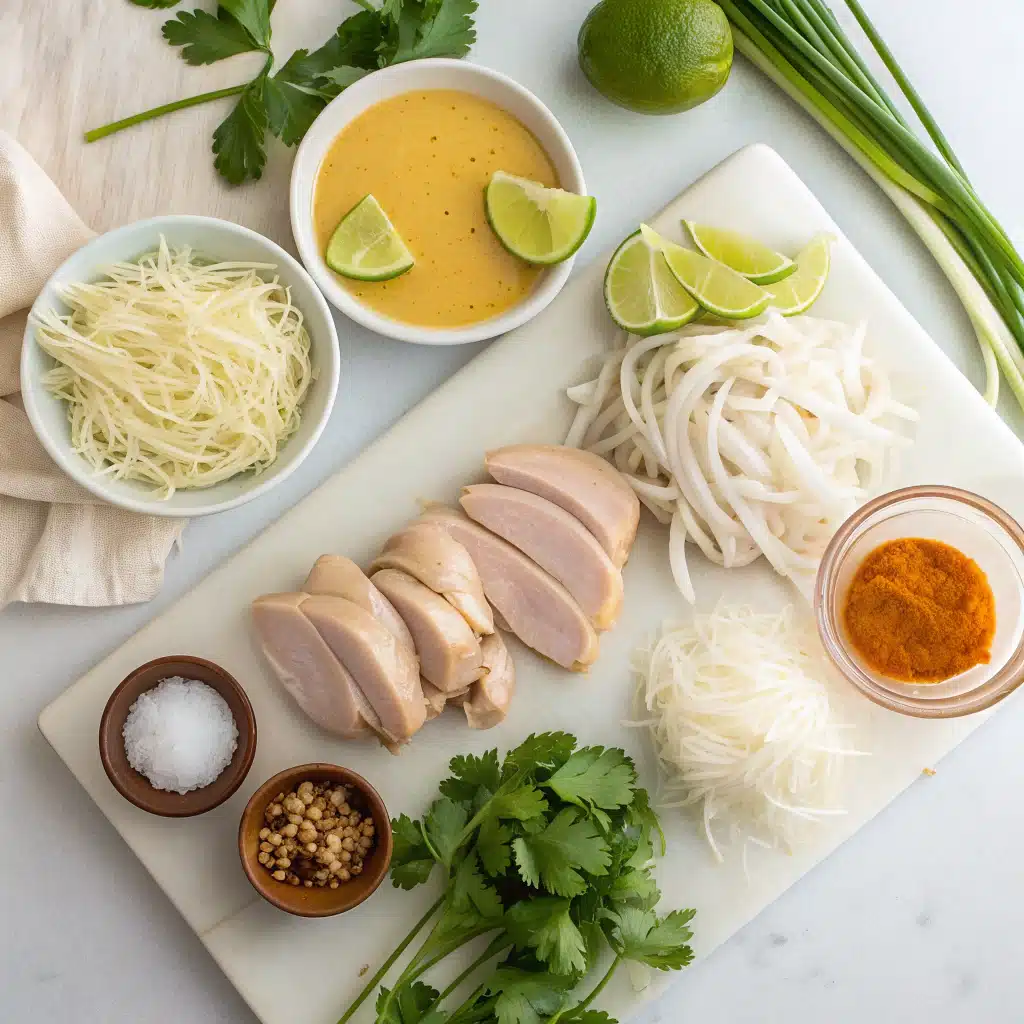
Step-by-Step Chicken Khao Soi Preparation
Preparing the Curry Paste and Noodles
Begin by making the homemade khao soi paste if you’re not using pre-made paste. Combine all paste ingredients in a food processor or blender: dried chilies, salt, fresh turmeric, coriander seeds, curry powder, shallots, garlic, ginger, and water. Blend until you achieve a smooth, aromatic paste.
Take a small handful of the egg noodles (about 1/8 of the total amount) and set them aside for frying. Cook the remaining noodles according to package directions, typically boiling for 3-4 minutes until al dente. Drain thoroughly, rinse with cold water to prevent sticking, and set aside.
Heat about 1/2 inch of neutral cooking oil in a small pan over medium-high heat. When the oil is hot (around 350°F), carefully add the reserved uncooked noodles in small batches. Fry for 1-2 minutes until golden and crispy, then transfer to a paper towel-lined plate to drain excess oil. These crispy noodles will serve as the traditional topping for your chicken khao soi. “Check out our Chicken Pho Noodle Soup for another delicious Asian noodle soup experience” with similar preparation techniques.
Creating the Flavorful Curry Broth
In a large pot or Dutch oven, heat 2 tablespoons of oil over medium heat. Add about 3 tablespoons of the coconut milk (the thicker cream part from the top of the can) and bring to a simmer until it begins to bubble and separate slightly.
Add the khao soi curry paste to the coconut cream and stir constantly for 2-3 minutes until intensely fragrant and the oil begins to separate from the paste. This crucial step, known as “cracking” the paste, releases the essential oils from the spices and develops deep flavor.
Pour in the remaining coconut milk and chicken stock, stirring well to incorporate. Bring the mixture to a gentle simmer.
Add the chicken pieces and sliced mushrooms to the simmering broth. Reduce heat to low-medium and cook uncovered for 25-30 minutes, or until the chicken is completely tender and easily pulls apart with a fork.
Season the broth with soy sauce, fish sauce, and brown sugar. Taste and adjust these seasonings to balance the flavors according to your preference. The ideal khao soi broth should be rich, aromatic, slightly sweet, and savory with moderate heat.
Assembling and Serving Your Chicken Khao Soi
To serve, divide the cooked egg noodles among serving bowls. Ladle the hot curry broth with chicken and mushrooms over the noodles.
Top each bowl with a generous portion of the crispy fried noodles, which will slowly soften as they soak up the flavorful broth while still providing textural contrast.
Serve immediately with traditional accompaniments such as lime wedges, thinly sliced shallots, pickled vegetables, bean sprouts, and fresh cilantro on the side, allowing diners to customize their bowls according to taste.
Tips for Perfect Chicken Khao Soi
Achieving Authentic Flavor
For truly authentic chicken khao soi, balance is key. The curry should have a harmonious blend of savory, sweet, spicy, and tangy elements. To achieve this balance, don’t rush the curry paste cooking process. Properly “cracking” the paste in coconut cream releases essential oils from the spices, developing deep, complex flavors. When making your own paste, toast the dry spices briefly before grinding to enhance their aromatic qualities. The curry should have a distinctive golden-yellow color from the turmeric, with a consistency that’s rich but still soup-like rather than overly thick.
If you’re looking to adjust the heat level, rather than simply adding more chilies, try balancing with additional aromatics like ginger or garlic. Remember that authentic khao soi from Northern Thailand often has a mild to medium heat level that doesn’t overpower the other flavor components. “Looking for inspiration? Try our Mushroom Chicken Curry” which uses similar techniques to develop complex flavors.
Getting the Right Texture
Texture is crucial to an authentic chicken khao soi experience. The contrast between the soft, boiled noodles and the crispy fried noodle topping creates the signature eating experience. For perfect fried noodles, ensure your oil is hot enough (around 350°F) before adding the noodles. They should crisp up quickly, becoming golden but not brown or burnt. Fry in small batches to maintain the oil temperature and ensure even cooking.
For the chicken component, thigh meat is traditional and recommended for its tenderness and flavor. Cook the chicken directly in the curry broth rather than separately to allow it to absorb the complex flavors. The chicken should be tender enough to easily pull apart with a fork or chopsticks. Some authentic versions include bone-in chicken pieces, which add richness to the broth, though boneless pieces are more convenient for eating.
Balancing Flavors
A hallmark of great chicken khao soi is the perfect balance of flavors. If your curry tastes flat, try these adjustments:
- Too bland? Add more fish sauce for saltiness and depth.
- Too spicy? Balance with additional coconut milk or a touch more brown sugar.
- Too rich? A squeeze of fresh lime juice brightens the flavors.
- Missing depth? A splash more soy sauce adds umami complexity.
Remember to taste frequently while cooking and adjust seasonings incrementally. The flavors will continue to develop as the curry simmers, so what might seem perfect early on could become too intense later. Allow diners to further customize their bowls with the traditional accompaniments, which can be used to adjust flavors according to individual preferences.
Storage and Make-Ahead Tips
Storing Leftover Chicken Khao Soi
Properly storing leftover chicken khao soi ensures you can enjoy this delicious dish for days after preparation. For best results, store the components separately. Keep the curry broth with chicken and mushrooms in an airtight container in the refrigerator for up to 3-4 days. The cooked egg noodles should be stored separately in their own container after being tossed with a small amount of oil to prevent sticking. Store the crispy fried noodles at room temperature in an airtight container lined with paper towels to maintain their crunch. Never store assembled bowls of khao soi, as the noodles will absorb too much liquid and become soggy.
When reheating, warm the curry broth thoroughly in a saucepan over medium heat until it reaches a gentle simmer. Refresh the cooked noodles by briefly dipping them in hot water for 30 seconds before draining well. Then assemble as you would a fresh bowl, topping with the stored crispy noodles and fresh garnishes. “Here’s your guide to Creamy Skillet Chicken Mushrooms Cheese” which also stores beautifully when components are kept separate.
Make-Ahead Strategies
Chicken khao soi is excellent for meal prep and can be prepared in stages to make weeknight dinners easy. The curry paste can be made up to a week in advance and stored in an airtight container in the refrigerator. For longer storage, freeze the paste in ice cube trays, then transfer to freezer bags for up to 3 months. This method allows you to portion out exactly what you need.
The curry broth with chicken can be prepared 1-2 days before serving and actually benefits from this rest time as the flavors continue to develop. Simply reheat before serving. Prepare the crispy noodles up to 2 days ahead and store in an airtight container at room temperature with a desiccant packet to maintain crispness. The boiled noodles should be prepared fresh on the day of serving for the best texture, though they can be cooked a few hours ahead if tossed with a small amount of oil and refrigerated.
Freezing Guidelines
While fresh is always best for noodle soups, the curry broth component of chicken khao soi freezes exceptionally well. To freeze, allow the curry broth with chicken and mushrooms to cool completely, then transfer to freezer-safe containers, leaving some headspace for expansion. Label with the date and freeze for up to 3 months.
Never freeze the noodles or assembled khao soi, as the texture will deteriorate significantly upon thawing. When ready to use, thaw the frozen curry broth in the refrigerator overnight. Reheat gently on the stovetop until it reaches a simmer, adjusting seasonings as needed since freezing can slightly mute flavors. Prepare fresh noodles (both boiled and fried) on the day you plan to serve the thawed curry.
Variations on Traditional Chicken Khao Soi
Protein Alternatives
While chicken is the traditional protein for khao soi, the curry’s rich flavors pair beautifully with various protein alternatives. For a seafood version, substitute the chicken with large shrimp or chunks of firm white fish like cod or halibut. Add these to the simmering curry broth during the final 5-7 minutes of cooking to avoid overcooking. For a beef variation, use 1½ pounds of thinly sliced beef chuck or brisket, which benefits from the longer simmering time to become tender.
Vegetarian khao soi can be incredibly satisfying with the right substitutions. Replace the chicken with extra-firm tofu cut into 1-inch cubes and lightly fried before adding to the curry, or use a variety of mushrooms for a meaty texture. Tempeh chunks or seitan also work well. For vegetarian versions, substitute the chicken stock with vegetable broth and replace fish sauce with soy sauce or liquid aminos.
“Don’t miss our Wild Mushroom Stew” which showcases how to build deep flavors in vegetarian dishes.
Regional Adaptations
Khao soi varies across Northern Thailand and neighboring countries, each with unique regional characteristics. In Chiang Mai, the curry tends to be richer with more coconut milk and a balanced heat level. The Chiang Rai version often incorporates more fresh turmeric and typically has a thinner broth with a sharper spice profile.
Burmese-influenced khao soi (ohn no khao swè) uses fewer spices in the curry paste, resulting in a milder flavor profile with a greater emphasis on coconut and garlic. The Laotian version often includes minced pork in addition to chicken and incorporates more fermented soybean paste for a distinctive umami character.
To adapt your chicken khao soi to these regional variations, adjust the spice level, coconut milk quantity, and supporting ingredients accordingly. Each variation provides a unique culinary experience while maintaining the dish’s fundamental character.
Dietary Modifications
Chicken khao soi can be easily adapted to accommodate various dietary needs without sacrificing its essential flavors. For a gluten-free version, replace traditional egg noodles with rice noodles and ensure your soy sauce is gluten-free. You’ll miss the traditional texture contrast but can still enjoy the wonderful flavors.
To create a lower-calorie version, use light coconut milk instead of full-fat and increase the proportion of chicken stock. Add more vegetables like bell peppers, baby corn, or snow peas to bulk up the soup while reducing the calorie density. For a spicier adaptation that fits a keto dietary pattern, increase the protein portion, use full-fat coconut milk, and substitute shirataki noodles or spiralized zucchini for the traditional egg noodles.
Dairy-free diners can enjoy chicken khao soi as is, since the creaminess comes from coconut milk rather than dairy products. This makes it naturally suitable for those avoiding dairy while still delivering the rich, indulgent experience that makes khao soi so beloved.
Serving and Pairing Suggestions
Traditional Accompaniments
Authentic chicken khao soi is traditionally served with an array of accompaniments that allow diners to customize their bowls according to personal preference. These essential garnishes include:
- Lime wedges: A squeeze of fresh lime juice brightens the rich curry and adds essential acidity.
- Thinly sliced shallots: Raw shallots provide a sharp, aromatic crunch that contrasts with the soft noodles.
- Pickled mustard greens: These add tanginess and textural contrast.
- Fresh cilantro sprigs: The herbal notes complement the curry’s spices beautifully.
- Bean sprouts: For added fresh crunch and subtle sweetness.
- Chili oil or fresh Thai bird chilies: For those who prefer to adjust the heat level upward.
When serving, arrange these accompaniments on a shared plate in the center of the table, allowing each diner to garnish their bowl as desired. The traditional way to eat khao soi involves first enjoying the dish as served, then customizing with condiments partway through the meal to experience different flavor combinations.
Want more ideas? Check out Ginger Sesame Soba Bowl” for another Asian-inspired bowl with customizable toppings.
Creating a Complete Thai Meal
To create an authentic Thai dining experience around your chicken khao soi, consider serving it as part of a larger meal with complementary dishes. In Northern Thailand, khao soi is often enjoyed as a complete meal on its own, but for a more elaborate spread, consider these pairings:
- Som Tam (Green Papaya Salad): The bright, tangy flavors and crisp texture of this classic Thai salad provide a refreshing counterpoint to the rich curry.
- Miang Kham: These bite-sized leaf-wrapped appetizers with ginger, lime, coconut, and herbs awaken the palate.
- Sticky rice: While not traditionally served with khao soi (which already contains noodles), sticky rice helps complete a Northern Thai table setting.
- Thai Tea or a cooling cucumber water: The perfect beverage pairing to balance the richness of the curry.
For dessert, consider fresh tropical fruit like mango or lychee, or a light coconut-based dessert such as coconut sticky rice with mango. These sweet, refreshing options cleanse the palate after the complex flavors of the khao soi.
Presentation Tips
The presentation of chicken khao soi is an important aspect of the dining experience. Traditionally, it’s served in a wide, shallow bowl that allows the beautiful golden curry to be showcased while providing ample room for the crispy noodle topping and garnishes.
To create a visually appealing presentation:
Place cooked egg noodles in the bottom of each bowl, arranging them in a neat circular pattern.
Ladle the hot curry broth with chicken and mushrooms over the noodles, being careful not to completely submerge all the noodles.
Position larger pieces of chicken prominently on top rather than hidden beneath the broth.
Crown each bowl with a generous handful of the crispy fried noodles, creating height and visual interest.
Arrange fresh herbs like cilantro sprigs artistically on one side of the bowl.
Serve accompaniments on small side plates or in a sectioned serving dish to add color to the table setting.
For an extra touch of elegance, place each bowl on a larger plate or charger with a folded napkin and serving spoon alongside chopsticks, recognizing that this dish is typically eaten with a combination of utensils.
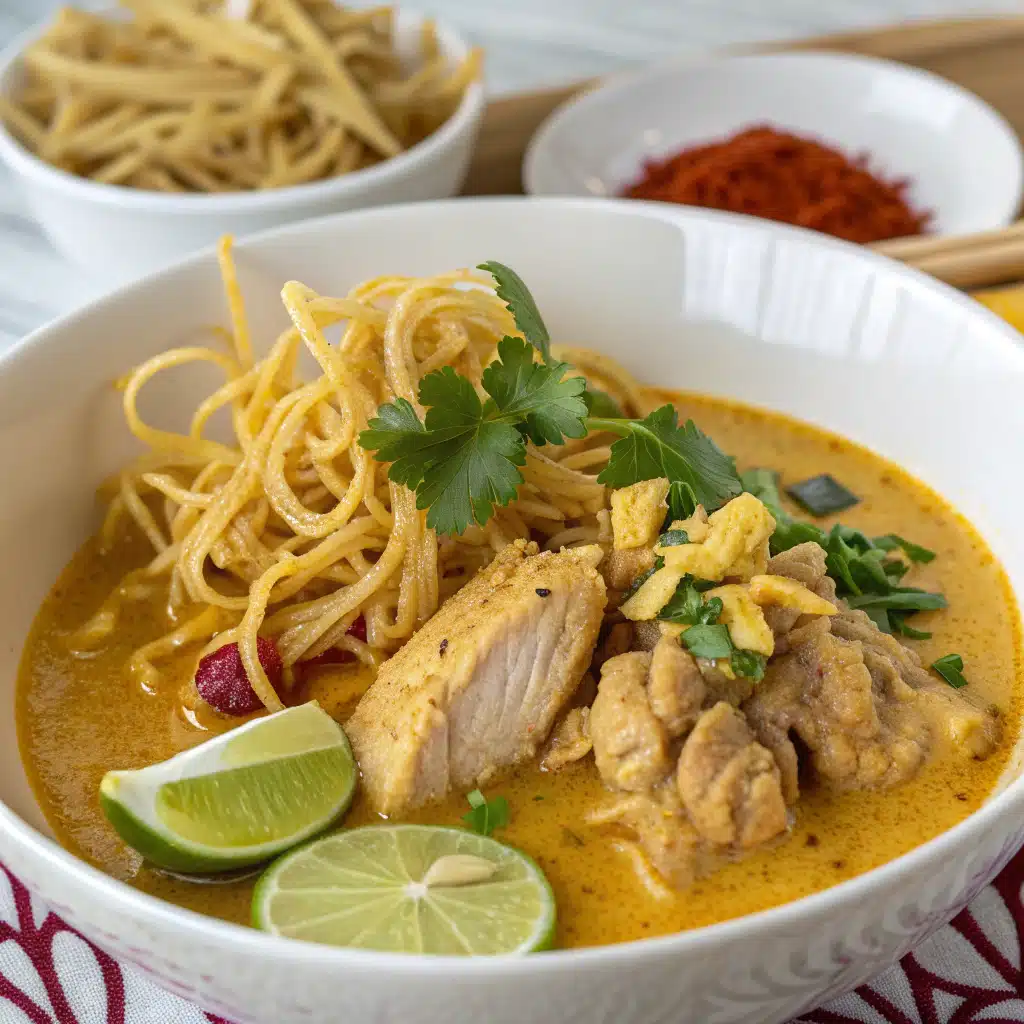
Frequently Asked Questions about Chicken Khao Soi
What is khao soi and where does it come from?
Khao soi is a coconut curry noodle soup that originates from Northern Thailand, particularly the Chiang Mai region. Its roots can be traced to influences from Burmese cuisine and Chinese Muslim communities that settled in Northern Thailand. The dish features a rich curry broth made with coconut milk and a distinctive blend of spices, served over egg noodles and topped with crispy fried noodles for textural contrast. The name “khao soi” is believed to derive from the Burmese word for “cut noodles,” reflecting the dish’s cross-cultural heritage.
Is chicken khao soi spicy?
Traditional chicken khao soi has a moderate heat level that balances with the rich coconut milk and complex spices without overwhelming them. The spiciness can be easily adjusted according to preference by varying the number of dried chilies used in the curry paste. Authentic Northern Thai versions typically have a pleasant warmth rather than intense heat. One of the beauties of khao soi is the customization available through condiments – diners can add fresh chilies or chili oil to increase the spiciness to their liking, making it accessible to both spice enthusiasts and those who prefer milder flavors.
What noodles are traditionally used in khao soi?
Traditional khao soi uses Chinese-style egg noodles (ba mee), which are wheat-based noodles with a slight yellow hue from egg content. These noodles come in various thicknesses, but a medium-width variety similar to egg noodles or wonton noodles is most common for khao soi. What makes the dish distinctive is that some of these noodles are boiled and served soft in the curry broth, while another portion is fried until crispy and used as a topping, creating a delightful textural contrast in every bowl.
Can chicken khao soi be made with coconut milk?
Yes, coconut milk is essential to authentic chicken khao soi and forms the base of its characteristic rich, creamy curry broth. The traditional preparation method involves first “cracking” the coconut cream (the thicker part that rises to the top of coconut milk) with the curry paste to release the oils from the spices, then adding the remaining coconut milk and stock. The coconut milk contributes the luxurious mouthfeel and helps balance the complex spices in the curry paste. For the most authentic flavor, use full-fat coconut milk rather than light versions.
What toppings are served with chicken khao soi?
Chicken khao soi is traditionally served with an array of toppings and condiments that allow diners to customize the flavor profile. These typically include crispy fried egg noodles as the signature topping, lime wedges for acidity, thinly sliced shallots for sharp contrast, pickled mustard greens (tang chai) for tanginess, fresh cilantro for herbal notes, and bean sprouts for crunch. Some versions also include ground roasted chilies or chili oil for those who prefer extra heat. These accompaniments are essential to the full khao soi experience, as they allow each person to balance the flavors according to their preference.
Can chicken khao soi be made ahead of time?
Chicken khao soi is excellent for make-ahead preparation with some important considerations. The curry broth with chicken actually benefits from being made 1-2 days ahead, as the flavors continue to develop and meld. Store this component refrigerated in an airtight container. The crispy fried noodles can be prepared up to 2 days in advance if stored at room temperature in an airtight container. However, the boiled noodles should be prepared fresh on the day of serving for the best texture. When ready to serve, gently reheat the curry, prepare fresh boiled noodles, and assemble the bowls with the pre-made components and fresh garnishes.
Conclusion
Mastering the Art of Chicken Khao Soi
Mastering chicken khao soi is about understanding the harmonious balance of flavors and textures that make this Northern Thai dish so beloved worldwide. The key to success lies in taking time with the curry paste, allowing its complex flavors to bloom properly in the coconut milk. Remember that the characteristic golden color comes from fresh turmeric, while the distinctive taste results from the balance of spices, coconut richness, and careful seasoning with fish sauce, soy sauce, and brown sugar.
The textural contrast between soft boiled noodles and crispy fried noodles creates the signature eating experience that defines khao soi. As you become more comfortable with the recipe, don’t hesitate to adjust the seasonings to your preference – the best khao soi is the one that delights your palate. With practice, you’ll develop an intuitive understanding of how the different elements interact, allowing you to create a restaurant-quality dish right in your own kitchen.
“Discover great ideas like our Coconut Shrimp” which pairs wonderfully with the flavors in this curry.
Embracing the Cultural Experience
Chicken khao soi isn’t just a delicious meal; it’s a gateway to experiencing Northern Thai culture through its cuisine. When you prepare and share this dish, you’re participating in a culinary tradition that has evolved over centuries through cultural exchanges along ancient trade routes. The communal aspect of serving khao soi with various accompaniments encourages conversation and shared enjoyment as diners customize their bowls.
Take time to appreciate the sensory experience – the aromatic spices, the visual appeal of the golden curry topped with crispy noodles, the textural contrasts, and the complex flavors that unfold with each spoonful. By understanding the cultural context of khao soi, you enrich the dining experience beyond mere sustenance to something that connects you to the vibrant food culture of Northern Thailand. Whether you’re cooking for yourself or hosting a gathering, chicken khao soi offers an opportunity to travel through taste and share in a beloved tradition that continues to captivate food lovers around the world.
PrintChicken Khao Soi
An authentic Northern Thai coconut curry noodle soup with tender chicken, aromatic spices, and a signature contrast of soft and crispy egg noodles.
- Prep Time: 30
- Cook Time: 45
- Total Time: 1 hour 15 minutes
- Yield: 4-6 1x
- Category: Main Dish
- Cuisine: Thai
Ingredients
- 1 pound egg noodles or wonton noodles
- Neutral cooking oil, for frying
- 1/2 cup Khao Soi curry paste
- 1 1/2 pounds boneless chicken thighs or drumsticks
- 1 (13.5-ounce) can coconut milk
- 3 cups low-sodium chicken stock
- 2 1/2 tablespoons soy sauce
- 1 1/2 tablespoons fish sauce
- 1 1/2 tablespoons brown sugar
- 8 ounces mushrooms, sliced
- 2 to 6 dried chilies, soaked and deseeded
- 1 teaspoon salt
- 1 tablespoon fresh turmeric, grated
- 1 tablespoon coriander seeds
- 1 tablespoon curry powder
- 2 ounces shallots, finely chopped
- 1 tablespoon garlic, finely chopped
- 2 tablespoons fresh ginger, finely chopped
- 1 tablespoon water
Instructions
- Fry a small handful of noodles in hot oil until crispy; drain on paper towels.
- Cook remaining noodles according to package directions; drain and set aside.
- If making homemade paste, blend all paste ingredients until smooth.
- Heat 2 tablespoons oil with some coconut cream until bubbling, then add curry paste and cook 2-3 minutes until fragrant.
- Add remaining coconut milk and chicken stock, stirring to combine.
- Add chicken and mushrooms, simmer 25-30 minutes until chicken is tender.
- Season with soy sauce, fish sauce, and sugar to taste.
- Divide cooked noodles among bowls, ladle hot curry over, and top with crispy noodles.
- Serve with lime wedges, sliced shallots, fresh herbs, and other traditional accompaniments.
Notes
Nutrition facts are estimates and may vary based on ingredients used, portion sizes, and preparation methods. For best results, prepare the curry a day ahead to allow flavors to develop fully.
Nutrition
- Serving Size: 4
- Calories: 620 Kcal
- Sugar: 7g
- Sodium: 1250mg
- Fat: 32g
- Saturated Fat: 18g
- Carbohydrates: 52g
- Fiber: 4g
- Protein: 35g
- Cholesterol: 120mg
Keywords: Khao soi, Thai curry soup, coconut curry noodles, Northern Thai cuisine, Chiang Mai curry
Let’s connect! Follow me for more Joylicious Recipes: Facebook, Instagram, Pinterest