
How to Make Vegan Mayo Recipe: Quick, Creamy & Delicious
Why Make Your Own Vegan Mayo?
Vegan mayo recipe enthusiasts know that store-bought options can be expensive and often contain unnecessary additives. Making your own vegan mayonnaise at home is surprisingly simple, cost-effective, and allows you to control exactly what goes into your creamy spread. This easy vegan mayo recipe requires just a handful of ingredients and takes less than 5 minutes to prepare. Whether you’re following a plant-based diet or simply looking for an egg-free alternative to traditional mayonnaise, this recipe delivers a rich, creamy condiment that’s perfect for sandwiches, dressings, and dips.
The Science Behind Vegan Emulsification
The key to a successful vegan mayo recipe lies in the emulsification process. Traditional mayonnaise relies on egg yolks to bind oil and water together, but our vegan version uses soy milk as the emulsifier. The protein in soy milk works similarly to eggs, creating a stable emulsion when combined with oil. Additionally, the acid from vinegar or lime juice helps to thicken and set the mixture, while mustard not only adds flavor but also contains natural emulsifiers that help maintain the creamy consistency. Understanding this science makes achieving the perfect vegan mayo texture easy and reliable every time.
Ingredients for Perfect Vegan Mayo
Plant-Based Emulsifiers Explained
The foundation of any good vegan mayo recipe is the plant-based emulsifier that replaces eggs. Soy milk works exceptionally well because it contains proteins that help bind oil and water together, creating that classic creamy mayonnaise texture. While other plant milks can work, original (not flavored or sweetened) soy milk produces the most reliable results due to its higher protein content. If you’re avoiding soy, unsweetened almond milk or aquafaba (the liquid from canned chickpeas) can be substituted, though the consistency may vary slightly. The acid component—whether apple cider vinegar, white vinegar, or lime juice—works with the plant milk to create a chemical reaction that thickens the mixture.
Choosing the Right Oil for Vegan Mayo
The type of oil you select significantly impacts the flavor and texture of your vegan mayo recipe. Neutral oils like sunflower, canola, grapeseed, or avocado oil work best as they don’t overpower the other ingredients. Extra virgin olive oil, while nutritious, has a strong flavor that can dominate the mayo, so it’s best used in a blend with neutral oils if desired. Coconut oil should be avoided as it solidifies when refrigerated, which will ruin the texture of your mayo. For a healthier option, you can use a combination of neutral oil with a small amount of flaxseed oil, which adds omega-3 fatty acids. The most important factor is ensuring your oil is fresh, as rancid oil will result in unpleasant-tasting mayonnaise.
| Ingredient | Quantity | Notes |
|---|---|---|
| Original soy milk | 1/2 cup (125mL) | Room temperature; see notes for substitutions |
| Apple cider vinegar | 2 teaspoons | Can substitute lime juice or white vinegar |
| Garlic powder | 1/2 teaspoon | Adds depth of flavor |
| Sea salt | 1/2 teaspoon | Enhances all flavors |
| Dijon mustard | 1 teaspoon | Acts as an additional emulsifier |
| Neutral oil | 1 cup (250mL) | Don’t use coconut oil |

Step-by-Step Vegan Mayo Recipe Instructions
Preparation and Temperature Considerations
Before diving into making your vegan mayo recipe, proper preparation is crucial for success. First and foremost, ensure all ingredients are at room temperature—this is non-negotiable. Cold ingredients can prevent proper emulsification, resulting in a failed mayo.
If your soy milk is refrigerated, microwave it for about 10 seconds or let it sit on the counter for 30 minutes. Similarly, if you store your oil in the refrigerator, bring it to room temperature. Also, prepare your equipment: an immersion blender works best for this recipe, but a regular blender or food processor can also work. The narrow container that comes with most immersion blenders is ideal as it helps create the proper vortex for emulsification. Lastly, measure all ingredients accurately—mayonnaise is a science, and precision matters.
Blending Technique for Foolproof Emulsification
The blending technique is where the magic happens in this vegan mayo recipe. Follow these numbered steps for perfect results:
Combine the room temperature soy milk, apple cider vinegar, garlic powder, sea salt, and dijon mustard in your blending container. Stir briefly to incorporate.
Gently pour the oil on top of the soy milk mixture. Allow it to settle for about 60 seconds—this brief resting period helps the oil form a distinct layer above the soy milk mixture.
Insert your immersion blender all the way to the bottom of the container, making sure it’s touching the base. This positioning is critical.
Without moving the blender, turn it on at high speed and keep it pressed firmly against the bottom for 15 seconds. You’ll see the magical transformation begin at the bottom of the container as the mixture turns white and creamy.
Once you see the emulsification happening, slowly begin to move the blender up and down to incorporate the remaining oil. This should take another 15-20 seconds at most.
Continue blending until all ingredients are fully incorporated and the mixture has thickened to a mayonnaise consistency.
Taste and adjust seasonings if needed, blending briefly to incorporate any additions.
Troubleshooting Common Vegan Mayo Issues
Even experienced cooks occasionally encounter issues when making vegan mayo. If your mayonnaise isn’t thickening, the most common culprit is cold ingredients—especially cold soy milk or oil. If this happens, let your mixture come to room temperature and try blending again. Another possible issue is moving the blender too quickly at the beginning of the process. Remember to keep it at the bottom for those crucial first 15 seconds. If your mayo breaks or separates, you can often rescue it by adding an additional tablespoon of soy milk to a fresh container and slowly blending in the broken mayo. For mayo that’s too thin, adding a small amount of additional oil while blending can help thicken it. Conversely, if it’s too thick, a few drops of water or plant milk can adjust the consistency.
“Looking for inspiration? Try our creamy garlic herb chicken recipe where you can substitute the sauce with this vegan mayo for a plant-based version.”

Tips for Perfect Vegan Mayo
Ingredient Temperature and Quality Control
The success of your vegan mayo recipe heavily depends on the temperature and quality of your ingredients. Always use room temperature soy milk and oil—this is perhaps the most critical factor for proper emulsification. Cold ingredients often result in failed mayo that refuses to thicken. High-quality ingredients also make a significant difference in the final product. Fresh oil is essential, as rancid oil will ruin your mayo no matter how perfect your technique. Similarly, check that your vinegar or lime juice is fresh for the best flavor. If you’re using alternative plant milks, opt for unsweetened versions with no flavors or additives. The purer your ingredients, the cleaner and more authentic your mayo will taste.
“Want more ideas? Check out our vegan ice cream recipe for another dairy-free treat to complement your homemade mayo.”
Flavor Variations and Customizations
One of the joys of making your own vegan mayo recipe is the ability to customize the flavor profile to suit your preferences. Start with the basic recipe, then consider these delicious variations:
- For aioli: Add 1-2 cloves of fresh minced garlic instead of garlic powder
- For herb mayo: Add 1-2 tablespoons of finely chopped fresh herbs like dill, basil, or chives
- For spicy mayo: Add 1-2 teaspoons of sriracha or hot sauce
- For lemon mayo: Replace the vinegar with fresh lemon juice and add 1/2 teaspoon of lemon zest
- For smoky mayo: Add 1/4 teaspoon of smoked paprika or a few drops of liquid smoke
- For sweeter mayo: Add 1/2 teaspoon of maple syrup or agave nectar
These adaptations transform your basic vegan mayo into specialty condiments perfect for different dishes. Remember to add any flavor enhancements after the mayo has emulsified, then blend briefly to incorporate the new ingredients.
Equipment Recommendations for Best Results
While an immersion blender is the ideal tool for making vegan mayo, you can achieve success with other equipment if needed. If using an immersion blender (also called a stick blender), the narrow container it comes with creates the perfect environment for emulsification. For those using a standard blender, use a narrow jar if possible and start on low speed, gradually increasing as emulsification begins. With a food processor, drizzle the oil in very slowly through the feed tube while the machine runs.
Hand whisking is possible but extremely challenging and time-consuming for vegan mayo. Whatever equipment you choose, ensure it’s completely clean and dry before starting, as any water droplets can interfere with the emulsification process. The right tools make this vegan mayo recipe much easier to execute perfectly.
Storing Your Homemade Vegan Mayo
Shelf Life and Refrigeration Guidelines
Proper storage is essential for maintaining the quality and safety of your homemade vegan mayo recipe. Unlike commercial products, homemade vegan mayo lacks the preservatives that extend shelf life, so refrigeration is absolutely necessary. Store your mayo in an airtight container—glass jars with tight-fitting lids work exceptionally well.
When properly refrigerated, homemade vegan mayo typically lasts 7-10 days. Always use clean utensils when scooping out mayo to prevent introducing bacteria that could cause spoilage. You’ll know your mayo has gone bad if it develops an off smell, changes color, or shows signs of mold. The texture might also separate or become watery when it’s past its prime. Dating your container with a small piece of tape can help you track freshness.
“Discover great ideas like our banana bread with mayo which uses regular mayo, but your vegan version works perfectly too!”
Freezing Options and Considerations
While refrigeration is the standard storage method for vegan mayo, freezing is an option if you’ve made a large batch. However, freezing does come with some caveats. Vegan mayo can separate when frozen and thawed, altering its creamy texture. If you decide to freeze your vegan mayo recipe, here’s the best approach: freeze in small portions using ice cube trays or small containers, making it easier to thaw only what you need.
When ready to use, thaw in the refrigerator overnight rather than at room temperature. After thawing, the mayo will likely need reconstituting—vigorously whisk it or give it a quick blend with an immersion blender to restore its creamy consistency. Frozen vegan mayo is best used in cooked applications like dressings or sauces rather than as a spread, as the texture change is less noticeable when incorporated into other ingredients.
Signs of Spoilage to Watch For
Knowing when your vegan mayo has spoiled is important for food safety. Without preservatives, homemade vegan mayo is more susceptible to bacterial growth than store-bought versions. Be vigilant for these signs of spoilage:
- An unusual or sour smell that differs from the fresh mayo’s aroma
- Visible mold, which may appear as colored spots on the surface
- A significant change in color, such as yellowing or darkening
- Separation that doesn’t reincorporate with stirring
- A noticeably thinner consistency or watery texture
- Bubbling or fizzing, which indicates fermentation has begun
- An off or tangy taste that wasn’t present initially
If you notice any of these signs, discard the mayo immediately. Homemade vegan mayo should not be kept for longer than two weeks, even if stored correctly. If you’re unsure, play it safe and whip up a new batch—the recipe is quick and effortless to make.
Delicious Vegan Mayo Variations
Herbed and Flavored Vegan Mayo Options
After mastering the basic vegan mayo, experimenting with flavors unlocks endless culinary options. Herbed mayos are particularly versatile and can elevate simple dishes to gourmet status. To create herb-infused vegan mayo, start with your finished base mayo and blend in 2-3 tablespoons of finely chopped fresh herbs like dill, basil, parsley, tarragon, or chives. For a robust garlic mayo, add 2-3 cloves of roasted garlic for a sweet, mellow flavor, or 1-2 cloves of fresh minced garlic for a more pungent kick.
Citrus variations are refreshing—try adding 1 teaspoon of lemon, lime, or orange zest along with a squeeze of the corresponding juice. For an umami-rich option, incorporate 1 teaspoon of nutritional yeast or 1/2 teaspoon of white miso paste. These flavored mayos can be stored the same way as the basic version but might have slightly shorter shelf lives depending on the fresh ingredients added.
“Learn more about creating versatile plant-based condiments in our cowboy butter chicken linguine post, where you can find tips on making dairy-free butter alternatives.”
Reduced-Oil and Low-Fat Alternatives
For those monitoring fat intake, it’s possible to create lighter versions of this vegan mayo recipe without sacrificing too much flavor or texture. To make a reduced-oil version, you can substitute a portion of the oil with aquafaba (the liquid from canned chickpeas), which has natural emulsifying properties. Try using 3/4 cup oil and 1/4 cup aquafaba for a lower-fat alternative. Another approach is to incorporate silken tofu—blend 1/4 cup silken tofu with the soy milk before adding the oil, which allows you to reduce the oil to about 2/3 cup while maintaining a creamy texture.
Some creative cooks use pureed white beans to replace a portion of the oil, which adds protein and fiber while reducing fat content. These lighter versions typically have a slightly different texture than traditional mayo—often a bit less rich and sometimes more fluffy—but they still work beautifully in sandwiches, dressings, and dips. Keep in mind that lower-fat versions may not keep as long, so plan to use them within 5-7 days.
Colorful Variations with Natural Ingredients
Adding natural colorants to your vegan mayo recipe not only creates visually stunning condiments but also incorporates additional nutrients and flavors. For a vibrant pink mayo, blend in 1-2 teaspoons of beet powder or a small amount of roasted beet puree. This adds a subtle earthy sweetness that pairs wonderfully with roasted vegetables. Yellow mayo can be created with a pinch of turmeric, which adds anti-inflammatory properties and a gentle warmth to the flavor profile.
For a beautiful green mayo, incorporate 1 tablespoon of finely chopped herbs like parsley, basil, and chives, or blend in a small amount of avocado for a green hue with added creaminess. Roasted red peppers create a lovely orange-red mayo with a sweet, smoky flavor perfect for sandwiches and wraps. These colorful variations make excellent dips for party platters and can transform ordinary sandwiches into impressive culinary creations. Each colored variation maintains the same basic properties as the original vegan mayo but adds a unique flavor dimension that can complement specific dishes.
Serving Suggestions for Vegan Mayo
Creative Sandwich and Wrap Applications
Your homemade vegan mayo recipe elevates everyday sandwiches and wraps to new heights of flavor. For classic applications, spread a generous layer on whole grain bread and stack with fresh vegetables like tomato, cucumber, avocado, and sprouts for a nutrient-packed vegan sandwich. Create a plant-based BLT by substituting tempeh bacon or smoked coconut bacon for the traditional meat. Vegan mayo makes an excellent binding agent for chickpea “tuna” salad—simply mash chickpeas with vegan mayo, diced celery, red onion, and a splash of lemon juice.
For wraps, try blending your vegan mayo with chipotle powder or adobo sauce to create a spicy spread that pairs beautifully with black beans, roasted vegetables, and crisp lettuce in a tortilla. Another excellent application is using herb-infused vegan mayo as the spread for grilled vegetable paninis—the heat slightly melts the mayo, creating a luscious sauce that permeates the sandwich. For breakfast options, spread vegan mayo on toasted bagels before adding tomato and avocado for a plant-based morning treat.
Vegan Mayo as a Base for Dressings and Dips
One of the most versatile uses for your vegan mayo recipe is as a foundation for creamy dressings and dips. To create a classic vegan ranch dressing, blend your mayo with a splash of plant milk, dried herbs like dill and parsley, garlic powder, and a squeeze of lemon juice. For a tangy thousand island dressing, mix vegan mayo with ketchup, finely chopped pickles, a dash of vinegar, and a pinch of sugar. Tartar sauce is simple to make by combining vegan mayo with chopped pickles, capers, lemon juice, and fresh dill. For party dips, transform your mayo into a spinach-artichoke dip by mixing it with thawed frozen spinach, chopped artichoke hearts, nutritional yeast, and garlic, then warming it in the oven.
A zesty aioli for vegetable platters can be made by blending vegan mayo with roasted garlic, lemon zest, and fresh herbs. These dressings and dips generally keep for 5-7 days in the refrigerator and can transform simple vegetables, potatoes, or grain bowls into extraordinary meals.
“Here’s your guide to crispy vegetable egg rolls which pair perfectly with a spicy vegan mayo dipping sauce.”
Incorporating Vegan Mayo into Cooked Dishes
Beyond cold applications, your vegan mayo recipe can be a secret ingredient in many cooked dishes. Use it to create creamy, dairy-free pasta sauces—simply whisk vegan mayo with a little pasta water, garlic, and nutritional yeast for an instant alfredo-style sauce. For baking, vegan mayo can replace eggs and oil in many recipes, resulting in incredibly moist cakes and quick breads. Try using 1/4 cup of vegan mayo to replace one egg in baking recipes.
Creamy casserole toppings benefit from vegan mayo—mix it with breadcrumbs and nutritional yeast for a golden, crispy topping for vegetable gratins. When making mashed potatoes, substitute some of the plant milk with vegan mayo for extra richness without dairy. It also makes an excellent base for creamy soups—stir in a few tablespoons at the end of cooking (after removing from heat) to add silkiness without curdling. For roasted vegetables, toss them in a light coating of vegan mayo before roasting for a crispy, flavorful exterior. The high oil content in mayo helps vegetables caramelize beautifully in the oven while locking in moisture.

Frequently Asked Questions
What is vegan mayonnaise made of?
Vegan mayonnaise is made with plant-based ingredients like soy milk, vinegar or lemon juice, mustard, and oil. The proteins in plant milk create a stable emulsion, resulting in a creamy, spreadable condiment similar to traditional mayo but 100% egg-free and dairy-free.
How to make vegan mayonnaise with aquafaba?
To make vegan mayo with aquafaba, blend 3 tbsp chickpea liquid with mustard, salt, and vinegar or lemon juice. Slowly stream in 1 cup neutral oil until thick, about 1–2 minutes. Aquafaba proteins act as emulsifiers, creating a stable, creamy mayo similar to soy-based versions. Best used within 5–7 days, it’s perfect for those avoiding soy.
Can I make mayonnaise with oat milk?
Yes, you can make vegan mayo with oat milk, though it may be less stable than soy or aquafaba versions. Use unsweetened oat milk, blend with vinegar, salt, mustard, and garlic powder, then slowly add oil. For thicker consistency, add ¼ tsp xanthan gum or reduce oil to ¾ cup. Oat milk mayo has a mild, slightly sweet flavor, great for dressings or veggies, and is perfect for avoiding eggs and soy
What oil is used in vegan mayonnaise?
The best oils for vegan mayo are neutral ones like sunflower, canola, grapeseed, or safflower. Avocado oil adds healthy fats but costs more. A little olive oil can add flavor, but too much makes mayo bitter. Avoid coconut oil since it solidifies when cold. For a healthier homemade option, blend oils—like sunflower with a touch of flaxseed oil for omega-3s.
How to make mayonnaise at home vegetarian?
Vegetarian mayo is simpler than vegan since eggs act as the emulsifier. Whisk 1 egg yolk, mustard, lemon juice or vinegar, and salt, then slowly add oil until creamy. Use pasteurized or coddled eggs if concerned about raw eggs. Stored in an airtight container, vegetarian mayo keeps for 1–2 weeks in the fridge.
Conclusion
Why Homemade Vegan Mayo Beats Store-Bought
Making your own vegan mayo recipe at home offers numerous advantages over purchasing pre-made versions. First and foremost is cost-effectiveness—homemade vegan mayo typically costs about one-third the price of premium store-bought brands. You also gain complete control over the ingredients, allowing you to avoid preservatives, stabilizers, and artificial flavors commonly found in commercial products. Many store-bought vegan mayos contain additives like modified food starch, calcium disodium EDTA, and natural flavors—mysterious ingredients you won’t need in your homemade version.
The flavor of freshly made vegan mayo is noticeably superior, with a bright, clean taste that commercial versions often lack. Additionally, you can customize the flavor profile and consistency to your exact preferences, making it thicker, thinner, more tangy, or more savory according to your taste. Environmental benefits are substantial too—making mayo at home reduces packaging waste, especially if you’re using bulk ingredients stored in your own containers.
“Don’t miss our kale crunch salad recipe where this homemade vegan mayo creates the perfect creamy dressing base.”
Embracing Plant-Based Alternatives in Everyday Cooking
The journey to creating the perfect vegan mayo recipe is more than just making a condiment. It reflects a broader shift toward using plant-based alternatives in everyday cooking. Once you master this mayo, you may feel inspired to try other substitutions. Cashew cream can take the place of heavy cream. Aquafaba can replace egg whites in meringues. Nutritional yeast delivers a cheesy flavor without dairy.
These swaps do more than expand your recipe list. They often reduce your environmental impact and improve nutrition at the same time. Plant-based cooking also sparks creativity and problem-solving in the kitchen—skills that elevate all styles of cooking. Even if you’re not strictly vegan, adding these options a few times a week makes a real difference. The reward goes beyond health or sustainability. Creating food that tastes great while aligning with compassionate values adds a meaningful dimension to the cooking experience.
PrintVegan Mayo Recipe
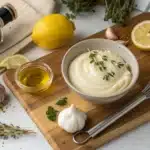
Quick and easy homemade vegan mayonnaise that’s creamy, tangy, and perfect for sandwiches, dressings, and dips.
- Prep Time: 5
- Total Time: 5 minutes
- Yield: 1 1x
- Category: Condiment
- Cuisine: Vegan
Ingredients
- 1/2 cup original soy milk, (125mL) see notes for substitutions
- 2 teaspoons apple cider vinegar, or lime juice or white vinegar
- 1/2 teaspoon garlic powder
- 1/2 teaspoon sea salt
- 1 teaspoon dijion mustard
- 1 cup oil, I recommend any neutral oil (don’t use coconut oil) (250mL)
Instructions
- Ensure all ingredients are at room temperature. If your milk is cold, microwave it for about 10 seconds.
- Add soy milk, vinegar, garlic powder, salt and mustard in your blender container and stir.
- Pour the oil over the soy milk mixture and let sit for about one minute.
- Place immersion blender at the bottom of container. Blend while keeping it pressed against the bottom for 15 seconds.
- Slowly move the blender up and down to incorporate all ingredients until thick and fully combined.
- Taste and adjust seasonings if needed.
- Transfer to a sealed jar and refrigerate. It will thicken even more in the fridge.
Notes
For substitutions, you can use unsweetened almond milk or aquafaba instead of soy milk, though results may vary. For flavor variations, try adding herbs, spices, or a touch of sweetener after blending. Nutrition facts are estimates and may vary based on ingredients used, portion sizes, and preparation methods.
Nutrition
- Serving Size: 1
- Calories: 120 kcal
- Sodium: 80mg
- Fat: 14g
- Saturated Fat: 1g
- Carbohydrates: 1g
Keywords: vegan mayo, egg-free mayonnaise, plant-based condiment, homemade vegan mayonnaise, dairy-free mayo
Let’s connect! Follow me for more Joylicious Recipes: Facebook, Instagram, Pinterest