
Perfect Gingerbread Cookies: Classic Holiday Recipe with Warm Spices
A Holiday Tradition Worth Savoring
Gingerbread cookies have been a cherished part of holiday celebrations for centuries, delighting generations with their warm spices and distinctive flavor. These iconic treats combine the rich sweetness of molasses with the perfect blend of ginger, cinnamon, and other aromatic spices to create a cookie that’s instantly recognizable and deeply nostalgic. Whether you’re making gingerbread people, festive shapes, or simple rounds, these cookies bring warmth and joy to any holiday gathering.
What Makes Gingerbread Cookies Special
What truly sets gingerbread cookies apart from other holiday treats is their perfect balance of sweetness and spice. The star ingredient, ginger, delivers a pleasant warmth that’s complemented by cinnamon, allspice, and cloves. Meanwhile, molasses provides depth, richness, and that characteristic deep brown color.
“Looking for inspiration? Try our creamy garlic herb chicken recipe for another delicious holiday meal option to accompany your gingerbread cookies.”
The versatility of gingerbread cookie dough allows for everything from soft, chewy cookies to crisp, sturdy creations perfect for decorating or building gingerbread houses.
Ingredients: Everything You Need for Perfect Gingerbread Cookies
The Essential Spice Blend
The heart and soul of any gingerbread cookie recipe is its spice blend. Our recipe features a generous tablespoon of ground ginger that delivers that signature warmth and zing. This is complemented by an equal amount of ground cinnamon, plus smaller quantities of allspice and cloves that round out the flavor profile. Together, these spices create the distinctive, aromatic quality that makes gingerbread cookies instantly recognizable and utterly irresistible.
The Foundation: Flour, Butter, and Sweeteners
A successful gingerbread cookie depends on the perfect balance of structural ingredients and sweeteners. This recipe calls for all-purpose flour as the foundation, providing structure and stability to the cookies. Unsalted butter adds richness and helps create that perfect tender texture. For sweetness, we use a combination of brown sugar and molasses—the brown sugar contributes moisture and a caramel-like flavor, while the molasses delivers the deep color and distinctive taste that defines gingerbread cookies.
| Ingredient | Quantity | Notes |
|---|---|---|
| All-purpose flour | 3 1/2 cups (440g) | Spooned & leveled |
| Baking soda | 1 teaspoon | Leavening agent |
| Salt | 1/2 teaspoon | Enhances flavor |
| Ground ginger | 1 tablespoon | The star spice |
| Ground cinnamon | 1 tablespoon | Warm, sweet note |
| Ground allspice | 1/2 teaspoon | Adds complexity |
| Ground cloves | 1/2 teaspoon | Provides depth |
| Unsalted butter | 10 tablespoons (142g) | Softened to room temperature |
| Brown sugar | 3/4 cup (150g) | Light or dark, packed |
| Molasses | 2/3 cup (160ml; 200g) | Unsulphured or dark (not blackstrap) |
| Large egg | 1 | Room temperature |
| Pure vanilla extract | 1 teaspoon | For enhanced flavor |
| Optional decorations | As needed | Icing, royal icing, or cookie buttercream |
Step-by-Step: Creating Perfect Gingerbread Cookies
Preparing the Dough
Making gingerbread cookie dough requires attention to detail for the best results. Here’s how to prepare your dough perfectly:
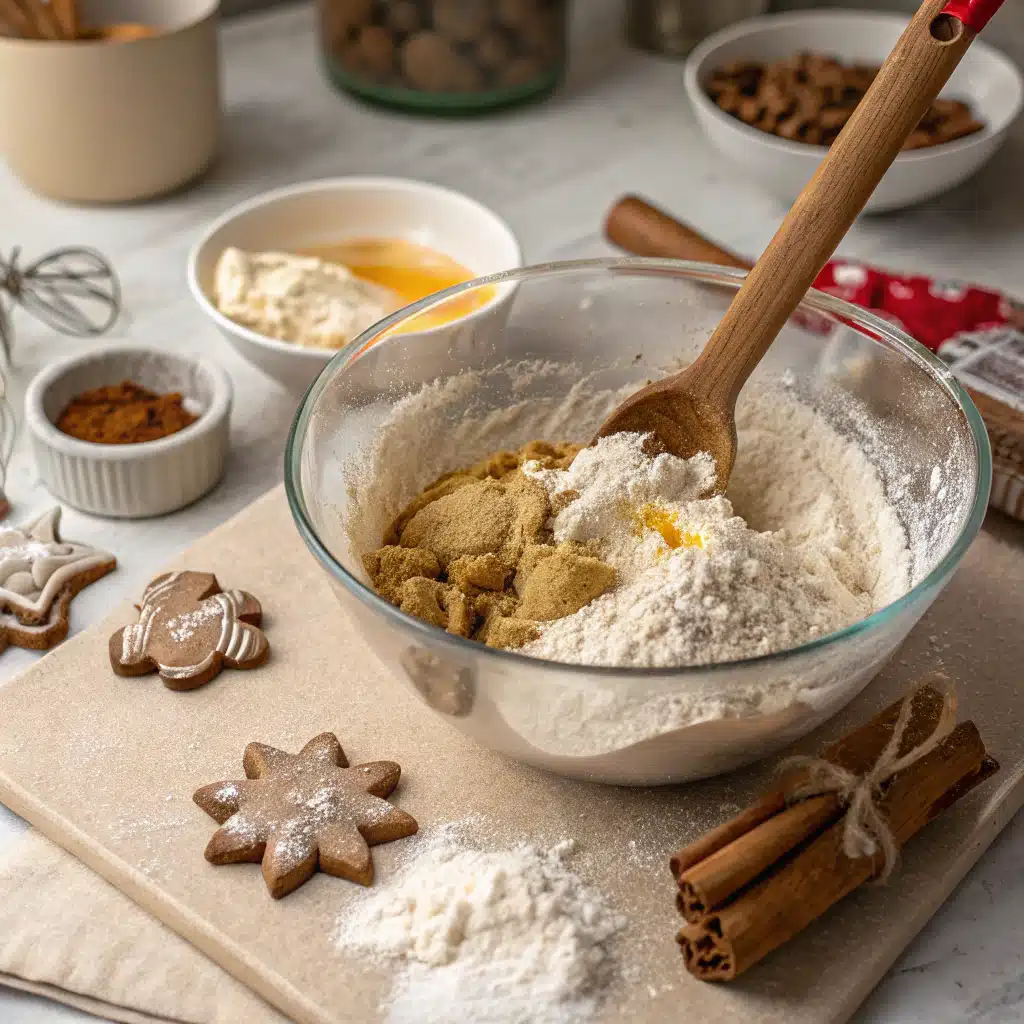
Begin by whisking together the dry ingredients in a large bowl—combine the flour, baking soda, salt, ginger, cinnamon, allspice, and cloves until well mixed, then set aside.
In another large bowl, beat the softened butter for one minute on medium speed using either a handheld mixer or a stand mixer with a paddle attachment. The butter should become completely smooth and creamy.
Add the brown sugar and molasses to the butter and beat on medium-high speed until the mixture is thoroughly combined and creamy. Be sure to scrape the sides and bottom of the bowl as you mix.
Add the egg and vanilla extract, then beat on high for a full two minutes. This step is crucial for proper incorporation. Don’t worry if the butter appears to separate—this is normal and won’t affect the final result.
Gradually add the flour mixture to the wet ingredients, beating on low speed until just combined. The resulting dough will be quite thick and slightly sticky.
Chilling and Rolling the Dough
Proper handling of gingerbread cookie dough is essential for the best texture and shape:
Divide the dough into two equal portions. Place each portion onto a large piece of plastic wrap, then wrap tightly and pat down to form a disc shape.
Chill the dough discs for at least three hours, though overnight is ideal. This chilling period is absolutely mandatory—it allows the flavors to meld and makes the dough easier to handle.
When you’re ready to bake, preheat your oven to 350°F (177°C) and line 2-3 large baking sheets with parchment paper or silicone baking mats.
Remove one disc of dough from the refrigerator and generously flour your work surface, hands, and rolling pin. Roll the dough until it’s about 1/4-inch thick. If the dough cracks or crumbles as you roll (which is common since it’s cold), simply pick up the pieces and press them back together.
Cut the dough into your desired shapes using cookie cutters and place them about 1 inch apart on the prepared baking sheets. Re-roll any scraps and continue cutting until all dough is used.
“Learn more about easy cookie icing techniques that will make your gingerbread cookies look professional.”
Baking and Cooling
Proper baking is crucial for achieving the perfect gingerbread cookie texture:
Bake the cookies for approximately 9-10 minutes if using standard-sized cookie cutters (around 4 inches). For smaller cookies, reduce the baking time to about 8 minutes; for larger cookies, increase to about 11 minutes.
Rotate the baking sheets halfway through baking to ensure even browning, as most ovens have hot spots.
Remember that the baking time directly affects the texture—longer baking produces harder, crunchier cookies, while shorter baking times result in softer cookies.
Allow the baked cookies to cool on the baking sheet for 5 minutes before transferring them to a cooling rack to cool completely.
Once completely cooled, decorate as desired with icing, royal icing, or cookie buttercream.
Tips: Mastering the Art of Gingerbread Cookies
Achieving the Perfect Texture
The texture of your gingerbread cookies can be customized according to your preference. For soft, chewy cookies, roll the dough slightly thicker (about 1/4 inch) and bake for the minimum suggested time. Once you see the edges just beginning to set but the centers still appear slightly underdone, remove them from the oven—they’ll continue to firm up as they cool. Conversely, for crisp, snappy cookies perfect for building gingerbread houses, roll the dough thinner and extend the baking time by 1-2 minutes.
“Here’s your guide to making perfect chocolate chip cookies that can complement your gingerbread cookie display.”
Working with Sticky Dough
Gingerbread cookie dough can be notoriously sticky, but there are several techniques to make it more manageable. First, never skip the chilling step—cold dough is significantly easier to handle than room temperature dough. When rolling out the dough, be generous with flour on both your work surface and rolling pin. If the dough becomes too soft during rolling, don’t hesitate to return it to the refrigerator for 10-15 minutes to firm up again. For intricate cookie cutters, try spraying them lightly with non-stick cooking spray before using to help the dough release more easily.
Decorating Like a Pro
Decorating gingerbread cookies allows for endless creativity. For the best results, ensure cookies are completely cooled before applying any icing. Royal icing is ideal for detailed work and creates a hard, matte finish that’s perfect for gingerbread people or intricate designs. For a simpler approach, cookie buttercream offers a delicious, softer alternative. Consider using small candies, sprinkles, or even edible metallic paints to enhance your designs. If working with children, prepare separate bags of colored icing with small tips for easy handling and minimal mess.
Storage: Keeping Your Gingerbread Cookies Fresh
Short-Term Storage Options
Properly stored gingerbread cookies maintain their quality remarkably well. For short-term storage of up to one week, place the cooled cookies in an airtight container at room temperature. To maintain softness in chewy cookies, add a slice of bread to the container—the cookies will absorb moisture from the bread, helping them stay soft. For crisp cookies, avoid the bread method and instead focus on keeping moisture out of the container. Layer cookies between sheets of parchment paper to prevent sticking, especially if they’re decorated.
Freezing Gingerbread Cookies
Gingerbread cookies freeze exceptionally well, making them perfect for advance holiday preparation. For undecorated cookies, allow them to cool completely, then place in freezer-safe containers with parchment paper between layers. They’ll maintain quality for up to three months.
“Don’t miss our lemon shortbread cookies recipe for another freezer-friendly holiday treat option.”
For decorated cookies, freeze them uncovered on a baking sheet until the icing is completely hard, then carefully layer in containers with parchment paper between layers. When ready to serve, thaw cookies at room temperature for about an hour—never use a microwave to speed up thawing as this will affect both texture and decoration.
Storing Gingerbread Cookie Dough
The dough itself can be made in advance and stored for convenience. Wrapped tightly in plastic wrap and placed in an airtight container, the dough will keep in the refrigerator for up to 4 days. For longer storage, wrap the dough disc in plastic wrap, then aluminum foil, and freeze for up to 3 months. When ready to use, thaw the frozen dough overnight in the refrigerator before rolling and cutting. This make-ahead option is particularly helpful during the busy holiday season when time is at a premium.
Variations: Exciting Twists on Classic Gingerbread Cookies
Adding Flavor Dimensions
While traditional gingerbread cookies are delicious on their own, there are numerous ways to enhance and vary their flavor profile. Consider adding orange or lemon zest to the dough for a bright, citrusy note that contrasts beautifully with the warm spices. For a more complex flavor, incorporate 1-2 tablespoons of finely minced crystallized ginger into the dough. Chocolate lovers might appreciate the addition of mini chocolate chips or a drizzle of melted chocolate over the finished cookies. For an adult version, try adding 1-2 tablespoons of bourbon or dark rum to the wet ingredients for a sophisticated twist.
International Gingerbread Inspirations
Gingerbread traditions vary worldwide, offering inspiration for delicious variations. German Lebkuchen incorporates nuts and candied fruit for a more complex texture. Swedish Pepparkakor tends to be thinner and crispier with a more pronounced spice profile.
“Discover great ideas like our authentic German-inspired recipes that can complement your gingerbread cookie spread at holiday gatherings.”
British gingerbread often includes golden syrup instead of molasses for a lighter flavor. Try incorporating elements from these international traditions to create your own unique gingerbread cookie recipe that becomes a new family favorite.
Dietary Accommodations
Modern dietary needs needn’t prevent anyone from enjoying gingerbread cookies. For gluten-free versions, substitute a high-quality gluten-free flour blend that includes xanthan gum. Vegan gingerbread cookies can be made by replacing butter with coconut oil or a plant-based butter substitute, and using a flax egg (1 tablespoon ground flaxseed mixed with 3 tablespoons water) in place of the egg. For reduced-sugar options, consider cutting the brown sugar by up to half and using a blackstrap molasses, which has a more intense flavor with less sweetness. These adaptations ensure everyone can participate in the gingerbread cookie tradition.
Serving: Perfect Pairings and Presentation Ideas
Classic Beverage Pairings
Gingerbread cookies pair beautifully with a variety of beverages that complement their warm, spicy flavor profile. Hot drinks are particularly wonderful companions—try serving them with spiced apple cider, hot chocolate with a cinnamon stick, or a warm chai tea latte. Coffee enthusiasts will appreciate how the robust flavor of a dark roast coffee balances the sweetness of the cookies. During warmer months, these cookies are equally delightful alongside cold milk or a vanilla milkshake for a refreshing contrast.
Creative Serving Suggestions
Elevate your gingerbread cookie presentation beyond the traditional cookie plate. Create an interactive dessert station where guests can decorate their own cookies with various icings, sprinkles, and candies—this is especially entertaining for children and family gatherings.
“Check out our easy fruit pizza recipe for another fun, interactive dessert idea for your holiday gathering.”
For an elegant dessert, sandwich vanilla ice cream between two gingerbread cookies for a sophisticated ice cream sandwich. You might also consider crumbling gingerbread cookies over vanilla pudding or using them as a flavorful base for a holiday cheesecake.
Gift-Giving and Display Ideas
Gingerbread cookies make thoughtful, homemade gifts that spread holiday cheer. Package them in clear cellophane bags tied with festive ribbon, or arrange them in decorative tins lined with parchment paper. For a personalized touch, create gingerbread cookies that represent family members or friends, decorated to highlight their interests or features. During the holiday season, display your gingerbread creations as part of your home decor—arrange them on a tiered stand as a centerpiece, hang intricately decorated cookies on your Christmas tree using ribbon, or create a gingerbread village as a festive focal point on your mantel or sideboard.

FAQs: Everything You Need to Know About Gingerbread Cookies
What makes gingerbread cookies hard or soft?
ChatGPT said:
The texture depends on baking time, dough thickness, and ingredients. Longer baking and thinner dough make cookies crisp, while shorter baking and thicker dough keep them soft. More molasses or brown sugar adds moisture, and airtight storage maintains softness.
What is a gingerbread cookie made of?
Classic gingerbread cookies are made with flour, baking soda, butter, eggs, molasses, brown sugar, and warm spices like ginger, cinnamon, and cloves. Some recipes include nutmeg or allspice for depth. Together, these ingredients create the signature rich flavor and balance of sweetness and spice. Certain regional versions may also add honey, citrus zest, or pepper for a unique twist.
Why are gingerbread cookies brown?
Their deep brown color comes mainly from molasses, which darkens during baking through caramelization. The Maillard reaction between sugars and proteins also enhances browning, while spices such as cinnamon and cloves deepen the hue. Brown sugar contributes to both flavor and color.
What is on the bottom of German gingerbread cookies?
Traditional German Lebkuchen often rest on a thin edible wafer known as Oblaten. It prevents sticking, supports the soft cookie, and adds a light crunch. Some versions are finished with chocolate for extra richness.
Are gingerbread cookies pagan?
Gingerbread’s origins trace back to ancient winter rituals that predate Christianity, where spiced cookies symbolized deities or nature. Over time, the recipe evolved into a festive European treat tied to Christmas traditions, blending pagan and Christian influences.
What’s the difference between gingerbread and Lebkuchen?
Gingerbread is usually crisp or chewy and made with molasses, while Lebkuchen is softer, often with honey, nuts, and candied fruit. Lebkuchen also sits on a wafer base and may be glazed or chocolate-coated.
Conclusion: The Joy of Gingerbread Cookie Traditions
Creating Lasting Holiday Memories
Gingerbread cookies transcend their status as simple treats to become vessels for creating meaningful holiday traditions. The multi-sensory experience of baking these aromatic cookies—from the warm scent of spices filling your home to the tactile pleasure of cutting shapes and the artistic expression of decorating—creates powerful memories that last a lifetime. Many families pass down gingerbread recipes through generations, with each iteration carrying the stories and adaptations of those who came before. By baking gingerbread cookies with loved ones, you’re not just making dessert; you’re crafting experiences that become part of your family’s unique holiday narrative.
“Want more ideas? Check out our holiday dessert collection for additional treats to complement your gingerbread cookies.”
The Universal Appeal of Gingerbread Cookies
Few holiday treats boast the universal appeal and adaptability of gingerbread cookies. Their warm spices and comforting flavors evoke nostalgia across cultures and generations. The versatility of gingerbread—from simple rounds to elaborate constructions—means they can be tailored to any skill level, making them accessible to everyone from novice bakers to culinary artists. Their long shelf life and excellent freezing quality make them practical for busy holiday schedules. Whether you’re preserving time-honored traditions or establishing new ones, gingerbread cookies offer a delicious connection to the past while remaining relevant in our modern celebrations. This enduring popularity ensures that gingerbread cookies will continue to be a beloved part of holiday celebrations for generations to come.
PrintGingerbread Cookies

Classic spiced gingerbread cookies with the perfect blend of ginger, cinnamon, and molasses for holiday baking.
- Prep Time: 30 minutes
- Chilling: 3 hours
- Cook Time: 10 minutes
- Total Time: 3 hours 40 minutes
- Yield: 24 cookies 1x
- Category: Dessert
- Cuisine: American
Ingredients
- 3 and 1/2 cups (440g) all-purpose flour (spooned & leveled)
- 1 teaspoon baking soda
- 1/2 teaspoon salt
- 1 Tablespoon ground ginger (yes, 1 full Tablespoon!)
- 1 Tablespoon ground cinnamon
- 1/2 teaspoon ground allspice
- 1/2 teaspoon ground cloves
- 10 Tablespoons (142g) unsalted butter, softened to room temperature
- 3/4 cup (150g) packed light or dark brown sugar
- 2/3 cup (160ml; about 200g) unsulphured or dark molasses (do not use blackstrap)
- 1 large egg, at room temperature
- 1 teaspoon pure vanilla extract
- Optional: easy cookie icing, royal icing, or cookie buttercream
Instructions
- Whisk together flour, baking soda, salt, ginger, cinnamon, allspice, and cloves in a large bowl. Set aside.
- Beat butter for 1 minute until smooth, then add brown sugar and molasses. Beat until combined and creamy.
- Add egg and vanilla, beating on high for 2 minutes. The mixture may separate slightly.
- Gradually mix in the flour mixture on low speed until combined into a thick, slightly sticky dough.
- Divide dough in half, wrap in plastic wrap as discs, and chill for at least 3 hours or overnight.
- Preheat oven to 350°F (177°C). Line baking sheets with parchment paper.
- Roll one disc of chilled dough to 1/4-inch thickness on a floured surface. Cut into desired shapes.
- Place shapes 1 inch apart on prepared baking sheets and bake for 9-10 minutes.
- Allow cookies to cool for 5 minutes on the baking sheet before transferring to a cooling rack.
- Once completely cool, decorate as desired with icing.
Notes
For soft gingerbread cookies, bake for the minimum suggested time. For crisper cookies, extend the baking time by 1-2 minutes.
Nutrition facts are estimates and may vary based on ingredients used, portion sizes, and preparation methods.
Nutrition
- Serving Size: 24 cookies
- Calories: 176
- Sugar: 12g
- Sodium: 96mg
- Fat: 6g
- Saturated Fat: 3.5g
- Trans Fat: 0g
- Carbohydrates: 29g
- Fiber: 0.5g
- Protein: 2g
- Cholesterol: 24mg
Keywords: gingerbread, holiday cookies, Christmas cookies, spiced cookies, molasses cookies
Let’s connect! Follow me for more Joylicious Recipes: Facebook, Instagram, Pinterest